
Bible, Entertainment, Movies, Television

Six Thoughts on History’s “The Bible” ~ Part 3 ~ REDUX

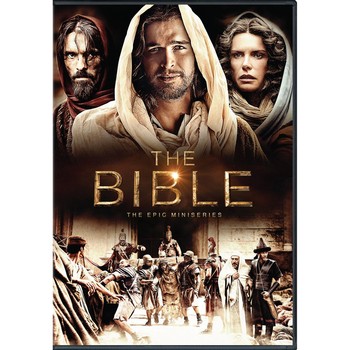
thWith the movie Son of God releasing in theaters tomorrow, February 28, for the past two Thursdays I’ve been rerunning a three part series I wrote on last year’s History Channel miniseries, The Bible. This is the final installment. Son of God is Roma Downey’s and Mark Burnett’s movie about Jesus that is drawn from The Bible’s scenes pertaining to His life and ministry, as well as deleted scenes that did not make it into the miniseries.

Also see: Should Christians Boycott ‘Son of God’? Three Things to Consider


Six Thoughts on History’s “The Bible” ~ Part 3

This is the third of a three part series on The History Channel’s The Bible miniseries*. You can find Part 1 here and Part 2 here.

5. The faulty theology of “The Bible’s” theological advisors is influencing and slanting the way God’s word is being presented.

Rick Warren’s twisting of Scripture to fit his “Purpose Driven” overview of God’s nature and character, Joel Osteen’s self esteem boosting and positive thinking, T.D. Jakes’ prosperity gospel and modalism (an unbiblical doctrine of the Trinity), and Roma Downey’s New Age spiritual psychology degree have crept into The Bible’s stories and subtly shifted the Scriptures’ real focus on sinful man’s need of God’s redemption to a “follow the leader and together we’ll change the world” paradigm.

Go back to the beginning of the series and watch it again, counting the number of times the word “leader” is used. Every major Old Testament character has been cast as a “leader,” and Israel’s prosperity or demise is portrayed as contingent on whether the leader was good or bad and whether or not Israel followed his leadership. This is not the message of God’s word. When Israel was obedient to God, she flourished. When she rebelled and chose idolatry, she crashed and burned. Kings, judges, and prophets had influence on the people, but it was Israel’s obedience to God Himself that was the hinge on which the nation swung.
0bc90ac98e8e3d20a24be1f335b5966aIt was especially disturbing to hear prophets such as Jeremiah and Daniel being cast as “leaders.” The prophet’s job was not to lead the people. The prophet’s job was to speak the words of God to the people and exhort them to submit to Him, just as pastors are supposed to do today. Leaders say, “Follow me.” Prophets say, “Follow God.”

Further, nowhere in God’s word does it say that Jesus came to “change the world,” or “change people’s lives,” nor does the Bible teach that Christians are to do these things. Jesus came to seek and to save the lost (Luke 19:10), to serve, and give His life as a ransom for many (Mark 10:45). Christians are exhorted, not to the lofty goal of “changing the world,” but to the abasing role of denying ourselves, taking up our crosses daily (Luke 9:23), being persecuted (2 Tim. 3:12), and making disciples (Matt 28:19-20).

Jesus did change the world, and He does change our lives, but this was a side effect of His life, death, and resurrection, not His goal. He was here to carry out God’s plan of redemption. The movie’s “change the world” mentality puts the focus on us. Scripture puts the focus on God’s sovereign redemptive purposes.

6. The glory has departed from “The Bible.”

From the beautiful picture of Jesus’ sacrificial death for us in the story of Abraham’s sacrifice of Isaac, to the overwhelming mercy and forgiveness of God after David’s sin with Bathsheba, to the awe-inspiring, God given faith in Shadrach, Meshach, and Abednego’s refusal to bow to an idol, the glory of God, which fairly drips from the Scriptures, is achingly absent from The Bible. To be fair, I don’t think any movie could ever completely capture the same revelation of God’s magnificence that a Christian experiences when he sits down and interacts with the Bible as the Holy Spirit moves in and among the living and active words. But there are movies that have come much closer than this one has. The Scriptures are not just a collection of stories meant to inspire us to emulate their heroes. Rather, they reveal to us who God is; a different facet of His glorious nature and character in each story we read.

As I conclude these six observations about History’s The Bible, it is my hope and prayer that the overall effect of the series having been telecast will be a positive one for the Kingdom. For those of us who belong to Christ, may we use it as a springboard to share the gospel with the lost and encourage discernment and study of God’s word for our brothers and sisters in Christ and for ourselves.

*Just a note for future readers: This article was written during the week between episodes 3 and 4 of the miniseries. Episode 3 wrapped up the Old Testament and introduced the New Testament, covering Jesus’ birth through the calling of Peter. As I write, I have not seen episode 4 or 5.

Bible, Entertainment, Movies, Television

Six Thoughts on History’s “The Bible” ~ Part 2 ~ REDUX

With the movie Son of God releasing in theaters on February 28, for the next three Thursdays I’ll be rerunning a three part series I wrote on last year’s History Channel miniseries, The Bible. Son of God is Roma Downey’s and Mark Burnett’s movie about Jesus that is drawn from The Bible’s scenes pertaining to His life and ministry, as well as deleted scenes that did not make it into the miniseries.

Also see: Should Christians Boycott ‘Son of God’? Three Things to Consider

Six Thoughts on History’s “The Bible” ~ Part 2

This is the second of a three part series on The History Channel’s The Bible miniseries*. You can find Part 1 here and Part 3 here.

4. Does it really matter if “The Bible” is factually inaccurate and skips a lot of important stuff? It’s artistic license after all! 

Yes, it matters. And it matters on a lot of levels.

First, I’ve noticed a lot of details that this movie has gotten wrong when it would have been just as easy/inexpensive/practical to get it right. A few small examples:

0bc90ac98e8e3d20a24be1f335b5966aIn Scripture, when the Philistines wanted to bribe Delilah to betray Samson, they went to her (Judges 16:5). In the movie, the Philistines summoned Delilah to come to them.

In Scripture, Daniel was cast into a pit or cave with lions, and a stone was rolled over the opening (Daniel 6:17). In the movie, Daniel was put into a dungeon with lions and a door was closed and locked behind him.

In Scripture, it is clear that Sodom and Gomorrah were destroyed primarily for the sin of homosexuality (Jude 7). In the movie, homosexuality in Sodom and Gomorrah is not even hinted at.

Now, if the movie makers can’t even get these simple details correct, can they be trusted to get the much more complex details of Jesus’ life, teachings, and propitiatory death and resurrection correct? As I said before, a lot of people won’t pick up their Bibles or have a Christian share the gospel with them after seeing the movie. What about them and the real Jesus they need for salvation?

Second, the Bible isn’t just an anthology of short stories which are unrelated to one another. The Bible is one unified story—the story of God’s redemption of sinful man in the person of Jesus Christ. Every story, every incident, every jot and tittle of the Old Testament shows man’s need for redemption and points to the Redeemer to come: Christ. The gospels tell the story of Christ’s redemptive mission. Acts through Revelation point us back to the first coming of Christ and ahead to His second coming. When you omit or mangle any of the links in that chain, the story of redemption –the entire point of the Bible—breaks down, gets tarnished, gets lost in the shuffle. Why is that important? Because the Bible shows us our need of redemption from our sin. Our eternity depends on it.

Finally, and most importantly, God’s word is high and holy, and it must be treated as such rather than playing fast and loose with it. He has preserved it through thousands of years and at the cost of many lives. God takes His word seriously, and so should we.

Heaven and earth will pass away, but my words will not pass away.
Matthew 24:35

I warn everyone who hears the words of the prophecy of this book: if anyone adds to them, God will add to him the plagues described in this book, and if anyone takes away from the words of the book of this prophecy, God will take away his share in the tree of life and in the holy city, which are described in this book.
Revelation 22:18-19

To be continued…

*Just a note for future readers: This article was written during the week between episodes 3 and 4 of the miniseries. Episode 3 wrapped up the Old Testament and introduced the New Testament, covering Jesus’ birth through the calling of Peter. As I write, I have not seen episode 4 or 5.

Bible, Church, Creation, Discernment, Evolution, False Teachers, New Apostolic Reformation, Prayer, Word of Faith Movement, Worship

Keep On Keeping Up: 6 More Issues Christians Need Guidance About From Our Pastors ~ Part 2

14333562683841

Recently, I read a great article by Justin Peters entitled “Ignorance Is Not An Option.” I would call this article a response to that one, but it’s really more of a…well, I guess you could call it a “ricochet”. Last week, in Part 1 of this article, I discussed five current issues in evangelicalism that we folks in the pew need some guidance on from our pastors. Following are six more issues we all, pastors and church members alike, need to learn about and and keep a biblical perspective on.

Creation vs. Evolution:  Sorely missing from some pulpits these days is the exhortation to Christians that the Bible is our final authority on every issue in life and that we are called to believe God’s word- believe it intelligently, yes, but believe it, even in the face of worldly opposition. This admonition does not begin with Genesis 3, it begins with Genesis 1.  We are called to believe that God created the world and that He created it the way the Bible says He created it.

*Resources:
Answers in Genesis– From Creation apologetics to scholarly scientific articles to colleges that teach Creation to VBS curricula, you would be hard put to find a more comprehensive, gospel-centered Creation resource.
The Case for a Creator by Lee Strobel

Denominational Differences: Do you know the basics of what the major Christian denominations teach (salvation, baptism, communion, membership, etc.) and the differences between their doctrine and the doctrine of your own denomination? Are you aware that some denominations which are considered by many to be “Christian” hold to doctrines- including soteriology- that conflicts with God’s word? Are you fairly well acquainted with the doctrines of the denomination or religion that is predominant (or secondary if your own denomination predominates) in your area? Pastoral instruction on the basics of other denominational beliefs (as well as their own!) can be quite helpful as we church members relate to friends and family members or help new church members who come from a different denominational background.

Resources: 
GotQuestions.org For a brief overview of most of the major religions and denominations, type “Methodist,” “Mormon,” etc., in the search box.

For more detailed information, find the denomination’s main web site and click on their “statement of faith” or “what we believe” page (Keep in mind that there are several different “flavors” of Baptist, Presbyterian, Lutheran, etc., whose doctrines and practices may vary significantly from each other.), or get to know local pastors of other denominations and just ask what they teach.

The Word of Faith Movement:  Used almost interchangeably with the term “prosperity gospel,” anti-biblical Word of Faith concepts such as the “little gods” doctrine (we have a divine nature), health and wealth prosperity (it is never God’s will for you to be sick or poor, and if you are, it’s because of your lack of faith), positive confession (Our words have the power to create reality or speak things into existence. Conversely, negative words create negative circumstances.), and twisted teachings about tithing (“sow your seed so God will multiply it back to you”), among others, are infiltrating unsuspecting churches at an alarming rate, and many are being deceived.

Because church members are often introduced to these doctrines by seemingly innocuous, popular speakers and leaders such as Joel Osteen, Joyce Meyer, Christine Caine, Hillsong personnel, Robert Morris, John and Lisa Bevere, John Hagee, Kari Jobe, and Judah Smith, whose materials are sold at Christian stores, conferences, and web sites, church members, and even some pastors, have no way of knowing they’re encountering false teaching unless they understand sound biblical doctrine and have a modicum of discernment skills.  It is now more necessary than ever for Christians to be trained in the basics of hermeneutics and discernment. 

Resources:
A Call for Discernment by Justin Peters
Word Faith Movement at Stand Up For the Truth
Sound the Alarm: The Dangers of the Word of Faith Movement by Emmanuel Davis
A Softer Prosperity Gospel: More Common Than You Think at 9Marks

The New Apostolic ReformationHopefully, your church members have never encountered NAR leaders, doctrines, or manifestations, or, if they have, were immediately turned off by its weirdness and because it is so blatantly anti-biblical. NAR takes the Word of Faith movement, and –BAM!– kicks it up a notch. But, as a gateway drug can lead to addiction and addiction can lead to a fatal overdose, so exposure to Joel Osteen can lead to T.D. Jakes to Benny Hinn to holy laughterstrange “anointings,” glory clouds of gold dust, tremoring, false prophecy, and being “drunk in the Spirit.” This is signs and wonders on steroids.

The NAR is also largely responsible for many of the corrupt teachings on prayer (mainly through Bethel Church in Redding, California) that have become popular in recent years, such as: contemplative/centering prayer, lectio divina, the International House of Prayer, Sozo prayer, healing rooms, and soaking prayer, as well as the false teaching of dominionism.

Resources:
False Spirits Invade the Church: Part 1, Part 2, Part 3  A Documentary by Andrew Strom
Love and Death in the House of Prayer by Jeff Tietz of Rolling Stone

The Emergent/Emerging Church MovementEver heard the old joke, “The only rule is…there are no rules!” Well, replace the word “rule” with “doctrine” and you’ve got a somewhat loose definition of the emergent church. It’s a post-modern mix of ethereal non-traditionalism, feelings, experiences, and mysticism as a means of worship, anti-absolute truth, ideological inclusivism, and anything goes universalism, topped off with a heaping helping of “did God really say…?“. Everything in the Bible, from moral absolutes to the divinity of Christ to the atonement to every other jot and tittle of the Word is questioned, if not outright denied. The only doctrine is…there is no doctrine. And, unfortunately, we church members can find any number of emergent books and materials on the shelves at our local Christian bookstores.

Resources:
What is the Emerging Church? by CARM.org
Exposing the Emergent Movement by Stand Up For the Truth

Bible Translations and Paraphrases, Study Bibles, and Theme BiblesIf the members of your church are carrying the LOLCat Bible or the KLV (yes, folks, that’s the Klingon Language Version of the Bible {Thanks a lot, Aaron. I’ll never be able to unsee that.}) into the sanctuary every week, you probably need more doctrinal intervention than I’m qualified to offer. But, while there are a number of theologically sound study Bibles and theme Bibles out there, there are some that may be just as theologically off base as the gospel according to kitty cats and Star Trek. Joyce Meyer’s Everyday Life Bible, Joel Osteen’s Hope for Today Bible, Sarah Young’s Jesus Calling Devotional Bible, and T.D. Jakes’ Woman Thou Art Loosed Bible are a few that come to mind. (Notice that these are all sold on a Christian web site right alongside materials that teach sound doctrine.)

Are you somewhat familiar with the most common Bible translations being used today, and which ones are the most accurate? Do your church members understand the difference between a translation and a paraphrase? What about gender neutral Bibles? There is such a variety of Bible options available today that the members of your congregation could likely use some guidance in selecting an accurate translation for studying God’s word.

Resources: 
BibleGateway.com– Just about every Bible translation and paraphrase you can imagine, all on line, all free. Compare a few versions side by side, and, if you’re thinking of buying a new version, try it out at BG before you buy.
Comparison of English Bible Translations
Translation Comparison Charts
How the Use of Some Bible Versions Can Twist God’s Truth at The Sacred Sandwich

*The resources given are obviously not an exhaustive list. For the most part, they are resources I have used myself, found to be helpful, and trust to be generally doctrinally sound. There are many other wonderful resources out there, but our most important resource is to compare all things and people to God’s word in context.

Bible, Entertainment, Television

Redux Dynasty: In Stereotype

collage


I’ve tried to stay out of this whole Duck Dynasty thing. Really, I have. As a fan of the show and a fan of Louisiana’s economy (which has been bolstered by the show), I guess I felt like it would be something akin to a conflict of interest to write anything about it. Plus, anything I could have written was already being written by plenty of other, better writers. I’m not a bandwagon kind of gal. Why rehash and regurgitate? It’s boring.

But, today I read Trevin Wax’s excellent blog post: Duck Dynasty Debriefand he said something that got me thinking (he’s really good at that). So much so, that, late to the party or not, I had to write about it.

“The popularity of Duck Dynasty is a double-edged sword for evangelicals. The show reinforces the stereotype that devout Christians are a bunch of backwards rednecks. “

True, that stereotype is out there. It’s even been laid on me a number of times by non-Christians.

And guess what? I’m OK with that.

Why?

Because if anyone is at “fault” for the stereotype of Christians as uneducated, rough around the edges rednecks, it’s Jesus. He started the whole thing by picking people like Peter, Andrew, James, and John as His disciples. Fishermen. Uneducated. Not sophisticated. As Trevin rightly said in his article, we shouldn’t make Phil Robertson Christianity’s spokesman simply because he’s a celebrity. But the disciples? Those guys ARE our spokesmen despite their blue collar status and the fact that they put their feet in their mouths occasionally. And I’ll bet they had beards, too.

Jesus is also responsible for saying how difficult it is for a rich (which, in His day, went hand in hand with “educated” and “sophisticated”) man to enter the kingdom of God (Matthew 19:24), for thanking God “that you have hidden these things from the wise and understanding and revealed them to little children;” (Matthew 11:25), and, through Paul, “But God chose what is foolish in the world to shame the wise; God chose what is weak in the world to shame the strong; God chose what is low and despised in the world, even things that are not, to bring to nothing things that are,” (1 Corinthians 1:27-28).

So, maybe it’s not so much a stereotype as it is, well, true. We’re the ones who have become pridefully elitist. If rednecks were good enough for Jesus, that’s good enough for me. Grab the camo, quit looking down your nose, and embrace your inner redneck, brothers and sisters. It’s in our blood.

Bible, Bible Study, Church

Context Message Me

gettysburg-veterans-public-domainYesterday, I saw several friends and organizations re-posting this article (and others like it) on Facebook. The gist of the article is about teaching the Gettysburg Address to students in a “stand alone” sort of way without teaching that it has anything to do with the Civil War.  As a teacher myself, this seems utterly ridiculous to me. How can students grasp the full meaning, depth, and impact of the Gettysburg Address without knowing the history and events that led up to it, who wrote and delivered it, the people to whom it was delivered, and why it was delivered? Yes, a few things can be gleaned merely from the text itself, but is that all we want our students to learn about the Gettysburg Address? Are we satisfied for them to merely skim the surface of this document and leave with a superficial (and likely, incorrect) understanding of it, or do we want them to dig in and learn all they can about it?

And then it hit me:

What many of us would not abide in the classroom,
we embrace in the sanctuary.

Week after week, many Christians sit under pastors and Bible teachers who fail to preach and teach God’s word in context. A verse from one book is thrown in here, a half verse from another passage, there, like so many sprinkles on top of an ice cream sundae.

No mention is made of the historical (pre-Exile or post-Exile?) or cultural (Was this written to Jews or Gentiles?) context of the passage.

Prescriptive (thou shalt/shalt not do X) passages are conflated with descriptive (here’s what happened to this particular guy) passages, leading to confusion over law, grace, and precisely what it is that God wants from us.

Promises that were never meant for 21st century Christians (because they were written only to a specific person(s) at a specific time) are ripped away from their intended audience and plastered, bait and switch style, onto you and me. (I’ve always wondered why Jeremiah 29:11 is preached as applying to today’s Christians, but verses such as Jeremiah 29:17-19 are not.)

Pastors and teachers treat individual Bible verses and brief passages as “stand alone” items rather than showing how they fit into the immediate context of the surrounding passage and book, while simultaneously neglecting to show how those Bible tidbits fit into the broader, complete story of the gospel revealed across both Testaments.

Pastors and Bible teachers, myself included (and, believe me, I’ve failed many times in this area, too) are to care for those who sit under our teaching by doing our best to handle God’s word correctly (2 Timothy 2:15) and by preaching and teaching, as Paul put it, “the whole counsel of God” (Acts 20:26-27). May we as teachers not merely skim the surface of God’s word, but proclaim the Truth, the whole Truth, and nothing but the Truth. And may our hearers demand nothing less.