Basic Training, Bible

Basic Training: The Bible Is Our Authority

For more in the Basic Training series, click here.

The Bible. Scripture. The Good Book. It used to be so blatantly self-evident that God’s written Word was the foundation and standard for the Christian faith that it was assumed. A given. You learned, “I stand alone on the word of God- the B-I-B-L-E,” when you were three or four years old, you believed it, and you moved on.

But take a look at the Westernized version of Christianity these days. The fruit of abandoning the authority of Scripture is chilling. From the demonic tremoring and barking antics of New Apostolic Reformation “churches” to the rebellion of female “pastors” to the “gay Christian” movement to “Christian” abortion doctors, it’s clear that an astounding number of self-professed Christians and churches don’t submit to Scripture’s mandates for their beliefs and practices.

“Whew,” you might be thinking, “my church and I must be OK. We call homosexuality sin. We’re pro-life. Our pastor is male. And the wildest our congregation gets is when Brother Joe bellows a good, hearty ‘Amen!’ during the sermon.”

Those are all good, biblical things and I don’t want to minimize them. But is it good enough? Are there other, more subtle ways you or your church aren’t submitting to the authority of Scripture? And what does it mean that the Bible is our authority, anyway?

Have you ever played Monopoly? If you have, you know that you’re supposed to use a Monopoly board, two dice, the and the game pieces and Chance and Community Chest cards that come with the game. You also know that there is a standard set of Monopoly rules that are supposed to be followed.

monopoly-1356307_640

Suppose a friend invited you to play Monopoly but wanted to use a checker board instead of a Monopoly board. Or wanted to create a new rule that you would get $500 for passing Go instead of $200. Or that you could get out of jail without rolling doubles.

Monopoly was created in 1903 by a lady named Elizabeth J. Magie Phillips. Magie created the game to teach people the consequences of having large or valuable tracts of land controlled by private monopoliesยน. Each piece of the game and each rule was created with that teaching goal in mind. To alter the rules of the game is to, at best, be out of alignment with Magie’s intentions and purposes, and, at worst, to not be playing Monopoly at all. If you want to truly play Monopoly, learn the fullest extent of the lesson Magie was trying to teach, and respect Magie as the creator of the game, you’ve got to play by her rules. All of them. Even the ones you don’t like or particularly understand.

Many of the same principles apply to Christianity. God set Christianity up a certain way with His own intentions and purposes. If we alter His rules, we’re, at best, not lined up with those intentions and purposes, and, at worst, not practicing Christianity at all. If we really want to honor God, grow in Christ to the greatest extent and truly be practicing biblical Christianity, we’ve got to play by His rules. All of them. Even the ones we don’t particularly like or understand.

But what many Christians are doing today is taking their “Monopoly game” of Christianity and assuming it’s for their own entertainment, better quality of life, or positive feelings. And because they’re largely ignorant of the Creator of the “game” and His purposes and intentions behind said game, the players start tossing out His rules whenever those rules don’t fit the purposes and intentions of the players.

God created you and me and the world and Christianity and the church for His glory. He gets to make the rules. We follow the rule book (the Bible), not because those rules will make us personally happy or successful, but – simply and ultimately – because they are given by God and glorify Him. What He says goes, and we honor Him by our obedience. We need to remember that our role in the game is player, not Creator. Players submit to the authority of the Creator.

When the Creator says…
I created the world in six literal days and here’s how I did it, we don’t dishonor His word by trying to cram evolution in there and make it fit. We believe Him, and we teach what His word says.

When the Creator says…
Ladies, I don’t want you to preach, teach Scripture to men, or hold authority over men in the church, we don’t search for loopholes. We search for ways we can humble ourselves and serve God in ways that please Him, not ourselves.

When the Creator says…
Here’s how I want you to pray, we repent of using unbiblical prayer methods such as private prayer languages and contemplative prayer, and we pray the way God wants us to pray.

When the Creator says…
Pastor, I want you to preach the Word, that means pastors preach rightly handled, in context Scripture- not a stand up comedy routine, not the storyline of the latest blockbuster movie, not a half hour of jokes and personal anecdotes, not their own opinions and self-styled doctrines.

When the Creator says…
I want you to stay away from people who teach false doctrine, it doesn’t matter how much we like that teacher, how good she makes us feel, how much we think she’s helping us in our walk with the Lord, or that we’d rather “chew up the meat and spit out the bones.” We reject her, and her teaching, and listen to those who teach sound biblical doctrine instead.

We bow the knee to what God’s word says. Period.

Ladies, if you don’t want to cripple your growth in Christ, one of the worst phrases you can utter about Christian beliefs and practices is, “Well, I just think…” followed by your own personal feelings or opinions. You don’t write the rules.

The Bible says:

You are not your own, for you were bought with a price. 
1 Corinthians 6:19b-20a

…you…have become slaves of God…
Romans 6:22

If you’re a genuinely regenerated believer, you are the slave of Christ. That means you don’t get to hold, or live by, your own feelings or opinions any more. That’s what lost people do. You are only entitled to God’s opinions as set down in His written Word. Your opinions don’t matter.

mozart

When it comes to Christian beliefs and practices, your experiences don’t matter either. It doesn’t matter what kind of so-called supernatural experience you had where you babbled incoherently or “heard God speak” or saw a “vision” or whatever. If your interpretation of your experience conflicts with the written word of God, your interpretation of your experience is wrong. Something may have happened, but it wasn’t God. (And if something supernatural happened and the Bible says God doesn’t work that way, there’s only one other option.)

When you decide what you’re going to believe and do based on your own opinions, feelings, and subjective personal experiences rather than the written word of God, what you’re doing is saying, “I know better than the almighty, all-knowing God of the universe.” You’re setting yourself up as judge over Scripture. You’re in charge, not God. Doesn’t sound much like a slave, does it?

That’s because Scripture says those who truly belong to Christ will have a heart to keep His word. We will stumble and fall along the way. We will sometimes mistakenly believe things we shouldn’t. But one of the hallmarks of a Christian is that she loves and strives to obey God’s word. Because, as Christians, the Bible is our authority.
ps-119-57


Additional Resources

What does it mean that the Bible should be our sole authority for faith and practice? at Got Questions

For the Authority of Scripture by Dr. John MacArthur

Divine Authorship and Authority at Ligonier

The Authority of the Bible by Dr. Martyn Lloyd-Jones

Bad Fruit, Diseased Trees, and the Authority of God’s Word


ยนMonopoly (game), Early History, Wikipedia, February 16, 2017
ยฒAmadeus photo and quote courtesy of Orion Pictures, Amadeus1984.

Apologetics, Bible

Without Apology: 7 Reasons Not to Be Ashamed of the Hard Parts of the Gospel

7-not-ashamed

I am not ashamed of the gospel…

Romans 1:16ย is such a great verse, isn’t it? And one of the things that’s great about it is that we can all agree on it. I mean, no self-respecting Christian would dream of saying she’s ashamed of the gospel, would she?ย It’s a rallying cry for evangelism and for standing against persecution.ย Of course we’re not ashamed.

In theory. But in practice?

You see, the gospel is the good news of salvation. And, while we don’t tend to share the entire Bible when we share the gospel with someone, the good news starts in Genesis with a holy God who created a perfect world, and moves on to the first people who messed everything up with their sin, a whole bunch of subsequent people who couldn’t be faithful to God and keep His Law, Christ and His redemption of sinners, and the Revelation of the hope of His return at the end of time. So, “the gospel” really stretches from the front cover of your Bible to the back cover.

Are there any parts of it you shy away from in evangelism, discipleship, or teaching?

What about the atheist you’re witnessing to who denigrates your God for committing genocide in the Old Testament?

Were you afraid to speak up the last time you were the only Creationist in a room full of evolutionists?

Have you ever seen some poor pastor or male teacher tiptoe his way through the minefield of a passage on marital submission or the biblical role of women in ministry lest the wrath of church ladies befall him?

Are you reluctant to be known as someone who believes and will unequivocally say that homosexuality and other deviant sexual behavior is a sin?

Hey, we’ve all been there and failed. These are tough passages for sinners to hear, after all! When they come up, we should certainly approach them wisely and lovingly with people, but we should take care never to wish these things (and others) weren’t in Scripture, feel embarrassed about them, apologize for them, or act as though we have to make excuses for God about them. We need to be just as willing, bold, kind, and comfortable saying, “The world did not evolve, God created it,” and “You must repent of homosexuality along with all your other sin,” as we are saying, “God is love.” Why?

1. The Bible is God’s word.

Scripture is the very words of the God of the universe. It’s not a storybook or a policy and procedure manual dreamed up by men. Scripture isย God speaking to us. To be ashamed of any part of His word is to be ashamed of Him, what He has done, and who He is. We dare not.

2. The Bible glorifies God.

The mere existence of Scripture brings honor and glory to God. No other god has spoken personally, so magnificently, and in a living and active book, to his people. The Bible brings glory to God when His people believe and obey it. We exemplify His goodness and holiness to a watching world. And even when the Bible isn’t believed and obeyed, God is glorified by showing us in His word that His way is right and perfect and man’s way is not.

3. The Bible is perfect.

God didn’t leave anything out of the Bible or put anything extra in that shouldn’t be there. The Bible is perfect just the way it is. God doesn’t need us to help Him out by editing it. If He wanted it to say something different, it already would.

4. The Bible is right.

When God’s word says something is a sin, it is right. When God’s word tells us He, in His holiness, did something we think is unfair or distasteful, it is right. When God’s word requires us to do something, it is right. When someone balks at what the Bible says, it’s not the Bible that’s wrong. It’s that person’s sinful flesh that thinks it knows better than God what is good, appropriate, loving and fair. If a person comes up against the Bible, the Bible does not bend. That person bends. The knee. To God. If you are standing on the rightly divided word of God, you can be confident that you are in the right because the Bible is right. There’s no need for reticence.

5. The Bible is a blessing.

If you’ve ever studied the history of how you got the Bible sitting on your coffee table, you know just how amazing it is that you own one. Thousands of years, scores of writers, so many people who were martyred for penning it, protecting it, and translating it. How could we be ashamed of such a precious gift from God Himself?

6. The Bible is good for us.

God put those tough passages in the Bible because they’re good for you. And they’re good for the person who’s foaming at the mouth over the one you’re trying to explain to her, right now, too, she just doesn’t know it yet. God is a kind and loving Father who always does what is best for us. Those difficult passages would not be in the Bible if God didn’t want them there to benefit us in some way.

7. The Bible is useful.

ย I can’t say it better than Scripture itself does:

All Scripture is breathed out by God and profitable for teaching, for reproof, for correction, and for training in righteousness, that the man of God may be complete, equipped for every good work. 2 Timothy 3:16-17

God uses every verse of Scripture – even the hard ones – to save us, grow us, conform us to His will, equip us, and reveal Himself to us. Why would we deny those saving, growing words to people who desperately need to hear them by shying away from them just because they’re difficult to say or unpleasant to hear?

Steve Lawson once said, “The Bible is not hard to understand. It is just hard to swallow.” And he’s so right. It’s not difficult to understand the concept that wives should submit to their husbands or that the God who sovereignly gave people life has every right to take it away. What’s difficult for us is to humble ourselves and cede control to Someone else. We think we know best. We want to run things and make the rules. We don’t want to submit to God’s authority.

In the end, there really aren’t any tough passages. There are only passages that come up against tough hearts. Tough hearts that need to be broken by the gospel, that they might repent of their sin and be forgiven by a great and merciful God.

And that’s nothing to be ashamed of.

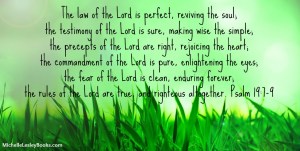
ps-19-7-9

Bible, Obedience, Old Testament, Sunday School, Worship

Worship, Grief, and Obedience: Three Responses to God’s Word ~ Sunday School Lesson ~ 9-28-14

worship grief obedience 1Through the Bible in 2014 ~ Week 39 ~ Sep. 21-27
Zechariah, Esther, Ezra 7-10, Nehemiah 1-8
Worship, Grief, and Obedience: Three Responses to God’s Word

These are my notes from my ladiesโ€™ Sunday School class this morning. Iโ€™ll be posting the notes from my class here each week. Click here for last week’s lesson.

Background/Time Line:
Judah had been in exile for 70 years. As there had been three waves of deportations (605 B.C., 597 B.C., and 586 B.C.) to Babylon, there were three waves of return from Babylon.

1. 539 B.C.- There’s a new sheriff in town as world domination changes hands. Babylon is out. Persia is in.

2. 538 B.C.- Zerubbabel (Jerusalem’s first post-exilic governor) leads the first return wave. Many of Israel’s feasts and ceremonies are reinstituted, and work on the rebuilding of the temple begins.

3. 536 B.C.- Work on the temple is abandoned shortly after it begins and is not resumed for another 16 years.

4. 516 B.C.- Temple completed.

5. 483-473 B.C.- The events of Esther take place. These events happen between Ezra 6 and 7.

6. 458 B.C.- Ezra leads the second return wave (Ezra 7ff).

7. 445 B.C.- Nehemiah leads the third and final return wave. The city wall is rebuilt.

Nehemiah 8
The exiles were all finally back after 70 long years in captivity, and the wall was finished. They were home and they were safe. It was time to re-establish the nation by ceremony and celebration.

8:1: The Feast of Booths (Ezra 7:10, Leviticus 23:33-44, Deuteronomy 16:13-17)
Ezra was a scribe and a teacher of Scripture. Ezra 7:10 tells us,

“For Ezra had set his heart to study the Law of the Lord, and to do it and to teach his statutes and rules in Israel.”

It would have been natural for Israel to look to Ezra for biblical instruction. It’s interesting to me to think back to Jeremiah at this point and recall how, before the exile, all the people came together against him to oppose the word of God. Now, after the exile, the people gather en masse and ask Ezra to teach them the word of God.

It’s a little unclear in verse 1 whether the people knew it was near time for the Feast of Booths (it was supposed to start on Tishri {7th month} 15, and this was the 1st) and that’s why they asked Ezra to read the Law (it was “required reading” at the Feast of Booths), or they just longed to hear the word of God, and the elders learned during the reading or their study time (8:13) that it was time for the Feast.

At any rate, the Feast was on. God had commanded that the Feast of Booths (or Tabernacles) be held every seven years, in the autumn after the harvest had been gathered in. The first and eighth days were days of rest, and sacrifices and offerings, as well as the reading of the Law were done on the remaining days. The Feast of Booths immediately followed the Day of Atonement, a solemn assembly in which the nation’s sins were atoned for. The Feast of Booths had not been held since the days of Joshua.

The Feast of Booths had been instituted as a reminder to Israel of how God had delivered them from “captivity” in Egypt and cared for them during their “exile” in the wilderness. The booths were lean tos or huts built from leafy branches, and the people were to live in these huts during the feast as a reminder of their temporary homes during the wilderness wandering. It is the only feast in which rejoicing is commanded.

What more appropriate feast could there have been on this day in Israel’s history? Their sin had been atoned, and God had “harvested” the apple of His eye from their temporary home in captivity and exile. It was certainly a time for rejoicing.

8:2-12: The Reading of God’s Word
2- God’s word is important for everyone: women, children, families, not just men. Not only did God want His word ministered to everyone, but “all who could understand” in verses 2 and 3 indicates that they would be held responsible for what they had heard. They were to know what God commanded, what He prohibited, and obey accordingly.

3-5- Ezra read from “the Law.” Often, the phrase “the law” or “the book of the law” can mean the entire Pentateuch (Genesis – Deuteronomy), but in this instance, it seems to mean the actual “law” portions of the Law. As he read, Ezra stood on a raised platform so that he could be seen and heard. The men standing with him to show their agreement and support were probably priests and/or elders.

“From early morning until midday” would have been about 6 hours, from dawn to noon. Outdoors (in the square). Standing. Yet, the people were still attentive. Compare this to our one or two hour worship services, indoors, sitting, where the pastor is not usually focusing on the finer aspects of how much you’ll be fined if your ox tramples your neighbor’s fence.

These people were starving for God’s word. Eager to get back to living as His people. How intense is our own hunger for God, His word, holy living?

Responding to God’s Word with Worship:
6- Ezra opened with a prayer, blessing the Lord. Joining together freely in their own land to worship and hearing God’s word taught in public by one of their own teachers was a new experience for the generation that had been born and raised in captivity. By this time, overwhelmed and overcome by all God had done for them, their only possible response was humble worship. Worship is one of the right responses to God revealing Himself in His word.

7-8- Because many of the people were hearing God’s law for the first time, they needed some help in understanding it. God had raised up godly men to teach the people. This is what godly teachers do. They read out God’s word and explain it to people (exegesis). They don’t come up with fanciful ideas of their own and bend God’s word to make it fit their ideas (eisegesis).

Responding to God’s Word with Grief:
9-12 (Romans 10:13-14, Ecclesiastes 3:1)- The Holy Spirit works primarily through the teaching and preaching of His word, and that’s just what He was doing here. The people heard the word and the Holy Spirit worked through it to convict them of their sin. They began to mourn over their sin and repent. Grieving over our sin is another right response to God revealing Himself in His word.

But grieving over sin was for the Day of Atonement, a form of which, this time, would follow the Feast of Booths instead of preceeding it (see chapter 9). This was a time of rejoicing for all God had done for them in spite of their sin. As we read in Ecclesiastes,

For everything there is a season, and a time for every matter under heaven:

Confession would have to wait.

And why did the people rejoice? Not because God performed a miracle or made their lives nice and comfy or gave them a bunch of stuff. They rejoiced because “they had understood the words that were declared to them.” How often do we rejoice in understanding God’s word or having it preached to us? It’s not often we see a Facebook status that says, “Praising God for understanding the Bible passage I read in my quiet time today!”

8:13-18: Studying God’s Word
13-14- For a Believer, one of the effects of hearing God’s word is the desire to hear more of God’s word. Hearing God’s word preached and taught led the elders, priests, and Levites to want to study the Word even further. As they studied, they discovered that there are things that God’s word actually tells us to do.

Responding to God’s Word with Obedience:
14-18- The leaders learned that there were some actual, tangible, behavioral things God had told Israel to do with regard to the Feast of Booths. They were obedient to God’s word by studying to understand these things, teaching them to the people, exhorting them to obey, and setting the example by obeying the instructions themselves.

The people responded in obedience to the word by heeding the instruction of their spiritual leaders, and by going out, gathering branches, constructing the booths, and living in them during the feast. As each individual obeyed, it encouraged others to obey, so that the whole assembly came together in obedience. And what was the result? “There was very great rejoicing.” (17)

Our response to God’s word should be no different than Israel’s. We should hunger for God’s word and desire more of it with each passing day. It should inspire us to worship the glorious King who sent His son to die for us. It should convict us of our sins and cause us to grieve over them and repent. And, we should obey God’s word, and through our obedience, encourage the rest of the body of Christ to do the same. Then, there will be “very great rejoicing.”

Bible, Bible Study, Christian women, Women

You’re Not as Dumb as You Think You Are: Five Reasons to Put Down that Devotional and Pick Up the Actual Bible

Bible Five Reasons

As a women’s Bible study author and teacher, I have the unique privilege of talking to women from all kinds of backgrounds about their spiritual lives. I can’t tell you how many times I’ve had women share with me that they didn’t grow up in church, or they grew up in a church that “didn’t allow” them to read the Bible, and now they have to use a Bible study or devotional book in their quiet time or they’re afraid they won’t be able to understand the Bible. My heart goes out to these ladies because they desperately want to learn from God’s word, but somewhere along the way, someone or something has convinced these perfectly intelligent women–I haven’t met a dumb one, yet– that they’re not good enough or smart enough for God’s word.

As Colonel Potter used to say:

ColPotter MM

Ladies, you are not dumb. God created you smart enough to understand the Bible, and He created the Bible to be understandable. He loves you and wants you to read, embrace, and apply His word to your life. So don’t be afraid to throw that Daily Bread out the Open Windows of your Upper Room and read a chapter out of your Bible instead. Why?

1. Because you need spiritual nutrition, not mind candy.
The other day I was asked my opinion of a popular women’s daily devotional web site. I read a few of the devotions, and the basic format of what I found was a Bible verse (or worse, part of a Bible verse) followed by an inspiring or poignant personal story. Frequently, the Bible verse had little or nothing to do with the story. There’s nothing wrong with reading a good story, but that’s not the same thing as studying God’s word. Other “Bible” studies are built largely on the author’s opinions. You’ll find that I think… or I believe… far outnumber God’s word says… (quoted verbatim, in context, and with a chapter/verse reference). Still others are basically advice or “life tips” books.

Don’t let the fact that a book, magazine, or website bills itself as a “Bible study” or a “devotional” fool you. If all you’re reading is the author’s unsubstantiated opinions, advice, or anecdotes from her (or someone else’s) life, you are studying her story, not God’s story.

There are many good, doctrinally sound studies out there that can be a fine supplement to your regular study of God’s word, and there are many more “Bible studies” and devotionals that are merely feel-good stories, or worse, contain teaching that actually conflicts with the Bible. But how will you know the difference if you don’t know what God’s word says by reading it?

If you don’t know enough of what God’s word says to use it as your measuring stick for other books, you’ll end up doing the same thing a child would do when offered anything in the world that he wants to eat. He’ll choose what looks and tastes good (which might be candy or it might be poison) instead of what’s good for him. When you pick up a Bible study or devotional, you might not know what you’re getting, but when you pick up your Bible, you can be sure you’re getting the very words of God, and that’s what your spirit needs to feed on to grow up healthy.

2. Because King James has been dethroned.
No disrespect intended. The King James Version of the Bible is a good translation, and the language is beautiful, but if you have trouble with 1611 English, it’s not the only game in town anymore. Some of our modern translations (please note: that’s translations not paraphrases) are actually more accurate than the KJV because thousands more biblical manuscripts have been discovered since it was first published, allowing translators to be more precise. Two of these, which I highly recommend, are the New American Standard Bible (NASB) and the English Standard Version (ESV).

If you can read books, recipes, magazines, instructions, and Facebook (good heavens– if you can decipher certain Facebook posts, you can comprehend anything), and understand them, there is a Bible translation out there that you can understand. You can even check most of them out for free at BibleGateway.com.

3. Becase the Holy Spirit promised to help you.
I always find it heartwarming to hear someone say, “Before I was saved, I read the Bible, but it didn’t make any sense to me. But now when I read it, I get it!” What changed? The Holy Spirit now lives inside that person. He convicts us of sin, leads us to love the things of God, and shapes us to be more like Christ. One of the ways He does that, according to 1 Corinthians 2:14-15, John 14:26, and 1 John 2:27 and other passages, is that He helps us understand and apply God’s word to our lives.

Before you start reading your Bible, take a moment to pray, confess and repent of your sin, and ask the Holy Spirit to help you understand and obey His word. He’ll do it, because He keeps His promises.

4. Because you can get by with a little help from your friends.
 
While the Holy Spirit illumines our understanding of the Scripture, it’s both immediate and a process, so sometimes, you’ll run across a verse that stumps you, a word you don’t understand, or passages that seem to conflict with each other. Fortunately, the Holy Spirit is/was at work helping other godly men and women to understand the Scriptures, too, and one of the ways He can help you is through their study and hard work.

Cross References:
Take a look at your Bible. See any little superscript numbers or letters in the text? Find the corresponding letter/number, and you’re likely to see the reference for another related Bible verse. Look it up. Clear passages of Scripture interpret unclear passages, and it will probably shed some light on what you’re finding confusing.

Study Bibles:
I almost hesitate to recommend study Bibles because there are so many shoddy ones out there, but if you can find a good one they are extremely helpful. Good study Bibles contain the entire text of the Bible plus notes and explanations on most of the verses. They also often contain historical, cultural, and background information on each book and author, maps, charts, glossaries, etc. As to the shoddy ones, generally speaking, stay away from “theme” Bibles (the Bible for teachers, for athletes, for petroleum engineers who eat waffles for breakfast–yes, I’m kidding– the environmental Bible, the NASCAR Bible, the Duck Dynasty Bible– no, I’m not kiding), and from any Bible whose title contains a televangelist’s name (such as the Bibles T.D. Jakes, Joyce Meyer, and Joel Osteen have put out).

For my “hard copy” Bible, I use and strongly recommend the MacArthur Study Bible. It is my understanding that the Lutheran Study Bible and the ESV Study Bibleย are also very good, although I have not personally had a chance to check them out myself. And there are some phenomenal (and free!) study Bible apps out there. I absolutely LOVE the Faithlife Study Bibleย and the Bible study app from Olive Tree. And check out this article from Tim Challies: What Makes a Really Good Study Bible?.

Commentaries, Dictionaries, and Bible Study Helps
Commentaries are a Bible scholar’s written explanation of Scripture. Bible dictionaries will help you with definitions of certain words and phrases. And there are many other notes, outlines, and other Bible study helps you can use to better your understanding of Scripture. The resources page at BibleGateway.com contains several of these, including Matthew Henry’s commentary (my favorite). The Christian Classics Ethereal Library (CCEL) has a treasure trove of thousands of resources to help you study. And Logos Bible Software has a great free app that has dozens of resources.

5. How badly do you really want this, anyway?
Nobody ever won a medal at the Olympics by practicing her sport for five minutes a day. Edison didn’t invent the light bulb by messing around in his garage for a few hours on the weekend. And, despite the titles of some Christian books, nobody ever grew to spiritual maturity by spending five minutes a day reading a devotional.

Think about the things you spend your time on. Work, cooking, cleaning, TV, social media, novels… If asked, we would probably all say that our relationship with Christ is more important than any of these things, but do our day planners reflect that?

Anything worth having is worth investing time and effort into. It’s worth working at it and sharpening your skills. And nothing–nothing–is more worthwhile than growing closer to Christ. Is Christ worth some time and effort to you?

So, ladies, this is probably going to sound strange coming from a women’s Bible study author, but you don’t need my book, or anybody else’s, to study the Bible. Just pick up the Scriptures, pick a book, start reading at the beginning, and keep going until you get to the end. People did that for thousands of years before Bible studies hit the scene. They did just fine, and you can too.

Bible, Law- Old Testament, Old Testament, Sunday School

Loving God’s Word: Psalm 119 ~ Sunday School Lesson ~ 6-8-14

PicsArt_1402283595984

These are my notes from my ladiesโ€™ Sunday School class this morning. Iโ€™ll be posting the notes from my class here each week.ย Click here for last week’s lesson.

Through the Bible in 2014 ~ Week 23 ~ June 1-7
Psalm 119:89-176, Song of Solomon 1-8, Proverbs 1-15
Loving God’s Word: Psalm 119

Last week and this week, we read through Psalm 119, the longest psalm and the longest chapter in the Bible. Today, I thought we would go a little “old school” — “old” as in “Old Testament.” It was not uncommon at various times of worship in the temple or synagogue for the people to listen to lengthy portions of Scripture being read. (In fact, when we get to Nehemiah 8, you’ll have a completely new perspective on what constitutes a “lengthy” passage of Scripture or a “long” sermon!). But it’s an aspect of worship and teaching the church has lost as the years have gone by. So today, we’re going to start at verse 1 of Psalm 119 and see how far we can get. I have some brief notes on some of the verses/sections that I’ll share with you, and I encourage you to ask questions and comment as we read.

Note to blog readers: This is one of those “ya kinda had to be there” lessons. I’m happy to report that we ended up making it all the way through the chapter and even had some great discussion along the way!ย 


Psalm 119

1-8-The importance of obedience.

9-16- The importance of God’s word. We cannot be obedient to Him without His word, because His word tells us what He requires of us.

14, 16- The psalmist calls God’s word a “delight”. This was at a time when most of his “Bible” consisted of the Pentateuch, which was mostly law. He delighted in it, not primarily because of the do’s and dont’s, but because these were the words from the mouth of God. Also because the non-law portions reflected the greatness, power, mercy, and other attributes of God.

20 (John 1:1)- “My soul is consumed with longing for your rules at all times.” The psalmist has a genuine love for, and godly obsession with, God’s rules/statutes/ordinances/commands. It is not just a love for the rules themselves; a desire to obey them is inextricably interwoven throughout that love.ย The reason the Christian has a natural love for, and obsession with, God’s word is that Christ IS that word (John 1:1)

25-32- The psalmist realizes that only God’s word gives life, strengthens the sorrowing soul, and transforms the heart and behavior, therefore, he “clings” to them. He asks God to teach him His ways and give him understanding of His word.

32 (John 8:34-37)- “I will run in the way of your commandments when you enlarge my heart!” (for you set my heart free). Rather than seeing God’s law as confining or burdensome, the psalmist says they set his heart free. This is one of the core differences between the genuinely regenerated and those who are not. Christians, while we may struggle to understand and obey God’s word at times, know that it is His word that sets us free (if the Son sets you free, you are free indeed- John 8- This is, in fact, why we struggle to obey it instead of struggling against obeying it.). Lost people see God’s word as confining, enslaving, a prison. This is why, when coming face to face with God’s word, they rebel against it.

59- 60- “When I think on my ways, I turn my feet to Your testimonies.” The solution for sin is found in God’s word. Our shame over our sin should drive us TO His word, not away from it.

63- We make our friendships with those who keep His law.65-72- This passage extols God’s goodness even in times of hardship and attack. God’s word is the psalmist’s comfort and reassurance. Even in difficult times, he values God’s word more than great riches.

75- “In faithfulness You have afflicted me” The psalmist isn’t blaming God or accusing Him of wrong. He knows that what God does, He does for our best. He has already, in the preceding passage shown that affliction was valuable in teaching him to keep God’s commands. He goes on to say in v. 92 that he would have perished in his affliction if it had not been for his delight in God’s word.

81-88- Even when we know God is good and He afflicts us in faithfulness, it gets old and wearisome. The psalmist (88) asks God to ease up, not for his own personal comfort or gain, but so that he will be better able to keep God’s word.

97-104 (Proverbs 1:7)- This passage echoes what we studied in Proverbs this week about wisdom. “The fear of the Lord is the beginning of wisdom.” (Proverbs 1) The psalmist shows us that the knowledge of God’s word and the wisdom gained from it surpasses any other form of knowledge or wisdom: the craftiness of the enemy (98), academic knowledge (99), and the wisdom of age and experience (100).

129-136- The psalmist’s deep love for God and His word is palpable. It runs so deep he can scarcely convey it, even with so many descriptions in so many verses. He loves the Lord so much that it breaks his heart for others to continue in sin. This is the love that should fuel our evangelism. God’s testimonies are wonderful (129). They enlighten and give wisdom to even the simplest person (130), yet people throw them away in favor of their sin. It is incomprehensible to the psalmist.

137-144- God has laid down his precepts in righteousness. They are righteous and He is righteous.

158 (1 Corinthians 6:9-11)- We often look at “the faithless” (lost people) with disgust because they do not keep God’s commandments, but we must keep in mind that that’s what lost people do. (That’s what we did before we were saved!- 1 Corinthians 6) They are slaves to sin and need Jesus to set them free.

As we continue to study God’s word,
we will grow to love Christ more and love His word more.

Open my eyes that I may behold wondrous things out of your law. Psalm 119:18