Mailbag

The Mailbag: How can I grow to love Jesus more?

Originally published June 11, 2018

I have been a born again Christian for many of years. But how do I get so in love with him?? Please can you help me.

This could possibly be my favorite Mailbag question ever. How can I love Jesus more? What a sweet and precious thought. I should be asking that question every day. We all should.

The first thing you will have to determine in your own heart, through prayer and study of the Word, is exactly what you mean by your question. Do you mean:

“I’m a Christian, but I consistently have no affection for Christ whatsoever. I just don’t really care about Him one way or the other, but I see other Christians who seem to genuinely love Him. How can I get those feelings for Jesus?”

or:

“I’m a Christian. I love Christ, but I want to develop an even greater love for Him. How do I do that?”.

If your meaning is closer to the first question, I would counsel you to examine yourself to see if you are truly saved as 2 Corinthians 13:5 instructs us. Someone who has genuinely been born again should have some sort of affinity, love, gratitude, and affection for Christ because of who He is and all He has done for her. If you honestly don’t give a flip about Jesus, that’s a big red flag signaling that you might not be saved, even if you think you are. I would strongly recommend working through my Bible study Am I Really Saved? A First John Check Up as well as setting up an appointment with your pastor, a trusted, spiritually mature Christian friend, or a biblical counselor for counseling.

If you’ve compared your heart and life to Scripture and you’re certain you’re a genuinely regenerated Christian who wants to grow in the love she already has for Jesus, it’s simple. Just do what His Word says:

Study Your Bible

I would urge you to put away all of the “canned” studies (books, DVDs, etc. written by others) and simply pick up your Bible, choose a book, start at the beginning, and work your way through to the end. I cannot stress enough how much more rewarding studying the Bible for yourself is than relying on someone else’s materials, and how much closer it will draw you to Christ. If you’ve never studied the Bible on your own before, try taking notes on the text, or use one of my studies (see the “Bible Studies” tab at the top of this page) as “training wheels” to get started. Here are a few other resources that may help:

Bible Study Articles and Resources

10 Simple Steps to Plain Vanilla Bible Study

Rightly Dividing: 12 Doโ€™s and Donโ€™ts for Effective Bible Study

Youโ€™re Not as Dumb as You Think You Are: Five Reasons to Put Down that Devotional and Pick Up the Actual Bible

Pray

You can’t grow in your love for Someone you’re not spending time with. Set aside a designated, uninterrupted time of prayer each day in which you can take all the time you need to pour out your heart to God, worship Him, praise Him, and thank Him. But talk to the Lord throughout the day, too. “Lord, I have to discipline my child right now. Help me do it in a godly way.” “Father, thank you that these peaches I needed were on special today!” “I see Julie coming toward my office. Lord, she’s so hard to love. Please help me show her Your kindness.”

Resources on Prayer

Basic Training: 8 Things You Need to Know about Prayer

Sweet Hour of Prayer: Learning to Pray from the People of Scripture (a 12 lesson Bible study on prayer)

After this Manner, Therefore Pray

Can We Talk?

Be a Faithful Church Member

Find a doctrinally sound church that preaches and teaches the Bible well. Become a member. Faithfully attend worship service and Sunday School (aka: small group, Bible study, etc.) each week unless an emergency comes up. Find a place to serve, and get plugged in. Make friends with other members of your church and spend time in fellowship with them outside of church activities. Being fed the Word, serving the Body of Christ, and bonding with brothers and sisters in Christ will build your love for Him.

Basic Training: 7 Reasons Church is Not Optional and Non-Negotiable for Christians

All Word and No Play: The Importance of Fun and Fellowship in the Doctrinally Sound Church

Preach the Gospel to Yourself

Remind yourself of what Jesus did for you – the sin He saved you out of, the forgiveness, cleansing, and peace He freely gave you, the power the indwelling Holy Spirit gives you to resist sin and walk in holiness, the home in Heaven He has promised you.

For while we were still weak, at the right time Christ died for the ungodly. For one will scarcely die for a righteous personโ€”though perhaps for a good person one would dare even to dieโ€” but God shows his love for us in that while we were still sinners, Christ died for us. Since, therefore, we have now been justified by his blood, much more shall we be saved by him from the wrath of God. For if while we were enemies we were reconciled to God by the death of his Son, much more, now that we are reconciled, shall we be saved by his life. More than that, we also rejoice in God through our Lord Jesus Christ, through whom we have now received reconciliation.
Romans 5:6-11

That’s what Jesus did for you. You. How could you not love Him more and more every time you think about that?

What Must I Do to Be Saved?

Be Thankful

Make it a habit to thank God for things throughout the day, especially the things you often take for granted. Can you read? Do you have enough food to eat and clean water to drink? Do you own a Bible in your native language? Do you have a car? Clothes to wear? Family and friends? Air conditioning? Chocolate?

Everything good in your life, every blessing you experience, comes to you straight from the hand of God. Think about what you really deserve for your sin and rebellion against God. Then think about the fact that He not only sacrificed His precious Son for you, but that He continues to bless you abundantly. Every thing you thank God for is just another reason to love Him more deeply.

Top 10 Bible Verses on Giving Thanks

25 Things I Forgot to Thank God For

Give it Time and Be Patient

My husband and I have been married for over 25 years. Everything I feel about him – my love, trust, respect, admiration, everything – has grown deeper since the day I married him. But it has taken years of walking through “for better or for worse, for richer or for poorer, in sickness and in health” together to get to where I am in my love for him today. And if God blesses us with more years together, my love for my husband will continue to grow beyond where it is today.

It’s the same way with your love for Christ. Developing a deep, mature love for Him doesn’t happen overnight. It takes time. There are going to be “for better” days and “for worse” days, but if you continue walking with Him – studying His Word, praying, investing your life in the church, remembering all He has done for you, and being thankful – over the years, your love for Christ will continue to grow and grow.


If you have a question about: a Bible passage, an aspect of theology, a current issue in Christianity, or how to biblically handle a family, life, or church situation, comment below (Iโ€™ll hold all questions in queue {unpublished} for a future edition of The Mailbag) or send me an e-mail or private message. If your question is chosen for publication, your anonymity will be protected.

Rock Your Role

Deaconesses and Female Deacons

The role of women in the church. It can be a sticky wicket sometimes, you know? Some things are pretty clear. Like, women aren’t to pastor churches. That’s clear in Scripture. Complementarians and egalitarians disagree on this point for various reasons, but none of those reasons include disagreeing on what a pastor is. Both camps pretty much agree that the pastor is the primary undershepherd of the church.

But sometimes, the sticking point is the fact that, even within our own camp, we disagree, or have different perspectives on, the definition of a term. And that can leave doctrinally sound, complementarian, brothers and sisters in Christ in a bit of a quandary. We start off with the same orthodoxy but end up with differing orthopraxies.

Such is the case with the question of women serving as deacons or deaconesses. Different churches define these terms differently. But what does the Bible say?

We find the English word deacon in only two passages in the New Testament: in 1 Timothy 3:8-13, where God spells out the biblical qualifications for deacons, and in Philippians 1:1, Paul’s greeting to “all the saints in Christ Jesus who are at Philippi, with the overseers and deacons.”. Although the English word “deacon” isn’t used in this passage, a significant sector of Christian thought considers Acts 6:1-6 to be a description of the appointment of the first deacons in the New Testament church. In fact, this idea is so widely accepted that one reliable English translation titles this passage with the section heading “The First Seven Deacons Appointed”.

The Greek word ฮดฮนฮฌฮบฮฟฮฝฮฟฯ‚ (diรกkonos), โ€œdeacon,โ€ used or implied in these passages, simply means โ€œservantโ€ and โ€œa waiter- at table or in other menial dutiesโ€. It comes from the root ฮดฮนฮฌฮบฯ‰ (diรกkล), which means โ€œto run on errands,โ€ and involves neither teaching nor authority. As you can see, this is a position of humility, anonymity, and servanthood, not power, influence, and rulership. We can see this from the description of the duties of the seven chosen men – presumably the first deacons – in Acts, who โ€œwaited on tablesโ€ providing food for the churchโ€™s widows.

Most churches would basically be in agreement with all of this (at least “on paper”) up to this point. Where we start to diverge is, how does this flesh itself out in practice in the local church body? Though there are undoubtedly more, I’ve run into five main perspectives on the diaconate in the church (the descriptors that follow are only general touchstones based solely on my own personal experience, they are not universally definitive / applicable. I gotta call them something, folks.) :

  • The traditional Southern Baptist perspective: The office of deacon exists and is restricted to men. Deacons must meet the biblical qualifications for the office, and are set apart to the diaconate by way of the ordination process (nomination, examination, voting, and the laying on of hands). There is no category of deaconess. All Christians are expected to be servants.
  • John MacArthur’s perspective: Because diรกkonos means “servant,” and all Christians are to be servants, all church members who serve in some way are deacons. There is no office, position, or official title of deacon.
  • The Baptistic hybrid perspective: Various blendings of the traditional Southern Baptist and John MacArthur perspectives. Some churches have the traditional, ordained male diaconate with a separate, non-ordained, less formal group of women deaconesses who see to the tangible needs of women and children when called upon by the deacons. Some churches have a group of non-ordained deacons and deaconesses a bit more set apart than the “everybody’s a deacon” perspective. The deacons generally minister to men and the deaconesses to women and children, or each deacon or deaconess is attached to a specific ministry in the church (deaconess of media, deacon of benevolence ministry, etc.)
  • The progressive – egalitarian perspective: Usually found in “mainstream” (i.e. theologically liberal) Protestant churches. The office of deacon does exist and is open to both men and women who undergo the same ordination process, perform the same duties, hold the same positions of authority (if any), etc. There is no need for a separate category of deaconess.
  • The Charismatic – egalitarian perspective: Usually found in Charismatic churches with female “pastors” or co-“pastors”. The formal office or position of both deacon and deaconess exist and may operate somewhat independently from one another. Both deacons and deaconesses seem to function as elders in some ways. Deaconesses often operate in a “ruling elders meets women’s ministry” sort of way.

The two final categories are obviously unbiblical because they are fruit of the poisonous tree (egalitarianism), but what about the first three?

The issue of deaconesses and female deacons recently placed itself in my path, so I wanted to take a fresh look at it to make sure my beliefs and position are as much in line with Scripture as possible. It never hurts to do that, right? We grow in Christ, we grow in the Word, and we strive to increasingly align with Scripture accordingly. Let me share with you where I currently am on all of this in case it might help as you think through your own beliefs.

I continue to hold to the “traditional Southern Baptist perspective” on the diaconate. I think the Bible more robustly supports this perspective than the “John MacArthur” or “hybrid” perspectives for the following reasons:

  • I have long said on the issue of women pastors and elders that if you will take out the chapter and verse markings and look at 1 Timothy 2:11-3:7 as one continuous stream of thought (as it was originally written), the passage starts off by describing who is not qualified for the office of elder (women) and why, followed by who is qualified for the office of elder (men) and how. I do not usually extend that passage to include 3:8-13, because what I’m usually asked about is women preaching and pastoring, not women being deacons. But when dealing with the topic of women serving as deacons, there is no reason not to include 3:8-13 in that continuous stream of thought (i.e. women are excluded in 2:11-15, qualified men are described in 3:1-13), and every reason to include it, as the word “likewise” in verse 8 indicates that 8-13 is part of the same thought as 2:11-3:7.
  • The word “likewise” in 3:8 also indicates the similarity of 3:8-13 to the form and content of 3:1-7. There’s no transition or contrast between the two passages indicating that “pastor/elder is a set apart office for qualified men only” in 1-7, but “deacon is not a set apart office for qualified men only” in 8-13. In fact, “likewise” would seem to indicate to the contrary – that they are both set apart offices of the church for qualified men only.
  • Chapter 3, verses 1-2 speak of deacons as husbands with wives, indicating that deacons are men. If Paul meant that women were qualified for the office of deacon, there is a way to make that clear in Greek. He differentiates between “wives” and “women in general” in other passages – why not here? And if he meant that women could be deacons, why not make that crystal clear in 3:8-13, since he just said basically the same things about elders being the husband of one wife in 3:2-5? (And we certainly use that qualification to help prove that only men can be pastors/elders, don’t we?)
  • I think the preponderance of evidence points to the seven men of Acts 6 being deacons, or at least the precedent for deacons, regardless of whether this was an impromptu, temporary assemblage of men or whether they served the church on a permanent basis. They were a group of men, set apart to serve. No women were appointed. This was the example later codified and explained in 1 Timothy 3:8-13.
  • If Phoebe, or any of the other women of Romans 16, were considered “deacons” on par with the seven men in Acts 6 or the parameters of 1 Timothy 3:8-13, why would translators not simply render Romans 16:1 as “deacon” instead of servant? Choosing those two different words in those two different passages seems to draw a distinction between someone who is qualified and set apart to the office of deacon and any random Christian who serves in some way.
  • To say that all Christians are to serve, therefore all Christians are deacons is imprecise and confusing. All Christians are also to share the gospel. Should we therefore say that all Christians are evangelists in the Ephesians 4:11-12 sense?
  • Look at the widows of godly character in 1 Timothy 5:3-16. These are godly women who, in addition to having served their families well, have a history of serving the church prior to being widowed. Notice verse 11: “having a reputation for good works: if she…has shown hospitality, has washed the feet of the saints, has cared for the afflicted, and has devoted herself to every good work.” Does this passage – just two chapters after qualifications for deacons – indicate in any way that these women were set apart as, or carried the title of “deacon” or “deaconess”? Does it indicate that women need to be set apart as deacons / deaconesses or bear the title of “deacon” or “deaconess” in order to serve in these ways? No. The women of 1 Timothy 5 took it upon themselves to fill the needs of the saints they were aware of – no office or title needed, just as most Christian women continue to do today.

Now, I say all of that to explain how I arrived at the beliefs and position I hold on this issue. It is not, by any stretch of the imagination, to be construed to mean that I think those who hold to the “John MacArthur” or “hybrid” perspectives are wrong, unbiblical, heretical, or false teachers. Not at all.

I stand shoulder to shoulder, without a second thought about it, with many who hold the “John MacArthur” or “hybrid” perspectives. I don’t think either of those perspectives, as I’ve described and understand them, are unbiblical. Personally, I would have no problem joining a church that held to either of those perspectives. My main point of divergence with those two perspectives is that calling women who serve “deacons” or “deaconesses” – because of the wide array of definitions that can be attached to those two terms – is confusing and could lead someone to think a church is doing something unbiblical when it actually is not.

Certainly, it is biblically right and good for women โ€“ individually or as a set aside group, titled or untitled โ€“ to act as servants, care for widows, run errands, wait tables, and carry out menial tasks in service to their brothers and sisters in Christ. We see Paul commending Phoebe and the other women of Romans 16 for doing these very sorts of things. In fact, most Christian women who are faithful church members are already doing things like that. The Bible says โ€œserve one another,โ€ so every Christian ought to be serving the church in some way.

But because of the current confusion and different perspectives in the church over what deacons actually are and who may or may not serve as a deacon, if a church wishes to set aside a group of women as servants, the pastor and other leadership might want to consider call them something other than deacons or deaconesses. Just a thought.

In the end, whatever our position on the finer points of deacons, female deacons, and deaconesses, I think we can all agree that, as brothers and sisters, we are all to serve one another in love and humility.

In the end, whatever our position on the finer points of deacons, female deacons, and deaconesses, I think we can all agree that, as brothers and sisters, we are all to serve one another in love and humility.

As each has received a gift, use it to serve one another, as good stewards of God’s varied grace:

For even the Son of Man came not to be served but to serve, and to give his life as a ransom for many.โ€

Do nothing from selfish ambition or conceit, but in humility count others more significant than yourselves. Let each of you look not only to his own interests, but also to the interests of others.

1 Peter 4:11, Mark 10:45, Philippians 2:3-4

Postscript:

The issue of women serving as deacons or deaconesses arose for me after my most recent request for recommendations of doctrinally sound churches to add to my list of Reader Recommended Churches. I noticed that a significant number of the recommended churches listed female deacons or deaconesses on their websites, and that these churches also seemed to be doctrinally sound, usually Reformed or Calvinistic churches, often pastored by graduates of The Master’s Seminary – churches I would normally add to the list in a heartbeat.

In the past, I’ve received a handful of recommendations for churches with female deacons, but they were all of the “progressive-” or “Charismatic- egalitarian perspectives,” and were excluded from the list for that reason. Therefore, my initial inclination upon seeing women listed as “deacons” or “deaconesses” on a church website was to exclude these churches from the list.

But because there is such a dearth of doctrinally sound churches available out there, I didn’t want to exclude any church that didn’t, biblically speaking, have to be excluded. So I revisited the issue of deaconesses and female deacons.

Going forward, I’ll be including these doctrinally sound churches with deaconesses / female deacons (as long as they appear to hold to the “John MacArthur” or “hybrid” perspectives). I’ve made a note on the list that some of the churches listed have deaconesses / female deacons, and that if a searcher is uncomfortable with that idea, or has questions about the church’s position, she should ask the pastor about it.


Additional Resources:

Can women serve as deacons in the church? at GotQuestions

Was Phoebe a Deaconess? at Grace to You

Can Women Serve as Deacons? at WWUTT

The Office of Deacon by New Beginnings Church

Qualified Servants for the Church–Deacons, Part 1 by John MacArthur

“No. Women May NOT be Pastors.” But Can They be Deacons? at Truth+Fire

Complementarianism

Throwback Thursday ~ Toxic (Evangelical) Femininity

Originally published August 24, 2018

Toxic masculinity. It’s a buzzword that’s gaining momentum as it’s bandied about in pop culture like a shuttlecock over a badminton net. There’s a clinical definition of the term (which, in the ivory towers of the scholarly world is, properly, “hegemonic masculinity“):

Hegemonic masculinity is defined as a practice that legitimizes men’s dominant position in society and justifies the subordination of women, and other marginalized ways of being a man. Conceptually, hegemonic masculinity proposes to explain how and why men maintain dominant social roles over women, and other gender identities, which are perceived as “feminine” in a given society.

And then there’s the sort of similar working definition of the huddled masses: Anything a man does that others – especially women – don’t like that can, by any stretch of the imagination, be blamed on the fact that he’s a man.

If a man cuts you off in traffic, it’s not that he’s a jerk or didn’t see you, it’s toxic masculinity. If a man holds a door open for a woman, it’s not that he’s polite and helpful, it’s toxic masculinity. If a man leaves his socks on the bathroom floor, it’s not that he’s sloppy and has no home training, it’s toxic masculinity. In other words, he’s not doing these things because he’s a polite or rude or aggressive or helpful human being, it’s because he’s a man who just wants to keep women down and exercise dominance over them.

Pardon my French, but what a bunch of malarkey.

Yes, I’m sure there’s a fringe element of men out there who consciously think they’re better than women, that women shouldn’t have any rights or hold any positions of responsibility, blah, blah, blah. And you know what? They’re considered fringe kooks, and rightly so. But I’m not buying this business of these elitist gnostics telling us that every little move a man makes is a subconscious act of belittling women or exercising domination over them, and neither should you. It’s like the race-baiters who say that every single white person is racist, deep down, and this latent racism manifests itself in everything we do, from the way we tie our shoes to the breakfast cereal we buy at the store. We’re just not aware of it, supposedly.

Poppycock.

Want to know where this notion of toxic masculinity came from? It sprang from the loins of toxic feminism. Zoom out and look at the big picture. This is a manufactured concept, baptized in the (assumed) credibility of academia, designed to help women leverage power and control over men. How? By denigrating them at every turn, thereby convincing the world that men are intrinsically bad and women are good and must be elevated to prominence. Call me crazy if you want to, but it doesn’t take a prophet or the son of a prophet to look down the road and see that the feminist end game here is a matriarchal world where women rule and men drool. And there are plenty of brazen females out there who would openly and unashamedly admit this.

That, however, is not my concern. Sinners gonna sin, and God’s going to deal with them in His own way and in His own good time.

My concern is the way this attitude is fleshing (pun intended) itself out in Christian families and the visible church, and creeping into evangelical women’s (and men’s) hearts. Because, whether or not we’d like to admit it, this worldliness is advancing upon us, and we need to be aware of – and biblically approach – the facets of this issue that are already at our doorstep:

On the Top of the World Looking Down on Creation

I actually laughed out loud when reading some of the academic definitions of so-called toxic masculinity. There seemed to be an air of, “We just don’t understand it! This pattern of male dominance seems to transcend all cultures and time periods!”

Well here’s a really academic response to that: Duh.

I mean, you have to wonder if these researchers and scholars have ever said to  themselves, “I wonder if there’s a reason for that. I wonder if this tendency in men that defies time and culture can be traced back to a pinpointed source.”

There is, and it can. It’s called Creation, and God is the one responsible. God created man first and then woman. God created husbands to lead and wives to be helpers. God set up the Old Testament patriarchal society that became the nation of Israel, which was led by male tribal heads and, later, male kings. God established male leadership in the temple, and subsequently, in the church. The major and minor prophets were male, Jesus was male, the apostles were male, the writers of Scripture were male. And all of this traces back to that one moment in Genesis 2 in which God decided to create man first and hard-wire him to lead, protect, and git ‘er done. Broadlyยน speaking, the reason we see a generalยน pattern of male leadership across time and culture is because God set those wheels in motion.

As Christians, we recognize that sinful men sometimes abuse the positions of leadership God has given them, but that doesn’t negate the entire pattern and call for us to turn it on its head. We study our Bibles and embrace and submit to the way God has instructed men and women to behave in the roles He has bestowed upon us.

Come on, Baby, (Don’t) Do the Woke-Emotion

One of the components of God’s creative work that adds inexplicable beauty to this world is the tender-heartedness, passion, and empathy He built into women in a uniquely feminine way. Emotions. Feelings. God created them, and they are good. What a dreary and heartless world this would be if women didn’t bring nurturing, caring, sympathy, and love to the table. God uses us to soften the hard edges of life and make the planet pleasantly inhabitable.

But along with that good gift comes the challenge to steward it wisely and in obedience to God so that we may use it to glorify Him rather than dishonoring Him.

I see Christian women wisely stewarding their emotions to the glory of God every day as they care for their husbands and families, friends and co-workers, and serve in their churches. It is a beautiful picture of the mature fruit of biblical womanhood.

Unfortunately, I also see the exact opposite. I see (ostensibly) Christian women who scream like banshees any time their pastor preaches on the passages of Scripture dealing with women’s roles in marriage or the church. I’ve seen women who claim to believe and follow the Bible throw an everloving fit when someone points out – from Scripture – that their favorite women’s “Bible” study author is a false teacher. I see women formulating their beliefs and practices about God, worship, the Bible, their own behavior, their families, and their churches based on their own personal opinions, experiences, and feelings rather than on rightly handled Scripture.

And, just like secular feminists demand domination over men because they feel oppressed, have experienced sexism, or resent the world’s history of male dominion, I see Christian women letting their emotions rule the day as they demand unbiblical solutions to their real or perceived personal experiences with men and male leadership.

The anger, the outrage, the hurt feelings, and being offended are nearly as evident in evangelicalism as they are in society at large.

Godly women are not ruled by their feelings. We are ruled by the Bible. We make our feelings submit to and obey God’s Word. We don’t make decisions based on what we like or don’t like, or what makes us feel good about ourselves. We base our decisions on what the Bible says. When our feathers get ruffled, we take a step back and evaluate the situation with rightly handled Scripture. Maybe we’re upset because someone actually sinned against us, but maybe we’re upset because our pride or vanity was wounded, or our unbiblical notions were biblically challenged, or because God used someone to expose an idol we’re worshiping. Maybe it’s not that the other person sinned, but that we’re in sin. Those hurt feelings could be a wake up call from God to humble ourselves and repent.

Ladies, we must learn to put our feelings aside and act on the objective truth of God’s Word instead of our fickle and deceptive emotions. If we display the same sorts of fleshly emotionalism as unsaved women, how are we being salt and light in the world, pointing the way to Christ? We’re supposed to be set apart and different from the world.

Why Can’t a Woman Be More Like a Man?

Because – speaking of salt and light – embracing and submitting to our biblical roles in the family and in the church sets us apart from the world. Now, more than ever, we have a unique opportunity to be counter-cultural – simply by obeying God’s Word.

Women being hired as pastors and teaching and exercising authority over men in the church and leading denominations and becoming popular evangelical conference speakers with co-ed audiences – that’s what the world expects because that’s the way they do things. But a Christian woman who happily puts her foot down and refuses to teach men in the church setting or joyfully insists on submitting to her husband? That’s different. It’s against the grain, not the norm.

Remember that out of the ordinary burning bush that caught Moses’ attention and he turned aside out of curiosity to investigate? And remember how, when Moses was watching it burn, wondering what in the world was going on, that God called to him out of that fiery shrub – “Follow Me.”? God can do the same thing with our obedience to Scripture.

Lost people see this anomaly of our “weird” behavior, and they want to know what in the world is going on. Why do we act differently than they do? And that’s when we get to explain it to them. We get to share the gospel. God can call to them out of our passionate burning for Christ and His Word, “Follow Me.”.

People in darkness gravitate toward light. Salt makes people thirsty. Do we care more about giving them the Light of the World and the Living Water or our own selfish and fleshly desires for power and position? Our embrace of and obedience to the biblical roles God has laid out for us as Christian women is one gateway to sharing the gospel with the lost.

Toxic femininity is worldly and fleshly. It has no place in Christian homes and churches. How do we combat it? We take up the sword. We submit to the authority and sufficiency of Scripture. We recognize that God is the authority in our lives, not self, and that we are to obey Him at any cost – even at the cost of our convenience and pleasure. We trade our desires for His.


ยนI’m well aware that there are plenty of exceptions to this generalization. I’m referring to a broad pattern across time and culture, here. There are many biblical ways women can contribute and lead in the family, society, and the church.

Psalm 119 Bible Study

Psalm 119: The Glory of God’s Word ~ Lesson 10

Previous Lessons: 1, 2, 3, 4, 5, 6, 7, 8, 9

Read Psalm 119:129-144

Recall the things from the introductory lesson that you wanted to keep in mind as you study the text of Psalm 119.

Don’t forget to read in complete sentences instead of stopping at the end of each verse.

Recall the themes you’ve been noticing in Psalm 119. Watch for those themes to be repeated in today’s and future passages. You may wish to make a list of those themes to refer to throughout this study.

Questions to Consider

1. Review your notes from last week’s lesson. Does that passage relate to this week’s passage? How? Do you notice any repeated words, thoughts, or themes?

2. As you have been studying Psalm 119, have you noticed that everything in the psalmist’s life is oriented toward God and His Word? I illustrated his God-ward orientation like this in my own notes: “Let me eat my Wheaties so I’ll have the strength to obey Your Word.” “Even when I’m brushing my teeth, I long for Your statutes.” Explain the psalmist’s desire, reflected in today’s passage, to have everything in his life: his heart, his actions, his environment, and his relationships with others, align with, be saturated with, and be enthralled with God’s Word. Compare that desire to these passages. What does it mean to glorify God in whatever we do? To desire God’s will in every circumstance? Explain the friction and tension sin – our own sin, others’ sin, and living in a fallen world – creates as it works against that desire. When and how will this conflict between sin and God’s will and His glory be resolved?

3. How is Psalm 119 – as a whole, and today in verses 132-135 – a model for our prayer life? Compare the psalmist’s prayer in this passage to the Lord’s Prayer. Would it be a right handling of God’s Word to see the Lord’s Prayer as sort of a general, condensed version of the prayers we see in Psalms, especially Psalm 119? How does this similarity in prayer from the Old Testament to the New Testament to today reflect God’s immutability – His unchanging nature?

4. Read verses 136 and 139 together. Describe the two reactions the psalmist has to others’ sin. Why does he react to others’ sin this way? List some reasons. Do you react to others’ sin (and not only sin that directly affects you) in the same way as the psalmist, and for the same reasons? What is it about our new nature in Christ that moves our hearts to view and respond to sin this way?

5. How many times are the words right, righteous, and righteousness used in 137-144? Define righteousness. Explain in your own words what each of these occurrences of right/righteous/righteousness means in this passage. Describe how the concept of righteousness “bookends” (137 & 144) this passage. Who/what is righteous? How is He/it righteous? How are we to respond to that righteousness? How does the righteousness described here help us to have confidence in God and His Word? How does it lead us to trust God and His Word?

6. Compare and contrast the reaction to sin of #4 with the righteousness of #5. How are they connected? Is it possible to have one without the other? Why or why not?


Praying Psalm 119

Have you ever tried praying the psalms? I want to encourage you to try praying part of Psalm 119 back to God each week of this study. (If you’re familiar with my other studies, this will take the place of the weekly “Homework” section.)

The psalms are uniquely suited for praying back to God, both verbatim and conceptually, because they are often written as prayers – as though the psalmist is talking to God. Did you notice that about today’s passage? In which verses?

What is a concept or thought for your own life that the Holy Spirit impressed on your heart or convicted you about from today’s passage? Is there a particular verse(s), or maybe the whole passage, that you would like to pray back to God verbatim? Whatever your “prayer point” from today’s lesson, pray it at least daily until we get to the next lesson.


Suggested Memory Verse

Speaking Engagements

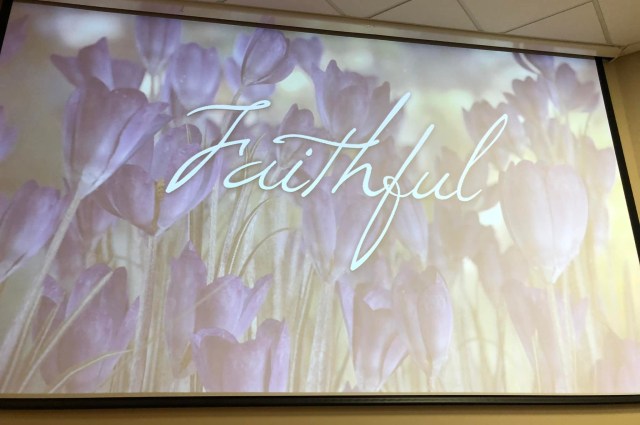
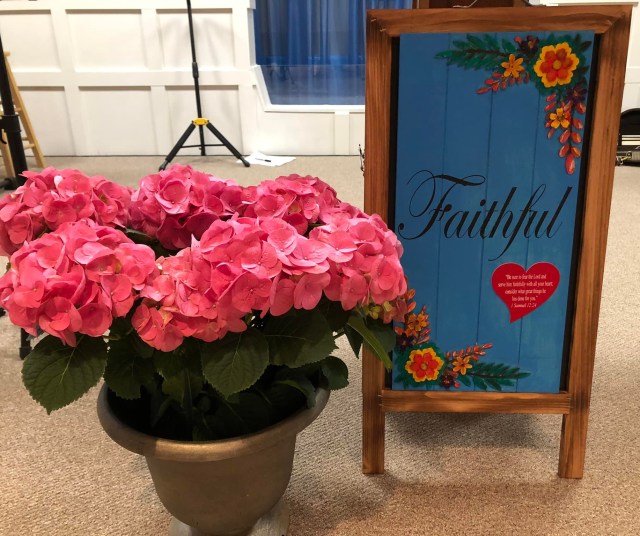
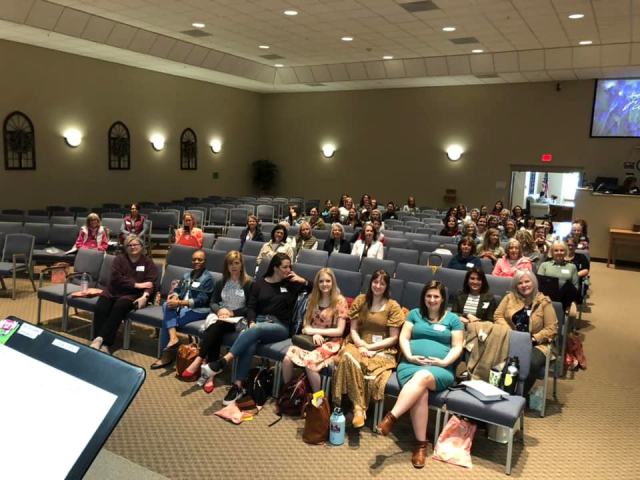
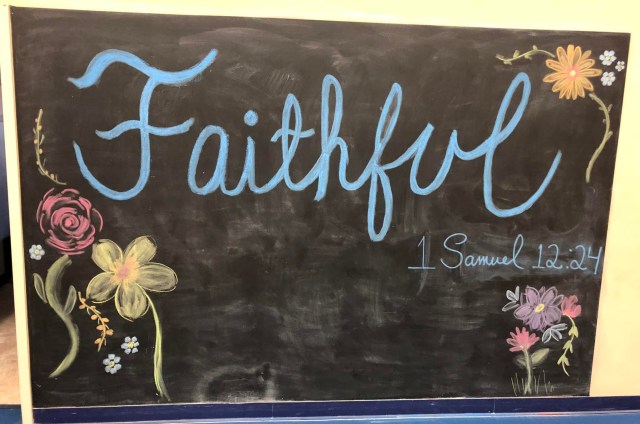
Report Back: Faithful Conference

I had a wonderful time last week sharing and fellowshipping with the ladies of Providence Bible Church (and the surrounding area) in lovely Culpeper, Virginia, at the Faithful conference!

I arrived in Culpeper on Thursday evening, so there was plenty of time to rest up and prepare before the conference.

My hosts for the weekend were the perky Miss Katie and her aptly named husband, Happy. They live in a beautiful home on the lake, and I loved hearing their testimony of coming to Christ, and to each other!

My view while working Friday morning
Some sweet hostess gifts were waiting in my room

Friday, Katie was kind enough to treat me to a delicious Italian lunch followed by a little sightseeing.

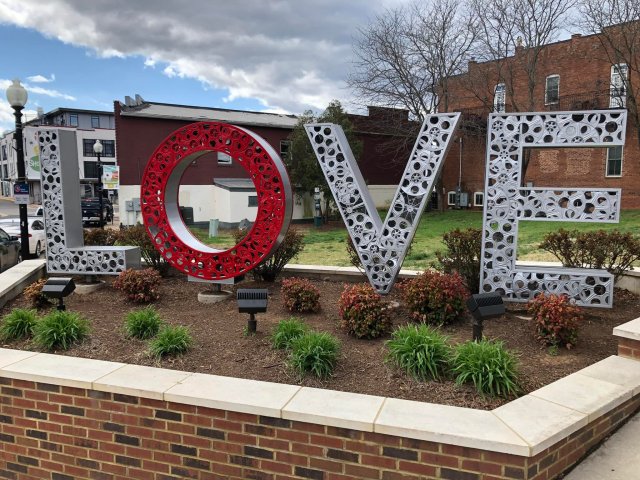
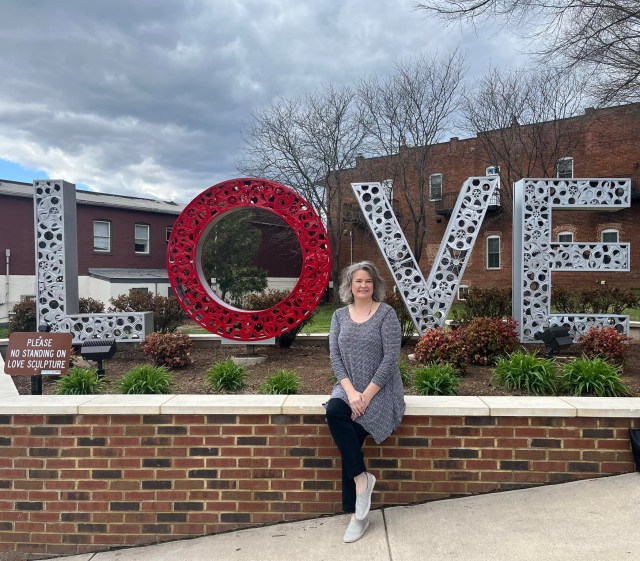
Culpeper is home to the Packard Campus of the Library of Congress’ National Audio-Visual Conservation Center, “where the Library of Congress acquires, preserves and provides access to the worldโ€™s largest and most comprehensive collection of films, television programs, radio broadcasts, and sound recordings.”. On my trip to Faber, Virginia, last year, I learned that the local flavor is often captured in a LOVE (“Virginia is for lovers”) sculpture. Culpeper’s is made of film reels, paying tribute to the Conservation Center.

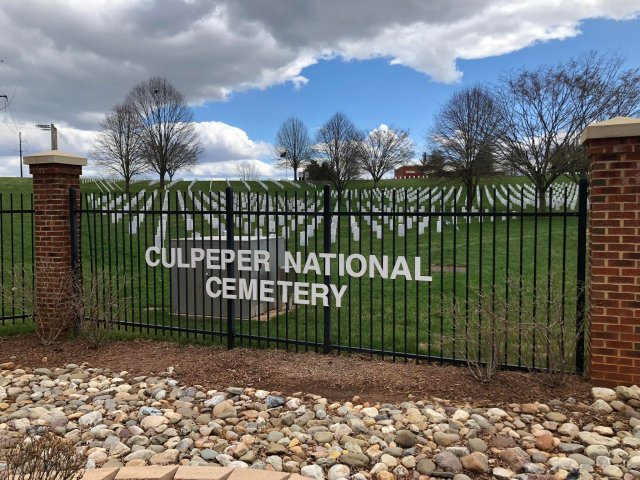
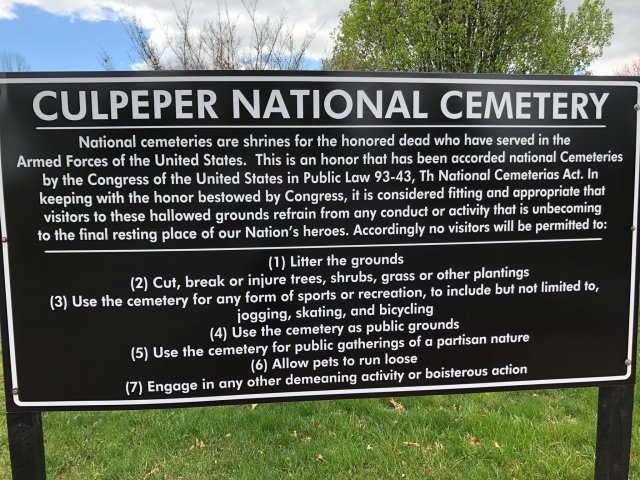
We also stopped by Culpeper National Cemetery. Originally established in 1867 as a burial ground for Union soldiers who were killed in the area during the Civil War, the cemetery is now the final resting place for over 7500 of our nation’s heroes.


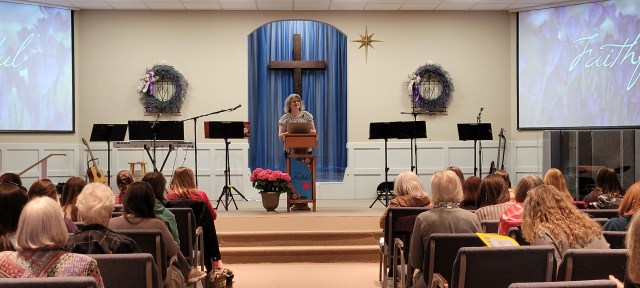
Friday night, it was time to get down to the business of teaching and studying God’s Word. (Conference audio/video will be available on PBC’s website as soon as they’re able to get it processed and posted.)

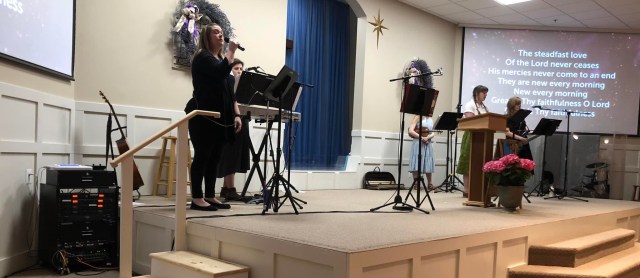
After check in and worship…

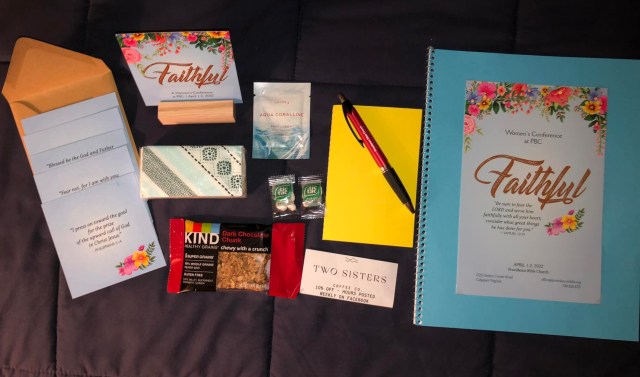
Check out what was in the ladies’ “swag bags”! I really liked the little packet of memory verses (about faithfulness, of course!) with the wooden card holder. What a great idea!
These ladies did a wonderful job leading us in song and prayer

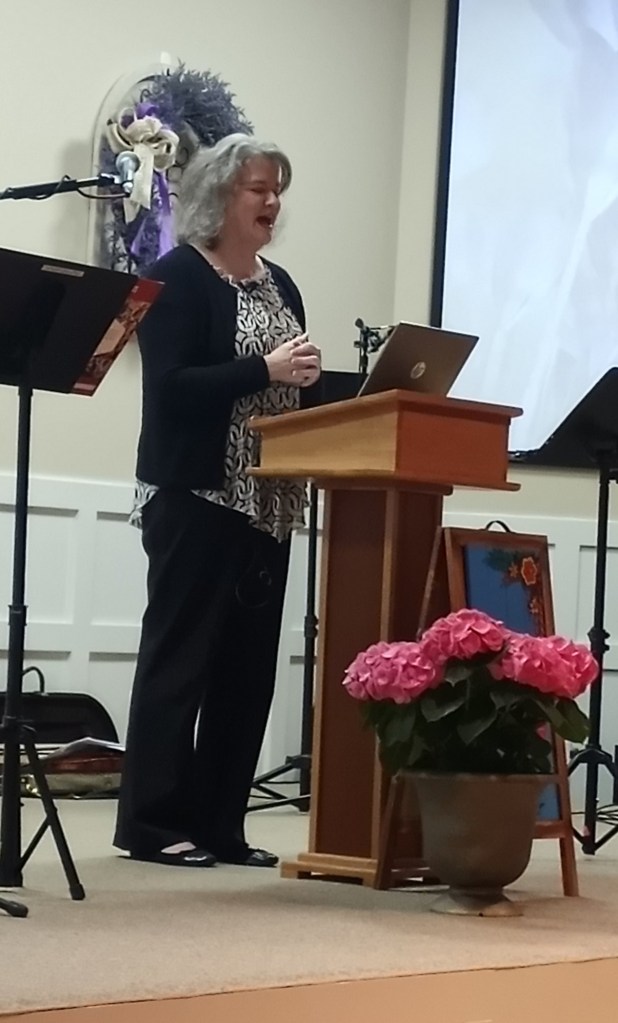
…we kicked things off with Faithful to the Word, a teaching session on the basics of how to study the Bible.

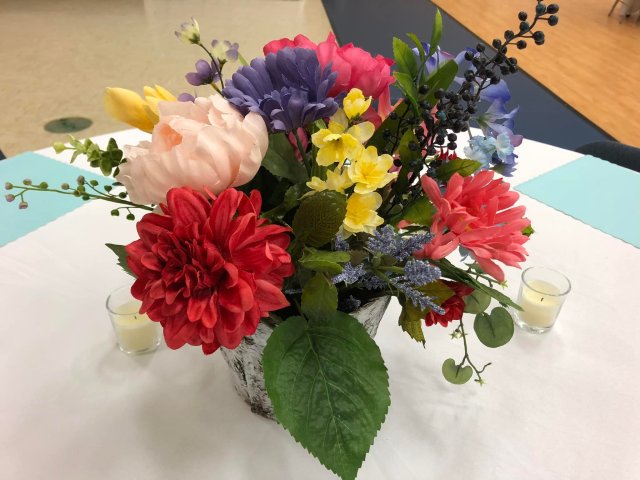
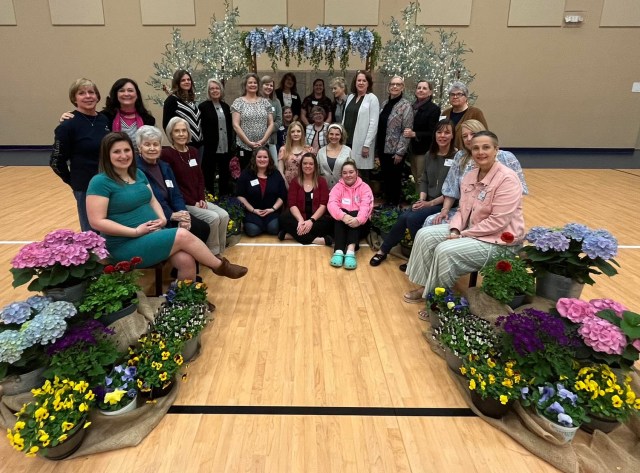
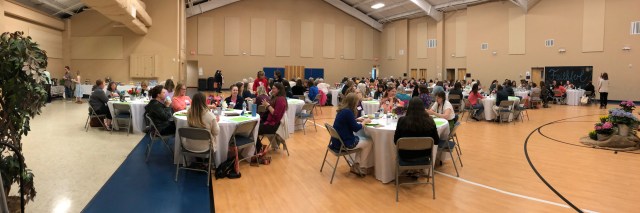
Next up was a hearty baked potato bar for dinner in the gym. Didn’t the planning committee do a fabulous job of decorating?

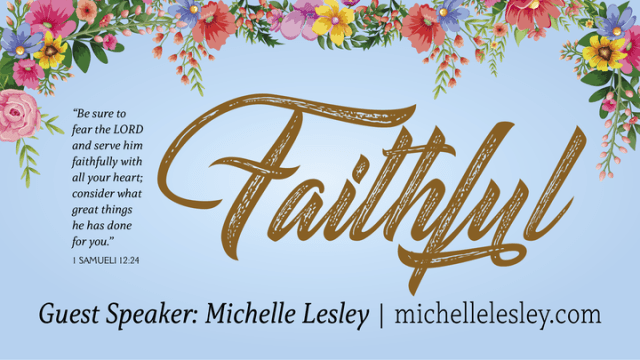
Don’t you love how all the flowers match the flower art on the Faithful materials (programs, PR materials, etc.)? I love continuity of theme, and these ladies did it spectacularly!

Isn’t this rough-hewn bench gorgeous? You can see it sitting under the arbor in the picture taking area in the photo above. Heather Edgecombe, wife of PBC’s pastor, Jarred, is the one who initially reached out to me last year to speak at the Faithful conference. A few months into planning, her cancer recurred, and, sadly, she was unable to attend the conference due to undergoing treatment for it. A husband and wife team created this masterpiece to raise money for Heather’s treatment. Y’all take a moment to pray for Heather, please.

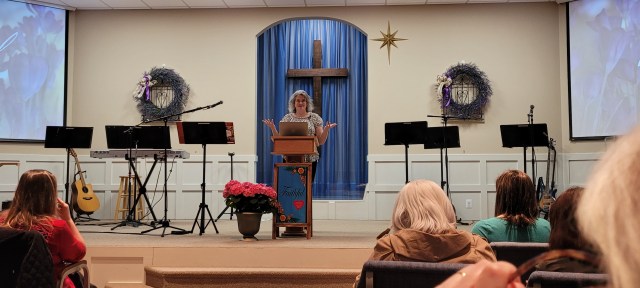
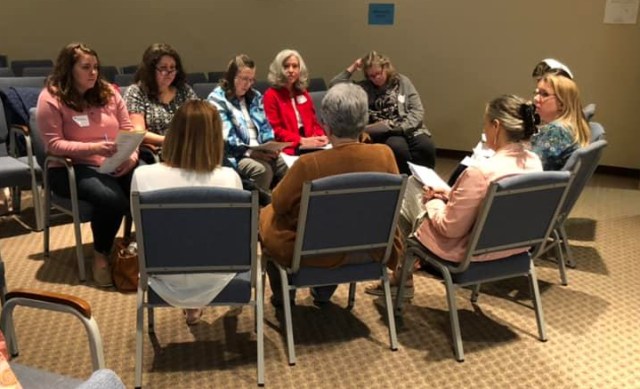
Our last session for the evening was Faithful to Our Roles, discussing the beauty of the biblical role of women in the home and in the church. The ladies then broke into discussion groups to talk over the material.

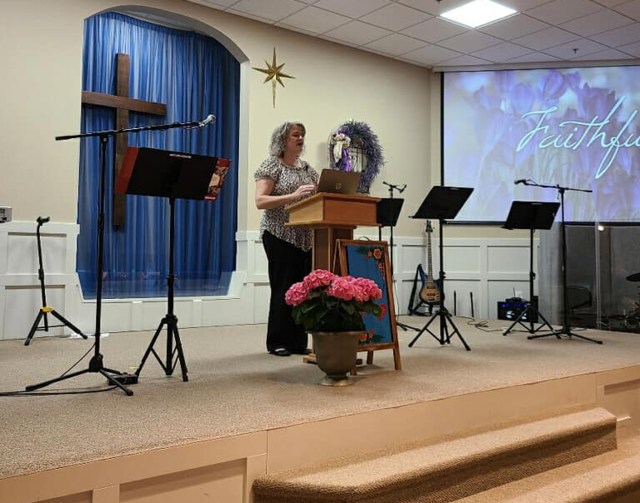
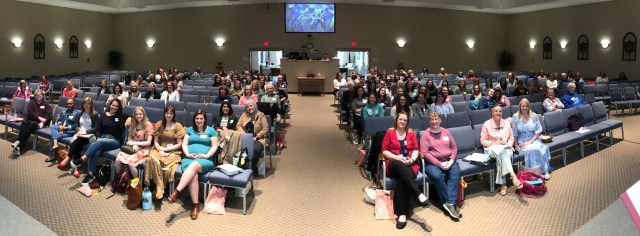
Saturday morning started bright and early with Faithful Discernment. What is discernment, and how can you tell if what you’re being taught matches up with Scripture? Faithful in Suffering was our final teaching session. As Christians, there’s a hero for our suffering, there’s hope in our suffering, and, in Christ, there’s a way to handle our suffering.

3
3
4

After teaching, the ladies rejoined their discussion groups to share what they had learned.

Our last gathering was a fun time of Q&A.

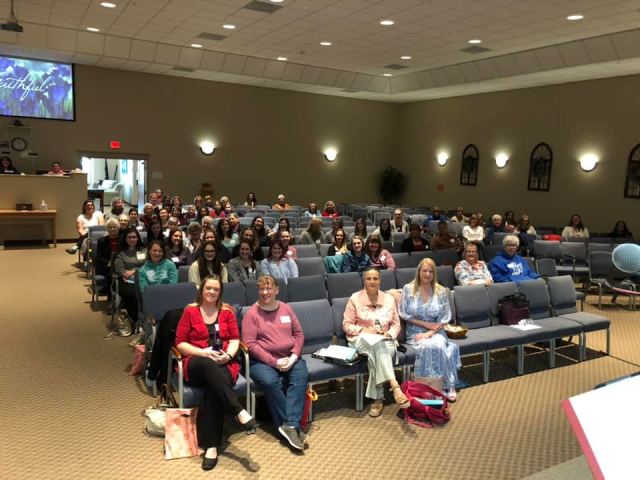
Ladies from all over Virginia and from as far away as Tennessee, Kentucky, New Jersey, Maryland, and North Carolina came out for Faithful! It was a great turn out!

Lunch and fellowship was a great way to end the day!

Just a bit more sightseeing before heading home – we passed by the Pentagon on the way to the airport. I was told this was the side of the building that the plane crashed into on 9/11. Sobering.


Many thanks to Heather, Julie, Lesley, Katie and Happy, Danielle and Rob, and all of the other ladies and gentlemen of Providence Bible Church who worked so hard to make Faithful a great conference, took care of all my needs, and made me feel so welcome. If you’re ever in the Culpeper area, be sure to stop in to PBC for a visit!


If your church or organization is ever in need of a speaker for a womenโ€™s event, Iโ€™d love to come share with your ladies as well. Click here for more information.


Photo Credits

Photo of Michelle in front of “LOVE” sculpture by Katie Hash.

Photos marked “1”- Photographer unknown (if it was you , let me know so I can credit you! :0)

Photo marked “2” by Melissa Morris

Photos marked “3” by Julie Smith

Photo marked “4” by Lesley Lezcano

All other photos by Michelle Lesley.