
Speaking Engagements

Report Back: Jesus Camp Nantucket Retreat 2022 (and 30th Anniversary Jaunt!)

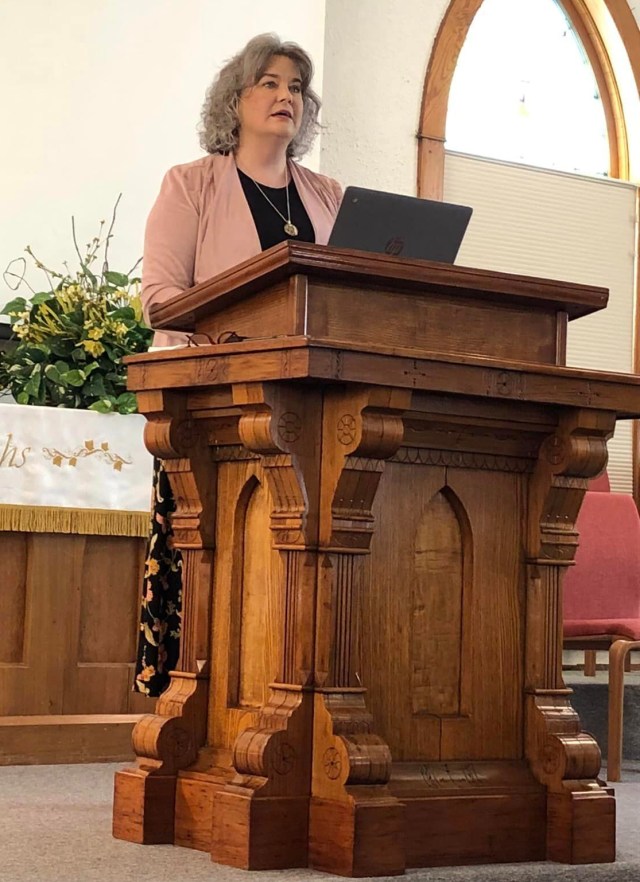
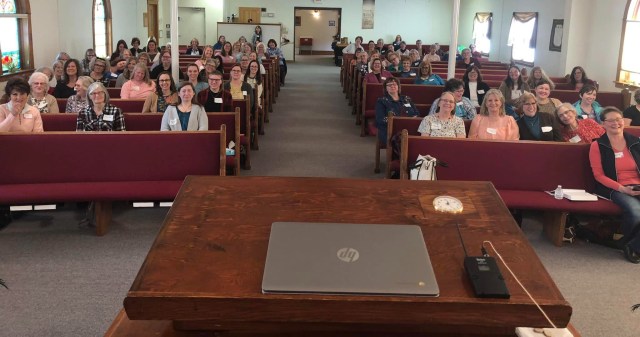
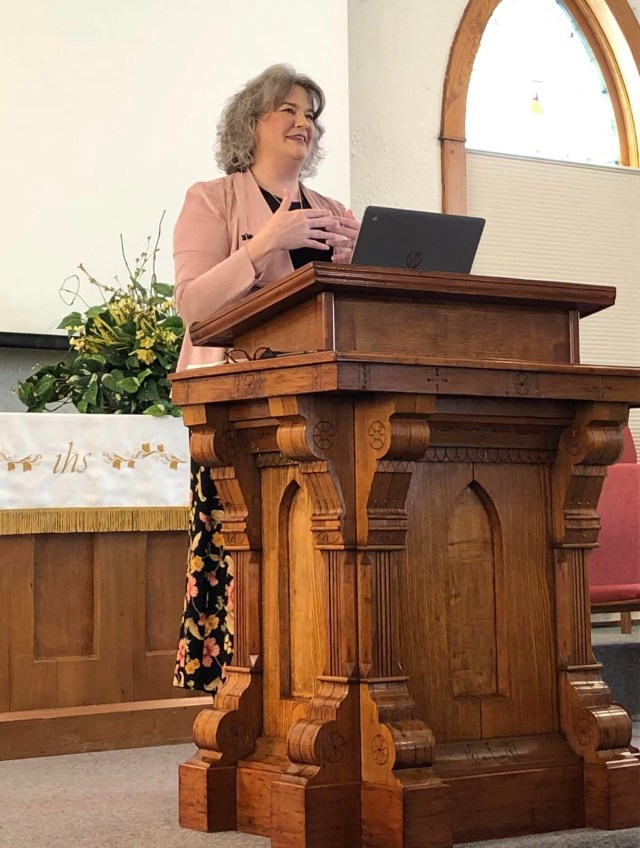
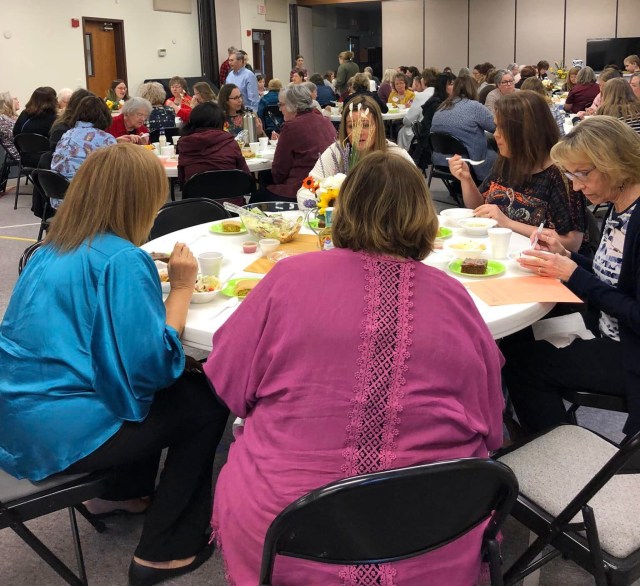
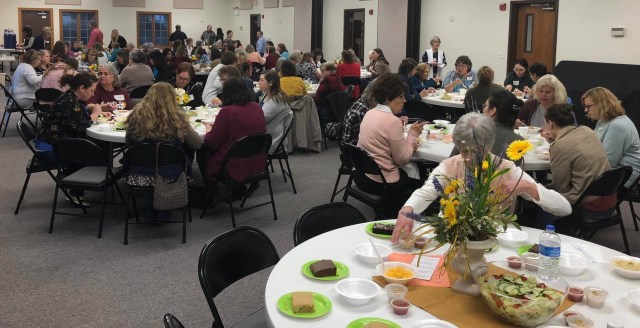
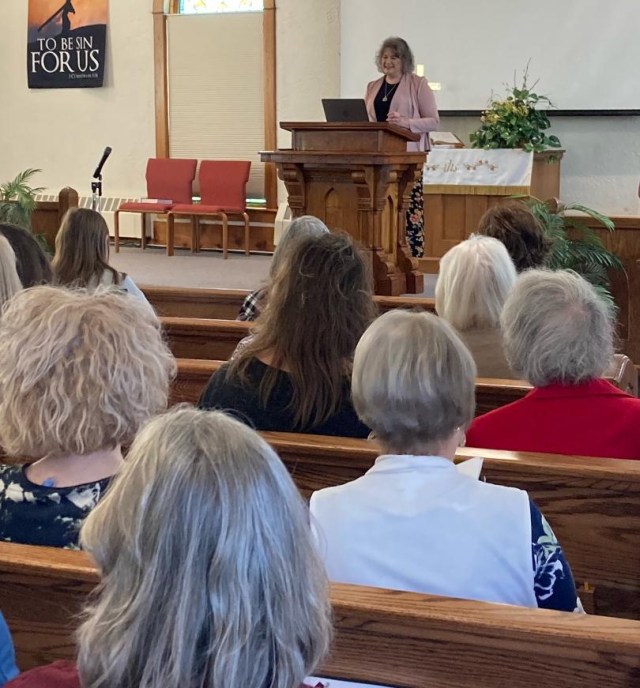
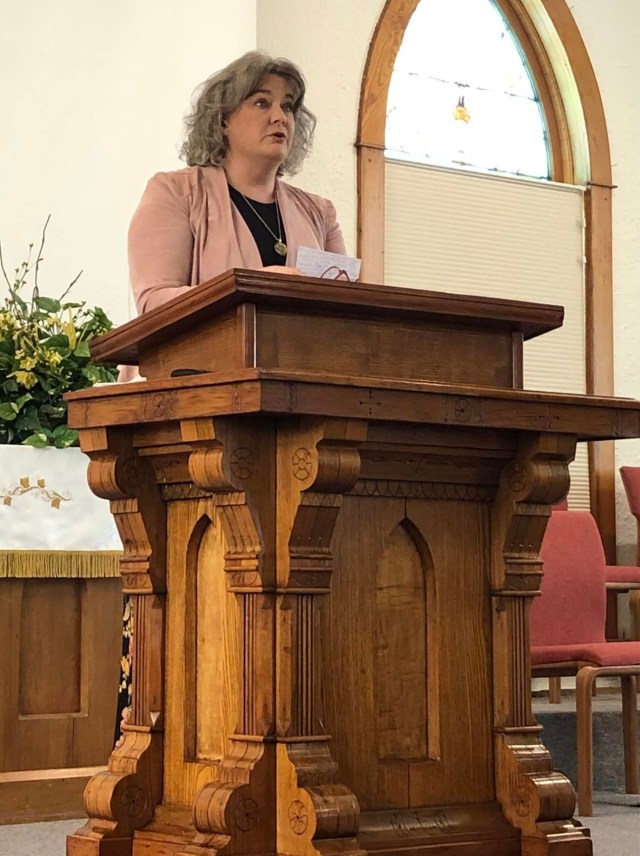
It brought me such joy, recently, to share with a great group of ladies at the Jesus Camp, Nantucket Women’s Retreat on Nantucket Island, Massachusetts. Conferences are super for reaching out to women in your community and surrounding areas, but retreats provide an intimate atmosphere that’s conducive to both formal instruction and informal, one on one discipleship. And we had plenty of time and space for both! Many thanks to Darcy Creech Marelli for opening up her lovely homes and hosting this biannual time of refreshing for women from all over the country.

I love the way Darcy decorates her homes with these varied and striking maps of Nantucket!

My husband doesn’t often get to come with me to speaking engagements, but since we’ll be celebrating our 30th anniversary in December, we decided to make this a “working second honeymoon,” driving up to the retreat together, exploring Nantucket, and visiting any sites that caught our fancy on the drive home. (In case you’re wondering, it’s about a 24 hour drive from our home in Baton Rouge, Louisiana, to Hyannis, Massachusetts, where we caught the ferry to Nantucket Island.)

Our view from the ferry as we docked in Nantucket.

Darcy and her friend Sheree graciously picked us up at the ferry and whisked us out to the High Point, the Jesus Camp property, a lovely home and guest house perfect for hosting retreats and other getaways. (Ladies if you enjoy admiring beautifully appointed homes, be sure to check out the slideshow and video of High Point here. You’ll love the nautical and local island themes!)

Things got off to a cozy start Wednesday night with the arrival of all the retreat attendees. We shared a delicious dinner, then had the opportunity to hear everyone’s testimonies. Our backgrounds varied from those of us who were born and raised in church and came to know Christ at an early age to those who had survived abuse, or walked on the wild side, or were involved in heretical church backgrounds before coming to Christ later in life. There is no such thing as a “boring” testimony. Every new birth in Jesus is a miracle of His mercy and grace.

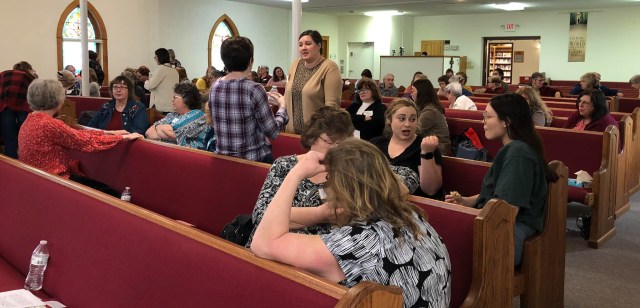
Thursday’s teaching started with God’s Word, Our Foundation, discussing the necessity, authority and sufficiency of God’s Word. We rounded out our instructional time with Teach What Is Good: Discipling Women in the 21st Century, examining biblical and practical discipleship and women’s ministry. Each session was followed by a time of Q&A and discussion groups.

Friday, session 1 was Hooked on a Feeling: Living By God’s Word Instead of Our Emotions. As Christians, our feelings don’t get to lead us around by the nose, we submit to the authority of Scripture instead. Our second session was Discernment 101. Both teaching sessions were again followed by Q&A and discussion groups. Many of the ladies were new to discernment and were disappointed to learn that some of their favorite ministries, authors, and teachers are false teachers. But they were all very gracious and receptive, and I had several fruitful conversations with women who were eager to learn.

During free time, the ladies enjoyed chatting around the dinner table, relaxing in the pool and hot tub, and trips into town and to the beach.

Retreat swag! Darcy kindly provided these resources and gifts for retreat attendees, and gave me a special treat of honey from High Point’s hive!

Ana, a retreat attendee who is originally from Guatemala but now resides in Ohio, brought me these lovely gifts. Homemade buckeyes and Guatemalan gifts and coffee. The sale of this coffee supports the orphanage and foster care home Ana and her husband still operate in Guatemala.

All too soon, it was time to say goodbye. It was a wonderful time of fellowship in the Lord, and I’m looking forward to going back next year! Many thanks to Darcy and her assistant, Otilia, who worked so hard to host a great retreat, took care of all my needs, and made my husband and me feel so welcome.


If your church or organization is ever in need of a speaker for a womenโ€™s event, Iโ€™d love to come share with your ladies as well. Click here for more information.


When the retreat was over, my husband, Scott, and I had the opportunity to explore the island a bit. We went out to Great Point, the farthest point on the island, and had a wonderful time seeing the seals and the Great Point lighthouse. The shops downtown were charming, and we enjoyed an authentic Nantucket dinner at The SeaGrille.

The next day, we boarded the ferry and headed back to the mainland. Since Plymouth, Massachusetts, was only 30 minutes away, we decided to make that our first sightseeing stop.

At Plimoth Patuxet we saw recreations of a Patuxet home site and 17th century English village. We enjoyed seeing Wampanoag (Indian) boats, dwellings, and a cooking demonstration. The Wampanoag word for the succotash stew (turkey, beans, corn, celery, onions, etc.) our guide was making means โ€œthrow it inโ€. (There’s a running joke in Louisiana that that’s pretty much what โ€œgumboโ€ means, too.) They would just throw in whatever they had and keep adding to it. We sampled some at the visitorsโ€™ center, and it was pretty good – basically a turkey and vegetable soup. We also saw the English village, made up of several Pilgrim homes and a fort.

We loved the beautiful fall foliage and scenery in the Plymouth area.

Our next stop in Plymouth was Jenney family grist mill. It was situated in a lovely little area, on, of course, a running stream. It still operates several times a week.

From the mill, we walked over to Plymouth Rock. It sits ensconced in a little pavilion on the side of the road. No velvet ropes or admission fees, no big hoopla. It’s just there. Along the way we saw some other Pilgrim points of interest including the Scrooby Leyden Church / Mayflower Meetinghouse and the Church of the Pilgrimage, along with monuments to Governor William Bradford and Elder William Brewster.

Our final stop in Plymouth was the Mayflower II, a replica of the original Mayflower. It was much smaller than I expected, and very spare in its appointments.

My husband is a JFK buff, so the next day we drove the half hour to Boston and visited the John F. Kennedy Presidential Library and Museum on the campus of the University of Massachusetts. (If you’d like to hear the “My Daddy Is President” song, click here.)

I had wanted to visit New York City on our way home, but, unfortunately, we didn’t have time. This is as close as we got.

After Boston, we headed for Hershey, Pennsylvania, and spent most of the day at Chocolate World. We went on a ride that explained how chocolate is made, designed our own candy bars, went to a chocolate tasting, and took a trolley tour of the town.

And one last stop on our way home from Alabama. I finally got a chance to go to Buc-ee’s!


Photo Credits

All photos marked with a white star were taken by Ana Morales.

Photo of The SeaGrille courtesy of The SeaGrille.

All other photos by Michelle Lesley

Titus Bible Study

Titus: God’s Order of Service ~ Lesson 7- Wrap Up

Previous Lessons: 1, 2, 3, 4, 5, 6

Wrap Up

Questions to Consider

1. Was there anything new God taught you in this study that particularly impacted you? What was it, and why was it so significant?

2. How is your walk with the Lord different after this study than it was before?

3. What did you learn from this study about the nature and character of God?

4. What did this study teach you about the structure and order of the church? About the orderliness of God?

5. What did this study teach you about your role, function, and responsibilities as a church member?

6. Have there been any passages or concepts in this study that God used to convict you of disobedience and lead you to repentance? How will you walk differently in this area from now on?

7. Describe one specific, practical way you will apply to your life something you learned in this study.


Homework

Spend some time in prayer this week asking God to show you how to put into practice one thing you learned from this study.

Recite all of your memory verses from this study. Which one is most meaningful to you right now?

Titus Bible Study

Titus: God’s Order of Service ~ Lesson 6

Be sure to come back Wednesday, November 2,
for our wrap up lesson!

Previous Lessons: 1, 2, 3, 4, 5

Read Titus 3

Questions to Consider

1. Review your notes from last weekโ€™s lesson. How does that passage carry over to, impact, and set the tone and context for this week’s passage?

2. If we broadly characterize the lists of personal requirements in chapters 1&2 as character and behavior of Christians inside the gathering of the church, how would you broadly characterize the list of instructions in verses 1-2, 8b, 14? Do these instructions tend more toward character or external behavior? How does this compare with the requirements in chapters 1&2?

Let’s examine each of the instructions for church members in 1-2, 8b, 14:

Be submissive to rulers and authorities: Examine the cross-references for this phrase. What does this generally mean for law-abiding citizens today? Are there times when we shouldn’t obey our rulers and authorities?

Be obedient: Describe a Christian who walks in obedience in her daily life. To what and whom is she obedient? Is she subservient? Oppressed? How does her obedience look like Jesus’ example of obedience in the gospels?

Be ready for every good work: Notice this phrase doesn’t just say to do good works, but to be ready for every good work. What does it mean to “be ready” for every good work? How does being ready – being prepared, organized, planning ahead, etc. – help us get more good works done, and done well? How does this concept of being ready line up with the theme of “setting things in order” in the book of Titus?

Speak evil of no one: Wait a minute, didn’t Paul just say (1:12-13) it’s true that Cretans are “liars, evil beasts, lazy gluttons” and that they should be rebuked sharply? Isn’t that “speaking evil” of them? Why not? What does it mean to speak evil of someone? How is that different from speaking hard truths about someone or something when the situation requires it? Some professing Christians would say that warning against false teachers is “speaking evil” of them. Is this true? Why not?

Avoid quarreling: Give some examples of what this might mean in your own life. What does it not mean? (For example, does it mean not to contend for the faith? Never to oppose or correct anyone?)

Be gentle: What does it mean to be gentle as a Christian? Do Scripture’s various admonitions and descriptions of gentleness mean there is never a time to be assertive, even harsh, or is it more of a general descriptor? Consider again Paul’s instruction in 1:13 to “rebuke them sharply,” and these Scriptures.

Show perfect courtesy toward all people: Apply the questions asked in the sections above (speak evil of no one, avoid quarreling, and be gentle). Does showing perfect courtesy to everyone mean never to confront someone, stop someone from hurting others, etc., or is it just a general instruction not to be a rude person? Consider these passages.

Devote themselves to good works: Why do you think Paul mentions this twice (8b, 14)? What is the difference between being devoted to good works and being ready for every good work? How do the two go hand in hand? Some Christians can be a bit “triggered” by the phrase “good works,” afraid that any time they see or hear it, the writer or speaker is saying that we are saved by our own good works. Is that what Paul means by “devoting themselves to good works”? How do you know? (Hint: Look ahead to v. 5.) What is the difference between a person who thinks she can be saved by her own good works and a person doing good works out of love for Christ and obedience to Scripture because she’s already saved?

Help cases of urgent need: Think about socio-political culture of the first century. What sort of “cases of urgent need” might have presented themselves in the churches of Crete? How does your church family work together to “help cases of urgent need”?

Not be unfruitful: Examine the cross-references listed. What does an unfruitful church or individual Christian look like? Why does Paul admonish against unfruitfulness? How can the church and individual Christians be fruitful instead?

3. Examine verses 3-7. How do verses 3-7 answer the question of why Paul wants Titus to “remind them to be…” in verses 1-2? (Hint: What’s another word you could substitute for “For” at the beginning of 3?) How does this “why” apply to your life and behavior today?

How does verse 3 describe lost people? How does each descriptor in verse 3 describe you prior to salvation? Why is it good, from time to time, to remember how we lived and what we were like before we got saved?

Verses 3-7 explain how salvation happens. Work carefully through these verses and explain each step of the process in your own words.

Imagine you had a friend who believed in works righteousness – the idea that we can earn our salvation by our good works alone or by Jesus plus good works. Using verses 3-7, how would you explain salvation by grace alone, through faith alone, in Christ alone to her?

4. Examine verses 8-11. List and explain the reason for each specific instruction God gives Titus in these verses.

Notice God’s instruction to Titus (and all pastors) to insist (8) on these things in 1-7. Describe what it would mean for a pastor to insist on “these things” in verses 1-2, verse 3, and verses 4-7. (It might help to look at 8 in a few different translations.) How does this fit with the perspective many hold today that pastors should be “nuanced” and “winsome” when addressing these things?

Summarize God’s desire for the church in these verses:

  • 8- God wants the church to focus its efforts and attention on what? Why?
  • 9- God does not want the church to focus its efforts and attention on what? Why?
  • 10-11- What are Titus / pastors to do if someone in the church starts stirring up dissension by getting those two things (8-9) backwards? Why?

5. Sometimes we can accidentally slip into thinking of people like Paul and Titus as characters in a story. How can passages like verses 12-15 serve as an endearing reminder that they were real people with real Christian friends living real day to day lives just like you and me? Has it ever occurred to you that, even though you can’t see them, Paul and Titus are – right this very minute – your brothers in Christ, and you are their sister in Christ, just as much as the brothers and sisters in Christ you see every week at church? What are your thoughts about that?


Homework

Verse 1 says: “Remind them to be submissive to rulers and authorities”. Christians submitting to the authority in our lives is a major theme of the New Testament. Do a study of this theme. Type into your concordance words like “submit,” (often, if you’ll type in, for example, “submi,” your concordance will give you all forms of the word: submitting, submission, submits, etc.) “obey,” “authority,” etc., and examine the verses that pop up. Why, in general, does God want Christians to submit to authority? Are there times when we should not submit to particular authorities? How do Scripture and godly wisdom play into this? Who are the authorities in our lives that God wants us to submit to, and why? How does submitting to authority grow us, sanctify us, and make us more like Christ? What does our submission to authority teach a watching world about submitting to God?


Suggested Memory Verse
Titus Bible Study

Titus: God’s Order of Service ~ Lesson 5

Previous Lessons: 1, 2, 3, 4

Read Titus 2:7-15

Questions to Consider

1. Review your notes from last weekโ€™s lesson. How does that passage carry over to, impact, and set the tone and context for this week’s passage?

2. In lesson 4 (link above, see question 2) we noted that 1:9 and 2:1 bookend the section (1:10-16) on false teachers. Today, note how 2:1 and 2:7-8 bookend the section (2:2-6) on the character and behavior qualities of church members. What aspect(s) of the pastor’s life, ministry, and/or character does verse 1 address? Verses 7-8? How does the spiritual health, doctrinal soundness, and maturity of the church both begin and end with the pastor? How can both a pastor’s teaching (2:1) and his character / behavior (7-8) impact the church toward godliness? How can the pastor’s teaching and character / behavior set a godly example for older and younger men and women (2:2-6)?

3. Compare the exhortation to older women in 3-5 to the exhortation to pastors in 7-8, especially the “so that’s” in 5b and 8b. What differences and similarities do you see? The “so that’s” explain the purpose of each of these instructions. What are those purposes? Review your answers to this question alongside your answers to question 5 from lesson 4 (link above).

4. Why do the character and behavior qualities of bondservants (9-10) seem almost to be added as an afterthought – outside the “bookends” of the pastor in 2:1 and 7-8 – to this section? Is it because they are somehow “second class citizens” in the church? Describe the character and behavior qualities of bondservants in 9-10. Why are more instructions given to bondservants than some of the other church members in 2:1-8? While there are character qualities and behaviors that are unique to, say, pastors and women, how do the character qualities and behaviors of bondservants translate to all of us who are servants of Christ? Compare the “so that” of bondservants (10), stated in the positive, to the “so that’s” of women (5) and pastors (8), stated in the negative.

5. Examine 11-14. What does the word “For” mean at the beginning of 11? Summarize the main points of 11-14. What is the reason(s), in these verses, for the instructions that have been given in 2:1-10, and even since 1:1? Why do we as individual Christians and as the church body comport ourselves as we do and carry out the tasks we carry out?

Carefully study verse 12. What does it look like for…

  • Christians in general
  • the members of your local church
  • you, personally

…to “renounce ungodliness and worldly passions, and to live self-controlled, upright, and godly lives in the present age”? What are some specific things each of those groups would do differently in their particular situations if they were renouncing ungodliness, etc.? How does God’s grace “train” (11) us to live the way verse 12 describes? Compare the description of God’s grace “training” us (11-12, 14) to pastors training and teaching the congregation (1:9, 2:1, 15), and to older women teaching and training younger women (2:3-5). Notice how each (God’s grace, pastors, older women) trains in both the positive (“do this”) and the negative (“don’t do that”). How does teaching / training from pastors and older women reflect the way that God’s grace trains each of us?

What is the purpose for which Christ gave Himself to redeem us (14)? How is Christ giving Himself for us to redeem us (14) the impetus for renouncing ungodliness, etc. (12)? Is it possible to live the way verse 12 describes if you have not been redeemed by Christ? Why?

Imagine you have a “Christian” friend whose outlook on life is, “I prayed the prayer and walked the aisle. I’ve got my ticket to Heaven punched, so it doesn’t really matter how I live between now and my death. I can do whatever I want.” How would you correct her with verses 11-14?

6. Who is the “you” in verse 15? How does this verse – and Paul continually circling back to Titus – help remind us that the book of Titus is a pastoral epistle? What is the purpose of a pastoral epistle?

Notice the emphasis on a pastor’s authority in verse 15. Consider the authority of your pastor and other pastors you may know in light of this verse. Why is it important for a pastor to exercise godly authority and oversight over his congregation? Compare verse 15 to these passages. Describe biblical pastoral authority.


Homework

Study the theme of self-control in Titus 2. How many times is self-control mentioned, and in which verses? For which individuals or groups in the church is self-control a required character trait, and why? How does self-control, exercised by each individual and group in the church, lend itself to the orderliness, unity, and spiritual maturity of the church? What specific ways can you personally, and the older and younger women in your church practice self-control?


Suggested Memory Verse

Mailbag

The Mailbag: Potpourri (Teaching co-ed college Sunday School… “Losing it” with attackers… “Tough” vs. “fluff” Bible studies… Why “Bye Begg”?)

Welcome to another โ€œpotpourriโ€ edition of The Mailbag, where I give short(er) answers to several questions rather than a long answer to one question.

I like to take the opportunity in these potpourri editions to let new readers know about my comments/e-mail/messages policy. Iโ€™m not able to respond individually to most e-mails and messages, so here are some helpful hints for getting your questions answered more quickly. Remember, the search bar (at the very bottom of each page) can be a helpful tool!

Or maybe I answered your question already? Check out my article The Mailbag: Top 10 FAQs to see if your question has been answered and to get some helpful resources.


Iโ€™ve been asked to teach a college/career Sunday School class. Itโ€™s couples that are married, some engaged. I would probably be able to co-teach with a man. Should I as a woman not be teaching that class since it has men and not really youth?

It’s really great that you’re giving this some thought and asking that question!

You’re correct – college aged young men are men, even if they are young. You should not be teaching them, your church is wrong for asking you to teach them, and your pastor is wrong for allowing women to teach men in your church. It isn’t just wrong for you, individually because you would be violating Scripture, it’s also wrong because, if you did it, you would be leading these young men to think that it’s OK for women to teach men. You would be teaching them by your actions that it’s OK to ignore or disobey any command of God that’s inconvenient or that we don’t like. (This is one of the reasons I also discourage women from teaching youth/teen boys.)

As far as “co-teaching” goes, it depends on what you and your church mean by that term. What the term “co-teaching” actually means is that you and another teacher(s) take turns teaching the class the Bible lesson. If that’s how you and your church are using that term, then, no, you shouldn’t be co-teaching. It doesn’t matter whether you’re teaching every week or every other week or once a month or whatever. You’re still teaching men the Bible, and that’s still a sin.

However, some churches/Christians will say that, for example, a husband and wife are “co-teaching” a Sunday School class when what they really mean is that the husband is doing all of the actual teaching and the wife is taking care of the administrative duties of the class like making the coffee, taking attendance, organizing fellowships, contacting those who have been absent, etc., but not doing any of the actual teaching. That is absolutely fine, but they need to stop calling it “co-teaching” – a) because it’s not, and b) because it leads others to believe they and their church are sinning when they’re actually not.

I would encourage you to give some thought and study to my Rock Your Role series of articles, starting with Jill in the Pulpit and Rock Your Role FAQs (start with #13), then make an appointment with your pastor to politely and kindly ask him why he’s allowing women to teach men in your church. If he brushes you off or tries to make you feel like the bad guy, it’s time to find a new, doctrinally sound church. Churches that allow or encourage women to teach men are just as much in sin as if they were allowing or encouraging church members to steal from the offering, or remain in a homosexual lifestyle, or if they taught that abortion is OK. No one should be joined to a church that’s in active, unrepentant sin.


Curious- Do you ever lose it? As in raise your voice and yell at someone who attacks you over doctrinal issues?

I don’t personally recall ever having lost it quite like that, but that has nothing to do with my stellar level of self control or personal holiness or anything like that. It has more to do with the fact that when I’m attacked, it’s virtually always online – social media, email, or blog comments – and virtually always by strangers. That affords me ways of dealing with the person or comment that aren’t feasible when you’re dealing with a friend or loved one in person.

I have gotten into a few exchanges on social media in which I was convicted that I crossed the line of anger or I squandered time in an argument that I should have stewarded better. In those cases, I’ve repented and asked the person’s forgiveness. And I’ve tried, since then to have a much stricter Matthew 7:6 policy.

The handful of times I’ve been attacked in person by someone I know, I was usually prepared because the meetings were pre-arranged for the specific purpose of excoriating me for standing on the truth of Scripture and decrying false teachers and false doctrine. I had my notes and thoughts in order and was prepared beforehand not to lose it.

The one or two times I’ve been spontaneously attacked in person by someone I know were relatively brief in duration, and I pretty much stood there in stunned silence with my mouth agape at the shock of a professing Christian acting that way. Even after all these years, I don’t think that’s something I’ll ever get used to.

So, to my recollection, no, I’ve never lost it like that in a similar situation, but mainly because I haven’t been in a similar situation.


I’m a co-leader of a women’s group at our church.. at first the other leader and I were on the same page.. no fluff. We are currently doing J.I. Packer’s book, Knowing God, and all I hear is, “It’s too hard!”. They all want fluff but 3 of us..How do I change their minds?… I’ve been praying on how to handle this. I can’t do fluff! They want Beth Moore type stuff. That is a hard pass for me. What should I do?

Atta girl! Fluff is not the answer, and we should always take a hard pass on false doctrine.

What should you do? You do exactly what you do with a toddler who only wants to keep eating candy rather than healthy food: You keep feeding her healthy food. You don’t give in to unbiblical, unhealthy childish whims. There’s not a single biblical passage that teaches us to coddle Christians in their immaturity. Scripture always instructs us to grow up.

That being said, we start babies on baby food, not steak. I haven’t read that particular book by Packer. Perhaps it is a little too tough for them, and the reason they’re suggesting “fluff” type authors and studies is that that’s all they know to suggest as an alternative.

Can I make a couple of suggestions? When you finish the Packer book (or, if you think it’s wiser, just discontinue it now)โ€ฆ

  • Grab one of my Bible studies and take them through it. Maybe one of the shorter ones like Colossians or Ruth. All of my studies are free, so if it turns out not to be a fit, nobody has lost any money. Also, you know where your ladies are, maturity-wise, and you can simplify or skip any of the questions you think are too tough for them at this moment. You can tailor the study for the ladies of your particular church.
  • If you absolutely have to do a book study rather than a Bible study, I would recommend my friend Allen Nelson’s book From Death to Life: How Salvation Works for two reasons: a) It’s a lot shorter, and probably simpler, too, than Packer’s book, and b) Often the reason women clamor after false teachers is because they’re not genuinely saved (John 10). This book is a wonderful, simple exposition of the gospel.

“Tough” and “fluff” aren’t your only two options. The key is to meet your ladies where they are, set the bar a little higher, and help them grow to maturity.


Why is Alistair Begg no longer listed at your Recommended Bible Teachers tab?

February 2024 UPDATE: Due to recent events, this section unfortunately became too lengthy and too much of a distraction to the rest of this article. I have explained why I removed Begg from my recommends and have gathered all of my information about him in one stand-alone article here.


If you have a question about: a Bible passage, an aspect of theology, a current issue in Christianity, or how to biblically handle a family, life, or church situation, comment below (Iโ€™ll hold all questions in queue {unpublished} for a future edition of The Mailbag) or send me an e-mail or private message. If your question is chosen for publication, your anonymity will be protected.