I’ve been married to a minister of music for over 20 years. My husband has served at many different churches in a variety of capacities: on staff, interim, supply, revivals, conferences, retreats, etc. Over those 20+ years and in those various capacities, I’ve observed a number of things about him, pastors, church musicians, and congregations from a unique vantage point.
Now, with a little help and a lot of input from a few sister minister of music’s wives, it’s true confession time. Time for us to tell all…
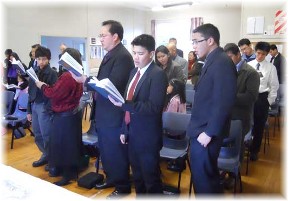
Sing, Sing a Song… Singing is often the only opportunity church members have (besides the offering) to take an active role in worship. Let’s all take advantage of it!
The music portion of the worship service is just that: worship and service, but sometimes we can slip into thinking of it as “filler time” before the “main event” of the sermon. If we’re spending the music time chatting with our friends, checking Facebook on our phones, knitting, or clipping our nails (sadly, yes, I’ve seen all of those happen) aren’t we robbing God and ourselves of the precious few hours per week we set aside for worship? Is it fair to God to spend the time we’re supposed to be worshiping on these kinds of distractions? God commands our worship and God deserves our worship. So, let’s give God our full attention and worship Him!
R-E-S-P-E-C-T – find out what it means to your minister of music. The minister of music doesn’t just roll out of bed on Sunday morning, jump up on the platform, and wave his arms around for thirty minutes. He works hard during the week to plan a worship service that honors God and grows and trains the congregation spiritually. He often does so amid a number of challenges: the varied talents of his accompanists, a hymn request by the pastor or a church member, bugs in the sound system, musicians going out of town, the choir soloist getting the flu. He rehearses with the instrumentalists, the praise team, the choir, and others. When he stands in front of us to lead the music, he deserves the same respect we give the pastor when he preaches or a teacher imparting knowledge or someone at work who’s making a presentation: our attention.
Someone To Watch Over Me Singing in the choir or on the praise team kinda goes hand in hand with being a minister of music’s wife, so we’re often up on the platform near our husbands. I need to tell you a little secret:
We can see you out there.
It is incredibly encouraging to see people who are focused on Christ and engaged with Him as they’re worshiping. It’s obvious they’re communing with their Savior and thinking about Him as they sing. It makes the minister of music feel like he’s been successful in helping them connect with the Lord in worship.
On the other hand, it’s very discouraging to see people with their hands stuffed in their pockets, not singing, or, conversely, mindlessly rattling off lyrics, and with a countenance that says, “I’d rather be at the dentist.” I once saw a televised worship service where the congregation was singing the hymn, “All that Thrills My Soul is Jesus.” It would be difficult to describe just how unthrilled most of them looked. The word “corpses” comes to mind.
Jesus said to love the Lord with all our heart, soul, mind, and strength. When we engage all four of those areas in worship, we’re not just pleasing Him by our obedience, He’s growing us into stronger, more mature Believers. And that’s the best encouragement of all for our minister of music.
Where He Leads Me, I Will Follow We minister of music’s wives are blessed that our husbands have, for the most part, worked under pastors who are supportive and set a great example for their congregations. Pastors, you have an enormous influence on your congregation even when you’re not aware of it. And one area in which you may not be aware that church members are watching and emulating you, even when we’re not aware of it, is during the music portion of the worship service.
Your congregation can see you during the worship time, whether you’re sitting on the stage or in a pew. What you convey with your own behavior about the importance of worship, we will absorb and reflect. If you are engaged and sing heartily to the Lord, we will get the message that you think God is worthy of all of our worship and we will follow suit. If you spend the worship time engaged in other activities, we will get the message that worship time is more like the coming attractions before a movie than a time to join in and commune with the Lord through what we sing.
Additionally, when your congregation is actively engaged in worship, it gets our hearts prepared to soak up the message you have for us in your sermon. So, when you’re worshiping with gusto, you’re not only setting a great example, you’re also getting people right where you want them: ready to drink in God’s word!
Part two of this article is on its way!
What are some things you appreciate about your minister of music or worship leader?
Or maybe I answered your question already? Check out my article The Mailbag: Top 10 FAQs to see if your question has been answered and to get some helpful resources.
Did Judas go to Hell when he died?
Although there is no Bible verse that says verbatim, “Judas died and went to Hell,” and we always have to be very careful with speculating, I believe we can safely infer from two passages (and their surrounding contexts) that Judas is, indeed in Hell.
The first passage is Matthew 26:20-25. This is the scene at the Last Supper when Jesus has just told the disciples that one of them (Judas) will betray Him. He says about His betrayer in verse 24, “woe to that man by whom the Son of Man is betrayed! It would have been better for that man if he had not been born.” “Woe,” and “better if he had not been born,” are not phraseology anyone, let alone omniscient Jesus, would use to describe someone who would be entering Heaven mere hours later.
The second passage is John 17, Jesus’ high priestly prayer for His disciples just prior to His crucifixion. In verse 12, Jesus says, “not one of them perished but the son of perdition,” referring to Judas. Again, Jesus knows Judas’ death is only hours away. He also knows whether Judas will be in Heaven or Hell afterward. If Jesus knew Judas would be in Heaven, why would He call him “the son of perdition”? Furthermore, the Greek word translated “perdition” or in other Bible translations, “destruction,” is apoleia. This word can carry the connotation, “damnable,” and “the destruction which consists of eternal misery in Hell” (Strongs, G684).
So, yes, Scripture indicates that Judas is spending eternity in hell.
My cousin’s (a professing Christian) husband has Alzheimer’s, and his mental state has gone downhill very quickly (she is 59 and he is 77.) At one point in the conversation, she mentioned all the responsibilities she’s taken on that he used to handle, and said that she was now the head of the household. I’m wondering if any Biblical texts address a wife’s role in that situation.
My heart goes out to your cousin. Alzheimer’s Disease and other forms of dementia are such cruel conditions, both for the patient and his or her loved ones.
There is nothing in the Bible that specifically addresses caring for a spouse with dementia or any other mental incapacitation, or what a wife’s submission to her husband might look like in that situation.
I think what your cousin probably meant by her remark about being “head of the household” is that she now has to take over all of the family “business” responsibilities her husband used to handle: paying the bills, getting things around the house fixed, handling legal paperwork and taxes, making decisions, and so on. And, sadly, her husband is also not able to lead her in Bible study, prayer, and spiritual matters, so she’s having to handle that as well.
These are all things she would immediately have to take over and handle if her husband suddenly dropped dead of a heart attack, and we wouldn’t think a thing of it.
What’s happening to your cousin’s husband is a slow death. His body isn’t dying all at once, but day by day, bit by bit. So, she’s gradually taking over the things his body has died to and is unable to handle any more. And, biblically, that’s not just OK, that is being a faithful, godly helper.
If she came to me for counsel, I’d advise her to keep doing what she’s doing. If her husband has moments of lucidity in which she can tell he’s making a reasonable decision or request, she should certainly submit to that. If her husband made non-sinful decisions before he became ill, she should continue to submit to and carry out those decisions*. But otherwise, she should continue to love and serve him the best she can, and that includes gradually taking over what he can no longer do.
*(Thank you to “hiltonjp5c174e0fe6” for her comment below on 10/8/25, which reminded me of this.)
Are Christian Americans ALWAYS supposed to back Israel? The people of Israel now may not even be Jesus believing Christians or even God believing Jews. Should we support everything they say and do, just because they live in the country? I’m not implying anything, one way or another, but it seems a lot of Christians say, “we back Israel so we will be blessed” and it sometimes seems like a blind backing.
Much has been written and said in the last hundred years or so about Israel, eschatology, end times prophecy, and so on, but sometimes it gets a little complicated and convoluted. I think there might be a simpler way to look at things.
First, I would have to ask: What does it mean for a Christian individual in 2025, who’s not a politician or a pastor, to “back Israel”? What does that look like in your daily life? Posting supportive things about Israel on social media? Voting for politicians who promise to create legislation and policies that are favorable to Israel? Those are really the only things I can think of. You and I have no power to do anything substantive to “back Israel” in our day to day lives, so this question is mostly moot for the majority of us as individuals.
Second, Christians handle and evaluate situations according to Scripture as they come up. If an issue comes up with Israel, we look at it biblically:
Did Israel’s government make a decision that the Bible clearly says is sin? Christians can’t support that. God certainly has never supported Israel’s sin just because they’re Israel. Just take a gander at how He responded to Israel’s sin in the Old Testament. He sent diseases, natural disasters, the armies of pagan nations to attack them, and finally exiled them for 70 years. In Jeremiah 7, God essentially tells them they can’t go out and commit a bunch of abominations and then expect Him to deliver them.
Did Israel’s government make a decision that doesn’t conflict with God’s commands or biblical principles? Then we evaluate the wisdom of it according to Scripture, and we have the freedom in Christ to support or not support that decision (whatever that might mean) accordingly.
I’m curious if replacing the preaching of God’s Word on the Lord’s Day during the morning worship service with a gospel music concert or a VBS commencement is biblically appropriate and/or considered to be our worship of Him? I am seeing a doctrinal shift toward the progressive left in some areas of my local church, and I’m burdened and heartbroken as I pray for God to make clear what I perceive as concerns and how I can glorify Him in this matter.
I’m so sorry. I know firsthand what it’s like to be in a good church that goes bad. It is heartbreaking and stressful.
Scripture doesn’t give us a line by line order of service to follow for the worship service, but that doesn’t mean anything goes, either. Typically, churches follow either the regulative principle of worship (RPW) or the normative principle of worship (NPW). The NPW is the idea that we can do anything in the worship service that isn’t prohibited in Scripture. The RPW basically says that we are only to do things in the worship service that are prescribed in Scripture: preaching the Word, worshiping God through song, praying, giving offerings, and so on.
Now, you’ll notice that God commands both the preaching of the Word and singing in His church, but He doesn’t specify how much time we’re to devote to each. However, when we look at the overall picture of the church that the New Testament presents, it’s easy to see that the preaching and teaching of the Word should be central as a general rule.
That being said, it is my opinion that it’s perfectly OK for a doctrinally sound church to occasionally (maybe a couple of times a year) have a service in which the music portion of the worship service is longer than the preaching portion, as long as the Word is being proclaimed through the music.
For example, my church usually holds a worship service a couple of weeks before Christmas called “Lessons and Carols”. Scriptures pertaining to Christ’s incarnation are alternated with Christmas carols and hymns that echo those Scriptures. That takes up most of the service. At the end, my pastor gives a briefer than normal gospel presentation / sermon.
I think something like that or a Christmas or Easter cantata is fine.
I would not agree that it would be appropriate to replace the sermon with a “gospel music concert” (if, by that, you mean a singer/group comes in and gives a performance) or a VBS commencement, to the exclusion of the sermon. Neither a concert-style performance nor a commencement program are elements of worship prescribed in Scripture. And if you’re seeing other doctrinal problems alongside these things, it’s probably indicative of the overall declining spiritual health of your church. Time to make an appointment with the pastor, and kindly and lovingly express your concerns.
I pray your pastor will listen, and I hope you won’t need this, but just in case you do, you can always find the Searching for a new church? tab in the blue menu bar at the top of this page.
If you have a question about: a Bible passage, an aspect of theology, a current issue in Christianity, or how to biblically handle a family, life, or church situation, comment below (I’ll hold all questions in queue {unpublished} for a future edition of The Mailbag) or send me an e-mail or private message. If your question is chosen for publication, your anonymity will be protected.
I recently received the kindest e-mail from a sweet lady at a movie subscription service – sort of a “family-friendly” version of Netflix – asking me to write an article pointing my readers to the movie subscription service (hereafter: “MSS”) as a resource for whatever issue I was addressing in the article:
“I am hoping to hear your advice on some ways to relay valuable lessons to others in a post on your page. Maybe you have used a book or a movie to help someone better understand how to deal with bullying. Or maybe you have used parables from the Bible to demonstrate how to deal with a tough situation. We would love our movies to be a resource for your readers to utilize as a tool, since we have many relevant Christian movies and shows.”
This is a brilliant and creative marketing/publicity strategy, and I really admire whoever it was at the MSS who came up with and implemented this idea. It’s grassroots, it reaches their target audience, they get to harness the creativity and energy of the bloggers they contact, and it’s free. Very smart.
Nice people, smart marketing, a variety of attractive products, the desire to help others, a company built on wholesome morality- what’s not to endorse, right? And if they were selling hand cream or light bulbs or waffle irons, I’d agree.
The thing is, when you sell something, that product is supposed to correctly fill a need your potential customers have. You sell hand cream to people with dry hands, light bulbs to people wondering why they’re sitting around in the dark, and waffle irons to people who want to enjoy breakfast in their jammies rather than driving across town to IHOP.
But this MSS is not selling you the right tool for your problem. Though I’m sure they have the noblest of intentions, they’re attempting to sell you a waffle iron to rake your yard with: movies as theology.
Though I’m sure they have the noblest of intentions, they’re attempting to sell you a waffle iron to rake your yard with: movies as theology.
I like movies. I watch them all the time with my family (at home- have you seen the price of a movie ticket lately?!?!). But movies are for leisure time fun and entertainment, not for proper instruction on how to live a godly life or the way to solve personal problems, and certainly not for what to believe about God, as we’ve recently seen with The Shack debacle. When Christians have issues, questions, and problems, we don’t go to the movies, we go to the Bible.
When Christians have issues, questions, and problems, we don’t go to the movies, we go to the Bible.
God’s word is the primary source document for Christians. It is the authority that governs our thoughts, words, and deeds. It is the sufficient answer to any question we might have about life and godliness. Above any other advice, instruction, help, or input, we need the Bible, and we can rest assured that its counsel is always right and trustworthy since its words come straight from the lips of God.
But just for the sake of argument, let’s try it the MSS’s way. Let’s say you do have the problem of being bullied. And let’s say this MSS has a good movie about a character in similar life circumstances to yours who overcomes being bullied. So you watch it, hoping to get some advice on how to handle your own problem. You’re a Christian, so, by definition, you want to address the situation without sinning, in a way that pleases God, and, hopefully, in a way that is conducive to sharing the gospel with the bully.
How do you know whether or not the character in the movie overcame her bullying problem in a godly way? That’s right- you have to open your Bible, study it, and compare what she did in the movie with rightly handled, in context Scripture. So why not just go straight to the Source and spend the hour and a half you invested in the movie studying Scripture instead?
Another issue with watching movies to learn how to solve your problems or teach you how to live rightly is that doing so subtly trains you in poor hermeneutics. It trains you to follow the example of a character who is just as broken, sinful, and unwise as you are instead of looking directly to the perfect, holy, infallible instruction of God Himself. Which is often the way people incorrectly read the Bible.
As I’ve previously mentioned, there are two main types of Scripture: descriptive and prescriptive. Like a movie, descriptive passages describe something that happened: Noah built an ark. Esther became queen. Paul got shipwrecked. These passages simply tell us what happened to somebody. Prescriptive passages are commands or statements to obey. Don’t lie. Share the gospel. Forgive others.
If we wanted to know how to have a godly marriage, for example, we would look at passages like Ephesians 5:22-33, 1 Corinthians 7, and Exodus 20:14,17. These are all passages that clearly tell us what to do and what not to do in order to have a godly marriage.
What we would not do is look at David’s and Solomon’s lives and conclude that polygamy is God’s design for marriage. We would not read about Hosea and assume that God wants Christian men to marry prostitutes. We would not read the story of the woman at the well and think that being married five times and then shacking up with number six is OK with Jesus. All of which is the same reason we should not be watching movies – even “Christian” movies – as a resource for godly living.
“But,” the kind MSS lady would probably reassure me, “our MSS also has non-fiction videos of pastors and Bible teachers that could be helpful.” And indeed they do. There are a handful of documentaries on missionaries, some of the Reformers, current moral and societal issues, and Bible teaching that look like they could be solid. The problem is, they’re mixed in with the likes of Joyce Meyer, John Hagee, Henri Nouwen, Greg Laurie, a plethora of Catholic leaders, and even those who don’t claim to be Christians like Betty White, Frank Sinatra, and Liberace. The few videos with good teaching are combined with many that teach worldly ideas, signs and wonders, mysticism, Bible “codes” and “secrets,” false prophecy, faulty eschatology, and other false doctrine.
It’s a great example of why God tells Christians we’re not to receive false teachers nor to partner with them, as, sadly, this MSS has chosen to do. Mixing biblical truth with false teaching confuses people. A little leaven leavens the whole lump.
When a little bit of truth is mixed in with the false, how are we to know which is which? We have to do exactly what the Bereans did with Paul- examine the teachings against Scripture, accept what matches up and reject what doesn’t. Again, why spend the time and confusion searching for, hoping you’ve found, and watching a video you’re not sure will teach you biblical truth when you could simply pick up your Bible, study it, and confidently believe what God says about the issue instead?
There are some good, clean movies on this MSS that would make for an enjoyable evening of family fun, and there’s certainly nothing wrong with that. But for instruction in holy living and resolving the dilemmas of life in a godly way, we need to use the right tool for the job: the Bible.
“I desperately want to go to church, but I take care of my elderly mother who has Alzheimer’s. I can’t take her with me, I can’t leave her alone, and I can’t afford someone to sit with her while I’m at church.”
“We’d love to be faithful church members, but our child has a disability that makes him extremely sensitive to the light and sound stimuli in the worship service and he becomes uncomfortable and disruptive. Attending church is rarely an option for us.”
“I’m the sole caretaker of my husband who is a quadriplegic. It takes several hours to get him up, dressed, and ready in the morning. We’ve tried, but there’s no way we can make it to the 9:00 a.m. service of the only doctrinally sound church near us, and no other service times are offered.”
These are just a sampling of the stories I’ve heard from readers recently as I’ve written about the importance of church membership and attendance. The Bible is clear that we’re to be faithful members of a local body of believers. The entire New Testament assumes that Christians need to meet together to worship, pray, encourage and exhort each other, study and hear the preaching of God’s word, celebrate the ordinances of baptism and the Lord’s Supper, and serve one another. “Lone Ranger Christians” don’t exist in the New Testament. Neither do Christians who are perfectly able to attend church, but choose to skip it in favor of sleeping in, kids’ soccer games, birthday parties, frequent travel, shopping, and other non-essential activities. We aren’t to place such a low value on meeting together that we attend church only if it happens to fit into our busy schedules; we arrange our busy schedules around being faithful, active members of a local church. Yes, Scripture insists, it’s that important.
When I was a child, there was still the notion among Christians that you were to attend church unless “Providentially hindered,” meaning that God, in His providence and sovereignty placed you in a situation that made it impossible for you to go to church that day- illness, death, unavoidable imperative travel, an emergency.
What about people who are Providentially hindered from attending church for an extended period because they’re taking care of somebody else who’s Providentially hindered by illness or disability from attending church? How can we help?
But what about people who are Providentially hindered from attending church week after week – maybe for years on end, maybe even for the rest of their lives – because they’re taking care of somebody else who’s Providentially hindered by illness or disability from attending church? How are these precious brothers and sisters who are honoring their parents or laying down their lives for their children not only to obey the Scriptural admonition to meet together, but also to receive the encouragement, edification, and spiritual nourishment they desperately need and want?
It takes two, baby. Both the caretaker and the church itself bear some responsibility here.
The caretaker needs to make sure she’s put in the effort to explore all possibilities of physically attending a doctrinally sound church or meeting of believers before concluding that she can’t. Her first priority is to pray fervently that God will provide a way. God honors the prayers of believers who are looking for ways to be obedient to Him. The caretaker might have to make some sacrifices of time, money, convenience, or preferences, but God can and will make a way.
Most of the caretakers I’ve heard from are praying. They have made the effort. And that’s where the local church comes in.
Local churches often don’t even think about what it’s like to be a caretaker. To long to simply attend church for worship, fellowship, and refreshing of soul, only to realize it’s the impossible dream.
It is to our shame (and I include myself in this obliviousness) that local churches often don’t even think about what it’s like to be a caretaker. To long to simply attend church for worship, fellowship, and refreshing of soul, only to realize it’s the impossible dream. Christian caretakers are often out of sight, and, thus, out of mind, but they are not out of God’s heart, His mindfulness, or His family, and we need to be ministering to them.
Christian caretakers are often out of sight, and, thus, out of mind, but they are not out of God’s heart, His mindfulness, or His family, and we need to be ministering to them.
How? It’s a great question, and I don’t have all the answers because each situation is unique. But guess who can answer that question? God, and the caretakers your church needs to minister to.
Pray:
Does your church have a heart to reach out to caretakers, but isn’t quite sure how to go about it? Pray. Ask God for the wisdom to find caretakers who need to be ministered to and to know how best to meet their needs for fellowship and worship.
Find Them:
Go to your pastor or church secretary and ask for the names of families who are already on your church roll or who are in some way connected to your church, and start with them. Ask friends and family members for names of caretakers your church can minister to. Go to your local agencies, hospitals, organizations, schools, businesses, and other entities that provide services to people with disabilities or chronic illnesses and let them know your church wants to reach out to caretakers.
Ask Them:
Contact caretakers and ask them how your church can meet their needs both inside and outside the church. Caretakers often feel invisible to the church. They need to know Christ loves them- that they matter to Him. We can demonstrate His love by coming alongside them and making a sacrificial effort to help. And, who knows? It might be simpler than you think.
Think Outside the Box:
Put yourself in the caretaker’s shoes. What could be a creative solution to helping her attend church while still tending to her loved one? Just a few ideas…
Sitter rotation– The caretaker in the first scenario of this article could attend worship if just a handful of church members would volunteer to come over to her house and sit with her mother during church on a rotating basis. It wouldn’t even cost anything.
Transportation– Maybe the caretaker’s loved one uses a wheelchair and could attend church with her, but she doesn’t have access to wheelchair accessible transportation on Sundays. Could your church borrow or rent a van and set that up for her?
Special classes– We already provide things like nurseries and children’s church for babies and small children. What about a similar concept for ill or disabled people of any age?
Home church– Perhaps there are a few families with disabled loved ones who would like to meet together for worship in one of their homes. Could the church send a pastor or elder to lead and teach them?
Home groups– Does your church do home groups? Could one of them meet in the caretaker’s home and bring church to her?
Medical needs– Could a caretaker bring her loved one to church if there were medical help available should the need arise? Perhaps a church member who’s a doctor or nurse would agree to be “on call” if needed while the family is at church.
Service times– The caretaker in the third scenario would be helped by the church simply pushing back its service time an hour or so. Could your church adjust its Sunday morning worship time or offer additional services, Bible studies, or small groups on Sunday evenings, on Saturdays, or on a week night?
Accommodations– Could your church make structural changes such as installing wheelchair ramps, elevators, modified seating, or other adjustments to the physical property that would make it possible for the caretaker’s loved one to attend with her? What about turning off the strobe lights and turning down the volume of the sound system for those sensitive to these stimuli? If the caretaker’s main concern is the distraction (noises, etc.) her loved one might create, would it be possible to simply educate the church body about the disability and train them to make loving allowance for these distractions during the worship service?
In home help– Perhaps it would be helpful to the caretaker for a church member to volunteer to come to the caretaker’s home and help get the disabled person ready for church on Sunday mornings while the caretaker gets herself ready.
Professional help– Are there members of your church who are special education teachers, doctors, nurses, home health care aides, contractors? Enlist their help for suggestions on how to make your church accessible to the ill and disabled and how to help caretakers both at home and inside the church.
The spiritual needs of caretakers have been overlooked by the church for far too long. Thanks to technology, transportation, and other modern conveniences God has blessed us with, it has never been easier to reach out to caretakers and meet their needs. Are you looking for a place of service in the church? Maybe you’ve been a caretaker and are all too familiar with ways the church failed to help you? Reaching out to meet the needs of caretakers is a ministry that’s practically tailor made for godly, nurturing women, especially since the majority of caretakers are also women. Could God be calling you to help bridge the gap between caretakers and the church?
Could God be calling you to help bridge the gap between caretakers and the church?
Want more suggestions? Check out how these churches and ministries are assisting caretakers and their loved ones, and if you have a helpful idea or link, or if your church offers a ministry to caretakers, please share it in the comments below. Another reader could be looking for your church, resource, or idea!
Does your church have the resources to “go big” in ministry to families with disabled children both inside and outside the church? Could you partner with Jill’s Houseand import their respite services to your area? Could you replicate their services at a level your church could fund and staff? Check out this amazing ministry. No doubt there’s a need for it in your area.
My former church was a megachurch that had a great special needs kids ministry: A special classroom for children and a classroom for teens who needed more care, pairing a special kiddo with a buddy to go to the regular kids’ program, a once a month respite night.
1) The first step is to welcome the family. Caregivers are tired and can be easily discouraged. If your church only has one service, consider adding another service.
2) Be patient. You may not see them every Sunday; medical emergencies and other stuff happens. They also may not have time to volunteer or attend Bible studies. Someone from the church will have to take the initiative to contact them: a phone call, an email, a postcard are HUGE. Also, having sermons available to stream online may help the caregivers to catch up on missed sermons.
3) Offer a once a month respite night to the whole community. If you can muster the volunteers then for 2 hours a month, you can offer parents (or spouses) the chance to drop off their special kids at your church and give them a much needed break to grocery shop or take a nap. Seriously, this is a huge ministry to parents – especially single parents. Also, I have seen teenage volunteers absolutely flourish by being a buddy to a special needs child. Another great opportunity for teens and adults is to be a buddy to a special needs child for your VBS or AWANA programs as well.
4) Joni and Friends is a Christian organization that ministers to the disabled. In California where I’m from, there are regional offices that offer to host disability ministry workshops to local churches.
5) Realize that at least with special needs children it is not all sunshine and lollipops. There are behavioral, cognitive, and physical challenges. But these kids need to hear about Jesus, and their parents need to feel loved and a part of the wider church body. They need to feel they’re not alone.