Bible Study

Blog Swap ~ When Learning Styles Affect Relationships with God

blog swap

It’s time for another awesome blog swap! Blog swaps give me the opportunity to share other talented bloggers with you, plus offer you fresh content that’s a great supplement to our regular fare here. If you’d like to do a swap, click on the link above for more information.

Today, I’m excited to be swapping with a new blogger, Candice, of Momma’s Wonderings. Momma’s Wonderings has all kinds of great information for mommies of little ones, from cloth diapers to home schooling to fun learning activities. One thing that sets Momma’s Wonderings apart from typical “mommy blogs” is that Candice not only blogs as the mom of a child with physical challenges, but as someone who has a learning disability herself.

With the new year right around the corner, I know many of us will be making resolutions to read the Bible more often or study it more effectively. Candice has found a method that helps her work around her learning disability to study God’s word in an organized yet meaningful way. Whether you have a learning disability or not, this is a method that might be a fit for you.

0001-24930728

Once upon a time not to long ago there was a young girl who thought the reason why she did not fit in with a crowd was because she was not christian enough. She could not memorize a memory verse if her life depended on it…Prayer was something she just did not get…Oh and don’t even mention Bible reading.

Do you relate to this girl/women? Do you struggle with personal time with God?

Head on over to Momma’s Wonderings and check out Candice’s article When Learning Styles Affect Relationships With Godand don’t forget to follow her on social media.

Have you tried Candice’s method of Bible study?
What are some Bible study techniques you’ve found helpful?

Politics, Prayer

Not Gonna Bow: 5 Reasons Prayer in School Isn’t the Magic Bullet Christians Think It Is

Prayer In School

“We need to put prayer back in school!” It’s a well worn mantra that many Christians have been shouting from pulpits, in PTA meetings, and now on social media since the early 1960s when it was outlawed. No, we don’t need to put prayer back in public schools, and I think if Christians who think that the United States would revert to some idyllic 1950’s utopia by reinstituting classroom prayer would give it five minutes of serious thought, they would run as far as they could from the idea of prayer in public schools.

Now, just so there are no misunderstandings, when I say “prayer in public schools,” I’m not talking about things like a child saying the blessing over his own lunch, or a group of kids who want to pray together during free time, or an after school club that wants to include prayer. Those are all voluntary, private things that should, by all means, be allowed. When I say “prayer in public schools,” I’m talking about a teacher or a student or someone over the loudspeaker leading the entire class in prayer during class time. And we definitely do not want that. Why?

1. What’s good for the Christian goose is good for the Muslim/Mormon/Atheist gander.
There is no way in the current cultural climate –none whatsoever- that any court in this land will reinstitute Christian prayer, and only Christian prayer, in the classroom. And even if some well meaning judge did manange to do so, his decision would be overturned faster than you could say “amen.” You want prayer in the public school classroom? You might get Christian prayer, but you’re also going to get Muslim prayer, Mormon prayer, atheist prayer, Hindu prayer, Satanist prayer, and any other sect that comes along and wants to do prayer in the classroom. Do you really want your six year old faced with the choice of participating in a Satanic prayer or trying to get permission to abstain? Neither do I.

2. Why is it so important that we have prayer in schools?
Assuming you don’t work at a church or ministry, does your workplace gather all the employees at the beginning of the day and start with prayer? No? Has that been deeply detrimental to you personally or to your workplace? No? Then why is it so important that schools have prayer?

3. Post hoc ergo propter hoc.
This nifty little Latin phrase means “after this, therefore, because of this.” It refers to the faulty reasoning people sometimes use by assuming that because two events occurred near the same time or seem to be related, one of them must have caused the other.

Time and time again, I have heard Christians bemoan the moral state of this country and wail, “It all started when they took prayer out of schools!”

Post hoc ergo poppycock.

If the moral state of this country was so perfect before 1962, then how in the world did prayer ever get taken out of schools in the first place? No, things started going downhill in this country long before prayer was removed from schools. It was as a result of that moral decay that prayer was taken out of schools.

Saying that the removal of prayer from public schools created the mess our country is in today would be like someone sixty years from now saying, “When the Supreme Court legalized gay marriage nationwide, that’s when things started going bad for America.”

Because things are just so morally peachy right now.

4. It isn’t biblical.
It is not the job of a secular governmental institutition or employee to monitor or lead our children in prayer, and no one could make the case from God’s word that it is. Scripture tells us that leading in prayer is the job of Christian parents and the church.

Neither would it be biblical for the sake of unsaved children in your child’s class that you’re hoping will somehow get saved by someone leading a prayer every morning. That’s not how people get saved. If you’re concerned about lost children, teach your child how to share the gospel. Befriend the children’s parents and share the gospel with the parents yourself. It’s free, it can be done immediately, without waiting for court decisions (that won’t be coming anyway) and it’s biblical.

5. It’s hypocritical.
It is often Christians who exclaim the loudest, and rightly so, that the government should back off and stop trying to control, regulate, and meddle in every square inch of our lives. Yet with regard to prayer in schools, Christians talk out of the other side of their mouths and practically beg the government to insinuate itself into an issue it has no business touching. (Not to mention that the government does such a bang up job of handling things like this.)

Will those very Christians complain if the government reinstitutes prayer and then tries to regulate it just like they do everything else? And what about depending on the government for a handout of prayer when we are the ones who should be doing the work of teaching prayer and sharing the gospel? Isn’t that a sort of prayer “welfare” system?
Putting prayer back in public schools would be a nightmare of false religions and government regulations.

We don’t need prayer in schools. We need prayer in homes and in churches. We need people sharing the gospel with their friends, fellow students, neighbors, and co-workers. We need Christians to be the salt and light Jesus called us to be in the world we actually live in rather than pining away for an imaginary ideal that will never come to fruition.

Pop Theology, Prayer

Pop Theology ~ The Bottle

Pop Theology- the bottle


Dear Pop Theology-

I keep seeing Christian pages post this video, but I was wondering, does this bottle prayer thing match up with what the Bible says?

Signed,

Praying for an Answer

Well, what about it, Pop? Could you give us any reasons why this might not be a biblical way to learn about prayer?

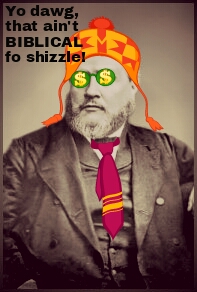
Spurgeon dawg

Lemme lay it down for ya homies:

1. No one has the right to put words in God’s mouth. When you hear someone say, “God says _____,” the only thing that blank can safely be filled in with is Scripture. Otherwise, you’re turning God into a ventriloquist’s dummy and making Him say what you want Him to say. (Deuteronomy 18:21-22, Ezekiel 22:28, Jeremiah 14:13-16).

The truth is, things DON’T always become clear to us on this side of Heaven. Talk to a woman whose husband has abandoned her, or someone in chronic pain, or a parent who has lost a child in an accident. There are things in this life that are painful, dark, and confusing, and no where in Scripture does it say that God owes us an explanation for them or that things will “become clear.”

Did you notice the gentleman in the video didn’t use a single Bible verse to back up his “God says____,” or “Things will become clear,”  statements? That’s because he can’t. Scripture doesn’t teach this. It’s just his opinion.

What Scripture DOES promise Christians is that, even in the darkest times, Christ will never leave us nor forsake us (Hebrews 13:5), that God can use even the worst difficulties for the good (Romans 8:28), that even our Master learned obedience through suffering (Hebrews 5:8), and that when we trust God (regardless of whether or not we get what we want), He will keep us in perfect peace (Isaiah 26:3).

2. Where does Scripture say that “in order for Him to really begin to do the work that YOU want done” you have to “take the limitations off”? It doesn’t. Prayer isn’t about us maneuvering and manipulating God to get Him to do what we want Him to do. Prayer is about US getting on the same page with GOD’S agenda. Us submitting to His will. Us trusting Him regardless of the outcome. It’s not about the work that we have to do (and no matter how holy it might sound, all the “ya gotta…ya gotta…ya gotta” stuff in this video is work) to force God’s hand. The gentleman in the video makes it sound like everything rests on YOU and that if you’ll just pray hard enough, long enough, and with enough faith, everything will work out the way you want it to.

And if things don’t work out, guess whose fault it is? Yours. Because you didn’t have enough faith, or you didn’t pray long enough, or whatever. That’s a Word of Faith false teaching. It is not what the Bible teaches.

The Bible says that God is in the Heavens and does whatever He pleases (Psalm 115:3), that His ways and thoughts are higher than ours, not the same as ours (Isaiah 55:8-9), and that when we pray, we don’t have to feel anxious. Prayer is to produce peace (Philippians 4:6-7), not worry over whether we’ve said the right things or said them long enough (Matthew 6:7-8). Even our perfect, sinless, holy Jesus, when He prayed in Gethsemane before going to the cross, said “NOT My will, but Yours, be done.” (Matthew 26:39).

3. Watch this video again, paying attention to HOW the liquid in the bottle becomes clear. Who, in this analogy, initiates the action? You. Who does all the work? You. (You take off the lid, you put the bottle in the sink, you turn on the water, you make sure the bottle is in the right place, you readjust the bottle to make sure you’re getting the result you want, you decide when it’s clear enough.) So who gets the glory if everything works out the way you want it to? You.

God says He will not share His glory with another (Isaiah 48:11), and that HE is the one who wills and works for His good pleasure (Philippians 2:13).

Ladies, if you want to know how to pray, a video like this featuring a guy who dares to speak for God outside of, and in conflict with, Scripture and doesn’t offer a single Bible verse to teach you about one of the most important aspects of the Christian life is not the way to go.

Don’t believe somebody just because what he says makes you feel good and he has a cool visual aid. Instead, if we want to know how to pray, we need to go straight to the horse’s mouth. That’s what the disciples did when they wanted to know how to pray (Luke 11:1-4), and here’s what Jesus told them in Matthew 6:7-13:

And when you pray, do not heap up empty phrases as the Gentiles do, for they think that they will be heard for their many words. Do not be like them, for your Father knows what you need before you ask him. Pray then like this:

“Our Father in heaven,
hallowed be your name.
Your kingdom come,
your will be done,
on earth as it is in heaven.
Give us this day our daily bread,
and forgive us our debts,
as we also have forgiven our debtors.
And lead us not into temptation, but deliver us from evil.

If that was good enough for Jesus, it should be good enough for us. Ya feel me?

Prayerfully,

Pop


Discernment, Old Testament, Prayer, Sunday School

Properly Praying the Promises ~ Sunday School Lesson ~ 6-15-14

PicsArt_1402888803113

These are my notes from my ladies’ Sunday School class this morning. I’ll be posting the notes from my class here each week. Click here for last week’s lesson.

Through the Bible in 2014 ~ Week 24 ~ June 8-14
Proverbs 16-24, 1 Kings 5-8, 2 Chronicles 2-7, Psalm 136
Properly Praying the Promises

There are lots of different ways of praying, and Solomon’s prayer at the dedication of the completed temple shows us several. Today, we’re going to take a look at the way Solomon addressed God’s promises in his prayer, and how we can do the same.

2 Chronicles 6:12-7:17

Humility (12-15) Solomon begins his prayer by humbling himself before the Lord. His physical posture is an outward, visible-to-the-people indication of his inward attitude of the heart and sets an example for the people, that they should humble themselves before God as well. When we pray, we are to approach God in humility.

As Solomon did, we:

  • confess God’s uniqueness, magnitude, and supremacy above all else, (14- “there is no God like you in heaven or on earth”).
  • confess God’s faithfulness and fulfillment of promises to His people (14-15- “keeping covenant and showing steadfast love to your servants…You spoke with your mouth, and with your hand have fulfilled it this day.”) What are some promises God has made to Christians that you have seen fulfilled?
  • ask God to keep His promises not yet fulfilled (16- “keep for your servant David my father what you have promised him,” 17- “Now…let your word be confirmed, which you have spoken”), not because there is any doubt that He will, but:
  1. as a way to call to mind and confess God’s faithfulness to keep His promises in the past. Seeing God’s track record of keeping His promises builds our faith and trust that He will continue to do so.
  2. as another way of acknowledging God’s attributes. He is faithful, sovereign, trustworthy, and a promise keeper.
  3. as a reminder to us to give God thanks, praise, and glory for His faithfulness and promise keeping.
  4. as a way of declaring our trust in Him. We ask Him to keep His promises, not hoping that He might, but knowing that He will.
  5. as a way of submitting ourselves to God, agreeing with Him about what He has spoken, rather than asking Him to agree with us about what we have spoken.
  6. as a way of praying in God’s will and in Jesus’ name. Often, when we pray, we’re not certain precisely what God wants to do (His will) in a given situation. When we ask Him to fulfill His promises, we can be certain we are praying for His will to be done and that He will do it.
cross-106416_640-1


What’s a promise, anyway?

When thanking God for fulfilling His past promises, or asking Him to fulfill as yet unfulfilled promises, we need to make sure we understand what constitutes a promise (and what does not) and which promises are for us as Christians (and which are not).

Not a Promise (Proverbs 22:6):
For example, we are in the middle of reading Proverbs. The proverbs aren’t promises (to us or anyone else). They are general rules of thumb. We can think of exceptions to many of them. “Raise up a child in the way he should go and when he is old he will not depart from it,” is generally true, but we have all certainly known of godly parents here and there who did their best to raise their child biblically, and then the child rebelled as a teenager or young adult and never came back to the faith.

Just because something is stated in the Bible doesn’t mean it is a promise that God is bound to. We have to discern between promises and other types of statements.

I Never Promised YOU a Rose Garden:
We also have to discern between promises that are meant for us as Christians and promises that were meant for another individual or group of people by studying God’s word in context.

Hi, my name is not David:
It’s easy to see, for example, in v. 16, that God’s promise, “You shall not lack a man to sit before me on the throne of Israel…” was made specifically to David, and not to us. First of all, Solomon clearly says, “keep for your servant David my father what you have promised him.” But even if it didn’t say that, it’s clear in other ways: Israel no longer has a king, you and I are not citizens of Israel, and there are no other Scriptures which indicate that God promises every Christian a line of heirs who will be kings of Israel.

“If my people…” Which people? (2 Chronicles 7:11-18)
tumblr_mo0ykqaNjr1ron0poo1_500


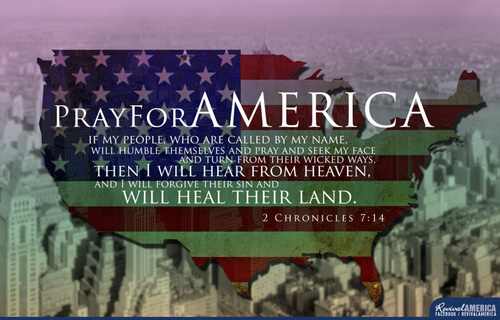
However, just one chapter over, is a verse that is often misunderstood to be a direct promise for Christians. 2 Chronicles 7:14 says:

if my people who are called by my name humble themselves, and pray and seek my face and turn from their wicked ways, then I will hear from heaven and will forgive their sin and heal their land.

Now, you’ve seen this verse on memes and bumper stickers and coffee cups. What do you think people usually mean when quoting this verse today? This verse is often quoted as a call to prayer and revival for American Christians, with the promise that if we pray, repent, and humble ourselves, God will turn America around and make it “one nation under God” again. We’ll have a Christian president and legislators who make moral laws. Abortion and homosexual “marriage” will be made illegal, and Christian prayer will be reinstituted in public schools. But is that really what this verse is promising, and is it promised to us as 21st century American Christians? Let’s take a look.

The first thing to notice about this verse is the very first letter. What kind of letter does it start with? A lowercase one. What does that indicate? It’s not the first word of a sentence. Verse 14 starts in the middle of a sentence.

If I gave you a recipe that consisted only of, “whip until frothy, adding the sugar gradually,” and told you to make the dish, you’d have a lot of questions. What am I making? Whip what? How much sugar? What else goes in the dish? What do I do before and after whipping and adding the sugar? In the same way that we can’t fully understand a recipe by just seeing one line of it, we don’t just rip one line or verse of Scripture out of the Bible without looking at the whole “recipe,” or context, or we won’t have an accurate picture of what it’s saying.

Let’s back up just one verse to the beginning of this sentence. Verse 13 says:

When I shut up the heavens so that there is no rain, or command the locust to devour the land, or send pestilence among my people, 14- if my people who are called by my name humble themselves, and pray and seek my face and turn from their wicked ways, then I will hear from heaven and will forgive their sin and heal their land.

This gives us a little better picture of what’s going on. Who is “I” and “my” here? Obviously God, because He’s the only one with the power to shut up the heavens, etc. But who is “my people” in both of these verses? Israel? All Christians for the past 2000 years? 21st century American Christians? Well let me ask you a couple of questions:

Supporting Scriptures:
Are there any other verses of Scripture that would support that this is a direct promise to all Christians for the past 2000 years or to 21st century American Christians? I don’t know of any other supporting passages that imply that if Christians humble themselves and repent that God will give them a nation governed by biblical laws and leaders and that we will have a society that behaves itself, morally.

In fact, in the New Testament, in the early church, we see the exact opposite. The more the church prayed, humbled itself, and spread the gospel, the more Rome persecuted Christians. Thousands were crucified, burned alive, thrown to the lions, and otherwise tortured and martyred. And yet, we never hear of them claiming 2 Chronicles 7:14 as God’s promise to them that He would turn things around if they would only humble themselves and seek His face more.

We have Jesus Himself saying, “If they persecuted me, they will also persecute you” (John 15:20) and, “you will be hated by all for my name’s sake.” (Matthew 10:22). In 2 Timothy 3:12-13, Paul says: “Indeed, all who desire to live a godly life in Christ Jesus will be persecuted, while evil people and impostors will go on from bad to worse, deceiving and being deceived.”

We can see the same thing today in countries like North Korea, Pakistan, and others that persecute Christians. Things are getting worse for Christians in those countries, not better (as 2 Timothy said), and none of those governments are turning around and embracing Christian ways.

Pestilence, anyone? (2 Chronicles 6:26-30)
When was the last time America experienced widespread drought, locust infestation, or pestilence? Verse 13 specifies that these agricultural hardships are the ones that God promises to heal. It is a promise of literal healing of the land so that crops will grow unharmed, game will be plentiful, and people will be able to eat, not a promise of a metaphorical “healing” of a nation’s immorality.

Now, if we claim that this “healing of the land” applies to us today, then we also have to claim that God will punish our disobedience with those very things He promises to heal (drought, locusts, and pestilence), because that’s what these verses are talking about. The people would disobey, God would punish them with these things, they would repent, and God would heal the land.

We can’t claim the promise without claiming the punishment.

And that’s not the way God disciplines Christians, as a whole, today. If it were, we’d see a lot more agricultural problems in our country. So, if we give it a little thought and a little context, we can see that verse 14 does not apply to Christians. Who does it apply to? Who is the “my people” God is talking about? Let’s read verses 11-18 and 6:26-30.

Now, it’s very clear that these are specific instructions to Solomon by God after the dedication of the temple, and a specific answer to Solomon’s prayer, and that the people that both Solomon and God are referring to is the people of Israel.

But it just sounds like it’s for us!
It may sound like this passage is a promise to us, but it isn’t. Just because something sounds good to us doesn’t mean it applies to us.

The reason this passage sounds like it applies to us is because there are some principles in this verse that do apply to us. How do we know? Because they are supported by other clear and direct Scriptures that we know apply to us.

Are we God’s people who are called by His name”? Yes (Acts 11:26)

Should we humble ourselves? Yes (1 Peter 5:6)

Should we pray and seek God’s face? Yes (1 Thessalonians 5:17)

Should we turn from any wicked ways we practice? Yes (Acts 3:19)

Will God hear from Heaven if we do these things? Yes (1 John 5:14-15)

Does God promise to heal our land of the agricultural problems He has punished our disobedience with if we do these things? No. He hasn’t. They don’t exist. He won’t. And there are no other supporting Scriptures that say He will.

Asking, as Solomon did, for God to fulfill His promises and thanking Him for those already fulfilled is a wonderful and worshipful way to pray. But, if we truly want to pray “in the name of Jesus” and pray rightly for God’s will to be done, we must use wisdom, discernment, and the tools God has given us to discover exactly what He has promised us.

And this is the confidence that we have toward him, that if we ask anything according to his will he hears us. And if we know that he hears us in whatever we ask, we know that we have the requests that we have asked of him.
1 John 5:14-15


Sanctification

Six Cliches Christians Could Can (Or at Least Re-think)

Have you ever noticed we use a lot of expressions without giving much thought to their origin or what they really mean? For example, why do we use the phrase, “in a (pretty) pickle” to mean “experiencing a difficult situation”?

Here are six cliches we often use as Christians that could stand to be replaced or at least re-thought:

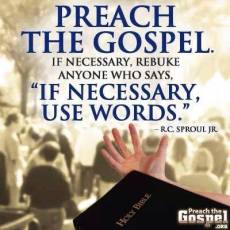
1795610_10153768796270386_733462403_n1. Preach the gospel. If necessary, use words.
It’s necessary. Use words. While our behavior should certainly prove out our testimony, nobody’s going to see us working at a soup kitchen or eschewing barhopping and somehow magically understand that he has broken God’s law and needs to repent and put His faith in Christ’s death, burial, and resurrection for the forgiveness of his sin unto eternal life. That has to be explained. Clearly. By us. From the Bible. With words.


tombstone-159792_6402. Rest in peace/God rest his soul
If the person who died was saved, he’s already resting in peace by the time you can get these words out. (2 Corinthians 5:6-8)

If the person who died wasn’t saved, unfortunately, he’s in a place of eternal torment and suffering, and no amount of asking God to rest his soul will give him a respite. Worse, when Christians say this about someone they know was not saved, they reinforce the false idea many lost people have that the dead are “resting” in some sort of spiritual coma, or that they simply cease to exist (annihilationism) , or that everybody automatically goes to Heaven (universalism).

Maybe “I’m praying for you,” or “I’m bringing you dinner,” would be better.

and speaking of which…


th3. Sending positive thoughts/energy your way.
Thoughts and energy are not things you can wrap up in brown paper, haul down to the post office, and mail to somebody. You can’t send them and the other person can’t receive them, and they can’t actually accomplish anything, and everybody knows this. But, commendably, atheists, New Agers, and other non-Christians wanted to have something compassionate to say to people who are hurting, and since they can’t say, “I’m praying for you,” this is the best they can do.

Christians, we’ve got something better. We can say, “I’m praying for you.” We have an open line to the almighty God of the universe who is listening to us and can actually do something about the situation. Pray for that hurting person. Put your arms around her. Listen to her. Do whatever you can to help. Show her Jesus, not empty words.


RNR084. Christianity isn’t a religion, it’s a relationship.
The only people running around today saying that Christianity is not a religion are Christians. Everybody else in the world considers Christianity a religion. And up until this little humdinger materialized, so did Christians.

Usually, what people mean by this is that true Christianity is not an institutionalized system of rote obedience to dead and meaningless rituals. It’s a reconciliation with the only true God by means of being redeemed by His Son, Jesus Christ, who propitiated and expiated God’s wrath against us in our sin through His death, burial, and bodily resurrection, and is, therefore, a dynamic and living interpersonal relationship.

But that’s too long to fit into a tweet or a hashtag.

Our relationship with God through Christ is our religion- the only true religion. And that’s not a bad thing.


ttgpt231112b5. Don’t judge someone just because he sins differently than you do.
I find this one confusing, but I think the sentiment behind this is something along the lines of, “I may be an adulterer, but you’re not any less of a sinner just because you only tell the occasional white lie.  Therefore, you have no right to call me to repentance.”

This is a lovely casserole of simultaneous truth and falsehood, and it all hinges on the word “judging,” which has been tossed around so much that even Christians scarcely know what it means anymore. No, we’re not to berate someone for his sin while pompously pretending we’re sin-free. All have sinned, after all, and if we say we have no sin, we lie. But does that mean we should never call anyone to repentance? Of course not! We’re to walk in repentance ourselves and seek to help the lost find forgiveness in Christ and help our Christian brothers and sisters who have fallen into sin to be reconciled to Christ. Scripture doesn’t say we can never call people out of sin because we have a log in our own eye. It says first remove the log and then help your brother.


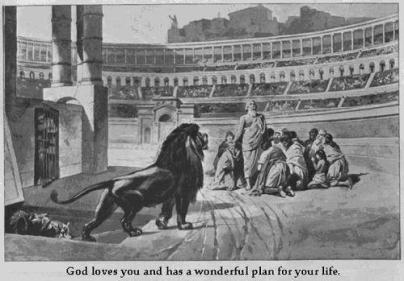
69475_10102578902186220_955102342_n6. God loves you and has a wonderful plan for your life.
This is actually true, it’s just that our idea of a “wonderful plan” doesn’t always match up with God’s idea of a “wonderful plan”.

Our desire is to be healthy, wealthy, and blissfully comfortable with never a family problem, fender bender, lost love, or bankruptcy. God’s desire is for us to be holy. He wants to root the sin out of our lives, show us how to be completely dependent on Him, lead us to trust Him more, build our character and endurance, give us boldness to share the gospel, make us kinder and more merciful, teach us what it means to extend grace and forgive. Most of those lessons are learned only through hardship and suffering. Just ask the apostles or the early church martyrs or our brothers and sisters being persecuted across the globe today.


What are some expressions Christians commonly use that you think we should replace or re-think?