Discernment, Old Testament, Prayer, Sunday School

Properly Praying the Promises ~ Sunday School Lesson ~ 6-15-14

PicsArt_1402888803113

These are my notes from my ladies’ Sunday School class this morning. I’ll be posting the notes from my class here each week. Click here for last week’s lesson.

Through the Bible in 2014 ~ Week 24 ~ June 8-14
Proverbs 16-24, 1 Kings 5-8, 2 Chronicles 2-7, Psalm 136
Properly Praying the Promises

There are lots of different ways of praying, and Solomon’s prayer at the dedication of the completed temple shows us several. Today, we’re going to take a look at the way Solomon addressed God’s promises in his prayer, and how we can do the same.

2 Chronicles 6:12-7:17

Humility (12-15) Solomon begins his prayer by humbling himself before the Lord. His physical posture is an outward, visible-to-the-people indication of his inward attitude of the heart and sets an example for the people, that they should humble themselves before God as well. When we pray, we are to approach God in humility.

As Solomon did, we:

  • confess God’s uniqueness, magnitude, and supremacy above all else, (14- “there is no God like you in heaven or on earth”).
  • confess God’s faithfulness and fulfillment of promises to His people (14-15- “keeping covenant and showing steadfast love to your servants…You spoke with your mouth, and with your hand have fulfilled it this day.”) What are some promises God has made to Christians that you have seen fulfilled?
  • ask God to keep His promises not yet fulfilled (16- “keep for your servant David my father what you have promised him,” 17- “Now…let your word be confirmed, which you have spoken”), not because there is any doubt that He will, but:
  1. as a way to call to mind and confess God’s faithfulness to keep His promises in the past. Seeing God’s track record of keeping His promises builds our faith and trust that He will continue to do so.
  2. as another way of acknowledging God’s attributes. He is faithful, sovereign, trustworthy, and a promise keeper.
  3. as a reminder to us to give God thanks, praise, and glory for His faithfulness and promise keeping.
  4. as a way of declaring our trust in Him. We ask Him to keep His promises, not hoping that He might, but knowing that He will.
  5. as a way of submitting ourselves to God, agreeing with Him about what He has spoken, rather than asking Him to agree with us about what we have spoken.
  6. as a way of praying in God’s will and in Jesus’ name. Often, when we pray, we’re not certain precisely what God wants to do (His will) in a given situation. When we ask Him to fulfill His promises, we can be certain we are praying for His will to be done and that He will do it.

cross-106416_640-1


What’s a promise, anyway?

When thanking God for fulfilling His past promises, or asking Him to fulfill as yet unfulfilled promises, we need to make sure we understand what constitutes a promise (and what does not) and which promises are for us as Christians (and which are not).

Not a Promise (Proverbs 22:6):
For example, we are in the middle of reading Proverbs. The proverbs aren’t promises (to us or anyone else). They are general rules of thumb. We can think of exceptions to many of them. “Raise up a child in the way he should go and when he is old he will not depart from it,” is generally true, but we have all certainly known of godly parents here and there who did their best to raise their child biblically, and then the child rebelled as a teenager or young adult and never came back to the faith.

Just because something is stated in the Bible doesn’t mean it is a promise that God is bound to. We have to discern between promises and other types of statements.

I Never Promised YOU a Rose Garden:
We also have to discern between promises that are meant for us as Christians and promises that were meant for another individual or group of people by studying God’s word in context.

Hi, my name is not David:
It’s easy to see, for example, in v. 16, that God’s promise, “You shall not lack a man to sit before me on the throne of Israel…” was made specifically to David, and not to us. First of all, Solomon clearly says, “keep for your servant David my father what you have promised him.” But even if it didn’t say that, it’s clear in other ways: Israel no longer has a king, you and I are not citizens of Israel, and there are no other Scriptures which indicate that God promises every Christian a line of heirs who will be kings of Israel.

“If my people…” Which people? (2 Chronicles 7:11-18)

tumblr_mo0ykqaNjr1ron0poo1_500


However, just one chapter over, is a verse that is often misunderstood to be a direct promise for Christians. 2 Chronicles 7:14 says:

if my people who are called by my name humble themselves, and pray and seek my face and turn from their wicked ways, then I will hear from heaven and will forgive their sin and heal their land.

Now, you’ve seen this verse on memes and bumper stickers and coffee cups. What do you think people usually mean when quoting this verse today? This verse is often quoted as a call to prayer and revival for American Christians, with the promise that if we pray, repent, and humble ourselves, God will turn America around and make it “one nation under God” again. We’ll have a Christian president and legislators who make moral laws. Abortion and homosexual “marriage” will be made illegal, and Christian prayer will be reinstituted in public schools. But is that really what this verse is promising, and is it promised to us as 21st century American Christians? Let’s take a look.

The first thing to notice about this verse is the very first letter. What kind of letter does it start with? A lowercase one. What does that indicate? It’s not the first word of a sentence. Verse 14 starts in the middle of a sentence.

If I gave you a recipe that consisted only of, “whip until frothy, adding the sugar gradually,” and told you to make the dish, you’d have a lot of questions. What am I making? Whip what? How much sugar? What else goes in the dish? What do I do before and after whipping and adding the sugar? In the same way that we can’t fully understand a recipe by just seeing one line of it, we don’t just rip one line or verse of Scripture out of the Bible without looking at the whole “recipe,” or context, or we won’t have an accurate picture of what it’s saying.

Let’s back up just one verse to the beginning of this sentence. Verse 13 says:

When I shut up the heavens so that there is no rain, or command the locust to devour the land, or send pestilence among my people, 14- if my people who are called by my name humble themselves, and pray and seek my face and turn from their wicked ways, then I will hear from heaven and will forgive their sin and heal their land.

This gives us a little better picture of what’s going on. Who is “I” and “my” here? Obviously God, because He’s the only one with the power to shut up the heavens, etc. But who is “my people” in both of these verses? Israel? All Christians for the past 2000 years? 21st century American Christians? Well let me ask you a couple of questions:

Supporting Scriptures:
Are there any other verses of Scripture that would support that this is a direct promise to all Christians for the past 2000 years or to 21st century American Christians? I don’t know of any other supporting passages that imply that if Christians humble themselves and repent that God will give them a nation governed by biblical laws and leaders and that we will have a society that behaves itself, morally.

In fact, in the New Testament, in the early church, we see the exact opposite. The more the church prayed, humbled itself, and spread the gospel, the more Rome persecuted Christians. Thousands were crucified, burned alive, thrown to the lions, and otherwise tortured and martyred. And yet, we never hear of them claiming 2 Chronicles 7:14 as God’s promise to them that He would turn things around if they would only humble themselves and seek His face more.

We have Jesus Himself saying, “If they persecuted me, they will also persecute you” (John 15:20) and, “you will be hated by all for my name’s sake.” (Matthew 10:22). In 2 Timothy 3:12-13, Paul says: “Indeed, all who desire to live a godly life in Christ Jesus will be persecuted, while evil people and impostors will go on from bad to worse, deceiving and being deceived.”

We can see the same thing today in countries like North Korea, Pakistan, and others that persecute Christians. Things are getting worse for Christians in those countries, not better (as 2 Timothy said), and none of those governments are turning around and embracing Christian ways.

Pestilence, anyone? (2 Chronicles 6:26-30)
When was the last time America experienced widespread drought, locust infestation, or pestilence? Verse 13 specifies that these agricultural hardships are the ones that God promises to heal. It is a promise of literal healing of the land so that crops will grow unharmed, game will be plentiful, and people will be able to eat, not a promise of a metaphorical “healing” of a nation’s immorality.

Now, if we claim that this “healing of the land” applies to us today, then we also have to claim that God will punish our disobedience with those very things He promises to heal (drought, locusts, and pestilence), because that’s what these verses are talking about. The people would disobey, God would punish them with these things, they would repent, and God would heal the land.

We can’t claim the promise without claiming the punishment.

And that’s not the way God disciplines Christians, as a whole, today. If it were, we’d see a lot more agricultural problems in our country. So, if we give it a little thought and a little context, we can see that verse 14 does not apply to Christians. Who does it apply to? Who is the “my people” God is talking about? Let’s read verses 11-18 and 6:26-30.

Now, it’s very clear that these are specific instructions to Solomon by God after the dedication of the temple, and a specific answer to Solomon’s prayer, and that the people that both Solomon and God are referring to is the people of Israel.

But it just sounds like it’s for us!
It may sound like this passage is a promise to us, but it isn’t. Just because something sounds good to us doesn’t mean it applies to us.

The reason this passage sounds like it applies to us is because there are some principles in this verse that do apply to us. How do we know? Because they are supported by other clear and direct Scriptures that we know apply to us.

Are we God’s people who are called by His name”? Yes (Acts 11:26)

Should we humble ourselves? Yes (1 Peter 5:6)

Should we pray and seek God’s face? Yes (1 Thessalonians 5:17)

Should we turn from any wicked ways we practice? Yes (Acts 3:19)

Will God hear from Heaven if we do these things? Yes (1 John 5:14-15)

Does God promise to heal our land of the agricultural problems He has punished our disobedience with if we do these things? No. He hasn’t. They don’t exist. He won’t. And there are no other supporting Scriptures that say He will.

Asking, as Solomon did, for God to fulfill His promises and thanking Him for those already fulfilled is a wonderful and worshipful way to pray. But, if we truly want to pray “in the name of Jesus” and pray rightly for God’s will to be done, we must use wisdom, discernment, and the tools God has given us to discover exactly what He has promised us.

And this is the confidence that we have toward him, that if we ask anything according to his will he hears us. And if we know that he hears us in whatever we ask, we know that we have the requests that we have asked of him.
1 John 5:14-15

Sanctification

Six Cliches Christians Could Can (Or at Least Re-think)

Have you ever noticed we use a lot of expressions without giving much thought to their origin or what they really mean? For example, why do we use the phrase, “in a (pretty) pickle” to mean “experiencing a difficult situation”?

Here are six cliches we often use as Christians that could stand to be replaced or at least re-thought:

1795610_10153768796270386_733462403_n1. Preach the gospel. If necessary, use words.
It’s necessary. Use words. While our behavior should certainly prove out our testimony, nobody’s going to see us working at a soup kitchen or eschewing barhopping and somehow magically understand that he has broken God’s law and needs to repent and put His faith in Christ’s death, burial, and resurrection for the forgiveness of his sin unto eternal life. That has to be explained. Clearly. By us. From the Bible. With words.


tombstone-159792_6402. Rest in peace/God rest his soul
If the person who died was saved, he’s already resting in peace by the time you can get these words out. (2 Corinthians 5:6-8)

If the person who died wasn’t saved, unfortunately, he’s in a place of eternal torment and suffering, and no amount of asking God to rest his soul will give him a respite. Worse, when Christians say this about someone they know was not saved, they reinforce the false idea many lost people have that the dead are “resting” in some sort of spiritual coma, or that they simply cease to exist (annihilationism) , or that everybody automatically goes to Heaven (universalism).

Maybe “I’m praying for you,” or “I’m bringing you dinner,” would be better.

and speaking of which…


th3. Sending positive thoughts/energy your way.
Thoughts and energy are not things you can wrap up in brown paper, haul down to the post office, and mail to somebody. You can’t send them and the other person can’t receive them, and they can’t actually accomplish anything, and everybody knows this. But, commendably, atheists, New Agers, and other non-Christians wanted to have something compassionate to say to people who are hurting, and since they can’t say, “I’m praying for you,” this is the best they can do.

Christians, we’ve got something better. We can say, “I’m praying for you.” We have an open line to the almighty God of the universe who is listening to us and can actually do something about the situation. Pray for that hurting person. Put your arms around her. Listen to her. Do whatever you can to help. Show her Jesus, not empty words.


RNR084. Christianity isn’t a religion, it’s a relationship.
The only people running around today saying that Christianity is not a religion are Christians. Everybody else in the world considers Christianity a religion. And up until this little humdinger materialized, so did Christians.

Usually, what people mean by this is that true Christianity is not an institutionalized system of rote obedience to dead and meaningless rituals. It’s a reconciliation with the only true God by means of being redeemed by His Son, Jesus Christ, who propitiated and expiated God’s wrath against us in our sin through His death, burial, and bodily resurrection, and is, therefore, a dynamic and living interpersonal relationship.

But that’s too long to fit into a tweet or a hashtag.

Our relationship with God through Christ is our religion- the only true religion. And that’s not a bad thing.


ttgpt231112b5. Don’t judge someone just because he sins differently than you do.
I find this one confusing, but I think the sentiment behind this is something along the lines of, “I may be an adulterer, but you’re not any less of a sinner just because you only tell the occasional white lie.  Therefore, you have no right to call me to repentance.”

This is a lovely casserole of simultaneous truth and falsehood, and it all hinges on the word “judging,” which has been tossed around so much that even Christians scarcely know what it means anymore. No, we’re not to berate someone for his sin while pompously pretending we’re sin-free. All have sinned, after all, and if we say we have no sin, we lie. But does that mean we should never call anyone to repentance? Of course not! We’re to walk in repentance ourselves and seek to help the lost find forgiveness in Christ and help our Christian brothers and sisters who have fallen into sin to be reconciled to Christ. Scripture doesn’t say we can never call people out of sin because we have a log in our own eye. It says first remove the log and then help your brother.


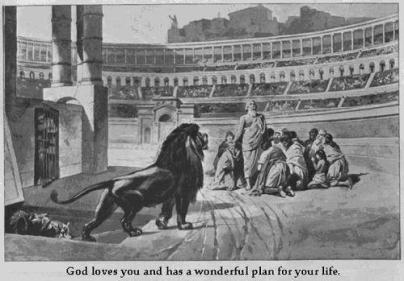
69475_10102578902186220_955102342_n6. God loves you and has a wonderful plan for your life.
This is actually true, it’s just that our idea of a “wonderful plan” doesn’t always match up with God’s idea of a “wonderful plan”.

Our desire is to be healthy, wealthy, and blissfully comfortable with never a family problem, fender bender, lost love, or bankruptcy. God’s desire is for us to be holy. He wants to root the sin out of our lives, show us how to be completely dependent on Him, lead us to trust Him more, build our character and endurance, give us boldness to share the gospel, make us kinder and more merciful, teach us what it means to extend grace and forgive. Most of those lessons are learned only through hardship and suffering. Just ask the apostles or the early church martyrs or our brothers and sisters being persecuted across the globe today.


What are some expressions Christians commonly use that you think we should replace or re-think?

Obedience, Old Testament, Sanctification, Sovereignty of God, Sunday School, Trust

Decisions, Decisions ~ Sunday School Lesson ~ 5-4-14

sunday school

These are my notes from my ladies’ Sunday School class this morning. I’ll be posting the notes from my class here each week. Click here for last week’s lesson.

Through the Bible in 2014 ~ Week 18 ~ Apr. 27-May 3
1 Chronicles 6-12, 2 Samuel 5:1-10, Psalm 81, 88, 92-93, 102-104, 133, 106-107
Decisions, Decisions

We all face difficult and confusing times of decision in our lives. Should I marry this guy or not? Which job should I take? What’s the best plan of action in X situation? How can we know for sure which decision God wants us to make?

1 Samuel 8:4-7, 2 Samuel 5:1-10
In these two passages, we see Israel’s decision to have a king to rule over them. In the first passage, which we studied a few weeks ago, the leaders wanted Saul (they didn’t know his name yet, but they sure had his résumé!). In the second, they wanted David. Two times when the government of Israel was at a crossroads. Two times when Israel’s leadership wanted a king. Two kings coronated. Similar circumstances, the same desire, similar outcomes. But even though the situations were so similar, were both decisions made the right and godly way?

Let’s take a look at some principles for godly decision-making and see how these principles worked themselves out in the Israelites’ situations with Saul and David.

MH900390083

Principles for Godly Decision-Making:
One thing we need to be careful about with the following principles is that we are not using them to manipulate God into making us make the right decision. Any time we modify our behavior in order to try to make God do what we want, we’re guilty of idolatry, even if what we want seems to be godly. The principles listed below are all things we should be doing or believing on a daily/regular basis because they are part of the obedient Christian walk, not just because we have a big decision to make. Godly decisions are a side effect of this kind of walk, not the end goal.

1. In order to make godly decisions, you must be saved (1 Corinthians 2:14-16, 2 Corinthians 5:17).
People who are unsaved aren’t capable of making godly decisions, because the motivation behind making godly decisions is the desire, from the heart, to please and be obedient to God. God, in His grace, may lead an unsaved person via his circumstances to make a certain decision, but the motive of his heart will still not be to please God. We are not capable of that motive unless we are saved.

2. Delight yourself in the Lord (Psalm 37:3-4).
Because Christians are new creatures with the mind of Christ, we have an inborn desire to love God, His word, and the things of God (godly preaching, books, music, friends, etc.). But this desire must be cultivated (3- New American Standard Bible translation) through a daily walk with the Lord, spending time in His word and prayer, and intentionally seeking out godly influences.

It’s like one of those “miraculous” weight loss stories we often hear. An extremely obese person decides he’s going to lose weight. The desire of his heart is there—he’s fed up with his looks and poor health, and he wants to tackle the problem and get healthy. But if he doesn’t intentionally do something, the weight isn’t going to come off, despite the desire. He starts off slowly. Maybe he cuts out cokes and walks around the block three times a week. As he progresses, his desire to cut bad things from his diet, add good things, and exercise more, builds. Not only does he see results, but he begins to enjoy the healthier diet and exercise more and more, and becomes even more committed to them. Eventually, he loses the weight and maintains a healthy lifestyle.

That’s how it is with delighting in the Lord. Through the power of the indwelling Holy Spirit, Christ helps us to intentionally cultivate faithfulness, and we grow in our love and affection for the Lord. As a result, He gives us the desires of our heart—to be more Christlike.

With Saul, were the Israelites delighting in the Lord? Definitely not. In fact, it was their lack of delighting in the Lord that led them to demand a king against God’s wishes. With David? Israel had just been through the consequences of having Saul as king and they knew God had ordained that David be the next king, plus he was a great military leader. Which of these motivated them the most? It’s hard to tell, but it feels like they were acquiescing to the inevitable, and the practical desire for military strength rather than repenting and taking an affirmative step towards godliness.

3. God’s word is sufficient for our every need (Hebrews 1:1-3a, 2 Timothy 3:16-17).
Often, when we read the Bible, it’s easy to long for God to speak to us one on one, through a burning bush, a fleece, a prophet, or some other form of direct revelation. But now that we have God’s complete written Word, we no longer need direct revelation, nor does God want us to seek that. Hebrews and Timothy tell us that God no longer speaks that MH900410128way and that His word is sufficient for our every need. Additionally, we now have access to God’s word any time we need it. We don’t have to wait for Him to miraculously show up. Finally, if we were to rely on signs or “hearing God’s voice,” how could we be sure we’re really hearing from God and not our own sinful inner voice, or worse, Satan? God’s word is absolutely trustworthy. When we read it, we can be 100% certain we’re hearing from God. And remember, Israel (and others in the Bible) did hear directly from God, and they still often disobeyed.

4. Know God’s word and study God’s word in context as it applies to your situation (Psalm 119:11, Deuteronomy 17:14-15).
We must study God’s word daily; even memorize it, so that we can apply it to every aspect of our lives. As we do, it’s very important to study it in context so we can be sure we’re applying the correct biblical principles.

Did Israel know God’s word as it applied to the situation with Saul? Yes. They certainly knew Deuteronomy 17, which predicted they would demand a king, and outlined the regulations for a king of God’s choosing. They also knew that God was, and always had been, the only king they needed, and that He did not want them to demand a king.

With David? Yes. Through Samuel’s prophecy, Israel already knew David was to be the next king and that he had already been anointed.

5. Obey God’s word (1 Samuel 15:22).
As we can see with Israel’s demand for a king (Saul), knowing God’s word isn’t enough. We also have to obey it. Sometimes it can seem like sin is the most practical way out of a situation, but it is only a temporary fix. Even when we try to put a godly spin on our disobedience, as Saul did in 1 Samuel 15, it is still disobedience. As Saul learned the hard way, God wants us to be obedient to Him regardless of our circumstances. With David, Israel, whatever her motivations were, obeyed God and made David king.

6. Know your “bent” (Psalm 139:13-14).
God has created each of us uniquely. We are all “bent” Bent_eye_cranked_bolt_profiletoward certain things and away from others. One of the ways God may show us the things He wants us to do and not do is through the talents, tastes, and abilities He has given us. If you can’t carry a tune in a bucket, that’s a pretty good indication God doesn’t want you to sing for a living. If you love numbers, that may be God’s way of leading you into a math-related field. Other times, we may be thrust into a situation in which we have to learn a new skill. We might just discover a talent we didn’t know we had!

7. Pray, and ask others to pray with you about the situation, especially for wisdom and guidance (James 1:5-6).
Some things we don’t need to pray about because they are clearly taught in God’s word. We don’t need to pray about whether we should attend church regularly, be faithful to our spouses, help those in need, etc. But, some situations aren’t as clear. James tells us that if we lack wisdom, all we have to do is ask God for it in faith, and He will give it to us. It’s a promise. We may not feel very wise, but we don’t operate on feelings. We take God at His word and trust Him as we continue to take the next step and the next.

With Saul, did Israel pray about the situation or ask God for wisdom in selecting a king? No. And even though God tried to provide them with wisdom- spelling out the consequences of their demand- they insisted on disobeying Him. They did not need to pray about making David king. God had already made it clear that he was the next to take the throne.

8. God has given you (and others) a brain for a reason (Proverbs 11:14, 24:5-6, 18:15)
Seek counsel from godly people you trust. Take what they say, make sure it matches up with Scripture, and pray about it. In other situations, such as a medical diagnosis, you may need to do some research and gather information so you can make an educated decision. Finally, trust that God, our wonderful Creator has hard wired you with the ability to process information and make the best decision you can with His help and guidance.

With Saul, God directly gave Israel godly counsel and information through Samuel. They chose to reject it and disobey, and suffered the consequences. With David, Israel also had all the information they needed to make the right decision. This time, they obeyed.

9. Trust in God’s sovereignty to direct your steps and work things out for your good (Proverbs 3:5-6; 16:9, Psalm 37:23-24, Romans 8:28).
Sometimes our desire to do what God wants us to do is so strong that we become paralyzed by the fear that we’re going MH900448357to do the wrong thing. When we do that, our trust is no longer in God’s sovereignty over the situation. We have shifted our trust from God—where it should be—to ourselves—where it should not be.

God’s sovereignty over situations does not rest on our actions. We can clearly see this in Israel’s situation with Saul. Even though they didn’t desire to please God, He had complete control of the situation and worked it out for His will to be done in the long run. How much more can we trust God to take care of our situations, if it is our desire to please Him, since He promises to do so?

10. Trust that God understands and has compassion on the frailty of His children (Psalm 103:14).
You aren’t God. You aren’t omniscient, knowing all the ins and outs of your situation. In most cases there is at least some aspect of the situation in which you are powerless. Every time you make a decision, you do it with only partial knowledge and partial control (at best). God knows all of this better than we do. That’s why He tells us to love Him, seek to honor Him, ask Him for wisdom, and trust Him.


One of the natural outgrowths of walking with the Lord is making more godly decisions. We must use the resources He has given us: His word, godly counsel, information, prayer, and wisdom, and trust Him to work everything out for our good.


Additional Resources:
The Problem with Seeking God’s Will by Matt Papa

Faith, Old Testament, Parenting, Prayer, Sunday School, Trust

Meet the Parents (of Samson) ~ Sunday School Lesson ~ 4-6-14

sunday school

These are my notes from my ladies’ Sunday School class this morning. I’ll be posting the notes from my class here each week. Click here for last week’s lesson.

Through the Bible in 2014 ~ Week 14 ~ Mar. 30-Apr. 6
Judges 1-18
Meet the Parents (of Samson)

In this week’s reading, we said goodbye to Joshua and met up with a variety of Israel’s lesser known judges. We also read about three better known characters in Israel’s history, judges Deborah, Gideon, and Samson. Often, when we come to passages like this, it’s like a treasure hunt. We focus on the valuables that are in plain sight. But, if we dig just a little, we can find more gems just beneath the surface. Today, we’re taking a look at two godly people who had a profound impact on Samson’s life: his parents.

Judges 13-14

Mr. and Mrs. Manoah
It’s always interesting to me that, just as we saw last week with the two spies, some of the most faithful of God’s servants are ordinary people like you and me serving God as they go about their daily tasks. And, just as with the two spies, in many cases, we never find out their names.  Samson’s mother was just this kind of nameless, faithful servant. Though we know little about her husband, Manoah, the most important thing about him—his faith—comes through loud and clear.

Barrenness (13:2-3)
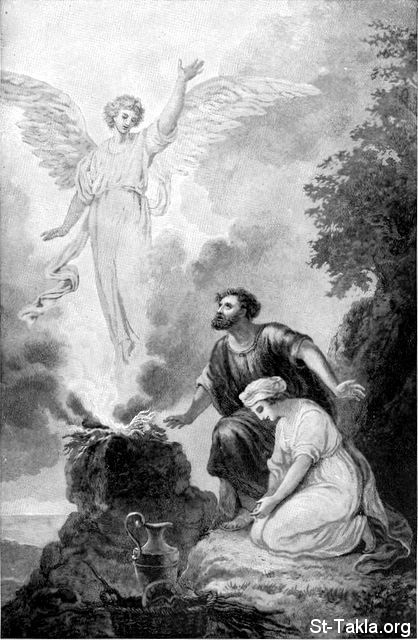
Mrs. Manoah was barren. Have you ever noticed how many “big names” in the Bible had mothers who were previously barren or who conceived miraculously? Joseph (Rachel), Samuel (Hannah), John the Baptist (Elizabeth), even Jesus (Mary), just to name a few. Things are different today, but, in manoah-wife-angel-offering the Bible, a miraculous conception was often a sign that the child would grow up to be a mighty man of God.

Barrenness was usually seen by others in the community as a curse by God or a punishment for sin (and sometimes it was: 2 Samuel 6:23). During that time in history, the only way for women to achieve status and be considered successful was by marrying and having children- particularly sons. A woman’s entire self-worth—in her own eyes, her husband’s eyes, and the eyes of her community—was at stake. So it’s easy to see why women and their husbands would have spent a great deal of time crying out to the Lord in prayer and seeking to be obedient to Him in hopes that He would grant their request for a child. We see this most clearly in the case of Hannah (1 Samuel 1), and it’s reasonable to surmise that this was likely also the case for Manoah and his wife.

Belief, Not Doubt (13:3-8)
It’s interesting that both times the angel of the Lord appeared to deliver His message, He initially appeared, not to the man, Manoah, but to the woman, his wife. Was it because she was praying at the time, or because her faith was stronger than her husband’s? This passage doesn’t tell us, so we don’t know. But, notice Mrs. Manoah’s reaction to the news that she would conceive. Did she laugh in disbelief like Sarah and Abraham did (Genesis 17:17,18:12)? Did she doubt like Zechariah (father of John the Baptist: Luke 1:18)? No, Mrs. Manoah believed. And, as a godly wife should, the first person she shared the news with and sought direction from was her husband.

Now let’s consider the reaction of Manoah to his wife’s news. Did he think her desire for a child had sent her over the edge or that she was making this up? No. He believed her without question. What does this tell us about the character, faith, and influence on her husband of Mrs. Manoah? “The heart of her husband trusted in her” (Proverbs 31:11) because she was a godly, trustworthy woman.

A Household of Faith (13)
In addition to spending time praying for a child, Mr. and Mrs. Manoah probably prayed regularly, like many other faithful Israelites, for deliverance from the Philistine oppressors, and here, we find them in prayer again.

Manoah not only trusted his wife, he had faith that the Lord would fulfill His promise. His first reaction was to believe and ask God the best way to obey Him. “And God listened to the voice of Manoah…” and answered his prayer of faith. He came back—to Manoah’s wife. Again, Manoah believed her without question and followed her out to meet the angel of the Lord.

When they met up with the angel, we see further evidence of this couple’s godliness. Though the angel had appeared and spoken twice with Mrs. Manoah, she, as a godly wife, does not take control of the situation or assert superiority over her husband. She takes a step back and, as a godly husband and leader of his home, Manoah steps up to the plate to assume the responsibility for his family and receive God’s instructions.

Manoah’s conversation with the Lord is fraught with faith. He doesn’t ask how or why they’re suddenly being blessed with a miracle child even though they’re just ordinary people. He simply accepts that it will happen. Manoah is confident that God is telling the truth and will keep His promise when he says, “When [not if] your words come true…” (12, 17). He believes God’s word that Samson will “begin to save Israel from the hand of the Philistines,” (5) when he asks about “the child’s manner of life, and…his mission” (12) so that he and Mrs. Manoah could prepare him to do so. He trusted in the www-St-Takla-org--12-Angel-Visits-Manoah-and-His-Wifecharacter of God, “the one who works wonders,” (19) and worshiped Him as such. He and Mrs. Manoah feared and trusted in God’s holiness as they fell on their faces at His departure (20).

Without a total grasp of the situation (22), Manoah believed God’s word that, “no man can see Me and live” (Exodus 33:20). Only later (21) did Manoah understand that He had been speaking with the angel of the Lord (Jesus – theophany: an appearance of the pre-incarnate Christ – {“My name…is wonderful” (18)- see Isaiah 9:6}—this is how people could “see God and live” even though God had said, “you cannot see Me and live.” They could not live through seeing God the Father, but they could live through seeing God the Son. Also a piece of supporting evidence for the Trinity). Jesus, the true deliverer and judge came personally to announce the birth of this temporal deliverer and judge who would point ahead to Christ.

Finally, we come full circle to Mrs. Manoah’s quiet trust in the Lord. Even with a strong faith like Manoah had, there can be moments of confusion. How could God say to Moses –the greatest leader Israel had ever known, the friend of God!—“you cannot see My face, for man shall not see me and live,”—yet here he and his wife were, having seen Him, but somehow still unscathed? How could anyone understand this?

But Mrs. Manoah shows us that faith means trusting God’s word even when we don’t fully understand His actions. Yes, it was true that God had said that people couldn’t live through seeing Him, but it was also true that He had visited them and told them they were going to have a son who would be a deliverer for Israel. How could both of those things be true at the same time? She probably couldn’t understand it either, but she encouraged her husband to trust God even in their confusion (23). And God kept His promise (24-25)

Trusting Despite the Circumstances (14:1-10)
Kids grow up, and as broken, sinful human beings, they sometimes make foolish decisions despite being raised in a godly home. That’s what Samson seems to have done here. While the Philistines were not one of the seven nations the Israelites were specifically forbidden to intermarry with, the principle behind God’s forbidding of intermarriage with those other nations was the same for the Philistines: they were idolaters and enemies of God and His people.

As godly parents, Mr. and Mrs. Manoah tried to steer their adult son to a godly choice of a wife. They reminded him that he was one of God’s people, and surely wanted him, as a leader in Israel, to set a good example for the people. Once again, they were seeking to be faithful to God.

thInstead of honoring his parents, Samson chose poorly. Or so it seemed. Either Samson was operating solely on lust and God sovereignly used the situation to His own advantage, or Samson, moved by God, was intentionally trying to infiltrate the Philistines by marrying in. The passage doesn’t make this precisely clear to us.

And, it wasn’t clear to Samson’s parents, either. So, perhaps thinking that they could influence the girl’s family or hoping Samson would change his mind, they went along with his decision and accompanied him to meet the new in laws. Once again, though the circumstances were worrisome and hard to understand, Mr. and Mrs. Manoah trusted that the God who had already worked so many wonders in their lives could handle this situation. They had faithfully obeyed what God had asked them to do and raised Samson in a godly home. Now, they had to sit back and watch God take care of the rest. And He did. Again, God kept His promises.

And we know that for those who love God all things work together for good,
 for those who are called according to his purpose. Romans 8:28

Faith, Obedience, Old Testament, Sunday School, Trust

Trust and Obey ~ Sunday School Lesson ~ 3-2-14

sunday school

These are my notes from my ladies’ Sunday School class this morning. I’ll be posting the notes from my class here each week. Click here for last week’s lesson.

Through the Bible in 2014 ~ Week 9 ~ Feb. 23-Mar. 1
Numbers 1-15, Psalm 90
Trust and Obey

Not a grief or a loss, not a frown or a cross, but is blest if we trust and obey.

Trust and obey, for there’s no other way to be happy in Jesus, but to trust and obey.

Dilemma → The People’s Response → Moses/Leadership’s Response ←→ God’s Response

Today, we’re taking a look at four incidents from this week’s reading which follow the paradigm above. All start out with a problem. We’ll look at how the people responded to that problem, how Moses and the other leaders responded, and how God responded, which will show us how we should respond to the dilemmas we face: with trust in, and obedience to, God.

 A Generic Gripe (Numbers 11:1-3)

The Dilemma (11:1):
This seems to have been a general discontent with the aggravations that come with marching around the desert. Various translations mention “hardships,” “adversity,” and “misfortunes.” We can’t tell from this verse whether these were hardships of their own making (as two of the subsequent problems were) or they were just things that came up outside their control.

Israel’s Response (11:1-2, Psalm 142:1-2):
Israel’s response was to gripe. How was this different from Psalm 142:2, where David said, “I pour out my complaint before him; I tell my trouble before him.”? Check out verse 1: David said, “I cry out to the Lord…I plead for mercy to the Lord.” David was crying out to the Lord. Israel was crying out against the Lord (“in the hearing of the Lord”).

God’s Response (11:1):
God’s anger was literally kindled. Why such a harsh response to a little complaining? We’ll see more clearly in the next incident.

Moses’ Response/God’s Response (11:2):
Moses intercedes in a picture of the way Christ intercedes for us. He gets between the sinful people and God’s wrath and pleads their case before Him. God’s wrath abates, not because there’s anything righteous in the people, but because of the righteousness of the one interceding.

 Where’s The Beef? (Numbers 11:4-35)

 The Dilemma (11:4-9):
“Waaah…we’re tired of the same old food day after day!” Notice, it wasn’t that they didn’t have food and were crying out to God to help them and keep them from starving. God had provided plenty of the food He thought best for them. He even delivered it right to their doorsteps—they didn’t have to go out and hunt! But that wasn’t good enough.

Israel’s Response (11:4-6,10, Philippians 3:19, Romans 1:25):
Israel’s response to this dilemma (which wasn’t really a dilemma at all—this was about what they preferred—it was a problem of their own making) was to turn their noses up at what God had provided for them and cry out against Him.

Their complaint was a disdain for all God had done for them in delivering them from Egypt. They didn’t want to do things God’s way anymore. They actually preferred going back to (and thought they had it better under) slavery! And for what? Food. The kind of food they missed and preferred. The food of their old way of life. The fruit of slavery.

Their complaint was essentially a contempt for and rejection of God’s salvation because they were willing to toss it all aside for something as paltry as a different kind of food. “They worshiped and served the creation rather than the creator.”

What are some ways we do the same thing? (Thinking we had it better when we were lost and longing for the things we had back then.)

Moses’ Response (11:10-15, Philippians 4:13, Matthew 11:28):
Moses had had it with these rebellious, childish people, and he cried out passionately to the Lord about it. This “friend of God” was not rejecting God or His ways. He was saying, “You’ve asked me to lead and care for this people, and I want to comply, but I can’t. It’s too hard. I need Your help!” His response was not to reject God (as was the case with the Israelites’ complaint), but to trust God and ask for His help in obeying Him.

When it is our desire to take up our cross daily, God has promised to either give us the strength to carry it (Phil. 4:13) or lift it off our backs permanently (Matt. 11:28).

God’s Response (11:16-35, Psalm 37:4):
Two different complaints. Two different motives. Two different responses: God showed kindness to Moses, but anger towards the Israelites.

Yet, in a way, the same response. God gave both Moses and the people what they asked for. (Actually, He gave the people much more than they asked for!) When Moses got what he wanted, it was a blessing because He was asking according to God’s will and out of a desire to obey Him. This is what Ps. 37:4 is talking about when it says, “Delight yourself in the Lord, and He will give you the desires of your heart.” When the people got what they wanted, it was a curse because God gave them what they never should have wanted in the first place.

Power Play (Numbers 12)

The Dilemma (12:1-2):
Miriam and Aaron were annoyed with Moses for some unclear-to-us reason having to do with Moses’ new wife. Whether they were opposed to her because she was a Cushite or because she had done something to tick them off, we don’t know.

Miriam and Aaron’s Response (12:1-2):
Their annoyance led Miriam and Aaron to grumble against Moses. And once they started grumbling against him- which was really grumbling against God, because God had called Moses, placed him in authority, and spoke through him- it was easy enough to convince themselves that they should be in charge, or at least equal to Moses. “And the Lord heard it,” indicates that they were implicating God in their complaint. Here is another incident that’s a problem of the complainant’s own making.

God’s Response (12:4-10, 14-15):
Again, God’s anger is “kindled.” He comes down personally, since they are denouncing Him personally by way of Moses, and sets them straight. “Yes, there is a difference between y’all and Moses. No, you’re not equal to him. Moses is the one I’ve put in this position, not either of you.” Miriam’s name being mentioned first (v.1) and the fact that God gave her leprosy but not Aaron, probably indicate that she was the instigator in this situation.

Moses’ Response (12:11-13):
Again, Moses intercedes between the sinner and the wrath of God and asks, trusting in God’s grace, for Miriam’s healing. God grants his petition, but not right away. God wants Miriam to understand how serious her disobedience is, so He allows her to experience His chastening for a week. But after her time of discipline is over, God’s grace allowed her back into the camp to be reconciled to Moses and the people.

Ten Were Bad, Two Were Good (Numbers 13:25-14:35)


The Dilemma (13:25-33):
The spies came back and gave an accurate report of what they saw. The land itself was awesome, but the people were strong, militarily, and the cities were strongly fortified. All of the spies and the people who heard their report were understandably afraid. This was not a problem of their own making.

Israel’s Response (14:1-4, Exodus 3:8):
Again, the people’s immediate response to fear was not to trust in the Lord and obey Him, but to rebel. Again, their response was to quickly abandon and disdain all God had done for them. They tossed aside His salvation in favor of slavery and what they thought would be safety. They knew what God had promised (Ex. 3:8- compare to 13:29) and called Him a liar (14:3- compare to Ex. 3:8). Again, they cried out against the Lord instead of crying out to Him.

Joshua and Caleb’s Response (14:5-9, 13:30):
Nowhere do we see Caleb and Joshua {13:30, 14:6-9} denying or minimizing the difficulty and scariness of the situation, but confirming it. They knew what people like the Hittites, et al, were capable of doing to their enemies. They were well aware of Israel’s military weakness and disadvantage.

Yet, instead of letting what they could see and experience determine reality, they trusted God’s word and promises to them to determine reality. They had seen what God was capable of doing to His enemies. They saw what He had done to Pharaoh’s army without their even having to fight, and trusted that, if He had promised them this land, He could do something like that again.

Moses’ Response (14:13-19):
Again, Moses stands between the sinful people and God’s wrath- just like Jesus does for us- pleading with God to forgive them so that God’s name will be glorified. He calls God to act in accordance with His own character: slow to anger, steadfast love, forgiving.

God’s Response (14:20-35):
Again, God grants the request of the intercessor (Moses), not because of the sinful people, but because of the righteousness of the one interceding, and because of His own character. Though they will still suffer the consequences of their sin, God pardons sinners.


What Can We Learn?

1. When we have a problem, need, or desire, God wants us to bring it to Him in prayer with a heart submissive to His will. He desires for us to cry out to him, not against Him.

2. Sometimes, we’re the problem. Sometimes we’re in anguish over a problem that’s not really a problem, but a selfish or ungodly desire we’re not even supposed to have.

3. When we face difficult situations, God wants us to calm down, trust His word and His promises, and obey Him, not reject Him in order to do things our own way. Like the song says, “there’s no other way to be happy in Jesus, but to trust and obey.”