Wednesday's Word

Wednesday’s Word ~ Joel 1

joel 1 14

Joel 1

The word of the Lord that came to Joel, the son of Pethuel:

Hear this, you elders;
    give ear, all inhabitants of the land!
Has such a thing happened in your days,
    or in the days of your fathers?
Tell your children of it,
    and let your children tell their children,
    and their children to another generation.

What the cutting locust left,
    the swarming locust has eaten.
What the swarming locust left,
    the hopping locust has eaten,
and what the hopping locust left,
    the destroying locust has eaten.

Awake, you drunkards, and weep,
    and wail, all you drinkers of wine,
because of the sweet wine,
    for it is cut off from your mouth.
For a nation has come up against my land,
    powerful and beyond number;
its teeth are lions’ teeth,
    and it has the fangs of a lioness.
It has laid waste my vine
    and splintered my fig tree;
it has stripped off their bark and thrown it down;
    their branches are made white.

Lament like a virgin wearing sackcloth
    for the bridegroom of her youth.
The grain offering and the drink offering are cut off
    from the house of the Lord.
The priests mourn,
    the ministers of the Lord.
10 The fields are destroyed,
    the ground mourns,
because the grain is destroyed,
    the wine dries up,
    the oil languishes.

11 Be ashamed, O tillers of the soil;
    wail, O vinedressers,
for the wheat and the barley,
    because the harvest of the field has perished.
12 The vine dries up;
    the fig tree languishes.
Pomegranate, palm, and apple,
    all the trees of the field are dried up,
and gladness dries up
    from the children of man.

13 Put on sackcloth and lament, O priests;
    wail, O ministers of the altar.
Go in, pass the night in sackcloth,
    O ministers of my God!
Because grain offering and drink offering
    are withheld from the house of your God.

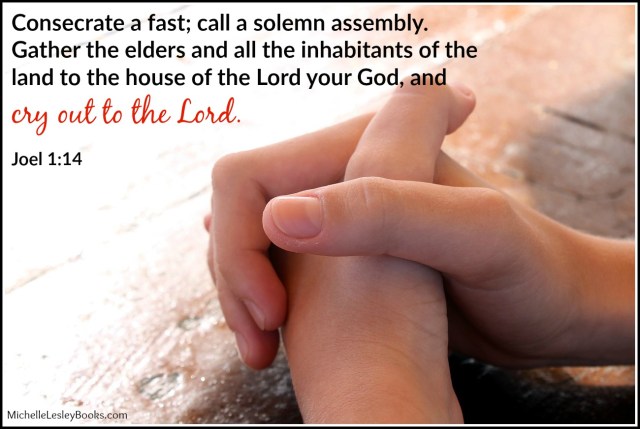
14 Consecrate a fast;
    call a solemn assembly.
Gather the elders
    and all the inhabitants of the land
to the house of the Lord your God,
    and cry out to the Lord.

15 Alas for the day!
For the day of the Lord is near,
    and as destruction from the Almighty it comes.
16 Is not the food cut off
    before our eyes,
joy and gladness
    from the house of our God?

17 The seed shrivels under the clods;
    the storehouses are desolate;
the granaries are torn down
    because the grain has dried up.
18 How the beasts groan!
    The herds of cattle are perplexed
because there is no pasture for them;
    even the flocks of sheep suffer.

19 To you, O Lord, I call.
For fire has devoured
    the pastures of the wilderness,
and flame has burned
    all the trees of the field.
20 Even the beasts of the field pant for you
    because the water brooks are dried up,
and fire has devoured
    the pastures of the wilderness.


The Holy Bible, English Standard Version Copyright © 2001 by Crossway Bibles, a publishing ministry of Good News Publishers.


Questions to Consider:

1. What is the purpose or theme of the book of Joel? Which genre of biblical literature (epistle, historical narrative, wisdom, etc.) is it? To whom was the book written? What do verses 2-3 indicate about the gravity of the situation the rest of the chapter describes?

2. What was the natural disaster that fell on the land? (4) Which crops were affected? (10-12) How were the land and livestock affected by the natural disaster in verse 4? (18-20) What does Joel 2:12-14 suggest might be the reason Israel is experiencing this hardship?

3. What were two major aspects of Israel’s life the famine was detrimental to? (16) How were “joy and gladness [cut off] from the house of our God”? (9) How might a natural disaster, war, or other major catastrophe affect your church? In what ways would worship be affected?

4. How was Israel to respond to the famine? (13-14, 19) Who was to lead the way in lamenting and crying out to God? What should our response be when trouble or disaster strikes? What are some ways pastors can lead the way when a catastrophic event impacts the church?

5. What does this chapter teach us about God’s sovereignty? His judgment? How does this chapter hint at the intensity and the dreadfulness of God’s final judgment on the earth?

Sanctification, Throwback Thursday

Throwback Thursday ~ Six Cliches Christians Could Can (Or at Least Re-think)

Originally Published March 29, 2014


Have you ever noticed we use a lot of expressions without giving much thought to their origin or what they really mean? For example, why do we use the phrase, “in a (pretty) pickle” to mean “experiencing a difficult situation”?

Here are six cliches we often use as Christians that could stand to be replaced or at least re-thought:

1795610_10153768796270386_733462403_n1. Preach the gospel. If necessary, use words.
It’s necessary. Use words. While our behavior should certainly prove out our testimony, nobody’s going to see us working at a soup kitchen or eschewing barhopping and somehow magically understand that he has broken God’s law and needs to repent and put His faith in Christ’s death, burial, and resurrection for the forgiveness of his sin unto eternal life. That has to be explained. Clearly. By us. From the Bible. With words.


tombstone-159792_6402. Rest in peace/God rest his soul
If the person who died was saved, he’s already resting in peace by the time you can get these words out. (2 Corinthians 5:6-8)

If the person who died wasn’t saved, unfortunately, he’s in a place of eternal torment and suffering, and no amount of asking God to rest his soul will give him a respite. Worse, when Christians say this about someone they know was not saved, they reinforce the false idea many lost people have that the dead are “resting” in some sort of spiritual coma, or that they simply cease to exist (annihilationism) , or that everybody automatically goes to Heaven (universalism).

Maybe “I’m praying for you,” or “I’m bringing you dinner,” would be better.

and speaking of which…


th3. Sending positive thoughts/energy your way.
Thoughts and energy are not things you can wrap up in brown paper, haul down to the post office, and mail to somebody. You can’t send them and the other person can’t receive them, and they can’t actually accomplish anything, and everybody knows this. But, commendably, atheists, New Agers, and other non-Christians wanted to have something compassionate to say to people who are hurting, and since they can’t say, “I’m praying for you,” this is the best they can do.

Christians, we’ve got something better. We can say, “I’m praying for you.” We have an open line to the almighty God of the universe who is listening to us and can actually do something about the situation. Pray for that hurting person. Put your arms around her. Listen to her. Do whatever you can to help. Show her Jesus, not empty words.


RNR084. Christianity isn’t a religion, it’s a relationship.
The only people running around today saying that Christianity is not a religion are Christians. Everybody else in the world considers Christianity a religion. And up until this little humdinger materialized, so did Christians.

Usually, what people mean by this is that true Christianity is not an institutionalized system of rote obedience to dead and meaningless rituals. It’s a reconciliation with the only true God by means of being redeemed by His Son, Jesus Christ, who propitiated and expiated God’s wrath against us in our sin through His death, burial, and bodily resurrection, and is, therefore, a dynamic and living interpersonal relationship.

But that’s too long to fit into a tweet or a hashtag.

Our relationship with God through Christ is our religion- the only true religion. And that’s not a bad thing.


ttgpt231112b5. Don’t judge someone just because he sins differently than you do.
I find this one confusing, but I think the sentiment behind this is something along the lines of, “I may be an adulterer, but you’re not any less of a sinner just because you only tell the occasional white lie.  Therefore, you have no right to call me to repentance.”

This is a lovely casserole of simultaneous truth and falsehood, and it all hinges on the word “judging,” which has been tossed around so much that even Christians scarcely know what it means anymore. No, we’re not to berate someone for his sin while pompously pretending we’re sin-free. All have sinned, after all, and if we say we have no sin, we lie. But does that mean we should never call anyone to repentance? Of course not! We’re to walk in repentance ourselves and seek to help the lost find forgiveness in Christ and help our Christian brothers and sisters who have fallen into sin to be reconciled to Christ. Scripture doesn’t say we can never call people out of sin because we have a log in our own eye. It says first remove the log and then help your brother.


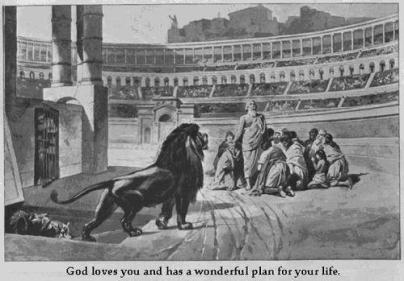
69475_10102578902186220_955102342_n6. God loves you and has a wonderful plan for your life.
This is actually true, it’s just that our idea of a “wonderful plan” doesn’t always match up with God’s idea of a “wonderful plan”.

Our desire is to be healthy, wealthy, and blissfully comfortable with never a family problem, fender bender, lost love, or bankruptcy. God’s desire is for us to be holy. He wants to root the sin out of our lives, show us how to be completely dependent on Him, lead us to trust Him more, build our character and endurance, give us boldness to share the gospel, make us kinder and more merciful, teach us what it means to extend grace and forgive. Most of those lessons are learned only through hardship and suffering. Just ask the apostles or the early church martyrs or our brothers and sisters being persecuted across the globe today.


What are some expressions Christians commonly use that you think we should replace or re-think?

Guest Posts

Guest Post: What I Want in a Church

If your theology pretty much matches up with mine (as outlined in the “Welcome” and “Statement of Faith” tabs) and you’d like to contribute a guest post, drop me an e-mail at MichelleLesley1@yahoo.com,
and let’s chat about it.
lisa engel church

What I Want in a Church
by Lisa Engel

1. I need the FULL counsel of God preached. I don’t need a preacher who tip-toes around certain parts of the Bible because he’s afraid to offend or appear judgmental (to those who don’t understand Matthew 7 in its context)

2. I want a church whose preacher and (male) elders warn the flock about apostasy and wolves in sheep’s clothing. They need to instill the importance of discernment because the internet and broadcast television, especially, are rampant with heretical teachings.

3. I want a church that isn’t focused on appealing to my flesh and “feelings”. I don’t need a “seeker-friendly” church. Church is a meeting place for the believer, no? We are there to be equipped to go out and seek the seekers and THEN bring them into the fold. What people are fed is what they’ll return for. The main thing needs to be the main thing and it mustn’t be entertainment and amusement.

4. After sound preaching, I need fellowship, accountability, sharpening, edification, and hopefully rebuke when necessary.

5. I’d like women’s Bible studies to be overseen by the male leaders of the church. I believe they need to use biblical discernment regarding study materials the women use. (This goes for any material any other group within the church might use) Too often, women choose their own material and choose the latest fad study that can likely be from a false teacher. And what’s wrong with just studying the Bible on its own anyway???

6. I’d like a church library where books are reviewed and discerned BEFORE being made available to the flock. There are a LOT of heretical books on the market that fill church library shelves. This shouldn’t be! Books on meditation and extra-biblical revelation are rampant. Warnings regarding so-called “Christian films” would be wise too. People are feeding on all sorts of heresy outside of their local church. Why not ongoing classes on discernment and how to to be good Bereans?

7. I need a prayer-minded church, not one where it’s more about potlucks.

8. I need a church that knows doctrine matters and makes clear their views on theology.

9. My church needs to be clear on where it stands on social issues such as gay marriage and the sanctity of life. The flock needs to hear preaching on such subjects from time to time. Too often the pulpit never touches on these things. It’s very important these days for a pastor to speak out on the issues of the day. It would be nice if the church, on its webpage, would acknowledge that it believes in the sanctity of life and traditional, biblical marriage.

10. God is Sovereign. I need my church to understand this.

11. Easter eggs and bunnies. We are to be in the world and not of it. Isn’t there enough of the Pagan Easter celebration in the world? Why on Earth would a church host Easter egg hunts??? To get the unsaved kids and their families in the church door? A terrible marketing scheme, wooing people with something OTHER than Gospel message. Is not the Gospel message enough without having to incorporate the nonsense of eggs and bunnies? It makes zero biblical sense. But churches will find a way to incorporate the eggs and bunnies into the Gospel message because they obviously don’t think the Gospel message can stand on its own. Churches only add to the confusion in doing Pagan celebrations. Scrap the eggs and bunnies for the Cross.

12. Yoga. Christianized yoga. Whatever twisted name it is given, a church that supports this Eastern religion practice is ignorant. I wouldn’t attend a church where this was endorsed or offered, any way it’s labeled.


Lisa is a wife, mom and grandma who loves her Lord Jesus Christ and wants to contend as earnestly as she can for the faith.


ALTHOUGH I DO MY BEST TO THOROUGHLY VET THE THEOLOGY OF THE BLOGGERS WHO SUBMIT GUEST POSTS, IT IS ALWAYS POSSIBLE FOR THINGS TO SLIP THROUGH THE CRACKS. PLEASE MAKE SURE ANY BLOGGER YOU FOLLOW, INCLUDING ME, RIGHTLY AND FAITHFULLY HANDLES GOD’S WORD AND HOLDS TO SOUND BIBLICAL DOCTRINE.

Prayer

Throwback Thursday ~ “Can We Talk?”

Originally published, February 9, 2012

“Thanks for meeting with me, today, Dad,” said the tow-headed six year old as he strode across the study, arm extended for a firm handshake.

Smiling, the father grasped the child’s hand, assuming a hug would follow. When none did, he stood, somewhat dismayed, as his son took the chair opposite the imposing mahogany desk and motioned for him to take his accustomed place behind it.

Oh. This was going to be one of those conversations.

“I only have about five minutes,” said the boy, briskly, as he clicked open the latches on his caramel brown leather brief case and withdrew two copies of a neatly typed agenda, “so let’s get down to business.”

“First, as I’ve mentioned numerous times, I’d like you to get me that big shiny motorcycle I’ve been wanting. And would you please hurry up about it? I’ve been asking for that bike for a long time, and I don’t understand why you haven’t given it to me yet.”

Again with the motorcycle? Doesn’t this kid get that he’s six? There’s no way he could handle a bike that large and powerful, and I love him too much to see his guts splattered all over the pavement. Yeah, that’s gonna be a big, fat “no.”

“Next,” the boy hurried on, “I’m kinda in a jam. You see, there’s this big spelling test tomorrow, and I haven’t had time to study for it. Could you sit by me in class tomorrow and give me all the answers?”

Haven’t had time? Yesterday he played video games for two hours, and the day before that I heard him throwing a tennis ball up against the side of the house all afternoon!

“And finally, Sparky seems to be limping around lately. Could you take a look at his paw and fix it up with some of that special cream?”

Well…sure. You know I’m always glad to help, but…

“Thanks for everything, Dad,” the boy chirped as he hopped off his chair and headed for the door, “I’ve got to run. See you later!”

Bye…Son.


I can just see that Dad standing there, forlorn, missing his son. The son who lives under the same roof with him. The son he watches play ball, play with his friends, and achieve the great feats of six year olds. The son who never really talks to him.

The father longs to have an intimate, “Daddy’s home!” relationship with his child. To have his son run up, give him a hug, and jump in his lap to tell Dad all about his day. He wants to share his child’s joys and sorrows. He wants to hear his heart.

And if the child really thought about it—or even knew such a relationship could exist—he’d want the same thing.

We can have that kind of joyous relationship with our Heavenly Father. It really is possible.

But how?

Well, think about how you relate to the person you love the most in the world. Because you love that person, you want to spend time with him. You’re relaxed around each other. You enjoy being together. You share everything—your deepest secrets, your regrets, your hopes for the future, your concerns for others, your frustrations, your joys, your sorrows, even the mundane, day to day happenings of life.

You’ve probably never read a book, taken a class, or attended a lecture on how to talk to that special someone. And you’ve probably never made a list of conversation topics for your next get-together with him. This is a friendship, not a business meeting.

Now think about how our connection to God is illustrated in Scripture. He’s called our Father (Matthew 6:9); Jesus is our brother (Matthew 12:50) and our friend (John 15:14); the church is the bride of Christ (Revelation 19:7). These are the most intimate relationships we know, and they’re used to describe a bond of love and friendship with God.

So, why do we have so much trouble talking to Him? Why is it that, so often, what’s supposed to be a heartfelt conversation with God feels like a one-sided recitation of a laundry list of prayer requests?

In some ways, we’ve done it to ourselves. There are thousands of books, Bible studies, and other materials on how to pray. Preachers preach on it. Teachers teach on it. There are acronyms you can follow, lists you can make, prayer calendars, even apps and on-line prayer organizers. None of these things are inherently bad, in fact, some are excellent—I’ve used and recommended some of them, myself.

But, I think that, sometimes, when faced with all of these resources and methodologies, one of two things can happen. First, you can become paralyzed by all the choices, not know which one to choose, and give up on prayer because you think it’s too complicated. Or, you might try to use too many prayer resources and become overwhelmed because they don’t work for you or you can’t keep up with all of them. Second, you can fall into the trap of thinking you have to use some sort of prayer resource or methodology. You can become enslaved to the structure, and that stands between you and intimacy with God like a brick wall.

May I make a suggestion here?

Throw out the lists. Put away the prayer calendar. Turn off the app.

Just talk to your Father. Talk to Him like He’s the person you love most in the world. Pour out what’s on your heart to Him.

If you’re not sure how to do that or what to say or whether you might be doing it wrong, tell Him about that, and ask Him to help you. It’s OK to ask God to show you how to talk to Him. The disciples did, and Jesus gladly obliged (Luke 11:1-13).

Don’t become paralyzed by the number of prayer requests you think you have to keep up with, either. I know that some churches have prayer lists a mile long, plus prayer calendars for missionaries, and you have friends and relatives asking you to pray for certain things. Sometimes, our prayer time can feel like we’re the office flunky armed with a long list of orders being sent out to pick up lunch for everybody. “Get those orders right! Don’t forget anything!” But prayer is not about completing a checklist of everyone else’s concerns. It’s about you and God, and it should be governed by God, not ruled by a list.

Wait a minute. This is starting to sound selfish. Aren’t we supposed to pray for others? Well, yes…and, no. What we’re supposed to do is to submit ourselves and our prayer time to God’s word and the leadership of the Holy Spirit.

That sounds great, but what does it mean in practical terms?

  • Study God’s word before you pray. As you do, He’ll begin leading you to the things He wants you to pray about.
  • Ask God what to pray about. Often, I’ll open a prayer meeting by praying that God will lead our prayer time and that He will put all the things on our hearts that He wants us to pray about.
  • Resist the list. Trust God to lead you to the things He wants you to pray about, and let your conversation with Him flow freely from your heart. Don’t worry about forgetting something on your prayer list.
  • Prayer time isn’t self-contained. Usually, my praying for others is done throughout the day rather than during my set prayer time. When someone asks me to pray for something, I’ll stop right then and do it. There are certain missionaries and other Christian ministries that I pray for when I receive an e-mail or Facebook update from them. Most of the time, unless God lays something on my heart during my personal prayer time, I only pray for requests on the church prayer list during the prayer meeting in which I receive them.

Relax. Just talk to Him.

“…the prayer of the upright is His delight.” Proverbs 15:8

Politics, Prayer, Throwback Thursday

Throwback Thursday ~ Not Gonna Bow: 5 Reasons Prayer in School Isn’t the Magic Bullet Christians Think It Is

Originally published August 29, 2014Prayer In School

“We need to put prayer back in school!” It’s a well worn mantra that many Christians have been shouting from pulpits, in PTA meetings, and now on social media since the early 1960’s when it was outlawed. No, we don’t need to put prayer back in public schools, and I think if Christians who think that the United States would revert to some idyllic 1950’s utopia by re-instituting classroom prayer would give it five minutes of serious thought, they would run as far as they could from the idea of prayer in public schools.

Now, just so there are no misunderstandings, when I say “prayer in public schools,” I’m not talking about things like a child saying the blessing over his own lunch, or a group of kids who want to pray together during free time, or an after school club that wants to include prayer. Those are all voluntary, private things that should, by all means, be allowed. When I say “prayer in public schools,” I’m talking about a teacher or a student or someone over the loudspeaker leading the entire class in prayer during class time. And we definitely do not want that. Why?

1. What’s good for the Christian goose is good for the Muslim/Mormon/Atheist gander.
There is no way in the current cultural climate –none whatsoever- that any court in this land will re-institute Christian prayer, and only Christian prayer, in the classroom. And even if some well meaning judge did manage to do so, his decision would be overturned faster than you could say “amen.” You want prayer in the public school classroom? You might get Christian prayer, but you’re also going to get Muslim prayer, Mormon prayer, atheist prayer, Hindu prayer, Satanist prayer, and any other sect that comes along and wants to do prayer in the classroom. Do you really want your six year old faced with the choice of participating in a Satanic prayer or trying to get permission to abstain? Neither do I.

2. Why is it so important that we have prayer in schools?
Assuming you don’t work at a church or ministry, does your workplace gather all the employees at the beginning of the day and start with prayer? No? Has that been deeply detrimental to you personally or to your workplace? No? Then why is it so important that schools have prayer?

3. Post hoc ergo propter hoc.
This nifty little Latin phrase means “after this, therefore, because of this.” It refers to the faulty reasoning people sometimes use by assuming that because two events occurred near the same time or seem to be related, one of them must have caused the other.

Time and time again, I have heard Christians bemoan the moral state of this country and wail, “It all started when they took prayer out of schools!”

Post hoc ergo poppycock

If the moral state of this country was so perfect before 1962, then how in the world did prayer ever get taken out of schools in the first place? No, things started going downhill in this country long before prayer was removed from schools. It was as a result of that moral decay that prayer was taken out of schools.

Saying that the removal of prayer from public schools created the mess our country is in today would be like someone sixty years from now saying, “When the Supreme Court legalized gay marriage nationwide, that’s when things started going bad for America.”

Because things are just so morally peachy right now.

4. It isn’t biblical.
It is not the job of a secular governmental institution or employee to monitor or lead our children in prayer, and no one could make the case from God’s word that it is. Scripture tells us that leading in prayer is the job of Christian parents and the church.

Neither would it be biblical for the sake of unsaved children in your child’s class that you’re hoping will somehow get saved by someone leading a prayer every morning. That’s not how people get saved. If you’re concerned about lost children, teach your child how to share the gospel. Befriend the children’s parents and share the gospel with the parents yourself. It’s free, it can be done immediately, without waiting for court decisions (that won’t be coming anyway) and it’s biblical.

5. It’s hypocritical.
It is often Christians who exclaim the loudest, and rightly so, that the government should back off and stop trying to control, regulate, and meddle in every square inch of our lives. Yet with regard to prayer in schools, Christians talk out of the other side of their mouths and practically beg the government to insinuate itself into an issue it has no business touching. (Not to mention that the government does such a bang up job of handling things like this.)

Will those very Christians complain if the government re-institutes prayer and then tries to regulate it just like they do everything else? And what about depending on the government for a handout of prayer when we are the ones who should be doing the work of teaching prayer and sharing the gospel? Isn’t that a sort of prayer “welfare” system? Putting prayer back in public schools would be a nightmare of false religions and government regulations.

We don’t need prayer in schools. We need prayer in homes and in churches. We need people sharing the gospel with their friends, fellow students, neighbors, and co-workers. We need Christians to be the salt and light Jesus called us to be in the world we actually live in rather than pining away for an imaginary ideal that will never come to fruition.


¹I only wish I were clever enough to have come up with this. Kudos to CHRIS ROSEBROUGH’S wife who coined the Phrase.