Discernment

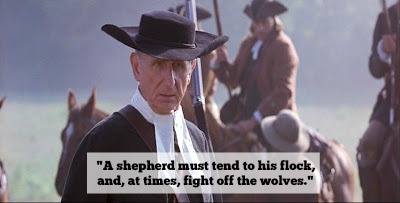
Fighting Off the Wolves

12974352_1075682862478482_4420640709694072913_n

I love pastors. I really do. As a minister of music’s wife, church member, and through involvement in other ministries, I’ve known a lot of them. They have a tough job that most of us wouldn’t take on in a million years. I pray for and encourage my own pastor and my pastor buddies regularly, and try to remind y’all to do the same from time to time. All this to say, I’m not a preacher-basher. Far from it.

But sometimes there’s a bit of a veering in a dangerous direction, like a vehicle heading towards the center line, among (some, not all) pastors who are momentarily distracted and might need a friendly “Hey, did you see that truck we’re about to crash into?” from their terrified, front seat passenger.

Color me terrified.

There are pastors out there who treat false teachers with kid gloves. They refuse to label anyone as a false teacher, or only vaguely allude to certain false teachers without naming names. I’d like to encourage those pastors to pull the steering wheel to the right and call a spade a spade. Yes, they need to use the label of false teacher soberly, sadly, and only after making sure, with hard evidence, that it is warranted, but enough with grown men of God tiptoeing around under the guise of “we don’t know what’s in that person’s heart” or “I’m afraid to be painted with the ‘mean old discernment blogger’ brush.”

Enough with grown men of God tiptoeing around under the guise of “we don’t know what’s in that person’s heart” or “I’m afraid to be painted with the ‘mean old discernment blogger’ brush.”

The Bible doesn’t say anywhere that a pastor shouldn’t call someone a false teacher and warn the flock about him just because the pastor doesn’t know for sure what’s in the person’s heart or because he’s afraid of what others might think. We are all to look at their words and their behavior and judge (that’s right, I said “judge“) whether or not they are teaching what accords with sound doctrine. And if they’re not, they need to be denounced. Not in a wild-eyed, foaming at the mouth, wingnut way, but certainly loudly and decisively as a mature man of God.

We never see Paul or Jesus or Peter or Jude or any other godly man in the Bible being over-cautious about firmly calling out those who had proved themselves to be false teachers.

We never see Paul or Jesus or Peter or Jude or any other godly man in the Bible being over-cautious about firmly calling out those who had proved themselves to be false teachers.

“Beware of the leaven of the Pharisees and Sadducees.” – Jesus, Matthew 16:11

“Woe to you, Scribes and Pharisees, hypocrites…blind guides…fools…serpents…brood of vipers.” – Jesus, Matthew 23

“For such men are false apostles, deceitful workmen, disguising themselves as apostles of Christ. And no wonder, for even Satan disguises himself as an angel of light. So it is no surprise if his servants, also, disguise themselves as servants of righteousness. Their end will correspond to their deeds.” – Paul, 2 Corinthians 11:13-15

“For certain people have crept in unnoticed who long ago were designated for this condemnation, ungodly people, who pervert the grace of our God into sensuality and deny our only Master and Lord, Jesus Christ.” – Jude, Jude 4

“They count it pleasure to revel in the daytime. They are blots and blemishes, reveling in their deceptions, while they feast with you. They have eyes full of adultery, insatiable for sin. They entice unsteady souls. They have hearts trained in greed. Accursed children! Forsaking the right way, they have gone astray.” – Peter, 2 Peter 2:13b-15a

“But even if we or an angel from heaven should preach to you a gospel contrary to the one we preached to you, let him be accursed. As we have said before, so now I say again: If anyone is preaching to you a gospel contrary to the one you received, let him be accursed.”
Paul, Galatians 1:8-9

Would pastors today be wise to use this same kind of verbiage? Maybe. Maybe not. These godly men spoke and wrote in a way that was appropriate for their time, culture, and context. Our time, culture, and context are different and may call for a different approach. But the point is, none of them were afraid to speak the truth boldly about false teachers in order to protect the sheep God had entrusted to them. And we sheep today desperately need courageous shepherds who will do the same.

Pastors, if you speak out against false teachers, there are people who will get mad at you. It’s unavoidable. But there are others who know the truth and will be cheering you on and supporting you. And there are still others you will turn back from false doctrine who will learn the truth of God’s word and love you for warning them. And their souls are worth any risk or trial.

Be encouraged, dear pastors. Be strong in the Lord. Be faithful to Him. You can do this!

Be encouraged, dear pastors. Be strong in the Lord. Be faithful to Him. You can do this!

Remember the words of your brother and fellow laborer Paul, who, after condemning false teachers in Galatians 1:6-9, may have anticipated the same backlash you might receive:

For am I now seeking the approval of man, or of God? Or am I trying to please man? If I were still trying to please man, I would not be a servant of Christ.
Galatians 1:10


Photo and quote courtesy of The Patriot. ยฉ2000, Columbia Pictures, Inc.
Mailbag

The Mailbag: Expository or Topical Preaching: Which is better?


I would like to read your thoughts on expositional vs. topical preaching. I know we can benefit from both but is one superior to the other and why?

Great question! You’re right, both forms of preaching can be beneficial as long as the pastor properly exegetes (rather than eisegetes) Scripture.

For readers who might not be familiar with the terms, expository preaching is basically when a pastor preaches through books of the Bible from beginning to end carefully explaining what each passage means. He might go through only a few verses each week, or maybe a chapter each week, so the time it takes to work through a book will vary from pastor to pastor.

The termย topicalย preaching can have a couple of different meanings depending on who you’re talking to and what she understands the term to mean. Some people understand “topical preaching” to mean a sermon series, usually in a seeker drivenย church, that centers around something in pop culture. (For example, popular moviesย or the Olympics.) Normally, these sermons are very shallow, biblically – sometimes nothing more than a pep talk or self-help tips. This type of preaching is unbiblical, and if it makes up the bulk of the preaching at your church, I’d recommend finding a new church.

There is, however, a biblical form of topical preaching that can be very helpful. If a doctrinally sound pastor sees an issue in the church that needs to be addressed, there is nothing wrong with his taking a break from preaching through a certain book (or when he’s between books) to teach on this issue from the pulpit.

For example, pastors in Parkland, Florida,ย might wish to take a few weeks right now to preach sermons on “Why does God allow tragedies to happen?”, “How can I biblically comfort the families of the victims?”, “Are the victims of the shooting in Heaven?”, and so on. One great topical sermon concept I’ve seen is for the pastor to give the congregation the opportunity to submit biblical questions and then preach sermons answering those questions. Other times a pastor might address a biblical topic for several weeks, such as peace, the gospel, the Fruit of the Spirit, or parenting. As long as these topics are driven by “let’s look at what the Bible says about X” and the pastor handles Scripture correctly and in context, topical preaching is both biblical and beneficial.

My personal opinion (this is not law and there may be plenty of perfectly doctrinally sound pastors who disagree) is that the majority of a pastor’s preaching should be expository with occasional breaks for (biblical) topical preaching as needed. Why?

โœข Expository preaching usually covers a wider spread of Scripture and a wider variety of topics. Topical preaching is, by definition, very narrowly focused on fewer passages and fewer topics.

โœข Expository preaching models for the congregation the proper way they should study the Bible at home. Most of the time, in your daily Bible study, you should be working your way through books of the Bible systematically. (That said, topical preaching done properly isย alsoย helpful for demonstrating to the congregation how to correctly find and apply Scripture to various topics and situations which arise in their lives. We need to know how to do both, but the former is primary.)

โœข Expository preaching helps a pastor better preach the whole counsel of God. He doesn’t have to worry that he’s neglecting to teach on a certain issue and wrack his brain trying to think of what that issue might be. With expository teaching, Scripture takes care of that for him.

โœข I have to think that expository preaching is easier than being forced to come up with a new topic or series every week or few weeks. I’m not a pastor, but the Bible studies I post each Wednesday are nearly always expository. The articles I post each Friday are nearly always topical. Hardly a week goes by that I don’t fret over coming up with a topic for the Friday article and struggle against writer’s block. But I know exactly what each week’s Bible study is going to cover: whatever the next passage of Scripture is in the book we’re studying. Exposition eliminates “forced creativity stress” for me, and I’m thinking maybe it’s similar for pastors.

โœข Expository preaching pushes pastors to tackle hard and unfamiliar passages as they come up in the text, making them more biblically knowledgeable and well-rounded, and allowing them the blessing of depending on God in prayer to open their eyes to understand His Word.

โœข Expository preachingย shouldย keep the Old Testament and certain books of the Bible from being neglected as much as they usually are. There are only 66 books in the Bible to preach through. Eventually you’re going to have to get to the minor prophets, Leviticus, Jude, Philemon, Song of Solomon, and the really long books of the Old Testament. Ostensibly. I’m sure there are expository pastors out there who have preached through the more neglected books, but I’ve never sat under a pastor who preached through Nahum or Zephaniah or Ezekiel. Just sayin’.

โœข Expository preaching gives the congregation a better grip on the overall story arc of the Bible and the culture of the period being studied. If your pastor preaches a topical sermon on leadership from Nehemiah one Sunday, you’re not going to understand the post-exilic period of Israel’s history or the culture of that time nearly as well as if he preached through the entire book over several weeks or months. That knowledge and insight is something you can stick in your pocket and hang on to for studying other post-exilic Scripture at home or in Sunday School, or listening to other sermons dealing with that period of Israel’s history.

โœข Expository preaching better lends itself to encouraging the congregation to prepare for Sunday worship during the week. If you know what passage your pastor is going to be preaching on this Sunday, you can study, and even memorize verses, ahead of time to prepare your heart to hear your pastor preach it.

I just have a couple of caveats (still just my personal opinions) about expository preaching:

I don’t think it’s wise for a pastor to be so rigidly stuck on expository preaching that he ignores the leading of the Holy Spirit to preach the occasional biblical topical sermon when it would be a benefit and a blessing to his congregation simply because he sees himself as an expository preacher. Preaching a topical sermon or series from time to time doesn’t mean you have to turn in your expository preaching card.

Also, while verse by verse preaching is an excellent way to teach the text thoroughly, I once heard someone talking about her (very good, doctrinally sound) pastor who had been preaching through a particular book of the Bible for seven years and still had several chapters to go. I don’t think it’s a good idea to take that long on a single book. At that point, several of the aforementioned benefits of expository preaching are gone: the pastor has ceased to preach the whole counsel of God, he’s neglecting bibilical topics not found in that book, he’s neglecting other books of the Bible, he’s not helping his congregation learn the whole storyline of Scripture and the customs of various historic periods and cultures, and he’s not covering as wide a spread of Scripture as he could if he’d limit himself to a year or two, max, to finish one book and move on to the next.

Expository and topical preaching are both helpful in their own ways, but the most important thing is that the pastor is “rightly handling the word of truth.”


Additional Resources

Why topical preaching can never build a healthy churchย by Mark Dever

The Sheer Weightlessness of So Many Sermonsโ€”Why Expository Preaching Matters by Albert Mohler

What is topical preaching? Does it have a place in the church? by John MacArthur

Can Topical Preaching Be Expository? by Timothy Warren


If you have a question about: a Bible passage, an aspect of theology, a current issue in Christianity, or how to biblically handle a family, life, or church situation, comment below (Iโ€™ll hold all questions in queue {unpublished} for a future edition ofย The Mailbag) or send me anย e-mail or private message. If your question is chosen for publication, your anonymity will be protected.

Church, Encouragement

Words Fitly Spoken: 11 Ways to Encourage Your Pastor

I hope you have the blessing of sitting under good, biblical preaching at your church. I do. I’m always so thankful to hear God’s word beautifully preached in my own church, and I’m thankful for the all of the other godly men out there laboring faithfully each week to proclaim the truth of the gospel to the sheep God has entrusted to them.

Are you thankful for your pastor and a church that rightly handles God’s word? Are you telling anybody you’re thankful? Are you telling your pastor?

The ministry is a tough job, and pastors need all the encouragement they can get. Sometimes it’s the little things you say and do that can be a blessing to your pastor and make his job easier and more joyful. Proverbs 25:11 says:

Here are eleven ways you can encourage your pastor (and don’t forget your associate pastor, minister of music, youth pastor, etc.!)

1.
Pray for your pastor

Some specifics you can pray for:

๐Ÿ’ญ His wife and children

๐Ÿ’ญ His stress level, and for peace

๐Ÿ’ญ His finances and provision

๐Ÿ’ญ His marriage, and that he will be a good father

๐Ÿ’ญ That God will grow him in his understanding and handling of Scripture

๐Ÿ’ญ That God will grow him in discernment, and guard him from being influenced by false teachers/doctrine

๐Ÿ’ญ That God will protect him from temptation and lead him to repentance when he sins

๐Ÿ’ญ And here are even more ways to pray for your pastor.

Remember to tell your pastor you’re praying for him, and ask him if there’s anything in particular you can pray for him about.

2.
Show Up

First of all, Scripture says you’re supposed to be a faithful, active member of your local church. Second, it’s very discouraging to pastors when church members who are perfectly able to attend faithfully simply choose to let other, non-essential things take precedence.

3.
Be Present

Pay attention, be engaged, and have a pleasant look on your face during the sermon. If you’ve ever stood in front of a group of people, you know how easy it is to tell who’s “with you” and who’s not. And the more “with yous” there are out there, the more encouraging it is.

4.
A Word of Thanks

Just say thank you. Thank you for being my pastor, for being faithful to the Word, for encouraging me, for working so hard, for studying well…

Just say thank you. Thank you for being my pastor, for being faithful to the Word, for encouraging me, for working so hard, for studying wellโ€ฆ

5.
Submit to His Leadership

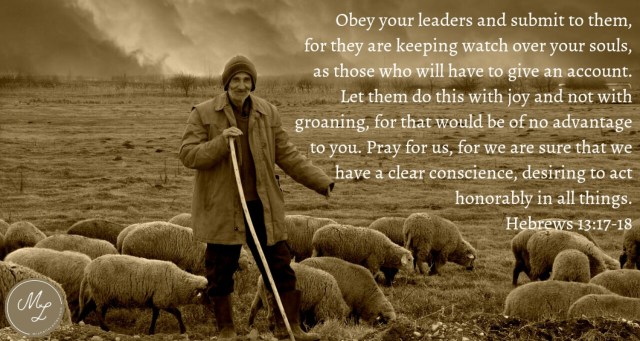
Take Hebrews 13:17-18 seriously:


Yes, there are abusive pastors out there. Yes, there are pastors who are flagrantly disobedient to Scripture in their leadership. If that’s your pastor, leave that church and find a pastor you can trust (yes, I know it’s hard), and whose leadership you can submit to. Don’t be the constantly complaining, argumentative, nit picky thorn in your pastor’s side.

6.
Don’t Major on the Minors

If you do need to speak to your pastor about something you disagree with him about, whenever possible, try to make sure it’s a biblical issue rather than an issue of preference, and make sure you do it in love and kindness, not in an attacking way.

7.
Wait, Mr. Postman…

Isn’t it nice to open your mail or e-mail and find something besides bills and bad news? Send your pastor a note, card, or e-mail of encouragement.

Isn’t it nice to open your mail or e-mail and find something besides bills and bad news? Send your pastor a note, card, or e-mail of encouragement.

8.
C is for Cookie (and Calories)

Think before you bake. When I want to send someone a little token of encouragement, my first instinct is always to bake something. But a lot of pastors, like everyone else these days, are dieting, so use wisdom. Maybe a gift card to his favorite store or restaurant, a book by his favorite author, or a service he needs performed would be better. Here are some more ideas if you want to give your pastor a token of appreciation.

9.
Fitly Spoken Words

Tell your pastor something you learned from the sermon or how God has been growing you through his preaching. Let him know how your Sunday school class is maturing. Tell him about the good progress that’s being made in the committee you serve on or the ministry you serve in.

Tell your pastor something you learned from the sermon or how God has been growing you through his preaching.

10.
Perfect Timing

Do not pull your pastor aside right before the service to discuss anything that could wait until later. He needs to be focused on preaching and worship. And don’t detain him for long after the service, either. He’s probably hungry, tired, has to go to the bathroom, and wants to get home to his family. Make an appointment during the week.

11.
Nobody’s Perfect

Remember that your pastor is human. He’s going to sin. He’s going to get things wrong. Don’t assume he knows why you’re upset with him. Don’t hold a grudge. Extend the same grace you would to anyone else, and forgive.

What are some other ways we can encourage our pastors?

Christian women, Church, Discernment, Guest Posts

Guest Post: Building a Biblically Healthy Women’s Ministry (by a pastor, for pastors)

If your theology pretty much matches up with mine (as outlined in the โ€œWelcomeโ€ and โ€œStatement of Faithโ€ tabs) and youโ€™d like to contribute a guest post, drop me an e-mail at MichelleLesley1@yahoo.com,
and letโ€™s chat about it.


Building a Biblically Healthy Women’s Ministry
(by a pastor, for pastors)

by Pastor John Chester

It is no secret that I am not a fan of discernment ministries, and that I think the concept of Biblical discernment is grossly misunderstood by many. But that in no way means that I donโ€™t think telling truth from error and sound theology from errant (or even heretical) theology is unimportant.

And nowhere is it more important than in womenโ€™s ministry. The reason I say that is simple, more than 50% of the people in our churches are either women or they are growing into women. According to The Pew Research Center 55% of those attending Evangelical churches are women.ย 

Yet womenโ€™s ministry is often not thought of much by us pastors, I think because we view โ€œwomenโ€™s ministryโ€ as a thing or program, rather than ministry to women who make up more than half of the congregation we are charged to shepherd. And so we spin it off to someone else or put it on our benign neglect list so that we can concentrate on โ€œmore importantโ€ things. But nothing is more important than the souls of the women of the church. And practically speaking, any error introduced in a womenโ€™s Bible study will work its way through whole families and infect the whole church.

With that in mind, let me offer some tips to guard against error in your churchโ€™s womenโ€™s ministry.

Preach The Bible

The pulpit sets the tone for the church and everything that the church does, or at least it should. The good news is that even the smallest church with the least talented preacher can have a strong pulpit, because the strength of the pulpit depends on what is preached, not the preacher. What the church needs is a healthy dose of Bible. And by a healthy dose, I mean all that should be preached is the Bible.

It is the Scripture that is inspiredย and the Word of God that is living and active,ย and it is the word of God that makes your pulpit strong, not your ability. No one needs your ten tips on having a more productive quiet time or your five steps toward a healthy marriage even if you sprinkle them with a few verses. The people the Lord hasย entrusted to you need to hear from Him, not you. Your job as a preacher is to decrease while the whole counsel of God is declared. By all means, illustrate, explain, introduce, conclude and apply the text, just stick to the text!

Why this is so important for womenโ€™s ministry and guarding the women of your church from error is that it will trickle down in to the church’s Bible studies. If on Sunday (and whenever else you preach) the women of the church get a strong dose of Godโ€™s truth, they are going to be better able to spot error and less susceptible to it. And when they see that you have a high view of Scripture, they will develop a high view of Scripture too. When they see you are a Berean who evaluates everything in light of what Scripture says, they will be more likely too as well.

And as a corollary, when youโ€™re preaching the Bible, use it as an opportunity to teach the church, women included, how to think about and interpret the Bible. Iโ€™m not saying that the pulpit is a place for a discourse on the grammatico-historic hermeneutic, but it is a place to (often) say things like โ€œthis would have meant to the original readersโ€ or โ€œcontext determines meaningโ€ or โ€œWhenever you see a ‘therefore,’ ask yourself, ‘What is the ‘therefore’ there for?’.โ€ These may be throwaway phrases to you, but they teach the congregation, including the women, how to approach Scripture.

Pay Attention

This seems very basic but it needs to be said, you need to know what is going on, what is being taught and what materials are being used. And you need to read any material being used in any class or study. Read, not skim, not look up on the internet, not ask your seminary alumni group on Facebook, but actually read. Need I remind you that you will give an account for how you cared for the souls the Lord entrusts to you? When you stand before God to give an account, โ€œWell, I Googled it,โ€ is not going to be good enough.

You need to pay attention to what is popular in the world of womenโ€™s ministry too. The women in your church buy and read more books than the men. Pay attention to what is out there, and donโ€™t be afraid to address any errors that are gaining traction inย โ€œchurchianityโ€.

Be The Bad Guy

What I mean by that is be willing to be the one to take the heat. Be willing to veto a book, a curriculum, or even a topic that the womenโ€™s Bible study wants to use, and be willing to have the leader lay the blame for the veto on you. I would much rather have someone say to me, โ€œWe wanted to use ________ book. Why did you say to use ________ instead?โ€ than have a bad book used, or quash the joy of the womenโ€™s Bible study leader if she became an object of scorn. And quite frankly (and this actually happened to me) I would rather have the womenโ€™s Bible study leader mad at me, than to have the women be taught something that is wrong.

Invest In Your Leaders

I am genuinely baffled by the lack of investment in womenโ€™s leaders. We pastors will often go out of our way to invest both time and treasure in a young man we think might one day have a significant ministry in our church (or dare we hope and pray) or even go into pastoral ministry themselves.. But we often fail to invest our time and treasure in women who have a significant ministry in our churches right now. Might I suggest that the bare minimum you should do for every Bible study leader (man or woman) is to provide basic instruction in hermeneutics. A great resource is Grasping Godโ€™s Word by Scott Duvall and Daniel Hays, and there is an excellent companion workbook that makes teaching basic hermeneutics a snap.ย I promise you that if you teach the teachers of the women in your church how to approach Scripture, it will rub off.

Invest time and invest treasure too. Provide at your (or the churchโ€™s) expense good reliable resources for deeper study to leaders of your churchโ€™s womenโ€™s Bible study. If the women are going through a book of the Bible (with an approved curriculum as the guide) provide reliable (and accessible) commentaries on that book. If the womenโ€™s Bible study is topical or using a topical book as a guide, provide some other good books for deeper study and reading.ย 

Be Approachable

The women of your church need to feel comfortable sending you an email, shooting you a text or even Facebook messaging you with a question. They should even feel OK picking up the phone and calling you if need be. I get the wisdom in erecting hedges and being careful how you interact with women. But you canโ€™t shepherd effectively if you treat over half of your congregation as walking third rails. Rest assured the women of the church will pick up on your reluctance to interact with them and they will be reluctant to approach you with any questions, doctrinal or otherwise.

If you are married, this is one area where your wife can really help you. Her saying โ€œyou should ask my husbandโ€ will go a long way. And as a corollary one of the worst things that can come out of your mouth when a woman from your church asks you a theological question is โ€œyou should ask my wife.โ€

If you are like me you will have to work at this. The one thing I can say that always gets a laugh from my wife is, โ€œIโ€™m a people person.โ€ Itโ€™s not that I donโ€™t love people, itโ€™s that I tend toward shyness, and Iโ€™m not super outgoing. So I work at being an accessible resource for the women of the church, and you can too. And who knows, you may one day be rewarded with a call where a newer believer asks โ€œIs it true that the Israelites ate the scapegoat?โ€. (That is a real question I got from a real woman in the church and why it is so important that women feel like they can pick up the phone and call you.)

Write

Your pulpit ministry and other teaching at the church is not enough. You need need to be regularly writing. As Al Mohler observed, โ€œLeadership is about communication, and much of that communication is necessarily writtenโ€ฆleaders must learn to write and to set time aside for writing.โ€

But you say you donโ€™t have time. Mohler, one of the busiest men on the planet offers this helpful bit of advice, โ€œYou do what you have to do.โ€ I contribute to a group blog with other pastors and a couple of former seminary professors. We all write with an audience in mind – our own church. Why? For two reasons, it builds a resource library that they can access, and it allows us to address issues that we may not get to address in a systematic fashion from the pulpit. Iโ€™ve covered topics like the various approaches to apologetics, what goes into a worldview, basic pneumatology, basic anthropology, how to bring Scripture to bear on anxiety, the sanctifying power of suffering, and much more. And yes I have written some things that would fall into the broad category of discernment, like why our church isnโ€™t charismatic, the danger of letting a prolife social gospel supplant the biblical gospel and the respect for life that flows from it, why assisted suicide is unbiblical and even why events like Together 2016 (which for the record took place in our proverbial back yard) should be avoided. I write because I want to educate the church, especially the women of the church, who as a rule read more, about these issues.

Be willing to Sacrifice

Whatever cherished activity or ministry is keeping you from being all in on your churchโ€™s ministry to the women of the church, give it up! Let me give you an example. I love our menโ€™s Bible study, so much so that I had the next three topics for the study preplanned. But currently there is no overlap in our church between the women qualified to lead a womenโ€™s Bible study and the women with the desire and time to do so. So the Wednesday night Menโ€™s Bible study I have taught since the church opened has been tabled and replaced with a coed midweek Bible study. Sure, I had planned on going through the topics covered in Men Counseling Men edited by John Street, but instead I am teaching an Old Testament survey course geared to Christians of both genders. Truth be told Iโ€™d rather be with the guys, but that is not the best thing for the church, and as pastors we should lead in counting others (including the women of the church) as more significant than ourselves.

I could go on and on, but Iโ€™ll close with this; it breaks my heart that Michelle asked me to write this guest post. When she asked me to write this post she said that multiple women had contacted her and asked if there was anything about how important it is to help church ladies tell truth from error that they could print out and give to their pastors. For shame! No one should be more concerned with the spiritual well being and growth of the women in the church than their pastors. That in some places and in some cases that is not true is a blight on our brotherhood. This is a profound failure to fulfill the charge of 1 Peter 5:1-4, and there is no excuse for it. As the Apostle said:

So I exhort the elders among you, as a fellow elder and a witness of the sufferings of Christ, as well as a partaker in the glory that is going to be revealed: shepherd the flock of God that is among you, exercising oversight, not under compulsion, but willingly, as God would have you; not for shameful gain, but eagerly; not domineering over those in your charge, but being examples to the flock. And when the chief Shepherd appears, you will receive the unfading crown of glory.


John Chester is the pastorย of Piedmont Bible Church, a Grace Advance church plant in Haymarket, Virginia. Prior to ministry John worked as a lacrosse coach, a pizza maker, a writer, a marketing executive, and just about everything in between. He hails from The City of Champions: Pittsburgh, Pennsylvania, and is blessed to be married to his wife Cassandra. Read John’s blog articles at ParkingSpace23.


Note from Michelle: I first had the pleasure of “meeting” John when I read and responded to this excellent article of his on ParkingSpace23. While he and I have a couple of differences on discernment ministry, I think the world of him as a brother in Christ, pastor, and fellow blogger. I literally teared up when I first read this guest post, because I wish every church could have a pastor like John.


ALTHOUGH I DO MY BEST TO THOROUGHLY VET THE THEOLOGY OF THE BLOGGERS WHO SUBMIT GUEST POSTS, IT IS ALWAYS POSSIBLE FOR THINGS TO SLIP THROUGH THE CRACKS. PLEASE MAKE SURE ANY BLOGGER YOU FOLLOW, INCLUDING ME, RIGHTLY AND FAITHFULLY HANDLES GODโ€™S WORD AND HOLDS TO SOUND BIBLICAL DOCTRINE.
Christian women, Discernment, False Teachers, Men

Women and False Teachers: Why Men Don’t Get It, and Why It’s Imperative That They Do

Confession time: Sometimes – OK, often – I think my brain works more like a man’s than a woman’s. You’ve got a problem? Suck it up- here’s the solution. The mall? A perfectly horrifying way to ruin a Saturday. And why do we have to hug people hello and goodbye when we see each other multiple times a week?

I’ve always been more comfortable around men, and when I was single, I had mostly male friends. They’re generallyยน less mysterious and easier to figure out than women, and they don’t usually play those manipulative emotional games some women can be notorious for. If a man says he wants a cheese sandwich, there’s no hidden “you don’t bring me flowers often enough” meaning there. He just wants a cheese sandwich. I like that. It’s pretty much how I operate.

Which makes me the perfect person for God to plunk down smack dab in the middle of women’s ministry, right?

Harrumph.

God just has this way about Him of stretching us and growing us beyond our comfortable little confines. I used to be terrified of walking into a room full of women (They’re so unpredictable! You never know when a big emotional scene might break out!) But after years of teaching and discipling women, developing close friendships with women, serving and ministering to women, I now walk into that room and see precious sisters, created oh so tenderly and intricately by God’s loving hands.

God purposefully and intentionally made each woman unique, but with common traits and perspectives that bind us together as sisters and differentiate us from men. And because men aren’t wired by God the same way women are, sometimes they’re just not going to get the way women think about things, approach people, or respond to issues. Sometimes (shopping, flowers, hugginess) that’s no big deal. They can shrug their shoulders, extend grace, and make space for the women in their lives to think, feel, and react differently than men would without really taking the time to understand why.

There’s at least one biblical issue women respond to differently at the core level of their spiritual DNA than men do. And men, it’s crucial that you get it on this one.

But there’s at least one biblical issue women respond to differently at the core level of their spiritual DNA than men do. And men, it’s crucial that you get it on this one. You’re the pastors. The elders. The husbands. The fathers. The ones responsible before God for leading your churches and your families in doctrinally sound spiritual growth. You’ve got to get this for the sake of the girls and women you lead:

Women respond differently to false teachers than men do.

And, ladies, we need to understand this about ourselves, too.

It started, not with the advent of modern feminism, or the church age, or even the Fall. It started in the Garden.

Genesis 3 begins…

Now the serpent was more crafty than any other beast of the field that the Lord God had made. He said to the woman

Have you ever wondered why the serpent approached Eve instead of Adam?

Before sin entered the world, before that snake in the grass even thought up his dastardly plan of deception, there was a void in the world. None of the animals or birds could fill it. Neither could Adam. God determined that, in order to make His creation complete, there was a need for woman to fill that void. So He reached down with His own two hands (so to speak) and personally crafted a woman.

God had made both animals and Adam out of cold, dead dirt. Not so with woman. God made woman out of soft, warm, living flesh, already coursing with life. God made man to tend the ground from which he had come. God made woman to tend the man from which she had come.

God made man to tend the ground from which he had come. God made woman to tend the man from which she had come.

And in the same way that God used a different method for creating man and woman and gave them different modes of work, He also gave them different mental and emotional makeups.

God created women with some incredible strengths. Women are usually much better nurturers than men. We’re often better at negotiating, compromising, and making peace between opposing parties. We’re more sensitive to what others are going through and how to treat people in a kind and compassionate way. We bear up under certain pains and stressors better than men do. We’re usually better communicators than men. And, frequently it’s much easier for women to trust, love, and give the benefit of the doubt to others.

And along with those unique strengths come unique challenges that we have to watch out for and that men need some insight about.

We’re kinder and more compassionate, so we have to be careful about people who would take advantage of that. Nurturing is great for raising our children, but if we baby them all their lives, that’s not healthy. Being trusting is a fantastic character trait, but it’s imperative that we be vigilant not to put our trust in the wrong person.

Could it be that the serpent approached Eve instead of Adam because he thought she would be more trusting, give him the benefit of the doubt, and thus be easier to deceive?

First Timothy 2:14 echoes this idea. In 1 Timothy 2:11-14, God explains that women are not to teach men or exercise authority over men in the gathered body of Believers – the church. He gives two reasons for this in verses 13-14. The first reason (13) is the Creative order: “Adam was formed first, then Eve”. God’s second reason is in verse 14:

and Adam was not deceived, but the woman was deceived and became a transgressor.

It’s interesting that verse 13 refers to the specific woman, Eve, but verse 14 uses the more generic term “the woman.” Are women, as a whole, more likely to be victimized by deceivers than men are? Scripture seems to point us that direction.

In 2 Timothy 3:1-9, Paul warns Timothy that people – including those in the church – will become more and more degenerate during the last days. There will even be those who have an outer facade of godliness but are not operating by the power and indwelling of the Holy Spirit (5). In other words: false teachers. Verses 6-7 tell us that among these false teachers are those…

…who creep into households and capture weak women, burdened with sins and led astray by various passions, always learning and never able to arrive at a knowledge of the truth.

In verse 16 of this same chapter we read that “all Scripture is breathed out by God,” and we know that God never makes mistakes or chooses His words haphazardly. So we know there’s a reason God uses the words “weak women” here. Not weak men, not weak Christians, not weak people – weak women. God graciously gives a warning to women not to be taken in by these false teachers, and an exhortation to men – particularly pastors, since this is a pastoral epistle – to protect the women of their churches and families against those who would prey upon tenderhearted, trusting women.

One reason these women are weak is that they’re led astray by various passions. Today, the word “passion” or “passionate” often has a sexual connotation, but that’s not the only meaning, especially not here. Dictionary.com defines passion as “any powerful or compelling emotion or feeling, as love or hate; a strong or extravagant fondness, enthusiasm, or desire for anything.” Merriam-Webster says passion is, “the emotions as distinguished from reason; a strong liking or desire for or devotion to some activity, object, or concept.”

As with so many other valuable characteristics God has blessed women with, passion is a two-edged sword. God wants us to have a passion for holiness, pursing Christ, and biblical ministry to others, but we have to be extremely careful to steward that passion with the reins, bit, and bridle of discernment and knowledge of the Scriptures. Otherwise, we will pour our passion – our powerful and compelling loyalty, enthusiasm, fondness, and love – into the wrong teachers and doctrines.

Which brings us full circle to Eve, because that’s where her train jumped the tracks.

But the serpent said to the woman, โ€œYou will not surely die. For God knows that when you eat of it your eyes will be opened, and you will be like God, knowing good and evil.โ€ So when the woman saw that the tree was good for food, and that it was a delight to the eyes, and that the tree was to be desired to make one wise, she took of its fruit and ate, and she also gave some to her husband who was with her, and he ate.
Genesis 3:4-6 

Notice the serpent doesn’t invite Eve to do something blatantly evil. “God knows…” “…you will be like God.” He’s tempting her to do something she thinks is godly. Then Eve takes her eyes off God and His Word and looks instead at the tree.

๐ŸƒIt was good for food The fruit would satisfy a felt need. It was practical. She and Adam needed supper. Here was an easy solution. And, besides, it looked delicious and nutritious.

๐ŸƒIt was a delight to the eyes– The fruit appealed to Eve’s sense of beauty. It looked good to her.

๐ŸƒIt was to be desired to make one wise– Eve had a passion to grow in wisdom and godliness, and this beautiful, appealing, practical, attractive fruit seemed, in her eyes, the best and most enjoyable way to reach that goal.

This is the same way women are being deceived today. The attractive “tree” (Ever notice that most false teachers are at least somewhat physically attractive – “a delight to the eyes”?) extends a branch with lovely-looking, supposedly nutritious fruit on it which she says will lead to godly wisdom and growth (even though her teaching conflicts with God’s written Word). And it’ll be delicious too. Those who bite the apple will feast on love, positive thoughts, encouragement, and self-esteem-building teaching. It’s too appealing to the woman’s senses – and she’s too weak in her knowledge of Scripture and her desire to obey it – to pass up. She succumbs to the passions of her senses, plucks the fruit, and eats.

And then a fascinating phenomenon begins to take place. The weak woman feeds her passions with the fruit of false doctrine, and then she begins to pour that passion – that intense, compelling loyalty, love, fondness, and enthusiasm – into the false teacher herself. As anyone who has ever tried to gently open a devotee’s eyes can attest, hell hath no fury like a confronted Beth Moore disciple. I have seen women defend their favorite false teachers – against clear Scripture, mind you – with a viciousness I’m not sure I could muster to protect my own children against physical harm.

Men may enjoy a particular false teacher, but women worship them.

Men may enjoy a particular false teacher, but women worship them.

And this is the crux of the difference that men rarely grasp when the topic of discernment comes up. I’ve talked to countless pastors who don’t understand why simply preaching and teaching sound doctrine from the pulpit and in the Sunday School class isn’t sufficient to protect their churches from the infiltration of false doctrine and false teachers. This is why.

I’ve talked to countless pastors who don’t understand why simply preaching and teaching sound doctrine isn’t sufficient to protect their churches from false doctrine and false teachers. This. is. why.

Maybe a man will hear hear a biblical truth, realize the preacher he’s been listening to conflicts with it, and simply walk away. A woman won’t. Because, not only has the teaching a woman listens to inextricably wrapped its tentacles around the very core of her soul, she has also formed an emotional bond with the teacher that’s almost impossible to break. She loves her. And she will nearly always choose that loving, bonded “relationship” over biblical truth, giving the teacher the benefit of the doubt and making excuses for her every step of the way.

A woman will nearly always choose that loving, bonded “relationship” with the teacher over biblical truth, giving the teacher the benefit of the doubt and making excuses for her every step of the way.

The Holy Spirit gets it. He understands the power false teachers wield over weak women and the destruction false teaching in general brings upon the church, so He inspired Paul to write Titus 1:9:

[A pastor] must hold firm to the trustworthy word as taught, so that he may be able to give instruction in sound doctrine and also to rebuke those who contradict it.

Pastors who only preach sound doctrine are only doing half their job.

Pastors who only preach sound doctrine are only doing half their job. And notice that this verse doesn’t merely say to “rebuke teaching that contradicts sound doctrine” in a generic sort of way. It says rebuke “those who” contradict it. “Those who” are people. Specific people. People with names.

Many pastors and teachers don’t want to name names of false teachers. They’ll quote false teachers, allude to them, describe them, and drop hints as to their identity, hoping against hope their church members will figure out who they’re talking about and stop following them. But they don’t want to call specific names. I understand the fear of naming names. It opens pastors up to attack by the aforementioned disciples of false teachers. I’ve experienced their venom, and believe me, nobody wants to go through that.

Guys – pastors, teachers, husbands – I’m telling you the women you’re preaching to, the women who are in the tightest clutches of false teachers aren’t getting your veiled allusions to generic, unnamed “false teachers”.

But guys – pastors, teachers, husbands – I’m telling you the women you’re preaching to, the women who are in the tightest clutches of false teachers aren’t getting it. They are not going to hear your veiled allusions to “some Christian authors who say…” or “the pastor of one of the largest churches in America teaches…” and think you’re talking about the false teacher they’re following. They think you’re talking about somebody else. The guy their neighbor is following. That crazy preacher on TBN. But not my favorite Southern Baptist “Bible” study teacher who’s a best seller at LifeWay and is touted on social media by well known pastors.

It takes courage – manly courage – to stand up in front of your congregation, class, or wife and warn them against specific false teachers, but that’s what godly men – who love the women in their churches and families and want to see them spiritually healthy – do.

We need your help, men. The church needs your help. Your family needs your help. Please get this so you can help other “Eves” not to be deceived and weak women to become strong followers of Christ, not false teachers.


ยนIf it’s not abundantly clear from context, please understand that I’m speaking in generalities in this article. Naturally, individuals vary.


Additional Resources

Popular False Teachers & Unbiblical Trends

Is She a False Teacher? 7 Steps to Figuring it Out on Your Own

Clinging to the Golden Calf: 7 Godly Responses When Someone Says Youโ€™re Following a False Teacher

Basic Training: Being Berean- 8 Steps for Comparing Teaching to Scripture

Do You MIND? : Five Reasons for Pastors to Mind What Their Brides Are Reading

Women In Combat