Christian women, Church

Throwback Thursday ~ Pastoral Propriety with Church Ladies, and 7 Ways Women Can Help

Originally published September 20, 2016dancing-893206_1280

Yesterday, I read a fantastic article for pastors entitled The Pastor and Inappropriate Interactions with Women in the Church. (I’ll give you the gist of it, but it’d be better if you would take a second and read it. It’s not long. I’ll wait.) It’s not about pastors having affairs, it’s about inappropriate interactions with women at church: full frontal hugs, emotionally intimate conversations, and such.

I thought it was great advice to pastors, and, while the onus really is on pastors themselves to make sure their behavior toward women in the church is appropriate, there’s no reason women have to make it difficult for them, right? So what can we ladies do to help out our pastors and other brothers at church?

1. Oh, man. Remeber that pastors and Christian brothers are men. No matter how godly they are, they’re subject to all the same temptations as other men, including temptations to lust, touch inappropriately, and even commit adultery. Don’t be lulled into some idyllic complacency that your pastor doesn’t struggle in this area and you don’t have to mind your P’s and Q’s.

2. Trade hugs for handshakes. Maybe you’re just a huggy person in general. You probably don’t mean anything more by hugging a man at church than you do by hugging a woman. But what might it mean or feel like to the man you’re hugging? Maybe that’s something he struggles with. How about offerning a handshake or a pat on the shoulder instead?

3. What Not to Wear. Dress modestly. Yeah, I went there. I’m not going to get into inches of skirt length and all that, just serve your brothers by keeping the girls and the gams sufficiently under wraps. If in doubt, wear something else. If you look like you’re going clubbing instead of to church, wear something else. If it would be too tight or revealing to wear to a funeral without people talking behind your back, wear something else. Sometimes your husband, father, or brother can offer a helpful opinion. They have more experience at looking through a man’s eyes and thinking with a man’s brain than you do.

4. (Don’t) Call me on the line. Don’t exchange personal or numerous phone calls, e-mails, texts, or private social media messages with men. Brief, businesslike, back and forths when absolutely necessary due to mutual projects, meetings, etc., at church are fine, but even those can grow into something inappropriate if you’re not careful.

5. Flirty is for floozies. There’s a fine line between friendly and flirtatious. Locate it and stay on the right side of it.

6. None on one. Do not, under any circumstances, meet alone behind closed doors with your pastor or any other man. That includes your pastor’s office, and it includes pastoral counseling. If he doesn’t insist on another person being present or leaving the door of his office open to a common area where others are around, then you insist on it. Don’t meet in public (a coffee shop, restaurant, etc.) alone with your pastor or any other man, either. That looks like a date to most people.

7. The welcome mat chat. Don’t enter a man’s home if his wife isn’t there, and don’t invite a man inside if your husband isn’t home. Maybe you and the pastor’s wife are friends. You’re out running errands and happen to find yourself in her neighborhood, so you drop by to say hello. It turns out she isn’t home, but her husband is. Keep it to a brief exchange of pleasantries on the porch and go finish your errands. You never know who might be passing by seeing your car in the driveway, but not the pastor’s wife’s car.

Those are just a few of the thoughts I had about some safeguards and precautions we can take to help out our pastors and Christian brothers as well as protect our own hearts and reputations. What say you, ladies (and gentlemen- want to give us the benefit of your experience and wisdom?)? Any other ideas?

Church

You Don’t Need the Internet, You Need a Pastor

Mark Zuckerberg: Facebook Can Fill the Role Played by Churches,” declared recent headlines.

It should come as no surprise to us that Mark could reach such a conclusion. He sees people’s innate desire for community. He’s a decent guy (by the world’s standards) and wants to give something back. He sees his profession as a way to do that. It makes sense if you look at things from his perspective.

To Mark, church is merely a gathering of people for social interaction and encouragement. Like a coffee klatch. Or a support group. But the thing is, Mark isn’t a believer. His mind hasn’t been transformed by Christ to a biblical way of thinking, so it’s understandable that he doesn’t get it.

What should shock us is that, long before Mark’s thoughts on church popped up in our news feeds, people who identify as Christians were saying the same thing. Or at least acting like it.

I don’t need to join a church. I can just watch sermons online.

I’ve been hurt by a church, so I’m done with it altogether. I’ll just hang out in my Christian Facebook group instead.

I like my online friends way better than the people at the churches around here.

It seems like a lot of Christians -who should be thinking biblically – don’t get it either.

Sure, there are times of illness, tragedy, work, being out of town, and other circumstances that can temporarily prevent us from being with our church family. In those cases, social media and the internet are a godsend that can keep us connected, in a minimal way, to the body of Christ. But, in much the same way that it would be unhealthy to replace every meal with a Snickers bar simply because you don’t want to make the effort to cook, choosing a steady diet of internet “church” when there’s a spiritually healthy meal available is a sure fire way to deteriorate into a diseased, malnourished Christian.

There are lots of reasons why being a faithful, active member of a local church isn’t optional for Christians, but now it seems necessary to also explain that the internet isn’t your local church. It can’t be. There’s just too much missing: church ordinances, practicing the “one anothers”, serving in church ministries, making sacrifices for others, church discipline, ecclesiastical structure and authority, and…you know…actual face to face interaction with other humanoids. There’s far more to church than hearing a good sermon and the occasional carefully-edited chat with other Christians.

And perhaps one of the most important things that’s missing at First Church of the Interwebs is a pastor.

Not a preacher. A pastor. Your pastor.

You need a pastor – a man who labors in prayer over the sheep God has entrusted to him, who nurtures and serves those under his care, whose heart so beats with the Body that he knows whether they need encouragement, rebuke, comfort, training, or guidance, and lovingly provides it.

A blogger isn’t going to come to your house and comfort you at 3:00 a.m. when your spouse has just passed away.

A Facebook group can’t possibly grasp all the nuances of the situation with your prodigal child and provide correct biblical counsel on how to deal with it.

A sermon web site isn’t led by the Holy Spirit to choose the sermon you need to hear. You choose what you want to hear.

Even the most doctrinally sound preacher on the web can’t marry you, bury you, baptize you, or administer the Lord’s Supper to you.

Your Twitter friends won’t visit the hospital and pray with you before surgery.

Your favorite Christian podcaster can’t look you in the eye and know when something’s wrong or that you need help.

And even if they could, it’s not their place.

You see, when you have real, serious spiritual needs, reaching out to a blogger, internet pastor, or other online personality to fill those needs doesn’t work right and could even be harmful to your situation, because you’re asking us to step in where we don’t belong. To usurp the place God has reserved for the man He has called to shepherd you.

God didn’t ordain the office of blogger. He didn’t breathe out Scripture to train and encourage podcasters. And there aren’t any biblical qualifications for social media groups.

God created pastors.

God created pastors because He thought that was the best way for Christians to be cared for until Christ returns to take us home. And if God thought that was the best way, isn’t any other way we come up with going to be less than what’s best for us? Who are we to second guess the God of the universe and try to replace His plan with one of our own making?

Yes, there are wolves out there masquerading as shepherds, and it can be hard to find a doctrinally sound church and pastor. That doesn’t mean you give up and settle for something that’s not biblical. As far as it’s within your ability, you search, you pray, you make sacrifices, maybe you even pack up and move, but you find a reasonably healthy church with a pastor you can submit to, and you plug in. That’s what people did before there was an internet, you know.

Nobody on the internet can take the place of a living, breathing, boots on the ground pastor and church family, so stop trying to replace them with people you’ll likely never meet, who don’t love you as much, can’t care for you, and aren’t as invested in you as those God has ordained to fill that need in your heart and life.

You don’t need the internet. You need a pastor.

Mark Bible Study

Mark: Lesson 9

Previous Lessons: 1, 2, 3, 4, 5, 6, 7, 8

Mark 6:30-56:

The apostles returned to Jesus and told him all that they had done and taught. 31 And he said to them, “Come away by yourselves to a desolate place and rest a while.” For many were coming and going, and they had no leisure even to eat. 32 And they went away in the boat to a desolate place by themselves.33 Now many saw them going and recognized them, and they ran there on foot from all the towns and got there ahead of them. 34 When he went ashore he saw a great crowd, and he had compassion on them, because they were like sheep without a shepherd. And he began to teach them many things. 35 And when it grew late, his disciples came to him and said, “This is a desolate place, and the hour is now late.36 Send them away to go into the surrounding countryside and villages and buy themselves something to eat.” 37 But he answered them, “You give them something to eat.” And they said to him, “Shall we go and buy two hundred denarii worth of bread and give it to them to eat?” 38 And he said to them, “How many loaves do you have? Go and see.” And when they had found out, they said, “Five, and two fish.” 39 Then he commanded them all to sit down in groups on the green grass. 40 So they sat down in groups, by hundreds and by fifties. 41 And taking the five loaves and the two fish, he looked up to heaven and said a blessing and broke the loaves and gave them to the disciples to set before the people. And he divided the two fish among them all. 42 And they all ate and were satisfied. 43 And they took up twelve baskets full of broken pieces and of the fish. 44 And those who ate the loaves were five thousand men.

45 Immediately he made his disciples get into the boat and go before him to the other side, to Bethsaida, while he dismissed the crowd. 46 And after he had taken leave of them, he went up on the mountain to pray. 47 And when evening came, the boat was out on the sea, and he was alone on the land. 48 And he saw that they were making headway painfully, for the wind was against them. And about the fourth watch of the night he came to them, walking on the sea. He meant to pass by them, 49 but when they saw him walking on the sea they thought it was a ghost, and cried out, 50 for they all saw him and were terrified. But immediately he spoke to them and said, “Take heart; it is I. Do not be afraid.” 51 And he got into the boat with them, and the wind ceased. And they were utterly astounded, 52 for they did not understand about the loaves, but their hearts were hardened.

53 When they had crossed over, they came to land at Gennesaret and moored to the shore. 54 And when they got out of the boat, the people immediately recognized him 55 and ran about the whole region and began to bring the sick people on their beds to wherever they heard he was. 56 And wherever he came, in villages, cities, or countryside, they laid the sick in the marketplaces and implored him that they might touch even the fringe of his garment. And as many as touched it were made well.


The Holy Bible, English Standard Version. ESV® Permanent Text Edition® (2016). Copyright © 2001 by Crossway Bibles, a publishing ministry of Good News Publishers.


Questions to Consider

1. Since this is the second half of chapter 6, you may wish to review lesson 8 (link above), which covered the first half of chapter 6. Notice again Mark’s use of the word “immediately.” How many times does he use this word in chapter 6? Recall how “immediately” gives a sense of urgency to Jesus’ message and mission.

2. In Mark 6:7-13, we saw Jesus send the disciples out two by two on history’s first mission trip. What is happening with regard to that mission trip in verses 30-32? What, according to verses 12-13, would the disciples have reported back to Jesus that “they had done and taught”? (30) Why was it important for the disciples to get some rest? (31) Why is it important today that we help guard our pastors’ down time so they can be well rested?

3. Re-read verses 30-44, noting the imagery of Jesus as the Good Shepherd – of both the crowd and the disciples – and the disciples as under shepherds (pastors) of the people. How does Jesus shepherd – provide for, teach, etc. – the disciples in this passage? In what ways does He shepherd of the entire crowd of people (compare 39 to Psalm 23:1-2a, and 34 to Psalm 23:3 for a couple of nifty examples)? How do the disciples foreshadow the New Testament pastors they will become (and the ones to follow them) in these verses? Could Jesus separating the crowd into groups of hundreds and fifities (40) with different disciples serving each group point ahead to the multiplicity of New Testament local churches, each with its own under shepherd?

4. Examine verse 34. Why did Jesus feel compassion for the people? What were they needing that they weren’t getting from their current “shepherds” (the scribes, Pharisees, and teachers)? What did He do for the people? Considering what Jesus did for them, did He think their greatest need was for health, wealth, a better political situation, a stronger economy, entertainment, or self-esteem? What did Jesus think was their greatest need? As followers of Christ, is our greatest need the same?

5. In verses 33-44, why were the people hungry? What had Jesus been doing for the hours the crowd had been with Him? (34) Perhaps some had come for a miracle (as was the case with many who sought Jesus out), but those who stayed so late, stayed for what? (34) Examine this passage in light of Matthew 5:6 and James 2:15-16. In what two ways were the people hungry, and in what two ways did Jesus fill them?

6. What might Jesus have been trying to teach the disciples – His under shepherds – about feeding His sheep (pastoring) in verses 35-42? Did Jesus know they wouldn’t be able to physically feed the crowd with what little they had? (37) How did Jesus demonstrate to the disciples how much they lacked in and of themselves to provide for the flock, and how they needed to depend completely on Him to be the Bread of Life to the sheep they were tending? (37-38) Do you notice in these verses that the disciples (under shepherds/pastors) did not make or provide the food? They merely served the people what Christ had given them. What does this tell you about the job of a pastor today? Is he to create his own food (extra-biblical doctrine) and feed it to the people, or is he merely to serve the people what Christ has given him (rightly handled Scripture)?

7. If even Jesus needed alone time to pray, what does that tell us about our need for prayer? (46)

8. What do the stories of Jesus feeding the 5,000 (33-44) and walking on the water (45-52) tell us, as well as Mark’s original Gentile audience, about Jesus’ deity and His role as Creator? Why did the disciples not already understand these things from Jesus creating food out of thin air? (52) How did Jesus’ actions on the sea demonstrate that the disciples (and we) could trust Him and put their faith in Him to care for them?

9. Which aspect of Jesus’ character is showcased when he heals people in Scripture? (53-56)

10. What three miracles take place in 30-56, and what is a central truth that can be gleaned from each? The first half of chapter 6 has a theme of rejection of Christ and His message running through it. Do you sense that same theme running through this second half of the chapter? Why or why not?


Homework

In verses 30-32, we see what a huge job it was for the disciples to both preach the gospel and return to the “office” and handle regular “church business”. And there were twelve of them, plus Jesus!

Is your pastor getting enough down time to be well rested? To be the husband and father he needs to be? Most pastors work 50-60 hours per week, and they are on call 24/7 for emergencies like deaths in the church family or the security alarm going off at church after hours.

Is there any way you and members of your church could do something to lighten his load? In small churches pastors often must take care of tasks such as typing up the bulletin or cleaning the bathrooms that could easily be taken care of by a church member. Or perhaps you could give your pastor and his wife a gift card to their favorite restaurant and offer to keep their children one evening so they could have a date night. Maybe the personnel committee could offer your pastor an extra week of vacation. Contact your pastor this week and find out what would be most helpful to him – then do it with joy!


Suggested Memory Verse

When he went ashore he saw a great crowd, and he had compassion on them, because they were like sheep without a shepherd. And he began to teach them many things.
Mark 6:34


Discernment

And Rebuke Those Who Contradict It

“We have to be clued into the popular false teachers and know why we disagree with them,” says Pastor Casey Lewis in his excellent article, How Do We Lovingly Guide Church Members Away From False Teaching?

And, indeed, we do, pastors as well as as those of us in the pew. People ask me all the time why pastors don’t warn their church members about false teachers. This is why. Most of the time, they simply aren’t clued in. Pastors are extremely busy and stressed by their duties at church. They often don’t have time to research false teachers and the latest fads in false doctrine.

Your pastor might find Pastor Lewis’ article helpful, and there are a few things you as a church member can do to “hold his arm up” in this area:

1. Make sure your church isn’t placing so many demands on your pastor that he doesn’t have time to both preach sound doctrine and rebuke those who contradict it (Titus 1:9).

2. If you’re a faithful, trustworthy member of your church, offer to be a “research assistant” for your pastor. Let him know that if he ever needs somebody to vet an author or speaker you’ll be glad to do the legwork and report back to him so he can make informed decisions.

3. Pray regularly for discernment for your pastor and others in leadership at your church. Discernment is a gift only the Lord can bestow upon a person.

The pastorate can be a very demanding job. Love your pastor by doing what you can to help him.

Book Reviews

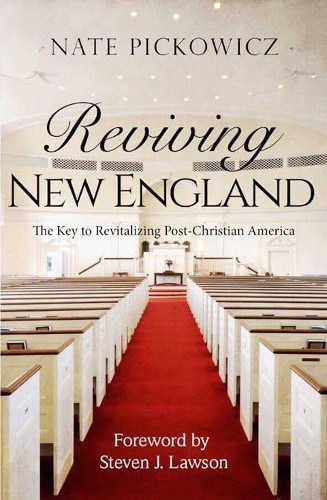
Book Review ~ Reviving New England

rnecover_330x500

I’ve said it dozens of times: I don’t write book reviews. But I’m fortunate that there are awesome, godly people out there who do, and who do a bang up job of it. So today I wanted to share a great review of the book Reviving New England. The review was written by my friend Rachel Williams over at danielthree18.com, and the book was written by my other friend, Nate Pickowicz, pastor, podcaster, and blogger extraordinaire. They are both lovely, doctrinally sound people I’m proud to know, so I’m certain you’ll enjoy both the review and the book.

Reviving New England 
(Why Women Ministry Leaders Should Read This Book)

by Rachel Williams

I ordered Nate’s book, Reviving New England: The Key to Revitalizing Post-Christian America, and I sit down to enjoy a treatise on the history of liberalism in New England, and what pastors in New England need to do today to turn the churches back to Christ.

Instead, I spent the majority of my time reading chunks of the books out loud to my husband, whispering, “YES!,” and underlining massive sections of it, realizing that every woman who leads women’s ministries across the United States (and beyond) needs this book.

Today.

Pickowicz does start the book with a brief history of the rise (and fall) of Christianity in New England. For those of you not students of church history, he does an excellent job of making this information relevant to today and fast-paced. (Trust me, I’ve heard my fair share of less-than-exciting lectures on this topic. He does a great job keeping your interest.) However, the history lesson is brief, and this is where the book becomes, in my opinion, necessary for women’s ministry leaders today.

The rest of the book is written for pastors and centers on how to preach the Word of God. He does a masterful job of navigating the problems in so many pulpits and offering real practical solutions to guiding the church back to sound biblical principles.

So why do I think women’s ministry leaders need this?…

Click here to continue reading.