Wednesday's Word

Wednesday’s Word ~ Joel 1

joel 1 14

Joel 1

The word of the Lord that came to Joel, the son of Pethuel:

Hear this, you elders;
    give ear, all inhabitants of the land!
Has such a thing happened in your days,
    or in the days of your fathers?
Tell your children of it,
    and let your children tell their children,
    and their children to another generation.

What the cutting locust left,
    the swarming locust has eaten.
What the swarming locust left,
    the hopping locust has eaten,
and what the hopping locust left,
    the destroying locust has eaten.

Awake, you drunkards, and weep,
    and wail, all you drinkers of wine,
because of the sweet wine,
    for it is cut off from your mouth.
For a nation has come up against my land,
    powerful and beyond number;
its teeth are lions’ teeth,
    and it has the fangs of a lioness.
It has laid waste my vine
    and splintered my fig tree;
it has stripped off their bark and thrown it down;
    their branches are made white.

Lament like a virgin wearing sackcloth
    for the bridegroom of her youth.
The grain offering and the drink offering are cut off
    from the house of the Lord.
The priests mourn,
    the ministers of the Lord.
10 The fields are destroyed,
    the ground mourns,
because the grain is destroyed,
    the wine dries up,
    the oil languishes.

11 Be ashamed, O tillers of the soil;
    wail, O vinedressers,
for the wheat and the barley,
    because the harvest of the field has perished.
12 The vine dries up;
    the fig tree languishes.
Pomegranate, palm, and apple,
    all the trees of the field are dried up,
and gladness dries up
    from the children of man.

13 Put on sackcloth and lament, O priests;
    wail, O ministers of the altar.
Go in, pass the night in sackcloth,
    O ministers of my God!
Because grain offering and drink offering
    are withheld from the house of your God.

14 Consecrate a fast;
    call a solemn assembly.
Gather the elders
    and all the inhabitants of the land
to the house of the Lord your God,
    and cry out to the Lord.

15 Alas for the day!
For the day of the Lord is near,
    and as destruction from the Almighty it comes.
16 Is not the food cut off
    before our eyes,
joy and gladness
    from the house of our God?

17 The seed shrivels under the clods;
    the storehouses are desolate;
the granaries are torn down
    because the grain has dried up.
18 How the beasts groan!
    The herds of cattle are perplexed
because there is no pasture for them;
    even the flocks of sheep suffer.

19 To you, O Lord, I call.
For fire has devoured
    the pastures of the wilderness,
and flame has burned
    all the trees of the field.
20 Even the beasts of the field pant for you
    because the water brooks are dried up,
and fire has devoured
    the pastures of the wilderness.


The Holy Bible, English Standard Version Copyright © 2001 by Crossway Bibles, a publishing ministry of Good News Publishers.


Questions to Consider:

1. What is the purpose or theme of the book of Joel? Which genre of biblical literature (epistle, historical narrative, wisdom, etc.) is it? To whom was the book written? What do verses 2-3 indicate about the gravity of the situation the rest of the chapter describes?

2. What was the natural disaster that fell on the land? (4) Which crops were affected? (10-12) How were the land and livestock affected by the natural disaster in verse 4? (18-20) What does Joel 2:12-14 suggest might be the reason Israel is experiencing this hardship?

3. What were two major aspects of Israel’s life the famine was detrimental to? (16) How were “joy and gladness [cut off] from the house of our God”? (9) How might a natural disaster, war, or other major catastrophe affect your church? In what ways would worship be affected?

4. How was Israel to respond to the famine? (13-14, 19) Who was to lead the way in lamenting and crying out to God? What should our response be when trouble or disaster strikes? What are some ways pastors can lead the way when a catastrophic event impacts the church?

5. What does this chapter teach us about God’s sovereignty? His judgment? How does this chapter hint at the intensity and the dreadfulness of God’s final judgment on the earth?

Wednesday's Word

Wednesday’s Word ~ Hosea 1

hosea 1 10Hosea 1

The word of the Lord that came to Hosea, the son of Beeri, in the days of Uzziah, Jotham, Ahaz, and Hezekiah, kings of Judah, and in the days of Jeroboam the son of Joash, king of Israel.

When the Lord first spoke through Hosea, the Lord said to Hosea, “Go, take to yourself a wife of whoredom and have children of whoredom, for the land commits great whoredom by forsaking the Lord.” So he went and took Gomer, the daughter of Diblaim, and she conceived and bore him a son.

And the Lord said to him, “Call his name Jezreel, for in just a little while I will punish the house of Jehu for the blood of Jezreel, and I will put an end to the kingdom of the house of Israel. And on that day I will break the bow of Israel in the Valley of Jezreel.”

She conceived again and bore a daughter. And the Lord said to him, “Call her name No Mercy, for I will no more have mercy on the house of Israel, to forgive them at all. But I will have mercy on the house of Judah, and I will save them by the Lord their God. I will not save them by bow or by sword or by war or by horses or by horsemen.”

When she had weaned No Mercy, she conceived and bore a son. And the Lord said, “Call his name Not My People, for you are not my people, and I am not your God.”

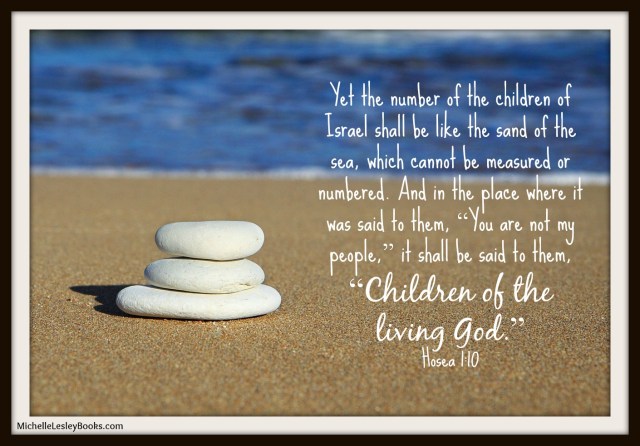
10  Yet the number of the children of Israel shall be like the sand of the sea, which cannot be measured or numbered. And in the place where it was said to them, “You are not my people,” it shall be said to them, “Children of the living God.” 11 And the children of Judah and the children of Israel shall be gathered together, and they shall appoint for themselves one head. And they shall go up from the land, for great shall be the day of Jezreel.


The Holy Bible, English Standard Version Copyright © 2001 by Crossway Bibles, a publishing ministry of Good News Publishers.


Questions to Consider:

1. Who wrote Hosea? What is the theme or purpose of the book? Which genre of biblical literature (wisdom, epistle, prophecy, history, etc.) is Hosea? What important background information about Hosea and this book can we glean from verse 1?

2. In verses 2-3 is God telling Hosea to commit a sin by marrying “a wife of whoredom”? (see interpretive challenges for help) Does this passage give Christians permission to sin in order to carry out God’s plans or proclaim His word?

3. How was Hosea’s marriage a picture of Israel’s sin? (2) Whom did Hosea represent in this picture? Whom did Gomer represent? What was the sin Israel had committed that God called “whoredom”? Do you see evidence of this sin in your life that you need to repent of? Do you see how God considers it “adultery” against Him?

4. Which attributes of God are portrayed in the names of the three children? (4-9) What was God saying to Israel through each of the names of the children? Do these attributes and messages conflict with other attributes we know to be true of God, such as mercy, forgiveness, compassion, and love?

5. Why does Paul quote from Hosea 2:23 and 1:10 in Romans 9:19-28? How does he tie the two passages together, and what is the point he’s trying to make?

Wednesday's Word

Wednesday’s Word ~ Ezekiel 18

For further study on the book of Ezekiel, try my study, Ezekiel.

ez 18 23

Ezekiel 18

The word of the Lord came to me: “What do you mean by repeating this proverb concerning the land of Israel, ‘The fathers have eaten sour grapes, and the children’s teeth are set on edge’? As I live, declares the Lord God, this proverb shall no more be used by you in Israel. Behold, all souls are mine; the soul of the father as well as the soul of the son is mine: the soul who sins shall die.

“If a man is righteous and does what is just and right— if he does not eat upon the mountains or lift up his eyes to the idols of the house of Israel, does not defile his neighbor’s wife or approach a woman in her time of menstrual impurity, does not oppress anyone, but restores to the debtor his pledge, commits no robbery, gives his bread to the hungry and covers the naked with a garment, does not lend at interest or take any profit, withholds his hand from injustice, executes true justice between man and man, walks in my statutes, and keeps my rules by acting faithfully—he is righteous; he shall surely live, declares the Lord God.

10 “If he fathers a son who is violent, a shedder of blood, who does any of these things 11 (though he himself did none of these things), who even eats upon the mountains, defiles his neighbor’s wife, 12 oppresses the poor and needy, commits robbery, does not restore the pledge, lifts up his eyes to the idols, commits abomination, 13 lends at interest, and takes profit; shall he then live? He shall not live. He has done all these abominations; he shall surely die; his blood shall be upon himself.

14 “Now suppose this man fathers a son who sees all the sins that his father has done; he sees, and does not do likewise: 15 he does not eat upon the mountains or lift up his eyes to the idols of the house of Israel, does not defile his neighbor’s wife, 16 does not oppress anyone, exacts no pledge, commits no robbery, but gives his bread to the hungry and covers the naked with a garment, 17 withholds his hand from iniquity, takes no interest or profit, obeys my rules, and walks in my statutes; he shall not die for his father’s iniquity; he shall surely live. 18 As for his father, because he practiced extortion, robbed his brother, and did what is not good among his people, behold, he shall die for his iniquity.

19 “Yet you say, ‘Why should not the son suffer for the iniquity of the father?’ When the son has done what is just and right, and has been careful to observe all my statutes, he shall surely live. 20 The soul who sins shall die. The son shall not suffer for the iniquity of the father, nor the father suffer for the iniquity of the son. The righteousness of the righteous shall be upon himself, and the wickedness of the wicked shall be upon himself.

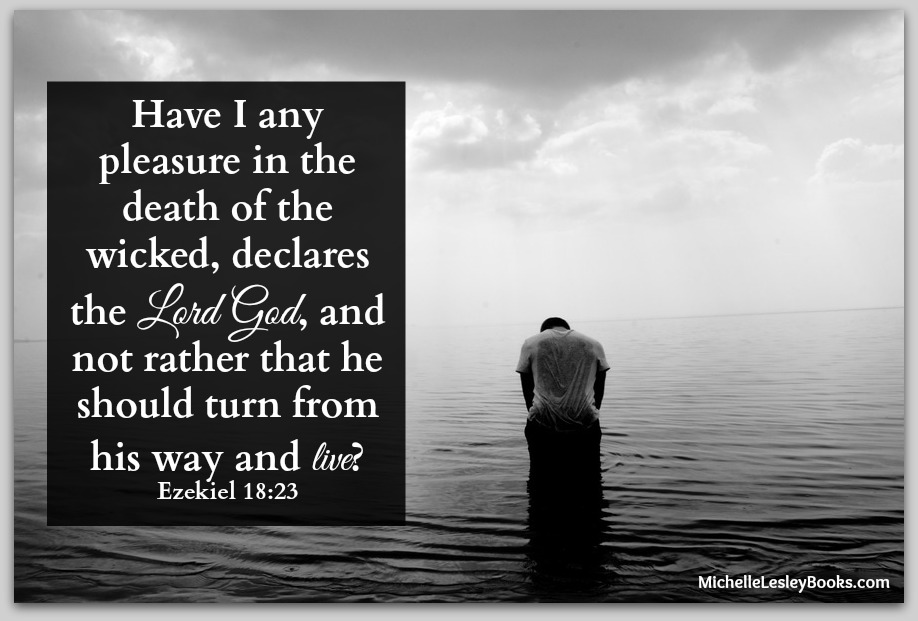
21 “But if a wicked person turns away from all his sins that he has committed and keeps all my statutes and does what is just and right, he shall surely live; he shall not die. 22 None of the transgressions that he has committed shall be remembered against him; for the righteousness that he has done he shall live. 23 Have I any pleasure in the death of the wicked, declares the Lord God, and not rather that he should turn from his way and live? 24 But when a righteous person turns away from his righteousness and does injustice and does the same abominations that the wicked person does, shall he live? None of the righteous deeds that he has done shall be remembered; for the treachery of which he is guilty and the sin he has committed, for them he shall die.

25 “Yet you say, ‘The way of the Lord is not just.’ Hear now, O house of Israel: Is my way not just? Is it not your ways that are not just? 26 When a righteous person turns away from his righteousness and does injustice, he shall die for it; for the injustice that he has done he shall die. 27 Again, when a wicked person turns away from the wickedness he has committed and does what is just and right, he shall save his life.28 Because he considered and turned away from all the transgressions that he had committed, he shall surely live; he shall not die. 29 Yet the house of Israel says, ‘The way of the Lord is not just.’ O house of Israel, are my ways not just? Is it not your ways that are not just?

30 “Therefore I will judge you, O house of Israel, every one according to his ways, declares the Lord God. Repent and turn from all your transgressions, lest iniquity be your ruin. 31 Cast away from you all the transgressions that you have committed, and make yourselves a new heart and a new spirit! Why will you die, O house of Israel? 32 For I have no pleasure in the death of anyone, declares the Lord God; so turn, and live.”


The Holy Bible, English Standard Version Copyright © 2001 by Crossway Bibles, a publishing ministry of Good News Publishers.


Questions to Consider:

1. What is the book of Ezekiel about? Which genre (history, poetry, wisdom, etc.) is the book of Ezekiel? What is the overall theme of chapter 18?

2. How do verses 5-9 describe a righteous man? What kind of heart would such a man have to have in order to consistently live this way? (9)

3. Who is the “he” in verses 11 and 12 referring to? Is this man to be punished for the sins of his son? (13) If the sinful man (14) fathers a righteous son (14-17) is the righteous son to be punished for his father’s sin? (17-18) Which verse(s) in this chapter sum up the principle of individual responsibility for sin? How does this chapter refute the false teaching of generational curses?

4. What can we learn about repentance from verses 21-32? In which does God take delight, pouring out His wrath on the wicked or pouring out His forgiveness on the repentant? (23, 32) How does this passage compare to 2 Peter 3:9?

5. Consider this chapter in light of the gospel. Is any person truly righteous? Where does the Christian’s righteousness come from? How does the New Testament describe Jesus, the righteous Son, being punished for our sin? What effect does this have on verse 4 (“the soul who sins shall die”)?

Guest Posts

Guest Post: Defiance and Defeat

If your theology pretty much matches up with mine (as outlined in the “Welcome” and “Statement of Faith” tabs) and you’d like to contribute a guest post, drop me an e-mail at MichelleLesley1@yahoo.com,
and let’s chat about it.
karen carrey defiance defeat

Defiance and Defeat
by Karen Carrey

I’ve been reading in Joshua the story of how the Israelites were defeated at Ai, immediately after their resounding victory at Jericho. They couldn’t believe that after such success came crushing defeat. The Lord had led them to defeat Jericho but told them not to take any of the spoils for themselves, because certain items were to be devoted to the Lord. They were explicitly told in Joshua 6:18-19 what the Lord’s command was.

But Achan decided to disobey and take from Jericho some of the items which were to be consecrated to the Lord, and his defiance resulted in the death of himself and his family, just as God had clearly told them would happen if they disobeyed.

God finds Joshua flat on his face wailing and moping after their defeat and basically tells Joshua he can’t expect to be victorious against his enemy whilst disobedience and defiance run rampant in the camp. However he gives them a chance to put it right and come into communion with him again once the sin was purged from among them.

It made me wonder about the sins we try to hide in our own lives, as Achan did, hoping God won’t notice. The things that God can’t bless us in. The things that cause Him to turn His face from us because He is a Holy God. Are we being defeated in areas of our lives and pretending we don’t know why? Are we on our faces crying out to the Lord, “Why me?” when we know we are breaking his commands and breaking His heart? Do we think there are no consequences to our sin? Of course there are. Unless we get before God and confess, seeking his forgiveness, the consequence will be the same as Achan faced. Spiritual and physical death. But our God is as God of forgiveness and if we are truly repentant, he restores us to Himself once again.

Each of us may have our own “accursed thing” that is keeping us from a closer walk with God. Have we gone our own way even though He’s blessed us and given us victory in certain areas of our lives? Have we become cocky in our own strength? Do we think we know better and can flout his commands and expect Him to turn a blind eye? When God gives us his Word, and we deliberately disobey it, we have no excuse. We cannot say “but I didn’t know …” because he makes his expectations very clear in His Word. Whether we like them or not is a different matter. We are to be consecrated and set apart, a holy people, not conformed to this world but transformed by the renewing of our minds. What things do we need to fall on our face before God about, sincerely seeking his forgiveness and help?

God does not bless us with financial gain, perfect health and a bigger house, just because we’re saved or because we speak it into existence with positive words. He promises us that in the final analysis, all things will work together for good (Romans 8:28) but we’re told we will have trouble in this world. The good news is that Christ has overcome the world. Addressing the hidden sin in our lives is not your guarantee to a happy-ever-after on this earth, but it is the key to a closer walk with your Saviour.

It’s important for all of us to turn over to God, those things that we know the Holy Spirit is convicting us of. Flirting with your co-workers is not innocent. Gossiping is not harmless. Arrogance is not becoming. Immodesty is provocative and Jezebel-like. Impatience is not “just the way you are”. Sleeping with your partner just because you’re getting married anyway, is not ok. Seek His Word. Pursue holiness.

Obedience brings victory, but defiance brings defeat.

Lord open our eyes to the accursed things in our own lives that we may gain favour in your eyes and be close to you once again.

Originally published at Faith and Food Chat, January 27, 2016


Karen Carrey is a 40-something wife and mother of two teenagers. She loves to read, bake, cook, and find like-minded Christian women. She was saved at an early age and continues to work out her salvation with fear and trembling. One of her favorite passages is Isaiah 43:2-4. Karen blogs at Faith and Food Chat.


ALTHOUGH I DO MY BEST TO THOROUGHLY VET THE THEOLOGY OF THE BLOGGERS WHO SUBMIT GUEST POSTS, IT IS ALWAYS POSSIBLE FOR THINGS TO SLIP THROUGH THE CRACKS. PLEASE MAKE SURE ANY BLOGGER YOU FOLLOW, INCLUDING ME, RIGHTLY AND FAITHFULLY HANDLES GOD’S WORD AND HOLDS TO SOUND BIBLICAL DOCTRINE.
Prayer, Sanctification, Throwback Thursday, Worship

Throwback Thursday ~ Great Expectations

Originally published February 6, 2014expectgreatthings-necklace (1)

Do we expect too much from God? Is that even possible?

No.

Yes.

Well, kinda.

You see, I’m not talking about expecting something and God being unable to deliver it. That’s just plain silly when talking about our omnipotent God. No, what I’m talking about is whether or not the expectations we come up with are grounded in biblical reality.

What do we mean when we talk about “praying expectantly” or coming to a time of corporate worship, study, or prayer, and “expecting God to do something”? Just what is it we are expecting God to do?

Could it be that He’s already doing something and we’re just not seeing it?

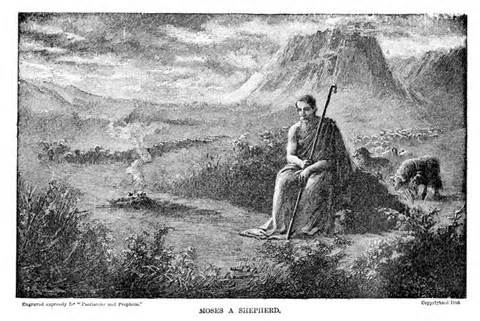
Sometimes, when we read God’s word, we expect God to do something just as “big” as He did in Moses’, Paul’s, or some other Bible hero’s life. We forget that the Bible is sort of like a “highlight reel” of the events in the lives of a handful of people that God drafted to be part of His visible activity at that moment in history.

We focus on the moments Moses had at the burning bush or walking through the Red Sea, and that’s what we want, too. r643167_4468740But we forget that Moses’ life wasn’t like that every day. We forget about the eighty years he spent wandering around the desert, half in the day to day monotony of shepherding on the back side of Midian, the other half, wandering around the wilderness with the people of Israel.

Eighty years of nothing special. Day after day of ordinary. Week after week of God not “showing up” and doing something amazing. Eighty years. That’s a lifetime for most of us.

Was God any less at work in Moses’ eighty years of desert thwandering than He was when He gave Moses the Law or spoke to him face to face or sent manna? Of course not. During those days, God was protecting Moses from the heat and wild animals, providing food and shelter for him, blessing him with a wife and children, directing his steps, teaching him obedience and trust.

Just like He does for us.

Have you read a Bible passage this week that allowed you to see more of God’s glory? God is doing something. He’s revealing Himself to you.

Are you praying for someone’s salvation? God is doing something. He’s working on the heart of that person.

Did you have a place to sleep last night and food on your table today? God is doing something. He’s providing for your needs.

Do you leave church on Sundays having been fed the truth of God’s word by your pastor? God is doing something. He’s growing you to spiritual maturity.

Is it possible that we’re expecting God to do something in our lives that isn’t in His particular plan for us? You aren’t Moses, and neither am I. Neither were the million or so other Israelites Moses led out of Egypt, and neither have the billions of other people been who have inhabited earth since Creation. Moses was Moses. You are you. God doesn’t have the same plan for your life He had for Moses’ life.

And, by the way, have you ever noticed that most of the people in the Bible through whom God did something “big” were not expecting it or asking for it? Moses wasn’t expecting God to show up in that burning bush. David wasn’t asking God to do great things in his life when Samuel dropped by to anoint him as the next king. Both of them were hanging out with the sheep when God called them. Paul thought he was already an awesome servant of God when he got knocked off his high horse. Mary wasn’t expecting to be expecting. She was just a teenage girl growing up and learning how to run a household.

1 Thessalonians 4:10b-12 says:

But we urge you, brothers to do this more and more, and to aspire to live quietly, and to mind your own affairs, and to work with your hands, as we instructed you, so that you may walk properly before outsiders and be dependent on no one.

That’s what all of those Bible characters were doing when God chose them. Just regular people living regular lives doing regular work. Just like billions of other people through whom God has not chosen to do anything big and spectacular.

keep-calm-god-is-at-workBut that doesn’t mean God hasn’t been “doing something” in all of our lives. In fact, the vast majority of the work God does in our lives every single day goes unnoticed and unappreciated.

So, instead of setting our expectations on those very rare “wow factor” works of God that seem so appealing, maybe we should be asking Him to open our eyes to, and make us thankful for, all of the things He’s already doing in our lives. Instead of having great expectations of things that God has never promised us, maybe we should ask Him for, and expect Him to, do what He has promised:

Forgiveness for our sin

Christ-likeness

Provision for our needs

Endurance

The ability and opportunity to help others

Faithfulness

Humility

Patience

The opportunity to share the gospel

Because “all the promises of God find their Yes in him.” You can expect it.