Prayer, Sanctification, Throwback Thursday, Worship

Throwback Thursday ~ Great Expectations

Originally published February 6, 2014expectgreatthings-necklace (1)

Do we expect too much from God? Is that even possible?

No.

Yes.

Well, kinda.

You see, I’m not talking about expecting something and God being unable to deliver it. That’s just plain silly when talking about our omnipotent God. No, what I’m talking about is whether or not the expectations we come up with are grounded in biblical reality.

What do we mean when we talk about “praying expectantly” or coming to a time of corporate worship, study, or prayer, and “expecting God to do something”? Just what is it we are expecting God to do?

Could it be that He’s already doing something and we’re just not seeing it?

Sometimes, when we read God’s word, we expect God to do something just as “big” as He did in Moses’, Paul’s, or some other Bible hero’s life. We forget that the Bible is sort of like a “highlight reel” of the events in the lives of a handful of people that God drafted to be part of His visible activity at that moment in history.

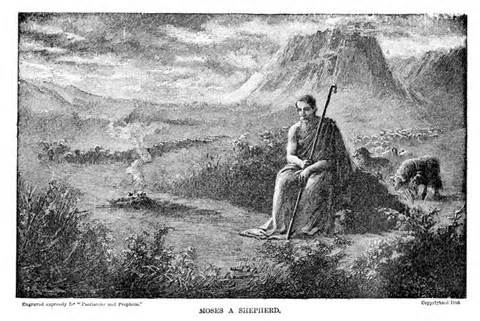
We focus on the moments Moses had at the burning bush or walking through the Red Sea, and that’s what we want, too. r643167_4468740But we forget that Moses’ life wasn’t like that every day. We forget about the eighty years he spent wandering around the desert, half in the day to day monotony of shepherding on the back side of Midian, the other half, wandering around the wilderness with the people of Israel.

Eighty years of nothing special. Day after day of ordinary. Week after week of God not “showing up” and doing something amazing. Eighty years. That’s a lifetime for most of us.

Was God any less at work in Moses’ eighty years of desert thwandering than He was when He gave Moses the Law or spoke to him face to face or sent manna? Of course not. During those days, God was protecting Moses from the heat and wild animals, providing food and shelter for him, blessing him with a wife and children, directing his steps, teaching him obedience and trust.
Just like He does for us.

Have you read a Bible passage this week that allowed you to see more of God’s glory? God is doing something. He’s revealing Himself to you.

Are you praying for someone’s salvation? God is doing something. He’s working on the heart of that person.

Did you have a place to sleep last night and food on your table today? God is doing something. He’s providing for your needs.

Do you leave church on Sundays having been fed the truth of God’s word by your pastor? God is doing something. He’s growing you to spiritual maturity.

Is it possible that we’re expecting God to do something in our lives that isn’t in His particular plan for us? You aren’t Moses, and neither am I. Neither were the million or so other Israelites Moses led out of Egypt, and neither have the billions of other people been who have inhabited earth since Creation. Moses was Moses. You are you. God doesn’t have the same plan for your life He had for Moses’ life.

And, by the way, have you ever noticed that most of the people in the Bible through whom God did something “big” were not expecting it or asking for it? Moses wasn’t expecting God to show up in that burning bush. David wasn’t asking God to do great things in his life when Samuel dropped by to anoint him as the next king. Both of them were hanging out with the sheep when God called them. Paul thought he was already an awesome servant of God when he got knocked off his high horse. Mary wasn’t expecting to be expecting. She was just a teenage girl growing up and learning how to run a household.

1 Thessalonians 4:10b-12 says:

But we urge you, brothers to do this more and more, and to aspire to live quietly, and to mind your own affairs, and to work with your hands, as we instructed you, so that you may walk properly before outsiders and be dependent on no one.

That’s what all of those Bible characters were doing when God chose them. Just regular people living regular lives doing regular work. Just like billions of other people through whom God has not chosen to do anything big and spectacular.

keep-calm-god-is-at-workBut that doesn’t mean God hasn’t been “doing something” in all of our lives. In fact, the vast majority of the work God does in our lives every single day goes unnoticed and unappreciated.

So, instead of setting our expectations on those very rare “wow factor” works of God that seem so appealing, maybe we should be asking Him to open our eyes to, and make us thankful for, all of the things He’s already doing in our lives. Instead of having great expectations of things that God has never promised us, maybe we should ask Him for, and expect Him to, do what He has promised:

Forgiveness for our sin

Christ-likeness

Provision for our needs

Endurance

The ability and opportunity to help others

Faithfulness

Humility

Patience

The opportunity to share the gospel

Because “all the promises of God find their Yes in him.” You can expect it.
Wednesday's Word

Wednesday’s Word ~ Ecclesiastes 3

ecc 3 11

Ecclesiastes 3

For everything there is a season, and a time for every matter under heaven:

a time to be born, and a time to die;
a time to plant, and a time to pluck up what is planted;
a time to kill, and a time to heal;
a time to break down, and a time to build up;
a time to weep, and a time to laugh;
a time to mourn, and a time to dance;
a time to cast away stones, and a time to gather stones together;
a time to embrace, and a time to refrain from embracing;
a time to seek, and a time to lose;
a time to keep, and a time to cast away;
a time to tear, and a time to sew;
a time to keep silence, and a time to speak;
a time to love, and a time to hate;
a time for war, and a time for peace.

What gain has the worker from his toil? 10 I have seen the business that God has given to the children of man to be busy with. 11 He has made everything beautiful in its time. Also, he has put eternity into man’s heart, yet so that he cannot find out what God has done from the beginning to the end. 12 I perceived that there is nothing better for them than to be joyful and to do good as long as they live; 13 also that everyone should eat and drink and take pleasure in all his toil—this is God’s gift to man.

14 I perceived that whatever God does endures forever; nothing can be added to it, nor anything taken from it. God has done it, so that people fear before him. 15 That which is, already has been; that which is to be, already has been; and God seeks what has been driven away.

16 Moreover, I saw under the sun that in the place of justice, even there was wickedness, and in the place of righteousness, even there was wickedness. 17 I said in my heart, God will judge the righteous and the wicked, for there is a time for every matter and for every work. 18 I said in my heart with regard to the children of man that God is testing them that they may see that they themselves are but beasts. 19 For what happens to the children of man and what happens to the beasts is the same; as one dies, so dies the other. They all have the same breath, and man has no advantage over the beasts, for all is vanity. 20 All go to one place. All are from the dust, and to dust all return. 21 Who knows whether the spirit of man goes upward and the spirit of the beast goes down into the earth? 22 So I saw that there is nothing better than that a man should rejoice in his work, for that is his lot. Who can bring him to see what will be after him?

The Holy Bible, English Standard Version Copyright © 2001 by Crossway Bibles, a publishing ministry of Good News Publishers.

 Questions to Consider:

  1. Who wrote the book of Ecclesiastes? What is the theme of chapter 3?
  1. How would you summarize verses 1-8? What are some of the ways the New Testament says Christians should respond to joyful or difficult circumstance in our lives and in the lives of others?
  1. What does it mean that God has “put eternity into man’s heart”? (11) What does the remainder of verse 11 mean? How might the idea in this part of verse 11 connect with these other passages?
  1. What can we learn from verses 14-22 about God’s absolute sovereignty, supremacy, authority, and control over the world and the events that take place in it? Make a list of all the things, beings, and events from these verses that God is sovereign over. How can contemplating God’s sovereignty in these areas help us to have a proper, humble view of ourselves compared to Him?
  1. Taking verses 12-22 into consideration, why do verses 12, 13, and 22 encourage man to “be joyful,” “take pleasure,” and “rejoice” in his toil and work? What is the alternative? How does this relate to what the New Testament says about being joyful in work or difficulties? What impact might your joy have on an unbeliever?
Wednesday's Word

Wednesday’s Word ~ Malachi 4

mal 4 2

Malachi 4

“For behold, the day is coming, burning like an oven, when all the arrogant and all evildoers will be stubble. The day that is coming shall set them ablaze, says the Lord of hosts, so that it will leave them neither root nor branch. But for you who fear my name, the sun of righteousness shall rise with healing in its wings. You shall go out leaping like calves from the stall. And you shall tread down the wicked, for they will be ashes under the soles of your feet, on the day when I act, says the Lord of hosts.

“Remember the law of my servant Moses, the statutes and rules that I commanded him at Horeb for all Israel.

“Behold, I will send you Elijah the prophet before the great and awesome day of the Lord comes. And he will turn the hearts of fathers to their children and the hearts of children to their fathers, lest I come andstrike the land with a decree of utter destruction.”


The Holy Bible, English Standard Version Copyright © 2001 by Crossway Bibles, a publishing ministry of Good News Publishers.


Questions To Consider:

1. Which genre (history, wisdom, poetry, prophecy, epistle, etc.) is the book of Malachi? What is the overall tone or theme of this chapter?

2. Some prophecies have a “near” meaning (something that will happen in the near future to the people the prophet is currently talking to), some have a “far” meaning (something that will happen far in the future in another context), and some have both. Which would you say is the case for this passage? In either or both cases, who is the audience for this prophecy? What is the near and/or far meaning?

3. How does God contrast the wicked with those who fear the Lord in verses 1-3? Why does God say to “Remember the law of my servant Moses…”? (4) How does verse 4 fit with verses 1-3?

4. What are some possible connections between verses 5-6 and Luke 1:13, 16-17, Matthew 11:13-14, and Revelation 11:3?

5. What are some general truths we can learn from this passage as we look ahead to Christ’s second coming?

Wednesday's Word

Wednesday’s Word ~ Job 1

job 1 21

Job 1

There was a man in the land of Uz whose name was Job, and that man was blameless and upright, one who feared God and turned away from evil. There were born to him seven sons and three daughters. He possessed 7,000 sheep, 3,000 camels, 500 yoke of oxen, and 500 female donkeys, and very many servants, so that this man was the greatest of all the people of the east. His sons used to go and hold a feast in the house of each one on his day, and they would send and invite their three sisters to eat and drink with them.And when the days of the feast had run their course, Job would send and consecrate them, and he would rise early in the morning and offer burnt offerings according to the number of them all. For Job said, “It may be that my children have sinned, and cursed God in their hearts.” Thus Job did continually.

Now there was a day when the sons of God came to present themselves before the Lord, and Satan also came among them. The Lord said to Satan, “From where have you come?” Satan answered the Lord and said, “From going to and fro on the earth, and from walking up and down on it.” And the Lord said to Satan, “Have you considered my servant Job, that there is none like him on the earth, a blameless and upright man, who fears God and turns away from evil?” Then Satan answered the Lord and said, “Does Job fear God for no reason? 10 Have you not put a hedge around him and his house and all that he has, on every side? You have blessed the work of his hands, and his possessions have increased in the land. 11 But stretch out your hand and touch all that he has, and he will curse you to your face.” 12 And the Lord said to Satan, “Behold, all that he has is in your hand. Only against him do not stretch out your hand.” So Satan went out from the presence of the Lord.

13 Now there was a day when his sons and daughters were eating and drinking wine in their oldest brother’s house, 14 and there came a messenger to Job and said, “The oxen were plowing and the donkeys feeding beside them, 15 and the Sabeans fell upon them and took them and struck down the servants with the edge of the sword, and I alone have escaped to tell you.” 16 While he was yet speaking, there came another and said,“The fire of God fell from heaven and burned up the sheep and the servants and consumed them, and I alone have escaped to tell you.” 17 While he was yet speaking, there came another and said, “The Chaldeans formed three groups and made a raid on the camels and took them and struck down the servants with the edge of the sword, and I alone have escaped to tell you.” 18 While he was yet speaking, there came another and said, “Your sons and daughters were eating and drinking wine in their oldest brother’s house, 19 and behold, a great wind came across the wilderness and struck the four corners of the house, and it fell upon the young people, and they are dead, and I alone have escaped to tell you.”

20 Then Job arose and tore his robe and shaved his head and fell on the ground and worshiped. 21 And he said,“Naked I came from my mother’s womb, and naked shall I return. The Lord gave, and the Lord has taken away; blessed be the name of the Lord.”

22 In all this Job did not sin or charge God with wrong.


The Holy Bible, English Standard Version Copyright © 2001 by Crossway Bibles, a publishing ministry of Good News Publishers.


Questions to Consider:

1. Read verses 1-5. Reflecting on this passage, what are some words you would use to describe Job, his family, and his life? Does the word “blameless” (1) mean “sinless”? How does your description of Job match up with God’s description of Job in verse 8 and what Satan says about Job in verse 10?

2. Why does Satan think Job loves and fears God? (9-11) Is he correct? (20-22)? Is it biblical to follow God in order to receive material or temporal blessings? Can you think of any churches or Christian celebrities who teach this? What should be our motivation for following Christ?

3. Was Job privy to the conversation between God and Satan (6-12)? Did he know why all these terrible things happened to him? Did he know that God would eventually restore what he had lost? How is Job’s situation similar to the blind man’s in John 9:1-3? Was Job being punished for sin? (8)

4. Make a list of all the things Job lost (13-19). Consider the repeated phrase, “while he was yet speaking.” What does this phrase tell us about the timing of these events?

5. Which three actions did Job take in verse 20? Which two indicate to us that Job was upset? Was Job’s grief sinful or an indication that he didn’t trust God? (21-22) How would you summarize Job’s response to tragedy? How do verses 20-21 correlate to Philippians 4:11-13? How are Christians to respond to suffering?

Wednesday's Word

Wednesday’s Word ~ Esther 4

esther 4 14

Esther 4

When Mordecai learned all that had been done, Mordecai tore his clothes and put on sackcloth and ashes, and went out into the midst of the city, and he cried out with a loud and bitter cry. He went up to the entrance of the king’s gate, for no one was allowed to enter the king’s gate clothed in sackcloth. And in every province, wherever the king’s command and his decree reached, there was great mourning among the Jews, with fasting and weeping and lamenting, and many of them lay in sackcloth and ashes.

When Esther’s young women and her eunuchs came and told her, the queen was deeply distressed. She sent garments to clothe Mordecai, so that he might take off his sackcloth, but he would not accept them. Then Esther called for Hathach, one of the king’s eunuchs, who had been appointed to attend her, and ordered him to go to Mordecai to learn what this was and why it was. Hathach went out to Mordecai in the open square of the city in front of the king’s gate, and Mordecai told him all that had happened to him, and the exact sum of money that Haman had promised to pay into the king’s treasuries for the destruction of the Jews.Mordecai also gave him a copy of the written decree issued in Susa for their destruction, that he might show it to Esther and explain it to her and command her to go to the king to beg his favor and plead with him on behalf of her people. And Hathach went and told Esther what Mordecai had said. 10 Then Esther spoke to Hathach and commanded him to go to Mordecai and say, 11 “All the king’s servants and the people of the king’s provinces know that if any man or woman goes to the king inside the inner court without being called, there is but one law—to be put to death, except the one to whom the king holds out the golden scepter so that he may live. But as for me, I have not been called to come in to the king these thirty days.”

12 And they told Mordecai what Esther had said. 13 Then Mordecai told them to reply to Esther, “Do not think to yourself that in the king’s palace you will escape any more than all the other Jews. 14 For if you keep silent at this time, relief and deliverance will rise for the Jews from another place, but you and your father’s house will perish. And who knows whether you have not come to the kingdom for such a time as this?” 15 Then Esther told them to reply to Mordecai, 16 “Go, gather all the Jews to be found in Susa, and hold a fast on my behalf, and do not eat or drink for three days, night or day. I and my young women will also fast as you do. Then I will go to the king, though it is against the law, and if I perish, I perish.” 17 Mordecai then went away and did everything as Esther had ordered him.


The Holy Bible, English Standard Version Copyright © 2001 by Crossway Bibles, a publishing ministry of Good News Publishers.


Questions to Consider:

1. The book of Esther is short, and chapter 4 can best be understood in its context in the middle of the story. I highly recommend reading the whole book, starting in chapter 1. Who are the main characters in this story? What are their backgrounds? What causes them to act the way they do?

2. What was the king’s decree (7-8)? Why would the decree have been cause for the Jews’ “fasting, weeping, and lamenting” (3)?

3. Give two reasons why it would have been dangerous for Esther to go to the king and plead the cause of the Jews (8-11). Read verses 12-14 through the lenses of a loving parent like Mordecai. He was asking his “daughter” to do what was godly, even at the risk of her life. Do you raise your children to be godly, even at risk of their lives?

4. In what ways is the story of Esther a type and shadow of Christ’s redemption of His people? Whom do King Ahasuerus, Esther, Haman, and the Jews represent? The three days of fasting?

5. God will probably never call you to save a nation as He did with Esther, but He has placed each one of us right where we are “for such a time as this,” because all of us have people in our lives who need to hear about Jesus, the Savior who steps between the wrath of God and the scheming of Satan and laid His life on the line to save His people from their sin. Think of some people and situations in your life where God has placed you “for such a time as this” to share the gospel, speak the truth of God’s word, or minister His love.