Women of Genesis Bible Study

The Women of Genesis: Lesson 27- Deborah and Rachel

Previous Lessons: 1, 2, 3, 4, 5, 6, 7, 8, 9, 10, 11, 12, 13, 14, 15, 16, 17, 18, 19, 20, 21, 22, 23, 24, 25, 26

📖📖📖📖📖

Read Genesis 35-36

📖📖📖📖📖


Questions to Consider

1. Study a map of Jacob’s travels, locating Haran, Shechem, and Bethel (35:1). What happened in Jacob’s life at each of these three places (review previous lessons if necessary)?

2. Where (city and nation) was Jacob living when God told him to move to Bethel? In what major way had living in the Shechemite area of Canaan influenced Jacob’s family? (35:2-4) In the book of Exodus, when we see Israel journeying through and into the Promised Land, what is the main offense against God that the Canaanites are guilty of? How did their idolatry impact God’s people?

3. Briefly review previous lessons (links above) in which we examined various reasons Abraham, Isaac, and Jacob didn’t want their children to intermarry with Canaanites. Even though the Ten Commandments (prohibiting idolatry) and the Levitical law (prohibiting intermarriage with pagans) had not yet been given, how might Canaanite idolatry have played a role in this? And if idol worshiping pagans weren’t good enough for Jacob’s children to marry, why did his own family possess foreign gods? (35:2-4)

4. Regarding the sin of idolatry, what were the three steps (35:2-3) of repentance Jacob led his family in? How can these steps be a model of repentance for us today?

5. Compare Genesis 28:10-22 with 35:1-15. Why did God tell Jacob to go back to Bethel (35:1)? What are the similarities and differences between the two passages with regard to God’s and Jacob’s words and actions? What promises did God make to Jacob in each passage? Describe the worship that took place in both passages.

6. Who was Deborah (35:8), and about how long had she been with the family? In what ways was Deborah’s death honored and memorialized (using your footnotes, what does Allon-bacuth mean)? Considering that we rarely ever hear the names of servants, much less the memorializing of their deaths, what might we surmise about Deborah, her character, and her relationship with Isaac and Rebekah’s family and Jacob’s family? How can you have an impact for Christ on others by serving them?

7. Refer again to the map in question 1. Where did Jacob travel in 35:16-27?

8. Examine 35:16-26 and review our previous lessons about Rachel. If you were writing Rachel’s obituary, how would you describe her? If Jacob were giving the eulogy at her funeral, what might he say about her? Why do we hear about Deborah’s, Rachel’s, and Isaac’s deaths, but we don’t hear about Leah’s or Rebekah’s deaths?

9. Compare Genesis 30:22-24 with 35:16-26. How was Rachel’s prayer answered? Using your footnotes, what do Ben-oni and Benjamin mean, respectively? Why do you think Jacob changed the baby’s name?

10. Who wrote the book of Genesis? Who was the original audience of the book of Genesis? Why might God have considered the information in chapter 36 important for this audience to know? How is this chapter a fulfillment of prophecy?


Homework

Jacob’s family was influenced toward idol worship by the Canaanites they lived among (35:2-4). Think about the various environments you live in: your community or neighborhood, your church, family, friends, workplace, clubs or organizations, social media, etc. Do any of these environments influence you toward idolatry – putting something in God’s place in your affections, loyalties, priorities, and time? Idolatry is a sin that should be repented of and forsaken. Read my article The Christian Introvert: Putting Off Social Anxiety, Putting On Serving Others to learn about the process of putting off sin, renewing your mind, and putting on godly behavior. Thinking about your own idolatry, write down how you can “put away those foreign gods” (put off), “purify yourself and change your garments” (renew your mind) and “arise and go up to Bethel…and make an altar to God” (put on).


Suggested Memory Verse

Then let us arise and go up to Bethel, so that I may make there an altar to the God who answers me in the day of my distress and has been with me wherever I have gone.
Genesis 35:3

Women of Genesis Bible Study

The Women of Genesis: Lesson 26- Dinah

Previous Lessons: 1, 2, 3, 4, 5, 6, 7, 8, 9, 10, 11, 12, 13, 14, 15, 16, 17, 18, 19, 20, 21, 22, 23, 24, 25

📖📖📖📖📖

Read Genesis 34

📖📖📖📖📖


Questions to Consider

1. Briefly review lesson 25 (link above), as well as Genesis 30:20-21 and 33:18-20 to refresh your memory on the events leading up to today’s passage. Connect the names mentioned in 33:19 to the names mentioned in chapter 34. How had Jacob and his family become acquainted with Shechem and his family? (33:19) What nationality (33:18) was Shechem’s family?

2. From whose perspective is chapter 34 written, Dinah’s or the men of Jacob’s and Shechem’s families? Do we hear anything from Dinah or Leah? (1) Considering the story arc of the Bible, the customs and culture of the era, and the Bible’s emphasis on men leading and protecting their families, what might be some reasons God chose for this story to be told from the perspective of the men rather than Dinah’s and/or Leah’s perspective?

3. Examine verses 1-3 and 26b. If Dinah were telling her side of the story, what details from these verses would she include in her account?

4. Did the events of chapter 34 take place before or after the Law (i.e. the 10 Commandments, Levitical law, etc.) had been given? How did Dinah’s brothers react to the news of her rape? (7) If the law had not yet been given, how did they know Shechem had done something wrong, and why were they angry? What does this tell us about the universality of sin and its consequences?

5. Examine the words and actions of Jacob, Jacob’s sons, and Shechem, and describe each of their attitudes about Dinah. If someone were to instruct all of these men in how to regard and treat women in a godly way, what would be some good (Old or New Testament) Scriptures to use?

6. Examine verses 8-17 in light of both Abraham and Isaac eschewing the idea of their sons marrying Canaanites, and review question 2 from lesson 18 (link above). Aside from their anger over Dinah being raped, why else would Dinah’s brothers not have wanted her to marry Shechem? What might the future ramifications of possessing the Promised Land (Canaan) have been if Jacob’s child(ren) had intermarried with Canaanites and had descendants who were partially Canaanite? Examine verses 20-23. Why did Shechem’s tribe want to intermarry with Jacob’s tribe?

7. Do you remember what the name “Jacob” means? List the ways in this story that Jacob’s (now Israel’s) sons personified his old name. How did they respond to the situation with “deceit” and “cheating”? What was Jacob’s reaction to his sons’ actions? (30) Why did he react this way?

8. Study verse 31. What did Simeon and Levi mean when they said Shechem had treated Dinah “like a prostitute”? What are some other synonymous words that could be substituted for that phrase? “Should he treat our sister ______?” Clearly, Dinah’s brothers valued her. What are some biblical ways fathers, husbands, brothers, and brothers in Christ can demonstrate care for and value of their sisters in the home and in the church?

9. Currently, it is being suggested in some Christian circles that the way to fix the problem of (real or imagined) misogyny in the church is to elevate more women to unbiblical positions of leadership. Is this the way Jacob and his sons handled what happened to Dinah? Did they unbiblically elevate Dinah, or did they deal with the specific sin a certain man had committed?

10. Where is God in chapter 34? Do we see God speaking to anyone? Anyone crying out to God for help or direction? Jacob speaking God’s words to Dinah or his sons, or his sons speaking God’s words to Shechem? How does the concept of “Everyone did what was right in his own eyes” fit into chapter 34? What happens when you experience a terrible situation and God is not part of the equation? For God’s people – both in chapter 34 and today – how should tragedies and trials point us to God?


Homework

Imagine Dinah is a friend of yours at church and she tells you this story of being raped. List three specific ways you could show kindness and compassion to her, and three passages of Scripture she might find comforting. In what ways – through your words or actions – could you encourage her to trust and pursue Christ as He heals her from her pain? Is there a Dinah you could reach out to at your church?


Suggested Memory Verse

But they said, “Should he treat our sister like a prostitute?”
Genesis 34:31

Women of Genesis Bible Study

The Women of Genesis: Lesson 25

Previous Lessons: 1, 2, 3, 4, 5, 6, 7, 8, 9, 10, 11, 12, 13, 14, 15, 16, 17, 18, 19, 20, 21, 22, 23, 24

📖📖📖📖📖

Read Genesis 32-33

📖📖📖📖📖


Questions to Consider

1. Briefly review lesson 24 (link above). What events precipitated the journey we see Jacob and his family taking in today’s passage?

2. Examine 32:3-21. How had Jacob and Esau left things the last time they had seen each other that would have caused Jacob to act this way? Approximately how many years had it been since they had seen each other? How was Jacob expecting Esau to act? (6-7) Why do you think Jacob arranged/organized his present (14-15) to Esau the way he did (16)?

3. In what ways was the “wrestling with God” incident (32:22-32) a turning point in Jacob’s life? What was the significance of God re-naming Jacob? What phase of his life was Jacob turning from, and what phase was he turning to? Think about the land he was coming from and the land he was entering (33:18). How does this serve not only as a reminder of Abram leaving his homeland to go to the Land of Promise, but also hint ahead to the Israelites leaving Egypt and entering the Promised Land? How do both of these things reinforce that God is keeping His promises in the Abrahamic Covenant?

4. How did God answer, in chapter 33, Jacob’s prayer from chapter 32? What does this answer to prayer teach us about God’s character and nature? In what ways have you seen these attributes of God when He has answered your own prayers?

5. Examine the words and behaviors of Jacob and his servants, wives, and children in chapter 33. What can we learn about the customs and culture of that time and place from this passage?

6. What are some specific ways Jacob demonstrates humility and dependence on God in chapters 32-33?

7. Compare 32:1-2 with Genesis 28:10-12,19, and 32-33 with 28:10-22. In what ways has Jacob come full circle? How has God kept his promises to Jacob? How has Jacob kept his vow to God?

8. What does 33:20 tell us Jacob did to bring closure to all that has transpired in his life? Using your footnotes, what does the name of the altar mean? Who is Jacob focusing on? Why is worship always an appropriate response to God’s work in our lives, whether that work brings joy or suffering? What is God doing in your life right now that should lead you to worship Him?


Homework

Analyze Jacob’s prayer in 32:9-12. Write down the purpose (ex: praise, request, etc.) of each of the statements he makes. What are some spiritual characteristics (ex: faith, humility, etc.) we can see in Jacob through this prayer? In verse 12, Jacob recites back to God a promise God made to Him. What is the purpose of praying God’s promises back to Him? Spend some time in prayer about an issue in your own life, using Jacob’s prayer as a model. What are some of God’s promises that you can pray back to Him demonstrating that you trust Him and believe His Word? (Hint: Make sure it’s a promise directly from rightly handled, in context Scripture, and make sure it’s a promise to Christians, not to Israel, a specific Bible character, etc.)


Suggested Memory Verse

There he erected an altar and called it El-Elohe-Israel.
Genesis 33:20

Women of Genesis Bible Study

The Women of Genesis: Lesson 24- Rachel and Leah

Previous Lessons: 1, 2, 3, 4, 5, 6, 7, 8, 9, 10, 11, 12, 13, 14, 15, 16, 17, 18, 19, 20, 21, 22, 23

📖📖📖📖📖

Read Genesis 30:25-31:55

📖📖📖📖📖


Questions to Consider

1. What are some things you remember about Jacob’s, Leah’s, and Rachel’s personalities and family dynamics that can give you some insight for today’s lesson? Briefly review lesson 23 (link above) or other previous lessons if necessary.

2. Carefully examine 30:25-34, and summarize the dialog and negotiation between Jacob and Laban in your own words. What does Jacob want to do? Why does he want to go? What does he initially ask for from Laban? Does Laban want him to go? Why or why not? What offers are made? What do they eventually settle on?

3. What does the name “Jacob” mean? (use your footnotes) In which incidents in today’s passage did Jacob live up to his name? In which incidents were the tables turned and Jacob became the deceived instead of the deceiver? (A little trivia for you: In Hebrew, Laban’s name means “white.” Is he wearing the good guy’s “white hat” in this passage?)

4. What’s this crazy stuff Jacob is doing with the sticks and breeding the sheep and goats (30:37-43)? Research time! Check out these links from the MacArthur Study Bible, CCEL Commentaries, and Bible Hub commentaries. How does Jacob’s success (30:43) demonstrate that God provides for His people’s needs?

5. Imagine that you are Rachel or Leah listening to what Jacob has to say in 31:4-13. How was it a show of respect and dignity to his wives that Jacob sat them down and explained all of this before uprooting them from the only home they had ever known? Were they hearing more about how Laban did Jacob wrong or how God did Jacob right? What was Jacob teaching them about God? Make a list of the attributes of God (ex: kindness, provider, etc.) that are showcased in this passage. After making this list, write down some ways you have seen each of these attributes of God in your own life.

6. How did Rachel and Leah respond to the news that they were moving? (31:14-16) What motivated this response – their desire to be godly, submissive wives, or another reason?

7. Considering Jacob’s and Laban’s words and actions in 31:17-43, how do you think Rachel and Leah felt about their father? What do you think would have happened if Laban had found the idols Rachel stole? (31:29,32) The passage doesn’t specifically say, but what are some of the reasons Rachel might have stolen the gods?

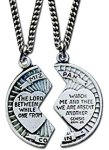
8. Carefully examine 31:44-54 in the context of all that has transpired between Jacob and Laban in this passage. Have you ever seen a set of Mizpah necklaces? They are usually shared by best friends, close loved ones, or boyfriends and girlfriends on the occasion of an impending temporary absence as a fond blessing that anticipates a happy reunion in the future. Knowing what you now know about the Mizpah (31:49) is this the correct usage and context of this verse? What is the correct understanding of this verse?

9. How does Jacob’s redeeming and rescuing of Rachel and Leah from Laban point to Christ as Redeemer and Rescuer? In what ways does it point further ahead to Christ taking Christians Home at the second coming?


Homework

Review the meaning of Jacob’s name from question 3. Write down your observations about the meaning of Jacob’s name as it compares to his statement in 30:33, and to Proverbs 22:1. Think about your own reputation – is it godly? Honest? Ethical? Why is it important for Christians to have an honest reputation? Examine 2 Corinthians 5:20, and consider how your reputation impacts your representation of Christ to others. What are some other New Testament Scriptures that address the importance of a godly reputation?


Suggested Memory Verse

Then the Lord said to Jacob, “Return to the land of your fathers and to your kindred, and I will be with you.” 
Genesis 31:3

Bible, Old Testament

6 Reasons You Need to Stay Hitched to the Old Testament

Oops, he did it again. Only it wasn’t an “oops”, it was quite intentional.

In a recent sermon, Andy Stanley declared that the modern church needs to “unhitch” the gospel from the Old Testament. He attempted to draw a parallel between James’ pronouncement in Acts 15 that Gentiles did not have to convert to Judaism prior to becoming Christians with the difficulty some non-Christians today have with some of the gory, hard to understand, or otherwise distasteful (to them) passages of the Old Testament (for example: God’s various commands to Israel to utterly destroy all people in certain nations). The apostles cut out the requirement for circumcision to make things easier for Gentiles who wanted to come to Christ, he reasons, so the 21st century church should basically divorce itself from the Old Testament to make it easier for lost people who have a problem with certain Old Testament passages to come to Christ.

Andy Stanley declared in a 2018 sermon that the modern church needs to “unhitch” the gospel from the Old Testament because “difficult passages” are keeping people from coming to Christ. Is that true?

There’s only about a million problems with this line of thinking, and, honestly, the more I investigate what Stanley said and his subsequent explanations of why he said it and what he meant, the angrier it makes me. That a man with a master’s degree from a decent seminary, who’s a pastor of several churches, a best-selling “Christian” author, and a leadership and church growth guru to thousands of pastors across the globe should say, or even believe, such things is reprehensible. If he were generally doctrinally sound and this were the first “iffy” thing he had ever said, I’d be inclined to extend grace and give him the benefit of the doubt. But this is somebody with every theological advantage who should know better, yet still has been on a trajectory of attempting to deconstruct the New Testament church for quite some time now.

So, for the sake of my own blood pressure, I’m just going to throw out a few of the most embarrassingly obvious errors here, and let better people than I handle the blow-by-blow.

1. Andy Stanley is not an apostle personally commissioned by Christ to set up the New Testament church. James and those other guys mentioned in Acts? They were. Andy doesn’t have the authority to change New Testament ecclesiology, which is permanently and inextricably hitched to the Old Testament.

2. Acts is generally a descriptive book, not a prescriptive one. While there are certain principles we can learn from Acts and follow, it’s a history of the establishment of the first century church, not a step by step list of instructions to implement in today’s church. If there were a church today that were insisting Gentiles become Jews before they could become Christians, Acts 15 would be applicable. But, except for the heretical Hebrew Roots movement, I don’t know of any legitimate churches like that, do you?

3. The two church scenarios Andy is trying to make analogous aren’t. No church I know of requires unbelievers to understand, agree with, or even have read whatever Old Testament passages Andy thinks are problematic prior to becoming a Christian.

Furthermore, how many lost people are actually out there saying, “I recognize I’m a sinner in need of a Savior. I want to repent of my sin and place my faith in Christ for salvation, but I just can’t, because of 1 Samuel 15:2-3.”? People who bring up Old Testament passages like that when confronted with the gospel are presenting excuses for rejecting the gospel, not looking for ways to embrace it.

4. Shoving difficult passages of Scripture into the broom closet is not how God has instructed the church to handle His holy Word. We’re to be “a worker who has no need to be ashamed, rightly handling the word of truth.” (2 Timothy 2:15b) We don’t get rid of challenging passages, we dive into them, study them, and explain them to others.

The Old Testament is absolutely essential to New Testament Christianity, and a rich blessing to the church, individual Christians, and lost people, besides. Here are six reasons you and your church should stay hitched to the Old Testament.

The Old Testament is absolutely essential to New Testament Christianity, and a rich blessing besides. Here are six reasons you and your church should stay hitched to the Old Testament.

1.
God says so

All Scripture is breathed out by God and profitable for teaching, for reproof, for correction, and for training in righteousness, that the man of God may be complete, equipped for every good work. 2 Timothy 3:16-17

That should be the end of any discussion of ditching any part of Scripture for any reason. God could not have been clearer. “All Scripture” means all Scripture, from Genesis 1:1 to Revelation 22:21. And every single verse of Scripture is profitable. Even the genealogies. Even the inventories. Even the Levitical law. There is stuff in every single verse of the Bible that is useful and beneficial to us. God says so (and He says so in the New Testament, by the way).

2.
You need the Old Testament
to understand the New Testament

Can you come to a saving knowledge of Christ by reading only the New Testament? Yes. But it’s kind of like saying, “I know American history,” when you’ve only studied the years 1900 to the present. The New Testament was birthed out of the Old Testament. The gospel is the culmination of Old Testament doctrine. Jesus Himself is the ultimate fulfillment of every Old Testament prophecy and covenant.

And then there are all the New Testament details that need explaining. Who are these Jews and how did they come to be God’s people? Why do they have such a problem with Gentiles? What are these laws the Pharisees keep talking about? If Jesus is the “second Adam”, who was the first Adam? What on earth is circumcision anyway? And…Hebrews? What’s that all about?

The gospel is the culmination of Old Testament doctrine. Jesus Himself is the ultimate fulfillment of every Old Testament prophecy and covenant.

3.
The Old Testament teaches how we CAN’T be saved

Therefore the Law has become our tutor to lead us to Christ, so that we may be justified by faith. Galatians 3:24 (NASB)

and how from childhood you have been acquainted with the sacred writings, which are able to make you wise for salvation
through faith in Christ Jesus. 2 Timothy 3:15

How was the Old Testament Law our tutor to lead us to Christ? How was it able to make Timothy wise for salvation through faith in Christ Jesus? It shows us the futility of thinking we can keep the law to earn righteousness. It shows us that right standing with God always comes by repentance and faith, not works. How many times have you shared the gospel with someone only to hear her say some variation of, “I’m OK with God and I’m going to Heaven because I’m a good person.”? Really? Take a stroll through the Old Testament, and watch how “good” God’s chosen people were. He spelled everything out for them, sent them prophets to tell them exactly what He wanted them to do, performed amazing miracles right before their eyes, and they still couldn’t be “good people.” And you, a pagan, think you can do better?

Remember the old saying, “You can lead a horse to water, but you can’t make him drink.”? Some smarty pants came up with the rejoinder, “Yes, but you can feed him salt.” The Old Testament is our salt. Its lessons in the futility of trying to be good makes us thirsty for the Living Water we find in the New Testament.

The Old Testament’s lessons in the futility of trying to be good makes us thirsty for the Living Water we find in the New Testament.

4.
The Old Testament vividly shows us
God’s wrath against our sin

I’m not saying the Old Testament only shows us God’s wrath against sin, because it also shows us His compassion, mercy, and love. I’m also not saying the New Testament doesn’t show us God’s wrath. It does, but in a different way than the Old Testament does. In the New Testament, the main ways we see God’s wrath against sin is when it’s poured out on Christ at the cross, and the wrath of God that’s yet to come as it’s described in Revelation.

When it comes to God’s wrath against me, personally, for my individual sin, those demonstrations of God’s wrath can feel a little detached sometimes. But in the Old Testament, I see, in vivid detail, the horrific plagues God rained down on Pharaoh for his sin. I see the ground open up and swallow Korah for his rebellion. I see God immolating Nadab and Abihu for offering illegal worship. I see the once mighty and majestic Nebuchadnezzar forced out into the wilderness to live like an animal because he took God’s glory for himself. And when I know that God doesn’t change – that His wrath towards my sin as a lost person burns just as hot as it did toward those Old Testament rebels – well, it can hit a lot closer to home and convince me of my need to run to the cross and throw myself on the mercy of Christ.

The Old Testament’s demonstrations of God’s wrath hit close to home and convince me of my need to run to the cross and throw myself on the mercy of Christ.

5.
The Old Testament teaches by example

The largest portion of the Old Testament is history and biography. Most of the New Testament is didactic. The New Testament gives us the subject matter we need to learn. The Old Testament puts flesh and blood on it and shows us what it’s like for real, flawed people just like you and me to walk it out. In the New Testament, we learn “by grace are you saved through faith.” In the Old Testament, we see just how God accomplished that in the life of Noah, who found grace in the eyes of the Lord. In the New Testament we learn what it means to repent. In the Old Testament, we walk with David through the loss of his child and his grief over his sin with Bathsheba. In the New Testament, we learn that the godly will face persecution. In the Old Testament, we stand next to Shadrach, Meshach, and Abednego refusing to bow to an idol, even if it means being burned alive. The New Testament gives the facts of the matter. The Old Testament says, “For example…”.

The New Testament gives us the subject matter we need to learn. The Old Testament puts flesh and blood on it and shows us what it’s like for real, flawed people just like you and me to walk it out.

6.
The Old Testament is a warning to the church

People are people. God’s people of the Old Testament are not significantly different from God’s people today. We’re all made in the image of God. We’re all tempted by similar things.

If you begin studying the Old Testament, you can’t help but notice some of the same themes running through the story of God’s people back then that run through our story today. Idolatry. Ecumenism. Doing what’s right in our own eyes. Going through the motions of religious activity without true repentance and faith. Depending on our own power and resources rather than depending on God. False prophets. Persecution and derision of those who stand firmly on God’s Word by those who claim to be His people. Fickle hearts and tickled ears. Oh sure, we might be a little more sophisticated and subtle about it, but, as Solomon put it:

What has been is what will be, and what has been done is what will be done, and there is nothing new under the sun. Ecclesiastes 1:9

And because the Old Testament shows us more direct interpersonal interaction between God and His people, we get to see exactly how God feels about all of those things. We hear what He has to say about it. We see how He responds to it. And, if we’re wise, we take heed to those warnings, humble ourselves, and grow in our fear of the Lord and our desire to please Him with holy living and clean worship.


I could give far more than a mere six reasons why the Old Testament is so vital, a precious blessing, and such a spiritual treasure trove. It tells us where we, and the world around us, came from. It shows us the beauty and precision of worship. It extols the charm of Creation. It displays God’s power, grace, trustworthiness, mercy, justice, His plan for mankind, and all of His other attributes. And so much more.

Are there some passages in the Old Testament that are hard to understand or accept at first blush? Sure. But they’re not keeping anybody from coming to Christ. People reject Christianity, not because of difficult Old (or New) Testament Scriptures, but because they love their sin more than Jesus. And that’s no reason to unhitch anything or anyone from the beauty, the joy, and the benefits of the Old Testament.

People reject Christianity, not because of difficult Scriptures, but because they love their sin more than Jesus. And that’s no reason to unhitch anything or anyone from the beauty, the joy, and the benefits of the Old Testament.

How has the Old Testament been profitable in your walk with the Lord?