These are my notes from my ladies’ Sunday School class this morning. I’ll be posting the notes from my class here each week. Click here for last week’s lesson.
Through the Bible in 2014 ~ Week 48 ~ Nov. 23-29
Acts 15-19, Galatians, 1&2 Thessalonians, 1Corinthians 1-4
The Believin’ Bereans and the Thessalonian Thugs
A large part of Acts is devoted to describing how Paul traveled around Asia and Europe preaching and planting churches. Today, we’re going to look at two places he went, Thessalonica and Berea, and their two very different responses to the gospel.
Acts 17:1-9- Thessalonica
Jews vs. Gentiles (1-2, Romans 1:16)
In the days of the early church, one of the apostles was known primarily as the apostle to the Jews, and one as the apostle to the Gentiles. Do you remember which was which? Peter preached mainly to the Jews, and Paul preached mainly to the Gentiles. But as we can see, there was some overlap for both of them.
When Paul arrived at a town with a synagogue (a local “mini-temple” in towns distant from Jerusalem) he started his preaching gig there– to the Jews. This mirrors what we studied back in October, when Jesus sent the disciples out to preach. First, the messiah was God’s promise to and through the Jews, so it was only right to give them “first dibs” on the gospel. Second, this was a period of rapid growth for the church, and converted Jews, with their background in the Old Testament could become competent teachers and preachers much more quickly than Gentiles who had no biblical training at all. Paul emphasizes this concept later in Romans 1:16:
For I am not ashamed of the gospel, for it is the power of God for salvation to everyone who believes, to the Jew first and also to the Greek.
The Substance of the Sermon (2-3)
In verses 2-3, what does Paul draw from to convince the people that Jesus is the Savior? Does he tell them about his phenomenal personal salvation experience on the road to Damascus? No. He “reasoned with them from the Scriptures.” (2) This is something that’s extremely important for us to grasp and remember as we share the gospel with others today.
The gospel isn’t true and necessary because we personally experience life change from it. The gospel is true and necessary because God says it is.
People can experience life change from Weight Watchers, or a near death experience, or Mormonism, or Buddhism. But the life change they experience doesn’t save them and doesn’t prove that these things are true. This is why, when we evangelize, Scripture should take center stage and personal experiences of how Christ has changed our lives should play a supporting role.
The Mixed Response (4-9)
The encouraging news of this passage is that some of the people Paul preached to heard the gospel and believed it. Sometimes, we are reluctant to share the gospel with people because we’re afraid they will reject it (or us), but we should always keep verse 4 in mind– what if they actually believe it?
The remaining five verses, however, describe the opposite response to the gospel. Now, keep in mind, Paul is preaching to Jews…in the synagogue…from their own Scriptures. These are “church people,” if you will. If anybody should have received with joy what Paul was saying, it was this audience. Instead, they rejected the plain teaching of Scripture and basically ran Paul and Silas out of town on a rail.
Though we don’t usually experience rejection to this extreme today, it is a good reminder to us that there are still unbelievers in the church who will reject the plain teaching of Scripture. And, if there are enough like-minded unbelievers in a particular church or denomination, they will run off pastors, teachers, and denominational leaders who stand firmly on Scripture, and will codify rebellion against Scripture into their core beliefs and policies. This is why we have “churches” today that have homosexual bishops, female pastors, accept evolution, etc. Faithful, active church membership does not automatically guarantee that a person is saved.
Acts 17:10-15- Berea
Second Verse, Same as the First (10)
Sometimes, God closes a door and opens a window. Sometimes He slams the door and throws us through the window. Regardless of His method, we end up in the yard with a new place to share the gospel, and that’s exactly what happened to Paul and Silas.
Again, they started out by preaching the gospel in the synagogue.
An Enthusiastic and Responsible Response (11-12)
It’s easy to see why Paul said that the Jews of Berea were more noble than those of Thessalonica. He had three reasons:
1. “They received the word with all eagerness.”
These Jews loved God’s word and were hungry for it. Hearing Scripture taught wasn’t a burden or a duty for them, it was a joy.
2. They were “examining the Scriptures daily to see if these things were so.”
These Jews had the godly wisdom to know that, if what Paul was preaching was truly from God, Scripture would back it up. They did not just gullibly take every thing Paul said at face value. They did their homework and dug into the Scriptures to make sure Paul wasn’t pulling a fast one on them.
In our day and age of so many false teachers permeating the media, it is imperative that we follow the example of the Bereans. Don’t listen to that TV preacher just because what he says sounds good to the ear. Don’t assume that Bible study you’re considering buying is true to Scripture just because it’s on the shelf at a Christian bookstore. Be a good Berean. Do the homework– it’s never been easier! Google the pastor or author and find out if he/she has a track record of proclaiming sound doctrine. Compare what you’re hearing or reading to Scripture (in context), and see if what you’re being taught is really what God’s word says.
3. “Many of them therefore believed” (Mark 1:14)
There’s nothing more noble than hearing the gospel and believing it. That’s exactly what Jesus said to do in Mark 1:14: “repent and believe in the gospel.”
The Rest of the Story (13-15)
I wanted to end the lesson with verse 12, because I’m a “happily ever after” kind of gal. But this is the Bible, not a Disney movie, and the reality is that wherever the gospel flourishes, Satan will be hot on its heels to attack.
The unbelieving Jews who had caused such a ruckus in Thessalonica heard what was going on in Berea, and they didn’t like it. So, they traipsed roughly 50 miles down the road (a trip which probably took 2+ days) and started causing the same kind of trouble in Berea. We can expect the same kind of results today. When we preach the gospel, we will often face opposition.
When we share the gospel, we can be encouraged and spurred on by the fact that sometimes people will believe it. At the same time, we must be prepared for the opposition Paul and Silas, and even Jesus faced. But, like them, we will eventually get our happy ending. Jesus promised:
Blessed are you when others revile you and persecute you and utter all kinds of evil against you falsely on my account. Rejoice and be glad, for your reward is great in heaven, for so they persecuted the prophets who were before you.
Matthew 5:11-12




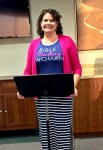 Thanks to my sweet friend Kesha over at Bible Thinking Woman for giving me a heads up on all the great t-shirts and other products available at her online boutique, Eternal Gift Store! The BTW shirt she kindly sent me is super soft with an eye-catching design. Check out all their products and give BTW a follow on Facebook or Twitter.
 Does your church collect Operation Christmas Child shoe boxes at Christmas time? Amy Medina and her husband Gil are missionaries in Tanzania, and she has written two startling articles at Everyone Needs a Little Grace in Their Lives about being on the receiving end of OCC shoe boxes. There’s corruption, evangelism dilemmas for missionaries, and often, no gospel. I urge you to read Opening Up Christmas Shoe Boxes: What Do They Look Like On the Other Side? and Sometimes the Starfish Story Doesn’t Work, and maybe pass them along to your pastor now, while there’s still plenty of time to decide whether or not your church should participate in OCC this year.
 Who doesn’t love an online quiz? Here’s a Simple Bible Doctrine Quiz from Josh Buice at Delivered by Grace that will test your knowledge of basic theology.
 If you’re a Sunday School or Bible study teacher, or even just for your personal daily Bible study time, The Hero of the Story is a really helpful new podcast from The Gospel Project featuring my friend Aaron Armstrong and co-host Brian Dembowczyk that will help train you to teach and/or study the Bible better. (So far, it is not specific to The Gospel Project Sunday School curriculum, so your church doesn’t have to use that literature in order for the podcast to make sense.) You can listen on line as well as get all the appropriate podcast links at the link above.
 My Sunday School class has a breakfast rotation. Last week it was my turn to bring breakfast, so I made a doughnut bread pudding. When I mentioned it on Twitter, a lot of people seemed interested in the recipe, so I thought I’d share it here. I use this bread pudding recipe, substituting glazed doughnuts for the bread. I leave out the raisins, cut the sugar a little (since the doughnuts are glazed), and top it off with a a cream cheese buttercream icing drizzle (melt a little butter and cream cheese, add a dash of vanilla and a spritz of water, stir in powdered sugar until it’s the right consistency) when it’s done.