Women of Genesis Bible Study

The Women of Genesis: Lesson 2

Previous Lessons: 1

(By way of reminder, this study will be slightly different from our regular studies. We will be taking a more in depth look at the passages of Genesis that focus on the women we’ll be studying and a more generalized overview of the passages in between. Those “in between” passages may be somewhat lengthy, so instead of reprinting them here, I will be linking to those longer passages on Bible Gateway. Simply click on “Read Genesis X:Y-Z” to start reading.)

πŸ“–πŸ“–πŸ“–πŸ“–πŸ“–

Read Genesis 1:1-2:17

πŸ“–πŸ“–πŸ“–πŸ“–πŸ“–


Questions to Consider

1. What is the theme of Genesis 1 and 2? Some people think that Genesis 1 and Genesis 2 are two separate accounts of Creation. Is this true? Explain how Genesis 1 and 2 fit together.

2. Make a list of the attributes and characteristics of God you see in Genesis 1 and 2. Describe the relationship between God and His creation. In what ways do we see the creation submitting to its Creator? Examine what verses 1:2, 1:26, andΒ John 1:1-3Β tell us about an important aspect of God’s nature. Describe the ways we see each member of the Trinity present and involved in Creation.

3. What are some specific ways Genesis 1 and 2 stand in opposition to evolution, the Big Bang Theory, etc.? Did God leave anything imperfect or incomplete on any of the days of creation? How do the “good”ness (1:31) and perfection of Creation reflect the goodness and perfection of God?

4. What method did God use (1:3, 6, 9, 11, 14, 20, 24) for creating everything except man? What method did God use for creating man? (2:7-8) What does this demonstrate about the uniqueness of human beings as well as God’s special love and care for humans?

5. What sets human beings apart from the rest of creation? (1:26-27) What does it mean to be made in the “image” and “likeness” of God? What responsibilities and instructions did God give Adam and Eve when He created them? (1:28-30)

6. Summarize 2:7-15 in your own words. What do we learn about God, the earth, and Adam from this passage?

7. Who is God instructing in 2:15-17? Was Eve present for these instructions? What did God tell Adam in these verses? Why did God put the tree of the knowledge of good and evil in Eden if He didn’t want Adam to eat from it? How might God have been using this tree to teach Adam to trust, obey, honor, and submit to Him? What should God’s instruction about this tree have taught Adam about God’s authority and His right to rule over both Adam and all of Creation?


Homework

For the next six days, choose something God created on each one of the six days of Creation. Write down how that thing brings glory to God, how it reflects God’s nature or attributes, and how you or another Christian could use it to spread the gospel, build up the church, encourage or teach others, etc. Pray, thanking God for that part of His Creation.


Suggested Memory Verse

In the beginning, God created the heavens and the earth.
Genesis 1:1

Creation, Evolution, Throwback Thursday

Throwback Thursday ~ Tru Dat

Originally published September 2, 2013tru dat

“God is not man, that he should lie,” Numbers 23:19

“God, who never lies,” Titus 1:2

“It is impossible for God to lie,” Hebrews 6:18

God tells us in Genesis 1 (and reiterates it elsewhere in Scripture) that He created the world by speaking everything into existence. There’s nothing that exists that came into being apart from His creating it (John 1:3). He created all plant and animal life “according to their kind” on successive days of creation, and He created man separately and in His own image. This does not allow for the (macro) evolutionary idea that bacteria changed into an animal, which changed into another kind of animal, which changed into another kind of animal, which changed into man.

As Christians, we are called to believe God’s word simply by virtue of the fact that He said it. As Christians, we can also believe secular science and history insofar as it supports, or does not conflict with, God’s word. But there’s another good reason to believe God over man:

God doesn’t lie, and He’s never wrong.

Man does lie. Man is frequently wrong.

Which makes more sense, purely from a logical standpoint? To cast your lot with Someone who doesn’t lie and is never wrong, or to cast your lot with someone who does, and is?

God doesn’t lie. When He tells us something in His word, we can trust it, regardless of what man may say to the contrary.


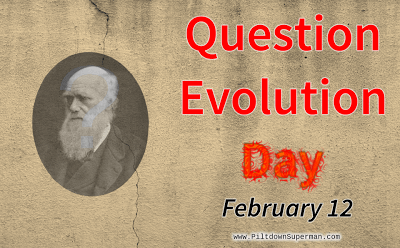
Β Today (February 12, 2015) is Question Evolution Day.

QE_Day_1_12_2012_C

“Question Evolution Day has several purposes. One is very basic, to support people who want to say, “I don’t believe in evolution, here are my reasons…” A second is to show people that there is indeed scientific evidence refuting evolution and supporting creation. Third, we hope to prompt people to consider evidence against evolution and supporting creation that they may have not known about before. Another purpose of QED is to equip Christians with resources so they can confidently stand up for the faith.”Β 

Click here for more great information on
Creation science and Question Evolution Day.

Creation, Evolution

Tru Dat

tru dat

“God is not man, that he should lie,” Numbers 23:19

“God, who never lies,” Titus 1:2

“It is impossible for God to lie,” Hebrews 6:18

God tells us in Genesis 1 (and reiterates it elsewhere in Scripture) that He created the world by speaking everything into existence. There’s nothing that exists that came into being apart from His creating it (John 1:3). He created all plant and animal life “according to their kind” on successive days of creation, and He created man separately and in His own image. This does not allow for the (macro) evolutionary idea that bacteria changed into an animal, which changed into another kind of animal, which changed into another kind of animal, which changed into man.

As Christians, we are called to believe God’s word simply by virtue of the fact that He said it. As Christians, we can also believe secular science and history insofar as it supports, or does not conflict with, God’s word. But there’s another good reason to believe God over man:

God doesn’t lie, and He’s never wrong.

Man does lie. Man is frequently wrong.

Which makes more sense, purely from a logical standpoint? To cast your lot with Someone who doesn’t lie and is never wrong, or to cast your lot with someone who does, and is?

God doesn’t lie. When He tells us something in His word, we can trust it, regardless of what man may say to the contrary.