
Forgiveness, New Testament, Sin, Sunday School

Sin-opsis ~ Sunday School Lesson ~ 10-26-14

Sinopsis

These are my notes from my ladies’ Sunday School class this morning. I’ll be posting the notes from my class here each week. Click here for last week’s lesson.

Through the Bible in 2014 ~ Week 43 ~ Oct. 19-25
Matthew 15-18, Mark 7-9, Luke 9:18-11:54, John 7-10
Sin-opsis

Sin. That word can cause us to think of a lot of different things, from our sin, to people who have sinned against us, to forgiveness. Today, we’re going to hear what Jesus has to say about five different aspects of sin.

Matthew 18

Causing Another Believer to Sin (1-5, Matthew 20:20-24)
Have you ever noticed that the disciples asked a lot of interesting questions? Why do you think they wanted to know who would be the greatest in the kingdom of heaven? Pride? A desire for clout or recognition? The disciples and Jesus lived in a society in which people were acutely aware of who had rank, recognition, and power (the Pharisees, scribes, Saducees, lawyers, priests, and Levites), and who did not (everybody else, including Jesus and them), when it came to the way Judaism was structured. We talked last week about what people, even the disciples, expected the Messiah to be: a conquering king who would overthrow Rome and restore Israel to prominence and prosperity. Here, as in the case of Mrs. Sons of Thunder asking if her boys could sit on either side of Jesus’ throne (Matt. 20), they were likely thinking of their offices in the new government they imagined Jesus would head up once He reestablished the kingdom.

Once again, Jesus had to set them straight. “It’s not about how high on the power ladder you can climb, Boys. It’s about how humble you can be, as humble as a little child.” And why did Jesus have to set them straight? Because they had been, skandalizo, “entrapped” or “tripped up” as verse 6 puts it, by faulty teaching from those who were responsible to rightly handle God’s word. The disciples would soon be in the position of teacher and preacher themselves. It was imperative they had a correct understanding of God’s word and God’s ways so they could accurately teach the new “little children” coming into the church.

When we share the gospel with others, teach the Bible, offer others advice or counsel, etc., we must make absolutely certain we have a correct understanding of what God’s word says. Otherwise, we might be tripping others up by leading them to believe things that are in conflict with the Bible. Jesus takes that very seriously saying (7) “it would be better for him to have a great millstone fastened around his neck and to be drowned in the depth of the sea.” Pretty strong words.

Recreation of a millstone used for pressing olives in Nazareth, Israel.

When I Am Tempted (7-9)
What about when someone else tempts me to sin? Again, Jesus has strong words for anyone who entices someone into any kind of sin: “woe.” What are some ways we can cause people to sin or be drawn into someone else’s sin, even in the church? Gossip, adultery, inciting other church members against the pastor or other leaders, playing “politics”, etc.

But whether tempted by a church member or the world, Jesus paints a serious picture of how we should respond to that temptation. Now, Jesus isn’t suggesting we literally maim ourselves, because, if you think about it, even a blind person can lust. Sin is an issue of the heart. Jesus is saying that we are to get away from temptation to guard our hearts, whatever the cost. Your relationship with Christ is worth it.

What might “gouging your eye out” or “cutting your hand off” look like for someone facing a certain temptation? For a person tempted to drunkenness, it might mean not drinking at all or not going to certain social events where they know the booze will be flowing freely. A person tempted to lust and adultery might need to make certain she is never alone with a man she’s not married to. She may even have to avoid spending any time with certain men she’s attracted to. Sin is serious, and we sometimes have to take big, inconvenient steps to stay out of it, but our relationship with Christ is completely worth it.

When Another Christian Sins (10-14, Romans 8:1)
Our brothers and sisters in Christ are going to sin. There’s just no way around it. How should we respond to a fellow Christian who has wandered off into sin? Ignore it and hope she’ll stop? Stop speaking to to her? Castigate her? No. We are to respond to her the same way Jesus does with the lost sheep:

10– We are not to treat any of our brothers or sisters unkindly; we are to treat all with kindness and love.

12– We remember that Christ came to save the lost from their sin. Of course, He does not want those He has saved to wander off back into their sin. Jesus goes after the wandering sheep to bring it back into the safety of the fold. We are to do the same. If someone wanders off, we don’t just let her go. We go after her in love and concern to bring her back to where she needs to be.

13-14– “If he finds it…” If is kind of an interesting word to use here, since Jesus is the shepherd in the story. Will there ever be a case in which Jesus can’t find someone who has wandered off? No. God is sovereign over all things. He knows where we are, what we’re doing, and the state of our hearts at all times. These verses are referring to the lost sheep who is willing to be found and return to the fold with Jesus. When a Christian repents and returns to Christ, Christ rejoices over her. While there may be consequences of the sin to face, “There is therefore now no condemnation for those who are in Christ Jesus.” (Rom.) Isn’t that awesome? When that repentant sheep comes back to the fold, we are to have the same loving, embracing, and forgiving attitude towards her that Christ has. Christ’s desire is always restoration and reconciliation, and that should be our desire as well.

When Another Christian Sins Against Me (15-20)
One of the most important things we can focus on in this passage is the word “sins”. In the church body, there are going to be times when things happen to us that we don’t like. That doesn’t necessarily mean these things are SIN. Maybe we don’t like the style of music, or a particular mannerism of the pastor. Maybe somebody tells us a truth we need to hear that stings a little, or someone is annoying or inadvertently hurts our feelings. Our feelings don’t determine what sin is, the Bible does. When deciding whether to confront the person, we first need to determine if what she did is sin according to the Bible (not according to our opinion), or if it’s a non-sinful offense, and we can overlook it and extend grace, realizing that people have probably done the same for us on many occasions.

On the other hand, if the person IS sinning, we can’t shy away from an awkward conversation with her about it. Remember the wandering sheep? We need to have the same love for that wandering brother or sister and try to restore and reconcile him/her. First, we go to the person privately -not in front of a group, not on Facebook- one on one, and, remembering the way we would want someone to approach us, kindly and lovingly, yet firmly, talk to her about her sin. If she repents and returns, let the rejoicing and forgiving commence! If she persists, we take a couple of other Believers with us to kindly, lovingly, and firmly approach her again. If she still persists in her sin, the next appropriate and required step is to take the matter before the church body for disciplinary action. If the person still refuses to repent, we are to treat her as “a Gentile and a tax collector.”

What does that mean? Are we supposed to shun her? Hate her? No. Look how Jesus treated Gentiles and tax collectors (like Matthew and Zacchaeus). He loved them, shared the gospel with them, and called them to repent and believe in Him. In other words, He treated them like the unbelievers they were. People who persist in unrepentant sin show us that they are not Believers. When we have exhausted all attempts at restoration, we agree with their behavior that they are not Believers and treat them that way. We remove their names from church membership and remove them from any positions of leadership or responsibility in the church, but we keep loving them, keep sharing the gospel with them, and keep praying for their salvation.

Why We Forgive (21-35, Ephesians 4:32)
This parable can be summed up in the words of Ephesians 4:32:

Be kind to one another, tenderhearted, forgiving one another, as God in Christ forgave you.

Who is the king in this parable? Jesus. Who is the first servant? Me. How big is our sin debt to Jesus? Verse 24 describes it as ten thousand talents. One talent was a unit of money equal to twenty years’ wages for a laborer. Therefore, ten thousand talents would have equaled 200,000 years’ worth of wages, an impossible amount to even begin to repay, just like our sin debt. But when we throw ourselves on the mercy of Christ and repent, He forgives us that enormous debt. Just wipes it right out. Any sin that anyone can commit against us, no matter how egregious, is peanuts (verse 28 calls it 100 denarii, or 100 days’ wages) compared to the grief and agony we put Christ through on the cross. How can we, knowing how hugely we have sinned against Christ, refuse to forgive others anything they might do to us?

The “Sin-Opsis”
There’s an old Carman song that contains the line

“Black is black, and white is white.
And Hell is hot, and sin ain’t right.”

It’s a pretty good “sin-opsis” of the what sin is. It is Christ’s desire that we stay out of sin ourselves, not lead others into sin, rescue others who have fallen into sin, and forgive those who have sinned against us.

Forgiveness, Hell, Justice, Old Testament, Salvation, Sin, Sunday School

Follow Up Week ~ Sunday School Lesson ~ 6-1-14

sunday school

These are my notes from my ladies’ Sunday School class this morning. I’ll be posting the notes from my class here each week. Click here for last week’s lesson.

Through the Bible in 2014 ~ Week 22 ~ May 25-31
Psalm 131, 138-139, 143-145, 127, 111-118, 37, 71-72, 94, 119:1-88; 1 Chronicles 26-29; 1 Kings 1-4; 2 Chronicles 1

Follow Up Week

Last week, we had a lot of great questions that I didn’t feel we had the opportunity to discuss thoroughly enough. This week we’re going to take an in depth look at three of those questions.

Follow Up: Zeruiah
Last week, we saw David repeatedly refer to Joab and Abishai as “sons of Zeruiah,” and a question arose as to what he meant by that. Was it an insult? An identifier? Here, briefly, is some clarifying information:

Zeruiah was David’s sister (1 Chronicles 2:15-16). Her sons were Abishai– one of the chiefs of David’s mighty men (1 Chronicles 11:20), Joab– commander of  David’s army, and Asahel (Asahel was murdered by Abner, commander of Saul’s army (2 Samuel 2:8), at the battle of Gibeon (2 Samuel 2:18-24). Abishai and Joab later took revenge on Abner for killing their brother (2 Samuel 3:24-30).)

images


Abishai, Joab, and Asahel were brothers and also David’s nephews. Therefore, calling them “sons of Zeruiah” may have had one of several meanings:

1. “Sons of Zeruiah” was just another way of saying “my nephews.” It is possible that this was to distinguish them from other men close to David who had the same names. (For example, in this week’s reading, we saw a man named Shimei (1 Kings 1:8, 4:18) who was a different person from the Shimei we studied about last week.) Adding such an identifier to someone’s name was common in biblical times before surnames were in general use (eg. Joshua son of Nun, Joseph of Arimathea, Jesus of Nazareth, etc.)

2. It is possible David had a close relationship with Zeruiah and had great respect for her. Perhaps when David called his nephews “sons of Zeruiah” he was reminding them to live up to their mother’s good character.

3. It is possible David had a contentious relationship with his sister and had little respect for her. Perhaps when David called his nephews “sonsof Zeruiah” when annoyed with them, he was implicitly saying, “What else can you expect when they had a mother like that?”

Since the Bible provides very little information on Zeruiah, we can’t definitively say why David would use this phrase; we can only speculate. Click here for more information on Zeruiah.

 

scales of justice

Follow Up: Shimei, David, and Solomon
Last week, we studied the story of Shemei cursing David, and David’s subsequent sparing of his life (2 Samuel 16, 19). This week, we saw the death of David and Solomon’s accession to the throne (1 Kings 1-2). We also saw David, from his deathbed, give instructions to Solomon regarding Shimei, and we saw how Solomon carried them out (1 Kings 2). Was David sinning by going back on his word to Shimei? Let’s take a look.

Two Different Justice Systems
In order to understand the dynamics of the situation between Shimei and David and Shimei and Solomon, we first have to step outside our 21st century United States understanding of “the justice system” and step back in time into the Old Testament monarchial justice system.

The American System:
In the American justice system, justice supersedes leadership and is a separate entity from leadership. We have the judicial branch of government (courts, judges, jails, lawyers, etc.) and the executive branch of government (the President, state governors, etc.). They each have their own powers and responsibilities, and, for the most part, are separate from, and not dependent on, one another. For example, if someone is acquitted of a crime during one person’s presidency, he cannot later be convicted of that same crime solely because someone else becomes President and thinks he should be convicted. (Obviously, there are exceptions and corruptions to this system, but, generally speaking, in a nutshell, this is how it is supposed to work.)

Old Testament Israel’s System: 
In Israel (and other monarchial or dictatorial nations), there was no separation of powers. Legislative (making the laws), judicial, and executive powers all resided in one man: the king. And, the rules could change every time a new king took over. Your verdict, conviction, and sentence lasted only as long as the reign of the king who handed them down unless the next king chose to honor those decisions. This is one of the reasons the death penalty and maiming (cutting off someone’s had for stealing, for example) were more prevalent during those times. If you were the king and wanted to make sure someone was punished long term and that your verdict would not be overturned, death or maiming were your main options.

Shimei’s Sentence (1 Kings 2:8-9, 2 Samuel 19:23, 1 Kings 2:36-46)
As we saw in this week’s reading in 1 Kings 2:8-9, David did not put Shimei to death himself or during his own reign. Additionally, because of the way Israel’s justice system worked, it would have been impossible for David to swear to Shimei that he would never be put to death, because David had no control over what the next king would do. David’s oath was only good for the duration of his own reign. Thus, he did not break the oath he made to Shimei in 2 Samuel 19:23.

David did, however, take full advantage of Israel’s system of justice, the fact that Solomon had made no such oath to Shimei and the fact that Solomon was his son and would be likely to do as he asked. In 1 Kings 2:8-9, David didn’t come right out and tell Solomon to execute Shimei, but he hinted pretty strongly at it.

Solomon, perhaps wishing to honor the spirit of David’s oath to Shimei in 2 Samuel 19, while still carrying out David’s desire in 1 Kings 2 that Shimei be punished, did not condemn Shimei to immediate death, but, rather, put him under “house arrest” (1 Kings 2:36-37). Shimei could not leave Jerusalem or he would be executed, but as long as he stayed in Jerusalem, he was free to live his life as he wished. Shimei agreed to this (2:38) and made an oath to the Lord that he would obey (2:43). Shimei could have lived out the rest of his life peacefully in Jerusalem if he had just abided by the rules of his sentence. He broke the rules; he knew the consequences (2:39-46).

 

deathbed-2

Follow Up: Can a Christian be forgiven for a sin he commits on his deathbed and doesn’t have the opportunity to repent for before dying? Will he go to hell for this? 
This question arose last week as we briefly touched on David’s deathbed instructions to Solomon regarding Shimei. Although it doesn’t appear that David was actually sinning in that particular case, this question is a very good one that I wanted to address more fully because it has application for all of us since we all sin and will all die one day. In order to answer this question, we need to take a look at several things regarding sin, forgiveness, and salvation.

The soteriology of the question (John 10:26-29, Romans 8:1-2, 33-39, 1 John 2:1-2) 
Soteriology is the field of theological study that deals with salvation: what it is, what it isn’t, and how it happens. We know that in order for a person to be saved and spend eternity in Heaven he must turn from his sin (repent), and place his faith in the death, burial, and resurrection of Christ on his behalf as payment for his sin.

John tells us that, for those who have truly been born again, no one is able to snatch them out of Christ’s or the Father’s hand. This includes Satan. Romans tells us (8:33-34) no one has the authority to condemn or to bring charges against God’s elect, because God is the one who has justified them and He has already said there is no condemnation for those who are in Christ Jesus (8:1-2). Satan no longer has the authority even if we sin, to drag us off to hell, and God has promised that he will not condemn us to hell if we are in Christ. And if/when we do sin, 1 John tells us that Christ has already stepped in between us and the wrath of God as our advocate, offering His righteousness on our behalf.

Bottom line: If you have truly been born again, God’s got you and there’s not anyone or anything that has the authority to change that.

The hamartiology of the question (Hebrews 10:11-14): 
Hamartiology is the study of sin. We sin before we’re Christians. We sin after we’re Christians. We will never be completely free from temptation and the effects of sin this side of Heaven. The truth is, unless you are capable of knowing every single sin in your life (Remember all those sins you committed when you were three? Neither do I.) and you die immediately after repenting of the last one, you’re going to die with unconfessed sin in your life. That’s pretty much every Christian. We sin so much that there are sins we don’t even realize or remember we’ve committed. How can you repent of something you’re not even aware of? So, no, a true Christian will not go to hell for failing to repent of an individual sin committed right before death.

As the old hymn says, “Jesus paid it ALL.” Hebrews tells us that Jesus died “once for all”– one time to pay for all sin, from the creation of the world until its destruction at the end of time. When we come to Christ for salvation, while we may repent of individual sins that are heavy on our hearts, what we are really doing is confessing that we are, and repenting for being, a sinner. If we had to repent of every individual sin no one could ever be saved because no one could remember all the sins he’s ever committed. For those who are in Christ, every sin in our entire lives, from birth to death, is forgiven.

Daily repentance and forgiveness:
So, if the sins we have forgotten about, and the sins we aren’t aware of, and the sins we don’t have a chance to repent for before dying are all forgiven anyway, why is any other sin any different? Why do we need to repent of our sin and ask for forgiveness every day when we pray?

Obedience (Matthew 6:12):
We do it out of obedience. Jesus tells us in the Lord’s Prayer to daily ask God to forgive us for sinning. So, we do.

Awareness and thankfulness (Psalm 32:1-2)
When we spend time in prayer daily repenting of our sin it reminds us of the greatness of God and His grace in forgiving our sin. It humbles us by reminding us of the great cost of our sin. It reassures us of God’s love and mercy towards us. It gives us an opportunity to give Him praise and thanks for forgiving us.

Restored relationship (1 John 1:6-9)
When we have unconfessed sin in our lives, it creates a rift (of our own making) between us and God. When we confess our sin to God and ask Him to cleanse us from it, that sin is no longer a hindrance to clean, unfettered communion with God.

If we say we have fellowship with him while we walk in darkness, we lie and do not practice the truth. But if we walk in the light, as he is in the light, we have fellowship with one another, and the blood of Jesus his Son cleanses us from all sin. If we say we have no sin, we deceive ourselves, and the truth is not in us. If we confess our sins, he is faithful and just to forgive us our sins and to cleanse us from all unrighteousness.
Forgiveness, Obedience, Old Testament, Sin, Sunday School

David’s Sin: You da Man! ~ Sunday School Lesson ~ 5-18-14

sunday school

These are my notes from my ladies’ Sunday School class this morning. I’ll be posting the notes from my class here each week. Click here for last week’s lesson.

Through the Bible in 2014 ~ Week 20 ~ May 11-17
1 Chronicles 19-20, 2 Samuel 10-18, Psalm 20, 65-67, 69-70, 32, 51, 86, 122, 3-4, 12-13, 28, 55
David’s Sin: You da Man!


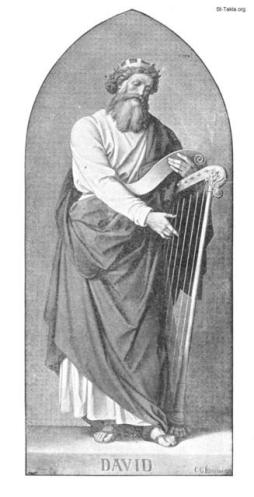
www-St-Takla-org--david

How could David, a man after God’s own heart (1 Samuel 13:14), sink to the level of committing adultery and murder? What was he thinking? How did he respond to being confronted by Nathan? What can we learn about how to deal with our own sin?

2 Samuel 11, 12:1-15, Psalm 51

2 Samuel 11- Setting the Stage for Sin

v. 1- “But David remained at Jerusalem.”
As we’ve read about David’s previous battles, where did we always find David when the fighting was going on? Back at the palace? No. He was out there with his men, leading things. This time, he was somewhere he wasn’t supposed to be. Can you think of a time when you were somewhere you knew you shouldn’t have been, which led to temptation?

v. 3- Eliam and Uriah: Mighty Men (2 Samuel 23:34, 39)
Both Eliam and Uriah were part of David’s mighty men. These weren’t just nameless, faceless Joe Blows in his army, but part of his inner circle who had been with him through thick and thin with fierce loyalty.

v. 4- The paternity test
Lest there be any question that maybe this was Uriah’s baby after all, verse 4 makes clear that the reason David saw Bathsheba bathing was that she was cleansing herself after “that time of the month.” David took her afterwards and Uriah was miles away at the battle, so only David could have been the father.

v. 8- Making Whoopee
(If you don’t know what that means, you’re not old enough to remember “The Newlywed Game” from the 1960s-70s. YouTube it.) “Go down to your house and wash your feet.” Since washing was done right before bed, this idiom meant for Uriah to go home and enjoy “knowing” his wife in the biblical sense.

thv. 9-13- A man of valor
Uriah, possibly inspired by David’s past honorable leadership, acted more valiantly and loyally here than his king did.

v. 4, 26- A willing participant?
Notice that this passage doesn’t tell us anything about what Bathsheba was thinking or feeling about all this. Remember, David was the king. You didn’t say no to the king if you wanted to live, especially if you were a woman. And furthermore, she knew he was “God’s anointed.” Surely such a man wouldn’t lead her to do anything wrong, would he? So, even if Bathsheba had been attracted to David, there was some level of coercion and advantage taking going on here on David’s part. Verse 26 makes a special point of telling us that she lamented over her husband. She loved him. David didn’t just sin with Bathsheba, he also sinned against her.

v. 27- Evil
I think in this case, the HCSB captures this verse better than the ESV (my preferred/usual translation): “The Lord considered what David had done to be evil.” That pretty much sums up what David had done, and it sums up our sin in God’s eyes as well. Evil.


2 Samuel 12:1-15- A Guilty Verdict

v. 1- Confronathan
Nathan wasn’t just a prophet; he was David’s friend and adviser. God sent him to confront David about his sin, and gave him the wisdom and the words to do it in exactly the right way.

v.1-4- The cast of characters
The rich man represented David. The poor man represented Uriah. The lamb represented Bathsheba. What do you think the traveler represented?

v. 4- Leaving out the welcome mat for temptation (1 Corinthians 10:13)
The traveler represented David’s temptation. Temptation is a lot like a visit from a traveling salesman. It comes and goes, it shows up unexpectedly, and it always tries to get you to spend more than you want to on something that seems fabulous but never lives up to the hype. When temptation rang David’s doorbell, he flung open the door and welcomed it in as an invited guest. As new creatures in Christ, we don’t have to do that. 1 Corinthians 10 says God will always provide a way for us to escape temptation.

One of those ways of escape is to not be home to answer the door. As I mentioned earlier, David wasn’t even supposed to be home when that temptation came around. He was supposed to be out on the battlefield with his troops. One way to avoid temptation is to be where you’re supposed to be and not be where you’re not supposed to be.

v. 4- Offering sacrifices to the idol of self
We also see in verse 4 that the rich man not only refused to send the traveler away and welcomed him in, but he also slaughtered a lamb to feed the traveler. The Israelites did slaughter lambs for food, but what else did they slaughter lambs for? Sacrifices.

David didn’t just welcome temptation in, he sacrificed for it. He was no longer sacrificing to honor God, but to gratify his own selfish desires. He sacrificed things that belonged to him—his integrity, his morals, his reputation, his example to his people, and his relationship with God. But he also sacrificed Bathsheba and Uriah who did NOT belong to him.

What are some ways we might sacrifice things, or others, for sin?

v. 5-6- The log in his eye (Matthew 7:3-5)
Isn’t it interesting how we can so clearly see the sin of others while simultaneously being blind to our own sin? “Why do you see the speck that is in your brother’s eye, but do not notice the log that is in your own eye?” (Matt. 7:3)

“He had no pity.” David never considered how his actions would affect Uriah and Bathsheba. He only thought about himself. Temptation and sin blind us to what we’re doing to ourselves, others, and God.

v. 7ff- Faithful are the wounds of a friend (Proverbs 27:6, Galatians 6:1-2, John 15:13)
Nathan was acting in three roles here. He was David’s friend, his brother in the Lord, and the man of God, and he loved David in all three capacities by showing him his sin. In the same way, we are to love our friends, our sisters in Christ, E1221909136and those under our spiritual leadership or influence. We care enough about them to help them out of sin, even at the risk of the relationship (Gal. 6)

Nathan confronted David wisely. Remember, David was the king—he could do (and had done) whatever he wanted to do, and he had already killed one man. Nathan knew this going in. Nathan also acted lovingly, boldly, and firmly. His commitment to what God had told him to do was greater than the love of his own life (John 15) or the love of his relationship with David. How often do we look the other way to keep the peace or preserve a relationship with someone instead of obeying what God has told us to do?

v. 7-9- Against Thee, Thee only…
I, I, I, I… Notice how many times God refers to Himself in these three verses? He is making it clear—and David gets the message as we will see in Psalm 51:4—that it is primarily God against whom David has sinned. Though others may be casualties or collateral damage (as Uriah and Bathsheba were), when we sin, we set ourselves up as enemies of God and wage war against Him.

v. 8- Gimme, gimme (Hebrews 13:5)
If all God had blessed him with had not been enough, God would have given him more. The fact that God had not given him more shows us that God had given David exactly what He wanted him to have. But David was not content with all the blessings God had given him. He selfishly wanted things God didn’t want him to have.

v. 9-10- Hatred for God’s word = Hatred for God
“Despised” and “evil”- When we sin, no matter how “small” it is, we are showing hatred for God’s word. Hating God’s word is evil. Notice in v. 9, “you have despised the word of the Lord,” and in v. 10, “you have despised me.” To despise God’s word is to despise God Himself.

v. 11-12- Public discipline for private sin? (Numbers 32:23)
Why did God discipline David publicly when he had sinned privately?

First, David had not sinned completely privately. Many people knew at least part of what he had done: the servants he sent to take Bathsheba in the first place (4), the servants who were in the house at the time(s) of the affair, Joab, likely several of the soldiers serving directly under Joab and with Uriah, probably the messenger who brought word of Uriah’s death, Nathan, and of course, Bathsheba herself. And you can bet that a lot of those people didn’t keep what they knew to themselves. “Your sin will find you out,” (Num. 32) is certainly true, especially for sins of this magnitude.

With all those people knowing what David had done, how would it reflect on God if He disciplined David privately? It would look as though God had given him a pass, that certain, special people were above God’s law. That’s how things were for kings of pagan nations. Israel and Israel’s God were different, not like the other nations. Furthermore, it would have diminished God’s justice in the eyes of Israel if God disciplined David privately and Israel couldn’t see it. How could they trust His justice if it looked like His justice was inconsistent?

Second, David was famous, highly visible. Like it or not, he set an example for the people. When he did right, it was a good example. Here, he did wrong and it was a bad example. Through his actions and God’s visible discipline, the people learned what not to do in their own lives.

v. 13- Admission of guilt
David didn’t try to justify his sin or retaliate against Nathan. It is precisely because he was a man after God’s own heart that he simply and humbly confessed, “I have sinned.”

v. 13-14- God’s merciful forgiveness
Because David confessed his sin and repented of it, God mercifully forgave him. While David had said the “rich man” should die for his sin (5), and David was guilty of crimes deserving the death penalty, God removed that penalty from him. The consequences of his sin would remain (the death of the baby), but the punishment was taken away.

1176199_570889419639205_1633472194_n

Psalm 51- Repentance and Restoration

Have mercy on me, O God,
    according to your steadfast love;
according to your abundant mercy
    blot out my transgressions.
Wash me thoroughly from my iniquity,
    and cleanse me from my sin!

For I know my transgressions,
    and my sin is ever before me.
Against you, you only, have I sinned
    and done what is evil in your sight,
so that you may be justified in your words
    and blameless in your judgment.
Behold, I was brought forth in iniquity,
    and in sin did my mother conceive me.
Behold, you delight in truth in the inward being,
    and you teach me wisdom in the secret heart.

Purge me with hyssop, and I shall be clean;
    wash me, and I shall be whiter than snow.
Let me hear joy and gladness;
    let the bones that you have broken rejoice.
Hide your face from my sins,
    and blot out all my iniquities.
Create in me a clean heart, O God,
    and renew a right spirit within me.
Cast me not away from your presence,
    and take not your Holy Spirit from me.
Restore to me the joy of your salvation,
    and uphold me with a willing spirit.

Then I will teach transgressors your ways,
    and sinners will return to you.
Deliver me from bloodguiltiness, O God,
    O God of my salvation,
    and my tongue will sing aloud of your righteousness.
O Lord, open my lips,
    and my mouth will declare your praise.
For you will not delight in sacrifice, or I would give it;
    you will not be pleased with a burnt offering.
The sacrifices of God are a broken spirit;
    a broken and contrite heart, O God, you will not despise.

Do good to Zion in your good pleasure;
    build up the walls of Jerusalem;
then will you delight in right sacrifices,
    in burnt offerings and whole burnt offerings;
    then bulls will be offered on your altar.

Sunday School, Trust

Looking Into the Mirror of Christ ~ Sunday School Lesson ~ 4-27-14

sunday school

These are my notes from my ladies’ Sunday School class this morning. I’ll be posting the notes from my class here each week. Click here for last week’s lesson.

Through the Bible in 2014 ~ Week 17 ~ Apr. 20-26
Psalm 121, 123-125, 128-130, 6, 8-10, 14, 16, 19, 21, 43, 45, 49, 84-85, 87, 73, 77-78,
2 Samuel 1-4, 1 Chronicles 1-5
Looking Into the Mirror of Christ

What is the purpose of a mirror? It’s for seeing what we look like on the outside. As women, we often look in the mirror to make sure our hair is behaving, to see that our make up is straight, to find out how we look in a certain outfit. But we MH900442449also look into “mirrors” to see what we look like on the inside. Often, the mirrors we turn to in times of trouble or use to measure our self worth—how many friends we have, what others say or think about us, what we think about ourselves, whether people feel sorry for us or compliment us, even the number of “likes” we get on a Facebook status—are like the mirrors in an amusement park fun house. We never get a true reflection of who we are on the inside because the mirror itself is distorted. The only way to get a true reflection is to take our eyes off the distorted mirrors and put them on the perfect mirror of Christ and His word.

Background
We usually think of the book of Psalms as having been written by David, but, in fact, of the 150 psalms, David wrote 73, 50 are anonymous (some possibly written by David), and the others were written by other authors. Psalms was the “hymnal” of biblical times, and, indeed, there are churches even today whose only worship songs are psalms set to music. As with our own worship music, Psalms covers a variety of topics from creation to the attributes and mighty works of God to laments and requests from God. Today, we’re going to take a look at some of the more personal psalms from different authors in which the psalmist is crying out to God about his own situation.

Psalm 121, 123

What kind of mirror does the psalmist hold up? (121:1-2, 123:1-2)
When we look into a regular mirror, we see ourselves reflected back. When we look into one of those fun house mt-haunted-mansion-nathan-timmirrors I mentioned, we see a distorted image of ourselves reflected back. But there’s another kind of mirror we can look into. Have you ever been on the “Haunted Mansion” ride at Disney World? At one point in the ride, you find yourself facing a mirror, but what you see reflected back is a hologram (a “ghost”) of one of the people who used to live there.

Where does the psalmist direct us to look in these two passages? To the Lord. Where do we find the Lord? In the mirror of His word. When we look into the mirror of the Word, what do we see? Ourselves? No. Kind of like that “Haunted Mansion” mirror, we see the Lord reflected back in all of His goodness and glory. Our eyes are not to be on ourselves – whether we measure up, whether we’re important enough or good enough or worthwhile human beings— but on the Lord.

What do we notice about the Lord’s reflection?

The Lord is sufficient in all things (121:2-4, 123:1)
He made heaven and earth (121:2), so He is all powerful (omnipotent) and capable of rightly handling all situations. He neither sleeps nor slumbers (121:3-4), so He is all knowing (omniscient). He is aware of and involved in every aspect of life. He is “enthroned in the heavens” (123:1). What is the rank of someone who is “enthroned”? A king. A king has sovereign jurisdiction over every inch of his kingdom. He has the final word in all things, and no one outranks him. What comprises God’s kingdom? The universe. He has perfect, final, and sovereign jurisdiction over every inch of the universe, and no one outranks Him. He is complete and sufficient. This is why we need only look to Him for all things, including a right view of ourselves.

Because He is sufficient in all things, the Lord is our help, stability, protection, provider, and mercy for the needs of our souls (121:1, 3, Psalm 62:2, 121:5-8, 123:2-4)

The Lord is our help (121:1). Notice that the psalmist does not qualify that statement. It is blanket, all encompassing. The Lord is our help in all situations. Others may turn away or be incapable when we need help. He will not.

The Lord is our stability (121:3). While the storms of life may rage around us and try to blow us over, He holds us firmly to Himself, the rock of our salvation (62:2). People are not stable. They can let us down and fail to be there for us. God will not.

The Lord is our eternal protector (121:5-8). He keeps us through the difficult times. Notice that the psalmist does not say that God will do away with the sun, the moon, evil, or even death, but that God will be our shade, he will protect from destruction by the sun and moon, and that He will keep our lives. He will keep our going out and coming in – every step we take—from this time forth and forever more. People are not capable of preserving us in this way, but God is.

The Lord is our provider (123:2). Just as an earthly slave would look to his master to provide everything: food, shelter, clothing, health care, etc., we are to look to and depend on our kind and gracious Master who never fails to provide us with all we need. It is not the job of friends or family to provide us with self worth or fulfill our need for emotional support. That is God’s job, and He does it perfectly. That is why we look to Him for those things.

The Lord is our mercy (123:2-4). God sees all aspects of our lives, and He alone is able to provide us with merciful relief from difficult situations, or merciful grace to see us through those situations. And He’s not only capable of doing so, He will do so. Notice (2) that the psalmist doesn’t say “our eyes look to the Lord…hoping, perchance, that He might have mercy,” but “till He has mercy.” The psalmist is confident that it is God’s intention to show mercy. People cannot alleviate our circumstances or carry us through them, nor would they always be willing to do so even if they could, in fact, sometimes the people we would look to in difficult times can actually be the cause of those difficult times (4). Only God can mercifully take away or see us through tough situations.

As we can see, people are often undependable or incapable of giving us what we need emotionally, and completely unable to provide for our spiritual needs. This is why God’s word never directs us to look to the mirror of ourselves or to others for our inner needs or fulfillment, but rather to the mirror of His word and the reflection of Christ. Only God is capable of being, and wants to be, our sufficiency in all areas of life. We must look to God and depend on Him for these things.

Psalm 77

In times of trouble, we look back to the mighty deeds of God in the past.
The first nine verses of this psalm are a lament. Asaph doesn’t explain exactly what’s going on in his life—and maybe that’s beneficial to us because we can all relate to what he’s feeling here regardless of the specific circumstances—but he’s going through a really gut-wrenching time.

Where does Asaph turn? He starts out determined to cry out to the Lord over his situation. He knows in his mind that the Lord “will hear me” (1), but as he begins to pray, he takes his eyes off the Lord, begins to focus on the problems themselves (3- I moan…my spirit faints), and gets overwhelmed. Notice that when he looks back to the mirror of better circumstances (5) or happier times (6- “my song in the night”) or looks to himself (6- let me meditate in my heart) for the solution to his troubles, he only despairs more (7-9).

Finally, Asaph realizes that the only thing that will help is to focus on the Lord Himself (9- His hand), His power (9- “Right hand” is a metaphor for strength), and His deliverance in years gone by (9- the years). He looks into the mirror of God’s steadfast faithfulness.

Asaph doesn’t just recount the details (11- deeds) of what God has done in the past, he also recalls that God’s works evoke a sense of wonder (11,14) for both those who witnessed them and those who think back on them. And Asaph doesn’t merely recall and regurgitate the details of these deeds, he ponders them. He meditates on them (12). He turns them over and over in his mind, considering how they reflect God’s might (12, 14), His holiness, greatness, and superiority to other gods (13). Asaph thinks about how God redeemed His people (15) and would redeem him from his troubles, God’s 1185602_570889882972492_1155182179_npower over nature (16-18) and His power over Asaph’s situation. And even though Israel couldn’t see God Himself, He still led them (19-20), the same way he would lead Asaph, though unseen. If God was powerful enough to redeem Israel, have power over nature, and lead Israel, He was powerful enough to handle Asaph’s situation.

When we face difficult times, Asaph sets a great example for us. We look not to ourselves, others, or circumstances, we look to God, determined to cry out to Him. We ponder His wonder, holiness, power, and greatness. We look at what He has done in the past in His word and in our own lives, knowing that if He was powerful enough to handle those situations, He is powerful enough to handle the present one. We remember that as God has been faithful in the past, He will continue to be faithful in the future.

Psalm 130

There is hope in the Lord (1 John 1:9)
Finally, we turn to the Lord, because in Him, and in no other, is hope.

There is hope of His forgiveness (2-4). When we cry out to God for mercy, He has promised to forgive us (1 John). With Christ, we do not have to stand hopeless and condemned in our sin.

There is hope in His word (5). Not only can we find hope in God’s great and mighty deeds from the past in His word, but we can also find hope in the attributes of God described by the Bible (His goodness, holiness, mercy, compassion, etc.), and in the promises He has made in His word (He will provide, He hears our prayers, He will never leave us, etc.), because we know He will never break them. We cannot find this kind of perfect hope in others.

There is hope because the Lord is trustworthy (5-6). “I wait,” the psalmist says, “more than the watchmen for the morning.” The watchmen knew the morning was coming. How much more does the psalmist know that the Lord will answer him with hope?

There is hope in God’s steadfast love and His plentiful redemption (7-8). The psalmist wasn’t hoping for fleeting things like riches or temporary happiness. He was looking at the big picture. The spiritual picture: God’s eternal love and His redemption from sin. This is our hope as well.

As we face difficult times, like the psalmist, we must keep our eyes focused on the Lord as He is reflected in the mirror of His word, not on our own reflection or the way others reflect us. The Lord is the only one powerful enough to give us the help, stability, protection, provision, and mercy to meet the needs of our souls. Others will let us down, but as we look to God’s faithfulness in the past, we find hope for the present and the future.

Forgiveness, Gospel, Salvation, Sunday School, Types and Shadows

Joe & Moe: Delivery Boys ~ Sunday School Lesson ~ 2-2-14

sunday schoolThese are my notes from my ladies’ Sunday School class this morning. I’ll be posting the notes from my class here each week.Click here for last week’s lesson.

 Through the Bible in 2014 ~ Week 5 ~ Jan. 26- Feb. 1
Genesis 41 – Exodus 9
Joe (Joseph) & Moe (Moses): Delivery Boys (Part 1)


→         ┼     ←→    II
Old Testament                     Gospels         Acts-Revelation    (Christ’s Return)

All of the Old Testament points to Christ. Throughout the OT, we see Israel, a people in need of deliverance, and throughout the OT, we see God use men as types and shadows of Christ, each pointing out a facet of the way He would deliver His people from their bondage to sin.

Let’s look back at some of the people we’ve studied so far and how they are types of (symbolize) Christ. Look at these people through the lenses of Jesus’ life.

Adam– One Man (Romans 5:17)
As sin entered the world through the first/only begotten son, so salvation entered the world through God’s only begotten Son.

Abel– Death of the innocent (Hebrews 12:22-24)
We see the good, obedient, innocent shepherd, betrayed by his brother and killed for no crime of his own.

Noah– The only righteous man (Genesis 6:9, 1 Peter 3:18)
We see salvation take place through the only righteous man on earth, scorned by sinners. We see the death of sin, the burial (at sea), and the resurrection to new life.

Job– The Suffering Servant (Isaiah 53:3,10)
In Job, we see Christ, the innocent, misunderstood and accused by those who should have been His friends, suffering, not for His own sin, but for God’s greater plan: that God might be glorified.

Abraham– The Obedient Son (Philippians 2:5-8)
Abraham left the comfort and position of his homeland in exchange for a life of sojourning in a land not his home. He was obedient to God whatever the cost to himself. So, Christ emptied Himself of His position and comfort in Heaven to sojourn on earth and live in obedience to God, whatever the cost.

Isaac– The Promised Son (Genesis 3:15) and The Lamb of God (Genesis 22:8,14, John 1:29)
God told Abraham He would send him a son, and after many years, the promise came true. The son of the Abrahamic Covenant was born in a miraculous way. In Genesis, God promised to send His Son, and after many years, and many reminders of God’s promise to Israel, the Son of the new covenant was born in a miraculous way.

Lamb of God- He was the only acceptable sacrifice. He took the wood for the sacrifice upon his back and walked up the hill to his place of death. “God will provide for himself the lamb for a burnt offering, my son.” “On the mount of the Lord it shall be provided.” That mountain, Mt. Moriah, turned out many years later to be Calvary. “Behold, the Lamb of God, who takes away the sin of the world!”

Jacob– Cornerstone (Matthew 19:28)
Jacob through his twelve sons/tribes, was the foundation of God’s people, Israel. Jesus, delegating through His twelve disciples, is the foundation of God’s people, the church.

Joseph– Deliverance Through Forgiveness (Genesis 50:20, Acts 5:31) (Genesis 45:5,7-8; 50:15-21, Luke 23:33-34, 1 John 1:5-9)
Joseph was a deliverer, as was Christ. His life shows us one aspect of Christ’s delivering us from our sin: forgiveness. I did a study on this a while back and wrote a blog article about it. It’s like one of those optical illusion pictures where if you look at it one way, it’s an old, ugly woman, but if you look at it another way, it’s a young, pretty woman. This is a “story optical illusion.” See if you can see Joseph and Jesus at the same time.

QueretaroCrossShadow1In the Shadow of the Son

And after all this: hating him, taking him away from his family and all he knew, selling him as a slave, working his way up only to lose everything again when he was falsely accused of rape and imprisoned for years for a crime he didn’t commit, forgotten by the cupbearer for two years, unsure how his brothers were treating Benjamin or his father, not even knowing if his father was still alive, Joseph forgave his brothers and gave them a new start, a new life.

When Joseph’s brothers saw that their father was dead, they said, “It may be that Joseph will hate us and pay us back for all the evil that we did to him.” So they sent a message to Joseph, saying, “Your father gave this command before he died: ‘Say to Joseph, “Please forgive the transgression of your brothers and their sin, because they did evil to you.”’ And now, please forgive the transgression of the servants of the God of your father.” Joseph wept when they spoke to him. His brothers also came and fell down before him and said, “Behold, we are your servants.” But Joseph said to them, “Do not fear, foram I in the place of God? As for you, you meant evil against me, but God meant it for good, to bring it about that many people should be kept alive, as they are today.So do not fear; I will provide for you and your little ones.” Thus he comforted them and spoke kindly to them.
Genesis 50:15-21

And when they came to the place that is called The Skull, there they crucified him, and the criminals, one on his right and one on his left.  And Jesus said, “Father, forgive them, for they know not what they do.” And they cast lots to divide his garments.
Luke 23:33-34

As Jacob forgave his brothers and Christ forgave his executioners, this is exactly what Christ does for us. We repent, and He forgives us for our sin. He gives us a new life.

This is the message we have heard from him and proclaim to you, that God is light, and in him is no darkness at all. If we say we have fellowship with him while we walk in darkness, we lie and do not practice the truth. But if we walk in the light, as he is in the light, we have fellowship with one another, and the blood of Jesus his Son cleanses us from all sin. If we say we have no sin, we deceive ourselves, and the truth is not in us. If we confess our sins, he is faithful and just to forgive us our sins and to cleanse us from all unrighteousness.

1 John 1:5-9

The story of Joseph is a beautiful story of a man rejected, betrayed, and done away with, only to live again victoriously, and forgive and save his betrayers. Just like Jesus.