Christian women, Church, Complementarianism

Unforbidden Fruits: 3 Ways Women MUST Lead and Teach the Church

Ladies, we whine too much.

Like petulant little girls, we look at what’s off limits to us, stomp our Mary Janes on the floor and cry “Why can’t I? I want to!” instead of giddily jumping into all the opportunities God has blessed us with. Instead of being happy and thankful for what we have, our greedy little fingers stretch out to grasp what God has said we can’t have because it’s not good for us or anybody else.

God has instructed pastors – who are, in turn, to instruct us – that, in the gathered body of Believers, women are not to preach to men, instruct men in the Scriptures, or exercise authority over men. And that’s what we focus on, and whine and kick our feet about. That part – the childish rebellion and discontent with the role God has graciously placed us in – that’s on us.

But pastors, we badly need your help on this one. Many pastors do a wonderful job of rightly and biblically explaining what women are not to do (And may I take a moment to say, from the bottom of my heart, thank you. I know how difficult that can be and that you take a lot of undeserved flak for simply teaching God’s Word on this subject.), but that “no” teaching has often not been coupled with the “yes” teaching of what women must do and how they must lead in order for women, and the church, to be healthy and function properly.

The “no” teaching of what the Bible forbids has often not been coupled with the “yes” teaching of what women *must* do and how they must lead in order for women, and the church, to be healthy and function properly.

You’ve loved us well to tell us not to bite at the apple from the forbidden tree, but we also desperately need you to take us on a tour of the Garden and introduce us to the all-you-can-eat buffet of pear and peach and cherry and pecan trees that we have the privilege and the responsibility to feast on.

๐ŸŠ The Other Institution ๐ŸŠ

Did you ever notice that the “do” for women in the church comes before the “don’t”? We tend to totally skip over that enormous little word that kicks off 1 Timothy 2:11: “Let a woman learn…”. We have no idea of, nor appreciation for, how huge and groundbreaking it was for the Holy Spirit, through Paul, to proactively instruct pastors: “Hey, get these women in here, make sure they listen up, and train them properly in the Scriptures so they’ll be equipped to fortify their homes with biblical truth.”

We completely miss the fact that, though God installs men as the teachers and leaders in one of His foundational institutions – the church – He has very much made women the functional, boots on the ground, day to day, teachers and leaders by example – of His other foundational institution – the family. The church didn’t even exist for the first few millennia of human history, but the family has existed since Creation. And people who are members of families populate and lead the church. Raising and molding those people is a tremendous position and responsibility. A position and responsibility God has largely given to women.

Wives pray for our husbands’ growth in Christ. We build them up with Scripture. With a gentle and quiet spirit, we set a godly example for them as they observe our respectful and pure conduct. We encourage and help them in their leadership roles at church.

Moms pray for our children’s salvation. We pour the gospel into them at every turn. We train up our children in the way that they should go – in the nurture and admonition of the Lord – so that when they are old they do not depart from it. We teach them to love and serve and invest in the church both directly and by modeling these things for them.

And our single, widowed, and childless sisters work right alongside us in this labor, praying for church leaders and members, nurturing children at church whose parents are unsaved or unequipped to raise them biblically, encouraging and assisting brothers and sisters in Christ.

We grow and develop, nourish and support, exhort and sharpen the population of the body of Christ.

Men may lead the church, but women raise the church.

Men may lead the church, but women *raise* the church.

๐Ÿ Woman to Woman ๐Ÿ

Essential to the health of any church is the component of women training women, whether in the formal setting of a Bible study class and structured women’s ministry programs or an impromptu “let’s get together for coffee this week” discipleship discussion.

Though we receive instruction in Scripture from our pastors, elders, and teachers, there are some counseling and teaching situations it’s not appropriate for a man to address with a woman, or that a woman understands better than a man. There are issues women face that men just don’t “get” in the same way a sister in Christ does. There are insights and perspectives a woman can use to explain Scripture to another woman that a man just doesn’t have. There are times when a woman needs someone to walk through a long term emotional journey with her that requires a personal intimacy which would be inappropriate for a man to engage in with her. And in the same way men are better equipped than women to train men to be godly husbands, fathers, and church members, women are better equipped than men to train women to be godly wives, mothers, and church members.

God knew all of this back when He breathed out the words of Titus 2:3-5…

Older women likewise are to be reverent in behavior, not slanderers or slaves to much wine. They are to teach what is good, and so train the young women to love their husbands and children, to be self-controlled, pure, working at home, kind, and submissive to their own husbands, that the word of God may not be reviled.

…and, again, 1 Timothy 2:11:

Let a woman learn quietly with all submissiveness.

Women must be trained properly in the Scriptures so we can take that training and pour it into other women, teaching and sharpening them into godly women, wives, mothers, and church members.

๐Ÿ‘ Super Models ๐Ÿ‘

Women instruct our brothers and sisters in the church in biblical truth when we lead by example. When we sin against someone, we go to that person and ask forgiveness. We demonstrate the importance of meeting together with the Body by being faithful in our church and Sunday School attendance. We model servanthood by serving the church and our brothers and sisters. We paint a picture of biblical compassion by ministering to the sick and others in need. We show Christians how to carry out the Great Commission by sharing the gospel. We set an example of trusting God when others see us depending on Him through difficult situations.

And one of the most important biblical concepts women have the privilege and responsibility of teaching the church through our example is submission to authority – a lesson the church is sorely in need of these days.

Because God blessed us by creating us as women, we have an opportunity to model submission to authority in a unique way that God has chosen to deny to men.

Because God blessed us by creating us as women, we have an opportunity to model submission to authority in a unique way that God has chosen to deny to men.

As we submit to our husbands, we teach the church what it means to submit to Christ. How to walk in humility and obey Him out of love. How to put selfishness aside. To trust Him to take care of us. To deny ourselves, take up our cross daily, and follow Him.

When we submit to God’s design for leadership in the church and joyfully carry out the work He has planned for us as godly women, we teach the church to submit to God’s authority and love Him by obeying His commands. We instruct our fellow church members in respecting and submitting to the pastors and elders God has placed in spiritual authority over us.

Submission to Christ, to God’s commands, and to pastors and elders is the bedrock of a healthy church. God has graciously given women the role – and the duty – of teaching these and other biblical principles to our churches in a way that men cannot -through our example as godly women.

Remember the series of fun little nutritional books that came out several years ago called Eat This, Not That? The idea the books centered around was, “Don’t eat that unhealthy thing. Eat this similar but healthy thing instead.”

Sadly, many Christian women have only been getting half the story. “Not that” (preaching to/teaching men and exercising authority over men) is biblically correct, but it’s not biblically complete. If all you tell someone is “Don’t eat that,” without showing her the “Eat this,” part, what she needs to eat to be healthy, she’s going to starve, and the church will be malnourished as well.

Christian women need our pastors to teach us to eat the fat of the land of being properly trained in the Scriptures and drink the sweet wine of leading and instructing the church the way God gifts us and requires us to. Only then will the Body be healthy and well nourished.


Favorite Finds

Favorite Finds ~ March 27, 2018

Here are a few of my favorite recent online finds…


Thanks to my sweet friend Kesha over at Bible Thinking Woman for giving me a heads up on all the great t-shirts and other products available at her online boutique, Eternal Gift Store! The BTW shirt she kindly sent me is super soft with an eye-catching design. Check out all their products and give BTW a follow on Facebook or Twitter.

 

Does your church collect Operation Christmas Child shoe boxes at Christmas time? Amy Medina and her husband Gil are missionaries in Tanzania, and she has written two startling articles at Everyone Needs a Little Grace in Their Lives about being on the receiving end of OCC shoe boxes. There’s corruption, evangelism dilemmas for missionaries, and often, no gospel. I urge you to readย Opening Up Christmas Shoe Boxes: What Do They Look Like On the Other Side? andย Sometimes the Starfish Story Doesn’t Work, and maybe pass them along to your pastor now, while there’s still plenty of time to decide whether or not your church should participate in OCC this year.

 

Who doesn’t love an online quiz? Here’s aย Simple Bible Doctrine Quiz from Josh Buice at Delivered by Grace that will test your knowledge of basic theology.


If you’re a Sunday School or Bible study teacher, or even just for your personal daily Bible study time, The Hero of the Story is a really helpful new podcast from The Gospel Projectย featuring my friend Aaron Armstrong and co-host Brianย Dembowczykย that will help train you to teach and/or study the Bible better. (So far, it is not specific to The Gospel Project Sunday School curriculum, so your church doesn’t have to use that literature in order for the podcast to make sense.) You can listen on line as well as get all the appropriate podcast links at the link above.

 

My Sunday School class has a breakfast rotation. Last week it was my turn to bring breakfast, so I made a doughnut bread pudding. When I mentioned it on Twitter, a lot of people seemed interested in the recipe, so I thought I’d share it here. I use thisย bread pudding recipe, substituting glazed doughnuts for the bread. I leave out the raisins, cut the sugar a little (since the doughnuts are glazed), and top it off with a a cream cheese buttercream icing drizzle (melt a little butter and cream cheese, add a dash of vanilla and a spritz of water, stir in powdered sugar until it’s the right consistency) when it’s done.

Mailbag

The Mailbag: MLM-ing Essential Oils at Church

Our church has recently had a visitor come who is now promoting essential oils to the women who are flocking to a class she is having in one of their homes. This makes me very uncomfortable as it appears (to me) that she has visited to increase her MLM [multi-level marketing] customer base while touting medicinal cures via essential oils. Do you have any research on this?

Sounds like a multi-level mess! There are several different issues going on here, so let’s dig in…

Cold-calling at church
Um, no. I mean… OK, I’m just going to go there. Have you no shame? Have you no home training? I don’t care how much of a go-getter saleswoman you are, there are some lines you just don’t cross. And I can’t believe I’m actually having to explain to grown up, adult people that you don’t go church hopping to make sales and recruit people to work for you. What’s next, showing up at funerals to sell Avon? Pampered Chef demonstrations at wedding receptions?

Church is the place where a local body of Believers gathers to worship the almighty God of the universe. How dare anyone sully the Bride of Christ it by making it something as low and common as a networking site for her business! If you are visiting a church, you should be doing so toย worship, not for any other reason. Jesus made that really clear.

Depending on how blatant, intrusive, and disruptive the visitor’s behavior at your church is, someone – preferably one of the women in the class that the visitor is close to, but if not, possibly an elder or the pastor – may need to pull her aside and firmly, yet lovingly, explain that she is welcome to come to church to worship, but not to hustle.

Multi-Level Members
The reader who sent in the question asked about someone who’s visiting her church, but I want to take a moment to speak to you ladies who are MLM-ing your own church.

Your fellow church members might be uncomfortable telling you this, so I’m going to do so on their behalf: Some of you are going too far and being too pushy with your businesses. And you’re putting your brothers and sisters in the no-win situation of either having to acquiesce to the pressure you’re putting on them or hurt your feelings by telling you no.

It’s certainly fine to tell people at church what your job is when they ask, but leave the ball in their court:

“What do you do?”

“I’m an independent sales consultant for Fancy Widgets.”

“Oh? That sounds great!”

“Yeah, it’s an awesome company. I love it! If you’d ever be interested in working with us or adding to your widget collection, just let me know. Want some coffee?”

And don’t bring it up again. She knows you’re her Fancy Widgets connection. If she wants something, she’ll find you.

If you leave it at that and you end up having a few people at church who want to order from you, it’s certainly OK to discreetly take orders from them or bring their products to them at churchย afterย services are over.ย It’s fine for people to approach you about your business, but don’t repeatedly ask people at church to host parties, invite people from church to parties others are hosting for you, attempt to recruit people, or push products. That’s a distraction from worship and fellowship, it gets on people’s nerves, and it will eventually end up alienating your church family.

Scientifically proven?
I don’t have much experience with essential oils, but it’s my understanding that some essential oils can help alleviate the symptoms of some ailments in some people. In other words, peppermint oil may work wonders on your migraine, but do nothing for mine. As long as the limits of the powers of the essential oils are made clear along with the potential benefits, there’s no problem. If the visitor is making snake oil-type promises that the essential oils don’t deliver on, that’s lying and she needs to be confronted about it. If it gets to that point, you need to let your pastor or elders know what’s going on in case she doesn’t stop and one of them ends up having to deal with her.

Essential Oils and New Age Spirituality
Some (not all) essential oils companies claim that their oils will bring about spiritual benefits in addition to (or instead of) physiological benefits. While it’s fine to say that a little lavender oil in your bath will help relax you, saying that it will balance your chakras or yin your yang or bring you inner peace and confidence or whatever is crossing the line into unbiblical (usually New Age) spirituality. No Christian should have anything to do with buying or selling such essential oils. If there’s someone in your church who’s promoting a company like that at church, that’s a church discipline issue, because she’s introducing false doctrine into the church.

Marcia Montenegro over at Christian Answers for the New Age has published numerous posts on the problems with New Age spirituality and essential oils.


If you have a question about: a Bible passage, an aspect of theology, a current issue in Christianity, or how to biblically handle a family, life, or church situation, comment below (Iโ€™ll hold all questions in queue {unpublished} for a future edition ofย The Mailbag) or send me anย e-mail or private message. If your question is chosen for publication, your anonymity will be protected.

Discernment

Fighting Off the Wolves

12974352_1075682862478482_4420640709694072913_n

I love pastors. I really do. As a minister of music’s wife, church member, and through involvement in other ministries, I’ve known a lot of them. They have a tough job that most of us wouldn’t take on in a million years. I pray for and encourage my own pastor and my pastor buddies regularly, and try to remind y’all to do the same from time to time. All this to say, I’m not a preacher-basher. Far from it.

But sometimes there’s a bit of a veering in a dangerous direction, like a vehicle heading towards the center line, among (some, not all) pastors who are momentarily distracted and might need a friendly “Hey, did you see that truck we’re about to crash into?” from their terrified, front seat passenger.

Color me terrified.

There are pastors out there who treat false teachers with kid gloves. They refuse to label anyone as a false teacher, or only vaguely allude to certain false teachers without naming names. I’d like to encourage those pastors to pull the steering wheel to the right and call a spade a spade. Yes, they need to use the label of false teacher soberly, sadly, and only after making sure, with hard evidence, that it is warranted, but enough with grown men of God tiptoeing around under the guise of “we don’t know what’s in that person’s heart” or “I’m afraid to be painted with the ‘mean old discernment blogger’ brush.”

Enough with grown men of God tiptoeing around under the guise of “we don’t know what’s in that person’s heart” or “I’m afraid to be painted with the ‘mean old discernment blogger’ brush.”

The Bible doesn’t say anywhere that a pastor shouldn’t call someone a false teacher and warn the flock about him just because the pastor doesn’t know for sure what’s in the person’s heart or because he’s afraid of what others might think. We are all to look at their words and their behavior and judge (that’s right, I said “judge“) whether or not they are teaching what accords with sound doctrine. And if they’re not, they need to be denounced. Not in a wild-eyed, foaming at the mouth, wingnut way, but certainly loudly and decisively as a mature man of God.

We never see Paul or Jesus or Peter or Jude or any other godly man in the Bible being over-cautious about firmly calling out those who had proved themselves to be false teachers.

We never see Paul or Jesus or Peter or Jude or any other godly man in the Bible being over-cautious about firmly calling out those who had proved themselves to be false teachers.

“Beware of the leaven of the Pharisees and Sadducees.” – Jesus, Matthew 16:11

“Woe to you, Scribes and Pharisees, hypocrites…blind guides…fools…serpents…brood of vipers.” – Jesus, Matthew 23

“For such men are false apostles, deceitful workmen, disguising themselves as apostles of Christ. And no wonder, for even Satan disguises himself as an angel of light. So it is no surprise if his servants, also, disguise themselves as servants of righteousness. Their end will correspond to their deeds.” – Paul, 2 Corinthians 11:13-15

“For certain people have crept in unnoticed who long ago were designated for this condemnation, ungodly people, who pervert the grace of our God into sensuality and deny our only Master and Lord, Jesus Christ.” – Jude, Jude 4

“They count it pleasure to revel in the daytime. They are blots and blemishes, reveling in their deceptions, while they feast with you. They have eyes full of adultery, insatiable for sin. They entice unsteady souls. They have hearts trained in greed. Accursed children! Forsaking the right way, they have gone astray.” – Peter, 2 Peter 2:13b-15a

“But even if we or an angel from heaven should preach to you a gospel contrary to the one we preached to you, let him be accursed. As we have said before, so now I say again: If anyone is preaching to you a gospel contrary to the one you received, let him be accursed.”
Paul, Galatians 1:8-9

Would pastors today be wise to use this same kind of verbiage? Maybe. Maybe not. These godly men spoke and wrote in a way that was appropriate for their time, culture, and context. Our time, culture, and context are different and may call for a different approach. But the point is, none of them were afraid to speak the truth boldly about false teachers in order to protect the sheep God had entrusted to them. And we sheep today desperately need courageous shepherds who will do the same.

Pastors, if you speak out against false teachers, there are people who will get mad at you. It’s unavoidable. But there are others who know the truth and will be cheering you on and supporting you. And there are still others you will turn back from false doctrine who will learn the truth of God’s word and love you for warning them. And their souls are worth any risk or trial.

Be encouraged, dear pastors. Be strong in the Lord. Be faithful to Him. You can do this!

Be encouraged, dear pastors. Be strong in the Lord. Be faithful to Him. You can do this!

Remember the words of your brother and fellow laborer Paul, who, after condemning false teachers in Galatians 1:6-9, may have anticipated the same backlash you might receive:

For am I now seeking the approval of man, or of God? Or am I trying to please man? If I were still trying to please man, I would not be a servant of Christ.
Galatians 1:10


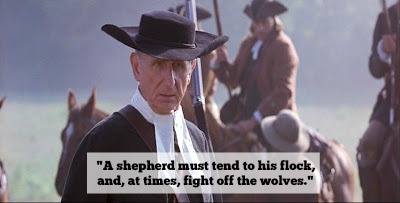
Photo and quote courtesy of The Patriot. ยฉ2000, Columbia Pictures, Inc.
Mailbag

The Mailbag: Expository or Topical Preaching: Which is better?


I would like to read your thoughts on expositional vs. topical preaching. I know we can benefit from both but is one superior to the other and why?

Great question! You’re right, both forms of preaching can be beneficial as long as the pastor properly exegetes (rather than eisegetes) Scripture.

For readers who might not be familiar with the terms, expository preaching is basically when a pastor preaches through books of the Bible from beginning to end carefully explaining what each passage means. He might go through only a few verses each week, or maybe a chapter each week, so the time it takes to work through a book will vary from pastor to pastor.

The termย topicalย preaching can have a couple of different meanings depending on who you’re talking to and what she understands the term to mean. Some people understand “topical preaching” to mean a sermon series, usually in a seeker drivenย church, that centers around something in pop culture. (For example, popular moviesย or the Olympics.) Normally, these sermons are very shallow, biblically – sometimes nothing more than a pep talk or self-help tips. This type of preaching is unbiblical, and if it makes up the bulk of the preaching at your church, I’d recommend finding a new church.

There is, however, a biblical form of topical preaching that can be very helpful. If a doctrinally sound pastor sees an issue in the church that needs to be addressed, there is nothing wrong with his taking a break from preaching through a certain book (or when he’s between books) to teach on this issue from the pulpit.

For example, pastors in Parkland, Florida,ย might wish to take a few weeks right now to preach sermons on “Why does God allow tragedies to happen?”, “How can I biblically comfort the families of the victims?”, “Are the victims of the shooting in Heaven?”, and so on. One great topical sermon concept I’ve seen is for the pastor to give the congregation the opportunity to submit biblical questions and then preach sermons answering those questions. Other times a pastor might address a biblical topic for several weeks, such as peace, the gospel, the Fruit of the Spirit, or parenting. As long as these topics are driven by “let’s look at what the Bible says about X” and the pastor handles Scripture correctly and in context, topical preaching is both biblical and beneficial.

My personal opinion (this is not law and there may be plenty of perfectly doctrinally sound pastors who disagree) is that the majority of a pastor’s preaching should be expository with occasional breaks for (biblical) topical preaching as needed. Why?

โœข Expository preaching usually covers a wider spread of Scripture and a wider variety of topics. Topical preaching is, by definition, very narrowly focused on fewer passages and fewer topics.

โœข Expository preaching models for the congregation the proper way they should study the Bible at home. Most of the time, in your daily Bible study, you should be working your way through books of the Bible systematically. (That said, topical preaching done properly isย alsoย helpful for demonstrating to the congregation how to correctly find and apply Scripture to various topics and situations which arise in their lives. We need to know how to do both, but the former is primary.)

โœข Expository preaching helps a pastor better preach the whole counsel of God. He doesn’t have to worry that he’s neglecting to teach on a certain issue and wrack his brain trying to think of what that issue might be. With expository teaching, Scripture takes care of that for him.

โœข I have to think that expository preaching is easier than being forced to come up with a new topic or series every week or few weeks. I’m not a pastor, but the Bible studies I post each Wednesday are nearly always expository. The articles I post each Friday are nearly always topical. Hardly a week goes by that I don’t fret over coming up with a topic for the Friday article and struggle against writer’s block. But I know exactly what each week’s Bible study is going to cover: whatever the next passage of Scripture is in the book we’re studying. Exposition eliminates “forced creativity stress” for me, and I’m thinking maybe it’s similar for pastors.

โœข Expository preaching pushes pastors to tackle hard and unfamiliar passages as they come up in the text, making them more biblically knowledgeable and well-rounded, and allowing them the blessing of depending on God in prayer to open their eyes to understand His Word.

โœข Expository preachingย shouldย keep the Old Testament and certain books of the Bible from being neglected as much as they usually are. There are only 66 books in the Bible to preach through. Eventually you’re going to have to get to the minor prophets, Leviticus, Jude, Philemon, Song of Solomon, and the really long books of the Old Testament. Ostensibly. I’m sure there are expository pastors out there who have preached through the more neglected books, but I’ve never sat under a pastor who preached through Nahum or Zephaniah or Ezekiel. Just sayin’.

โœข Expository preaching gives the congregation a better grip on the overall story arc of the Bible and the culture of the period being studied. If your pastor preaches a topical sermon on leadership from Nehemiah one Sunday, you’re not going to understand the post-exilic period of Israel’s history or the culture of that time nearly as well as if he preached through the entire book over several weeks or months. That knowledge and insight is something you can stick in your pocket and hang on to for studying other post-exilic Scripture at home or in Sunday School, or listening to other sermons dealing with that period of Israel’s history.

โœข Expository preaching better lends itself to encouraging the congregation to prepare for Sunday worship during the week. If you know what passage your pastor is going to be preaching on this Sunday, you can study, and even memorize verses, ahead of time to prepare your heart to hear your pastor preach it.

I just have a couple of caveats (still just my personal opinions) about expository preaching:

I don’t think it’s wise for a pastor to be so rigidly stuck on expository preaching that he ignores the leading of the Holy Spirit to preach the occasional biblical topical sermon when it would be a benefit and a blessing to his congregation simply because he sees himself as an expository preacher. Preaching a topical sermon or series from time to time doesn’t mean you have to turn in your expository preaching card.

Also, while verse by verse preaching is an excellent way to teach the text thoroughly, I once heard someone talking about her (very good, doctrinally sound) pastor who had been preaching through a particular book of the Bible for seven years and still had several chapters to go. I don’t think it’s a good idea to take that long on a single book. At that point, several of the aforementioned benefits of expository preaching are gone: the pastor has ceased to preach the whole counsel of God, he’s neglecting bibilical topics not found in that book, he’s neglecting other books of the Bible, he’s not helping his congregation learn the whole storyline of Scripture and the customs of various historic periods and cultures, and he’s not covering as wide a spread of Scripture as he could if he’d limit himself to a year or two, max, to finish one book and move on to the next.

Expository and topical preaching are both helpful in their own ways, but the most important thing is that the pastor is “rightly handling the word of truth.”


Additional Resources

Why topical preaching can never build a healthy churchย by Mark Dever

The Sheer Weightlessness of So Many Sermonsโ€”Why Expository Preaching Matters by Albert Mohler

What is topical preaching? Does it have a place in the church? by John MacArthur

Can Topical Preaching Be Expository? by Timothy Warren


If you have a question about: a Bible passage, an aspect of theology, a current issue in Christianity, or how to biblically handle a family, life, or church situation, comment below (Iโ€™ll hold all questions in queue {unpublished} for a future edition ofย The Mailbag) or send me anย e-mail or private message. If your question is chosen for publication, your anonymity will be protected.