Share Your Testimony

Testimony Tuesday: Jenny’s Story

Jenny’s Story

This is more of a testimony within a testimony. I suppose part of my journey and part of the sanctification process that will take from salvation to eternity to complete. It is something that has weighed on my heart for years though never seemed the right opportunity to share or discuss it aside over a cup of coffee at my kitchen table.

My name is Jenny. I am a mother of five and have been married fourteen years. We started homeschooling our clan about 7 years ago. Our marriage has been one that has been rocked by adversity and brought to redemption through the glorious grace of Jesus Christ. However, this will not be about why we homeschool, or how God saved my marriage…this is about how I came to see all Scripture is profitable for teaching, for reproof, correcting and training in righteousness.

I was a feminist. Girl Power, women can do everything, and anything, men are idiots and would be dead were it not for women, loud, haughty and always up for a debate. Set on a course like this as a young girl, I looked disdainfully at marriage and children. Why would I want either of those things? I was going to travel the world, be a missionary; a husband and kids would get in the way.

I was a feminist.

I had a worldview written both by man and by God. I loved the Lord; since I was a little girl I had an intense love of Jesus that governed most everything I did, except in areas of my ambition and attitude towards that dirty โ€œS-word” – submission. Submit- HA! I am not a dog! I can do what I want. I can be educated, independent, and preach. And I did. I grew up being taught that women can do anything in the church and I accepted that as truth, with zero hesitation. It affected every part of my biblical femininity. Do not think for a minute that you can walk hand in hand with secular feminism and biblical truth. They collide. That’s what happened to me.

There was a woman who I would see at church softball games. I enjoyed conversing with her dearly. Having come to Christ later in life, she was a testimony of continuing openness of her sanctification through the Word. At this point, I still held a view that, although I had salvation, my behaviors earned blessings or punishments, and that working for the Lord proved my love for Him and could somehow satisfy the debt I owed. She knew what I did for work, she knew I had taught/preached to large groups of men and women in church and college settings; and she never batted an eye when speaking to me. A beautiful example of an older woman teaching a younger woman.

A beautiful example of an older woman teaching a younger woman.

One day she said to me, “I am praying you get fired.” EXCUSE ME!!! We rely on that income! I have a great job. My husband and I both work. We juggle our children between our schedules. I AM MORE THAN A MOM!!!! How dare she! She pointed me to Scripture. I thought, “How archaic. Doesnโ€™t she know it is meant in context of culture and region?”. She gently kept pushing me- that if I am so adamant the Scripture is true, why am I so man-centered in this? I came face to face with the thought, “All scripture is breathed out by God.” But if I accepted this, it would change everything, including my identity. And praise be to God- it has. I have been able to come to see the glorious good workings of God, and the free grace offered through Jesus Christ my Lord. He does not demand anything from me, save my obedience and trust in Him.

My outlook has changed, and it is liberating. Feminism kills Christian women and Christian homes. We miss out on the beauty and strength and glory of God, through our proposed design and structurings, starting with male and female, into marriage, and foremost through the bride of Christ and His church.

This is why we NEED women heeding Titus 2:4-5:

Then they can urge the younger women to love their husbands and children, to be self-controlled and pure, to be busy at home, to be kind, and to be subject to their husbands, so that no one will malign the word of God.

No one told me I was maligning the Word of God. I was being cheered on. I was living the Christian American Dream. However, my identity was not in Christ, it was in myself serving Christ the best I thought how.

This verse is not a popular one. It is not often taught in churches and most squirm when it is read out loud. We read Pinterest and blogs and posts that mock housewives, and women that love, rather than bash, their husbands, and who strive hard in the home. We celebrate the chaos running amok and dismiss stay at home moms with the question, โ€œWell, what did you do before that?โ€.

I am forever thankful to the older woman, who was not concerned if I thought she was judging me, but loved me enough to point me back to the Word. I am grateful to the grace of God, Who allowed me still yet a teachable heart, Who has forgiven me for sins of my past, and Who allows me yet to model strength and dignity to my own daughters, so that they can learn who they are through Jesus Christ, and that His banner over them is love!

I am grateful to the grace of God.

I have learned that the ultimate example of submission comes from Christ, through his demonstration on the cross. That the Word of God is living and active, sharper than any two-edged sword. I also, would call sisters reading this to remember to be patient with others as Paul teaches, and as Christ is patient with us. Rather than cast down our looks at women fighting for authority and leadership, pray for them. Pray that they would have a Titus woman in their lives willing to speak truth in love, and continue in prayer. Pray that they would submit to Scripture instead of cherry-picking and trivializing it! I am ever grateful to a beautiful soul who cared more about truth than being liked. I am ever encouraged by great examples of the past, from Ruth to Mary to women of today, who share and strive in biblical truth and love.

This is not a popular message, neither in society, nor in the church. But the warning in Titus is clear: “that the Word of God would not be maligned”. And that has become my prayer, that my life would be a pleasing aroma unto the Lord. That I would not be known for works, or remembered by name, but that fragrance left behind the vapor of my life simply, only and always is Christ.


Ladies, God is still at work in the hearts and lives of His people, including yours! Would you like to share a testimony of how God saved you, how He has blessed you, convicted you, taught you something from His Word, brought you out from under false doctrine, placed you in a good church or done something otherwise awesome in your life? Private/direct message me on social media, e-mail me (MichelleLesley1@yahoo.com), or comment below. Your testimony can be as brief as a few sentences or as long as 1500 words. Letโ€™s encourage one another with Godโ€™s work in our lives!

Mailbag

The Mailbag: Potpourri (“Potty Prayers,” Women as Children’s/Worship Pastors, Solid churches with heretical music, Eternal Security)

Welcome to another โ€œpotpourriโ€ edition of The Mailbag, where I give short(er) answers to several questions rather than a long answer to one question. I also like to take the opportunity in these potpourri editions to let new readers know about my comments/e-mail/messages policy. Iโ€™m not able to respond individually to most e-mails and messages, so here are some helpful hints for getting your questions answered more quickly. Remember, the search bar (at the very bottom of each page) can be a helpful tool!

In these potpourri editions of The Mailbag, I’d also like to address the three questions I’m most commonly asked:

“Do you know anything about [Christian pastor/teacher/author] or his/her materials? Is he/she doctrinally sound?”

Try these links: 
Popular False Teachers /
 Recommended Bible Teachers / search bar
Is She a False Teacher? 7 Steps to Figuring It Out on Your Own
(Do keep bringing me names, though. If I get enough questions about a particular teacher, I’ll probably write an article on her.)

“Can you recommend a good women’s Bible study?”

No. Here’s why:
The Mailbag: Can you recommend a good Bible study for women/teens/kids?
The Mailbag: โ€œWe need to stop relying on canned studies,โ€ doesnโ€™t mean, โ€œWe need to rely on doctrinally sound canned studies.โ€.

“You shouldn’t be warning against [popular false teacher] for [X,Y,Z] reason!”

Answering the Opposition- Responses to the Most Frequently Raised Discernment Objections


I know this is going to sound silly or troll-like, but I’m serious! I have a habit of praying a quick prayer when thoughts cross my mind, like “God, please help Aunt Pam to feel better from her cold today,” or “Lord, thank You for providing that salary bonus I needed.” Sometimes those same kinds of thoughts and prayers cross my mind when I’m using the bathroom. Is that wrong? Should I wait until I get out of the bathroom to think that little prayer? What about what Deuteronomy 23:14 says about using the bathroom, “that God may not see anything indecent among you and turn away from you”?

I don’t think that’s a silly or troll-like question at all, and I’ll bet there are bunches of Christians out there who do the exact same thing and now, after reading this question, are wondering the exact same thing.

First Thessalonians 5:17 instructs us to “pray without ceasing,” which means our hearts are to be constantly oriented toward prayer even though we’re not consciously praying every moment of the day. (Kind of like your compass’ needle always points north even if it’s just sitting in a drawer not being used.) For most Christians, that means we’re intermittently speaking to God, just like you described, throughout the day as things happen, as random thoughts cross our minds, as we see various things. And this becomes such a habit (a good one!) that it doesn’t occur to us to think about where we are or what we’re doing as we utter those prayers in our hearts. Honestly, I think that mindset of reflexive prayer is pleasing to God, because it embodies what it means to pray without ceasing.

Deuteronomy 23:12-14 is part of the Old Testament ceremonial law regarding, in this particular case, the way Israel was to set up camp. When you give the law a good, thorough reading, you’ll notice that the underlying principle of most of the laws is that Israel is to be set apart and holy – different – from the pagan nations surrounding them. And He gives them laws to this effect that touch every aspect of their lives so that, at every turn, throughout the course of their day, there are little reminders, through the law, to “Be holy for I am holy.” This law is just one more of those little reminders: Don’t act like animals like the pagan nations around you, Israel, and just potty willy nilly in the street or the front yard or wherever you take a notion to. Step it up and keep your camp to a higher standard, because God is with you and you are His people.

The Deuteronomy passage is not about offending God by relieving yourself. God has seen every single time every person on the planet has ever relieved himself/herself, because God is omnipresent. If that were offensive to Him, He would not have designed your body to work that way.

Although I don’t think “bathroom time” should be the only time you pray, I don’t see anything in Scripture indicating that God considers it offensive for you to reflexively pray even though you happen to be in the bathroom at that moment. However, if it offends your sensibilities, wait until you get out of the bathroom and then pray.


Would you read 1 Tim 3 1-7 to read women can’t be “overseers/leaders/official” as in they can’t be “Children pastors” or “Women Pastors” in the church with those actual titles or even as directors? The verses only say men and state guidelines on how to choose. I’ve noticed some red flags in my church with a woman Worship Leader, which I don’t agree with since she sometimes teaches in between songs, but they are also giving women the pastor title, but only for children and women.

If I’m understanding correctly, you’re asking:

  • Is it biblical for women to hold a position of leadership over the women’s ministry or children’s ministry of a church?
  • Is it biblical for a woman to be the worship leader of a church?
  • If so, is it biblical to give those women leaders the title of, for example: “Pastor of Women’s Ministry” or “Children’s Pastor”?

Here are the fast and dirty answers. Below are a couple of links where I’ve discussed these issues in more detail.

Assuming the woman is doctrinally sound, has a godly character, her husband (if she’s married) is on board, and she’s otherwise qualified for the job, it’s fine for a woman to lead women or children in the church as long as the position she holds (which will vary from church to church) doesn’t require her to preach to or teach Scripture to men, or hold unbiblical authority over men.

No, it is not biblical for a woman to be the worship leader of a church. This is supposed to be a pastoral position.

No, churches should not give any woman on staff the title of “Pastor,” even if she isn’t violating Scripture in her position. Because Scripture doesn’t permit women to be pastors it is misleading and confusing, and will probably give people the impression that she is violating Scripture and that that’s OK. Neither should the converse be true – churches should not have women on staff in any capacity that violates Scripture (preaching to/teaching men, holding authority over men) and try to conceal that fact by giving her a title (instead of “pastor”) like “minister,” “facilitator,” “coach,” “associate,” “director,” etc.

Rock Your Role: Jill in the Pulpit

Rock Your Role FAQs (see #16, 21)


We have been searching for a doctrinally sound church in the area we moved to, and unfortunately it has not been easy! The few that we have found still use a Hillsong, Bethel or Elevation music. I usually cross a church off the list quickly if they sing from those artists. But like I said, now I am finding even doctrinally sound churches are throwing some of those songs in. Do you have any insight to this dilemma?

It can be really difficult to find a doctrinally sound church these days. Unfortunately even some churches that are fairly solid use music from these groups. The first thing I would recommend is that you check out the Searching for a new church? tab in the blue menu bar at the top of this page, just to make sure you haven’t overlooked any doctrinally sound churches in your area. There are lots of church search engines there and other resources that might help.

My counsel would be to find the most doctrinally sound church you possibly can (following your husband’s leadership, of course, if you’re married, {and assuming, in this particular case, that he’s saved}), attend for a while to get a feel for whether or not it’s a fit for your family, and set up an appointment with the pastor to ask any questions you might have (check out the articles under “What to look for in a church” at the “Searching…” tab for suggestions of questions you may want to ask). (I would recommend the appointment with the pastor regardless of how perfect the church seems.)

If the church uses Bethel, etc. music, this would be the time to gently and lovingly address it with the pastor, but let him know that this is a reason you’re a bit reticent about joining the church so he’ll understand the seriousness of the problem. I would approach the subject giving him the benefit of the doubt that he simply doesn’t know the problems with these groups (the vast majority of pastors are ignorant of things like this – they shouldn’t be, but it is what it is).

If he seems open, you might want to ask if you can send him some information. (You can find links on all three groups at the “Popular False Teachers & Unbiblical Trends” tab. Pick the 2 or 3 most convincing links for each group and send those rather than sending him the link to that tab. For someone who’s ignorant in the area of discernment, opening up that tab would be information overload, and he’ll tune it out.) If he says yes, send the links and then touch base with him again in a couple of weeks to get his reaction.

The only other counsel I would offer you is to remember that no church is perfect, and God may put you into a particular church to help it with those imperfections.

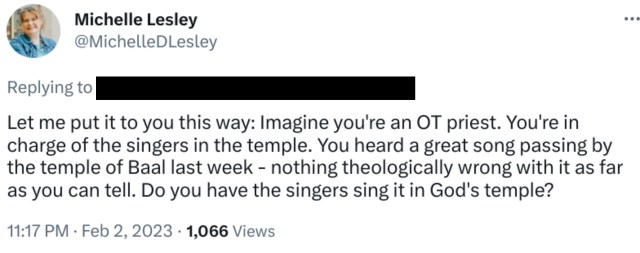
I would now like to take a moment to highlight this reader’s question for pastors and ministers of music. This is yet one more reason it is detrimental to your church to use music from Bethel, Jesus Culture, Hillsong, Elevation, any musician connected these groups (such as Phil Wickham who’s very prolific and has strong ties to Bethel), or any other musician who isn’t doctrinally sound (after you have thoroughly vetted him/her/them.) regardlessย of how biblical the lyrics of any particular song of theirs that you’re using might be. You could potentially be turning away solid, mature, discerning Believers who might otherwise be interested in joining your church. The woman who sent in this question is not the first to ask me something like this – not by a long shot. This issue is increasingly of concern to Christians looking for a solid church. (For that reason, I do not list churches – even Reformed or seemingly otherwise doctrinally sound churches – on my Reader Recommended Churches list, who use music from heretical sources like these.)

When a visitor walks into your sanctuary for the first time, your worship service is the “face” of your church to her. What kind of a first impression are you making? When you use music by doctrinally unsound musicians, it does not say, “We’re really a doctrinally sound church – honest! We only use songs from these groups whose lyrics are biblical.”. It says, “This church has leaders who aren’t discerning,” or “If this church uses music by these heretical groups, what other doctrinal problems does it have?”. Why put that stumbling block out there when there is plenty of music available with biblical lyrics written/performed by doctrinally sound musicians?

And there’s another stumbling block that using this type of music puts in front of weaker brothers and sisters that you may not have realized. I have heard from a number of Christians whom God graciously saved and rescued out of the pit of “churches” similar to Bethel, Hillsong, and Elevation. They tell me that when they walk into what they think is a doctrinally sound church and hear music from these and other heretical sources, it triggers a form of spiritual PTSD. It’s traumatizing to them. They immediately become fearful that your church is mere steps from turning into one of these types of “churches.” Will they grow out of that reflexive reaction? Yes, someday, as God continues to sanctify them. In the meantime, do you want the music at your church to cause them unnecessary anxiety? I hope not.

Even for Christians who have not come out of “churches” like these but are knowledgeable about their heretical theology, using these songs in your worship service is putting a stumbling block in front of them, too. Take me, for example. I’ve studied these groups. I’ve seen their heresy and the damage they do to both the Kingdom and to the individuals who follow them. And because of that, I’ve zealously spoken out against them. If I visit your church and an Elevation song suddenly flashes up on the screen, my ability to worship is completely derailed in grief that your church would use a song from that source – especially if you know about their theology and are well acquainted with music from doctrinally sound sources that you could have used instead. I cannot sin against my conscience by singing those songs. Consider me a “weaker brother” if you like, but do you care more about me as your sister in Christ, or your “right” to use music from these sources? What about Paul’s posture in 1 Corinthians 8:9-13?

But take care that this right of yours does not somehow become a stumbling block to the weak. For if anyone sees you who have knowledge eating in an idol’s temple, will he not be encouraged, if his conscience is weak, to eat food offered to idols? And so by your knowledge this weak person is destroyed, the brother for whom Christ died. Thus, sinning against your brothers and wounding their conscience when it is weak, you sin against Christ. Therefore, if food makes my brother stumble, I will never eat meat, lest I make my brother stumble.

If this was true in Paul’s personal life, shouldn’t it surely be true of our worship services? If you wouldn’t put a Christmas tree or portrayals of Jesus in your sanctuary because it might offend a brother in Christ, why would you use worship music that causes offense to your brothers and sisters?

Finally, what is the proactively good reason for intentionally choosing music from a heretical source? In other words, when you’re selecting music for the worship service, why would you choose, say, a Hillsong song about God’s glory, or Psalm 23, or the crucifixion, when you could just as easily choose a song from a doctrinally sound source about any of those things – a source that isn’t a stumbling block to anyone, won’t give anyone the wrong impression about your church, won’t lead anyone to follow a heretical “church,” and won’t use your church’s offerings to support a heretical “church”? What makes the Hillsong song you’re choosing better than the song from the doctrinally sound source? It doesn’t seem to me that there’s a good enough reason to use songs from these sources that outweighs all the good, biblical reasons not to use them.

There is simply no good reason for a doctrinally sound church to use music from heretical sources like these.

The Mailbag: False Doctrine in Contemporary Christian Music

Why Our Church No Longer Plays Bethel or Hillsong Music (or Elevation or Jesus Culture), and Neither Should Yours

Hillsongโ€™s Theology of Music and Worship

The Mailbag: Should Christians listen to โ€œReckless Loveโ€?


Hello there. I read your blog about Priscilla Shirer being a false teacher. Read some parts of your blog. Found your recommended preachers with sound doctrine. I don’t know what denomination you’re in. But I just wanted to ask if you believe if we can lose our salvation?

Hi there! I’m a Reformed Southern Baptist. You can read more about my denomination and my beliefs at the Statement of Faith tab and the Welcome tab (both in the blue menu bar at the top of this page.

No, I do not believe genuinely regenerated Christians can lose their salvation because that’s not what the Bible teaches. I discussed this at length, including the relevant Scriptures, in my article The Mailbag: Can unforgiveness cause you to you lose your salvation?.


If you have a question about: a Bible passage, an aspect of theology, a current issue in Christianity, or how to biblically handle a family, life, or church situation, comment below (Iโ€™ll hold all questions in queue {unpublished} for a future edition of The Mailbag) or send me an e-mail or private message. If your question is chosen for publication, your anonymity will be protected.


Church, Worship

Throwback Thursday ~ Rolling Out the Welcome Wagon

Originally published August 25, 2010

The LORD said to him, “I have heard your prayer and your supplication, which you have made before Me; I have consecrated this house which you have built by putting My name there forever, and My eyes and My heart will be there perpetually. I Kings 9:3

As Golden Girl Sophia would say, “Picture it:”

After church one Sunday, a friend says, “Why don’t you come over to my house tomorrow night for dinner?”

So, the appropriate time comes on Monday evening, and you drive over to her house. The door is standing open because she is expecting you, and you’re familiar enough with each other that you feel comfortable just walking on in.

As you’re walking in, you see your friend standing there, and you say to her, “I invite you into this house! You are welcome here!”

Anything seem a little off about that?

Well, of course that seems strange. It’s her house.

But that’s what is taking place in churches all over America every Sunday morning. I saw it in a televised local church service last week. The worship leader stood up to lead the first song and said, “God we welcome you into this place!” I’ve heard others say things like, “Lord, we invite you into this house this morning!” We sing songs like Holy Spirit, Thou art Welcome and Lord, we Invite You.

‘Scuse me? Isn’t the church God’s house?

Of course, it isn’t God’s house in the same way the temple was God’s house, in that there isn’t a holy of holies where the actual presence of God resides. On the other hand, I wouldn’t go so far as to say that it’s only a building, like the post office or a doughnut shop.

At some point, way back when, or maybe even recently, a body of Believers got together and asked God to give them a place where they could worship Him. God saw fit to answer that prayer. He provided the land, the permits, and every brick, nail, and piece of sheetrock. He allowed His name to be placed there when we decided to call it “Grace Fellowship”, “St. Luke’s”, or “First Baptist”. He protects that building and allows it to stand as a testimony to the community: God, and God’s people, can be found here.

It’s not your church. It’s not my church. It’s God’s church. And it exists for His glory.

But somewhere along the way, we’ve forgotten that. Somewhere along the way, we gave God an eviction notice and became squatters on His property. How arrogant have we become that we strut into church as though we own the place, and dare to invite Him, to welcome Him into His own house as though He were a guest? How dare we?

Maybe it’s partly because we no longer have a holy of holies that we don’t see God’s house as sacred. “Ah,” you may say, “but that’s Old Testament thinking. Now we understand that when we gather together in His name, He is with us.”

Really?

When it’s my church, my comfort, my pew, my ministry that nobody else better touch, my style of music, my opinion about how long the sermon should be, my feelings that got hurt, my idea of how things should operate, what I got out of the service, are we really gathering in His name?

Welcome, Lord. Are You sure You want to come in?

1&2 Peter Bible Study

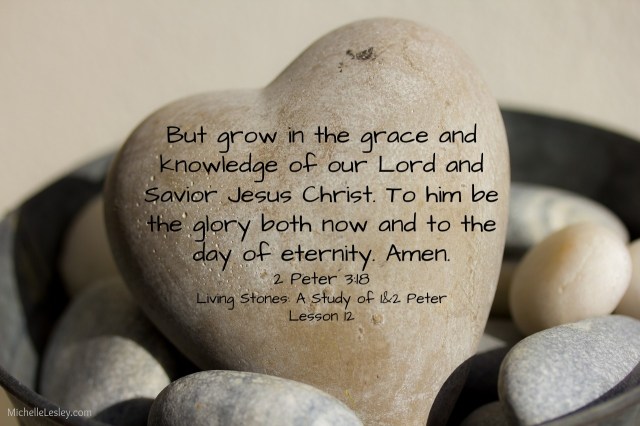
Living Stones: A Study of 1 & 2 Peter ~ Lesson 12

Previous Lessons: 1, 2, 3, 4, 5, 6, 7, 8, 9, 10, 11

Read 2 Peter 3

Questions to Consider

1. Read verse 1, noticing the words “beloved” and “sincere mind”. What do these words tell you about how Peter regarded his audience as opposed to…say…how Paul regarded the Galatian Christians?

2. Compare verses 1-3 with Jude 17-19. What does it mean for someone to be a “scoffer”? Make a list of all the words and phrases Peter and Jude use to describe scoffers. Do these words and phrases sound like they are describing lost people or saved people? Examine 2 Peter 2 (or lesson 11, link above) and the remainder of Jude – which words and phrases indicate that some scoffers are false converts (people who claim to be and/or believe themselves to be saved, but aren’t)?

Describe a prototypical lost person (makes no claim to be a Christian) scoffer. Describe a prototypical false convert scoffer. (These might be people you know personally, celebrities, authors, etc.) What’s something you might say, or a question you might ask each of these people as a lead-in to a gospel conversation?

3. Verse 4- What are the scoffers scoffing about? Have you ever heard a lost person scoff at or ridicule this? Read verses 5-7. How does Peter address the argument the scoffers make? What does it mean that they “deliberately overlook” the facts Peter lays out in 5-7? Explain why, in order for a scoffer to hold an anti-biblical view (evolution, abortion, egalitarianism, sexual perversion, etc.), she must first “deliberately overlook” biblical facts or “suppress the truth in unrighteousness.”

4. Examine verses 5-13. What is the main topic this passage deals with? How does Peter compare and contrast God’s creation (and first destruction) of the earth with His final destruction of the earth? In what ways will the final destruction be like the first destruction (the Flood)? What does this have to do with the return of Christ (4)?

5. Have you ever been in a situation in which a scoffer made an argument that seemed plausible, or asked a question you couldn’t answer (ex: If God is so good and so powerful, why does He allow evil and suffering?), and you knew she was wrong, but you didn’t know what the biblical answer was? Did you feel confused and anxious? That’s kind of the situation Peter’s audience is in here. Explain each of the components of Peter’s answer to the scoffers’ argument:

5-7-

8-10-

11-13-

How would Peter’s answer to the scoffers’ argument have set the minds of his audience at ease, brought them comfort, and given them hope?

6. Read verses 8, 9, and 15a together. Compare and contrast our impatience for the Lord’s return with His patience toward the world. Why is the Lord taking so long – from our perspective – to come back?

7. Using your cross-references, what does verse 9 teach us about the heart of God toward the unregenerate?

8. Examine verses 11-18. “What sort of people ought you to be in lives of holiness and godliness” considering that Christ could return at any moment? Make a list of the instructions Peter gives us for the way we should live as we await the Lord’s return:

Be sure to…ย  ย  ย  ย  ย  ย  ย  ย  ย  ย  ย  ย  ย  ย  ย  ย  ย  ย  ย  ย  ย  ย  ย  ย  ย  Be sure NOT to…


Homework

Second Peter 3:8 is often used by Old Earth Creationists and Theistic Evolutionists as a prooftext to explain how God could have taken millions of years to create the earth. Examining this verse in the entire context of chapter 3, is that what Peter, inspired by the Holy Spirit, intended when he wrote this verse? What was he intending to convey when he wrote this? Explain why it’s important to always use verses in their right context when building doctrine, claiming promises, supporting an argument, applying Scripture to our personal circumstances, etc.


Suggested Memory Verse

Be sure to come back next week as we wrap up
Living Stones: A Study of 1&2 Peter!


Answering a Fool, Mailbag

The Mailbag: Answering a Fool #4


Answer a fool according to his folly,
lest he be wise in his own eyes.
Proverbs 26:5

There’s a lot of foolishness masquerading as Christianity these days. Occasionally, I get e-mails and messages showcasing this type of foolishness. It needs to be biblically corrected so these folks can stop “being wise in their own eyes,” repent, and believe and practice the truth of Scripture. From time to time, I share those e-mails in The Mailbagย with a biblical corrective, not only so the e-mail writer can be admonished by Scripture, but to provide you with Scriptures and reasoning you can use if you’re ever confronted with this kind of foolishness.

To answer a fool according to his folly (or in the case of most of the foolishness addressed to me – a professing Christian acting the fool by spouting unbiblical folly) is to stand toe to toe with him and firmly and biblically address his unbiblical foolishness without backing down or letting him run roughshod over you – sometimes even mirroring his own words back to him to help him see his hypocrisy. Some Christians think holding your ground, refusing to compromise on biblical truth, and offering correction in this way is unkind or unloving. It is not. Not if you’re going by the Bible’sย definition of love rather than the world’s definition (“be nice” “accept everything” “don’t confront”), and not when you’re dealing with a pridefully stubborn person. One of the most unloving things a Christian can do is to see a professing brother or sister in biblical error and ignore it rather than trying to help that person see the truth of God’s Word. Jesus, Paul, Peter, Jude, John, Jeremiah, Isaiah, and many others, did this plenty of times in Scripture, and, often, much more stringently that I and other 21st century Christians do. Sometimes love – real, biblical love – has to be tough in order to reach someone’s heart.


(This reader’s blog comment {in blue},
responding to this article, is reprinted in full.)

Kay Arthur is a servant of the Lord and those of us who are Christians and love God and do her Bible studies can discern for ourselves. Who are you to bring up such things? Go study the Word of God yourself and take the log out of your own eye. Maybe you can go find somewhere to serve and stop trying to bring dissension among believers. Iโ€™m sure you can find better things to do then [sic] pick apart a woman who has devoted her entire life to teaching the Word of God. The woman is 86 yrs old, letโ€™s all try to leave a legacy as she is doing.

All right, let’s break this down, shall we?

Kay Arthur is a servant of the Lord…

I never said she wasn’t. I’ve clearly stated on many occasions, including twice in the article you commented on (which I’m assuming you read) that I do not regard her as a false teacher, and I have never questioned her salvation, nor (unless she apostatizes) do I plan to.

By the way, did it ever cross your mind that I might be a servant of the Lord? Just because someone is serving in a way you don’t personally like, doesn’t mean she’s not serving the Lord. A lot of people didn’t care for…say…John the Baptist’s methods, or Jeremiah’s messages, or Paul’s teaching, but that doesn’t mean they weren’t servants of the Lord. When determining whether or not someone is a servant of the Lord, the question is not, “Do I like what this person has to say and the way in which she says it?” the question is, “Does this person’s teaching and behavior line up with Scripture? Is she bearing fruit in keeping with repentance? Is she teaching what is good? Is she following the principle of teaching sound doctrine and rebuking those who contradict it?”.

…and those of us who are Christians and love God and do her Bible studies can discern for ourselves.

So why haven’t you discerned for yourself the things I’ve mentioned in the article? Why are you arguing against the issues I’ve brought up instead of agreeing with them? And why are you accusing and slandering me for exercising biblical discernment? It doesn’t appear from your comment that you are “discerning for yourself” or you would haveย alreadyย noticed these issues and you’d agree with the biblical passages I’ve cited that these things conflict with Scripture.

But you’re right, some Christians who love God and do her Bible studies can discern for themselves. Which, in several cases, is what has led them to write to me and ask about the issues with Kay that I’ve cited in the article. They’ve been discerning. They’ve noticed that some of the things Kay teaches and does conflict with Scripture.

Who are you to bring up such things?

I am a Christian being obedient to the clear teaching of Scripture to contend for the faith.

What’s the problem with bringing up such things? You want to hide the fact that a Christian teacher is deviating from Scripture in certain areas? Can you cite any rightly handled, in context Scripture which supports that idea? Because the Bible never suggests we should hide sin or unbiblical teaching:

Take no part in the unfruitful works of darkness, but instead expose them. Ephesians 5:11

This is the message we have heard from him and proclaim to you, that God is light, and in him is no darkness at all. 1 John 1:5

Brothers, if anyone is caught in any transgression, you who are spiritual should restore him in a spirit of gentleness. Keep watch on yourself, lest you too be tempted. Galatians 6:1

Not many of you should become teachers, my brothers, for you know that we who teach will be judged with greater strictness. James 3:1

(I’m not suggesting, via these verses, that Kay is demonic or a false teacher or anything like that. But anything that you or I or Kay or anyone does that is sinful and/or contradicts Scripture is a work of darkness, and the Bible does not even hint that these things should be covered over, swept under the rug, or hidden. In fact, it says the opposite. God’s desire is always that sin and unbiblical teaching be dealt with and corrected in a biblical manner for His glory and our good.)

And what’s the problem with me or anyone else bringing up such things? In fact, why aren’t you bringing up such things? You’re a discerning Christian who loves God, and does Kay’s Bible studies – why haven’t you brought up the issues with Kay? The Bible clearly instructs us to hold to rightly handled Scripture and reject whatever contradicts it. Why aren’t you doing that? And why are you attacking me for following the Bible’s instructions? That’s not the fruit of a discerning Christian who loves God.

Either Kay is actually being obedient to Scripture in the issues I’ve cited in the article and you can prove that with evidence and Scripture (in which case, it’s actually to your advantage that I’ve brought these things up so you can publicly disprove what I’ve said and exonerate Kay), or she is being disobedient to Scripture in these issues (in which case, it’s also to your advantage, spiritually, that I’ve brought these things up so you can be aware and take Scripture’s side on these things rather than taking Kay’s side).

Go study the Word of God yourself and take the log out of your own eye.

What log? You’re wielding Scripture like a weapon and an insult against a sister in Christ who is obeying God’s Word, and you don’t even seem to understand what it means in context. (And neither of those things, if you’re a student of Kay’s, speaks very well of her teaching). And the reason I know that is because I’ve studied Scripture, as you’ve probably surmised from the copious amounts of it which I’ve cited in that article and this one.

If you’ll read the entirety of Matthew 7, you’ll notice that, in context, verses 1-5 (from which you’ve drawn your remark above) warn against judging others hypocritically. In other words, we’re not to judge a brother or sister for a slight fault (speck) when we’re guilty of that same fault to a much greater degree (log). Can you please explain precisely howย I have done that in the article about Kay? Where have I taught unbiblically about spiritual warfare or endorsed someone else who does? When have I ever shared a stage with the likes of Beth Moore or Priscilla Shirer, much less co-authored books with them? When have I ever invited men to a conference I’m speaking at? How am I judging Kay hypocritically rather than judging her with right, biblical judgment?

Further along in Matthew 7, Jesusย Himself not only judges false teachers (and, again, I’m not saying Kay is a false teacher) and false doctrine, but tells us to recognize them by their fruits (i.e. make judgments about what is and isn’t biblical). Obviously Jesus is not guilty of hypocritical judgment by warning against false teachers and telling us to do the same, and neither are those of us who obey His instructions.

Whatย is hypocritical judgment is you casting aspersions at meย  – like: I haven’t studied the Word, and I’m hypocritically judging someone – with no evidence or biblical support. You have no evidence or grounds for saying that I don’t study the Word. In fact, I think that the twelve years’ worth of material on this blog is sufficient evidence to refute that claim. You have also provided no evidence or biblical support to your claim that I have a “log in my eye.”

But the biggest hypocritical judgment you’re committing? You’re accusing me of being unbiblical based solely on your own personal opinions, not based on Scripture. You have cited no rightly handled Scripture whatsoever. You’re accusing me of judging while you’re judging me. Who’s got the log in her eye?

Maybe you can go find somewhere to serve…

Another unsubstantiated, unbiblically judgmental accusation. You know nothing about me. You have no idea whether I’m “serving” somewhere or not. I am a faithful, active as I’m able to be member of a local church and I serve it in any way I’m permitted to. Furthermore, I am serving the Lord with this ministry. At the moment, I’m doing so by rebuking your unbiblical judgments and ideas.

…and stop trying to bring dissension among believers.

And another Scripture you seem not to understand, which you’re wielding against a sister in Christ like a weapon and an insult. (And, again, your lack of understanding of the Scriptures does not speak well for Kay’s teaching. Jesus said we will know whether teachers are good or bad by the fruit of their ministry. You’re part of the fruit of Kay’s ministry. How do you think your misunderstanding and misusing Scripture reflects on her?)

I’m guessing (since you didn’t quote or reference it) the verse you’re alluding to is Romans 16:17. Let’s look at what it actuallyย says:

I appeal to you, brothers, to watch out for those who cause divisions and create obstaclesย contrary to the doctrine that you have been taught;ย avoid them.

Where have I said anything contrary to sound biblical doctrine as taught in Scripture? This verse teaches that the people who cause divisions and create obstacles (“bring dissension”) among Believers are the people who teach things and act in ways that are contrary to the doctrine that you have been taughtย by Scripture. For example, the things Kay has taught and done (ex: teaching men, yoking with false teachers, etc.) that are contrary to Scripture. Hadย she not taught and done these things, there would be no “dissension” because I would have been able to happily and wholeheartedly recommend her and you wouldn’t have had anything to complain about. When there is dissension among Believers it is the fault of those who are contradicting Scripture, not those who are standing for Scripture.

Iโ€™m sure you can find better things to do then [sic] pick apart a woman who has devoted her entire life to teaching the Word of God.

Log, meet speck. Pot, meet kettle. Do you not see the hypocrisy of you saying this to me? My life is devoted to teaching the Word of God as well, even the parts you don’t personally like. And yet here you are picking me apart. I’m sure you can find better things to do.

And, again, twelve years’ worth of material on this blog.ย One article about Kay that was written four years ago. Over 1600 on other topics including Bible study, discipleship, encouragement, evangelism, apologetics, recommended Bible teachers, Biblical Counseling resources, and resources for helping people find solid churches all over the world, among a plethora of other topics. Although there’s nothing wrong with the article I wrote on Kay – so I don’t need to “find better things to do” – I’m sure any objective person would see a 1600+:1 ratio as evidence that I’ve certainly found other things to do.

Furthermore, writing a carefully annotated discernment article addressing and explaining multiple issues with a teacher is not “picking someone apart”. It’s called being ethical, biblical, and thorough. (And by the way, one of the reasons I have to be so thorough is because if I only briefly cited one or two issues, I would get critics like you saying, “That’s all you’ve got? That’s nothing!”. It’s a lot harder to dismiss multiple and well-documented incidents.) While some people may choose to write a paragraph casting unfounded aspersions and making unsubstantiated accusations against sisters in Christ (log), I prefer to be as fair, biblical, and extending of grace to the person I’m critiquing as I possibly (speck) can.

The woman is 86 yrs old, letโ€™s all try to leave a legacy as she is doing.

I’m sorry, is there some sort of age limit beyond which we’re allowed to sin and teach unbiblical doctrine with impunity? I don’t recall seeing that in the Bible anywhere. Solomon was elderly when he started worshiping false gods, and yet God doesn’t shy away from pointing this out publicly. In writing. Unconcerned about how doing so might impact Solomon’s legacy. Age is no excuse for sin or unbiblical teaching. In fact, God specifically says quite the opposite:

Older women likewise are to be reverent in behavior, not slanderers or slaves to much wine. They are to teach what is good, and so train the young women to love their husbands and children, to be self-controlled, pure, working at home, kind, and submissive to their own husbands, that the word of God may not be reviled. Titus 2:3-5

The truth is, we’re each responsible for our own legacy. If Kay wants to leave a more godly legacy, the areas I addressed need to be biblically corrected. I am doing my best to leave a legacy of pointing women to Christ and His Word, teaching them to be discerning, and encouraging them to be faithful to their local churches. There areย many areas in my life in which I need to be more obedient to God’s Word so that I can leave aย moreย godly legacy.

Misunderstanding and misusing Scripture. Falsely accusing, slandering, and hypocritically judging a sister in Christ. How’s your legacy looking? It’s something to think about, because, as you rightly pointed out, we should all look to the legacy we’re leaving. And we should strive to make it a godly one.


If you have a question about: a Bible passage, an aspect of theology, a current issue in Christianity, or how to biblically handle a family, life, or church situation, comment below (Iโ€™ll hold all questions in queue {unpublished} for a future edition ofย The Mailbag) or send me anย e-mail or private message. If your question is chosen for publication, your anonymity will be protected.