OHCW Women's Conference

Get Excited! Open Hearts in a Closed World is Next Week!

Who’s excited for Open Hearts in a Closed World next week? I am!

If you’re not familiar with OHCW, it’s a FREE annual online women’s conference. It has been my privilege to be one of the speakers each year since its inception.

Join us for OHCW22 – a FREE online women’s conference – *next week,* July 11-15. Get all the details here!

The theme of this year’s conference is Spiritual Sisterhood: Going Beyond the Facade, so each of our speakers will center their teaching around what it means to be godly, genuine sisters in Christ.

OHCW 2022 Speakers:

Find out more about each speaker here.

Where and When to Watch:

The conference will run each day next week, July 11-15, Monday – Friday, 8:30 a.m. – 11:00 a.m. (Central time), and “attending” is as easy as watching your favorite TV show! There’s no cost, no registration – just tune in starting at 8:30 (Central) each morning. You can even watch the recordings later, if that’s more convenient, as the videos of each session will remain posted.

I’ll post the YouTube version of each day’s teaching session as soon as it goes live (just like I did last year), so you can watch it here on the blog if you like. Or, if you prefer, you can watch directly on…

YouTube, AGTV, or Exposit the Word.

Daily Schedule:

This year, we’re so pleased to have the TMU Chapel Band from The Master’s University leading us in worship each day.

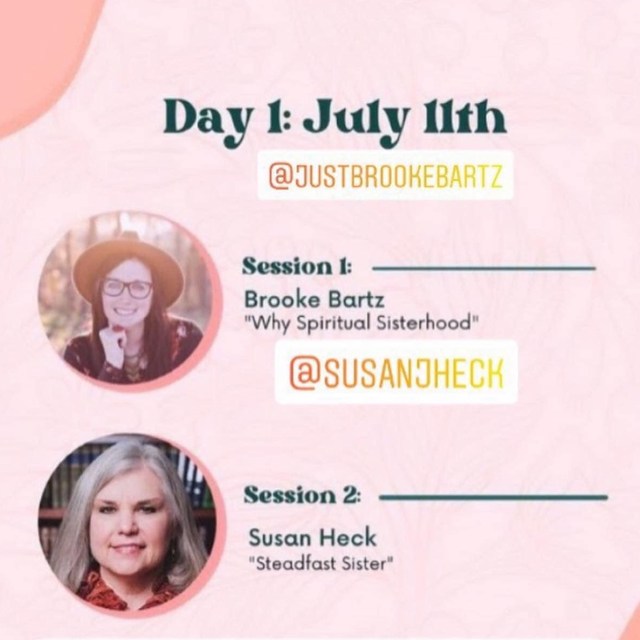
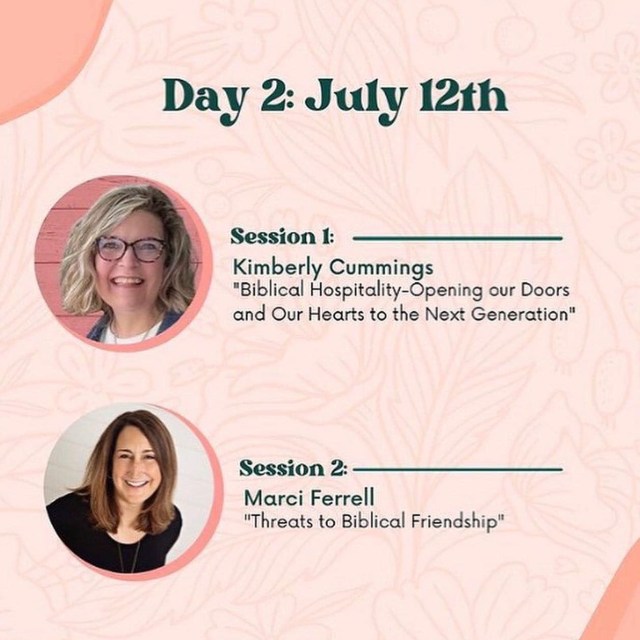
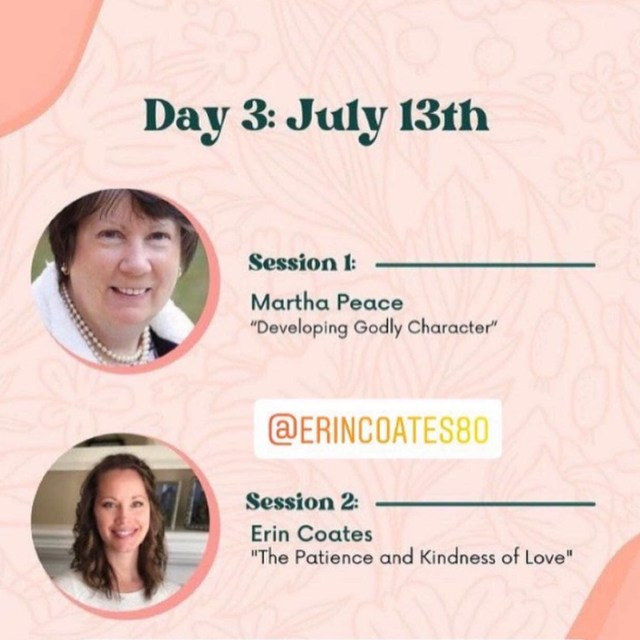
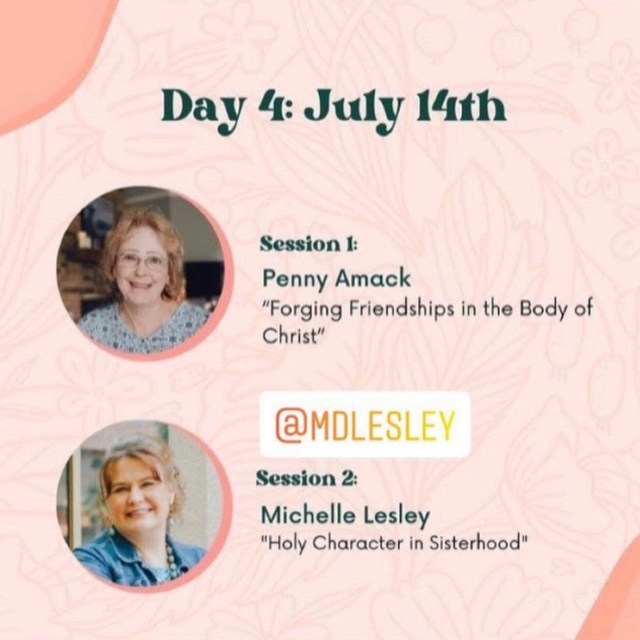
Here’s the teaching schedule for each day of the conference:

For more information:

For more conference details, check out the OHCW website, follow Open Hearts in a Closed World on Instagram, or join the OHCW Facebook group and ask the conference organizers directly.

I hope you’ll join us each day next week
for Open Hearts in a Closed World 2022!


And, since it’s Thursday, how about a little “throwback” to last year’s conference sessions to get us pumped up and ready for next week?

Christian women, Church, Southern Baptist/SBC

Is the SBC’s Tent Big Enough for ALL Marginalized Christian Women?

Originally published June 22, 2018

It started with Paige Patterson’s gobsmackingly horrible and unbiblical advice to an abused wife to return to her husband. Then it was the lurid remarks he made about a teenage girl, with which he regaled a congregation during a sermon. Next came the allegations of his mishandling of two separate sexual assault cases at two different seminaries.

In response to all this turmoil, Beth Moore added to the conversation some vague stories of various unnamed men in Christian circles who had, in her perception, condescended to her or otherwise not treated her as an equal, leaving the impression that there is widespread, systemic misogyny within modern evangelicalism. Jen Wilkin, from a more biblical – yet, troublingly, similarly vague – perspective, joined the chorus, and has been afforded a wider audience for the “they can’t be pastors, natch, but we need more women in church leadership” platform she has been advancing for the past several years. (Which leadership positions or roles? We’re still waiting for Jen to specify.)

And the icing on the cake was SBC pastor, Dwight McKissic, publicly declaring that the way to “heal” all of these woes against Christian women and “right historic patterns of wrong against women” is to elect Beth Moore as president of the Southern Baptist Convention.

So this nebulous idea has been introduced that Christian women are getting the short end of the stick across the board in evangelicalism (specifically in the SBC) and that the way to fix things – all the way from genuine abuse and rape on one end of the spectrum to women whose feelings have been hurt because they’re not seen as equal to pastors on the other end – is to make sure, somehow, that women’s voices are heard and validated.

That’s a pretty “big tent” idea. And if it’s going to be a big tent, there’s room under there for everybody, right? To be consistent, compassionate, and fair, wouldn’t these folks have to make space for the voices of, and give influential positions to, any Christian woman who feels she’s been diminished? Let’s find out.

Allow me to introduce you to a group of Christian women who have been silenced and brushed aside for years, often by the very same people who are now hypocritically crying out that women need to be heard in order to keep them from being marginalized.

I give you discerning, doctrinally sound, often Reformed, Christian women.

We are women who have been subjected to insults, and accusations of heresy and hatred of the lost, because we hold to the doctrines of grace. We are women who have been attacked by pastors, pastors’ wives, women’s ministry leaders, and fellow church members for pointing out the false doctrine of popular women’s “Bible” study materials and merely asking to properly be taught the Word of God in our own churches. We are women who have been shouted down or ruled “out of order” at denominational meetings for asking that our Christian retailers stop selling materials containing false teaching. We are women who have been forced out of our own churches for taking a biblical stand against women preaching to, teaching, or exercising authority over men in the church. We are women who have been called haters, legalistic, divisive, threats to unity, jealous, and all other manner of slander simply for holding to Scripture and refusing to budge from it.

All this mistreatment of women at the hands of Christian celebrities, denominational leaders, pastors and other church leadership, and fellow church members.

Do we qualify as marginalized? We’ve been hurt, and in many cases, sinned against outright. No church discipline. No redress or recourse. Nobody wants to make sure we have a voice or a place of power – quite the opposite, in fact. A lot of us saw our own pastors hand-wringingly share Beth Moore’s detailing of her grievances against Christian men even as they pushed us and our biblical concerns aside.

Everybody feels sorry for Beth Moore. Who will cry for us?

We don’t want much, just a return to what’s biblical.

We want sound doctrine in the church and solid preaching in the pulpit.

We want this nonsense about a female SBC President – especially a false teacher like Beth Moore – to stop. Not only is it not biblical, it’s a patronizing toss of a trinket or pat on the head attempting to dry the tears of fussy little girls, and it won’t work to solve any of the real problems that are going on.

We want false doctrine off the shelves of LifeWay, and for LifeWay, the ERLC, and others in leadership to stop organizing and promoting conferences and other events headlined by people they have already been informed (yea, as seminary trained pastors and leaders, should know without having to be told) are false teachers. Among the many things Jen Wilkin has rightly said is that we need to promote biblical and theological literacy among Christian women. When you go on a diet, the first thing you do is go through your kitchen and throw out all the junk food. You’ll never start eating healthy if you have an endless supply of candy bars in the pantry. The only way to begin to properly train women in Scripture and theology  is by “putting off” false doctrine in order to “put on” sound doctrine.

We want LifeWay to demonstrate that it actually cares about the spiritual health of women by putting its money where its mouth is. Ridding the shelves of false doctrine and the event docket of false teachers is going to cost LifeWay a lot of revenue. Women who want their itching ears scratched will quickly find another source of false teaching to pour their cash into. There’s not a lot of money to be made in encouraging women to study straight from their Bibles, sit faithfully under the teaching of a doctrinally sound pastor, and humbly serve the local church. Are Christian women worth it to you, LifeWay?

We want a strong doctrine of sin and church discipline to be understood and taught by our pastors and denominational leaders. The fact of the matter is that a woman who has been genuinely sinned against by a man who has abused her is in a different category from a woman whose feelings are hurt because she’s been told she can’t teach a co-ed adult Sunday School class. The first woman needs compassionate brothers and sisters in Christ to come alongside her and walk with her as God begins to heal her body and her heart. The abuser needs to be prosecuted to the full and appropriate extent of the law as well as to be placed under church discipline. The second woman is either in sin and rebellion (in which case she may need to be placed under church discipline) or she just hasn’t been taught God’s Word properly and someone needs to disciple her in that area. To put these two women underneath the same “big tent” just because they’ve both experienced some sort of hurt diminishes and confuses their situations and the solutions that would be biblically appropriate for each.

We want pastors and leaders to herald, praise, and validate the biblical role of women in the church. Women should not be taught only the things we cannot do in the church, we must also be taught what we must do in the church – what only women are uniquely and ontologically gifted by God to do. Women need to hear – particularly from the mouths of pastors and denominational leaders – the vital necessity of women discipling other women, women training the church’s children in the Scriptures, women serving in hospitality and mercy ministries, women properly using their administrative gifts, and so much more. Train us to teach. Equip us to serve. Encourage us to use our gifts in obedience to Scripture and for the glory of God.

We want men – from the heads of our denominations to the newly saved sinner in the pew – to step up and be godly men. We desperately need you to biblically and fearlessly lead the church. Don’t be afraid to stand up and put your foot down squarely on Scripture. Even if it makes you unpopular. Even if it rocks the boat at church. Even if people leave and never come back. As godly women, we can’t do our job if you’re not doing yours.

So how about it, brothers and sisters who are crying out for Christian women to be heard? Do doctrinally sound women get a seat at the table? Do we get to be heard? Will anything be done to correct the mistreatment we’ve received?

Do doctrinally sound women get a seat at the table? Do we get to be heard? Will anything be done to correct the mistreatment we’ve received?

Or are there only certain women you want to hear from? Women who fit the popular social narrative. Women the world and most of the church will applaud you for listening to. Solutions that do more to glorify people than to glorify God.

Just how big is that tent…really?

Church, Southern Baptist/SBC

10 Things I Wish Southern Baptists Knew About Southern Baptists

Originally published June 26, 2015

Some things have changed in the SBC, at LifeWay, the ERLC, etc., since this article was originally written in 2015 (see footnotes), however the bulk of what is mentioned here is still relevant. It also helps us see just how longstanding and pernicious many of these problems are.

Earlier this week, Russell Moore, president of the Southern Baptist Convention’s Ethics and Religious Liberty Commission3 published a nifty little article called “10 Things I Wish Everyone Knew About Southern Baptists“. Although I disagree with Dr. Moore on a number of things, I thought the article was pretty good, overall.

But it got me thinking. Yes, there is a lot of ignorance about Southern Baptists out there among those who aren’t part of our denomination. However, there’s also a lot of ignorance inside the SBC about what’s really going on in our denomination, our doctrine, practices, leadership, and so on. These are ten SBC realities I wish the average Southern Baptist church member were more aware of.

1. LifeWay sells lies and heresy, and they don’t want you to know.
Now I’m not saying everything they sell is lies and heresy. I’ve bought lots of good doctrinally sound materials from them over the years. However, the fact remains that they continue to sell books and materials from false teachers like T.D. Jakes, Sarah Young, and Andy Stanley on their shelves. They will order books by false teachers like Joyce Meyer and Joel Osteen for you if you just ask at the counter.ยน They continued to sell The Boy Who Came Back from Heaven (a book recounting Alex Malarkey’s supposed trip to Heaven after a car accident) for nearly a year even after Alex, his mother, Beth, and respected SBC pastor, speaker, and author Justin Peters repeatedly told LifeWay leadership that the story was a lie. Emails and phone calls about heretical materials at LifeWay are either ignored or the caller placated (I know this from first hand experience). Questions from the floor at the Southern Baptist Convention about LifeWay carrying false doctrine are quashed.

This entity of your denomination which purports to love and serve the Lord Jesus Christ is selling lies about Him to make a fast buck, and they need to stop.

2. There are plenty of apostate Southern Baptist churches, and we have no mechanism in place for kicking them out of the SBC.
This is a verbatim quote from the FAQ section (5th question from the top) of the SBC’s web site:ยฒ

“According to our constitution, if a church no longer makes a bona fide contribution to the Convention’s work, or if it acts to ‘affirm, approve, or endorse homosexual behavior,’ it no longer complies with the Constitution of the Southern Baptist Convention and is not permitted to send messengers to the annual meeting. These, however, are the only explicitly stated instances in which the SBC has the prerogative to take action.”

What does that mean? As long as your church doesn’t affirm homosexuality and gives to the Cooperative Program, you’re in. Never mind if your pastor twists God’s word until it’s unrecognizable. Or lets women and false teachers get behind the pulpit like Steven Furtick does. Or plays AC/DC’s “Highway to Hell” on Easter Sunday and says he probably wouldn’t have strippers on stage like Perry Noble does. Or any of the other ridiculous and blasphemous shenanigans so many of the seeker sensitive types in our denomination pull. Nope, as long as you give your money and stand on the right side of homosexuality, you’re good to go.

3. Beth Moore is a false teacher.
That’s right, the queen of SBC3 women’s Bible study, divangelista Beth Moore, does not rightly handle God’s word, partners with false teachers, and violates Scripture by preaching to men, among other things. And Priscilla Shirer is right there with her.

4. Having a small church isn’t a sin and it doesn’t necessarily mean your pastor (or your church) isn’t trying hard enough.
The average church size in America is 186 members, and 94% of church goers attend a church of 500 or fewer people, yet the constant drumbeat of SBC leadership is “bigger is better.” Countless articles harangue exhausted pastors about breaking the 200 or 250 or 300 member attendance “barrier.”

Listen, if your pastor is faithfully preaching and rightly handling God’s word and your church members are serving one another and carrying out the Great Commission in their daily lives, that’s what counts in God’s eyes, not how many butts are in a pew.

5. The Bible doesn’t require you to tithe, and neither should your church.
The tithe is part of the Old Testament law that Christians today are no longer bound by because we are under the covenant of grace, not the Mosaic covenant. Christians are to gladly give the amount we determine in our own hearts to give out of love for our Savior and a desire to serve Him- not under compulsion from someone else.

6. The “sinner’s prayer” won’t save you.
If you think you’re saved because you parroted a prayer someone led you in when you were five but your life shows no love of Christ and no evidence that you belong to Him, then your faith is in the prayer you prayed, not in Christ, and you are not saved. The evidence that you’re a Christian is that you love the Lord, and are growing in holiness, not that you once repeated a prayer (or that you were baptized, attend church regularly, are a “good person,” etc.) Examine yourself to see if you’re really in the faith.

7. Your church probably has a significant number of lost people in it.
Jesus Himself said, there are few who find eternal life and that there are many who call Him “Lord” whom He does not know and will turn away on the Day of Judgment. This is why it is absolutely imperative that pastors, Sunday School teachers, and all other church leaders know the gospel inside out and teach it incessantly, even to people who claim to know Christ.

8. Lots of Southern Baptist churches violate 1 Timothy 2:12ff.
We do fairly well at not permitting women to serve as pastors, but beyond that there are plenty of churches and pastors who sin by allowing women to serve in positions in the church that are restricted to men. Do women in your church preach the Sunday sermon or teach co-ed Sunday School classes? Do they head up committees or ministries that put them in authority over men? Do they, as worship leaders or in some other capacity, stand before the congregation and instruct or exhort them? Then your church is in sin.

9. Politics won’t save America.
This country is imploding. You don’t have to be a prophet to see that. Voting according to biblical principles, running for office, working through the system to right wrongs, signing petitions, and other political activity is fine, but don’t put your eggs in those baskets. The Titanic has hit the ice berg, and Christians in this country will soon be facing real persecution like we see overseas. We need to rescue the perishing with the gospel. It can’t be done with the White House or the state house. When is the last time you shared the gospel with someone?

10. Jesus wins.
Things are bad and getting worse. In our world, in our country, in our denomination, in our churches. But the good news of Scripture for all people is that, in the end, Jesus is coming back for His bride. He will conquer evil and those of us who truly belong to Him will spend eternity with Him. This world is not all there is. Jesus wins.


ยนIt is possible LifeWay has changed this policy. I called my local LifeWay last week (Jan. 2017) and asked them to order a Joyce Meyer book and a Joel Osteen book. I was told the store could not order books by either of these authors. I applaud LifeWay for this step in the right direction.

ยฒAs of 2019, this verbiage has been removed from the FAQ section of the SBC website. Conceptually similar language can be found here (see Article III: Composition).

3Russell Moore and Beth Moore (no, they’re not related) both left the SBC in 2021.

Psalm 119 Bible Study

Psalm 119: The Glory of God’s Word ~ Lesson 13 – Wrap Up

Previous Lessons: 1, 2, 3, 4, 5, 6, 7, 8, 9, 10, 11, 12

Wrap Up

Questions to Consider

1. Was there anything new God taught you in this study that particularly impacted you? What was it, and why was it so significant?

2. How is your walk with the Lord different after this study than it was before?

3. What did you learn from this study about what your relationship with, and response to God’s Word should be like?

4. What did this study teach you about obeying God’s Word?

5. What did this study teach you about the nature and character of God?

6. Have there been any passages or concepts in this study that God used to convict you of disobedience and lead you to repentance? How will you walk differently in this area from now on?

7. What did this study teach you about prayer?

8. Describe one specific, practical way you will apply to your life something you learned in this study.


Homework

Spend some time in prayer this week asking God to show you how to put into practice one thing you learned from this study.

Recite all of your memory verses from this study. Which one is most meaningful to you right now?

Psalm 119 Bible Study

Psalm 119: The Glory of God’s Word ~ Lesson 12

TOMORROW will be our wrap up lesson for Psalm 119. Don’t miss it!

Previous Lessons: 1, 2, 3, 4, 5, 6, 7, 8, 9, 10, 11

Read Psalm 119:161-176

Recall the things from the introductory lesson that you wanted to keep in mind as you study the text of Psalm 119.

Don’t forget to read in complete sentences instead of stopping at the end of each verse.

Recall the themes you’ve been noticing in Psalm 119. Watch for those themes to be repeated in today’s and future passages. You may wish to make a list of those themes to refer to throughout this study.

Questions to Consider

1. Review your notes from last week’s lesson. Does that passage relate to this week’s passage? How? Do you notice any repeated words, thoughts, or themes?

2. Write down each phrase in 161-164, 167 that follows the general pattern: “I / my [heart attitude] at Your Word, law, etc.”. Compare the posture of your heart toward God’s Word with that of the psalmist’s. Take a moment to ask God to help you stand in awe, rejoice at, etc., His Word.

Second Corinthians 13:5 tells us to test ourselves to see if we are, indeed, in the faith. The book of 1 John emphasizes the tests of obedience to the Word and love for the brethren. John 10 shows us the test of rejecting false teachers. Could the phrases you wrote down from 161-164, 167, help you test yourself regarding your love for God’s Word? Since even the finest Christian will never love God’s Word perfectly 100% of the time, what would passing the test of loving God’s Word look like? What role does God play in your ability to love His Word?

Once you’re done with this question, you might enjoy reading my article The Mailbag: I love the Bible, but I have to force myself to read it (Don’t think the psalmist didn’t feel that way sometimes, too.)

3. What kinds of things would the psalmist have considered to be “great spoil”? (162). When you get right down to it, aren’t money, jewels, gold, and silver essentially just paper, rocks, and metal? Why do they have value? Who assigns them their value? Is it ultimately our place to assign value to things? Why or why not? Do we incorrectly over or under value certain things?

Consider this statement: “It’s not our place to assign value to things. It’s God’s place. It’s our place to agree with Him and value the things to which He has assigned value.” Agree of disagree? Why? Does Scripture have intrinsic, ontological value, or assigned value, or both? Explain your answer.

4. Verse 165 is the only verse in Psalm 119 in which the psalmist uses the word “peace”. How does loving God’s Word give Believers peace? Can an unbeliever truly love God’s Word or derive real peace from it? Why not?

5. What does the psalmist mean by “all my ways are before you” (168), and why does this fact lead him to keep God’s precepts and testimonies? Ponder for a moment that all your ways are before God. In what ways does this realization make you want to better keep God’s precepts and testimonies in your own life?

6. Revisit lesson 11 (link above), question 4, and compare 169-170 to the “Give me _____ according to your_____,” verses there. What similarities do you see? Differences?

7. In question 2, the verses we looked at all dealt with the internal response of the heart toward God’s Word. How would you characterize the response to God’s word in 171-172? For a Believer, why is it; a) natural, and b) important that God’s word evokes both an internal and external response in us? How, and why, should pondering God’s Word move us to worship Him?

8. Compare the sheep motif of 176 to these passages. What is the perspective from which each of these passages is written? Is the focus of each of these passages on the individual sheep, the flock, the shepherd, etc.? Are any of these passages (or any other “sheep” or “shepherd” motif passages you can think of) written from the perspective of an individual “sheep” saying “I have gone astray” as 176 is? What does the psalmist mean when he says he has gone astray like a lost sheep, and then asks the “Good Shepherd” to seek him? How does he know he has gone astray? If he knows he has gone astray, why doesn’t he just go back? Why does he need the shepherd to seek him? What does “I do not forget Your commandments” mean in relationship to all of this? How does the Lord restore us to Himself after we sin?


Praying Psalm 119

Have you ever tried praying the psalms? I want to encourage you to try praying part of Psalm 119 back to God each week of this study. (If you’re familiar with my other studies, this will take the place of the weekly “Homework” section.)

The psalms are uniquely suited for praying back to God, both verbatim and conceptually, because they are often written as prayers – as though the psalmist is talking to God. Did you notice that about today’s passage? In which verses?

What is a concept or thought for your own life that the Holy Spirit impressed on your heart or convicted you about from today’s passage? Is there a particular verse(s), or maybe the whole passage, that you would like to pray back to God verbatim? Whatever your “prayer point” from today’s lesson, pray it at least daily until we get to the next lesson.


Suggested Memory Verse