Social Media

Memeology 101

I post a lot of memes on my social media pages, mostly Facebook and Instagram. I usually post four Bible verse memes every weekday morning on Facebook and other miscellaneous memes at various times on all my social media platforms. Over the course of the last couple of years, I’ve gotten some critical comments about a few of these memes, which, I think, stem mostly from misconceptions people have about what a meme is and the general understanding of the function of memes on social media. I’d like to try to clear up some of those misconceptions today.

Memes- Definition and Function

A meme is simply a picture with words superimposed on it (usually a couple of sentences, max), like the ones in the collage above, that you see on social media. The function of a meme is to convey a brief thought, quote, or joke. Memes are not books, articles, theses, or even long Facebook posts. They are not meant to exhaustively cover every aspect of the thought they present. Reading a meme is kind of like eating one grape (or even reading one verse of Proverbs!). The grape is good and nutritious in and of itself, but it is not: a bunch of grapes, a full meal, a well-balanced diet, or the buffet at Golden Corral. It is simply a grape. Appreciate it for what it is and don’t criticize it for not being something it isn’t.

Bible Verse Memes (BVMs)

The criticism I most often receive about Bible verse memes (a picture with a Bible verse on it) is that the verse is not in context. Of course it’s not in context. That’s the nature of a meme- it contains only a brief thought or quote (which is why you don’t usually see an extraordinarily long verse {like Esther 8:9} on a meme, either).

BVMs are not meant to be a Bible study, sermon, or exegesis of a passage of Scripture. The daily BVMs I post are to jog your memory about passages you’ve already studied or to pique your interest in studying the passage surrounding the verse on the meme. When I post a BVM, I do my best to make sure of three things: a) the meme contains a whole, not partial, verse, b) the meme contains the reference so you can look up the context for yourself, c) the picture that goes with the verse does not suggest a misleading meaning to the verse.
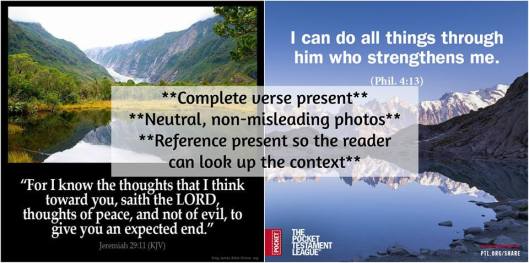
Interestingly, the only verses I seem to receive the “out of context” criticism about are Jeremiah 29:11 and Philippians 4:13. (Shouldn’t we want all Bible verses to be in context?) I’m fully aware that many Christians out there, and even false teachers, use these verses out of context. The fact that many people misunderstand or twist these verses to fit their own agendas does not negate the fact that these are still Holy Spirit-breathed portions of the Bible. I refuse to surrender these verses to those who abuse them by declining to post them. God’s Word is God’s Word, and even one verse can stand on its own, qualitatively, as the Word of God. The reader is the one who has the responsibility to look up those verses and understand and use them in context.

Christian Quote Memes

Going back to the grape illustration, the thing to remember is that a meme is not meant to exhaustively cover every aspect of the thought it presents. If I post a meme that says, “The grass is green,” that does not mean:

  • Only grass is green
  • Everything in the world is green
  • There aren’t other things in the world that are other colors
  • I hate things that aren’t green
  • Grass should never be mowed, fertilized, watered, etc.
  • Grass can’t be other colors because you could dye it or set it on fire

Also, simply stating that the grass is green does not obligate me to explain photosynthesis, suggest landscaping techniques, or debate zoysia versus Kentucky bluegrass. There’s certainly a time and a place to go into detail about issues (which I do every day on the blog), but it is also okay to make simple, true, stand alone statements without having to comment on every intricate aspect of the topic.

People Pictured in Memes

This is something you kind of have to get a feel for through exposure to memes, but I’ll do my best to explain.

Sometimes a meme uses a picture of a person because the words on the meme are a direct quote from that person. Other times, the words on the meme poke fun at or allude to the person pictured. Still other times, the words on a meme have nothing to do with the beliefs, personality, or actions of person pictured in the meme, rather, that picture was selected because of the look on the person’s face, the way he is posed, etc.
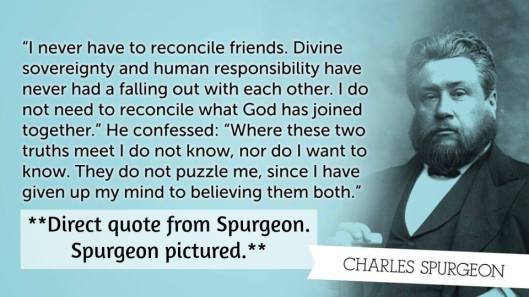
If you’re confused as to whether or not the person in the picture is being quoted, you can always Google the quote to find out. If you’re familiar with the person in the picture and know he would never say the words on the meme, it’s fair to assume the words are either poking fun at/alluding to the person in the picture, or that the picture was chosen for the visible appearance of the person, not for his beliefs, personality, actions, etc.

I can’t speak for everyone who shares memes, but the rule of thumb for my social media pages is that you will never see me positively quoting or promoting the beliefs of someone who’s well known to be a false teacher or otherwise theologically aberrant by biblical standards. So if you see a meme on my page that contains a picture of a famous false teacher, a non-Christian actor, politician, etc., it should be a given that I am not promoting his or her false beliefs. The meme is making another point, which you will need to glean from context or ask politely about.

Attribution

Except for BVMs, I create most of the memes I share. But with regard to BVMs and other memes I haven’t created, I see them – shared by a friend or a page I follow – in my social media timeline and I share them, just like you do. Most of the time I don’t share them immediately. They sit in my file for days, weeks, or even months before I get around to sharing them.

At that point, I usually can’t remember where I found them, so I can‘t type out a caption crediting the person who made it (if I even know). (If you design memes and you want credit for them, my advice is to watermark the meme with your name or website.) So, if you see me share a meme with no attribution, I’m not in any way trying to plagiarize it or claim that I made it any more than you would be if you shared a meme like that. All of the memes I create are watermarked with my website address (see collage above). If you see me share one that doesn’t have my website on it, you can safely assume I did not create it.

Sharing

I’m frequently asked by social media followers if they may have permission to share a meme (or an article, post, etc.) I’ve posted. Yes! I’m honored that you would want to. Sharing is the nature of social media. Generally speaking, you do not need to ask permission to share something that a public figure has posted publicly on social media. We like it when you share our stuff. It gets our material out to more people. And since my material is sound doctrine, the Bible, and the gospel, I want to get it out to as many people as possible. Consider this blanket permission to everyone who might ever want to share something of mine: Share away! No need to ask permission! :0)

The only thing you can’t do when sharing is to remove attributions (for example: cropping out the watermark of my web address on the memes I create) in order to intentionally present my work as your own or someone else’s. That’s called plagiarism, which is a fancy word for lying and stealing. And those are sins. But simply sharing a public post, attributions in tact, with your social media friends is not plagiarism, and you don’t need to ask permission.

If you’d like to peruse all the memes I’ve created, check out my Memes board on Pinterest.1

I hope this helps clear up any misunderstandings you may have about any of the memes I post on social media. Memes are just little nuggets that are meant to be humorous or thought provoking. Let’s let them be what they are, not expect them to be what they’re not.


1The oldest memes on that board (the ones toward the bottom) are still watermarked with my old web address (MichelleLesleyBooks.com). I’m in the process of editing them to reflect my current web address (MichelleLesley.com), and re-releasing them. I’m totally fine with you sharing a meme watermarked with the old address, but if there’s one you want to share that you need edited to the new address before you share it for whatever reason, just let me know, and I’ll fix it as fast as I can.

Book

The Twitter Book Challenge: 7 Books I Love


If you’re on Twitter, maybe you’ve seen this little challenge making the rounds:

I’ve accepted a challenge from Joe Blow to post covers of 7 books I love — no explanations or reviews, just the cover. Each time I post a cover, I’ll ask someone else to take the challenge. 1/Day for a week. My day 1 nomination goes to Jane Doe. #books

Yesterday, I got tagged into in the challenge by a sweet and lovely follower, and I wanted to participate.

But I didn’t like the rules.

You see, there are some “books I love” that I love just because they tell a good tale. Gone with the Wind. Biographies of the Reformers. Animal Farm. Pretty much every legal thriller John Grisham has ever written.

But there are other books I love for other reasons. Reasons that have less to do with what’s between the covers and more to do with the story that explains those reasons.

So today I’d like to take the challenge…but I’m breaking all the rules. I’m sharing photos of all seven books (and more) today. I’m sharing them here instead of on Twitter. I’m sharing the story behind why I chose each book. And, I’m not tagging anyone in particular – but I do invite you to share the name of a book you love, and why, in the comments section (or on Twitter) if you’d like.


1.

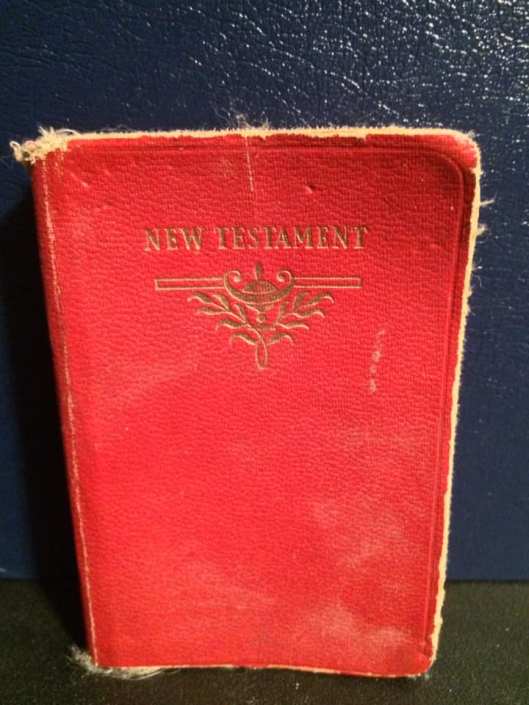
I have had this little red New Testament since I was a child. I’m not sure how old I was when I got it, but I remember carrying it to Sunday School and church from a very young age. It must be an antique by now!


2.

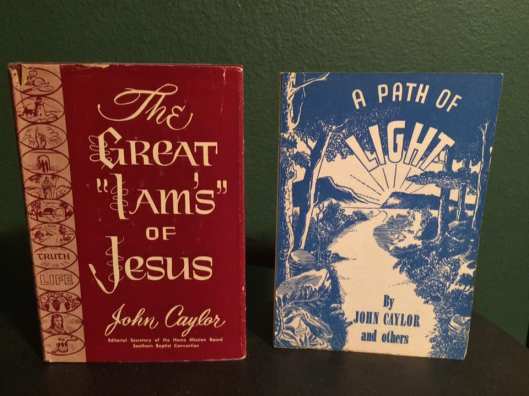
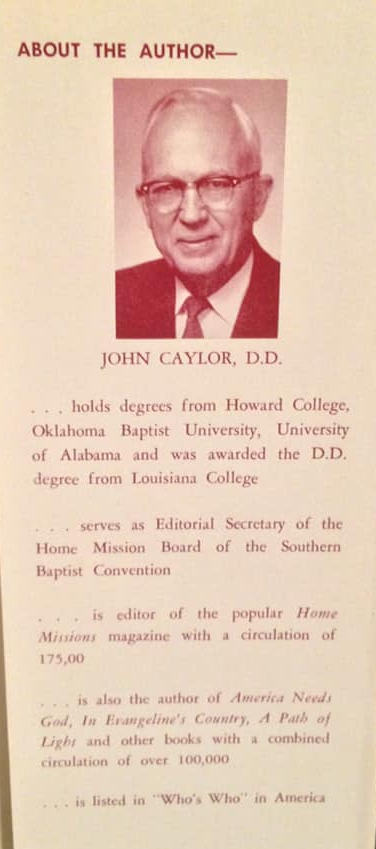
These books (and several others) were written by my maternal great grandfather, Dr. John Caylor, who was a pastor and also served in various capacities with the SBC, including on the Home Mission Board (now the North American Mission Board). A Path of Light is a compilation of missionary biographies. The Great “I Am’s” of Jesus examines twelve of Jesus’ “I am” statements. This particular copy of the book was one he autographed to my paternal grandparents.


3.

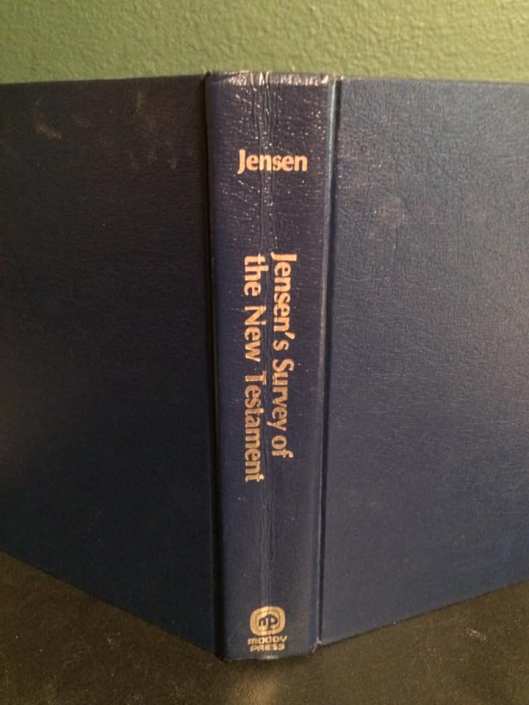
This was the textbook for the first theological class I ever took, New Testament Survey, when I was a freshman in college. I don’t know if it was the professor, the book, my lame brain, or some combination of the three, but it was the most boring class on the Bible – in church, school, or anywhere else – that I’ve ever taken in my life. I hated that class. It made a big impression on me:
The Bible is the most interesting book ever written.
No book or class about the Bible should ever be boring.


4.

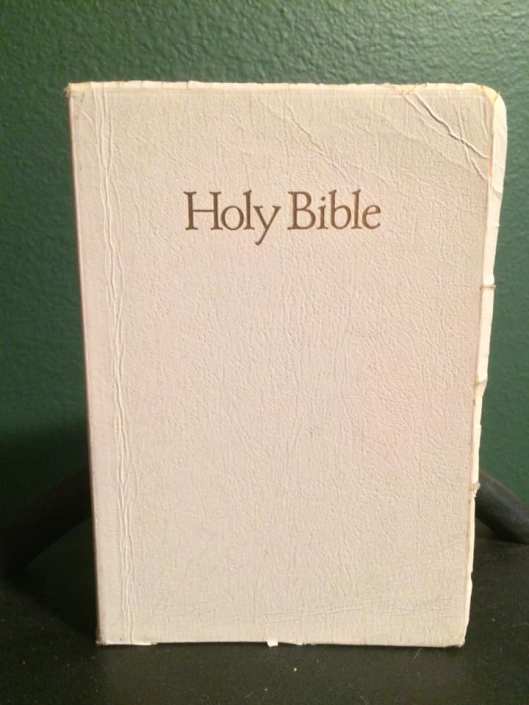
This is my favorite Bible ever. My husband gave it to me the Christmas after we started dating. When he gave it to me, it only had my first name imprinted on it. The following Christmas, just days before our wedding, he sneaked it away and then gave it to me again – this time with my new last name imprinted on the cover. (It’s a NASB if you’re wondering.)


5.

When my husband and I got married, we weren’t really close to any little girls who were the right age to be a flower girl. But we were close to two special little boys – Joshua and Caleb – my husband’s sons. So instead of a flower girl, we had a ring bearer (Joshua, below right) and a Bible bearer.
This is the Bible Caleb (below left) carried in our wedding.


6.

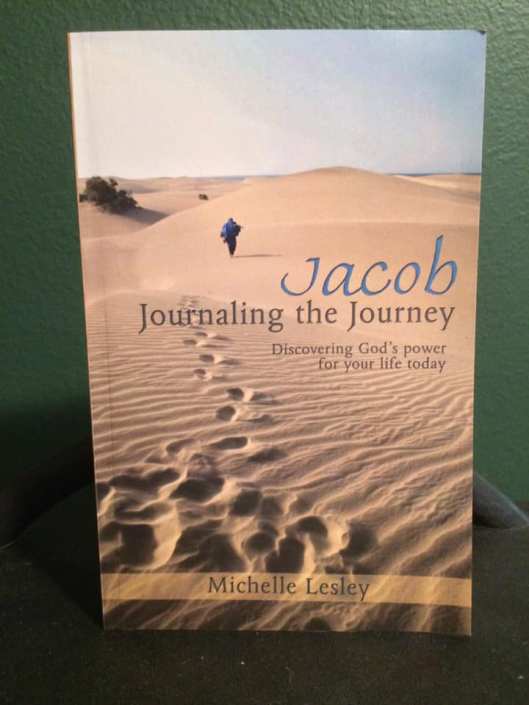
 This is the book that made me a published author. It was a joy to write. It taught me about the publishing business, marketing, public relations, promotion, and Christian retailing. It introduced me to a lot of wonderful people, and it stretched me in ways it would take far too long to describe. I love this book for everything except its hermeneutics. (Jacob is no longer in print, and, because of those unlovely hermeneutics, I would not recommend it to you if it were.)


7.


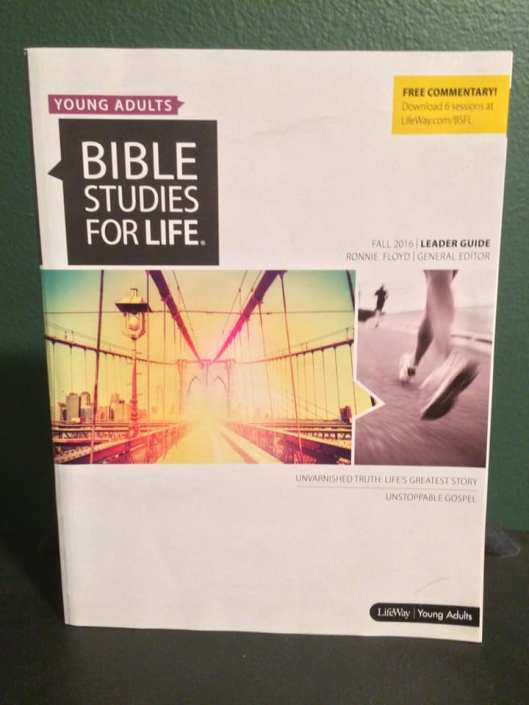
Technically, this is a booklet, not a book. It’s the leader guide for the Fall 2016 edition of one of the SBC’s Sunday School curricula for young adults: Bible Studies for Life. I wrote the discussion questions for one of the units. It was my first paid contract writing project, and it was a really interesting and informative experience.


How about you? What’s a book you love, and why do you love it?

Random Ramblings Ruminations Resources

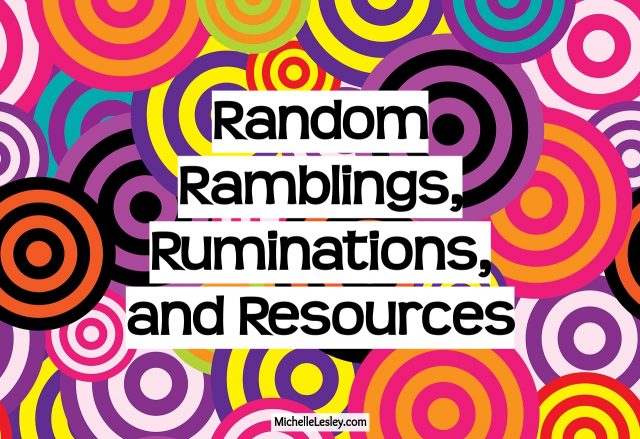
Random Ramblings, Ruminations, and Resources


Some days you wake up and you just don’t know what to write about, and it’s a beautiful fall day – which is rare as hens’ teeth in south Louisiana – and you just don’t feel like writing, anyway. Writer’s block: it’s the bane of a blogger’s existence.

I have a Google Docs file I’ve entitled “Scratch Pad”. Whenever I get a good idea for an article, I jot down the gist of it there. Then, when it’s one of those “meh” weeks when I’m not overwhelmingly passionate about anything in particular, I can thumb through those ideas for some inspiration.

It’s one of those “meh” weeks.

I started sifting through my scratch pad, and I noticed some of those article starters had been on the list for a while, mostly because they could really be addressed in a paragraph or two and didn’t need to be stretched out into a whole article.

(Are you bored, yet? I feel like you’re bored. I’m already bored and I’m the one writing this thing.)

So today is going to be a “clean out the fridge” day with some short random ramblings and ruminations on a variety of topics, with maybe a helpful resource thrown in here and there if I think about it. I’m just going to set it all out there on the counter and, hopefully, you’ll see something that looks appetizing.

This may or may not become a regular (monthly or every other month or whenever) feature. I don’t know. It depends on how often I wake up feeling “meh” and whether or not y’all like it, so shoot me some feedback on this one, and we’ll go from there.

Helloooooooo? Is anybody still with me?

I see that hand!

Here we go…

The apostle Paula

There’s this…lady…on Twitter. She’s very sincere and passionate about her theology – most of which seems to be pretty doctrinally sound. I have no doubt that she has the best of intentions with her tweets, and that she’s a sister in Christ, but…well, let’s just say she has some…um…issues…which, at this point, she’s not willing to be discipled out of. She’s kind of a Servus Christi meets Steven Anderson meets Westboro (so EVERYTHING SHE TWEETS IS IN ALL CAPS AND VERY EXTREME AND INTENSE) but with fairly decent theology.
A while back, she asked me something along the lines of (I forgot to bookmark her question to me) what I thought of the way she presented the gospel to the lost (which included a lot of in depth Reformed theological concepts). This was my answer to her, in case it might be helpful to you…

OK, everything you’ve said is technically biblically correct and that’s really good! But it’s not just about having the facts right. If you want to be an effective witness you have to have the facts right AND the right approach. And I know you want to be effective- also good!

If I could just offer you a few things to think about:

–Reformed theology is great. I believe it. I think everybody should believe it. But lost people aren’t going to get it (1 Corinthians 2:14). They aren’t going to understand terms like sheep, elect, justification, etc., and that’s OK. They can learn that after they’re saved. I would suggest finding a way to simplify – not water down – just explain things in a simpler way that even a child could understand: “God is perfect and holy. You’re not because you’ve sinned by lying, coveting, etc. The punishment for sin is an eternity in Hell. Jesus paid the penalty for your sin by His death on the cross, burial, and resurrection so you don’t have to spend eternity in Hell. If you turn sorrowfully from your sin and trust in His finished work on the cross, He will save and forgive you.” Something like that.

–It could just be the way you’re coming across on Twitter, and maybe you don’t sound like this in real life, but you’re coming across as judgmental and condemning rather than, “I love you and I can’t bear the thought of you continuing in this life or in eternity without Jesus.” Most people today are really looking for somebody to love them. It’s like the old saying goes: “People don’t care how much you know until they know how much you care.”

–I think it would be better to leave off the persecution part [she had included something in the gospel presentation about how Christians should expect to be harshly persecuted], NOT because it isn’t true, but because repentance and trusting Christ is overwhelming enough for the moment. Persecution is not something we hide and we definitely don’t go the other way and tell people everything will be awesome if they get saved, but you don’t want to put a fire hose up to the mouth of a baby who can barely handle a bottle, either.

She didn’t agree with me, said I was peddling a seeker-driven, watered down gospel that would send people to Hell, and decided she needed to harass me on a regular basis, so, unfortunately, I had to part ways with her. Eh, what can you do? 🤷

A book report

My reading habits have been terrible over the past couple of years. I blame social media and TV. (Embarrassingly, that’s one of the main reasons that, with extremely rare exception, I don’t write solicited book reviews.)

But I had been wanting to get my hands on Costi Hinn’s and Anthony Wood’s book, Defining Deception, ever since it first came out. I finally got around to ordering it, I just finished reading it, and now I want to commend it to you.

It’s good. Get it. Read it.

If your church uses Bethel or Jesus Culture music, give a copy to your pastor and minister of music. (Actually, get all of your pastors copies anyway. It’s Pastor Appreciation Month, and I don’t know a pastor who doesn’t love a good book.)

First of all, it’s short. I mean, if it were any shorter, it would be a booklet, not a book. So even if you’re a reading schlub like me, you could finish it in under a week. Some of you book nerds could sit down and finish it in a couple of hours.

It’s basically a primer on the New Apostolic Reformation, using Bethel as the iconic NAR exemplar (which it is). You get a history of the NAR including key figures in its founding and growth, an explanation of the theological problems and heresies within the movement, a brief course in basic pneumatology, several appendices which answer more specific questions readers might have, and more. And it’s all helpfully written at a level any Joe or Jane in the pew without a seminary degree can understand.

This NAR garbage is making its way into average churches like yours. Read up and be prepared.

Hearing voices

Remember earlier this year when Vice President Pence had made some sort of comment about God speaking to him and The View’s maven of mockery, Joy Behar, chortled:

“It’s one thing to talk to Jesus, it’s another thing for Jesus to talk to you. That’s mental illness…”

(I told you some of this stuff had been sitting in the hopper for a while.)

It pains me to have to say this because I despise everything Joy stands for, as well as her smug, derisive, self-righteous, condescending, supercilious, insulting attitude toward anything conservative or Christian, but unless Brother Mike was talking about God speaking to Him through Scripture…

…she was technically right.

Ouch. That hurt more than I thought it would.

Now, hang on before you start hurling those stones at me. I’m not saying that otherwise sane people who think they’re hearing God speak to them are mentally ill. They’re theologically wrong, but they’re not insane.

Here’s where she’s technically correct. In the era in which Joy came of age – before everybody and their dog started receiving extra-biblical revelation – if you were hearing voices in your head that nobody else could hear, whether you said it was God, or the devil, or Elvis talking to you, you were carted off to to a nice little institution and sedated. Heavily.

I happen to know this because when I was working on my bachelor’s degree in psychology (toward the end of that era), I did a lot of course work in abnormal psych (no idea where I was going with that, I just found it gruesomely interesting) and hearing non-existent voices telling you what to do was one of the criteria that pointed toward a formal diagnosis of schizophrenia or psychosis.

I don’t know if Joy or anybody else mentioned that, but that was my first impression of her comment about mental illness. I’ve been saying the same thing ever since I was in college- if Christians keep claiming they’re hearing God speak audibly to them, the world is going to start thinking they’re crazy. Because when it comes down to the price of eggs, there’s no outwardly demonstrable difference between observing a sane person hearing God tell her what to do and observing a schizophrenic hearing God tell her what to do. In the world’s eyes- why are we calling the first person a Christian and the second person insane?

Just one more reason to stick to sola Scriptura and the sufficiency of Scripture.

Is there an echo in here?

Sometimes I think social media has warped people’s brains.

Let me ask you something: If a pugnacious stranger knocked on your front door and started yelling at you, insulting you, and spewing all kinds of unbiblical garbage, would you welcome him into your living room with a humble smile on your face and put up with being treated that way on the off chance that you might learn something from his perspective on the issue, or to prove to others how open-minded you are?

Yeah, I wouldn’t either. In fact, I’d lock the door and probably call the police.

And yet those very people (and various SuperChristians who are apparently way more spiritually mature than I am, at least in their own opinion) demand that that kind of behavior be graciously tolerated and accepted on Twitter and Facebook, sneeringly accusing those of us who either refuse to engage with them, or block them, of living in a little “Christian bubble” or “holy huddle” or “echo chamber”.

Look, if you’re on social media for the purpose of verbally abusing people who think differently from you or to argue with strangers, I guess that’s your business (although if you claim to be a Christian you need to stop doing those things and repent), but that’s not why I’m on social media.

I’m on social media to keep up with far away friends and family, to promote my ministry, to help people I can help (who want to be helped), and to network and fellowship with like-minded Believers.

I’ve had lots of wonderful conversations with kind and polite people – Believers and unbelievers – who see things differently than I do, and I’m all for that.

But I’m not going to engage with rude, abusive people who are out looking for a fight. I’m just not. That would ruin the enjoyment I get out of social media. And if you want to call that “living in an echo chamber”, go right ahead. That doesn’t shame me in the least. I have nothing to prove about my level of open-mindedness and there’s nothing in Scripture that says I have to engage with people like that or subject myself to their abuse in order for God to consider me loving or tolerant or open-minded. The End.

A plea to the pastors

One of my recent Twitter threads:

Pastors- The women of your church need to be taught how to properly handle/study the Bible itself. Not Bible study books/DVDs – the Bible.

Many of them are so biblically ignorant I can’t explain to them why their favorite teacher is a false teacher because they have no frame of reference for comprehending such a thing and therefore just assume I’m (or anyone else who warns them is) being mean and hateful. They believe anything the false teacher says, not because she’s biblical, but because they like her and she makes them feel good.

For. the. love. please stop depending on canned studies (even the few doctrinally sound ones out there) in your women’s Bible study/Sunday school classes and get someone to teach who actually knows how to teach God’s Word and can teach them how to study God’s Word for themselves at home.

They are falling for false doctrine either because no one has properly taught them the gospel and they’re false converts or because they don’t know enough of the Bible to know that what they’re hearing conflicts with God’s Word. I can’t even simply tell women to compare what they’re hearing to Scripture because they have no idea what that means, why they should do it, or how to do it.


Don’t just assume they know the gospel or know their Bibles or are getting what you’re preaching. Some of them are not. A lady I know recently told me how excited she was about the new Joyce Meyer book she had just ordered. This was after three years of her faithfully sitting under doctrinally sound preaching. You’ve got to be intentional and proactive and make sure they are being properly trained in God’s Word.

I know I’m preaching to the choir with most of the pastors who follow me and are already doing a great job of training the women in your church. But if you could just double check to make sure. Please. We’re losing a generation of women to “feel-ology” and it breaks my heart.

McBible Study and the Famine of God’s Word

Bible Studies

Mailbag

The Mailbag: Potpourri (NBCS, Homeschool resources, Piper…)


Welcome to another “potpourri” edition of The Mailbag, where I give short(er) answers to several questions rather than a long answer to one question. I also like to take the opportunity in these potpourrri editions to let new readers know about my comments/e-mail/messages policy. I’m not able to respond individually to most e-mails and messages, so here are some helpful hints for getting your questions answered more quickly. Remember, the search bar can be a helpful tool!


I see many people on my Facebook news feed that are sharing innocuous or biblical sounding content (memes, Facebook posts, blog posts, etc.) from false teachers/ministries. I didn’t find an article on your web site and was wondering if you have already written one. I thinking it would be helpful to help share with others that it’s now necessary to understand the ramifications of sharing (boosting the author’s credibility, clicks, $, inadvertently sharing false doctrine or non-biblical philosophy, etc.)

I see the same thing in my Facebook feed, and it worries me for the people who, with the best of intentions, I’m sure, are following false teachers themselves and pointing others to false teachers by sharing those posts.

I have, indeed, written an article about this (it does pop up if you use the search bar, but you have to scroll down a ways to get to it since I wrote it a few years ago- sorry about that):

Four Reasons Why It Matters Who We Share, Pin, and Re-Tweet


What do you think of National Back to Church Sunday (NBCS)?

The concept is OK at the surface level, I guess. If all it is is a particular Sunday on the calendar when unchurched people are encouraged to go back to church, and churched people are encouraged to invite unchurched people to church, and churches are encouraged to find out why their supposedly churched members haven’t shown up for weeks, months, or years, I see no problem with the concept itself.

The problem comes when you move from the “on paper” concept to the actual churches that are participating and how those churches are attempting to get unchurched people in the door. If it’s a doctrinally sound church and the pastor says, “Hey- everybody invite an unchurched friend to come with you next week,” great. But we do not want unchurched people putting one toe over the threshold of an apostate or heretical church, and sadly, it appears as though at least some of the participating churches that have registered with the NBCS “Find a Church” page may fall into those categories. And if these “churches” are using unbiblical means and enticements to get lost people in the doors, that’s an additional problem.

The reader also included a link to encounter.com in her question. It’s clear encounter.com is in some way connected to NBCS, but I’m unclear as to how. The material on the “Invited to Belong” page is nauseatingly and blatantly seeker driven and man-centered. It’s all about how worthy you are rather than how worthy Christ is. There is no gospel presentation. Of the four people quoted, none are doctrinally sound Christians. One of the final sentences is a good summary of the whole page: “No church will be perfect, because no person is perfect, but we invite you to find a local church where you will belong.” Not a doctrinally sound church. Not a church that proclaims the biblical gospel. Not a church that preaches Christ and Him crucified. Not a church that teaches the Bible. It’s all about you, baby. If this encounter.com page is in some way NBCS’s mission statement or statement of faith, then I would certainly not recommend the NBCS organization.


I am looking for a solid but very simple Bible study for a loved one who struggles with understanding complicated concepts and words. Maybe even a kids study that is rich in theology. I was wondering if you had any ideas or advice on this?

It’s wonderful that your dear one loves the Lord and wants to study her Bible. Thank you so much for trying to help her!

Since you are a long time reader, you’ve probably heard me say that I don’t recommend “canned” studies, but that people should pick up the actual Bible and study it for themselves. In this case, may I suggest that might even be more important for someone like your loved one? I imagine that her poor reading skills may have made her more dependent on others in many areas of her life than she would like to be, and that studying the Bible for herself would not only be the best way to learn it, but would also give her a greater sense of confidence and independence. An “ownership” of her study of the Bible, if you will.

There are several good children’s and “easy reader” Bibles out there. I’ve suggested a few here: Children’s Bible Recommendations. You might wish to sit down with her and come up with a list of simple questions she can answer as she finishes reading a chapter, such as:

📖 Who is this passage about?
📖 What is the main idea of this passage?
📖 Why did God – the author of the author of the Bible Who says all Scripture is useful – put this passage in the Bible? 

📖 What can I learn about God from this passage?
📖 Is this passage telling me to do/not to do something? How can I obey it?
📖 Is there something in this passage I need to pray about?

Or, if you like, you could suggest that she read one of the books of the Bible I’ve written a study on (out of her own, new, easy to read Bible), take some of the questions I’ve written and send her a simplified version of the ones you think she can handle.

And, perhaps you could be “on call” via phone or e-mail to answer any questions she might have about what she’s studying. What a great opportunity to do one on one discipleship with someone who’s dear to your heart!


Do you know of any good Christian homeschooling blogs?

I homeschool, so I’m asked from time to time about homeschooling resources, but to be honest, it’s just not something I really read about. I recently asked my readers to recommend some good, doctrinally sound online homeschool blogs and resources, and here’s what they suggested (Please note, I have not vetted any of these. You will need to do the research yourself to discover whether or not they’re doctrinally sound.)

Family Renewal
✏ Reformed Homeschoolin’ Mamas
✏ Durenda Wilson
(author of The Unhurried Homeschooler)
✏ Half-A-Hundred Acre Wood
✏ The Kingdom Driven Family
✏ Annie & Everything


I really enjoyed reading A Few Good Men and A Few MORE Good Men, but how come John Piper (or another pastor) isn’t included? Is he a false teacher? 

Please understand that these two lists of godly male teachers aren’t exhaustive. Praise God, there are scores of preachers and teachers out there who faithfully teach and rightly handle God’s Word. I couldn’t list all of them if I tried, though I plan to add more articles like this in the future. These were just the teachers I was most familiar with at the time I wrote the articles. The mere fact that your favorite teacher doesn’t appear on these lists does not make him a false teacher, and I hope the articles don’t imply that (I don’t think they do).

John Piper’s books, sermons, and blog are mostly fine, and while I disagree with him on several points of theology, I certainly do not consider him to be a false teacher. But he’s not somebody I’m going to proactively recommend, either. Here’s how I’ve answered readers in the past who have asked me about John Piper:

While I consider Dr. Piper to be a generally doctrinally sound Christian brother and agree with him in many aspects of theology, he is not someone I proactively recommend for a few reasons:

1. Dr. Piper is a continuationist. I usually limit my endorsements to cessationists  because I believe this is the biblical view of the gifts. (I do not consider otherwise doctrinally sound continuationists to be false teachers, however.)

2. I’m concerned about Dr. Piper’s associations and partnerships with false teachers (which violates 2 Corinthians 6:14-18, Romans 16:17-18, and 2 John 9-11). First he appeared to embrace Rick Warren when he interviewed him and invited him to speak at the Desiring God conference in 2010. More recently, he has been a featured speaker at events like the Passion conferences where he has shared the stage with Christine Caine, Priscilla Shirer, Beth Moore, and Judah Smith.

3. Dr. Piper’s complementarianism seems muddled at best. On the one hand he will go so far as to say that Christian women should not be drill sergeants (the Bible mentions nothing of the sort), yet on the other hand he joins in ministry with the aforementioned Caine, Shirer, and Moore who – in addition the the false doctrine they preach – all actively and unrepentantly violate clear Scripture by preaching to men. It’s quite confusing.

I’m not going to warn people away from John Piper as a false teacher, but I can’t, in good conscience, recommend him either.


If you have a question about: a Bible passage, an aspect of theology, a current issue in Christianity, or how to biblically handle a family, life, or church situation, comment below (I’ll hold all questions in queue {unpublished} for a future edition of The Mailbag) or send me an e-mail or private message. If your question is chosen for publication, your anonymity will be protected.

Social Media

9 Ways Social Media Is a Blessing to Believers

Porn. Foul language. Arguments. Hacking. Cyber bullying. Affairs. Frittering away your time. Coveting others’ seemingly idyllic lives. Living and dying by how many “likes” your post got.

I get it. There are a lot of ways social media can go wrong.

But there’s nothing intrinsically wrong with Facebook or Twitter, Instagram or Google+ (Does anybody even use G+ anymore? Am I over there all by myself?), or social media platforms in general. They’re tools. Like a steak knife. You can cut up your supper with it so you can eat- good – or you can puncture somebody’s tire with it – bad. It’s all in how you use it.

There have been lots of articles which have, rightly, discussed the problems with social media and the need to take a break from it every now and then. (Ironically, I’ve seen these articles posted on Facebook and Twitter.) And if social media tempts you to sin or the problems it brings into your life outweigh the benefits, then, by all means, you should disconnect. For thousands of years, people have been living very fulfilling and godly lives without sharing pictures of every meal they eat and watching videos of their third cousin’s cat.

But if you use the tools available to you to customize your news feed, your list of followers, and other aspects of your account, there are many ways social media can be beneficial to believers.

1. Close contact with your church family during the week
How is Susannah, in your Sunday School class, doing with that problem at work? Is Mrs. Bunyan still in the hospital? The water main is busted and we won’t be able to have midweek services? Social media makes it easy to keep up with your brothers and sisters from church- to serve their needs, pray for them, rejoice with them, and encourage them outside of worship service. We’re meant to share our lives with one another, and social media is just one way we can do that. It’s also a great way for churches to send out announcements, reminders, and prayer requests as they come up to keep members informed.

2. You don’t have to miss church when you miss church
Once, when I’d had to miss church for a couple of weeks in a row due to having sick babies at home, I had my husband call me from the worship service right before the pastor started preaching and hold up the phone so I could hear the sermon. It was difficult to hear, we got disconnected a couple of times, and I had to keep things really quiet on my end. Now, lots of churches stream “Facebook Live” videos of their services. If you’re sick, out of town, or otherwise providentially hindered (video coverage is not an excuse to skip church for frivolous reasons) from being at church, you don’t have to miss worship. And, as a bonus, you can watch other churches’ services, too!

3. Supplementary preaching and teaching
Your pastor, elders, Sunday School, and Bible study teachers at your home church should always be your primary source of instruction in the Scriptures. Some churches make good use of social media by setting up a private group for church members to discuss Sunday’s sermon or what they’re learning in Bible study, and there are many excellent independent theology and Christian issues discussion groups on social media as well. Here, here, here, and here are a few I’m familiar with.

If you want to listen to additional good teaching during the week, social media is a great place to find it. Ask your doctrinally sound Facebook friends whose sermons they’d recommend. Follow good pastors, teachers, and podcasters on Twitter. You’ll soon have more good teaching queued up than you have time to listen to. And there are scads of excellent godly authors and bloggers to follow and learn from, too.

4. Evangelism
Social media is a great place for sharing the gospel! Write out a post of your own, share an evangelistic video (like this one or this one), or retweet an online tract. There may come a time when Christians or the Bible are banned from social media, but until that day comes, let’s get busy sharing the gospel online.

5. Fellowship
Online friendships are no substitute for face to face fellowship with your church family. But sometimes you’re in a church situation in which there are few sisters who understand a unique life circumstance you’re going through, who share an interest in the branch of theology you’re currently studying, and so on. On social media, you can “meet” like-minded brothers and sisters from all over the world and form sweet friendships with them- sometimes you can even experience the joy of meeting them in person!


Jayson, Lindsay, and DebbieLynn,
social media friends I’ve been blessed to meet in person.

6. Prayer and Encouragement
Need prayer or encouragement? In addition to asking your church family to pray for you or getting together with a Christian friend for lunch, your godly social media friends are always around to lift you up and intercede for you. And you can be a blessing to others by praying for them or offering a word of encouragement.

7. Thinktanking
“Does anybody know whether ______ is a doctrinally sound teacher?” “I’m researching Bible Topic X- what are some good resources?” “What’s that verse that says ____? I can’t remember the reference.” I can’t tell you how many times I’ve asked questions like this on social media and my friends have come through for me. There are a lot of godly people out there who have read a lot of books, listened to a lot of teachers, know a lot of Scripture, and been through a lot of experiences. Harness their knowledge and share your own.

8. Looking for a new church?
One of the things about social media that has brought me the most joy is helping people who are moving or who have to leave an apostate church to find a new, doctrinally sound church to join. Not only are there some great church search engines out there, but because of social media friendships and connections across the world, I’m able to get personal recommendations for good, solid churches. Not only can social media help you find a good church if you’re looking for one, you can help others by suggesting good churches you’re familiar with when they’re looking.

9. Current events in Christendom
What is the president of your denomination up to? Who’s the latest celebrity Christian to publicly support the homosexual lifestyle? Are there any good conferences coming up that would be helpful to your church members? Which sister churches in your state need some assistance?

Even more vital than being an informed citizen by following the local and international news, Christians need to be aware of what’s going on in the church- locally, nationally, and globally. Follow the pages of your denominational leadership, local churches, Christian news services, and so on, to keep abreast of current events. Outside of social media, you’ll probably never find out about the latest happenings until they happen in your own church and take you by surprise.


There’s no doubt that social media has the potential to cause a lot of problems, even the temptation to sin. But if you’re able to put it in its correct place so that it doesn’t steal time from God, your family, your church, or other vital relationships and ministries- using it, instead, as just one more tool to encourage yourself, and others, towards greater Christlikeness – social media can be a fantastic blessing.

Click above, and let’s be friends!