Idolatry, Old Testament, Sunday School

An Overview of Hosea ~ Sunday School Lesson ~ 7-27-14

Overview of Hosea


These are my notes from my ladies’ Sunday School class this morning. I’ll be posting the notes from my class here each week. Click here for last week’s lesson.

Through the Bible in 2014 ~ Week 30 ~ July 20-26
Hosea, Isaiah 28-43, Psalm 76
An Overview of Hosea

Hosea 1
Hosea was a prophet to the northern kingdom of Israel. God used his family life as a picture of what he was prophesying. Hosea married a woman, Gomer, who would later prove unfaithful to him. God also had Hosea give his children names that reflected God’s message to Israel: Jezreel, No Mercy, and Not My People. But the real story of the book of Hosea is not Hosea or his family, but the love, reluctant wrath, and forgiveness of God towards His unfaithful people.

2:8
Everything Israel gave away -as sacrifices to idols, as tribute to foreign potentates, as bribes for foreign armies to come to her aid- everything had been given to her by God.

4:17
When sinners persist in their sin long enough, God finally gives them over to what they want. (Rom. 1:18ff). Often sinners think the harshest thing God could do would be to try to stop them from participating in the sin that they love, but His wrath is most poured out when He gives them exactly what they want.

5:6, 15; 7:13-14
Seek the Lord while He may be found (Isaiah 55:6). God was calling Israel to seek Him before He gave them over to a hard heart and a reprobate mind. The Lord is always found by those with a soft heart whose desire is to repent and love Him, but He turns a deaf ear to those who continue in rebellion until it starts raining, only to beat on the door of the ark because they don’t want to die in the flood.

God is not interested in the worldly sorrow that is only grieved over the consequences of sin. That soul still has its eyes firmly fixed on self and how self is affected. The truly repentant heart has her eyes fixed on God and how her sin affects Him.

6:4,6
God doesn’t desire empty rituals, lip service, or going through the motions. He wants worship from the heart.

8:2, 5-6
God will not allow syncretism (the melding of unbiblical worship with biblical worship). He requires, not that He be first in our affections, but that He be ONLY in our affections.
It did no good for Israel to claim that she knew the Lord (2) because she was a) worshiping other gods besides the Lord, b) calling an idol (the golden calves) “God,” and c) not worshiping God in the way He had commanded. None of these were acceptable in God’s sight then, and because He is the same “yesterday, today, and forever” (Hebrews 13:8), it is still not acceptable to Him today.

That’s why false teachers are so dangerous. People like Joyce Meyer, Joel Osteen, and TD Jakes may not be fashioning golden calves and calling them “Jesus,” but they are fashioning false gods with unbiblical words and ideas and calling them “Jesus.” This is what Matthew 7:21-23 is talking about when it says:

Not everyone who says to me, ‘Lord, Lord,’ will enter the kingdom of heaven, but the one who does the will of my Father who is in heaven. On that day many will say to me, ‘Lord, Lord, did we not prophesy in your name, and cast out demons in your name, and do many mighty works in your name?’ And then will I declare to them, ‘I never knew you; depart from me, you workers of lawlessness.’

9:1
Just as Gomer has betrayed and forsaken Hosea, Israel has betrayed the Lord. She has loved adultery and the fleeting pleasures (Hebrews 11:25) that go with it instead of the true and lasting treasure that comes from loyalty to the Lord (Revelation 11:18).

10:5-6
The golden calf Israel worshiped would be used to pay off Assyria in tribute. God is sovereign. He will ultimately destroy everything that is raised up against Him. Idols, ideas, individuals.

11:1-4
God is not a cruel taskmaster. He led and cared for Israel with “cords of kindness” and “bands of love” as a parent leads a toddler. They didn’t have to live in fear of Him if they were walking with Him. Not so with other gods. With other gods, they could never be certain where they stood. Had they offered enough? Pleased it enough? Would it bless them with fertility or rain for their crops?

With God, on the other hand, His love for Israel came first. It wasn’t a reaction to whether or not their actions pleased Him. His love for them was there even before they knew Him (1 John 4:15-19). It was because He loved them that He lovingly spelled out everything He wanted Israel to do in worship, in daily life, and in their hearts. He also went into great detail about the things they could expect from Him, and He kept His promises time and again. They didn’t have to wonder how He felt towards them or what He required of them or whether He would come through for them. They could know.

11:8-9
It grieved God to destroy Israel as he had destroyed Admah and Zeboiim with Sodom and Gomorrah. God is not a God who delights in executing His wrath, but, rather, does so with a broken heart and only as a last resort.

“Have I any pleasure in the death of the wicked, declares the Lord God, and not rather that he should turn from his way and live?” Ezekiel 18:23

“The Lord is not slow to fulfill his promise as some count slowness, but is patient toward you, not wishing that any should perish, but that all should reach repentance.” 2 Peter 3:9

13:4-6
When Israel was in Egypt and in the wilderness where she had nothing to depend on but God, she was loyal to Him, but once prosperity came, she left Him, just as Gomer left Hosea for something she thought was better.

It is often only when people have no other choice but to turn to Christ that they do so, but when they don’t “need” anything, they turn away from Him. This is why Jesus said “it is easier for a camel to go through the eye of a needle than for a rich person to enter the kingdom of God.” (Matthew 19:24).

By stripping away everything Israel had and sending her into exile, God was bringing Israel full circle to the neediness she had started out with in Egypt in order to bring her back to Himself.

14:1-9
God’s desire is, and always has been, for His people to repent and be reconciled to Him, and enjoy a loving, father-child relationship with Him. We see this in His post-Eden relationship with Adam and Eve, in His blessing of the earth after the Flood, in His bringing Israel out of Egypt, in bringing Israel out of exile, and in the most important way of all, in saving us out of our sin that we might be permanently reconciled to Him through the precious blood of Christ, to love Him and serve Him forever.

I will heal their apostasy;
I will love them freely, for my anger has turned from them.

Bible, Bible Study, Christian women, Women

You’re Not as Dumb as You Think You Are: Five Reasons to Put Down that Devotional and Pick Up the Actual Bible

Bible Five Reasons

As a women’s Bible study author and teacher, I have the unique privilege of talking to women from all kinds of backgrounds about their spiritual lives. I can’t tell you how many times I’ve had women share with me that they didn’t grow up in church, or they grew up in a church that “didn’t allow” them to read the Bible, and now they have to use a Bible study or devotional book in their quiet time or they’re afraid they won’t be able to understand the Bible. My heart goes out to these ladies because they desperately want to learn from God’s word, but somewhere along the way, someone or something has convinced these perfectly intelligent women–I haven’t met a dumb one, yet– that they’re not good enough or smart enough for God’s word.

As Colonel Potter used to say:

ColPotter MM

Ladies, you are not dumb. God created you smart enough to understand the Bible, and He created the Bible to be understandable. He loves you and wants you to read, embrace, and apply His word to your life. So don’t be afraid to throw that Daily Bread out the Open Windows of your Upper Room and read a chapter out of your Bible instead. Why?

1. Because you need spiritual nutrition, not mind candy.
The other day I was asked my opinion of a popular women’s daily devotional web site. I read a few of the devotions, and the basic format of what I found was a Bible verse (or worse, part of a Bible verse) followed by an inspiring or poignant personal story. Frequently, the Bible verse had little or nothing to do with the story. There’s nothing wrong with reading a good story, but that’s not the same thing as studying God’s word. Other “Bible” studies are built largely on the author’s opinions. You’ll find that I think… or I believe… far outnumber God’s word says… (quoted verbatim, in context, and with a chapter/verse reference). Still others are basically advice or “life tips” books.

Don’t let the fact that a book, magazine, or website bills itself as a “Bible study” or a “devotional” fool you. If all you’re reading is the author’s unsubstantiated opinions, advice, or anecdotes from her (or someone else’s) life, you are studying her story, not God’s story.

There are many good, doctrinally sound studies out there that can be a fine supplement to your regular study of God’s word, and there are many more “Bible studies” and devotionals that are merely feel-good stories, or worse, contain teaching that actually conflicts with the Bible. But how will you know the difference if you don’t know what God’s word says by reading it?

If you don’t know enough of what God’s word says to use it as your measuring stick for other books, you’ll end up doing the same thing a child would do when offered anything in the world that he wants to eat. He’ll choose what looks and tastes good (which might be candy or it might be poison) instead of what’s good for him. When you pick up a Bible study or devotional, you might not know what you’re getting, but when you pick up your Bible, you can be sure you’re getting the very words of God, and that’s what your spirit needs to feed on to grow up healthy.

2. Because King James has been dethroned.
No disrespect intended. The King James Version of the Bible is a good translation, and the language is beautiful, but if you have trouble with 1611 English, it’s not the only game in town anymore. Some of our modern translations (please note: that’s translations not paraphrases) are actually more accurate than the KJV because thousands more biblical manuscripts have been discovered since it was first published, allowing translators to be more precise. Two of these, which I highly recommend, are the New American Standard Bible (NASB) and the English Standard Version (ESV).

If you can read books, recipes, magazines, instructions, and Facebook (good heavens– if you can decipher certain Facebook posts, you can comprehend anything), and understand them, there is a Bible translation out there that you can understand. You can even check most of them out for free at BibleGateway.com.

3. Becase the Holy Spirit promised to help you.
I always find it heartwarming to hear someone say, “Before I was saved, I read the Bible, but it didn’t make any sense to me. But now when I read it, I get it!” What changed? The Holy Spirit now lives inside that person. He convicts us of sin, leads us to love the things of God, and shapes us to be more like Christ. One of the ways He does that, according to 1 Corinthians 2:14-15, John 14:26, and 1 John 2:27 and other passages, is that He helps us understand and apply God’s word to our lives.

Before you start reading your Bible, take a moment to pray, confess and repent of your sin, and ask the Holy Spirit to help you understand and obey His word. He’ll do it, because He keeps His promises.

4. Because you can get by with a little help from your friends.
 
While the Holy Spirit illumines our understanding of the Scripture, it’s both immediate and a process, so sometimes, you’ll run across a verse that stumps you, a word you don’t understand, or passages that seem to conflict with each other. Fortunately, the Holy Spirit is/was at work helping other godly men and women to understand the Scriptures, too, and one of the ways He can help you is through their study and hard work.

Cross References:
Take a look at your Bible. See any little superscript numbers or letters in the text? Find the corresponding letter/number, and you’re likely to see the reference for another related Bible verse. Look it up. Clear passages of Scripture interpret unclear passages, and it will probably shed some light on what you’re finding confusing.

Study Bibles:
I almost hesitate to recommend study Bibles because there are so many shoddy ones out there, but if you can find a good one they are extremely helpful. Good study Bibles contain the entire text of the Bible plus notes and explanations on most of the verses. They also often contain historical, cultural, and background information on each book and author, maps, charts, glossaries, etc. As to the shoddy ones, generally speaking, stay away from “theme” Bibles (the Bible for teachers, for athletes, for petroleum engineers who eat waffles for breakfast–yes, I’m kidding– the environmental Bible, the NASCAR Bible, the Duck Dynasty Bible– no, I’m not kiding), and from any Bible whose title contains a televangelist’s name (such as the Bibles T.D. Jakes, Joyce Meyer, and Joel Osteen have put out).

For my “hard copy” Bible, I use and strongly recommend the MacArthur Study Bible. It is my understanding that the Lutheran Study Bible and the ESV Study Bible are also very good, although I have not personally had a chance to check them out myself. And there are some phenomenal (and free!) study Bible apps out there. I absolutely LOVE the Faithlife Study Bible and the Bible study app from Olive Tree. And check out this article from Tim Challies: What Makes a Really Good Study Bible?.

Commentaries, Dictionaries, and Bible Study Helps
Commentaries are a Bible scholar’s written explanation of Scripture. Bible dictionaries will help you with definitions of certain words and phrases. And there are many other notes, outlines, and other Bible study helps you can use to better your understanding of Scripture. The resources page at BibleGateway.com contains several of these, including Matthew Henry’s commentary (my favorite). The Christian Classics Ethereal Library (CCEL) has a treasure trove of thousands of resources to help you study. And Logos Bible Software has a great free app that has dozens of resources.

5. How badly do you really want this, anyway?
Nobody ever won a medal at the Olympics by practicing her sport for five minutes a day. Edison didn’t invent the light bulb by messing around in his garage for a few hours on the weekend. And, despite the titles of some Christian books, nobody ever grew to spiritual maturity by spending five minutes a day reading a devotional.

Think about the things you spend your time on. Work, cooking, cleaning, TV, social media, novels… If asked, we would probably all say that our relationship with Christ is more important than any of these things, but do our day planners reflect that?

Anything worth having is worth investing time and effort into. It’s worth working at it and sharpening your skills. And nothing–nothing–is more worthwhile than growing closer to Christ. Is Christ worth some time and effort to you?

So, ladies, this is probably going to sound strange coming from a women’s Bible study author, but you don’t need my book, or anybody else’s, to study the Bible. Just pick up the Scriptures, pick a book, start reading at the beginning, and keep going until you get to the end. People did that for thousands of years before Bible studies hit the scene. They did just fine, and you can too.

Book, Christian women, Jacob

4th of July Sale!

Image

Now through Sunday, July 6, the Kindle and Nook versions of Jacob are just 99 cents! (Click the hyperlinks here, or click on the “Books” tab above.)

This would be a great opportunity to order a summer Bible study for your women’s small group or Sunday school class. It’s a much less expensive way (especially for small churches on a limited budget) to do a women’s Bible study than ordering a $15 workbook for everybody.  And, with the free Kindle Reading App, you don’t even have to have a Kindle. Jacob can be downloaded to your smart phone, computer, or tablet.

Please consider ordering through Amazon Smile and selecting “International Mission Board of the Southern Baptist Convention” as your charitable organizaion. When you do, a portion of your purchase will be donated to the IMB to help carry the gospel around the world!

Order your copies today– this is a limited time offer!

Discernment, Entertainment, Evangelism, Gospel, Movies

Should Christians Boycott “Son of God”? Three Things to Consider ~ UPDATED

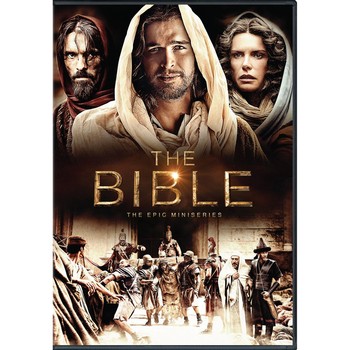
thWith the movie Son of God releasing in theaters on February 28, for the next three Thursdays I’ll be rerunning a three part series I wrote on last year’s History Channel miniseries, The Bible. Son of God is Roma Downey’s and Mark Burnett’s movie about Jesus that is drawn from The Bible’s scenes pertaining to His life and ministry, as well as deleted scenes that did not make it into the miniseries.

UPDATE: Click here to read Part 1, Part 2, and Part 3, of my article “Six Thoughts on History’s ‘The Bible'”.

During and after The Bible’s run last year, Downey and 0bc90ac98e8e3d20a24be1f335b5966aBurnett received quite a bit of criticism for the show’s inaccuracies and copious amounts of artistic license taken. It would give me great joy to discover that they took those critical reviews to heart and fixed in Son of God the rampant errors and faulty theology of The Bible, but since they are using scenes and deleted scenes pulled directly from the miniseries, it doesn’t sound like they’ve re-shot and corrected anything.

Since I have not seen Son of God, I’m not comfortable suggesting Christians boycott it, but I would like to throw a few things out there for your consideration as you make your decision about whether or not to see this movie:

1. Do you boycott products, organizations, restaurants, stores, actors, or political candidates who support abortion, the homosexual agenda, or any other sin?

Well, taking God’s name in vain, the third Commandment, is still a sin. A big one. And it’s not limited to saying “OMG” or boycottusing God’s name in an expletive. Far worse than those is attributing to God things that He has not said or that are not true of His nature and character. This happened a myriad of times in The Bible, and, unfortunately, I anticipate that the same will be true of Son of God.

Are you being consistent if you boycott Girl Scout cookies and Starbucks yet give your money to people who claim to be presenting the Jesus of Scripture but put words into His mouth that He did not say and philosophies into His teachings that He did not espouse and which conflict with God’s word?

2. If you do choose to see Son of God, or if you have friends stock-footage-african-american-friends-having-conversation-at-caf-x-ewho see the movie, make the most of the opportunity to start conversations for sharing the gospel and pointing people to the true Jesus of Scripture. God can use anything to draw people to Himself, but they can only be genuinely born again if someone tells them the truth of the gospel and they put their faith in the Jesus of the Bible.

3. Do your homework. If you choose to see the movie, read one or more of the gospels (Matthew, Mark, Luke, and John) before and afterwards. Did Jesus really say to Peter, “We’re going to bible-studychange the world,” as He does in the movie? If so, which verse says that? If not, what did Jesus actually say, and why? If you choose to see the movie, don’t just take for granted that what you see on the screen is true. Get your Bible out, dig through it, and sharpen your discernment skills. Be one of those Bereans Luke praised so much for comparing what Paul preached to what Scripture said.

~~~~~~~~~~

UPDATE: After the original publication of this article, Downey and Burnett announced that they would be removing all of the scenes from Son of God that contained the actor portraying Satan due to last year’s controversy over his striking resemblance to President Obama. 

A reader asked for my reaction to this announcement. My remarks to him were as follows:

Since I haven’t seen the movie, it’s hard for me to give a really fair comment on this, but I’ll take a stab at it. I am much more concerned about the theology of leaving out Satan than I am about the politics. 

When I read a statement like this (and granted, these are the reporter’s words, not Roma Downey’s words): 

“Eager to avoid rehashing the drama, producers Roma Downey and Mark Burnett decided to leave the character out of their film…” 

it tells me they are more concerned with political fallout and controversy than they are with adhering to Scripture. (In my opinion, the bulk of The Bible miniseries bears out that they were not overly interested in adhering as strictly as possible to Scripture.)

When I read a quote like this from Roma Downey: 

“‘It gives me great pleasure to tell you that the devil is on the cutting-room floor,’ …’This is now a movie about Jesus, the son of God, and the devil gets no more screen time.” and, “For our movie, Son of God, I wanted all of the focus to be on Jesus. I want his name to be on the lips of everyone who sees this movie, so we cast Satan out.”

it tells me that she and Mark Burnett don’t have a full understanding of the meaning and implications of Christ’s life, ministry, death, and resurrection. The story of Jesus goes much deeper than just words on a page. Everything He said and did had eternal, omnipotent, prophetic, God-magnifying, salvific, miraculous foundations, impact, and effects. We’re not talking about an entertaining little story like The Three Bears or Gone With the Wind, here. The story of Jesus turns the universe inside out for every atom of everything that’s ever existed, including every single human being who has ever walked the planet. You can’t just cut a little here and cut a little there and sew the edges back together without the crippling the impact of the gospel.

To say that now that they have cut out the scene with Jesus being tempted in the wilderness (I’m assuming this is the main scene they’re referring to. I can’t remember which other scenes may have had Satan in them.), NOW this movie is all about Jesus just further demonstrates their lack of biblical understanding. Are they saying the wilderness temptation was not “about Jesus”?

That incident was not about Satan. It was about Jesus. It is one of the major incidents in which we see that Jesus is both fully God and fully man. It also encapsulates the main point of the entire Old Testament sacrificial system– that Jesus is the perfect Lamb of God without blemish or spot, the only sacrifice that could permanently take away our sin. He could not have been our sacrifice for sin had He given in to Satan’s temptations even once. Finally, it is a demonstration to us that Jesus understands the struggle with sin that we go through because He went through it Himself, personally (Hebrews 4:15).

To sum up, I think leaving Satan out has worse theological consequences than the political fallout for leaving him in.

~~~~~~~~~~

Should you see (and financially support) this movie? That’s between you and God. But whether or not you choose to see it, as with anything else in life, use it as a springboard for sharing the gospel and studying God’s word more deeply.

What do you think? Should Christians boycott Son of God?

Book, Jacob, Uncategorized

E-BOOK SUPER SALE!!!

Image

All e-versions of “Jacob” are on sale! Get a Kindle or Nook copy for just 99 cents, or other e-version at CBD for just 79 cents! (Click the hyperlinks here, or click on the “Books” tab above.)

You can give “Jacob” as a GIFT, too! At these prices, you can get one for all the women on your Christmas list!

And don’t forget your women’s Bible study group! You don’t have to have an e-reader or tablet. “Jacob” can be downloaded to your smart phone, computer, or tablet, too. This is a much less expensive way (especially for small churches on a limited budget) to do a women’s Bible study than ordering a $15 workbook for everybody. It’s a great time to start thinking about January Bible studies!

Order your copies today– this is a limited time offer!