Uncategorized

The Word on Wednesdays

Hi ladies! I hope you enjoyed our most recent Bible study, Judges, and that youโ€™re looking forward to our new study as much as I am.

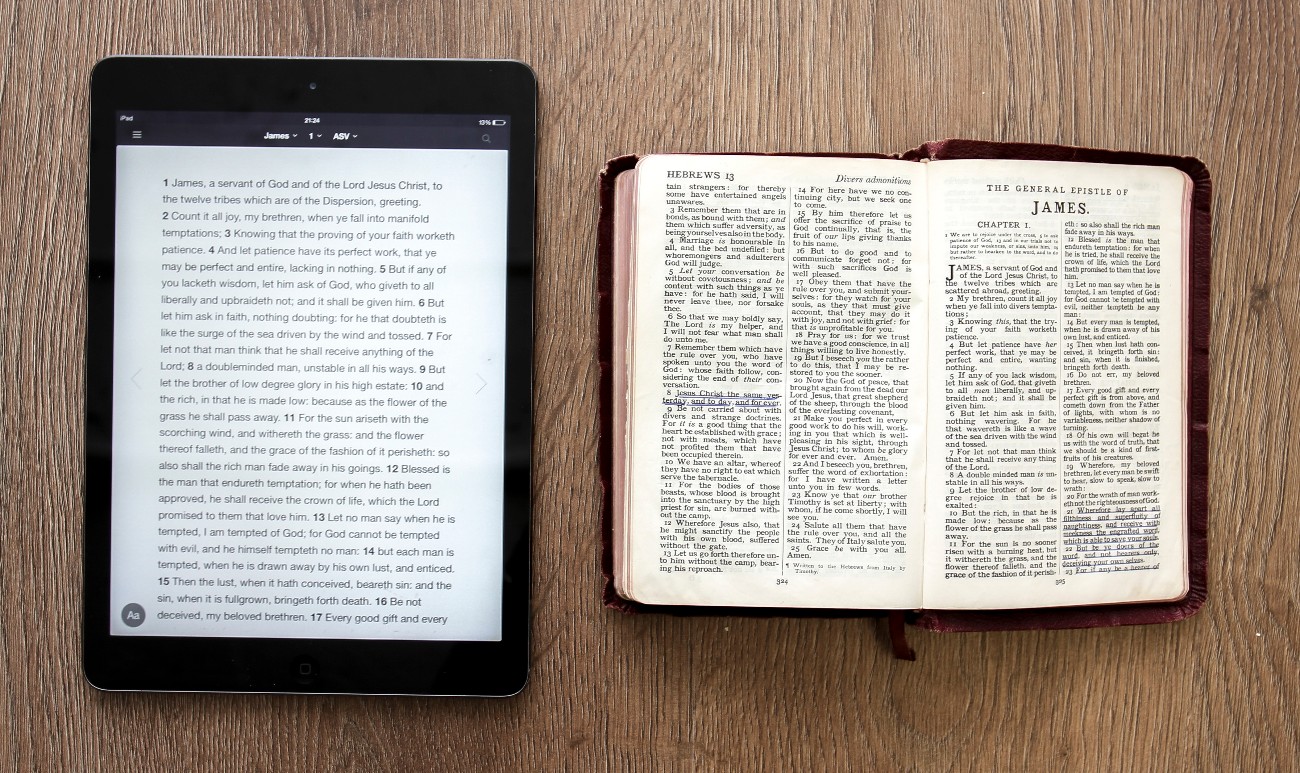
Iโ€™ll be taking a break for a few more weeks getting ready for our new study. I hope youโ€™ll enjoy it and that it will edify you as you seek to grow in Christ and His Word. (The picture above does not mean we will be studying James. :0) Stay tuned, and keep an eye on the blog on Wednesdays.

In the meantime, I’ll be posting some articles from the archives that I think youโ€™ll find helpful as we make our way toward our next study. Here is this weekโ€™s article:

Wednesday’s Word

Wednesday is Bible study day here on the blog. In my Wednesday’s Word Bible study series youโ€™ll find miscellaneous, one lesson Bible studies from each book of the Bible. One chapter of Scripture followed by study questions. This sampler series demonstrates that thereโ€™s nothing to be afraid of when approaching those โ€œlesser knownโ€ books and that every book of the Bible is valuable and worth studying.

Wednesday’s Word ~ Mark 1

1 The beginning of the gospel of Jesus Christ, the Son of God.

2 As it is written in Isaiah the prophet,

โ€œBehold, I send my messenger before your face,
ย ย ย ย who will prepare your way,
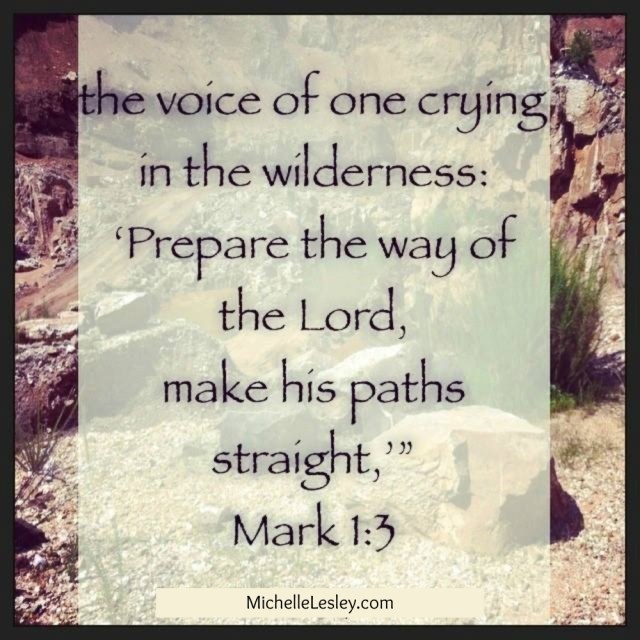
3ย the voice of one crying in the wilderness:
ย ย ย ย โ€˜Prepareย the way of the Lord,
ย ย ย ย make his paths straight,โ€™โ€…Continue Reading

Bible Study

How to Study the Bible- and How Not To!

Originally published December 31, 2020

It’s almost the new year! Are you making a resolution to start having a personal, daily Bible study time? Would you like to improve on the way you study your Bible? Maybe you’re looking for a Bible reading plan, or maybe you’re just looking to change things up a little?

If that sounds like you, give a listen to this December 2020 episode of A Word Fitly Spoken:

How to Study the Bible – and How Not To!

Amy and I discuss what our own Bible study times look like, plus some other helpful methods and resources. We also discuss false doctrine and false teachers to avoid as you’re studying your Bible.

This episode is a great way to kick off the new year. And don’t forget to subscribe to A Word Fitly Spoken on your favorite podcast platform!

Additional Resources:

Bible Study Resourcesย (how to study the Bible)
Bible Studies
Bible Reading Plans for the New Year- 2022

Popular False Teachers & Unbiblical Trends

Judges Bible Study

Judges ~ Lesson 18- Wrap Up

Previous Lessons: 1, 2, 3, 4, 5, 6, 7, 8, 9, 10, 11, 12, 13, 14, 15, 16, 17

Wrap Up

Questions to Consider

1. Was there anything new God taught you in this study that particularly impacted you? What was it, and why was it so significant?

2. How is your walk with the Lord different after this study than it was before?

3. What are the reasons for, and the consequences of, “Everyone did what was right in his own eyes”? What are the implications of this mindset and posture of heart for God’s people, both individually and as the church, today?

4. What did you learn about idolatry and syncretism from this study, and how can you apply this to the church and Christian organizations?

5. What did this study teach you about trusting and obeying God?

6. Have there been any passages or concepts in this study that God used to convict you of disobedience and lead you to repentance? How will you walk differently in this area from now on?

7. What did this study teach you about the character of those who lead God’s people?

8. What have you learned about God and His nature and character from this study?


Homework

Spend some time in prayer this week asking God to show you how to put into practice one thing you learned from this study.

Recite all of your memory verses from this study. Which one is most meaningful to you right now?

Judges Bible Study

Judges ~ Lesson 17

Don’t forget to come back next week for our wrap up lesson!

Previous Lessons: 1, 2, 3, 4, 5, 6, 7, 8, 9, 10, 11, 12, 13, 14, 15, 16

Read Judges 21

Questions to Consider

1. Go back to lesson 3 (link above) and review your answer to the first part of question 5, Israel’s pattern of sin and repentance in 2:16-23. How does today’s passage fit this pattern? How does today’s passage fit the theme verse of Judges (21:25), “In those days there was no king in Israel. Everyone did what was right in his own eyes.”?

2. Chapter 21 is a continuation of the story that began in chapter 19. Briefly review lessons 15 & 16 (links above) to refresh your memory.

3. Read all of chapter 21.

4. Explain 1-15 in your own words. What is taking place in this passage? What transpired at Mizpah (1,18)? (hint: use your cross references) Why was there “one tribe lacking in Israel”? (3,6) Which tribe was it, and why was it “lacking”? (3,6, chapter 20) If there were no Benjaminite women left for the Benjaminite men to marry and none of the other Israelite tribes would give their daughters to the Benjaminite men for wives (7), what would have happened to Benjamin as a tribe? Why was it imperative that the Benjaminite men marry women from among the tribes of Israel? Why couldn’t they just marry a woman from a neighboring country?

5. In the law, God explained why He didn’t want Israel marrying foreign wives. What was His reason? Think about all the idolatry we’ve seen in the book of Judges. Which seemed to be more important to Israel in chapter 21, the letter of the law (the outward behavior of not marrying foreign wives), or the heart of the law (the inward heart condition of loving God and rejecting idolatry)?

Recall Jesus’ teaching in the Sermon on the Mount: “You have heard it said that [letter of the law], but I say to you [heart of the law].” Was Jesus saying that obedience in our external behavior – such as (for the Israelites) obeying the command not to marry foreign wives – wasn’t important? Where does our outward obedience flow from? From God’s perspective (a perspective we should attain to), is mere outward, behavioral conformity to the law true obedience to Him?

Compare the Old Testament’s prohibition on God’s people marrying unbelievers to the New Testament’s prohibition on God’s people marrying (or closely yoking with) unbelievers.

6. We live in a very individualistic society. Old Testament Israel was a very corporate society. How does this impact and explain Israel’s grief and compassion (2,3,6,15) over the potential loss of the tribe of Benjamin, even though they had recently been at war with, and killing, the Benjaminites?

Compare the Old Testament corporate perspective in this passage with the New Testament corporate perspective of the church in 1 Corinthians 12. Make the connection between Judges 21:2,3,6,15 and 1 Corinthians 12:26. Why did God design His people to be interdependent – to need each other?

7. Explain in your own words what is happening in verses 16-25. What does verse 22 mean?

Did telling and allowing the Benjaminites to snatch the women (22) let Israel and Shiloh off the hook for the vow (18) since they weren’t technically โ€œgiving our daughters to themโ€? Were they truly keeping the vow, or was this yet another letter of the law versus heart of the law situation? What about the laws against coveting and stealing – were those laws being kept or broken in this situation?

When it comes to sin, does God ever let people off on a technicality? Is someone who looks for loopholes in God’s commands a person whose obedience is motivated by her love for the Lord, or someone who loves sin and wants to “get away with” as much of it as possible? Do you ever play games like this with God’s commands?

8. Do you notice anything in chapter 21 indicating that God instructed Israel to do any of the things they did, or that He approved of any of these things? Did Israel inquire of the Lord about the lack of wives for the Benjaminite men, or did they take matters into their own hands? Think about how Sarai took matters into her own hands to have a son, when God’s plan was for Him to provide her with a son. Could not the same God who miraculously provided an offspring for Abraham have also miraculously provided wives for Benjamin? How does taking matters into our own hands, especially by sinning, a) demonstrate a lack of trust in God and His ways, and b) never turn out as well as trusting God and His ways does?

9. How would you respond to this statement? “Living by doing what is right in your own eyes (25) gives you an inconsistent spiritual framework that puts you in the position of looking in moral indignation upon one sin while committing another to ‘correct’ it.”

Compare verse 4 to verse 25. Do our outward actions of worship (4) mean anything if our hearts aren’t right with God (25)?


Homework

Review your answers to question 5, above. Are there any areas of your life in which you are being externally, behaviorally obedient to God, but that outward conformity to the requirements of Scripture isn’t motivated by love for God or the heart of the law?

For example: Do you give your offerings or attend church reluctantly or resentfully rather than giving generously and cheerfully, or attending eagerly because you love the Lord and His people?

Think it over and repent of any areas in which your obedience is not a natural outflow of your heart. Choose one of these areas, and over the next week, do a deep dive into the Word on that particular issue. Why does God want you to do or not do that behavior? What should be the posture of your heart that leads to outward obedience on that issue? Ask God to change your heart so your outward behavior will be rightly motivated and will be a joy rather than a burden.


Suggested Memory Verse

Church, Discernment

Throwback Thursday ~ Build the Wall and Station a Guard: A Plea for Pastors to Protect 6 Areas of the Church Vulnerable to False Doctrine

Originally published August 5, 2016

The Great Wall of China

The Wailing Wall

The walls of Jericho

Walls. Sometimes they go up, and sometimes they come a tumblin’ down. When I was a kid it was, “Mr. Gorbachev, tear down this wall!” Now it’s, “Elect me and I’ll build a wall between the United States and Mexico.”

There was a time in history when it was common practice for a city to have a wall built around its perimeter. Walls have historically been built for protection, to keep inhabitants safe from attacking marauders. When Israel returned to Jerusalem after Babylonian captivity, their first priority was to rebuild the altar – their focal point of worship. Next came the temple – to consecrate, or set apart, their worship. And, finally, the city wall – which protected everything, including their worship.

Today, when Christians plant a church, we start off with our focal point of worship, the author and finisher of our faith, Jesus Christ. He is the foundation of the church, the center of our worship, our rallying point.

As the church grows, we consecrate it, setting it apart from other organizations and gatherings by buying or constructing its own special building. It’s not a store or an office or a restaurant. It’s a church. It’s where believers gather to worship, fellowship, and be trained in God’s word.

But somehow we never get around to protecting our churches from enemy attack. Indeed, it hardly ever occurs to most pastors and church members that there’s a need for a wall.

But there is. A huge need. And for some churches, it’s already too late.

Pastor, I plead with you- it’s time to build a wall around your church. A “walls of Jericho”-high wall. A chariot races on top- thick wall. And an armed guard posted at the gate. Not to keep out visitors or people who might look or act differently from your congregation- God forbid! It’s to keep out the false doctrine that’s infiltrating and attacking the Body in so many ways. And some areas of your wall are going to need extra fortification because they’re protecting these six vulnerable areas.

1. The Preaching of the Word

Pastor, the buck starts and stops with you. Are you preaching the Word? In season and out of season? Are you rightly handling God’s word? Preaching sound doctrine and rebuking those who contradict it? Declaring the whole counsel of God? Or is your focus on preaching to entertain, to keep people happy, to encourage giving, or to keep from rocking the boat? Only you can answer these questions. Strong preaching is the first step in building a strong wall to protect your church.

2. The Teaching of the Word

How much do you know about how, and what, your Sunday School, Bible study, or other small group leaders teach? Have you ever observed, evaluated, or interviewed any of your teachers? Does your church have any formal qualifications for teachers? Are they required to go through any sort of training? Who are their spiritual influencers? Which celebrity pastors and authors are they recommending to their classes?

A teacher who is listening to or reading materials by false teachers during the week is going to have her theology shaped by those false teachers, and she’s going to bring that warped theology into the classroom where it will infect the students. A teacher whose main discussion questions are, “How do you feel about this verse?” or “What does this verse mean to you?” is not handling God’s word properly and, thus, not properly training her students. Find out what’s going on in your Sunday School classrooms, and strengthen your wall by strengthening your teachers.

3. Sunday School/Small Group Curricula

Because so few teachers are properly trained, churches tend to rely heavily on the Sunday School curricula to do the actual teaching. Have you examined your curricula lately? Are the lessons anchored in copious amounts of rightly exposited Scripture or are they mainly comprised of inspirational stories and illustrations? Are the discussion questions watered down pablum or do they challenge people to think and search the Scriptures for understanding? Does the curriculum recommend supplementary materials or music from doctrinally sound, or questionable, sources? Does the curriculum recommend “homework assignments” that include unbiblical practices such as contemplative prayer or yoga? Build a solid wall with solid curricula.

4. Women’s Bible Study

This is an area of your wall which needs major fortification. In many churches, it is the primary avenue through which false teaching infiltrates the Body. Is your women’s ministry using studies or materials by a best selling author like Beth Moore, Priscilla Shirer, Christine Caine, Joyce Meyer, Lysa TerKeurst (Proverbs 31), Jen Hatmaker, Lisa Harper, Lisa Bevere, Victoria Osteen, Jennie Allen, Rachel Held Evans, Ann Voskamp, Sheila Walsh, or anyone with “Jakes” in her name? Are they attending conferences, retreats, or simulcasts headlined by any of these people? Then the women of your church are being taught false doctrine. Your men’s Bible study curriculum also needs to be examined, but women’s Bible study is a major foothold of false doctrine.

5. Music

If your church uses KLOVE’s playlist to formulate its worship set, you’re probably importing false doctrine right into your worship service. You’ve got to vet both the lyrics (hymns don’t get a pass on this, by the way) and the artists for sound theology. When it comes to contemporary worship music, the most popular and common sources of false doctrine are Hillsong, Elevation, and Bethel/Jesus Culture. Here’s another good resource.

6. Ecumenism

Is your church partnering or fellowshipping with other local churches outside your own denomination? Are you thoroughly familiar with their beliefs and practices? Are those beliefs and practices biblical? Where do they stand on female pastors, elders, and teachers? Homosexuals as church members or leaders? Abortion? The inerrancy, infallibility, and supremacy of Scripture? Extra-biblical revelation? Signs and wonders? Works righteousness? Do they have a biblical statement of faith “on paper” but stray from it in practice? Not every organization that calls itself a Christian church actually is one by biblical standards, and we are not to partner or fellowship with those whose beliefs and practices do not line up with Scripture.

That’s a lot of vetting to do for a pastor who’s probably already overwhelmed and stretched thin. May I make a suggestion? Don’t try to do it alone. After all, those cities with protective walls hired soldiers to guard the gates. Is there an associate pastor who could take on vetting curricula and fellow churches and conference speakers? Is there a mature, discerning layman or woman you trust who would be willing to lend a hand with researching your music or women’s Bible study books? Do you have a “master teacher” capable of training your Sunday School and small group teachers? Ask your people for help. Use the able. Train the willing. Get that wall built to shut out false doctrine, and station your armed guards at the gates to check out everything that comes in.

The enemy is out there, dear pastor. Let’s make sure that’s where he stays.