1&2 Timothy Bible Study

1 & 2 Timothy: Lesson 2

Previous Lessons: 1

Read 1 Timothy 1

Questions to Consider

1. Briefly review the housekeeping/helpful hints section and “Introduction to 1 Timothy” section from lesson 1 (link above).

2. Why did the Holy Spirit inspire Paul to list his credentials and explain his relationship to Timothy in verses 1-2? Why would this have been important to Paul and Timothy, to the members of Timothy’s church, to anyone else at that time who happened to read this letter, and to readers of 1 Timothy today? Where was Timothy’s church located? (3)

3. What is the very first issue Paul tackles regarding Timothy’s church? (3-11) What does this tell you about the urgency of this issue then, and now?

Today, with regard to false teachers, Christians will often say things like, “You shouldn’t say anything negative about that person, you should just pray for her,” or “You should just teach the truth of the Bible and people will figure out for themselves who the false teachers are.” Is this what the Holy Spirit, via Paul, instructs Timothy to do? (3-4) How is Timothy instructed to address the false teachers? (3-4) Why is it urgent that Timothy (and pastors today) deal with false doctrine and not allow it in his church? (4b, 7)

What is supposed to be the motive and goal of pastors, teachers, and church members when it comes to living the Christian life and serving the church? (5) When teachers “swerve from these,” what does that swerving lead to? (6-7)

Compare verse 19 to verses 5-6, noting the similarities. Who were Hymenaeus and Alexander? (use your cross references) How does Paul say he handled these false teachers? (20) Why did he do this? (20) Compare Paul’s handling of unrepentant false teachers in the church to Matthew 18:15-20, Jesus’ instruction of how to handle unrepentant sinners in the church (18:17b). Why is it necessary to remove unrepentant sinners and false teachers from the church and to regard them as non-Christians (“hand over to Satan”, “let him be to you as a Gentile and a tax collector”)? (20b, 4b) What is the goal of a Christian regarding anyone who is not a Christian? Are these actions toward false teachers in keeping with the motive and aim Paul expressed in verse 5?

4. Examine the words “genealogies” (4), “teachers of the law” (7), and the discussion about the law in verses 8-9. Now, draw from what you may already know about the false teaching of the Judaizers in the early church. What do you think is the general topic the false teaching Paul addresses in chapter 1 has to do with?

5. What does it mean to “use the law lawfully” (8)? (9) Who are the “just”? (9) Who are “the lawless and disobedient…the ungodly and sinners” (9a)? (9b-10) Which is the correct (lawful) group to “lay the law down for” (9a)? (9b-10)

If 8-11 describe the lawful use of the law – who it should be laid down for – what can you conclude about the false teachers’ use of the law? Who were they laying it down for? Why is this false teaching? (10b-11)

6. What is “sound doctrine” (10b)? (11) Why is it important that all pastors and teachers preach and teach sound doctrine?

7. Read 12-17. What are some adjectives you would use to describe Paul’s character and his view of himself? What is Paul’s view of his position in relationship to Christ? How does Paul see what Christ has done in his life as an example for others? (16) Pray through these verses asking God to develop in you the same view of yourself and your position before God that Paul had.

8. We’re going to see the word “charge” several times in 1 & 2 Timothy. How many times does this word appear in chapter 1? What does the word “charge” mean in verse 3? In verses 5 & 18?


Homework

Believe it or not, there are still false teachers out there today teaching that Christians must obey Old Testament civil and ceremonial laws. Do some research on the Hebrew Roots Movement to learn more, and if you come across a good resource about it, please comment below and share.


Suggested Memory Verse
1&2 Timothy Bible Study

1 & 2 Timothy: Lesson 1- Introduction

Welcome to our new study, 1 & 2 Timothy: The Structure and Spirit of the Church!

What is God’s plan for the church? How did He intend for it to be structured and run, and what is His vision for us, His people, as we worship Him and love and care for one another? For the next several weeks we’ll work our way through the books of 1 & 2 Timothy, one of God’s “policy and procedure manuals” for the church, to learn about its organizational skeleton as well as the spirit of its people.

Many thanks to those who worked so hard on their entries for our title pic contest. You ladies were very creative and did some beautiful work! 


Cheryl Toepfer                             Becky McGraw


Patti Green                                    Terri Mobley

In the end, I had such a hard time figuring out how to capture the theme I had in mind for the study – bouncing from one thought to another and discontent with every idea that popped into my mind – that I decided to design the title pic myself. (If there’s a chance I might end up dissatisfied, I’d rather be dissatisfied with my own work than the work of one of you lovely ladies!)

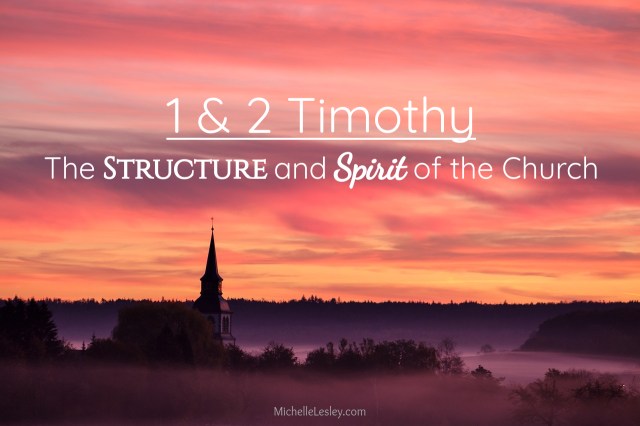
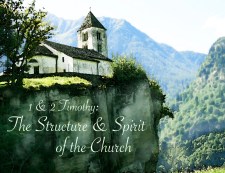
My thought is that the sunrise in this photo conveys the idea of the dawn of the church in history, when 1 & 2 Timothy were written. As the light of God’s instruction “rises” upon the church as they read through these epistles, it clears away the surrounding fog of uncertainty about God’s will and His ways for His people. Also, I really like the colors. :0)

If you’re new to using my Bible studies, just a few housekeeping items and helpful hints:

The studies I’ve written (you can find all of them at the Bible Studies tab at the top of this page) are like “training wheels”. They’re designed to teach you how to study the Bible for yourself and what kinds of questions to ask of the text so that, when you get the hang of it, you won’t have to depend on other people’s books and materials – even mine – any more. To that end, I do not provide answers for the study questions in the studies I’ve written.

My studies are meant to be extremely flexible and self-paced so that you can use them in the way that works best for you. You can do an entire lesson in one day or work on the questions over the course of the week (or longer). You do not need to feel obligated to answer all (or any) of the questions. If the Holy Spirit parks you on one question for several days, enjoy digging deep into that one aspect of the lesson. If He shows you something I haven’t written a question about that captures your attention, dive in and study it! Those are ways the Holy Spirit speaks to us through His Word. This is your time to commune with the Lord, not a school assignment or work project you are beholden to complete in a certain way by a certain deadline.

I will post a new lesson on the blog every Wednesday, so there is nothing to sign up for or commit to. Simply stop by the blog each week, or subscribe to the blog via e-mail to have the lessons delivered to your inbox.

With our last study (Imperishable Beauty) I “beta tested” a Facebook discussion group specific to that study. It was enthusiastically received, but after the first couple of weeks, there was virtually no participation. So with this study, I’ve decided not to put in the extra work of admin-ing a discussion group. You are welcome to form and admin your own discussion group if you like. I will also post the lessons on my own Facebook page each week, and anyone who would like to discuss the lesson can do so in the comments section of those posts.

I use hyperlinks liberallyThe Scriptures for each lesson will be linked either at the beginning of the lesson or in the lesson questions. Whenever you see a word in red, click on it, and it will take you to a Scripture, article, or other resource that will help as you study.

All of the studies I’ve written are suitable for groups or individuals. You are welcome to use them as a Sunday school or Bible study class curriculum (for free) with proper attribution.

You are also welcome to print out any of my Bible studies (or any article I’ve written) for free and make as many copies as you’d like, again, with proper attribution. I’ve explained more about that in this article (3rd section).


Introduction to 1 Timothy

Before we begin studying a book of the Bible, it’s very important that we understand some things about that book. We need to know…

Who the author was and anything we might be able to find out about him or his background.

Who the audience of the book is: Jews or Gentiles? Old Testament Israelites or New Testament Christians? This will help us understand the author’s purpose and approach to what he’s writing.

What kind of biblical literature we’re looking at. We approach books of history differently than books of wisdom, books of wisdom differently than books of prophecy, etc.

What the purpose of the book is. Was it written to encourage? Rebuke? Warn?

What the historical backdrop is for the book. Is Israel at war? At peace? In exile? Under a bad king? Good king? Understanding the historical events surrounding a piece of writing help us understand what was written and why it was written.

When the book was written. Where does the book fall on the timeline of biblical history? This is especially important for Old Testament books which are not always arranged in chronological order.

So this week, before we start studying the actual text of the book of 1 Timothy, we need to lay the foundation to understanding the book by finding the answers to these questions.

Read the following overviews of the book of 1 Timothy, taking notes on anything that might aid your understanding of the book, and answer the questions below:

Bible Introductions: 1 Timothy at Grace to You

Overview of the Book of 1 Timothy at Reformed Answers

Book of 1 Timothy at Got Questions

1. Who wrote the book of 1 Timothy? How do we know this?

2. Approximately when was 1 Timothy written? What is the geographical setting of the book of 1 Timothy? Here are some maps (scroll down to “1 Timothy”) that may be helpful as you study through the book of 1 Timothy.

3. Who is the original, intended audience of the book of 1 Timothy? Describe the historical setting (historic events, politics, sociology of the time, etc.) of 1 Timothy.

4. Which genre of biblical literature is the book of 1 Timothy: law, history, wisdom, poetry, narrative, epistles, or prophecy/apocalyptic? What does this tell us about the approach we should take when studying this book versus our approach to books of other genres?

5. What is the theme or purpose of the book of 1 Timothy?

6. What are some of the major topics of instruction in the book of 1 Timothy? How do these topics relate to the theme of 1 Timothy?

7. What are some ways 1 Timothy points to and connects to Jesus?

8. What else did you learn about 1 Timothy or the setting of this book that might help you understand the text of the book better?

Take some time in prayer this week to begin preparing your heart for this study. What are some ways your pastor and church could be encouraged by the instruction of 1 Timothy? What might you learn that could make you a healthier church member? Do you have any areas that need improvement when it comes to the way you serve God or your brothers and sisters in Christ? Ask God to grow you in those areas as we study together 1 & 2 Timothy: The Structure and Spirit of the Church.

Uncategorized

The Word on Wednesdays


I’m baaaaaack! :0) Lord willing and the creek don’t rise (and all the laundry gets done), this will be our last “re-run” Bible study for a while. Next week, I’ll announce our new regular weekly study and title pic contest. So if you were wanting to get finished up with anything you’re working on, you’ve still got a couple of weeks before lesson 1 of the new study.

Also, for those who have messaged me to let me know about all the broken links on previous Bible studies, thank you for reminding me! The Bible studies are the first things I’m going to fix links on. (Until I’m able to get to all of them, if you click on a broken link, just go up to your browser bar and delete the word “books” from the site address (so that it says MichelleLesley.com instead of MichelleLesleyBooks.com) it’ll take you right where you need to go.) So far, I’ve fixed The Women of Genesis, and everything in Imperishable Beauty looks like it’s working. I’ll get the others taken care of as soon as I can.

Here’s today’s “re-run”:

Wednesday’s Word

Wednesday is Bible study day here on the blog. In my Wednesday’s Word study, you’ll find miscellaneous, one lesson Bible studies from each book of the Bible. One chapter of Scripture followed by study questions. This sampler series demonstrates that there’s nothing to be afraid of when approaching those “lesser known” books and that every book of the Bible is valuable and worth studying.

Wednesday’s Word ~ 2 John

2 john 10 11

The elder to the elect lady and her children, whom I love in truth, and not only I, but also all who know the truth, because of the truth that abides in us and will be with us forever:

Grace, mercy, and peace will be with us, from God the Father and from Jesus Christ the Father’s Son, in truth and love. Keep reading…

Uncategorized

The Word on Wednesdays


As you read this, I’m winging my way across the country to speak at a conference, so our next regular weekly Bible study won’t start until after I return home and get my household back in order (I’m thinking probably mid-April-ish, but don’t quote me on that.). :0) I have a study in mind, but will keep thinking and praying about it for a few more weeks.

So anyway, for the next few Wednesdays, you’ve got some options:

📖 You can finish up Imperishable Beauty or any of my other studies you’re currently working on.

📖 You can choose a book(s) of the Bible to work through on your own.

📖 You can choose one of my studies to work through at the Bible Studies tab at the top of this page. (I would choose one of the shorter ones, like Colossians or Ruth rather than one of the longer ones if you’re only trying to fill the space between now and the beginning of our next study.)

📖 You can follow along with the sampling of “re-run” lessons I’ll be posting here on the blog each week.

Here’s today’s “re-run”:

sunday school

Sunday School: Chronological Study Lessons

During 2014, I led my ladies’ Sunday School class in a chronological read-through of the entire Bible. Each week I taught a lesson from that week’s reading and posted it here on the blog.

If you’re using the chronological one year Bible reading plan this year, here’s the lesson that roughly corresponds with this week’s reading. (And even if you’re not, I hope you’ll enjoy this lesson anyway.)

Through the Bible in 2014 ~ Week 13 ~ Mar. 23-29
Joshua 1-24
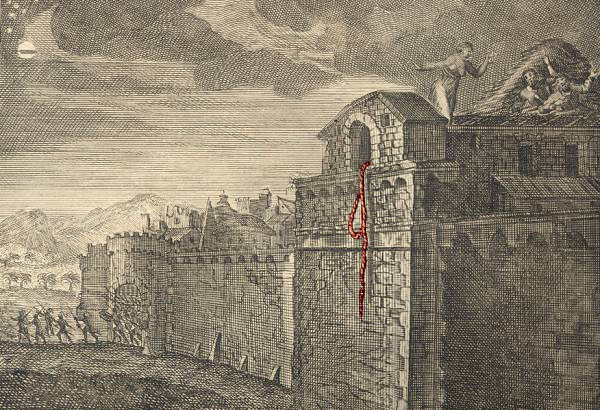
Rahab: From Floozy to Faithfulrahab-scarlet-thread

By faith Rahab the prostitute did not perish with those who were disobedient,
because she had given a friendly welcome to the spies.
Hebrews 11:31


Background- Joshua 1
Joshua 1 sets the stage for the story of Rahab and the spies. Moses had recently died, and God “promoted” Joshua to take his place. It was finally time for the Israelites to enter and take possession of the Promised Land. As God “installed” Joshua into his new position, He reminded him… Continue reading.

Uncategorized

The Word on Wednesdays


For the next several weeks, I’ll be making preparations to speak at a conference, so our next regular weekly Bible study won’t start until after I return home and get my household back in order (I’m thinking probably mid-April-ish, but don’t quote me on that.). :0) I have a study in mind, but will keep thinking and praying about it for a few more weeks.

So anyway, for the next several Wednesdays, you’ve got some options:

📖 You can finish up Imperishable Beauty or any of my other studies you’re currently working on.

📖 You can choose a book(s) of the Bible to work through on your own.

📖 You can choose one of my studies to work through at the Bible Studies tab at the top of this page. (I would choose one of the shorter ones, like Colossians or Ruth rather than one of the longer ones if you’re only trying to fill the space between now and the beginning of our next study.)

📖 You can follow along with the sampling of “re-run” lessons I’ll be posting here on the blog each week.

Here’s today’s “re-run”:

Wednesday’s Word

Wednesday is Bible study day here on the blog. In my Wednesday’s Word study, you’ll find miscellaneous, one lesson Bible studies from each book of the Bible. One chapter of Scripture followed by study questions. This sampler series demonstrates that there’s nothing to be afraid of when approaching those “lesser known” books and that every book of the Bible is valuable and worth studying.

Wednesday’s Word ~ Zechariah 7

zech 7 13

In the fourth year of King Darius, the word of the Lord came to Zechariah on the fourth day of the ninth month, which is Chislev. Now the people of Bethel had sent Sharezer and Regem-melech and their men to entreat the favor of the Lord,saying to the priests of the house of the Lord of hosts and the prophets, “Should I weep and abstain in the fifth month, as I have done for so many years?” Keep reading…