Sanctification, Sin

Throwback Thursday ~ The Garden of Weedin’

Originally published March 31, 2009

It’s that time again. Spring. Time to survey the damage winter did to the yard and get it back in shape. Sandwiched in between last week’s several days of rain and the multiple days of thunderstorms predicted for this week, were a few beautiful days that were just perfect for tackling the jungle that once was my back yard. Yikes. I could have lost a kid in all that grass.

Much to my dismay, when I got up close and personal with the overgrowth, I discovered that, once again, the army of weeds I spend every spring and summer fighting off had made significant advances into the yard. It also seemed to have secured the perimeter of my fencerow with a tall and nearly impregnable line of defense.

Heaving a sigh, I remembered what one gardener friend told me last year. The best way to fight off weeds is to get the grass really healthy and growing so it will choke out the weeds and reclaim the yard. Sounded reasonable to me. And familiar, too. Where had I heard something similar to that before? The idea tickled my brain as I hauled out the mower.

As I began shoving my trusty mower through that mess, it hit me. Weeds….choking something out. There was something about that in the Bible.

Ever notice how many of Jesus’ parables and illustrations include references to farming, plants, and other aspects of agriculture? The “Lord of the Harvest” gave us wheat and tares, fig trees, mustard seeds, vineyards, and of course, the parable of the sower scattering his seed.

Ah, that’s what it was. The parable of the sower. Remember him? He went out to seed his land, and the seed ended up finding its way not only to the good soil he had prepared, but also to some rocky soil, the roadside, and a patch of thorns (which the New Century Version translates as “weeds”):

Some other seed fell among thorny weeds, which grew and choked the good plants. Matthew 13:7 (NCV)

That’s exactly what was going on in my yard! The grass wasn’t yet strong enough to choke out all the weeds, the weeds were choking out my good crop of grass. They were also making my fencerow look awful, so I finished up the mowing, and, mentally assessing our temperamental edger, decided to clean off the fencerow by hand.

As I began yanking at those pesky plants, God reminded me that we all have weeds in our lives that need to be pulled up. So just what constitutes a “weed” in our spiritual lives? Well, Jesus was kind enough to explain that in Matthew 13:22:

And what is the seed that fell among the thorny weeds? That seed is like the person who hears the teaching but lets worries about this life and the temptation of wealth stop that teaching from growing. So the teaching does not produce fruit in that person’s life. (NCV)

Jesus compares the weeds to two things: “the worries about this life” and “the temptation of wealth”.

“The worries about this life” could cover just about anything. It could be a financial struggle, a wayward child, a difficult marriage, a hostile work environment, or even a painful past that we’re striving to put behind us. Any situation we deal with that looms so large, it blocks out our view of Christ and prevents us from trusting Him to handle it. Anything that takes our eyes off Him, tempts us to focus only on our circumstances, and derails the teaching God is trying to manifest in our lives.

“The temptation of wealth” could also cover a lot of areas in our lives. First Timothy 6:10 tells us that “the love of money is a root of all sorts of evil…”. Evil. In other words, sin.

“A root”. Hmmm…interesting.

Well, I was certainly dealing with plenty of roots. When it comes to weeds, it doesn’t do much good to simply pull the leaves off or snap the stem in half. For some reason, weeds– at least the ones in my yard –seem to take this as a challenge to grow back. You have to pull weeds up by the roots in order to get rid of them.

Likewise, if there is something in our lives which “stops [God’s] teachings from growing” or prevents God’s teachings from producing fruit in our lives (see Matthew 13:22 above) we need to have the Master Gardener root out the instigating problem rather than plucking at its leaves ourselves.

For example, if you’re struggling with being a workaholic, you can break off part of the stem of that problem by cutting back on work a few hours a week, but the root of the problem may be that you have made work an idol in place of God, that you don’t trust Him to provide for your needs, or that you are loving yourself and your work more than your family. If those root problems aren’t dealt with you will likely fail in your efforts to cut back on work, or something else, such as a hobby, may spring up to take the place of those hours you would have spent at work.

As I continued to work, I noticed that some weeds were very easy to pull up and some were quite difficult. The easiest to pull seemed to be the weeds that had taken root in the decaying leaf matter on top of the soil rather than in the soil itself. The difficult ones were the ones that had been growing for a long period of time. Some of their roots were over a foot long. These roots had made their way far from the visible plant and into another part of the yard, which meant they were affecting much more than just the immediate area around the plant itself.

And so it is with our spiritual weeds. The best time to deal with sin or turn a troubling situation over to God is early, before it has a chance to take root, because once it does, it’s going to be much harder to deal with and it’s going to begin to affect more and more areas of our lives.

Dealing with sin or difficult situations pre-emptively is even better. Flee temptation before you have a chance to give in to it. Determine to commit your works to the Lordย and acknowledge Him in all your ways, and you will avoid some of the heartbreaking circumstances that might otherwise come your way.

As I struggled with one particularly stubborn weed, I noticed that its roots were intertwined with those of a couple of other totally different weeds. As I pulled at the one I was working on, the others were coming up as well.

When God pulls up those really difficult weeds in our lives, we will often find that He is simultaneously uprooting other sins and situations that have become enmeshed with the primary one. Sometimes when this happens to me, I feels like God is “piling on” and wish He would just work on one thing at a time in my life!

By the time I reached the end of the fencerow, I was sweating, my back was killing me, and I had broken two nails, despite the gardening gloves I was wearing. Pulling weeds is not a day at Disney World. It’s tough work!

But as I stood back and surveyed the results of my efforts, I saw that the fencerow no longer looked trashy. It looked clean and neat. Something any gardener would be pleased with. And, something else had happened that I hadn’t even noticed until that moment. As the roots of those weeds came up, they naturally tilled the soil.

It was moist,

loose,

rich;

the perfect condition for good seed to be sown by the Master Gardener.

Women of Genesis Bible Study

The Women of Genesis: Lesson 29- Judah’s Wife and Tamar

Previous Lessons: 1, 2, 3, 4, 5, 6, 7, 8,ย 9, 10, 11, 12, 13, 14, 15, 16, 17, 18, 19, 20, 21, 22, 23, 24, 25, 26, 27, 28

๐Ÿ“–๐Ÿ“–๐Ÿ“–๐Ÿ“–๐Ÿ“–

Read Genesis 38

๐Ÿ“–๐Ÿ“–๐Ÿ“–๐Ÿ“–๐Ÿ“–


Questions to Consider

1. Who was Judah? (1) What do we know about him thus far? What do we know about his connection to Jesus?

2. What nationality was Judah’s wife (Shua’s daughter)? (2) Review previous lessons (links above) dealing with Abraham’s offspring taking Canaanite wives. What were some of the reasons it was problematic and undesirable for those in the Abrahamic Covenant to intermarry with the Canaanites?

3. What was Judah’s wife’s name? (2,12) How many sons did she have, and what were their names?

4. Who was Tamar, and what was her relationship to Er and to Judah? (6) What happened to Tamar’s first husband? (7)ย What was Onan’s relationship to Tamar? What did Judah instruct Onan to do after Er died? (8)

5. Verse 8 is the first instance we see in the Bible of levirate marriage. God later codified this practice into Israel’s law. What was the purpose of levirate marriage? How did it protect both the widow and the posterity of the family line? Put yourself in the sandals of an Old Testament woman involved in a levirate marriage situation. Describe some of the circumstances you might face, and the thoughts and emotions you might experience.

6. What happened with Tamar’s second husband? Explain verses 9-10 in your own words. What was Onan’s sin? Was it sexual sin or something else? (9) What does Onan’s sin tell us about his character as a man and as a husband?

7. Describe Tamar’s husbands and her experience with marriage thus far as she might describe it. Think back over Rachel’s, Leah’s, and Sarah’s desperation to have children as a reflection of the pressure that culture put on women to prove their worth and value through bearing sons. Could Tamar have been feeling that same sort of desperation, especially since she had gone through the “right channels” (levirate marriage) and had been cheated out of her legal recourse?

8. Explain in your own words the situation with Tamar marrying Shelah, Judah’s third, and only living son. (11, 14b, 26) Had Tamar followed Judah’s instructions? Had Judah kept his word to her? Briefly explain how Tamar had been let down by Er, Onan, and now Judah.

9. Read verses 13-26. What was Tamar’s plan? Was it premeditated? In what way(s) did Tamar sin in this situation? Did Tamar’s desperation and hopelessness over her situation and her mistreatment by Judah and his sons justify her sin?

10. Make a list of Judah’s sins against Tamar and against God, including any Scripture references you can recall of biblical principles he violated. Consider how Judah’s hypocrisy and judgment of Tamar in verses 24-26 is an example of the unbiblical judgment and hypocrisyย Matthew 7:1-5ย talks about. Describe how Judah could have treated Tamar in a godly way.

11. Did Judah’s sins against Tamar justify her own sin? If someone sins against you, is it OK with God if you act sinfully in response? How did Jesus act when He was sinned against by the Pharisees, Judas, and others? How can we follow His example, and why is it important for Christians to respond in a godly way to ungodly people and situations?

12. Compare and contrast Tamar’s mistreatment at the hands of men, and her response to the situation, with the current clamor in evangelicalism to respond to misogyny (both real and perceived) in the church. How does Tamar’s story teach us the importance of responding to misogyny and abuse in a godly and biblical way rather than taking matters into our own hands and doing what seems right in our own eyes?


Homework

Tamar was let down by an evil first husband, a second husband who didn’t want the responsibility of her and only wanted to use her for sex, and a father in law who broke his promise to her. Desperate for offspring, Tamar took matters into her own hands rather than trusting and obeying God. Compare the way Tamar took matters into her own hands with the way Sarah took matters into her own hands when she couldn’t conceive. What were the outcomes? Describe a time when you were in a difficult situation and were tempted to handle things your own way rather than trusting and obeying God. Explain why the clichรฉ “Desperate times call for desperate measures,” would be better changed to “Desperate times call for prayer, obedience, and trusting God.”


Suggested Memory Verse

Then Judah identified them and said, โ€œShe is more righteous than I, since I did not give her to my son Shelah.โ€ And he did not know her again.
Genesis 38:26

Favorite Finds

Favorite Finds ~ July 10, 2018

Here are a few of my favorite recent online findsโ€ฆ

Want toย memorize Scripture, but you need a little help or don’t know where to start? Check out the Scripture Typer Bible Memory System. Use verses you’ve already decided you want to memorize, or get some suggestions from Scripture Typer. Type in and practice your verses until you have them memorized, and Scripture Typer will keep everything nice, neat, and organized for you. Scripture Typer is available online, or in an app for Android, Kindle, iPad, or iPhone.

“Among English Baptists of the eighteenth-century, Anne Dutton was known as ‘the most theologically capable and influential Baptist woman of her day’.โ€ I had never heard of Anne before, but I found this little piece about her,ย Lessons from the Life and Ministry of Anne Dutton by Joshua Millsย over at Servants of Grace to be charming and encouraging. Take a moment to read about one of our foremothers in the faith.

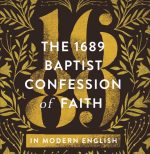
Being a “1689er” myself, I just loved this modern English version of the Second London Baptist Confession of Faith, put together byย Dr. Stan Reeves ofย Founders Ministries. Dr. Reeves has stayed true to the original LBC as much as possible, only clarifying and updating archaic verbiage when necessary. (You can compare with the original 1689 version here.) Giveย The 1689 Baptist Confession of Faith in Modern Englishย a read. You might even want to study the Scriptures it references during your Bible study time.

For regular readers, it’s no secret I’m a big fan of Josh Buice and his blog, Delivered by Grace. A few months ago, Josh started adding quizzes to his stellar lineup of blog articles, and I hope he keeps them coming. Quizzes can be a fun and helpful way to get us thinking through various issues and pointing out areas in which we need to study more. Take Josh’s most recent quiz,ย Biblical Peopleโ€”How Much Do You Know?, and find out how much you know about the people of the Bible. (And click here to check out any previous quizzes you might have missed!)

Mailbag, Marriage, Sanctification

The Mailbag: Can I share the gospel with my unsaved husband?

I was brought up to believe that women win their unsaved spouses by actions, not words, because of dissension in the the home and that sort of thing. Would love your thoughts.

One of the most difficult and stressful situations a Christian woman can walk through is being married to someone who is not saved. Sometimes this happens because husband and wife are both unsaved when they get married and the wife gets saved later. Sometimes it happens because the wife (and sometimes the husband, too) think the husband is saved and it later becomes obvious that he is a false convert. And sometimes what happens is that a spiritually immature Christian woman goes into marriage knowing her husband isnโ€™t saved, and she either doesnโ€™t care or she thinks sheโ€™ll change him right away.

Single ladies, please take heed and take this to heart: know your man well, spiritually, before you get married. While itโ€™s impossible to know with 100% certainty whether or not another person is saved, do your best. Make sure this is a man who can be the spiritual leader of your home – a man who will make wise and godly decisions, who intends to parent biblically, who is able and eager to lead your family in Bible study and prayer, and who is committed to faithfully attending and serving the local church. Many women who went into marriage thinking these things would somehow take care of themselves can tell you from sad experience that the issues you and your husband have before marriage will only get worse after marriage.

Thatโ€™s the best way to answer the readerโ€™s question: prophylaxis. Prevent the problem before it happens.

That said, God is the One who decides when you get saved, and if you and your husband werenโ€™t saved when you got married, but you are now, praise God for that! What a wonderful thing that He saved you and that He has placed a 24/7 witness to the gospel in your husbandโ€™s life!

If you ever feel alone in having an unsaved husband, take comfort and think about all the ladies in the first century when Christianity was brand new. Many, if not most, Christian women were in your situation. They worried and agonized over their husbandsโ€™ salvation just like you do. In fact, it was such a common situation in the early church that Paul and Peter each dedicated part of their writings to instructing and encouraging wives about walking out their faith in a marriage to an unsaved husband:

Likewise, wives, be subject to your own husbands, so that even if some do not obey the word, they may be won without a word by the conduct of their wives, when they see your respectful and pure conduct. Do not let your adorning be externalโ€”the braiding of hair and the putting on of gold jewelry, or the clothing you wearโ€” but let your adorning be the hidden person of the heart with the imperishable beauty of a gentle and quiet spirit, which in God’s sight is very precious. For this is how the holy women who hoped in God used to adorn themselves, by submitting to their own husbands, as Sarah obeyed Abraham, calling him lord. And you are her children, if you do good and do not fear anything that is frightening. 1 Peter 3:1-6


If any woman has a husband who is an unbeliever, and he consents to live with her, she should not divorce him. For the unbelieving husband is made holy because of his wife, and the unbelieving wife is made holy because of her husband. Otherwise your children would be unclean, but as it is, they are holy…For how do you know, wife, whether you will save your husband? Or how do you know, husband, whether you will save your wife? 1 Corinthians 7:13-14,16

I believe the readerโ€™s question focuses in on 1 Peter 3:1:

Likewise, wives, be subject to your own husbands, so that even if some do not obey the word, they may be won without a word by the conduct of their wives, when they see your respectful and pure conduct.

If we isolate this verse from its immediate context of surrounding verses, the context of the book of 1 Peter, and the context of the New Testament, it seems to say that a wife can win her husband to Christ simply by her Christlike behavior with no need to ever open her mouth and share the gospel with him. However, if we take a step back and even just think about it logically for a minute, we know that canโ€™t be what this verse is saying.

Think about how you came to saving faith. Did you get saved exclusively by watching someone act humbly, patiently, lovingly, etc.? Or did someone explain to you that you were a sinner in need of repentance, that Christ paid the penalty for your sin on the cross, that He rose again on the third day, and that if you placed your faith in Him, He would cleanse and forgive you and give you eternal life? Those are things you canโ€™t get just by watching someone behave kindly and lovingly. They have to be explained by a friend, a sermon, a tract, the Bible, or some other use of words. (This is whatโ€™s problematic with the old clichรฉ โ€œPreach the gospel at all times. Use words if necessary.โ€ Words are always necessary for explaining the gospel.)

Next, letโ€™s think about the context of the New Testament at large as well as 1 Peter. Can you think of any instances in which Christians are told to share the gospel with anybody simply by modeling good behavior? No. The iconic evangelism passage, the Great Commission, tells us to โ€œmake disciples…teaching them to observe all that I have commanded you.โ€ You have to talk to people, and maybe even use books or other written materials – with words – in order to teach and disciple. The theme of 1 Peter itself is largely, โ€œWalk in holiness, a) because itโ€™s the godly thing to do, and b) because it could open a door for you to share the gospel with others.โ€ Peter never suggests that godly behavior is the stopping point of evangelism, only the starting point.

Another great example is the account of Philip and the Ethiopian eunuch. The Ethiopian eunuch was actually reading a gospel passage from the Bible, when Philip arrived on the scene. โ€œDo you understand what youโ€™re reading?โ€ Philip asked. โ€œHow can I unless someone explains it to me?โ€ he answered. At that point, Philip did not put on a little skit of good works for the Ethiopian to watch, he climbed into the chariot beside him and explained the gospel from Scripture.

The 1 Corinthians 7 passage adds clarity as well, indicating that God has essentially placed a saved wife and mother in her family to be a missionary to her husband and children.

Now letโ€™s think about this verse in the context of 1 Peter 3:1-6. If you look at those six verses as a set, what is the main idea of the passage? Itโ€™s not witnessing, itโ€™s being winsome. Through Peterโ€™s pen, the Holy Spirit is helping women to see that godly behavior sets a gorgeous table from which the main dish of the gospel can be appetizingly served. Donโ€™t be confused – itโ€™s not about dressing like a supermodel dripping with jewels; thatโ€™s not whatโ€™s going to have the most profound impact on a husbandโ€™s heart – itโ€™s about being beautiful from the inside out. Your character, your demeanor, your submission and self-sacrifice, โ€œa gentle and quiet spirit.โ€ Thatโ€™s the focus of this passage – laying the foundation – so that when an opening presents itself to share Christ with your husband, the gospel is adorned with your grace and godliness instead of your behavior and attitude being an impediment to his receiving the good news.

The primary characteristic of having a โ€œgentle and quiet spiritโ€ is trusting God. And that plays into this passage too, because the scariest and weightiest thing youโ€™re going to have to trust God with is your husbandโ€™s salvation. God has to save your husband in His good time just like He saved you in His good time. You cannot convince, lecture, or nag him into the kingdom of God, even though it will be tempting to try because you want it so badly.

Thatโ€™s another application of this passage that can be very comforting and helpful. Maybe when you first got saved, you were so eager for your husband to know Christ that you harped at him constantly about it. You overwhelmed him with the gospel to the point that he said, โ€œPlease stop talking to me about that.โ€ This passage in 1 Peter reassures you that itโ€™s OK to back off. Youโ€™ve shared the gospel with your husband. Heโ€™s heard it. Until or unless a moment comes when you know beyond a shadow of a doubt that the Holy Spirit is intensely working on your husbandโ€™s heart, heโ€™s โ€œripe for the picking,โ€ and he needs you to pray with him or explain the gospel again, your job is over. Itโ€™s the Holy Spiritโ€™s turn. Stand aside and donโ€™t get in the way of the work Heโ€™s doing through the gospel seed youโ€™ve planted, your prayers for your husband, and your godly behavior.

God can save your husband even if youโ€™ve messed up and said the wrong thing. God can save your husband even if you donโ€™t say that โ€œone more thingโ€ you think will push him over the edge of salvation. Yes, share the gospel with your husband, but realize that God does not place the burden of saving your husband on your shoulders. Only Christ is strong enough to bear that burden. Rest in that, trust Him, and walk obediently. You are not responsible for saving your husband. God is.

“But what about the Bible’s prohibition against women teaching men?” some readers might be wondering. “Wouldn’t that preclude women from sharing the gospel with their unsaved husbands? Is it OK for Christian women to share something biblical or theological they’ve learned with their Christian husbands?”

This question refers to the prohibition in 1 Timothy 2:11-3:7 against women pastoring, preaching, instructing men in the Scriptures, and holding authority over men in the gathered body of the church. A private discussion at home between you and your husband is not the gathering of the church, so this passage does not apply. I’ve answered this question in more detail in this article (second question) and this article (second question).


If you have a question about: a Bible passage, an aspect of theology, a current issue in Christianity, or how to biblically handle a family, life, or church situation, comment below (Iโ€™ll hold all questions in queue {unpublished} for a future edition of The Mailbag) or send me an e-mail or private message. If your question is chosen for publication, your anonymity will be protected.

Vlogs

Vlogs, Volume 2

In case you’ve missed them, here are my latest vlogs.

If you follow me on Facebook or Twitter, you might have already caught all but the first one, which is new. It’s to let you know what’s happening on the blog this week since I’m taking a few days off and the blog schedule will be slightly different. If you’d like to subscribe to my YouTube channel, you’ll find it here. Or click here to view vlogs I’ve previously posted on the blog. Enjoy!