Christmas, Church

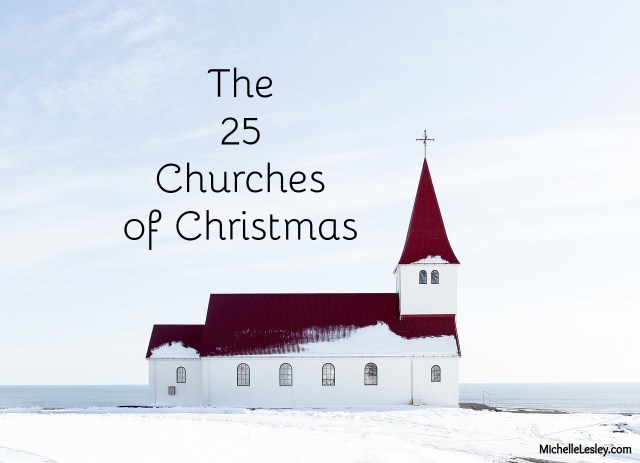
The 25 Churches of Christmas

This Christmas season, I’d like to offer you an opportunity to help me give our brothers and sisters in Christ a gift – a gift that won’t cost you a dime.

If you’ve followed me for a minute, you know I’m passionate about helping people find doctrinally sound churches to join. And if you’ve ever perused my list ofย Reader Recommended Churches, you’ve probably noticed that we have tons of listings for churches in some states, only one or two for others, and hardly any for countries outside the U.S.

What I’m hoping to do is add 25 doctrinally sound churches to the list in the states and countries that are lacking. Of course anyone is welcome to recommend a church anywhere, but in order for it to “count” toward The 25 Churches of Christmas, it needs to be a recommendation for a church:

โ›ช๏ธ in one of our U.S. states that has two or fewer recommendations (currently: Alaska, Connecticut, Delaware, Massachusetts, New Hampshire, North Dakota, Rhode Island, West Virginia)

OR

โ›ช๏ธ a church in any country besides the U.S.

I’ve made the list, you check it twice. If recommendations are naught, be nice and make one! :0) If you have a personal connection to a solid church that’s not on the list, comment below with:

๐ŸŽ„The full, correctly spelled name of the church
๐ŸŽ„The city and state, or city and country it’s located in
๐ŸŽ„The church’s website (please, please, please include this – it saves me a lot of time).

Think we can add 25 churches by Christmas Day? Let’s give it a shot and make it a merry Christmas for our brothers and sisters who are searching for a new church! Thanks for your help! :0)

Christmas, Mailbag

The Mailbag: My kid knows the truth about Santa. What if he tells his friends who don’t?

We have raised our five year old to know that Santa Claus isn’t real. Now that he’s getting old enough to have conversations with his little friends, how do we explain to him what to say to them when they talk about believing in Santa? I don’t want him to crush their dreams but I also don’t want to teach him to perpetuate the lie for his friends.

This is a great question, and one my husband and I also had to address with our own children, since we raised them to know that Santa Claus isn’t real.

Before I tackle your question, I’d like to address Christian parents who tell their children Santa Claus is real, that he is the one who brings their presents, etc.:

I’m sure you have the best of intentions and only want to make Christmas fun for your children, but when you tell them these things about Santa Claus, you are lying.

Santa Claus isnโ€™t real. If you tell your children he is, or that he is the one who brings their presents, or that he knows whether theyโ€™ve been naughty or nice, youโ€™re lying. The Bible says that lying is a sin, period. Thereโ€™s no exception for jolly old elves who pass out toys (or for tooth fairies or Easter bunnies, either, for that matter). And not only is lying a sin, it is extraordinarily hypocritical to lie to your children about Santa Claus and then turn around later and punish them when they lie about something. Lying to your children about Santa Claus teaches them that itโ€™s OK to lie (i.e. sin) when you want to or when it would be to your advantage.
Excerpted from: The Mailbag: What should we tell our kids (and grandkids) about Santa Claus?

And this reader has raised another ripple effect of your sin of lying. You’ve now put your brothers and sisters in Christ in the difficult position of figuring out how not to blow your cover when their child (who knows the truth) interacts with yours. Do they teach their child to take part in your lie, or do they risk their child telling the truth, disappointing your child and possibly angering you? And think about the pressure on a five year old child to try to keep something like that a secret, knowing someone will be disappointed if he doesn’t. You’ve created a no-win situation for people you are supposed to self-sacrificially love, encourage, and edify.

Our sin always negatively affects others.

We did our best to thread the needle by teaching our children to stay out of it. Every year, we reminded our kids – before family gatherings, play dates, etc. – that some kids believe Santa is real. If a friend inquired, “What did you ask Santa for this year?”, our kids could reply, “I asked my parents for a bike.” If any of their friends asked them if Santa was real, we told our kids to tell their friends to ask their parents.

You might want to give something like that a try, or maybe you can come up with a different solution that’s helpful to the situation. Don’t fret about it, though. Most kids learn the truth about Santa between ages 5 to 10, and most of them learn it from their friends. If you have a friend who freaks out at you because your five year old told the truth about something, it could be time to reevaluate that friendship, or at least the level of intimacy of that friendship. (And if it’s a family member, well…this, too, shall pass.)

However you teach your child to handle the situation, be sure you’re not conveying the idea that we cover up the sin (the lie that Santa is real) of others. We tried to go at it from the angle of our kids telling the other kids, “That’s a topic that should stay between you and your parents.” It’s pretty much the same way we later handled the situation of what to do if your friends ask you where babies come from (“You need to ask your parents about that.”)

Also keep in mind that, even though it may feel like you’re the Grinch if your child spills the beans about Santa, you’re not, despite the fact that others may treat you that way. If you’re humbly doing what is right in God’s eyes and the other person is doing what is wrong, you’re not the problem in that situation.


If you have a question about: a Bible passage, an aspect of theology, a current issue in Christianity, or how to biblically handle a family, life, or church situation, comment below (Iโ€™ll hold all questions in queue {unpublished} for a future edition of The Mailbag) or send me an e-mail or private message. If your question is chosen for publication, your anonymity will be protected.


Biblical Womanhood Bible Study

Imperishable Beauty: Lesson 8- Beautiful Biblical Obedience

Previous Lessons: 1, 2, 3, 4, 5, 6, 7

Read These Selected Scriptures

In lesson 7, we examined the concepts of loving God’s Word and being good students of God’s Word as important parts of biblical womanhood. But being a godly woman doesn’t stop there. We also have to obey God’s Word.

Questions to Consider

1. Briefly review lesson 7 and consider the significance to biblical womanhood of knowing and loving God’s Word. How does knowing and loving God’s Word lead to and impact obeying God’s Word? Is it necessary to know and loveย allย parts of God’s Word before obeyingย any part of God’s Word? Why or why not?

2. Study the Luke, Philippians, and Hebrews passages. Who is our ultimate example of obedience to God? To what extent did Jesus obey God (until it was inconvenient, costly, etc.)? How would you describe Jesus’ obedience to God and His written Word during His life on earth? In what ways does Jesus’ obedience set an example for your obedience to God’s Word? To what extent do you obey God? Has there ever been an instance in your life in which you disobeyed God because obeying Him would have been too costly? Considering Jesus’ example, is it ever OK with God for you to disobey Him because it’s too difficult?

3. Examine the James passage. Make a two-column chart displaying the differences between hearers of the Word and doers of the Word. What does James mean when he says that mere hearers of the Word deceive themselves? How does being a doer of the Word grow your understanding of the Word and your trust in God? What is the “perfect…law of liberty”? How do we “persevere” in that law, and why/how does persevering in that law bring blessing?

4. According to the 1 John 2&5 passages, loving obedience to God’s commands indicates two things about Christians: that we ____ God (2:3) and that we ____ God (5:3). In what ways does obeying God’s commands indicate that we truly know God (i.e. we’re saved)? In what ways does obeying God’s commands indicate that we love God? Why are God’s commands not burdensome (5:3) for the Christian?

5. Contrast the 1 John 2&5 passages with the chapter 3 passage. Is John saying that committing a single sin means you aren’t saved, or is he comparing a generally obedient lifestyle with a generally sinful lifestyle as an indicator of a saved person vs. a lost person?

6. Read the story of Saul’s disobedience to God’s Word in 1 Samuel 15. What did God tell Saul to do? (2-3) How did Saul disobey God? (8-9) When Samuel came to confront Saul in his disobedience, how did Saul respond? (13,20) Why, in Saul’s mind, did he think, or try to justify, that He had obeyed God? (15,21) What was the consequence to Saul for disobeying God’s clear instruction? (23,26,28)

What is/are the key verse(s) in this chapter? Explain how verses 22-23a summarize the main point God is teaching us by including this story in the Bible.ย Is “doing great things for God” that you’ve dreamed up ever an excuse for disobeying His clear written Word?

Describe the blame-shifting Saul engaged in (15,21,24), and compare/contrast Saul’s use of the personal pronoun “I” (13,20) in connection with obedience with “they/the people” (15,21,24) in connection with disobedience. Considering that disobeying the king’s orders was punishable by death, describe how flimsy this excuse was. Does God allow us to blame others for our disobedience?

7. Why does God require that we obey Him? Explain how our obedience a) glorifies God, b) is a testimony of the gospel to the lost, and c) is best for us, personally. Why is obeying God an important component of biblical womanhood?


Homework

Jesus was our perfect example of obedience, but we can’t and shouldn’t obey every part of God’s Word He obeyed. Even though we read about Jesus in the New Testament, He lived His entire earthly life as an Old Testament Jew. (This is because, during His earthly life, He had not yet instituted the new covenant of grace {by His death, burial, and resurrection} that Christians are under today.) In order to live a perfect life of obedience as Israel’s Messiah, Jesus had to obey the civil, ceremonial, and moral laws of the Old Testament. Do you understand the differences between these types of biblical law and why Christians are no longer bound by the civil and ceremonial types? Give this article a read and explain why, for example, Christians may wear garments of mixed fabrics but may not commit adultery.


Suggested Memory Verse

But beย doers of the word, and not hearers only, deceiving yourselves.ย 
James 1:22

Favorite Finds

Favorite Finds ~ November 13, 2018

Here are a few of my favorite recent online findsโ€ฆ

I’m so thankful for this new ministry from Stephen Newell,ย The Baptist Deafcast. The Deaf community in the U.S. and abroad is one of the largest unreached people groups in the world. Stephen has such a heart for carrying the gospel and discipleship to Deaf people, and his passion is inspiring. An extremely helpful resource if you have a Deaf ministry at your church, or Christian loved ones who are Deaf. Stephen voices as well as signs, so hearing people can benefit from each episode as well. Here’s episode 1:


“What do Americans think about God, Jesus Christ, sin, and eternity? Ligonier Ministriesโ€™ State of Theology survey helps uncover the answers.” You’ve probably heard some of the abysmal findings from Ligonier’s 2018ย survey. Why not use it as a springboard for teaching your Sunday School or Bible study class good theology?


If you grew up in the era when purity culture and courtship was en vogue in evangelicalism, you probably read, or were influenced by,ย I Kissed Dating Goodbye. Recently, the book’s author, Joshua Harris, released a statement describing how he has grown in his theology since writing the book, and how that growth has changed his views, leading to the decision to discontinue publishing it. This really resonated with me since this is the exact same reason I have not re-released my own book. It’s brief and worth a read even if you aren’t familiar with Josh or his book.


“Is Christianity Christ + the American dream? American Gospel examines how the prosperity gospel (the Word of Faith movement) has distorted the gospel message, and how this theology is being exported abroad.” If you haven’t seen the documentary movieย American Gospel: Christ Aloneย yet, rent or buy it and watch it, like…yesterday. It is excellent.


Enjoy the latest antics of Lutheran Satire in thisย just for funย video. It’s satire. It’s not really Clint Eastwood. It pokes fun. It’s made by Lutherans. If you’re easily offended by fun, satire, Clint Eastwood, Clint Eastwood impersonators, or Lutherans, please don’t watch this. Otherwise, sit back and have a laugh!


Announcement

Ladies, set your attitude to gratitude!

Thanksgiving is my favorite holiday, so for the rest of this week and all of next week, it’s Thanksgiving-palooza on the blog. If you’re participating in our Imperishable Beauty study, you’ve got two weeks to catch up on your lessons. And, if you’re a Black Friday shopper, stop here before you head out to the mall. I’ll have a great list of Christian-owned online businesses you might want to check out – and throw some brotherly love to – first!

Bible Study, Mailbag

The Mailbag: “We need to stop relying on canned studies,” doesn’t mean, “We need to rely on doctrinally sound canned studies.”.

ย In my recent article,ย 4 Ways Weโ€™re Getting Womenโ€™s Discipleship Wrong, and How We Can Get it Right!, one of the points I mentioned is that we’ve equated women’s discipleship with purchasing a celebrity Bible teacher’s DVD/workbook package and parking women in front of a TV instead of training older women in the local church to teach younger women straight from the Bible.

The idea that we have to use pre-fab studies instead of teaching straight from the Bible is so deeply embedded in our evangelical DNA that nearly every time I write an article or social media post saying we need to kick this habit and get back to straight Bible teaching, what some readers seem to hear is that we need to use doctrinally sound pre-fab studies. (And they proceed to recommend materials by the handful of doctrinally sound women authors who are out there.)

That’s not what I’m saying. I know there are (a few) doctrinally sound pre-fab studies out there. I’m saying we need to totally revamp the way we do women’s Bible study and detox ourselves from our addiction to studies written by authors outside of your local church, who don’t know the women of your church, and who aren’t there for the women of your church – even if those authors are doctrinally sound.

A variation of this question came up again (from a very kind sister who genuinely cares about the ladies in her church and the teaching they receive) in response to the aforementioned article. I share it here, along with my response, to a) help continue to hammer on the idea that we do not have to use canned studies, there’s another, better way, and b) to give you a few ideas of how to stop being so dependent on canned studies in your own church.

I have found some good DVDโ€™s that have been a real encouragement and have fostered true growth in our women. [List of doctrinally sound DVD studies.] While direct teaching is wonderful sometimes the women who teach in our church find themselves in limiting life circumstances…I would love to hear of some DVDโ€™s that youโ€™d recommend, not as a daycare/babysitter for women, but that contain good teaching for times when we want to be in the Word but cannot take the time to adequately prepare.

Iโ€™m glad there have been some doctrinally sound DVDs youโ€™ve been encouraged by, and, just to clarify, Iโ€™m not saying every DVD on the market features a false teacher (but the vast majority of them do).

Iโ€™m not trying to sound harsh, but I think you might have missed the point of section 3 [of the article]. The whole point is that we need to stop relying on pre-fab studies and teach/study straight from the Bible, and youโ€™ve responded by asking me which DVDs I recommend. I donโ€™t. I recommend teaching/studying straight from the Bible. (Iโ€™ve explained more here, if it would be of interest.) Your question kind of proves my point about how deeply ingrained the โ€œcannedโ€ Bible study mindset runs. Itโ€™s not a question of whether or not there are doctrinally sound DVDs on the market, the issue is that we need to study the Bible itself, and we need teachers in the local church who are trained to teach straight from the Bible.

โ€ฆgood teaching for times when we want to be in the Word but cannot take the time to adequately prepare.

Iโ€™m not sure whom youโ€™re referring to regarding not having time to prepare. If youโ€™re talking about a teacher, she should step down if she doesnโ€™t have time to adequately prepare. Thatโ€™s part of being a teacher (I address that at length in the first article linked below section 3). If she canโ€™t commit to preparing, she shouldnโ€™t be teaching.

If youโ€™re talking about students in a Bible study class- if they have time to watch a DVD, they could spend that same time period reading and discussing a passage out of the Bible.

Again, I donโ€™t mean to sound unkind or anything like that, and I do appreciate your question, but we really need to get away from the pre-packaged studies and simply pick up the Bible itself and study it.

Thanks for your response. I guess I didnโ€™t clarify that I was wondering if there were studies that youโ€™d recommend during times when the teachers we have donโ€™t have time to properly develop a lesson. Your post just spurred that question in my mind though I know that wasnโ€™t your intent. It takes me an average of six hours to prepare to teach a lesson and if Iโ€™m in a temporary place of not having time to adequately study for a couple of months we like to continue learning even if it is just from a sound teacher via DVD. Being from a smaller church in a depressed area where women are expected to work, it can be difficult to always have an available teacher. But the women do minister to each other in a word based way.

I definitely understand that womenโ€™s ministry is not done biblically in many cases. Your posts contain lots of good info. Thanks for what you do! 

Thanks for understanding. Here are a few things Iโ€™d recommend instead of falling back on a DVD.

1. Get one or two more women trained to teach, and have a rotation of teachers. That takes the burden off of one person and is also helpful if you get sick, go out of town, have an emergency, etc. It would also give each teacher a longer time period between lessons she has to teach, so she would have more time to prepare. It might not be the easiest thing in the world to get that in place, but prioritizing Christ and His ways rarely is. He never promised us easy, but He did promise to help us. Ask for His help and have your class pray about the situation, too.

2. If thereโ€™s some sort of out of the ordinary, rare emergency that has kept you from preparing, simply go in to class, read the passage together, and discuss it verse by verse.

3. If itโ€™s been impossible to prepare, turn that class period into a prayer meeting. Frankly, it would be beneficial as we need far more small group prayer meetings in the church. You might even want to purposely schedule your class that way, say, lessons for three weeks, prayer meeting on the fourth week, or something like that.

4. Make use of my studies at the Bible Studies tab at the top of this page. If you need a โ€œone and doneโ€ type of lesson in a pinch, look under โ€œWednesdayโ€™s Wordโ€ toward the bottom of the page. Read the passage with the class and use the questions for discussion. All of my studies are free to download, print out, and distribute.

These are the kinds of things teachers have done for centuries until DVD players were invented. Thereโ€™s really no reason to ever have to fall back on a DVD. Like I said, if you can watch a DVD, you can read a passage of Scripture and discuss it.

Additional Resources

The Mailbag: Can you recommend a good Bible study for women/teens/kids?

McBible Study and the Famine of God’s Word

Bible Study

Bible Studies


If you have a question about: a Bible passage, an aspect of theology, a current issue in Christianity, or how to biblically handle a family, life, or church situation, comment below (Iโ€™ll hold all questions in queue {unpublished} for a future edition of The Mailbag) or send me an e-mail or private message. If your question is chosen for publication, your anonymity will be protected.