Gospel, Homosexuality, Salvation, Sin, Throwback Thursday

Throwback Thursday ~ Cancer: A Love Story

Originally published April 7, 2013cancer love story

Cancer.

The dreadfulness of the word hung heavy in the air between Jana and her friend Denise.

“The doctor says it’s terminal,” Denise choked, “I’m so confused. I don’t know what to do.”

Jana’s heart broke as she envisioned the difficult emotional road ahead for Denise and watched the tears streaming down her face.

“I’d do anything to take that pain away,” thought Jana. “Anything.

For days after they parted, Jana’s thoughts were consumed with how she could help Denise accept and feel better about her condition. By the weekend, when they met for coffee, Jana was ready.

“Denise,” she began, “I’ve been giving it a lot of thought, and I think I know why you’re so uncomfortable with having cancer.”

“Oh? Why?” asked Denise.

“Well, first of all, you shouldn’t be fighting against the idea of having cancer. It’s a completely natural biological event. In fact, you were probably born genetically predisposed to cancer. It’s part of who you are. Accept it and embrace it as something that makes you unique and wonderful!”

Denise seemed skeptical, but Jana plunged ahead.Girlfriends Enjoy A Conversation

“You’re also worried about what other people will think of you. Maybe they’ll think you’re weak and try to help you with things that you’d rather do for yourself.”

“But maybe I’ll need some help,” Denise suggested quietly.

“Nonsense!” Jana retorted, “Having cancer doesn’t make you different from anybody else. It’s exactly the same as not having cancer. What we need to do is show that to the world. Maybe we should have a rally for cancer equality!”

“Jana, that’s great and all,” Denise whispered somberly, “but I’m going to die. That makes all the stuff you’re talking about seem a lot less important.”

Jana seems like a very loving and kind person, but does the “help” she was offering Denise seem…well…helpful?

What if I told you that during this entire scenario, Jana personally knew a doctor who had a proven cure for Denise’s type of cancer, and was giving it away, yet Jana never told Denise? How loving and kind does Jana seem now?

Now read back through this story and substitute “homosexuality” for “cancer”.

We live in a culture that tells Christians that we are to “love” our homosexual friends and loved ones by embracing homosexuality as good and natural. We even hear people who claim to be Christians saying this. But is this how the Bible defines love? Is this how Jesus loved people?

In this is love, not that we have loved God but that he loved us and sent his Son to be the propitiation for our sins. Beloved, if God so loved us, we also ought to love one another.
1 John 4:10-11

Think back over the encounters Jesus had with people, from the woman at the well, to Zaccheus, to Nicodemus, to the woman caught in adultery, to the rich young ruler, to anybody else Jesus ever interacted with.

Did Jesus ever “love” someone by telling him it was OK to stay in his sin?

No, He didn’t.

Jesus loved sinners by calling them to repentance, forgiveness, and a new life in Christ.

Why? Because it isn’t love to help the slave to embrace his chains. It’s love to set him free.

Christ loved us by going to the cross and becoming the propitiation –satisfying God’s wrath—for our sins. He laid down His life for our freedom.

And, Christian, if God so loved us, we also ought to love one another. We must lay down our opinions, our politics, our ideas of what we’d like the Bible to say, maybe even our actual lives, in order to help people know freedom in Christ. We have the cure for their spiritual cancer—the gospel—and it is not “love” to knowingly misdiagnose them or keep that cure from them.

Greater love has no one than this, that one lay down his life for his friends.
John 15:13

blurry-sky-cross
But as important as it is to rescue the perishing, there’s an even greater issue at stake here for those of us who claim the name of Christ.

For our sin, our Savior endured wrongful conviction, ridicule, mockery, and bullying.

For our sin, our Savior was slapped, punched, spit on, had His beard yanked out, and thorns and brambles mashed into His skull.

For our sin, our Savior had the skin flayed off His back, buttocks, and legs, whipped nearly to death until He was a bloody mess.

For our sin, our Savior, beaten, bloody, and broken of body, hoisted a heavy, splintery cross onto His shoulders and carried it through town and up the hill to His execution.

One nail.

Two nails.

Three nails.

For your sin. For my sin. For our neighbors’ sin.

How dare you, or I, or anyone spit in the face of our bleeding, dying Savior by saying that the sin that put Him on the cross is OK?

How dare we?

How can any of us claim to love Christ while celebrating the nails, the spear, the crown of thorns?

By this we may know that we are in him: whoever says he abides in him ought to walk in the same way in which he walked.
1 John 2:5b-6

Jesus walked the way of leading people to repentance from sin and to the beauty, the freedom of a glorious new life through faith in Himself. Will we, who say we abide in Him, love Jesus and our homosexual neighbor enough to walk in the same way in which He walked?

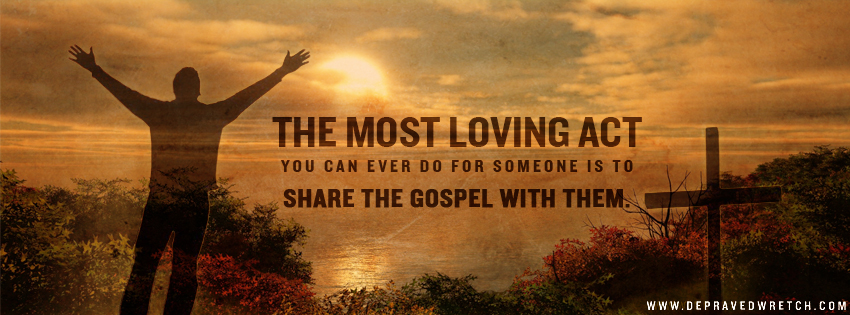
Mostloving

Gospel, Homosexuality, Politics, Salvation, Sin, Throwback Thursday

Throwback Thursday ~ SoteriObamaGigliology and You

Originally published January 12, 2013

Disclaimer: This article should not be viewed as an endorsement of Louie Giglio or any unbiblical theology he currently holds to.
soteriobamagigliology

Is Louie Giglio a living martyr or a coward? What do you think of our shiny new state church here in the U.S.? If you haven’t heard about The Giglio Imbroglio, allow me to bring you up to speed.gty_rev_louie_giglio_jef_130110_wblog

Pastor Louie Giglio was invited to say a prayer at President Obama’s inauguration ceremony later this month. Being a Christian pastor, it should have been expected that he would have preached at some point on what the Bible says about the sin of homosexuality. Someone with a pro-homosexuality group dug up a sermon  from decades ago in which he had done just that, and, yada yada yada, Pastor Giglio – pressured, or not, by the Inaugural Committee (that’s a little murky at the moment)— decided not to do the prayer. Ok, are ya with me? Good.

I’ve read a bit about this debacle over the past few days (though I have a few disagreements with some points, all of the articles hyperlinked above are excellent) and most of what I’ve read seems to be focused on Louie Giglio. But Louie Giglio isn’t alone on the stage of this little drama.

There’s another player. Our President.

Although all the details and communiqués were being handled by the Presidential Inaugural Committee, as President Truman used to say, “The buck stops here.” Right at the feet of President Obama. Ultimately, he is responsible for the “unvitation.” If he felt that the Committee was out of line in their statements or actions, he could have intervened. Instead, he has been silent, which implies consent.

Our President consented to the press release from the Inaugural Committee which said in part:

“As we now work to select someone to deliver the benediction, we will ensure their beliefs reflect this administration’s vision of inclusion and acceptance for all Americans.”

Translation: Louie Giglio’s Christian beliefs about homosexuality, which come straight from the Bible, do not “reflect this administration’s vision.”

Let me say that again. Christian beliefs about homosexuality, which line up with what the Bible clearly says, are opposed by our President.

Why is that important?

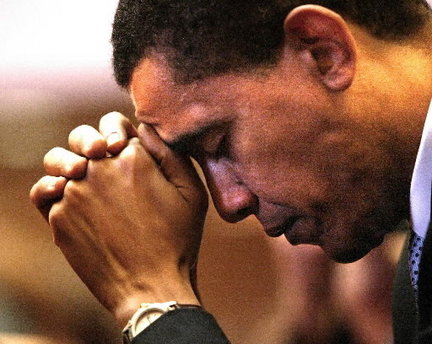
obama-in-church-2004-b654b48e648853dc_largeBecause our President believes he is a Christian.

And so do a lot of other people who share his beliefs on things like homosexuality and abortion.

If that describes you, before you get mad and stop reading, in fairness, hear me say something:

Sanctification (progressively becoming more and more Christlike) is a process. People who get saved, especially as an adult, bring a lot of entrenched opinions and thought processes with them to the cross.

Am I saying you have to become pro-life and anti-homosexuality (notice, I did not say anti-homosexual) before, or in order to, get saved?

No.

Am I saying that five minutes or a week after you get saved, you’ll be pasting “Choose Life” and “One Man, One Woman” bumper stickers on your car?

No.

What I am saying is that a person who has genuinely been born again has a God-created desire to know, trust, and obey God’s word.

Even if it’s hard.

Even if you don’t like it, initially.

Even if you don’t completely understand it.

The desire, inextricably interwoven with your love and affection for Christ, born in your heart when you were born again, exists.

Therefore if anyone is in Christ, he is a new creature; the old things passed away; behold, new things have come. II Corinthians 5:17

Do you have that desire?

Do you wrestle with the things in God’s word that are difficult for you –perhaps things like homosexuality- in order to understand, embrace, and obey them?

Or, do you war against the things you find in the Bible that you don’t like- rebelling against their inherent truth, rejecting them, twisting their meanings to suit your own opinions, and refusing to accept them?

If it’s the latter, you need to be afraid.

Be VERY afraid.

Because the Bible makes it clear that you aren’t saved.

By this we know that we have come to know Him, if we keep His commandments. The one who says, “I have come to know Him,” and does not keep His commandments, is a liar, and the truth is not in him; but whoever keeps His word, in him the love of God has truly been perfected. By this we know that we are in Him: the one who says he abides in Him ought himself to walk in the same manner as He walked. I John 2:3-6

But a natural man does not accept the things of the Spirit of God, for they are foolishness to him; and he cannot understand them, because they are spiritually appraised. But he who is spiritual appraises all things, yet he himself is appraised by no one. For who has known the mind of the Lord, that he will instruct Him? But we have the mind of Christ.  I Corinthians 2:14-16

You adulteresses, do you not know that friendship with the world is hostility toward God? Therefore whoever wishes to be a friend of the world makes himself an enemy of God.  James 4:4

Christians desire to keep God’s word, just like Jesus did. Christians lovingly call sinners to repentance from their sin and to faith in Christ, just like Jesus did. Christians think like Jesus did. Christians reject the world’s values rather than promoting them, just like Jesus did.bible

My dear friend, if you find yourself constantly battling against God’s word, I urge you, please examine your affections and the fruit of your life, thoughts, and behavior in the mirror of God’s word. It doesn’t matter if you’ve repeated a prayer, filled out a card, been baptized, taken communion, faithfully attended church, served as a teacher, deacon, elder, or pastor, had someone assure you of your salvation, or even if you just “feel saved”. If your life and heart don’t match up with what Scripture says is true of a Christian, you are not genuinely born again.

Please, turn away from your sin- all of your sin -and put your faith in Christ’s finished work on the cross, and in His bodily resurrection, as payment for that sin. If Cain taught us anything, it’s this: you can’t come to God on your own terms. You have to approach Him on His terms.

Or, to borrow from a mantra oft repeated by some in the homosexual community:

If you’re going to accept Him, you have to accept everything about Him.

Faith, Sin

The “Forbidden Fruit” Fallacy

You’ve heard the old adage: “forbidden fruit is sweeter.” When people use this phrase, what they mean is that if you tell someone he can’t have or do something, he’s going to want to have or do it all the more just because it’s forbidden.

I heard this little cliché several times last week on blogs, on Facebook, in discussion groups, etc., in reference to the deluge (yes, I contributed to it) of Christian blog and press articles decrying the movie Fifty Shades of Grey, and discouraging Christians from attending. Apparently – and I can see where they’re coming from, a little, I guess – some folks felt that the strong, repetitive, and biblical stand against Fifty Shades turned it into a piece of forbidden fruit that a) actually informed Christians (who would have been otherwise oblivious) that this movie even existed (Really? People are tech savvy enough to be on Facebook, Twitter, and blogs, but they were completely unaware of this movie? Ok, I suppose it’s possible.) and b) made Christians want to go see the movie because of its verboten status. The implication was that, if Christians went to see this movie, it was the fault – at least in part – of Christian writers who had warned against it.

Seems reasonable, right?

Until, that is, you start looking at this line of thinking a little more closely through the lens of Scripture.

Pop quiz: What does the phrase “forbidden fruit” allude to?
a) prunes
b) Snow White’s poisoned apple
c) the fruit of the tree of the knowledge of good and evil in Eden

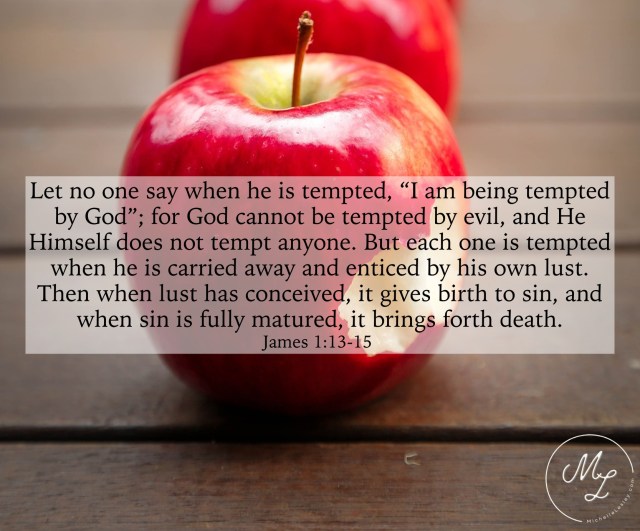
Please tell me you answered “c,” because, if you didn’t, I might have to sit down and cry. When God put Adam in the Garden way back in Genesis 2, He said, “You may surely eat of every tree of the garden, but of the tree of the knowledge of good and evil you shall not eat, for in the day that you eat of it you shall surely die.” (2:16-17) Fruit. Forbidden. Boom.

Notice that God is the One who forbade Adam from eating this fruit. God’s way, throughout the entirety of Scripture, is to warn the people He loves of the dangers and consequences of sin, not to remain silent and keep His fingers crossed that they don’t stumble into a pit. God didn’t stick the tree in the middle of the Garden and say to Himself, “Gee I hope Adam doesn’t notice this tree and eat from it, but I’m not going to mention it to him because I’m scared that I’ll make him aware that it exists, and that he’ll want to eat from it just because I said he can’t.” Uh uh. God pointed it out and said, “No.”

God’s way, throughout the entirety of Scripture, is to warn the people He loves of the dangers and consequences of sin, not to remain silent and keep His fingers crossed that they don’t stumble into a pit.

And let’s take a gander at something else in this story. What caused Adam and Eve to eat from the tree? Was it God telling Adam not to eat from it? No. If that was all it took, why don’t we find Adam eating the fruit immediately after God told him not to? Why didn’t Eve immediately eat from the tree upon learning from Adam of God’s prohibition against it?

Because the warning is not what led them to sin.

We don’t see Eve lay a finger on that fruit until Satan enters the picture. He tempted her, and she gave in to sin.

It wasn’t God’s fault for putting the tree there. It wasn’t God’s fault for warning them. It was Adam’s fault and Eve’s fault for being disobedient.

And giving in to sin is still our fault today. If you went to see Fifty Shades of Grey, it’s not God’s fault for allowing the movie to exist. It’s not some Christian blogger’s fault for making you aware of the movie or warning you not to see it. It’s your fault. You were tempted. You gave in to sin. (The good news is that if you will repent, God will graciously forgive you.)

As Christians we are to be imitators of God. “Whoever says he abides in him ought to walk in the same way in which he walked.” (1 John 2:6) That means that when we see sin that could easily ensnare our brothers and sisters, we don’t turn our heads. We don’t mind our own business. We don’t keep our mouths shut to be polite. We do the same thing God did time after time in the Bible. We run into the fray to rescue those we love.

When we see sin that could easily ensnare our brothers and sisters, we don’t turn our heads. We don’t mind our own business. We don’t keep our mouths shut to be polite. We run into the fray to rescue those we love.

And we are not to blame if there are those who choose to charge headlong into sin rather than heed the alarm we sound.

Faith, Hell, Salvation, Sin, Throwback Thursday

Throwback Thursday ~ Are you a Bin Laden?

Originally published March 2, 2011bin laden

Osama Bin Laden is dead.  Across the globe, people are celebrating.  There’s a general sentiment, even among non-Christians, that he is in hell, because that’s what he deserves.

I’m guessing that, some of those people, if you had shared the Gospel with them two days ago, would have said they didn’t believe in hell.  Or that a loving God wouldn’t send people to hell.  Or that God just forgives everybody when they die, and everybody goes to heaven.

If you hold any of those beliefs, the law of non-contradiction requires that they be applied across the board to everybody.  In other words, you can’t say you don’t believe in hell and at the same time believe that Bin Laden is in hell.  If it doesn’t exist, he can’t be there.

So I’d like to pose two questions to people who hold the aforementioned beliefs:

1. If God decided not to send Bin Laden to hell, but rather allowed him into heaven, has justice been done?

2. Do you think it’s fair that you will have to spend your own eternity in heaven with Bin Laden?  And Hitler, and Nero, and Mussolini, and Caligula, and Jack the Ripper?

As broken and messed up as we are, even we humans demand that there be justice –punishment– for people who have committed such heinous crimes.  If God doesn’t punish these awful people, what does that make Him?  How could He be perfect in every way and let such people off scot free?

I can tell you how.  Because I used to be Bin Laden.  And Hitler, and all of those other people rolled into one.  Me.  A good little Sunday School girl.  Guilty.  James 2:10 tells us:

For whoever keeps the whole law and yet stumbles in one point, he has become guilty of all.

In God’s eyes, when I broke curfew to stay at Bible study just a little bit longer, I was as guilty as a serial murderer.  When I said, “Oh my G-d!” I was on par with a child molester.  When I refused to forgive someone, I might as well have flown one of those planes into the Twin Towers myself.  And I deserved the same punishment as all of those horrible people.  Hell.

God is perfect.  He’s perfectly holy and perfectly just.  And that’s why He can’t let any sin slide, no matter how small.  But He’s also perfectly loving and compassionate.  He knew none of us would measure up to his standard for us –perfection, no sin whatsoever– so He made a way for us to escape punishment, yet still serve justice: Jesus.

God Himself came here and lived out His perfection as a human being.  And when it was time, on the cross, He took the punishment for our crimes against God.  He got our sin and our punishment, and because of His death and resurrection, we can get His sinless perfection.

We can get it, but it’s not an automatic thing that just happens to everybody when they die.  As I said in a previous post, you can’t have it both ways.  If you decide to get married, you give up the single life.  If you decide to become a star athlete, you give up being a couch potato.  And when God enables you to turn from your sin to faith in Christ, He empowers you to give up a life of embracing sin, and, instead, embrace Christ and the new life He has for you.  Here.  Now.

Is Bin Laden in hell?  I can tell you with certainty that if he did not, in the last moments of his life, sorrowfully turn from his sin and bow his knee to the Lordship of Jesus Christ, yes, he is indeed in hell.

And there, but for the grace of God, go I.  And you.

Forgiveness, New Testament, Sin, Sunday School

Sin-opsis ~ Sunday School Lesson ~ 10-26-14

Sinopsis

These are my notes from my ladies’ Sunday School class this morning. I’ll be posting the notes from my class here each week. Click here for last week’s lesson.

Through the Bible in 2014 ~ Week 43 ~ Oct. 19-25
Matthew 15-18, Mark 7-9, Luke 9:18-11:54, John 7-10
Sin-opsis

Sin. That word can cause us to think of a lot of different things, from our sin, to people who have sinned against us, to forgiveness. Today, we’re going to hear what Jesus has to say about five different aspects of sin.

Matthew 18

Causing Another Believer to Sin (1-5, Matthew 20:20-24)
Have you ever noticed that the disciples asked a lot of interesting questions? Why do you think they wanted to know who would be the greatest in the kingdom of heaven? Pride? A desire for clout or recognition? The disciples and Jesus lived in a society in which people were acutely aware of who had rank, recognition, and power (the Pharisees, scribes, Saducees, lawyers, priests, and Levites), and who did not (everybody else, including Jesus and them), when it came to the way Judaism was structured. We talked last week about what people, even the disciples, expected the Messiah to be: a conquering king who would overthrow Rome and restore Israel to prominence and prosperity. Here, as in the case of Mrs. Sons of Thunder asking if her boys could sit on either side of Jesus’ throne (Matt. 20), they were likely thinking of their offices in the new government they imagined Jesus would head up once He reestablished the kingdom.

Once again, Jesus had to set them straight. “It’s not about how high on the power ladder you can climb, Boys. It’s about how humble you can be, as humble as a little child.” And why did Jesus have to set them straight? Because they had been, skandalizo, “entrapped” or “tripped up” as verse 6 puts it, by faulty teaching from those who were responsible to rightly handle God’s word. The disciples would soon be in the position of teacher and preacher themselves. It was imperative they had a correct understanding of God’s word and God’s ways so they could accurately teach the new “little children” coming into the church.

When we share the gospel with others, teach the Bible, offer others advice or counsel, etc., we must make absolutely certain we have a correct understanding of what God’s word says. Otherwise, we might be tripping others up by leading them to believe things that are in conflict with the Bible. Jesus takes that very seriously saying (7) “it would be better for him to have a great millstone fastened around his neck and to be drowned in the depth of the sea.” Pretty strong words.

Recreation of a millstone used for pressing olives in Nazareth, Israel.

When I Am Tempted (7-9)
What about when someone else tempts me to sin? Again, Jesus has strong words for anyone who entices someone into any kind of sin: “woe.” What are some ways we can cause people to sin or be drawn into someone else’s sin, even in the church? Gossip, adultery, inciting other church members against the pastor or other leaders, playing “politics”, etc.

But whether tempted by a church member or the world, Jesus paints a serious picture of how we should respond to that temptation. Now, Jesus isn’t suggesting we literally maim ourselves, because, if you think about it, even a blind person can lust. Sin is an issue of the heart. Jesus is saying that we are to get away from temptation to guard our hearts, whatever the cost. Your relationship with Christ is worth it.

What might “gouging your eye out” or “cutting your hand off” look like for someone facing a certain temptation? For a person tempted to drunkenness, it might mean not drinking at all or not going to certain social events where they know the booze will be flowing freely. A person tempted to lust and adultery might need to make certain she is never alone with a man she’s not married to. She may even have to avoid spending any time with certain men she’s attracted to. Sin is serious, and we sometimes have to take big, inconvenient steps to stay out of it, but our relationship with Christ is completely worth it.

When Another Christian Sins (10-14, Romans 8:1)
Our brothers and sisters in Christ are going to sin. There’s just no way around it. How should we respond to a fellow Christian who has wandered off into sin? Ignore it and hope she’ll stop? Stop speaking to to her? Castigate her? No. We are to respond to her the same way Jesus does with the lost sheep:

10– We are not to treat any of our brothers or sisters unkindly; we are to treat all with kindness and love.

12– We remember that Christ came to save the lost from their sin. Of course, He does not want those He has saved to wander off back into their sin. Jesus goes after the wandering sheep to bring it back into the safety of the fold. We are to do the same. If someone wanders off, we don’t just let her go. We go after her in love and concern to bring her back to where she needs to be.

13-14– “If he finds it…” If is kind of an interesting word to use here, since Jesus is the shepherd in the story. Will there ever be a case in which Jesus can’t find someone who has wandered off? No. God is sovereign over all things. He knows where we are, what we’re doing, and the state of our hearts at all times. These verses are referring to the lost sheep who is willing to be found and return to the fold with Jesus. When a Christian repents and returns to Christ, Christ rejoices over her. While there may be consequences of the sin to face, “There is therefore now no condemnation for those who are in Christ Jesus.” (Rom.) Isn’t that awesome? When that repentant sheep comes back to the fold, we are to have the same loving, embracing, and forgiving attitude towards her that Christ has. Christ’s desire is always restoration and reconciliation, and that should be our desire as well.

When Another Christian Sins Against Me (15-20)
One of the most important things we can focus on in this passage is the word “sins”. In the church body, there are going to be times when things happen to us that we don’t like. That doesn’t necessarily mean these things are SIN. Maybe we don’t like the style of music, or a particular mannerism of the pastor. Maybe somebody tells us a truth we need to hear that stings a little, or someone is annoying or inadvertently hurts our feelings. Our feelings don’t determine what sin is, the Bible does. When deciding whether to confront the person, we first need to determine if what she did is sin according to the Bible (not according to our opinion), or if it’s a non-sinful offense, and we can overlook it and extend grace, realizing that people have probably done the same for us on many occasions.

On the other hand, if the person IS sinning, we can’t shy away from an awkward conversation with her about it. Remember the wandering sheep? We need to have the same love for that wandering brother or sister and try to restore and reconcile him/her. First, we go to the person privately -not in front of a group, not on Facebook- one on one, and, remembering the way we would want someone to approach us, kindly and lovingly, yet firmly, talk to her about her sin. If she repents and returns, let the rejoicing and forgiving commence! If she persists, we take a couple of other Believers with us to kindly, lovingly, and firmly approach her again. If she still persists in her sin, the next appropriate and required step is to take the matter before the church body for disciplinary action. If the person still refuses to repent, we are to treat her as “a Gentile and a tax collector.”

What does that mean? Are we supposed to shun her? Hate her? No. Look how Jesus treated Gentiles and tax collectors (like Matthew and Zacchaeus). He loved them, shared the gospel with them, and called them to repent and believe in Him. In other words, He treated them like the unbelievers they were. People who persist in unrepentant sin show us that they are not Believers. When we have exhausted all attempts at restoration, we agree with their behavior that they are not Believers and treat them that way. We remove their names from church membership and remove them from any positions of leadership or responsibility in the church, but we keep loving them, keep sharing the gospel with them, and keep praying for their salvation.

Why We Forgive (21-35, Ephesians 4:32)
This parable can be summed up in the words of Ephesians 4:32:

Be kind to one another, tenderhearted, forgiving one another, as God in Christ forgave you.

Who is the king in this parable? Jesus. Who is the first servant? Me. How big is our sin debt to Jesus? Verse 24 describes it as ten thousand talents. One talent was a unit of money equal to twenty years’ wages for a laborer. Therefore, ten thousand talents would have equaled 200,000 years’ worth of wages, an impossible amount to even begin to repay, just like our sin debt. But when we throw ourselves on the mercy of Christ and repent, He forgives us that enormous debt. Just wipes it right out. Any sin that anyone can commit against us, no matter how egregious, is peanuts (verse 28 calls it 100 denarii, or 100 days’ wages) compared to the grief and agony we put Christ through on the cross. How can we, knowing how hugely we have sinned against Christ, refuse to forgive others anything they might do to us?

The “Sin-Opsis”
There’s an old Carman song that contains the line

“Black is black, and white is white.
And Hell is hot, and sin ain’t right.”

It’s a pretty good “sin-opsis” of the what sin is. It is Christ’s desire that we stay out of sin ourselves, not lead others into sin, rescue others who have fallen into sin, and forgive those who have sinned against us.