Bible, Gospel, Salvation, Sin, Sunday School

What is salvation? What is the gospel? ~ Sunday School Lesson ~ 9-22-13

sunday school


I recently started teaching a women’s Sunday School class at my church. Right now we are taking a look at some of the challenging questions and issues we face as Christians. I’ll be posting the notes from my class here each week. Click here for last week’s lesson.

What is salvation? What is the gospel?

I. What is the one thing Jesus can do for us that we can’t do for ourselves?

II. Why do we need salvation?

A. Creation was perfect (Genesis 1, key verse: 31): “It was good.”

B. Fall of man (Genesis 3). What does this have to do with us today?

1. Death entered the world as a result of the fall  (Romans 5:12, 15-19)

2. Sin “genetically altered” every person from Adam on (Psalm 51:5) and now we are all sinners.

III. How do we know we need salvation?

A. The Law

1. The Law shows us what sin is (Romans 7:7-11)

2. The Law shows us we are guilty of breaking it (James 2:10-11)

3. The Law is written on our hearts and condemns us when we do wrong (Romans  2:15)

4. The Law shows us the futility of trying to keep it and leads us to cry out to God for help. (Galatians 3:10-11, 23-24)

IV. Extra Study Resources:

A. “How Did the Fall Affect Humanity?”  ~ Got Questions Ministries

B. “Law”  ~ Theopedia.com

C. “The Law and the Gospel” by John MacArthur

D. “The Gospel” by Matt Chandler

This lesson will be continued next week.

Faith, Sin

Repeating Wrongs Renders Right?

“Four hundred thirty seven.”

“Sorry, that’s not right. Try again, Buddy.”

scribble scribble scribble

“Oh, ok. Four hundred thirty seven.

“No, Honey. You just said that, and I just told you it was wrong. Give it another try.”

“But it’s 437!”

“Son, I have the answer book right here in front of me. The answer is not 437. Repeating the wrong answer over and over again doesn’t magically make it right.”

I can’t tell you how many times I’ve had this conversation -nearly verbatim- with each of my four children in the fourteen years I’ve been home schooling.

But I can tell you that this morning was the first time I realized that this is the same way many people relate to God and the Bible.

When this dialogue takes place between my child and me, it is because the child has done something wrong. He has forgotten to carry the one. Confused a peninsula with an isthmus. Mistaken an adverb for an adjective.

But he can’t see what he’s done wrong, or indeed, that he’s done anything wrong. And because he’s blind to his wrongness, his default position is to assume that he is right and I am wrong. Forget that he’s in fifth grade and I have a bachelor’s degree, half a master’s degree, and nearly two decades of teaching experience. Never mind that this is the fourth time I’ve taught fifth grade from this very same book. Completely disregarded is the fact that I have the teacher key right in front of me that shows exactly what he did wrong and what the right answer is.

No. He’s right. I’m wrong. The book is wrong. Math is stupid.

Foolishness is indeed bound up in the heart of a child.

But foolishness is bound up in all of our hearts when it comes to sin:

“My husband doesn’t treat me right.
God wouldn’t want me to be miserable
for the rest of my life, so my relationship
with the guy at work is just fine.”

“What the Bible says about
homosexuality only had to do
with male cult prostitutes, so my
monogamous homosexual relationship
with my partner isn’t a sin.”

“I’ve gone to church all my life.
Once, I even repeated a ‘sinner’s
prayer’ and was baptized. It doesn’t
matter what my life looks like now,
I’m sure I’m saved because of that.”

“The Bible says women aren’t
to instruct men in the church?
But I feel that God has called me
to be a pastor, so that verse must
not mean what it clearly says.”

Over and over we say it, hoping to convince ourselves, to drown out God’s law that’s written on our hearts, and to shout down anyone who would call us to repentance. Because we’re blind to our wrongness, our default position is to assume that we’re right and God, and His Word, are wrong. Never mind the fact that He’s God -Creator of the entire universe, knows everything, sees everything, has power over everything, and is perfect in holiness- and we’re, well… not.

No. We’re right. He’s wrong. The Bible is wrong. People who agree with God’s Word are just haters.

But, just like I tell my children: repeating the wrong answer over and over again doesn’t magically make it right.  When each of us stands before God on the day of judgment, it’s not going to matter how many times we’ve tried to convince ourselves, others, and God that our way is right. It’s only going to matter what God says is right.

There is a way that seems right to a man,
but its end is the way to death.
Proverbs 14:12

Faith, Gospel, Salvation, Sin, Tragedy

Never Forget…

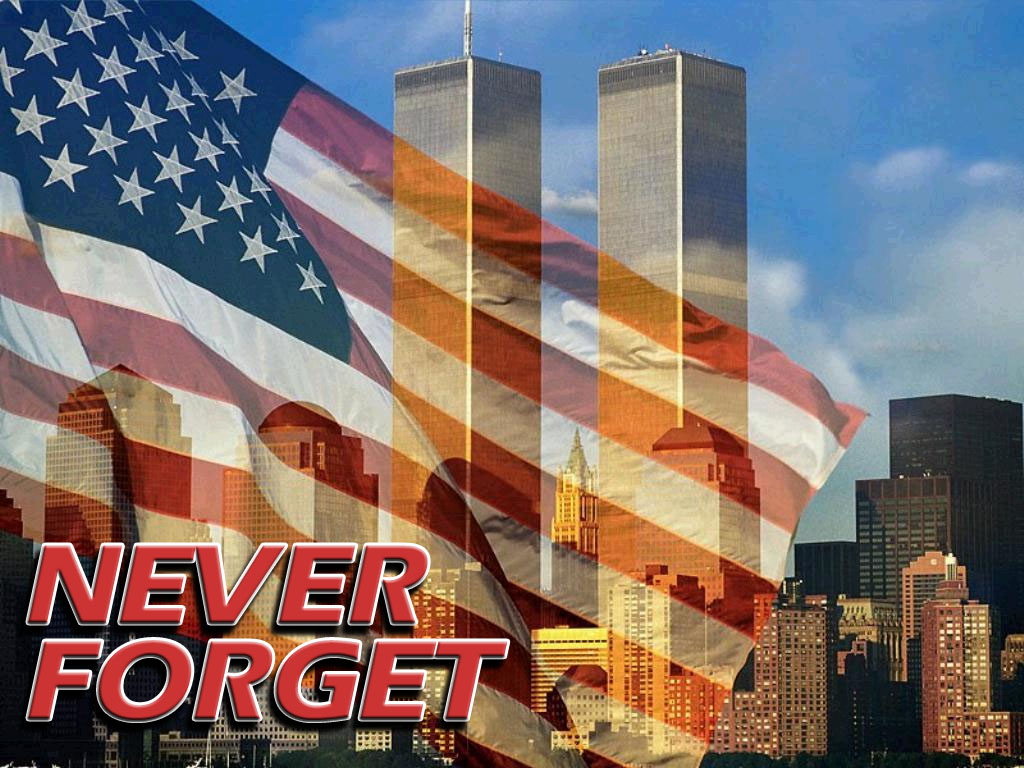
9-11neverforgetNever forget.

We will remember.

The words jump off the page, off the screen, from our lips. A haunting breath whispering of unspeakable tragedy and heart rending grief.

The terrorist attacks of September 11, 2001 did something to this country. It changed our history. It changed us.

It was a despicable act of cruelty. People innocent of any crime against their executioners were brutally slaughtered in service to a god who demands the death of infidels.

It was egregious. Horrific. Abominable. And we will never forget. Nor should we.

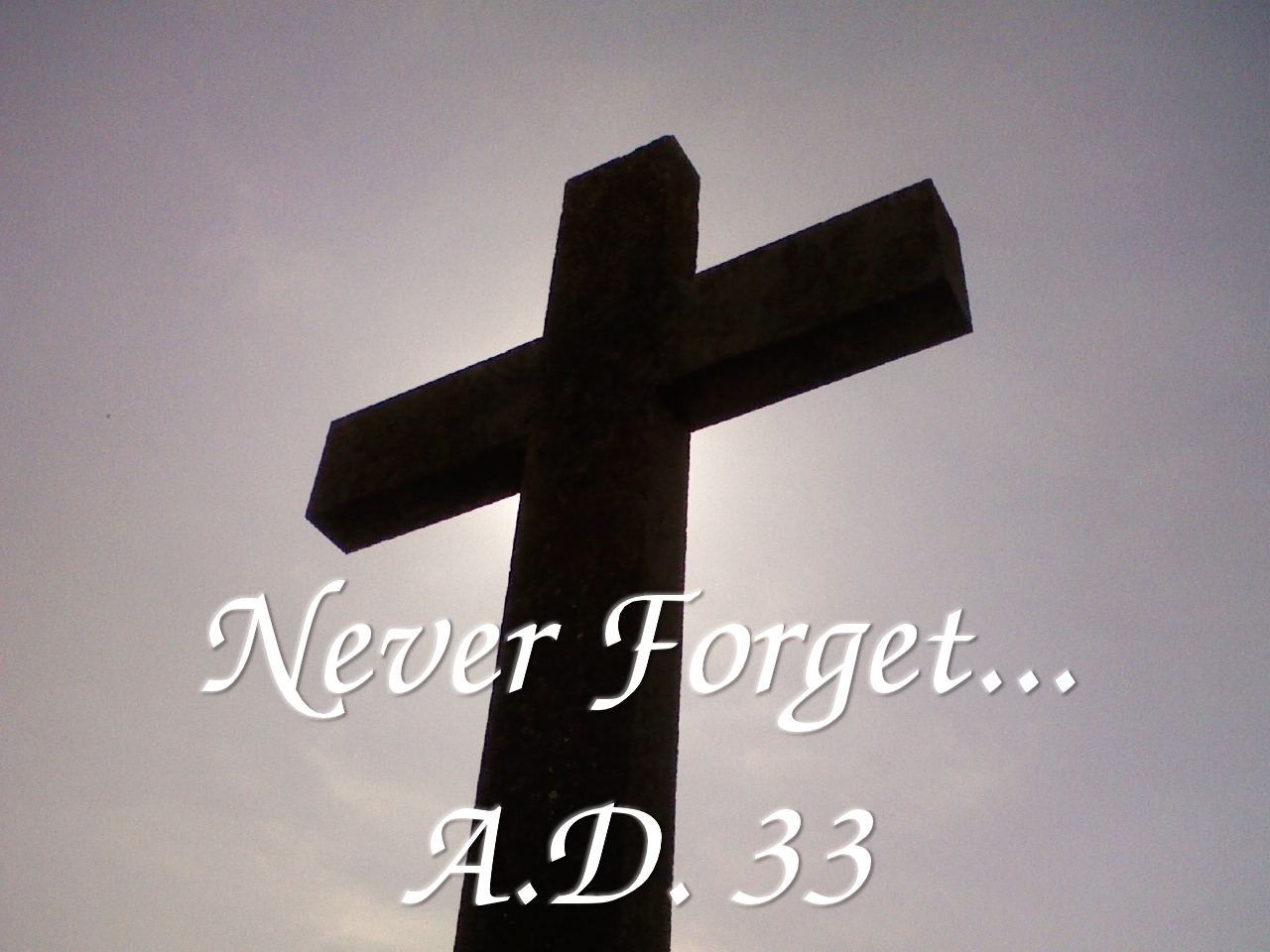
Do this in remembrance of Me.

The words lie quietly on the page, beckoning us back to another day. A day dusty with the passing of centuries. But it changed our history. It changed us.

It was a despicable act of cruelty. Jesus, innocent of any crime, was brutally slaughtered by executioners serving a God who demands the death of infidels.

But this was no infidel. This was no innocent victim dying needlessly and for no one. This was God Himself laying down His life to take the place of the infidel. You. Me. He satisfied His own wrath against us by pouring it out on His Son.

The cross drove a stake into the heart of sin and death that day and shouted across the expanse of creation, “NO MORE.”

It was egregiously beautiful. A horrific triumph. Abominably liberating. And we will never forget. Nor should we.

cross_phixr

Evangelism, Faith, Forgiveness, Gospel, Heaven, Hell, Homosexuality, Legislation, Marriage, Salvation, Sin

From the ERLC: “Your Church and the Same Sex Marriage Decisions”

erlc_logo0501


The ERLC has come out with a helpful fact sheet on the recent Supreme Court decisions on same sex “marriage.” It can be distributed or even used as a bulletin insert at your church, (it’s a free PDF download available in both English and Spanish). Anyone is free to use it– it’s not just for Southern Baptists. It’s really a great resource, so I wanted to share it with you.

I think there’s one point of clarification that needs to be made, though. Under the heading “What Hasn’t Changed,” we find this statement:

“Jesus Christ is still alive, and ultimately will bend history toward His kingdom.”

I read that, then read it again, then turned it over in my mind several times, then tried to recall a verse of Scripture that says anything about Jesus ultimately “bending history towards” His kingdom. Nada. Bupkis. Zilch.

I’m still not exactly sure what the fact sheet writer meant by this phrase. All I can figure (and perhaps I’m misunderstanding his intent) is that he’s referencing Christ’s return and the coming judgment.  When I read Scriptures referencing Christ’s return, I see things like Revelation 19:15:

“From his mouth comes a sharp sword with which to strike down the nations, and he will rule them with a rod of iron. He will tread the winepress of the fury of the wrath of God the Almighty.”

and Matthew 21:44:

“And the one who falls on this stone will be broken to pieces; and when it falls on anyone, it will crush him.”

Not exactly a soft summer breeze gently bending a stalk of golden grain, is it? At least that’s the mental picture I get when I read a phrase like “bending history toward His kingdom.”

Judgment is coming for all of us, lost and saved, regardless of sexual preference. It’s going to be fast and furious and without any second chances to change your mind. The wheat is going to be gathered into the barn and the tares burned up. The sheep are going to be placed on the right, and the goats on the left. Period. End of story. That’s all she wrote.

Sounds scary, doesn’t it?

It should. And that’s a good thing.

As Christians, it should scare us enough for ourselves that we do what 2 Corinthians 13:5 says to do: examine ourselves– our hearts and the fruit of our lives –against Scripture and make certain we are, indeed, saved. (If you’re not sure where to start with that, here’s an excellent tool that I’ve found very helpful.)

It should also scare us for our lost friends and loved ones. It’s a hard, cold, frightening fact, but anyone who does not repent of his sin and place His faith in Christ’s atoning sacrifice for his sin is going to spend eternity in hell when he dies. There’s no Purgatory. There’s no god who just forgives everybody and lets everybody into heaven.

Does that scare you for your children, your parents, your siblings, your spouse, your best friend?

Yeah, me too. And it makes me want to plead with them to repent and believe the gospel so they can escape that terrible fate and we can all spend eternity together with the Lord.

So use these fact sheets at church and share them with your friends. They’re good! They’re informative! But forget the “bending” and remember the sword, the fury, the wrath, and the crushing that are coming, and let them ignite a passion within you to love your lost neighbors enough to plead with them to flee to the cross for cleansing, forgiveness, and eternal life.

Bible, Church, Sin

Matthew Henry on Leviticus 19:17

images

Do you use commentaries as you study the Bible? My favorite commentaries are Matthew Henry’s “Commentary on the Whole Bible.” (It’s pretty cheap on Kindle {get the unabridged version!} and absolutely free on BibleGateway.com).

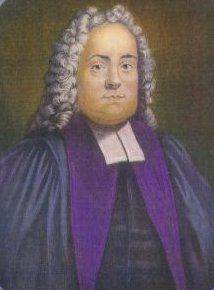
I’m studying the book of Leviticus right now, and, this morning, Leviticus 19:17 was one of the verses on deck. I really liked Matthew Henry’s teaching on it, so I thought I’d share it with you. Since 17 century British English can be a little cumbersome in the 21st century, I’ve written a brief synopsis below each of his points. My words are in purple.

“You shall not hate your brother in your heart, but you shall reason frankly with your neighbor, lest you incur sin because of him.” Leviticus 19:17

VII. We are commanded to rebuke our neighbour in love (Lev. 19:17): Thou shalt in any wise rebuke thy neighbour. 1. Rather rebuke him than hate him for an injury done to thyself. If we apprehend that our neighbour has any way wronged us, we must not conceive a secret grudge against him, and estrange ourselves from him, speaking to him neither bad nor MatthewHenrygood, as the manner of some is, who have the art of concealing their displeasure till they have an opportunity of a full revenge (2 Sam. 13:22); but we must rather give vent to our resentments with the meekness of wisdom, endeavour to convince our brother of the injury, reason the case fairly with him, and so put an end to the disgust conceived: this is the rule our Saviour gives in this case, Luke 17:3.

Synopsis: If somebody sins against you, don’t hold a grudge or seek revenge. Go to him in love, talk it out, and forgive him.

2. Therefore rebuke him for his sin against God, because thou lovest him; endeavour to bring him to repentance, that his sin may be pardoned, and he may turn from it, and it may not be suffered to lie upon him. Note, Friendly reproof is a duty we owe to one another, and we ought both to give it and take it in love. Let the righteous smite me, and it shall be a kindnessPs. 141:5. Faithful and useful are those wounds of a friendProv. 27:5, 6. It is here strictly commanded, “Thou shalt in any wise do it, and not omit it under any pretence.” Consider, (1.) The guilt we incur by not reproving: it is construed here into a hating of our brother. We are ready to argue thus, “Such a one is a friend I love, therefore I will not make him uneasy by telling him of his faults;” but we should rather say, “therefore I will do him the kindness to tell him of them.” Love covers sin from others, but not from the sinner himself. (2.) The mischief we do by not reproving: we suffer sin upon him. Must we help the ass of an enemy that has fallen under his burden, and shall we not help the soul of a friend? Exod. 23:5. And by suffering sin upon him we are in danger of bearing sin for him, as the margin reads it. If we reprove not the unfruitful works of darkness, we have fellowship with them, and become accessories ex post facto—after the factEph. 5:11. It is thy brother, thy neighbour, that is concerned; and he was a Cain that said, Am I my brother’s keeper?

Synopsis: It is our biblical duty to call brothers and sisters in sin to repentance because we love them. We should both give and take correction in love. If we fail to correct our brothers and sisters, we are actually hating them instead of loving them. If we do not correct them, we are accessories to their sin.