Or maybe I answered your question already? Check out my article The Mailbag: Top 10 FAQs to see if your question has been answered and to get some helpful resources.
Did any women write any part of the Bible?
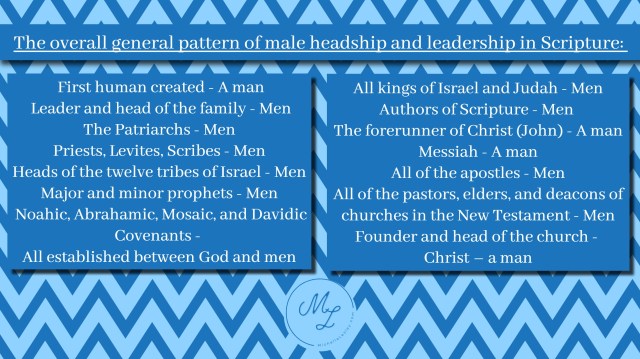
Nope. No women authored any of the books of the Bible. The main reason for this is God’s established pattern of male headship and leadership. (Additionally, women were largely illiterate at that time in history.) Because of this, we have no reason to believe that any parts or passages of any books of the Bible were written by women.
We have passages like the song of Miriam, the song of Deborah and Barak, and the Magnificat, but these wouldn’t be considered “writing part of the Bible”. They were almost certainly spontaneous songs, which the male writers of those books recorded in Scripture.
If you are at work and others are constantly saying “OH MY G-D!” would you say something? It hurts my heart! It has become such a common thing, making God so disrespected.
I get it. I physically wince every time I hear it, myself.
Since this is your work environment rather than your church or a situation with family or friends, I would suggest getting some counsel from your pastor or a spiritually mature friend about how to handle this situation. It really depends on the dynamics of your workplace and your relationship with your boss and co-workers.
If you’re good friends with the people who are doing this, you may be able to take them aside and gently request that they try not to say this around you. If you have a more distant relationship with them, they’re probably not going to take too kindly to your request, and it could strain the already tenuous relationship you have with them, creating a work environment that’s even more uncomfortable for you.
Bear in mind that the most likely reason they’re saying this is because they’re lost. Lost people do lost people things. They’re not concerned about obeying Scripture, and they’ll be offended and resentful if you ask them to. If, after talking to your pastor about the situation, you feel it would be best not to speak up, perhaps you could use every occasion when they say this as a reminder to say a quick prayer for them and their salvation.
Since I have been following your ministry, I have been trying to be a Berean in what I hear, read, and watch. But the more discerning I become, the more alone I feel I am!! Friends that I have for years thought were solid in their faith, love The Message, Jesus Calling, The Chosen, go to Bible Studies by either false teachers or at the very least not recommended teachers, and dismiss me when I give them resources that speak the truth about these things!! What in the world???!!
My question is, could I be too far discerning? Should I be more open to hear what they have to say? Should I too be willing to read The Message or watch The Chosen? I am really feeling alone and like I’m missing something! What’s wrong with me Michelle?!!
Thank you for listening to me. I wonder if others have felt this way too.
Nothing is wrong with you, honey. Everything is right with you. You’re growing in maturity in Christ, in discernment, and in your knowledge of the Word. And one of the “growing pains” we go through as Christ sanctifies us is the realization that when Jesus said…
Enter by the narrow gate. For the gate is wide and the way is easy that leads to destruction, and those who enter by it are many. For the gate is narrow and the way is hard that leads to life, and those who find it are few.
Matthew 7:13-14
…He meant it. And He meant it far more than we realized the first time we read that passage. Few find the narrow gate. Some of the people we thought – due to our own lack of spiritual maturity – were Christians, suddenly aren’t. We just didn’t know it before.
This is, of course, not to say that anyone who’s ever watched an episode of The Chosen is on the express train to Hell, or that thinking Jesus Calling is awesome right now necessarily means you’re a false convert.
Remember, every genuinely born again person is being sanctified by Christ. And just because you’re not at my level of discernment yet doesn’t mean you’re not saved. And just because I’m not at your level of patience yet doesn’t mean I’m not saved. None of us are at Christ’s level of any of those things, and we won’t be, this side of Glory. God is working on each of us, at His own pace, in the area(s) He sees fit, at this moment in time.
Rather than looking at the trees of someone’s life, it can be more helpful to zoom out and look at the forest. Is she on a general trajectory of growing more Christlike, more holy, more obedient, more understanding of the Word? Or, over a substantial period of time, is she on a general trajectory of increasing disobedience to Scripture, decreasing faithfulness to the church, a worldview that’s getting less and less biblical? It’s a more accurate barometer of someone’s overall spiritual state than whether she’s spent the last couple of weeks going gaga over The Message.
Could you be too discerning? No. That’s like asking if you could be too loving, too peaceful, too gifted at teaching, or too gifted at serving.
Should you be more open to hear what they have to say? No. That is, if by “open” you mean “Should I consider doing or believing things that conflict with Scripture?”. Of course not.
But being a good listener when your friend is going on and on about the new Beth Moore study she’s attending can help a lot, because it can help you to ask her good questions. Like, “Wow, I never heard that before! Where does Scripture say that?” or “Interesting! Could we look at that passage in context together?” And the same goes for reading that heretical book or watching that blasphemous movie or TV show. If you’re mature and discerning enough not to be swayed by it, you can use what you observe to start a good discussion and teach her what the Bible really says. So yes, being more open to listening and understanding is much more valuable than the knee jerk NOOOOOOOO!!! STOPPPPPP!!! reaction we discernment-world folks can be tempted to.
Have others felt this way too? Yep. You’re looking at one. Most people with even moderate discernment feel this way at least occasionally. And I can’t tell you how many emails I’ve received from women grieved over the fact that they’re “the only discerning person in my church!”.
It’s no fun. It can be lonely. You might even need to change churches. But you’re in good company with the rest of us discernment weirdos out here, and you’re always in good company with Jesus.
If you have a question about: a Bible passage, an aspect of theology, a current issue in Christianity, or how to biblically handle a family, life, or church situation, comment below (I’ll hold all questions in queue {unpublished} for a future edition of The Mailbag) or send me an e-mail or private message. If your question is chosen for publication, your anonymity will be protected.
I want to handle a situation biblically. I am on my church’s mission committee. We have been asked to support [a parachurch missions organization, henceforth, “PMO”]. Several members of the committee have voiced concerns over the PMO’s position on CRT [Critical Race Theory] and LQBTQ issues. We have provided evidence in the form of video and internal PMO documents. We voted not to support this PMO, but after the meeting, the elder who oversees our committee emailed and said we can only voice issues if we have evidence from the PMO’s public website, and he has scheduled a meeting for us to listen to the PMO’s representatives share their ministry because he believes we are misrepresenting it. I do not want to attend this meeting. I am not even sure if I should continue serving on the committee. He only gave us 24 hours notice of the meeting. How should I respond?
(I have redacted the name of this particular PMO because the reader’s question is about how to handle this situation, not about the PMO itself, and because my answer could apply to any number of demonstrably false teachers or organizations. To name this well known organization would require me to provide and explain the voluminous evidence that this PMO does, indeed, vehemently endorse CRT (watch the video series linked above) and is becoming increasingly unbiblical in their position on perversion. I plan to deal with that in another article about this particular PMO at some point, but dealing with it here would make this article much too long and involved.)
I know that’s a difficult spot to be in, and, having been in similar situations myself, I certainly sympathize.
If you’re married, and your husband is a Christian, the first thing you should do (which you probably have done, I just like to begin at the beginning) is to thoroughly discuss this with your husband and find out what he wants you to do, and do that.
Hebrews 13:17a says, “Obey your leaders and submit to them, for they are keeping watch over your souls, as those who will have to give an account.” This elder is not doing his Titus 1:9, 3:10-11 duty to keep watch over the souls of his flock. He is harming them and calling some of them (the discerning committee members) liars. And he will have to give an account of all of that to God. You discerning committee members are actually God’s grace to him to protect him from this sin and subsequent judgment, and he apparently doesn’t realize or appreciate that.
He’s got several credible, doctrinally sound committee members coming to him, warning him about a legitimate biblical issue, and he’s basically telling them they’re wrong in favor of letting the serpents come into the church and further deceive him and the other, less discerning, members of the committee.
The point of this is for the members of the committee to be swayed to support him and the PMO because this is what he wants. He wants to support the PMO. If they’re doing the things you and the other concerned committee members say they’re doing (and they are – there’s plenty of reputable evidence out there to prove it, including what you found), does he really think the representatives are going to admit to it when they visit? Of course not. They’re going to speak, softly, gently, and lovingly. They’re going to be personable and witty. They’re going to give all the right biblical answers. They’re going to say whatever they think this elder wants to hear so he’ll side with them and give them the church’s money.
Something Amy and I have discussed several times on the podcast is this dynamic of sensuality (in the classical sense of the word: “appealing to the senses” of sight, hearing, etc.). It’s exactly what Satan did in the Garden to convince Eve to eat the fruit (see the section on Genesis 3, here). He smooth talked her and appealed to her senses – her feelings – which she followed over her reason: that which she already knew with her brain that God had commanded. (Sensuality is why, for example, it’s easier to be objective about whether or not the lyrics of a worship song are biblical when you read the lyrics from a piece of paper rather than listening to the song. The music appeals to your sense of hearing and your emotions, which can override your rational, objective reasoning.)
That’s why – whether he realizes it or not – your elder is bringing these people in to meet with you in person. It’s a lot easier to appeal to people’s senses and feelings face to face and with your sincere tone of voice and sparkling personality than it is to sway them with facts on a piece of paper.
I really hate to say these things about your elder, but either he’s being underhanded, or he’s well intentioned, yet incredibly gullible and undiscerning. (In fact, he may be allowing his feelings of sentimentality for this PMO to sway him even though he can clearly see the evidence that their beliefs and practices contradict Scripture.)
Either way, assuming this is his general state instead of this being a one time slip up, both of these things are disqualifying (see the qualifications for elders in 1 Timothy 3:1-7 and Titus 1:5-9). One of the requirements for elders in the Titus 1 passage is in verse 9:
He must hold firm to the trustworthy word as taught, so that he may be able to give instruction in sound doctrine and also to rebuke those who contradict it.
He’s not “rebuking those who contradict” sound doctrine (the PMO), he’s being a corrupt gatekeeper and welcoming the wolves into his sheepfold. If he doesn’t repent, especially if this is a pattern for him, he has disqualified himself from eldership.
An additional issue is – what in the world is going on here with your church’s polity? Your committee voted not to fund this PMO and this elder singlehandedly overrules the committee? Why does the committee even exist? Is it just supposed to be a rubber stamp for whatever any particular elder wants? That’s not biblical.
Furthermore, why is he so locked in on this particular PMO? There are dozens of doctrinally sound missions organizations out there that your church could support and that your committee and your elder could probably unanimously agree on. Why does it have to be this PMO? (My guess: He worked for them in the past or has some sort of personal connection to them, ergo, the sentimentality, or there’s somebody he knows who works for this PMO that he wants to support using the church’s finances. This could be a conflict of interest.)
What I would do is to go to the meeting with my phone in hand, voice memo app open, and let it be known that you’re going to be recording the meeting so you can listen to it again later to make sure you haven’t misunderstood or missed anything. Do not try to hide the fact that you’re recording it. That makes you look sneaky and deceptive, plus, you have nothing to hide. You’re not doing anything wrong. This is just an electronic form of taking notes. Additionally, if you’re told, by the elder or the PMO representatives, that you can’t record the meeting, that speaks volumes about their motives.
After the meeting, the discerning members of the committee should go back to the elder and talk to him again. (You might want to really emphasize my point above that if the PMO were guilty of doing these things, they wouldn’t admit it.). If he digs his heels in and your church hierarchy has another elder or head pastor above him in the chain of command, make an appointment with him, take your whole group, and express your concerns to him. Go as far up the chain of command as you can until you get to the top or until somebody listens and deals with this elder.
If the elder is at the top of the chain of command, and supporting false teachers/doctrine is typical of the way he operates, and he doesn’t repent, you need to find out what your church’s protocol is for initiating church discipline with an elder and the discerning male members of the committee, your husband, and/or other appropriate men should initiate it. If there is no protocol and he can’t be removed and doesn’t repent, I’d go ahead and find a new church. But until you do (or if you decide to stay at this church despite this issue), explore your church’s options for designating your offerings so your money doesn’t go to support this PMO.
If you have a question about: a Bible passage, an aspect of theology, a current issue in Christianity, or how to biblically handle a family, life, or church situation, comment below (I’ll hold all questions in queue {unpublished} for a future edition of The Mailbag) or send me an e-mail. If your question is chosen for publication, your anonymity will be protected.
Welcome to another “potpourri” edition of The Mailbag, where I give short(er, kinda? sometimes?😀) answers to several questions rather than a long answer to one question.
Or maybe I answered your question already? Check out my article The Mailbag: Top 10 FAQs to see if your question has been answered and to get some helpful resources.
The other day, a man left this comment on my Facebook page on a 2022 post* in which I shared my article about Tara Leigh Cobble / The Bible Recap / D-Group (henceforth, “TLC”). I wanted to share my response to him with you (below, slightly edited) to provide an example of how to think biblically and critically, as well as respond biblically to one unbiblical claim professing Christians often make about false teachers.
(*Why do people dig up Facebook posts from years ago to comment on? I’m baffled.)
A doctrine that’s crucial to keep front of mind in situations like this is the doctrine of the authority of Scripture. When we’re presented with a choice of believing rightly handled (2 Timothy 2:15), in context Scripture or believing a fallen, sinful human being’s personal testimony, beliefs, opinions, etc., which conflict with Scripture, we are commanded and obligated to believe Scripture over that person’s testimony.
You are sadly mistaken! She has completely changed my bible study for the better by making the scriptures speak to me. She and her ministry are truly blessed by God!!
I’m afraid all your comment has accomplished is to prove that everything I said in the article is true.
You’re a man who apparently doesn’t know that God doesn’t want women teaching the Bible to men in the gathering of the Body. If TLC is such a great Bible teacher, how come she’s never taught you that? Maybe because she’s too busy rebelling against that part of God’s Word?
No human being can “make the Scriptures speak to” anyone. Only the indwelling Holy Spirit does that, and only for genuinely regenerate Believers. It’s called illumination. I’m sure you didn’t mean to, but by attributing the role and the work of the Holy Spirit to a human being, you’ve been unintentionally blasphemous. If TLC is such a great Bible teacher, how come she’s never taught you all of that?
God does not “bless” false teachers and their ministries. False teachers and their ministries are God’s judgment on those who follow them. If TLC is such a great Bible teacher, how come she’s never taught you that?
If TLC is such a great Bible teacher, how come your comment has no Scripture in it whatsoever? All I see is your feelings about her and your personal, subjective opinion about her. If you’re a Christian, your authority for life and the practice of Christianity is Scripture, not your feelings and opinions. That’s called the doctrine of the authority of Scripture. If TLC is such a great Bible teacher, she would have taught you how to defend her with rightly handled, in context Scripture.
You’re judging me unbiblically, because you’re judging my warnings about TLC by your feelings and opinions instead of judging them by rightly handled, in context Scripture. If TLC is such a great Bible teacher, how come she’s never taught you the difference between biblical and unbiblical judgment and how to judge biblically?
A minor point, but how come TLC has never taught you that the words “Bible” and “Scripture” are capitalized?
In Matthew 7:15-27, Jesus teaches us about the fruit false teachers bear. Not just the fruit of their personal character and practices (such as teaching men and yoking with false teachers) but also the fruit of their ministries.
As someone who follows, receives teaching from, and defends TLC, you are the fruit of her ministry. And, as I’ve outlined above, that fruit is ignorance of, misunderstanding of, and disobedience to Scripture. That is bad fruit (you) from a bad tree (TLC), once again proving that Scripture is true and everything I’ve said in the article is true.
TLC isn’t the great Bible teacher you’ve been deceived into thinking she is. Get out now while you still can.
I get two or three emails or DMs like this a month, usually about teachers who are more on the obscure side that I’ve never heard of…
Hi Michelle- What do you think about Jane Smith, the women’s Bible teacher and conference speaker? I’ve done a little research on her and found out that she preaches to men, yokes with false teachers X, Y, and Z, and teaches this, that, and the other unbiblical thing. I guess I probably shouldn’t be following her, right?
My dear readers who have sent questions similar to this one, I can’t tell you how much it encourages me that you are out there doing the research and comparing what these teachers do and teach with Scripture. You are exercising your God given discernment and being good Bereans. Way to go!
If you have researched a teacher to see whether or not you should be following her, you’ve compared her actions and teaching to rightly handled, in context Scripture, and you’ve found clear evidence that her actions or teachings don’t align with what the Bible teaches, then don’t follow her.
Although I’m honored and humbled you would want my feedback, and you’re always welcome to email and ask (though I’m usually not able to answer), I want to make sure you understand that you do not need validation or confirmation from me. I am not your authority for who to follow. Scripture is. If Scripture says you shouldn’t be following someone, there’s your answer.
If you feel a little unsure of yourself when it comes to doing the research on a teacher, I’ve got some resources to help you.
First, grab some of my long form articles (for example: this one or this one) I’ve written about various teachers at the Popular False Teachers & Unbiblical Trends tab (in the blue menu bar at the top of this page) and read through a few of them to get a feel for the kinds of things you should be looking for.
Ask God to give you wisdom and discernment, and to help you handle His Word accurately, and trust Him to do so.
We have had trouble finding a doctrinally sound church, but finally found one. My husband spoke to leadership and everything seemed good. He met with the pastor for lunch and we were very enthusiastic about it. Solid verse by verse preaching. He started with Ephesians and it took about 6 months to finish. No heretical church music either.
One thing. My husband noticed a box of “surgical masks” at the entrance to the sanctuary. We both agree it’s ridiculous to wear them but he feels it is “promoting a lie” by just having them there for those who want one. No one is currently wearing them. He spoke to the pastor and deacon chairman and they disagreed. The box stays for those who feel “more comfortable” wearing one. My husband will not commit to joining this church because of this one issue. I am heartbroken. I know it’s eating him as well. Everything else checks out. Just this. Is he being hyper-critical? Is this a good reason to not join a church. Praying without ceasing over this. Your advice is welcomed and appreciated.
Great question! These disagreements in marriage do come along, don’t they? It’s never pleasant when they do, but, praise God, He has explained to us how to handle them.
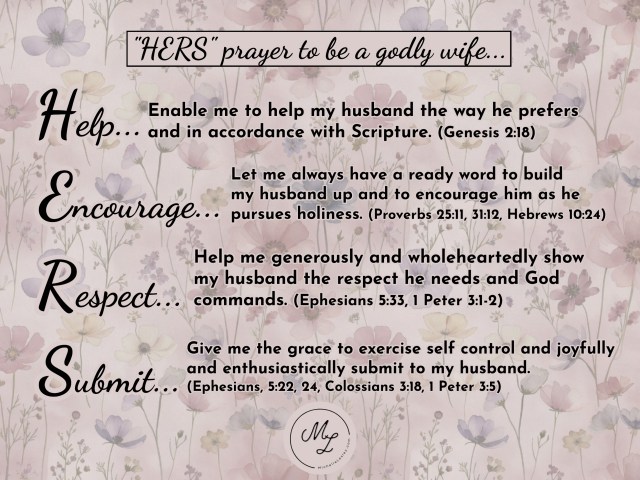
A few months ago, I posted an article called Prayers for a Godly Marriage that contained this graphic. Now, not only do we need to pray that God will help us to do these things, we also have to do them!
I would start by having a calm, kind, loving conversation with your husband than doesn’t contain even a hint of nagging, complaining, or otherwise expressing your displeasure. Whether you end up agreeing with him or not, you want to make sure you fully understand his heart on this issue.
You might say something like, “Honey, I really want to be clear on what you’re thinking about all of this. Can you help me understand all of the reasons why you feel so strongly about the masks being available in the lobby?”. And then really listen and do your best – whether you agree with him or not – to understand his position.
When he gets finished explaining, reflect back to him what you’ve understood him to say: “So here’s what I’m hearing you say- You don’t like the masks because they’re purple. The company that makes the masks supports abortion. And, you’re concerned that people will trust the masks more than they trust God to keep them healthy (or whatever his reasons might be). Did I get all of that correct?”.
When he says, “Yes,” thank him and let him know you’re going to think about and pray about what he’s said for a few days – and do that. Ask the Lord to help you understand and accept where your husband is coming from – even if you don’t agree with him. Pray that God will give you wisdom, love, and respect for your husband when you revisit the issue with him. Pray for wisdom for your husband as he makes this decision for your family.
When you go back a few days later to talk to your husband again, start things off with submission: “Honey, I love you, and I want you to know that I’ve been praying that the Lord will help you and give you wisdom as you make the decision for our family about whether or not to join this church. Whatever you decide, I will joyfully support you and follow you. If you would like, I have a few thoughts about the situation that I would be glad to share if you think that input would be helpful to you in your decision-making process. Would you like to hear them?”
If he says no, accept that answer graciously and don’t share your thoughts. If he says yes, pick the two or three points that are most important or urgent to you, frame them logically, objectively, and helpfully, not emotionally, manipulatively, or naggingly, and be as concise as possible.
You’re his helper. You’re doing this to provide helpful information so your husband can make the most godly decision possible. Think of yourself as a surgical nurse handing your husband, the surgeon, the instruments he asks for at the right time. You hand him that retractor, and that’s where your role ends. He takes it from there.
Once you’ve provided your input, again reassure your husband that you’ll continue to pray for him and gladly support whatever decision he makes, and let him take it from there. Bear a few things in mind that may help:
The Bible doesn’t command you to join this particular church, but it does command you to respect and submit to your husband.
This is a situation God is using to sanctify you. Be sure you’re being obedient to Him as you walk through it.
Matthew 7:12, the Golden Rule, tells us to treat others the way we want to be treated. If the shoe were on the other foot and you felt strongly against joining a certain church for what you had determined was a good reason, would you want your husband to insist on joining?
God could very well be using your husband’s uneasiness about the masks to keep you from joining a church He doesn’t want you to join, or to protect you from something that could happen in the future. What if, instead of submitting to your husband, you insist that your family join this church, your husband gives in, and a year from now the church implodes in some sort of horribly sinful situation? How are you going to feel then? How is your husband going to feel?
About 20+ years ago, I was a member of a church whose women’s ministry was just getting started, and they decided to kick things off with a Beth Moore Bible study. Well, Beth wasn’t as well known back then as she is now, and I had no idea what discernment was. So before shelling out the money for the book, I went to the library and checked it out to see if I liked it.
I didn’t. Beth’s writing style grated on my last nerve. It was the literary equivalent of a hummingbird flitting from one thing to the next and doubling back every two seconds. I knew there was no way I’d make it through that book without throwing it up against the wall, so I chose not to sign up for the class.
Imagine if I had signed up for it and had gotten hooked on Beth Moore. But God used something so stupid and inconsequential as my irritation at her writing style to protect me from what could have been years of deception. He could be doing the same kind of thing in your situation. You never know, so it’s always best to obey Scripture and submit to your husband. Even if your husband turns out to be wrong, you still did the right thing.X
If you have a question about: a Bible passage, an aspect of theology, a current issue in Christianity, or how to biblically handle a family, life, or church situation, comment below (I’ll hold all questions in queue {unpublished} for a future edition of The Mailbag) or send me an e-mail or private message. If your question is chosen for publication, your anonymity will be protected.
Hello! I believe as you do, about women “Pastors” and not usurping authority or teaching over men. Some women, such as Priscilla Schirer(sic) just as an example, who speak to thousands are considered as unscriptural because men are often present. Now I do know some encourage male attendance but what if they don’t but men show up? That’s not really in their control, right? What would you do if men attended an event you’re speaking at? I mean this sincerely, just wondering how this could be handled. Thank you!
This is a great question I’ve received a number of times, so when I was recently asked again by this reader, I thought I’d just drop my answer right into the ol’ Mailbag!
There’s a foundational understanding I need to lay before answering. There are three types of women with public speaking/teaching ministries:
Those who know what Scripture says about women preaching and teaching the Bible to men and strive to obey it.
Those who know what Scripture says about women preaching and teaching the Bible to men, but don’t care and choose to disobey it.
Those who don’t know what Scripture says about women preaching and teaching the Bible to men.
Women in the third category don’t know Scripture well enough to be teaching anyone, so you shouldn’t follow them for that reason regardless of whether they teach men or only women.
When confronted about their sinful practice of teaching men, those “second category” women often cry, “We can’t help it if men just show up!” as though they’re helpless victims of men choosing to attend their women’s conferences and there’s nothing they can do about it.
Hogwash, baloney, and poppycock.
Those women are not helpless victims who have unwittingly had men foisted upon them. They’re rebels against Scripture who are perfectly fine with preaching to men. In fact, Priscilla Shirer and most of the other aforementioned examples of “second category” women, have preached the Sunday sermon in a church multiple times. Don’t tell me they didn’t know men would be present in the Sunday morning worship service!
So when they try to present this “helpless victim of men showing up, otherwise I would have obeyed Scripture” scenario, they are lying to you. They are totally fine with preaching to men, and they will blasphemously twist Scripture to try to make you fine with it, too.
So, understanding that foundation from the get go should help us reframe the way we think about this scenario of men showing up at a women’s event.
How do “first category” women handle this situation? Well, being one, I’ll be happy to explain.
First, before you ever embark on a teaching ministry, you study the Scriptures, come to a biblical understanding of the role of Christian women, and you make a Holy Spirit empowered decision of the will that you’re going to obey Christ regardless of the cost. That’s just what we do – about everything – as Christians. It is the essence of the Christian life.
Next, you make it abundantly clear in all aspects of your ministry that you hold the biblical position of the role of women and that you, emphatically do. not. teach. men. I kinda feel like anybody who’s been following me for more than five minutes knows that about me.
Next, when you create your event speaking information and materials, you again make it explicitly clear that you only teach women. The very first sentence on my Speaking Engagements page says:
“I am available to speak on Biblical topics at women’s conferences, workshops, retreats, breakout sessions, and other women’s events.”
If that’s not clear enough, my event planner FAQs document, which discusses the issue further, is also linked on that page, and my speaking engagement request form requires that the pastor of the church hosting the event be familiar with my theology, especially on hot button issues like the biblical role of women.
When I receive a speaking engagement request, I check out the requesting church. If it’s a church that has female “pastors” or allows women to preach or teach men, my husband (my events coordinator) will specifically address that with the church’s event planner during the booking process.
In ten years of event speaking, that has happened once, and I did not speak at that church’s event. (They weren’t asking me to teach men at their event, but I’m not going to give the appearance of tacitly endorsing a church that allows women to pastor, preach, or teach men by accepting their invitation to speak.)
I have bent over backwards to make it perfectly clear that I only teach women. The “second category” women don’t. In fact, they make it perfectly clear that they’re fine with teaching men by accepting speaking engagements where they already know men will be in attendance, such as preaching the Sunday sermon, or contracting with Lifeway Women, which welcomes men at their women’s events.
If a speaker makes it clear that she only teaches women, event planners don’t usually ask her to speak at co-ed events. If a planner for a co-ed event somehow manages to miss the speaker’s clearly stated information, it’s the responsibility of the speaker to find out about the event and turn down those that invite men to attend. An invitation to speak at an event is not a subpoena. The speaker is absolutely free to turn it down. And if the event is unbiblical (such as a co-ed event for a female speaker), she has a biblical responsibility to turn it down.
When potential event attendees are familiar with the speaker and her position on the role of women, and the event is advertised as a women’s event, men generally get the picture that they’re not welcome or wanted and they don’t show up.
And these days, I request security at my events. It’s security’s job to intercept anyone -whether that’s an armed attacker, a protester, or a man who wants to attend – who shouldn’t be there and could endanger the women attending or disrupt the event.
That being said, this scenario of men just showing up to attend a women’s event actually happened to me. Once. In ten years of event speaking.
I was asked to teach a couple of breakout sessions for women at a doctrinally sound co-ed conference. The host organization and I were in complete agreement that only women would attend my sessions, and that was indicated in all of the publicity materials.
About five minutes after I started teaching my first session, a couple of young men wandered in and took seats near the back. I continued my opening remarks for a minute or two, hoping they’d look around, get a clue, and leave.
When they didn’t, and it had become obvious that they were there as attendees seeking to be taught (not looking for their wives, running the sound board, or some other legitimate reason), I stopped teaching, and as gently and kindly as I possibly could (because I didn’t want to embarrass them or make things more awkward than they already were), I said something along the lines of,
“Hi guys. I’m so honored that you’d like to hear me teach, but I don’t teach men, and this session is for women only. You might enjoy attending Brother So & So’s session. It’s right down the hall.”.
And they immediately and apologetically – with no hint of offense – stood up and and left, and I continued teaching the women. No big whoop. They just didn’t know any better, but I was able to teach them without teaching them!😀
(I did, however, as soon as that first session was over, track down the host of the conference and asked him to announce in the next plenary session that my remaining breakout sessions were for women only!)
I wasn’t a victim. There was a kind, loving, and biblical way to handle the situation, and I handled it. Those “second category” women? They don’t, because they don’t see men in their audiences as any sort of an issue.
The bottom line in this situation is that if you want to obey Christ in your ministry, you’ll make that your top priority and He’ll give you the grace to do so. If you don’t want to obey Christ in your ministry, you won’t. Those “second category” women don’t want to obey Christ, or they would.
If you have a question about: a Bible passage, an aspect of theology, a current issue in Christianity, or how to biblically handle a family, life, or church situation, comment below (I’ll hold all questions in queue {unpublished} for a future edition of The Mailbag) or send me an e-mail or private message. If your question is chosen for publication, your anonymity will be protected.
Welcome to another “potpourri” edition of The Mailbag, where I give short(er, kinda? sometimes?😀) answers to several questions rather than a long answer to one question.
Or maybe I answered your question already? Check out my article The Mailbag: Top 10 FAQs to see if your question has been answered and to get some helpful resources.
I recently commented on a post on X regarding a husband determining how his household votes and I took the position that if the husband votes against biblical principles, the wife should not have to also do so.
After reading your article I “feel led” in a different direction from my husband, I think my position is wrong. My husband generally votes liberal and I conservative. I try to keep quiet regarding my opinions which do not align with his, but my husband knows how I vote and he does not like it. Like the lady in the article, I would like to know that I am doing the right thing if I vote according to my husband’s choices.
Great question! I’m so glad you’re trying to think this through biblically and that you want to submit to your husband.
There’s a pretty big difference between the situation the lady in the “I ‘feel led'” article was asking about and the situation you’re asking about.
Her husband wasn’t doing anything sinful or unbiblical. He was doing something morally neutral and potentially beneficial for his family. Your husband is doing something sinful and unbiblical (especially if he professes to be a Christian), and potentially harmful to thousands or millions of people. Remember this paragraph of the article?
Unless your husband is…encouraging you to do something sinful, God’s will is for you to graciously submit to his decisions. Denying your request to move to another state may not make you happy, but it does not qualify as…sin.
Your initial position was correct. No Christian should vote for things that conflict with rightly handled, in context Scripture, and that includes Christian wives whose husbands vote in favor of those things. No, you would not be doing the right thing if you vote in favor of unbiblical issues simply because your husband does.
God is a God of order who established and runs His world according to a hierarchy of authorities that we are to submit to. The Christian woman’s hierarchy of authorities to submit to looks like this:
God Your husband Other authorities in their appropriate spheres (your pastor, the government, your boss, etc.)
You should absolutely submit to your husband, even if your husband isn’t a Believer. But God outranks your husband, and if God tells you to do something (in rightly handled, in context Scripture), and your husband tells you to do something else, you submit to God, not your husband. As Peter said in Acts 5:29, “We must obey God rather than men.”.
Sit down with your husband and have a conversation about this. Acknowledge that you’re aware he doesn’t like the way you vote, but that you can’t vote for things that are unbiblical. Reassure him that you will never lie to him about how you plan to vote and that you will vote the way he does on any issue that does not conflict with Scripture.
But on the items that do conflict with Scripture, there are two options on the table:
You can continue to vote on the issue in alignment with Scripture
You can refrain from voting on those items
Let him know you’ll graciously abide by whatever he decides. That way you will be submitting to him, but in a way that doesn’t cause you to sin against your conscience.
I have followed you for 6-7 years (or more-time flies!) and have learned so much about false teachers and discernment. This has also cost me many friends. I am deeply sad that so many are led astray. Would you please read the following Facebook post that my friend posted and comment on how you would respond to this? Thank you for your time and consideration.
Thank you so much for your kind words of encouragement and for being a loyal follower!
Yep, that’s me – if you have too many friends or too many social media followers, just start sharing my articles with them. I guarantee that will whittle your friend list down to an easily manageable number!😀
This is one of those things that sounds kinda “Christiany” on the surface, but the minute you start giving it any actual biblical thought, it collapses like the house of cards it is. I mean, just take the very last sentence.
Do you think any evangelical woman who swears by all this stuff -let’s call her “Vivian Virtue Signaler”- is going to find joy by surrounding herself with me (or any other doctrinally sound Christian who would tell her this is all a bunch of holier-than-thou hoo hah)? I give Vivian five minutes before she takes a swing at me – someone who, undoubtedly, lives “differently” than she does.
BEFORE READING FURTHER, let me issue all of my readers a little challenge. Go through each of the points listed on the meme, read them carefully, and see if you can explain – from rightly handed, in context, chapter and verse Scripture – why each statement is either biblical or unbiblical. Then, read my answers below and let’s see if we’re on the same page!
Here we go!
The title of this meme, “I Care About You,” is a lie for any Christian who agrees with many of the things listed in items 1-9.
Who you choose to love, and how you love, is your business. Anyone with a pulse knows this is code for, “Homosexuality is fine, and nobody better say any different.”. It’s a veiled threat. No one who’s actually been born again would ever say something so hateful to someone enslaved to the sin of homosexuality or any other sexual sin. When we see someone who desperately needs a Savior, it’s our business to call that person to repent and believe the gospel.
Furthermore, Vivian, if someone chooses to “love” your husband, your nine year old, or your dog in a sexually immoral way, is that still just his or her business? I think you’d say that’s now your business. X
I respect your pursuit of happiness. Again, this is code for, “Sin all you like, in any way you like! I’ll never confront you!”. How is that “I care about you,” for a Christian?
Vivian, what if my “pursuit of happiness” includes stealing your car, drowning kittens, or correcting all of these unbiblical beliefs you hold? You’re going to stand by and joyfully “respect” my pursuit of those things without telling me to stop? I don’t believe that for a second. X
I will live and let live. Riiiiiiight. No one who has ever said this truly believes it or lives it out. No one. Eventually, everyone confronts someone about something and tells him to stop. Why? First, because the law is written on our hearts. We all have a basic sense of right and wrong, justice and injustice. We’re not going to “let live” someone whose “pursuit of happiness” includes harming someone we love. Second, we idolize the comfort of our own flesh. If someone walks up to you and starts repeatedly poking you in the arm, exactly how many pokes will it take before “live and let live” goes right out the window?
(How ya doing over there, Vivian Virtue Signaler? Finding a lot of joy in this dismantling of your ridiculous and unbiblical platitudes?) X
I will follow my faith, knowing that Jesus calls me to love. Yo Viv, how about you follow the Bible, knowing that your “faith” is in the world’s definition of “love”. I got your love right here:
Do not love the world nor the things in the world. If anyone loves the world, the love of the Father is not in him. For all that is in the world, the lust of the flesh and the lust of the eyes and the boastful pride of life, is not from the Father, but is from the world. 1 John 2:15-16
You love the world and its ideologies. You love people thinking you’re a wonderful person. You don’t love Christ and His Word.
Greater love has no one than this, that one lay down his life for his friends. John 15:13
You won’t even lay your life down enough to call sinners to repent and believe the gospel. You hate them by leaving them to die in their sins. X
I will try to use my time on this earth wisely, choosing understanding over judgment. This whole screed is you judging other “Christians” who aren’t as awesome and virtuous as you are. It’s dripping with unbiblical, hypocritical judgment against the Christian clodhoppers who are so backwards and hick as to actually believe the Bible and do what it says.
I will not name call or belittle. This is a great – and, in fact, biblical – aspiration, Vivian, but this entire meme implicitly belittles everyone who isn’t as wonderful as you are. Furthermore, it’s the very “Christians” who say things like this and parade their awesomeness around in front of everybody who are the first to attack doctrinally sound Christians for humbly obeying Scripture and calling others to do the same. X
I am not better than you. This is a true and biblical statement, Vivian. If you believed this, you wouldn’t have created and posted this virtue signaling meme. X
We are all humans, created by God, not robots programmed to think, act, or live the same way. Accurate, at least on the surface. But in the context of all the other things Vivian is saying in this meme, what she seems to mean is that, for example, living as a Satan worshiping, transsexual, abortionist is just as valid a way of life as living as a genuinely regenerate Christian who thinks, acts, and lives according to Scripture.
It’s not. There’s a vast difference between “not thinking, acting, or living the same way” when it comes to morally neutral life choices like urban vs. rural, vegetarian vs. carnivore, or white collar vs. blue collar, and “not thinking, acting, or living the same way” when it comes to life choices that are not morally neutral, like Satanist vs. Christian, homosexual vs. heterosexual, or drunkenness vs. sobriety.
When it’s a matter of “not thinking, acting, or living the same way” as the Bible commands, that’s sin. And people living in sin must be called to repent and believe the gospel. That’s the only way “I Care About You” can be true. X X
I will love you as you express your kind, honest, true self. Well, Viv, I’ve expressed my kind, honest, true self to you, and I am kindly, honestly, and truly telling you that you need to repent of all these unbiblical notions and of the pride that motivated you to create and post this meme. Do you love me?
From experience, I’ve found joy in surrounding myself with those who live differently than I do. I don’t, because, broadly speaking, people who “live differently than I do” with regard to those life choices that aren’t morally neutral, aren’t saved.
And I find no joy in surrounding myself with sinners who are determined to fling themselves into the bowels of Hell for all eternity.
I find that heartbreaking.
I want them to know Christ. I want them to know the same forgiveness, peace, love, and hope I found when I came to know Him.
That’s what “I Care About You” means for a Christian.
Now, my dear reader who submitted this question, you asked how I would respond to this. The above is how I respond to the content of the meme.
If you’re asking how you should respond to your friend who found this meme somewhere and shared it on Facebook, I would take into consideration your friend’s spiritual state (lost or saved?) and, if she’s saved, her level of spiritual maturity, and I would most likely just scroll on by without comment.
If, for some reason, you do find it necessary to discuss it with her, I would do so privately and in person. Just take her through the various points of the meme, kindly and patiently ask her questions about what she understands each statement to mean, and point her to Scripture.
Be prepared for her not to react well. Maybe she’s just a young Christian who doesn’t know any better and will be thankful to learn from you. I hope that’s the case. But she could also be someone who’s entrenched in this drivel, doesn’t want you raining on her parade of good vibrations, and will not take kindly to anyone contradicting it. Don’t let her reaction deter you from standing firmly, yet kindly, on the truth of Scripture.
My question is, for childrens ministry, is it appropriate or biblical to have Sunday lessons as well as Wednesday night lessons for the children? I find myself being stretched thin and believe the responsibility should be for parents to primarily teach their children. I think of Titus, where Paul exhorts the older women to teach the younger women. I believe that though I have a passion to teach both women and children, I am being led to teach the mothers to teach their own children. While still continuing in Sunday lessons at least until the kids reach 12 yrs.
I think I understand what you’re asking, but I’m going to have to read between the lines a bit, because a few key pieces of information seem to be missing. So please forgive me if I misread between the lines.
There is absolutely nothing wrong or unbiblical, and everything right and biblical, with a church that has children’s Bible classes on Sunday morning and Wednesday night, just like they might have adult Bible classes on Sunday morning and Wednesday night. In fact, among the churches I’m familiar with, this is exactly what most of them do.
I’m inferring from your statements about being “stretched thin” and your passion for teaching children that perhaps you are the only one teaching the children’s classes and you’re starting to get a little burned out or your life has gotten busier and you no longer have time to prepare for and teach both Sunday and Wednesday.
If that’s the case, there are two separate issues at play here, and I would encourage you to keep them separate in order to handle each of them biblically.
First, while it’s important to keep our commitments, to be women of our word, and to follow through with things we’ve agreed to do, sometimes life just happens. This is why it is important to make sure our priorities in life are in a biblical order and that we learn to say no to lower priority things that impinge on higher priority things.
A Christian woman’s priorities and obligations should be:
Her personal relationship with Christ Her husband (if she’s married) Her children and grandchildren (if any) Her church Relationally close extended family / loved ones Her job or other work outside of managing her household Leisure, hobbies, optional volunteer work
Naturally, emergencies and other situations may temporarily shift some of these things around a bit. Caring for an aging parent may force you to miss church sometimes. If your neighbor’s house is on fire, the Lord does not want you to finish your morning Bible study time instead of helping them.
But if, for instance, you’ve entered a season of life in which your children or husband need more of your time at home, it’s OK to finish out, and cut back on, your commitments (those that are over and above attending Bible study and worship service) at church.
Too many Christian women do not know how to say a holy “no,” and end up overextending themselves in a way that is a disservice to themselves and their families, and is actually displeasing to the Lord. You do not have to say “yes” to everything you’re asked to do. (And trust me, the more you say yes, the more you’ll be asked.)
When someone asks you to take on a long term responsibility like teaching a class, or serving on a committee, or cooking the Wednesday night fellowship meal, or whatever, your immediate response should be something along the lines of, “I’m honored that you asked me. Let me talk to my husband about it and pray about it. Could I get back to you next week with my answer?”. And then take that time to think, pray, and discuss with your husband whether or not this new responsibility would be a fit for you, your family, and your schedule.
If it’s not, there’s no shame in that, and you don’t need to make up excuses (which can turn out to be lies, if you’re not careful). All you have to say is, “Myrtle, I’m so honored you asked me to teach the three year old class every week, but after discussing it with my husband, praying about it, and evaluating my schedule, I’m afraid I can’t commit to that right now. I’ll pray with you that you’ll find just the right person for the job.”.
Just because there’s a vacancy or a need doesn’t necessarily mean you have to be the one to fill it.
So if that’s the type of situation you’re in – you’re overextended, or you’ve been teaching the children forever and you just need a break, or God truly is changing the direction He wants you to go in serving Him (from teaching children to teaching adult women) that’s OK in and of itself. You don’t need to lean on “parents should be their children’s primary Bible teachers” or any other “loftier” theological reason to cut back or shift gears.* Prayerfully and honestly decide what you need to do to honor God, finish out your commitment or give plenty of notice, and do it.
*(I’m not saying the lady who asked the question is doing this, I just know that among hard-working, constantly serving Christian women, sometimes we feel like we have to have some sort of super spiritual sounding reason for saying no to something. We don’t. Keeping your priorities in a biblical order is a “super spiritual” reason.)
The principle of parents needing to be their children’s primary Bible teachers is a separate issue. Yes, parents should be pouring the Word and prayer into their children every day. Two Bible classes a week at church is not going to prevent or interfere with parents who are committed to doing that.
For parents who are not already committed to teaching their children the Bible at home, but are relying on the children’s Bible classes at church to do their job for them, canceling one or both of the classes is not the answer. That’s not going to suddenly inspire those parents to start teaching their children the Bible. All it’s going to do is reduce or eliminate the only Bible teaching the children are currently receiving.
My advice (depending on what your husband and your pastor say, of course – you’ll need to check with them first) would be to find however many people you need to either help you with or take over the children’s classes, and then begin discipling the mothers to teach their children the Bible at home during the week. Or maybe do both. Disciple the mothers, but also have them come with their children to either or both of the weekly classes so they can learn how to teach their children the Bible. Maybe even have the moms rotate teaching the children’s classes so they can get some “on the job training”! That might be a good way to get the help you need in the children’s classes.
If you have a question about: a Bible passage, an aspect of theology, a current issue in Christianity, or how to biblically handle a family, life, or church situation, comment below (I’ll hold all questions in queue {unpublished} for a future edition of The Mailbag) or send me an e-mail or private message. If your question is chosen for publication, your anonymity will be protected.