
Mailbag, Marriage

The Mailbag: What is submission?

How is biblical submission defined, with specifics?

It’s a great question that a lot of women wonder about. “Just give me a list of all of the things I need to do to be ‘doing submission,’ and I’ll do them!” Unfortunately, that’s not how this, and so many other biblical concepts, works.

“Just give me a list of all of the things I need to do to be ‘doing submission,’ and I’ll do them!” Unfortunately, that’s not how this, and so many other biblical concepts, works.

Asking “How is biblical submission defined, ‘with specifics’?” is kind of like asking someone to define “modesty” or “parenting” with specifics. A lot of those “specifics” are situation dependent and vary from family to family or person to person.

For example, you can’t make a law for Christians that a woman’s skirt must be a certain length, because the length of women’s legs vary, and the same length requirement will be modest on one woman and immodest on another. It’s the same idea with submission. It’s going to vary from marriage to marriage.

In a godly marriage1, a husband and wife come together and discuss how they’re going to handle various issues, chores, responsibilities, etc. If there’s agreement, great! But that’s not really submission because both spouses are getting what they want.

If there’s agreement, great! But that’s not really submission because both spouses are getting what they want.

When there’s an area of disagreement, both spouses offer their input. If, after discussing it, the husband comes to the conclusion that he was wrong or that it would work just as well to do things the wife’s way, then he leads the family to do things the way she has suggested.

But if, after hearing his wife out, he concludes that his way is the wisest way to do things, that’s where submission comes in. The husband is responsible before God for how he’s leading in this situation. The wife is responsible before God for maintaining a posture of heart that says, “I may think he’s wrong, but I’m going to trust God in this situation, and obey Him by putting my will aside and graciously doing things my husband’s way.” That is biblical submission whatever the specific circumstances may be.

I may think he’s wrong, but I’m going to trust *God* in this situation, and obey *Him* by putting my will aside and graciously doing things my husband’s way.

Obviously, that’s an ideal situation between a godly husband and a godly wife, but the same applies to a godly wife with an unsaved or not so godly husband. First Peter 3:1-6 and 1 Corinthians 7:12-16 are crystal clear that a wife’s godly submission can be instrumental in his salvation or sanctification.

Likewise, wives, be subject to your own husbands, so that even if some do not obey the word, they may be won without a word by the conduct of their wives, when they see your respectful and pure conduct.

For how do you know, wife, whether you will save your husband? Or how do you know, husband, whether you will save your wife?

2 Peter 3:1-2, 1 Corinthians 7:16

“But what if his way turns out to be the wrong way?” Sometimes you’re going to submit to your husband and he’s going to end up being wrong. He’s going to have to answer to God for that. You’re going to have to answer to God for whether or not you obeyed Him and submitted to your husband.

We don’t obey God only when we think that doing so will yield the results we want. We obey God’s commands every time, we leave the results up to Him, and we trust Him to carry us through and provide for us regardless of what happens. That’s called faith.

We don’t obey God *only* when we think that doing so will yield the results we want.

1If your knee jerk reaction to the word “submission” is to immediately reject this biblical command outright because there are men who abuse their wives (whether or not your husband is one of them), your attitude is not in line with Scripture. Abuse is a separate situation with a separate, biblical way of handling it that has nothing to do with biblical submission. Please note that this article is to be understood in the context of a godly (by definition, not abusive) marriage.

Additional Resources:

Why is submission so scary? at A Word Fitly Spoken

Toxic (Evangelical) Femininity

Imperishable Beauty Bible Study, Lesson 11- A Beautiful Wife

Godly Womanhood โ€“ Submission part 1  part 2

CBMW (type โ€œsubmissionโ€ into the search bar)


If you have a question about: a Bible passage, an aspect of theology, a current issue in Christianity, or how to biblically handle a family, life, or church situation, comment below (Iโ€™ll hold all questions in queue {unpublished} for a future edition of The Mailbag) or send me an e-mail or private message. If your question is chosen for publication, your anonymity will be protected.

Abortion, Mailbag

The Mailbag: Potpourri (Ectopic pregnancies… Selfie vanity… Staying single… Devotionals)

Welcome to another โ€œpotpourriโ€ edition of The Mailbag, where I give short(er) answers to several questions rather than a long answer to one question.

I like to take the opportunity in these potpourri editions to let new readers know about my comments/e-mail/messages policy. Iโ€™m not able to respond individually to most e-mails and messages, so here are some helpful hints for getting your questions answered more quickly. Remember, the search bar (at the very bottom of each page) can be a helpful tool!

Or maybe I answered your question already? Check out my article The Mailbag: Top 10 FAQs to see if your question has been answered and to get some helpful resources.


A question on your post regarding abortion if I may. I am most definitely pro-life. You stated that every attempt should be made to save the life of the mother and child โ€” including in cases of ectopic pregnancies. Can you direct me to articles of the professionals you mentioned who have stated publicly that ectopic pregnancies can be saved?

My first and only pregnancy was both an anembryonic pregnancy and a tubal pregnancy. I was told that I was 5 minutes until death, and that the tubal pregnancy could not be saved. I have wondered about this for many years but cannot find any information regarding a tubal pregnancy that can be saved. Thank you.

My deepest condolences for the loss of your baby. May the Lord continue to comfort you and give you peace.

I’m so sorry, but I think you may have misunderstood that part of the article. Here’s what it says:

Abortion is never necessary to save the motherโ€™s life. Numerous OB/GYNs and other medical professionals have stated this publicly. In cases in which the motherโ€™s life and/or health are at stake (including ectopic pregnancies), the biblical and medically ethical approach is to make every attempt to save both the mother and child (which can often be done through early delivery, not abortion). If the child dies during the attempt to save him and his mother, that is a grievous tragedy, but it is not an abortion. Abortion is the intentional, proactive killing of a child.”

The statement, “Numerous OB/GYNs and other medical professionals have stated this publicly,” refers to the previous sentence (“Abortion is never necessary to save the mother’s life.”) and link. In other words, these medical professionals have stated that abortion is never necessary to save the mother’s life, not that babies in ectopic pregnancies can be saved.

With ectopic pregnancies, “the biblical and medically ethical approach is to make every attempt to save both the mother and child…”. As I understand the situation, at this point in medical technology, it is not possible for a doctor, while attempting to save the mother with an ectopic pregnancy, to also save the life of the baby. However, it is my understanding that, through research, an attempt is being made to discover ways to save these precious babies, possibly through re-implantation or other means.

I think you will find the video below to be helpful as well as its companion article:

What about Ectopic Pregnancies?

One of the things Sarah mentions in the video that I found enlightening is that ectopic pregnancies are fairly rare, and that it is rarer still for the ectopic pregnancy to be nurturing a live, normally developing embryo.

She says that in every case she has personally seen in her career, either the baby in the ectopic pregnancy has already died by the time the mother is treated, or the cells in the blastocyst are so aberrant that normal development of a living fetus would be impossible, or both.


Is there a Biblical way to approach Christian friends about the appearance of vanity when they regularly post pictures of themselves on social media?

It is so kind of you to care about your friends’ reputation in the eyes of others.

There is a biblical way to approach them. There is not a way to approach them that comes with a guarantee that they won’t get mad. Those are two different things. In fact, it is likely no matter how gently and kindly you biblically broach the subject, they will get mad. That’s just how people respond to what they perceive to be criticism these days – even professing Christians.

And (assuming that what your friends are doing actually violates Scripture and isn’t just a matter of opinion – which I have no way of knowing) that’s OK. The fact that they get mad doesn’t automatically mean you weren’t being loving or biblical. As Christian women, we’ve been taught by society and by most of the popular evangelical women celebrities that the cardinal, unforgivable sin is hurting someone’s feelings. And that is what’s not biblical. You won’t find a single passage of Scripture that says, “Confront sin … unless it would offend somebody.”

Since the appearance of vanity is a highly subjective and sensitive issue, and one most Christian women aren’t familiar with, I would suggest broaching the subject privately and gently, keeping in mind that there’s always the possibility that you may be misreading the situation:

“Suzy, you know I love you and care for you, and I love looking through the pictures you post on social media. That picture of your dog last week was really cute! I’m just wondering if there’s a reason why you’re posting so many selfies? I know you love the Lord and I wouldn’t want others who see your pictures to get the impression that you’re vain or self-centered, but rather to see the godly young woman I know and love.”

If she’s teachable and willing to discuss the issue, you might wish to work through these Scriptures with her. (For the 1 Timothy 5 passage, I highly recommend listening to the section of our A Word Fitly Spoken podcast episode, Biblical Women’s Ministry, that explains this passage.)

You might also find the podcast series Amy and I did on modesty to be informative. “Modesty” doesn’t just mean refraining from dressing in a sexually provocative way. It also means dressing and conducting yourself in a way that doesn’t make you the center of everyone else’s attention.

Modesty: part 1 part 2 part 3– at A Word Fitly Spoken


Would you be so kind as to help me Biblically on the single/divorced woman. I would like to know if it’s OK to make my own way in life without remarriage. I am very successful in my profession, and content in my walk with the Lord and being single. (Or direct me to one of your articles)

It’s a great question, and one I’m sure a lot of single and single again Christian women wonder about.

There are a few different possibilities of how you might have arrived at the state of being single:

  • You’ve never married
  • You’re a younger widow
  • You’re an older widow
  • You initiated a divorce for unbiblical reasons
  • You initiated a divorce for biblical reasons (adultery, abandonment)
  • Your husband initiated an unwanted divorce (abandonment)

If you’ve never married, you’re an older widow, you initiated a divorce for a biblical reason, or your husband initiated an unwanted divorce, my general counsel would be to get up every day and serve the Lord faithfully wherever He has planted you – in life, in your church, in your job, and in your relationships. God says being single can be a good thing:

To the unmarried and the widows I say that it is good for them to remain single, as I am.

1 Corinthians 7:8

But never say “never”. There’s no requirement for you to pursue marriage, but don’t tell God “no” if He seems to be leading you toward marriage at some point in the future. Marriage is a good thing, too, especially if you struggle to control yourself sexually:

But because of the temptation to sexual immorality, each man should have his own wife and each woman her own husband… But if they cannot exercise self-control, they should marry. For it is better to marry than to burn with passion.

1 Corinthians 7:2,9

If you’re a younger widow, 1 Timothy 5:14 encourages you to remarry (a godly man, under godly circumstances, of course). In our culture, I think the principles behind this particular passage would also include younger divorcees who either initiated a divorce for a biblical reason or whose husbands initiated an unwanted divorce.

If you initiated a divorce for an unbiblical reason Scripture seems to indicate that you should remain unmarried:

To the married I give this charge (not I, but the Lord): the wife should not separate from her husband (but if she does, she should remain unmarried or else be reconciled to her husband), and the husband should not divorce his wife.

1 Corinthians 7:10-11

If you have not repented for initiating an unbiblical divorce – whether before or after you got saved – you should definitely not remarry, and you need to repent. However, if you have repented, there is some disagreement among reputable Bible scholars as to whether this prohibition on remarriage applies to any divorce you’ve initiated for unbiblical reasons (pre- or post-salvation), or only to post-salvation divorce, since Paul is speaking to Christians in 1 Corinthians 7. If you initiated a divorce for unbiblical reasons, it is imperative that you seek godly counsel from your (doctrinally sound) pastor if you’re considering remarriage.

In fact, in any situation in which marriage or remarriage is being considered, pastoral counsel is a must. And even if you’re contemplating lifelong singlehood, I would encourage you to seek pastoral counsel as well.

Whatever your future holds, while you’re single, steward your singleness to the glory of God.

Additional Resources:

All the Single Ladies at A Word Fitly Spoken

Imperishable Beauty: A Study of Biblical Womanhood (lesson 13 deals specifically with singlehood)

The Mailbag: Is it all right for a Christian to get divorced?

The Mailbag: Potpourri (Remarriage after divorceโ€ฆ

The Mailbag: Potpourri (…Remarriage Forbidden?)


I read your articles on recommended women to follow but could not find that any of them had a devotional book. I am involved in a ministry at our church and put together goody bags for them. Iโ€™d like to give them a devotional book. Do you have any recommendations?

That’s awfully kind of you to make these women feel special and loved. Thank you for serving your church.

On principle, I do not make recommendations for Bible study books or materials, or devotionals. Instead, I encourage women to study straight from the text of Scripture (see my article The Mailbag: Can you recommend a good Bible study for women/teens/kids? for more information).

May I recommend instead that you give them a lovely copy of “God’s devotional” – the book of Psalms or Proverbs? Here are a few I found (I didn’t vet all of these websites, so I’m not recommending them, just suggesting a few books to consider):

ESV Scripture Journal: Proverbs

Psalms for Joyful Living

Proverbs for your Daily Path

Mini Book of Psalms

Vest Pocket New Testament with Psalms and Proverbs

Or if you’d like to go with a copy of the gospel of John, check out these designs from the Pocket Testament League. (I would strongly recommend the ESV versions.) You can even design your own cover!


If you have a question about: a Bible passage, an aspect of theology, a current issue in Christianity, or how to biblically handle a family, life, or church situation, comment below (Iโ€™ll hold all questions in queue {unpublished} for a future edition of The Mailbag) or send me an e-mail or private message. If your question is chosen for publication, your anonymity will be protected.

Mailbag

The Mailbag: Potpourri (Prophetic “word” at church… Study apps… Pastoral counsel… Can treason be forgiven?… Fiction vs. lies)

Welcome to another โ€œpotpourriโ€ edition of The Mailbag, where I give short(er) answers to several questions rather than a long answer to one question.

I like to take the opportunity in these potpourri editions to let new readers know about my comments/e-mail/messages policy. Iโ€™m not able to respond individually to most e-mails and messages, so here are some helpful hints for getting your questions answered more quickly. Remember, the search bar (at the very bottom of each page) can be a helpful tool!

Or maybe I answered your question already? Check out my article The Mailbag: Top 10 FAQs to see if your question has been answered and to get some helpful resources.


I am writing to you today because the church we attend has started to allow a woman to speak a “word” over the congregation*.

After the third time, I approached the woman and asked if she thought she was a prophet. She did not deny it, but said that the Lord speaks to her directly through different ways. We went to our pastor who did not see a problem with what she was saying, but only that it was causing chaos during the service.

Last Sunday, our pastor allowed her to speak through the microphone stating that we need to let the Holy Spirit move in our midst.

My husband and I are very concerned and alarmed about this practice and we are unsure if we should leave the church over this and if we should approach our pastor with our concerns again. We have been attending this church for years and have never seen this happen until recently.

Honey, I know this is difficult and there are probably a lot of people you’re close to there, but this church has wandered off the reservation into New Apostolic Reformation land, and, yes, it’s time for you – and every other doctrinally sound Christian in it – to leave and find a real church. (Just to be clear, I would say the same thing if it were a man speaking these “words” over the congregation.)

Go to the Searching for a new church? tab in the blue menu bar at the top of this page, and begin studying the materials under “What to look for in a church” as you’re utilizing the church search engines.

You’ll also want to examine the materials under “Leaving Your Current Church,” including The Mailbag: How to Leave a Church. Be sure you don’t leave without going to your pastor and explaining to him that you’re leaving because he’s allowing false doctrine into the church. (You can consider this “approaching our pastor with our concerns again”. If you want to approach him one additional time – like you did before – prior to this explanation of why you’re leaving, you can, but it’s unlikely to do any good.)

*If you’re unfamiliar with what this reader means by “speaking a ‘word'” over the congregation, it looks something like this (start around the 14:27 mark), only, typically, it’s not quite this nutty and with a little thicker biblical veneer. The “church” in the link is not the reader’s church, it’s just the first example that popped into my head today.


As I read my Bible sometimes I would like to know what a certain word means in the original text. Can you recommend a resource that would be helpful for that? Thank you so much for all you do to keep us grounded in His Truth!

You’re welcome! It is my pleasure to serve you in Christ, and it is always encouraging to hear from women who are good students of Scripture.

I use both Blue Letter Bible’s and Bible Hub’s interlinear features, and find both to be helpful. You can read more about them in my article My Favorite Bible & Study Apps (they both have a web version as well as an app).


What does one do if they have a serious spiritual question and well known and trusted Biblical pastors give the exact opposite answers from one another? I cannot find the specific answer in Scripture and I desperately need to know what to do. I have read where one advises one course of action and the other advises the opposite. I am praying and continuing to search. But I need help. Any advice you have would be very welcome.

It’s hard to know exactly how to answer this question since I don’t know the details (and I’m not asking for them – this seems private), but, generally speaking, my advice is always to go to your own pastor first for counsel, assuming you’re in a doctrinally sound church. If it’s the type of issue best addressed by another woman rather than your pastor, reach out to a godly, doctrinally sound, “Titus 2” sort of woman in your church so that she can disciple you through this.

If, for some reason, you absolutely can’t go to your pastor or a godly older woman in your church, as a last resort, you can locate a biblical counselor (not the same thing as a “Christian counselor/therapist/etc.” – see the Biblical Counseling Resources tab in the blue menu bar at the top of this page) and set up an appointment.

If the reason you can’t go to your pastor or a godly older woman in your church is that you’re not currently in church, you need to remedy that immediately, and this situation is one of the main reasons why. (Go to the Searching for a new church? tab in the blue menu bar at the top of this page and start using the church search engines.)

When we go through crises and trials in life, God’s plan for us is to turn to our pastors and our church family, not to seek the generalized, one size fits all advice of celebrity pastors – even if they’re doctrinally sound.

Your own pastor and your brothers and sisters at your local church know you. They’re there for you, boots on the ground, to disciple you and help you walk through this situation over the long haul. A stranger on the internet or between the covers of a book can’t do that for you.

I urge you, turn to your church family.


Can God save someone convicted of treason by the government? Can they be forgiven and go to heaven?

Of course. God can and will save anyone who turns to Him in repentance over her sin and places her faith in the death burial and resurrection of Christ as payment and forgiveness for her sin. God doesn’t have a list of certain sins that He refuses to forgive*. I would encourage you to prayerfully study and consider the Scriptures and materials at the What must I do to be saved? tab in the blue menu bar at the top of this page.

*Readers, I know many of your minds immediately went here. Hope this resource is helpful.


Why should a woman or male read Fiction? Shouldn’t we read only and study only truth not fantasy? Jesus said “I am the truth”, Satan in the garden used fiction to challenge God’s authority and present a false truth to Eve, who was then deceived by her own desires gave Adam the forbidden fruit.

I think the struggle you’re having here is that you’re conflating fiction books, novels, and stories with lies and deception. They’re two different things, and they need to be kept in separate categories.

There’s nothing wrong with Goldilocks and the Three Bears or the John Grisham novel that’s sitting on my night stand. These are fiction – a creation of the author’s imagination. The authors aren’t trying to convince anyone that these stories are true. In fact, many novels carry a disclaimer stating that it is a work of fiction and that any resemblance the story or characters bear to real people or situations is purely coincidental. And no person of normal intelligence and wherewithal picks up a story or novel thinking it’s truth.

What Satan used in the Garden with Eve was not fiction. It was lies and deception. She thought he was telling her the truth. He was trying to make her believe he was telling the truth. See the difference? (Also, there’s no such thing as a “false truth”. A statement is either true or false. The words you’re looking for are “lies” and “deception”.)

And the Jesus who said, “I am the truth” in John 14:6? He told fictional stories throughout His ministry in order to teach and illustrate truth. We call them parables. And we know Jesus never lied or deceived anyone. That’s the best way we can tell the difference between lies and fiction. Lying is a sin. Fiction is not.

Now go and feel free to read that novel on your night stand.


If you have a question about: a Bible passage, an aspect of theology, a current issue in Christianity, or how to biblically handle a family, life, or church situation, comment below (Iโ€™ll hold all questions in queue {unpublished} for a future edition of The Mailbag) or send me an e-mail or private message. If your question is chosen for publication, your anonymity will be protected.

Mailbag

The Mailbag: Asked and Answered

The Lord’s richest blessings to you, readers. It is an honor and a joy to serve you in Christ. Welcome to all the newbies and to you seasoned veterans of the blog.

Because some of y’all are new, you aren’t yet aware of all of the resources here to help you. Or maybe you’ve been around a while and haven’t noticed something that might be helpful. Let’s remedy that!

First, if you’re new (or if you’ve never read it), check out Blog Orientation for New Readers and Old Friends. It’s like a CliffsNotes intro to the blog.

Second, be sure to familiarize yourself with all of the tabs in the blue menu bar at the top of the page. That’s where I keep the info I’m most frequently asked about.

Third, there’s a search bar at the bottom of every page (and one in the blue menu bar at the top of every page) which might help you find what you need.

Fourth, if you don’t find your question answered in one of these ways or below, you might want to check previous Asked & Answered articles and The Mailbag: Top 10 FAQs.

And finally, let me get you new readers some answers to the questions several of you have asked. Some of you long time friends may have missed these along the way, so I hope they’ll be helpful to you, too!


Do you do have study Bibles you recommend?

I’m looking for a new study Bible. I looked at the ESV John McArthur Study Bible, but I read some alarming comments in its reviews on Amazon that it’s missing Scripture verses from Matthew and a few other books. I’m curious if missing verses are typical of this translation.

A popular question this time around!

I’ve recommended several study Bibles in my article Bible Book Backgrounds: Why You Need Them and Where to Find Them. I’m personally partial to the MacArthur Study Bible in ESV as that’s what I currently use.

The accusations of verses being left out of the ESV (or any other modern translation) are most likely coming from King James Onlyists. Since 1611, when the King James Version of the Bible was published, thousands more – and much older – manuscripts of Scripture have been discovered, allowing modern translators to be far more accurate about which material is actual Scripture, and which might be something like a clarifying note or commentary added later by a scribe, than translators of the KJV were 400 years ago.

It’s not that modern translators of the ESV (or any other accurate and reliable modern translation) have “left out” verses, it’s that the KJV translators, doing the best they could with the manuscripts they had at the time, inadvertently added in “verses” they shouldn’t have.

The Mailbag: What is KJV-Onlyism, and Is It Biblical?

Missing Verses in the Bible โ€“ Part 1   Part 2 by Gabriel Hughes


I am looking for a resource to introduce a completely unchurched neighbor to the Bible and the gospel. She is tender and open. 

I’m so glad you want to share with your neighbor. What a good example you are to all of us!

I would recommend working through the verses and materials at the What Must I Do to Be Saved? tab (in the blue menu bar at the top of this page) with her.

If she’s (or you’re) uncertain whether or not she’s saved, try my study Am I Really Saved?: A First John Check Up.

You might also want to check through the studies and materials in my Bible studies tab (in the blue menu bar at the top of this page) to see what might be helpful.


I was hoping to see where you stood on predestination.

That would be in my Statement of Faith tab in the blue menu bar at the top of this page.


Is the Catholic religion false? Are they going to heaven?

This is such a painful issue for all of us who have Catholic loved ones. If that’s the case for you, dear reader, I’m so sorry I can’t reassure you that your Catholic loved ones are indeed saved and on their way to Heaven.

Roman Catholicism is an anti-gospel, unbiblical, heretical non-Christian religion that has sent millions of souls to Hell by teaching false doctrine. It is one of the accursed “another gospels” of Galatians 1:6-9. You no more belong at a Catholic “church” than at an altar of Baal or in the temple of Artemis.

Catholicism teaches numerous heresies, but perhaps the most grievous is that it anathematizes salvation by grace alone through faith alone. In other words, Catholic doctrine says if you believe this…

For by grace you have been saved through faith. And this is not your own doing; it is the gift of God, not a result of works, so that no one may boast.

Ephesians 2:8-9

…instead of believing that your good works help earn your salvation (as Catholic doctrine teaches), you are anathema- condemned to Hell.

If someone believes that she can earn her salvation – even partly – by her own good works, she is not a Christian. She is still lost and dying in her sins and will spend eternity in Hell.

Can someone get saved while still attending a Catholic “church”? Yes, praise God – if she somehow hears the biblical gospel from someone or reads it in her Bible, repents, and believes it. God mercifully and kindly saves people out of Catholicism every day, just like He saves people out of Mormonism, atheism, Hinduism, and so on.

Invariably, when I (or any other Protestant for that matter) address a well established doctrine or practice of Catholicism and how/why it isnโ€™t biblical, a Catholic will argue: โ€œThatโ€™s not what we really believe!โ€. If youโ€™re a Catholic and youโ€™re about to make a comment along those lines, hereโ€™s my response: Thatโ€™s what your own โ€œchurchโ€ teaches, so it IS what Catholics are supposed to believe. If you donโ€™t believe your own โ€œchurchโ€™sโ€ doctrine, why are you still a Catholic?

The Mailbag: Potpourri (…Catholic statues…)

Roman Catholicism: Mass Confusion at A Word Fitly Spoken

Truth and Love โ€“ with Mike Gendron at A Word Fitly Spoken


I am writing to see if you know of any resources for parents of adult special needs as far as Bible reading and studies go. I have 2 special needs daughters that I lead in Bible study. I don’t want to make it too kid like but I also don’t want it too hard to grasp either. Any advice or suggestions would be greatly appreciated.

What a blessing to be able to continue teaching your daughters the Bible even into adulthood!

I have offered some suggestions in my article The Mailbag: Potpourri (NBCS, Homeschool resources, Piperโ€ฆ) (3rd section).


I am curious to get your take on Bible Study Fellowship (BSF).

Here ya go!

The Mailbag: BSF (Bible Study Fellowship)


I am wondering if you had a recommendation for a chronological Bible? My sister and I have both desired to get one, yet often Bibles are pricey and thus we don’t want to get one that isn’t excellent.

Great question! I’ve never really looked at a chronological Bible because, to me (now you have to know this about me: I’m pretty frugal – read: cheap) it always seemed like a waste of money to buy a Bible arranged in chronological order when you could just use a regular Bible you already own and like along with a chronological reading plan that’s free.

So I can’t really recommend a chronological Bible since I’m not familiar with any of them, but I can recommend some decent Bible translations…

The Mailbag: Which Bible Do You Recommend?

…and a free (and excellent) chronological Bible reading plan:

Bible Reading Plans for the New Year- 2023.


Do you wear a hat in worship?

Not usually, though I have worn a few Easter bonnets in my time. In my opinion, I don’t look that great in hats. But I can rock a pair of sunglasses.๐Ÿ˜Ž (Which I also don’t typically wear during the worship service)

Or is this what you’re really asking about?

Rock Your Role: A Head of the Times- Head Coverings for Christian Women? (1 Corinthians 11:1-16)

(Tell you what, readers – I won’t judge you for covering if you won’t judge me for not covering. Deal?)


I’m turned upside down. For the last several years, I have led a group of 15 women through dozens of Bible studies written by many of the authors your have warned against in your articles. As I grow in my faith and Bible education, I am concerned about the “all about me” trends I see from Lifeway and Bible Study writers/producers. I see a worldly influence in most of what is written today. Who is a safe Bible study teacher? I used to think it was Beth Moore but, after doing her Daniel Study, I’m scratching my head about her reference to levels of heaven. The group I lead needs a structured lesson and isn’t prepared to dig into commentaries to do the work on their own. It would be far too intimidating and time consuming for many of the ladies I am blessed to lead. Is there any study or author that you do recommend?

I had to include your whole email, because I know lots of readers will be as encouraged as I was to read about how God is growing you – and, soon, hopefully, your group – in the knowledge of His Word.

Are there any studies I recommend? Yes. Mine. You’ll find them at the Bible Studies tab in the blue menu bar at the top of this page. They’re all free and they’re all suitable for groups or individuals, for study or for teaching.

My studies are designed for women and groups exactly like you and yours. They’re to help you transition from using what I call “canned” studies (books, workbooks, DVDs, etc.) to studying and teaching straight from the text of Scripture. And once you get the hang of it, you’ll never have to ask “Who is a safe Bible study teacher?” again, because you’ll never have to depend on anyone else’s books and materials again, including mine.


I would like to know if you think it is unbiblical to teach my grandson Scripture. He is 16 years old, and I try to hold him accountable to church attendance as well as a private Bible study and memory Scripture. I’m the only one to encourage in that area of his life.  

You go for it, Granny!

Thank God …THANK GOD… for women like you who pour the gospel into their grandchildren. You are in good company with Lois. What a blessing it would be if your grandson turns out to be a Timothy!

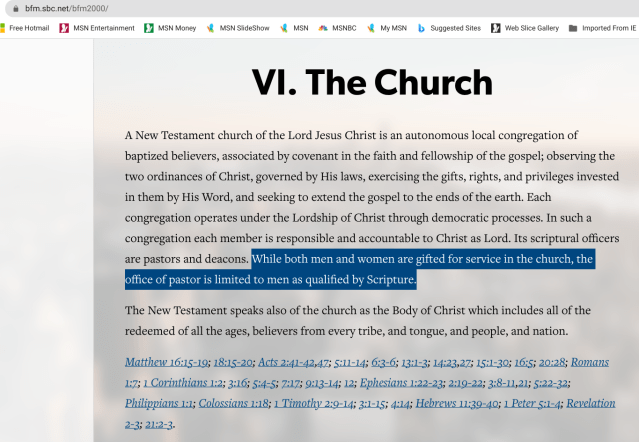
The biblical prohibition against women teaching men has a very specific context, and that context isn’t private instruction in the family. It’s public instruction (pastoring, preaching, teaching the Bible to men, and holding authority over men) in the gathering of the church body.

Rock Your Role: Jill in the Pulpit (1 Timothy 2:11-12)

Rock Your Role FAQs (see #12)

It would be very helpful if a godly older man at your church could take your grandson under his wing and disciple him, not because you’re violating Scripture, but because your grandson is at an age where he needs male role models and mentors to show him what a godly man looks and acts like.

Is it sinful for a wife to lead family worship (devotions) if the man is unwilling to read Scripture or even pray aloud? In our home that looks like mom gathering the children around, reading a chapter of Scripture, asking a few questions to the kids, singing a hymn, and praying. Sometimes the husband stays in the room. How should a wife handle this?  Should we try to do this before Dad gets home, as to not violate the command of women not to teach men?  

No, Hon, it is not sinful, it’s your responsibility as a Christian parent. Please see my answer to “Granny” above. She’s “Lois,” you’re “Eunice”.

No, I wouldn’t throw it in his face that you’re leading the children in worship, but I also wouldn’t make any special effort to do it when he’s not home, nor discourage him from staying in the room if he wanders in. If he’s not saved, he needs to see your living testimony and hear the gospel. If he is saved, yet shirking his responsibility as the spiritual leader of your home, perhaps the Lord will use your faithfulness to convict him.

I would also recommend that you set up an appointment with your pastor for counsel about all of this (you go alone if your husband won’t go with you). If your husband claims to be a Christian, he probably needs some godly older men to rally around him and disciple him about how to lead his wife and children. If he’s not saved, perhaps your pastor could recommend a godly older woman to disciple you through living with an unsaved husband.


If you have a question about: a Bible passage, an aspect of theology, a current issue in Christianity, or how to biblically handle a family, life, or church situation, comment below (Iโ€™ll hold all questions in queue {unpublished} for a future edition of The Mailbag) or send me an e-mail or private message. If your question is chosen for publication, your anonymity will be protected.

Mailbag

The Mailbag: Applying Twisted Scripture to Pseudo-“Christian” Events, Ideas, and Fads

The Asbury “revival”. Jesus Revolution. Bethel. The Enneagram. IF:Gathering...

Week after week, we see the ads, the social media posts, and the news stories of the latest, greatest “Christian” thing on the horizon.

Discerning Christians speak up in our churches, with our friends, and on our Facebook pages and rightly warn about the dangerous teachings and agendas these things push.

Other concerned Christians, genuinely fearing the “baby will be thrown out with the bathwater,” push back on those warnings. And sometimes, though they often have the best of intentions, they misapply Scripture or biblical principles to do so.

During the recent furor over the so-called Asbury “revival,” I saw, and was asked about, several of those misapplied Scriptures and principles employed in defense of the idea that we shouldn’t be so quick or so willing to publicly and confidently say something is not of God.

These Scriptures and principles could be applied to a myriad of things past and present, and will surely be employed again the next time a pseudo-“Christian” event, idea, or fad pops up, so let’s take a look at them and untangle them…

These Scriptures and principles will surely be employed again the next time a pseudo-“Christian” event, idea, or fad pops up, so let’s take a look at them and untangle themโ€ฆ


In response to doctrinally sound Christians decrying the Asbury event, one genuinely concerned lady asked:

What about Scripture that says “whoever is not against us is for us” in Mark 9:38-40? How do we apply this? Only God knows their heart, and Iโ€™m sure that people did come to know the Lord because of this.

There are several points in her question I’d like to address:

What about Scripture that says “whoever is not against us is for us” in Mark 9:38-40? How do we apply this?

John said to him, โ€œTeacher, we saw someone casting out demons in your name, and we tried to stop him, because he was not following us.โ€ But Jesus said, โ€œDo not stop him, for no one who does a mighty work in my name will be able soon afterward to speak evil of me. For the one who is not against us is for us.

Mark 9:38-40

Because we know that God’s Word never contradicts itself, and Jesus never contradicted Himself or Scripture during His earthly ministry, we have to understand passages like Mark 9:38-40 within the context of the entirety of the New Testament. In this case, we understand it in light of…

Not everyone who says to me, โ€˜Lord, Lord,โ€™ will enter the kingdom of heaven, but the one who does the will of my Father who is in heaven. On that day many will say to me, โ€˜Lord, Lord, did we not prophesy in your name, and cast out demons in your name, and do many mighty works in your name?โ€™ And then will I declare to them, โ€˜I never knew you; depart from me, you workers of lawlessness.โ€™

Matthew 7:21-23 (emphasis added)

โ€ฆand…

“Why do you call me โ€˜Lord, Lord,โ€™ and not do what I tell you?”

Luke 6:46 (emphasis added)

Notice Jesus is the speaker in all three of these passages. Again, Jesus did not contradict Himself during His earthly ministry.

We have to understand that there are a great many people out there who claim to be Christians and who, at first glance, look very much like Christians, but are not living in obedience to Christ, and/or are not teaching what accords with sound doctrine. Scripture calls those people liars and false teachers.

So when Jesus says in Mark 9:38-40 and other passages, that whoever is not against Him is for Him and vice versa, He’s defining “for Him” as someone who’s genuinely regenerated, obedient to Scripture, and teaching sound doctrine. Everybody else, regardless of what they might claim, is against Him according to Scripture.

You might think of it like this. When the disciples came to Jesus and said, “We tried to stop those guys because they aren’t part of our group,” and Jesus said, “Don’t. They’re still ‘with’ us,” it would have been similar to Him saying, “Don’t stop them. They’re doctrinally sound Presbyterians. We’re doctrinally sound Baptists. We preach the same gospel. We’re on the same team.”.

What He would not have been saying would have been something like, “It’s OK that they’re [Catholic, Mormon, prosperity gospel, New Apostolic Reformation, or any other heretical religion that claims to worship Jesus]. They say they love Me, so don’t stop them. Maybe some good will come out of this and a few people will get saved.”

Every week during his pastoral prayer, my pastor leads us to pray for a sister church in the area, and in his prayer, he always says, “Lord, we thank you that we are not the only expression of a Bible believing, God honoring, Christ exalting, Spirit filled church in this area.”

It’s kind of like that.

Only God knows their heart…

That’s not an excuse for failing to exercise discernment as Scripture commands us. God doesn’t require us to know other people’s hearts. He does require us to evaluate their observable behavior and teaching, compare it to Scripture, and stay away from it, warn others about it, and eradicate it from the church if it’s false.

“Only God knows their heart” is not an excuse for failing to exercise discernment as Scripture commands us.

…and Iโ€™m sure that people did come to know the Lord because of this.

1. That’s speculation on your part. Is it possible some people did get genuinely saved at this event? Yes, but we don’t have any proof of that. It’s an assumption.

2. The only way someone could have gotten saved at this event is if she heard the biblical gospel of law and grace, sin and repentance, and Jesus’ vicarious life, death, burial, and resurrection explicitly preached or explained. Here’s the biblical gospel. Was it proclaimed and explained at this event? If not, no salvations took place.

3. That idea is pragmatism. People come to Christ in all sorts of horrible situations and under all sorts of horrible teaching. People came to Christ in concentration camps, while they were still Muslims, in Catholic “churches,” while working as prostitutes, while practicing homosexuality, etc. The fact that people get saved while in those horrible situations or under that horrible teaching doesn’t magically make those situations and that teaching good. It means that God is so good and powerful and merciful that, through the power of His Word, He can save someone out of those situations and teaching.


But if even one person got saved, wasn’t it worth it?

Let me begin my answer to that question with another question.

Did you know that several medical procedures that have saved the lives of many people were discovered in World War II concentration camps by performing torturous experiments on inmates? Does the fact that those medical procedures have helped so many people justify the torture the Nazis inflicted on their victims?

Of course it doesn’t. Neither does one person (or even a bunch of people) getting saved excuse, nullify, justify, or make sin and false teaching “worth it”.

Stop and take a few moments to meditate on how high, and holy, and worthy of all honor, glory, majesty, praise, and reverence is God, the almighty King of the universe. Think about the excruciating pain Jesus went through on the cross, and the agony of having every drop of God’s wrath against sin poured out on Him. So that He might bear your sin and mine. So that we could be forgiven and free and saved from an eternity in Hell.

How could we ever say that the sewer slime of committing any sin against that God is “worth it,” no matter what the outcome might be?

No. A blasphemy-fest isn’t “worth it”. God doesn’t consider false teaching “worth it” if someone gets saved. He’s perfectly capable of saving everyone He means to save without such events.


You discerning Christians speaking out against this event should just back off like Gamaliel suggested in Acts 5 and let it play out. If it’s not of God, it will come to nothing.

So in the present case I tell you, keep away from these men and let them alone, for if this plan or this undertaking is of man, it will fail; but if it is of God, you will not be able to overthrow them. You might even be found opposing God!โ€

Acts 5:38-39

{Be sure to read that passage in its entirety (Acts 5:17-42), so you can get the context and all the details.}

Sisters, we’ve got to get it through our heads that the book of Acts is largely historical narrative like Genesis or Judges or Nehemiah. Not only that, it is also a historical narrative of transition from Old Testament Judaism to New Testament Christianity. Many of the things we read about in Acts are not to be understood as normative of, or instruction to the church today. (Those sorts of things are mainly in the pastoral epistles – 1&2 Timothy and Titus.)

Such is the case with the Gamaliel passage in Acts 5. This is a descriptive passage (it simply tells us what happened), not a prescriptive passage (instructions for us to follow). And be thankful for that, because the disciples get beaten a lot in Acts 5.

Nowhere in God’s didactic instruction to the New Testament church does He tell us to back off an event or teacher that claims to be “Christian” and just let things play out. Nowhere. Instead, we repeatedly see instruction throughout the New Testament (and even the Old Testament) to be wise and discerning, test the spirits, and have nothing to do with false teachers, either as individuals or the church.

We also have to take into account that Gamaliel was a Pharisee who was still hanging out with the rest of the Council. Know what that means? He wasn’t a Believer. You take Gamaliel’s advice, and you’re taking the advice of a lost person – over God’s instructions – about how to handle a situation in the church.

Gamaliel is not the hero of this story. If he were, he would have believed the gospel the disciples proclaimed, and prevented the Council from beating them and forbidding them to preach. And he probably would have suffered the same consequences the disciples suffered.

Gamaliel isn’t the hero of this story. If he were, he’d have believed the gospel the disciples proclaimed, and prevented them from being beaten & forbidden to preach. And he probably would have suffered the same fate as the disciples.

Finally, though Gamaliel, in his limited experience, could cite a couple of instances in which this rubric seemed to work, we have the advantage of looking back across much more history, over many more years, and in many more places, and we can see that his advice doesn’t always work. How long has Islam been hanging around? Hinduism? Mormonism? Buddhism? Catholicism? Certainly none of those religious movements are of God, and still, here they all are.

Don’t take Gamaliel’s advice in these situations, submit to God’s instructions to the church.


Be careful that you are not calling what is of God as not. Very serious thing to do.

It may not always be meant this way, but this kind of warning can come across as a veiled threat.

Be careful you are not calling something “of God” when it is not. That is also a very serious thing to do, especially if what you’re basing your conclusion on is your feelings, opinions, experiences, and out of context, misapplied Scripture, rather than on rightly handled, in context Scripture.


God can bring good out of anything!

Of course He can. God is out for His glory and the good of His people. But that doesn’t make the situation or false teaching itself good or excusable or that we shouldn’t warn against it if it’s bad. Scripture says the opposite.

When God sovereignly brings something good and holy out of a bad or sinful situation, it doesn’t mean that bad or sinful situation is good and holy. It means God is good and holy.

For example: A Mormon who studies her Bible and/or is evangelized can get genuinely saved while still in Mormonism. (And God will save her out of Mormonism.) That doesn’t make Mormonism Christian or good or biblical. That means God is good and merciful and kind.

When God sovereignly brings something good and holy out of a bad or sinful situation, it doesn’t mean that bad or sinful *situation* is good and holy. It means *God* is good and holy.

Be ready. The next “Christian” thing is just around the corner. Study your Bible and be prepared to correctly apply rightly handled Scripture as you carefully evaluate it according to God’s Word.


If you have a question about: a Bible passage, an aspect of theology, a current issue in Christianity, or how to biblically handle a family, life, or church situation, comment below (Iโ€™ll hold all questions in queue {unpublished} for a future edition of The Mailbag) or send me an e-mail or private message. If your question is chosen for publication, your anonymity will be protected.