Holidays (Other), New Year's

The Mailbag: My word for the year is…

Originally published January 7, 2019

I canโ€™t seem to find information on one topic that keeps coming up with women I am friends with. โ€œOne wordโ€ for the year. They are all waiting to โ€œhearโ€ from God what one word they need to focus on for the year. I have been asked what my word for the year is. I just think… the Word Of God is my word for every year. Do you happen to have any links, resources, or input?

I wish there weren’t any links or resources on this, but, unfortunately, it looks like a small cottage industry – both secular and evangelical – is growing up around this unbiblical concept. (I’m not going to give anyone free advertising and website hits by providing their links.)

The idea is pretty simple. You pick (or God “speaks” to you) a word that represents some sort of change you want to see in your life and you focus on that word, especially during situations when you want to see that change manifest itself, for the remainder of the year. For example, if you want to be a more peaceful person, you might choose “peace” as your word for the year. You find some way to think about or meditate on the word “peace” every day, but especially in worrisome or chaotic situations, and that’s supposed to make you a more peaceful person by the end of the year.

The only problem with this is – as with so many things in pop evangelicalism – the Bible.

You will not find this practice taught, endorsed, or even mentioned in the Bible. In fact, I suspect this idea traces its roots back to some form of Eastern mysticism. It’s a modern day twist on repeating a mantra. And somebody thought it would be a good idea to “Christianize” it – so she slapped a thin coat of “this is how God can speak to you and work in your life” paint over the surface of it.

That’s not how this works. That’s not how any of this works. You don’t just get to make up Christianity as you go along. That’s God’s job, not ours, and He already set it up exactly the way He wants it – in the Bible.

We know that God is not going to speak a certain “word for the year” to people for two reasons. First of all, extra-biblical revelation is unbiblical. God speaks to us through His all-sufficient written Word, not audibly. Which brings us to reason number two. Because God speaks to us through His written Word, and there’s nothing in His written Word about getting a word for the year, we can be certain that He’s not going to be whispering a word for the year in anybody’s ear.

OK, so let’s take the extra-biblical revelation component out of it. What if we go at it from a sanctification angle? Maybe I’ve noticed that I tend to worry too much, so I decide, for the sake of my own spiritual growth, that my word for the year is going to be “peace”, and I’m going to focus on that word this year?

Still not biblical. Not just because it’s not taught in the Bible (although that’s certainly reason enough), but for a host of other reasons as well.

For starters, we are not in charge of our sanctification, God is. He is the one who gets to decide what work He’s going to do in our hearts, and how He’s going to do that. And that’s a really good thing because He is infinitely wiser and more powerful than we are and He knows our hearts much better than we do. You probably won’t hear many of your girlfriends choosing words like “suffering”, “humility”, or “repentance” as their word for the year, but God knows that areas like these – the ones we often push back against with the greatest resistance – are the ones we usually need the most work on.

Next, sanctification isn’t linear. You don’t tackle peace, master it, then move on to patience, master it, and then move on to whatever’s next. And that’s how this “word for the year” thing is set up. This year, you choose the word “peace”. Next year, maybe you’ll choose “patience”, and so on. But what do you do when you get to the end of the year and you know you haven’t mastered peace yet? What then? Do you choose the word “peace” again? Give up on peace and choose another word?

Biblical sanctification is more like a big bowl of spaghetti noodles. Everything is all tangled up and inter-connected. At any given time, God could be working on one or five or a dozen different aspects of your character. And while you’ll rejoice when you occasionally look back over how much you’ve grown, you’ll never “master” any aspect of Christlikeness this side of Glory.

Finally, God has already prescribed our role in sanctification, and meditating on a particular word for the year is not even a little part of it. Our role in sanctification is to abide in Christ. How? We learn the “how” of abiding in Christ from studying our Bibles. John 15 offers us a little glimpse:

V.1: I [Jesus] am the true vine, and my Father is the vinedresser. Recognize that, as I mentioned, God is the vinedresser – the one who prunes, waters, fertilizes, harvests – not you.

V.2: …every branch that does bear fruit he prunes, that it may bear more fruit. Bear up under pruning as God conforms you to the image of Christ. Cooperate with whatever He’s working on in your life by obeying Him, thanking Him, and realizing that He’s doing it to make you more fruitful.

V.4: As the branch cannot bear fruit by itself, unless it abides in the vine, neither can you, unless you abide in me. Recognize and practice your dependence on Christ and His work for you and in you, not on a word you meditate on. You can’t be a fruitful Christian by coming up with your own way to grow in Christ. You can only do it His way.

V.7a: If you abide in me, and my words abide in you… To abide in Christ is simply to live for Him and commune with Him day by day. One of the ways we do that is to study “His words” – the Bible – so that those words will live in us. We ingest the words of Christ by studying our Bibles at home, with our Sunday School or Bible study class at church, sitting under good preaching at our church, and consuming other biblical materials during the week.

V.7b: …ask whatever you wish, and it will be done for you. If you’re abiding in Christ and His Word is abiding in you – what kinds of “whatever you wish” things do you think you’ll be asking Him for? Your foundational prayer to anything else you might ask for will be for God to be glorified and for Him to make you more like Christ. “Father, please heal me, but only if that will glorify You and make me more like Christ.” “Lord, I’d like You to take away this difficult situation at work, unless letting it continue would grow me to be more like Christ. Help me to glorify You no matter what.” Prayer is one of God’s prescribed methods of sanctification.

V.8: By this my Father is glorified, that you bear much fruit and so prove to be my disciples. Glorify God by bearing the fruit of the Spirit, displaying the fruit of obedience, harvesting the fruit of evangelism, and by doing so, displaying for the world what a real disciple of Christ looks like in order to point them to Him.

V.10,12,14: If you keep my commandments, you will abide in my love…This is my commandment, that you love one another as I have loved you…You are my friends if you do what I command you. Obey Christ’s commands and love others the way He loves you. That’s the heart of your role in sanctification. It’s an outward focus on how you can bring Him glory in any situation by obeying Him and loving others with a die-to-self love rather than a navel-gazing, self-centered, inward focus on “How can I be a better me?”.

V.11: These things I have spoken to you, that my joy may be in you, and that your joy may be full. Don’t forget the joy! What joy is there in a word that you focus on? How can you quantify whether or not you’re a better person at the end of the year and derive joy from that? Sanctification God’s way offers instant, daily gratification in the joy department. Joy dwells in us because the Holy Spirit dwells in us. Joy wells up when we see the hand of God at work in our hearts and lives, when He answers prayer, even just from spending time with Him in His Word, worship, and prayer. Joy is communion with a Person, not satisfaction over a job well done of pulling yourself up by your own boot straps.

This “word for the year” thing is not necessary or biblical. When someone asks you what your word for the year is, just hold up your Bible and tell her, “All of these.”

This “word for the year” thing is not necessary, it’s not biblical, and it kicks God out of His rightful place of authority in sanctification and attempts to put self in the driver’s seat. You’re on the right track with your thinking. When someone asks you what your word for the year is, just hold up your Bible and tell her, “All of these.” After all, Christ gives us abundant life. Why would we limit ourselves to one measly little word when we can study all of God’s words?

If you have a question about: a Bible passage, an aspect of theology, a current issue in Christianity, or how to biblically handle a family, life, or church situation, comment below (Iโ€™ll hold all questions in queue {unpublished} for a future edition of The Mailbag) or send me an e-mail or private message. If your question is chosen for publication, your anonymity will be protected.

Christmas, Holidays (Other)

Giving Tuesday

It’s Giving Tuesday! Big thank you’s to all of my followers who have ever supported my ministry financially, but especially to those of you who so generously send in your support on an ongoing basis!

Today, people will be supporting all sorts of charities, many of which stand in opposition to the Word of God. If you’d like to support the spread of sound doctrine to Christian women, I’d be most grateful if you’d click here and donate.

Thank you and Merry Christmas!

Christmas, Holidays (Other)

Have Yourself an Awesome Little Advent 2025: Advent Devotionals, Activities, Resources… and more!

Is your family getting ready for Advent? Loosely defined, Advent is the period of time leading up to Christmas when we commemorate Christ’s first coming and anticipate His second coming. And what better way to do so than by making Bible study and worship part of your family tradition? Here are some awesome Advent resources1 for young and old alike. Most of them are free, but the ones that aren’t, I’ve marked with a ๐Ÿ’ฐ.

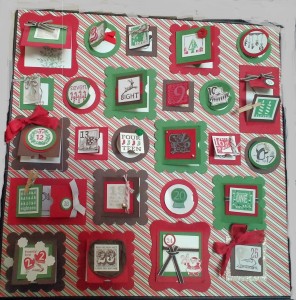
December Advent!– Here’s an advent calendar, craft, and devotional all rolled into one! Naomi’s Table is a women’s Bible study resource that I highly recommend for sound doctrine and right handling of God’s Word. Have a listen to their daily Advent podcasts and make the Advent calendar that goes with them!

Need a good Advent playlist? I’ve created one on YouTube. Your favorite Advent (not Christmas) song isn’t included? Leave a comment and I’ll add it if appropriate.

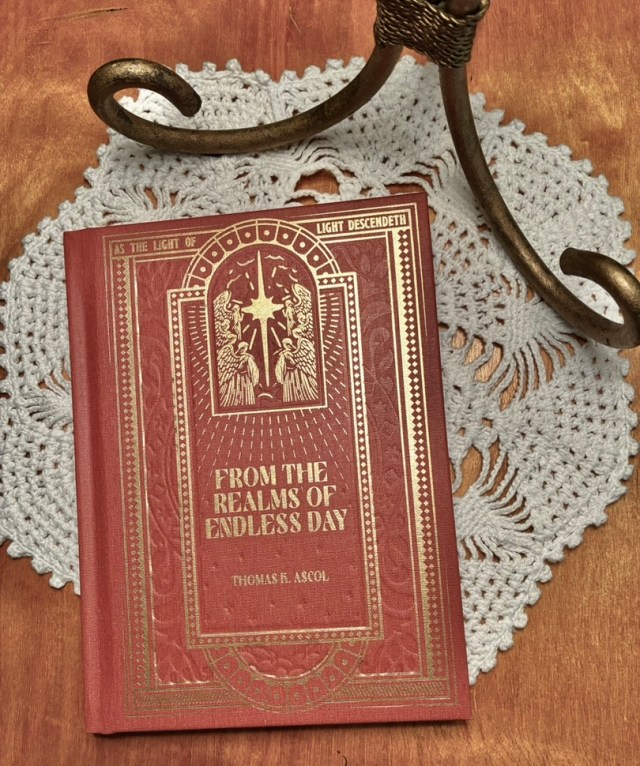
From the Realms of Endless Day by Dr. Tom Ascol. “This little book is meant to be used as a daily devotional guide throughout the Christmas season. It is broken into five sections of five devotions. Each section focuses on one passage of Scripture that is considered verse-by-verse.” Designed for family or individual use, with Scripture memory passages in each section and study questions at the end of each of the 25 lessons. Encouraging Christmas poetry from Dr. Tom Nettles is also sprinkled throughout the book.๐Ÿ’ฐ

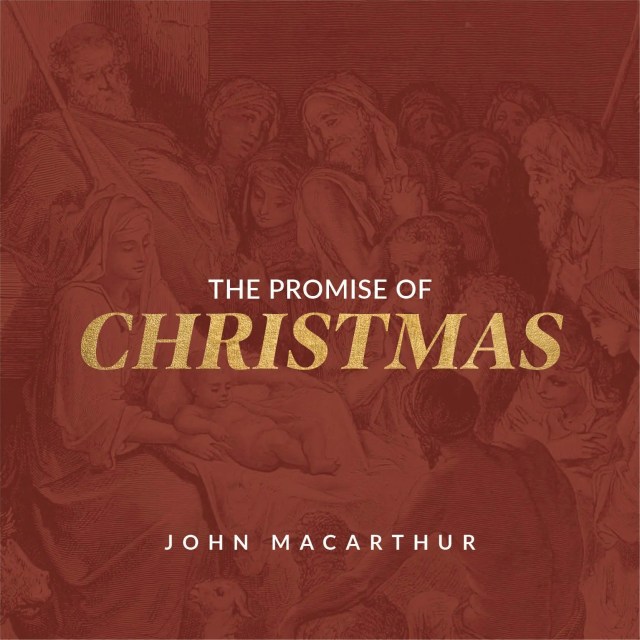
The Promise of Christmas by John MacArthur. “…What would it have been like to be in Bethlehem for the very first Christmas? Would you have been waiting for Jesus? What would you have been anticipating? Would you have expected the Savior, King, and deliverer promised in Scripture to arrive unheralded by menโ€”born in a lowly stable, surrounded by animals and societyโ€™s outcasts?…In The Promise of Christmas, John MacArthur answers those questions and more as he takes you back in time to first-century Israel.” A series of six sermons.

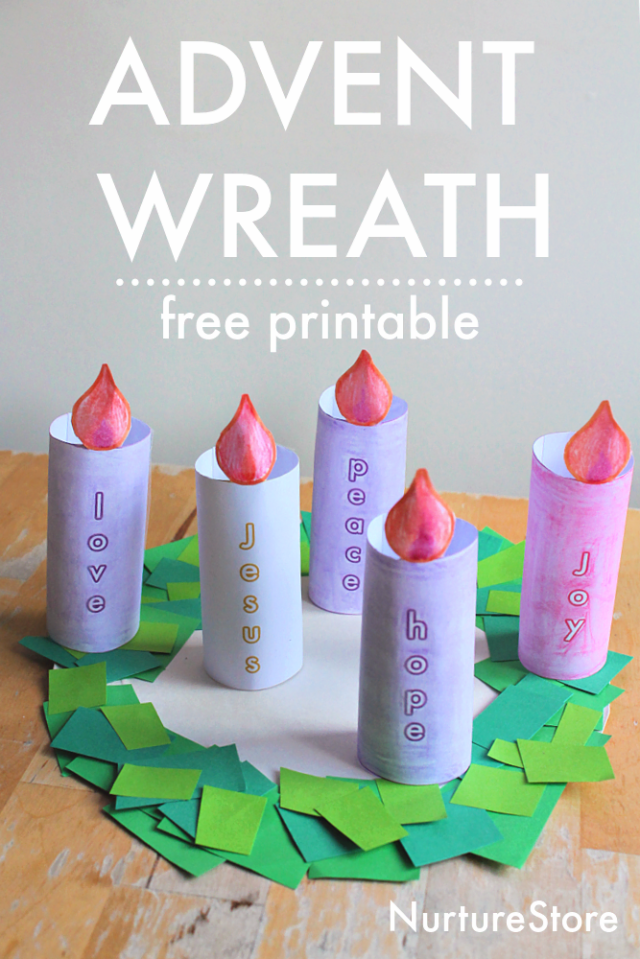
Is observing Advent new for your family? Children are often “hands on” learners, and this Advent wreath craft could be a great way to explain the significance of Advent, the wreath, and each candle as they create it. Follow the step-by-step instructions here, using your own design, or subscribe to the email list to download the free printables.

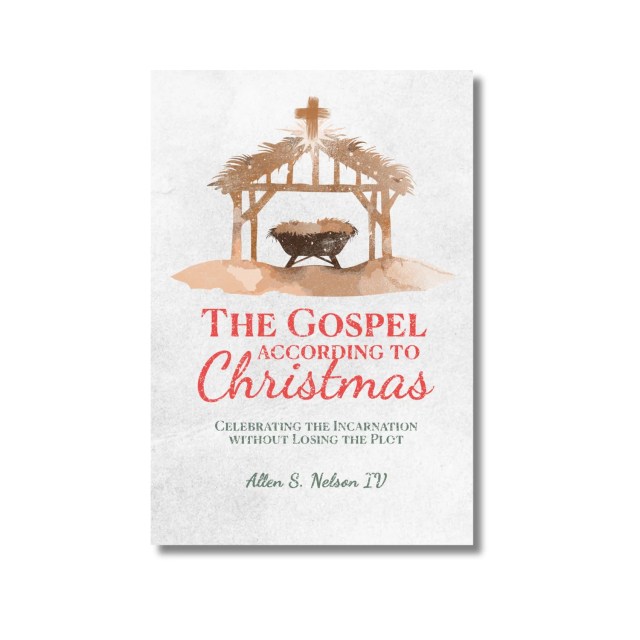
The Gospel According to Christmas by Allen Nelson. In a world where Christmas is often reduced to twinkling lights and fleeting sentiments, The Gospel According to Christmas is a clarion call to rediscover the holidayโ€™s true heartbeat: the gospel of Jesus Christ. With pastoral warmth, Allen Nelson IV guides readers through 1 Peter 2:24 to unveil the staggering reality of Christโ€™s incarnation and sacrifice…Read it, share it, and let it rekindle your love for the Christ of Christmas. Reflection questions in each chapter make this book a perfect fit for group study or family devotions.”๐Ÿ’ฐ

The Jesse Treeโ€“ A charming precursor to the Advent calendar, the Jesse tree traces the story of Jesus from Creation to His birth. Using your Christmas tree or a crafted tree, hang an ornament each day that represents the Bible story for that day. This site has a free Jesse Tree tool kit with ideas for making your own Jesse Tree, the Scripture references for each day, and printable ornaments. (They also offer a family devotional and a individual devotional. If youโ€™re considering using them, please do so carefully and discerningly. I read several of the family devotions and they seemed OK, but the Reformed Church in America {which sponsors this site} appears to have struggled with progressivism in their theology.)

Manger in Danger– This charming family devotional and game centering on the incarnation of Christ was created by Pastor Grant Castleberry and his wife, GraceAnna. “Manger in Danger is a fun, interactive family tradition that brings the Christmas story from the Bible to life in 25 days of family devotionals!”๐Ÿ’ฐ

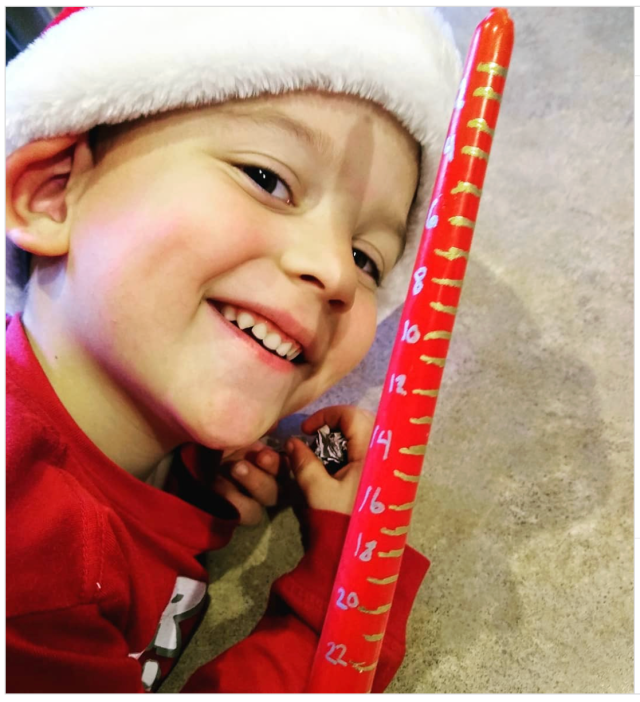
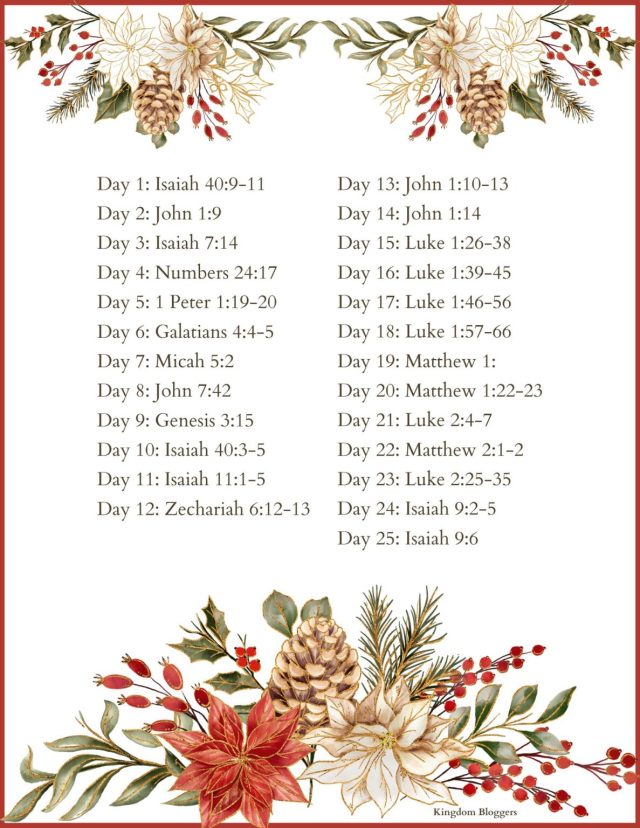
I thought this was a cute idea – an Advent Countdown Candle. Just grab a taper, make 25 marks down the side of it, and each night burn away one more day. Simple! You might even like to read one of these Advent Scriptures…

…every night by candlelight. Or use my Advent playlist above, and sing one of the hymns there as each day burns away.

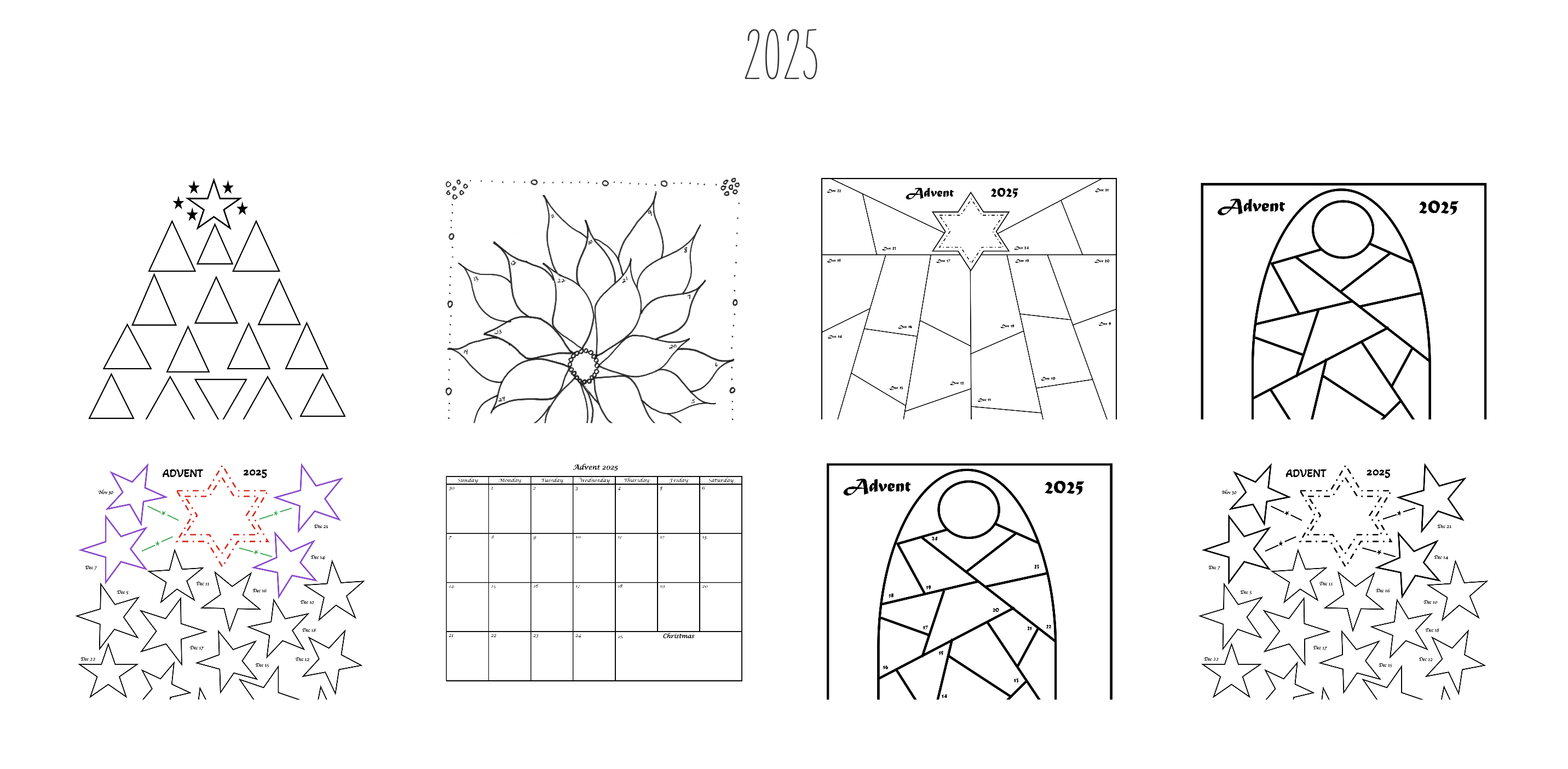
How about combining Advent and prayer with an Advent Prayer Calendar? Choose from dozens of designs, print out the one you like best, and color, decorate, or fancy it up any way you like. Each day, simply fill in the name of the person or ministry you’re praying for and spend a few minutes interceding for them. It’s a great way to start a habit of family prayer and count down to Christmas at the same time!

(This is a site1 where you’ll want to grab only the printable and leave everything else behind.)

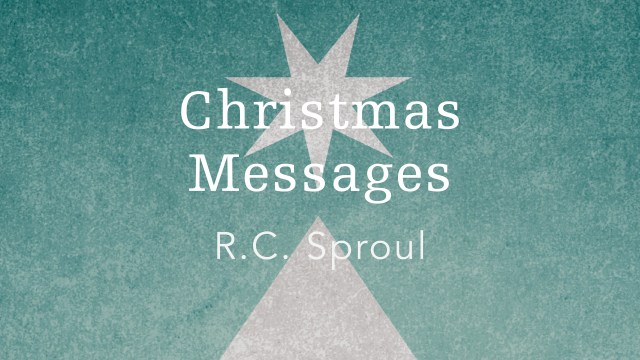
Christmas Messages by R.C. Sproul- “In this set of Christmas sermons, Dr. R.C. Sproul examines the account of the Magi in the gospel according to Matthew and the relationship of David and Saul in order to unfold the significance of Christmas and the incarnation of Christ. With theological insight and attention to scriptural detail, Dr. Sproul demonstrates how these events and relationships contribute to our understanding of the person and role of Christ.”

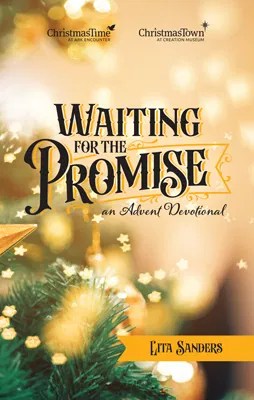
Waiting for the Promise from Answers in Genesis. “As you reflect through this devotional on the promises of God for 4,000 years before the birth of Christ, be reminded of his great love for you that he would send his only Son to offer salvation for sinners!”๐Ÿ’ฐ(Free sample chapters available)

What’s your favorite Advent resource?


1I do not endorse anything on any of these sites nor any of these creators who deviate from Scripture or conflict with my beliefs as outlined in the โ€œWelcomeโ€ or โ€œStatement of Faithโ€ tabs at the top of this page.

Easter, Holidays (Other), Second Coming

He’s Coming Back

Originally published March 25, 2016

Theyโ€™re words cooed by a mother to dry the tears of her frightened child.

Words murmured bedside by a nurse calming her anxious patient.

Theyโ€™re comforting words, imparted by someone in charge, someone taking care of us, someone weโ€™re depending on. Words that God has spoken to His people from the beginning.

Iโ€™m coming back.

From walking with God Himself in the cool of the day to banishment from the Garden.

The anguish of giving birth.

The toil of tilling the ground.

The sting of physical death.

Could anything compare to man’s ache of losing tangible communion with God? And, yet, even in the curse of the Fall, His bold declaration rang out:

Iโ€™m coming back.

In base splendor.

In humble glory.

Emmanuel – God with us – came back.

He tabernacled for a time among us, but all too quickly, the days of His visitation drew to an end.

Time and again, though they would not yet understand,

Though the cross was unfathomable,

And the empty tomb, unimaginable,

He gathered His disciples close and taught, with unassailable authority:

Iโ€™m coming back.

They saw the stone rolled away. The nail prints. His riven side. They ate with Him, walked with Him, talked with Him. They followed Him out to a hillside and watched as He was taken up into the clouds.

And with them, we wait. We set our gaze upon the heavens. We long for His blessed return. And we hear the same words they heardโ€ฆ

Words which should drive terror-stricken sinners to their knees in repentance and faithโ€ฆ

Words which warm the hearts of believers with glorious hope, comfort, and joyโ€ฆ

Words which, one dazzling and magnificent day, will never need be heard againโ€ฆ

HE’S COMING BACK.

He’s coming back.

Holidays (Other), New Year's

5 Ways to Be Discerning About Your New Year’s Reading Goals

Good news: book nerd is in. And these days, that doesn’t just mean you have your nose stuck in a book all the time. No, you’ve really got your nerd on – you’ve got a reading goal for the year.

Whether it’s merely a certain number of books you want to read, total, or you’ve got it broken down into goals for various genres of literature, feeding your mind by reading is a worthy pursuit, especially if you’re feeding it good theology. (You might even want to join other Christians in a reading challenge such as this one from G3 or this one from Tim Challies.)

Finally, brothers, whatever is true, whatever is honorable, whatever is just, whatever is pure, whatever is lovely, whatever is commendable, if there is any excellence, if there is anything worthy of praise, think about these things.

Philippians 4:8

But, as always, you’ve got to be discerning about the books you choose. In years past, I’ve seen some of my friends posting about book reading goals for the new year and asking for suggestions of Christian books. And I’ve seen some of the suggestions that have been made. Yikes. Some of those “Christian” books your friends are suggesting are written by false teachers.

Yikes. Some of those “Christian” books your friends are suggesting for your reading goals are written by false teachers. Here are 5 ways to exercise discernment about the books you choose.

May I offer some help for being discerning about the books you choose?

1.

Stay immersed in your Bible. That way, if you come across false doctrine in a book you’re reading, you’ll know it conflicts with Scripture. Need help? Check out my Bible reading plans and Bible studies.

2.

If you’re not already a faithful member of a doctrinally sound local church, find one, join it, and sit under good preaching and teaching every chance you get. This will also help you detect false doctrine when you’re reading. (Use my Searching for a new church? resource if you need help locating a good church in your area.)

3.

Vet the author of every book you read prior to reading it. Here are some quick and easy resources that can help:

4.

Don’t fall for the “chew up the meat, spit out the bones” fallacy or the “But this author has helped me so much!” argument. See #3 & 8: Answering the Opposition- Responses to the Most Frequently Raised Discernment Objections.

5.

Try a book by one of these doctrinally sound authors: Recommended Bible Teachers.

Happy (and holy!) reading!

Most of these linked resources can be found in the blue menu bar at the top of the blog.


Additional Resources:

Do You MIND? : Five Reasons for Pastors to Mind What Their Brides Are Reading

You Donโ€™t Need A Book, You Need THE Book