Celebrity Pastors, Discernment, False Teachers, Word of Faith Movement

Of Mega-Blogs and Molotov Cocktails

megablogs molotov

I Look Down on Young Women With Husbands and Kids, and I’m Not screaming-womanSorry, screamed the headline. Quite an attention grabber. It certainly grabbed mine. So, of course, I read the article.

It was brash. Extremist. Rude. Rather one dimensional and completely devoid of nuance. And it made me mad, too, since I used to be a young woman with a husband and kids. (“Used to be,” as in, I still have the husband and kids and I’m still a woman, but “young” would be a stretch at this point.)

I was all set to write a blog post in response about the value of wifing, mothering, and working outside the home. You know, whatever God has called you to. So as prep for my article, I read the article again. And again.

And, like a toddler yanking at the hem of my skirt to get my attention, an epiphany pushed and shoved its way into my consciousness.

It wasn’t real.

Or maybe I should say: I suspect it wasn’t 100% sincere.

Have you ever visited a mega-blog like Buzzfeed or Mashable? They churn out tons of cheap content every day, glasscandy-532959which means lots of hits on their web sites and lots of posts that go viral, which means lots of money from advertisers. (Nothing wrong with that, but it’s usually not terribly deep stuff. Sometimes people want a little mind candy, and that’s OK.)

Guess what? Lots of people want a piece of that pie and it’s easier to copycat than to innovate, so there are lots of other upstarts out there trying to become the next mega-blog. Like Thought Catalog, which published the aforementioned article on young women with husbands and kids.

As they say, there’s no such thing as bad publicity, and in a PR move that would make even Miley Cyrus chartreuse with envy, Thought Catalog threw out a Molotov cocktail of an article, stood back, and watched the crowd gather. Nearly a quarter of a million shares on Facebook. Almost 2000 re-tweets. Over 11,000 comments. From a PR standpoint, there’s pretty much no choice but to admire them.

Is Amy Glass, the author of the article, a real person? Maybe she is, or maybe it’s a pseudonym for someone who works for Thought Catalog as a content writer. If she’s a real person, are these her genuine thoughts and feelings, or did she throw in a hearty dose of hyperbole to push her readers into clicking, tweeting, sharing, pingback-ing, and writing response articles?

I don’t know.

There’s a lot of deception going on out there these days (I’m not saying Thought Catalog is being deceptive. Honestly, I haven’t poked around over there enough to know.) and it’s not just “out there.” It’s inside the walls of the church, as well.

joel_osteen-false_prophetThere are plenty of “Buzzfeed” pastors, leaders, and Christian authors who are throwing out cheap content and bombshells…

…2014 is going to be the year God turns everything around for you!
…Just say what you want! If you can say it, you can have it!
…God wants you to achieve all your dreams, so reach for the stars!

Joyce-MeyerThe glass breaks, the flames fly, and the crowd gathers. Their churches are overflowing with people. Their books become best sellers. They’re invited to speak at all the big conferences. And when the little guys start copying them and their methods, they know they’ve arrived.

But are they telling you the truth? And if you’re one of their devotees, how do you know whether or not they’re telling you the truth? Do you even want to know, or are you just happy with being entertained or being told what you want to hear?

There’s a way to find out. Get your Bible out and study it. Don’t just give it a surface reading– do the work and dig. Use the brain God gave you and pursue the knowledge of His word. Ask Him to open your eyes to understand the truth of Scripture. Love God with your mind, not just your emotions. Don’t be deceived.

Because they hated knowledge
and did not choose the fear of the Lord,
would have none of my counsel
and despised all my reproof,
therefore they shall eat the fruit of their way,
and have their fill of their own devices.
For the simple are killed by their turning away,
and the complacency of fools destroys them;
but whoever listens to me will dwell secure
and will be at ease, without dread of disaster.
Proverbs 1:29-33

Bible, Church, Creation, Discernment, Evolution, False Teachers, New Apostolic Reformation, Prayer, Word of Faith Movement, Worship

Keep On Keeping Up: 6 More Issues Christians Need Guidance About From Our Pastors ~ Part 2

14333562683841

Recently, I read a great article by Justin Peters entitled “Ignorance Is Not An Option.” I would call this article a response to that one, but it’s really more of a…well, I guess you could call it a “ricochet”. Last week, in Part 1 of this article, I discussed five current issues in evangelicalism that we folks in the pew need some guidance on from our pastors. Following are six more issues we all, pastors and church members alike, need to learn about and and keep a biblical perspective on.

Creation vs. Evolution:  Sorely missing from some pulpits these days is the exhortation to Christians that the Bible is our final authority on every issue in life and that we are called to believe God’s word- believe it intelligently, yes, but believe it, even in the face of worldly opposition. This admonition does not begin with Genesis 3, it begins with Genesis 1.  We are called to believe that God created the world and that He created it the way the Bible says He created it.

*Resources:
Answers in Genesis– From Creation apologetics to scholarly scientific articles to colleges that teach Creation to VBS curricula, you would be hard put to find a more comprehensive, gospel-centered Creation resource.
The Case for a Creator by Lee Strobel

Denominational Differences: Do you know the basics of what the major Christian denominations teach (salvation, baptism, communion, membership, etc.) and the differences between their doctrine and the doctrine of your own denomination? Are you aware that some denominations which are considered by many to be “Christian” hold to doctrines- including soteriology- that conflicts with God’s word? Are you fairly well acquainted with the doctrines of the denomination or religion that is predominant (or secondary if your own denomination predominates) in your area? Pastoral instruction on the basics of other denominational beliefs (as well as their own!) can be quite helpful as we church members relate to friends and family members or help new church members who come from a different denominational background.

Resources: 
GotQuestions.org For a brief overview of most of the major religions and denominations, type “Methodist,” “Mormon,” etc., in the search box.

For more detailed information, find the denomination’s main web site and click on their “statement of faith” or “what we believe” page (Keep in mind that there are several different “flavors” of Baptist, Presbyterian, Lutheran, etc., whose doctrines and practices may vary significantly from each other.), or get to know local pastors of other denominations and just ask what they teach.

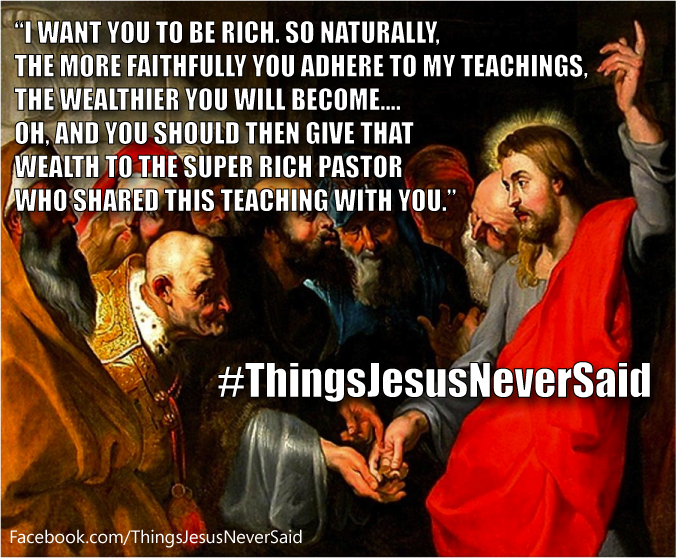
The Word of Faith Movement:  Used almost interchangeably with the term “prosperity gospel,” anti-biblical Word of Faith concepts such as the “little gods” doctrine (we have a divine nature), health and wealth prosperity (it is never God’s will for you to be sick or poor, and if you are, it’s because of your lack of faith), positive confession (Our words have the power to create reality or speak things into existence. Conversely, negative words create negative circumstances.), and twisted teachings about tithing (“sow your seed so God will multiply it back to you”), among others, are infiltrating unsuspecting churches at an alarming rate, and many are being deceived.

Because church members are often introduced to these doctrines by seemingly innocuous, popular speakers and leaders such as Joel Osteen, Joyce Meyer, Christine Caine, Hillsong personnel, Robert Morris, John and Lisa Bevere, John Hagee, Kari Jobe, and Judah Smith, whose materials are sold at Christian stores, conferences, and web sites, church members, and even some pastors, have no way of knowing they’re encountering false teaching unless they understand sound biblical doctrine and have a modicum of discernment skills.  It is now more necessary than ever for Christians to be trained in the basics of hermeneutics and discernment. 

Resources:
A Call for Discernment by Justin Peters
Word Faith Movement at Stand Up For the Truth
Sound the Alarm: The Dangers of the Word of Faith Movement by Emmanuel Davis
A Softer Prosperity Gospel: More Common Than You Think at 9Marks

The New Apostolic ReformationHopefully, your church members have never encountered NAR leaders, doctrines, or manifestations, or, if they have, were immediately turned off by its weirdness and because it is so blatantly anti-biblical. NAR takes the Word of Faith movement, and –BAM!– kicks it up a notch. But, as a gateway drug can lead to addiction and addiction can lead to a fatal overdose, so exposure to Joel Osteen can lead to T.D. Jakes to Benny Hinn to holy laughterstrange “anointings,” glory clouds of gold dust, tremoring, false prophecy, and being “drunk in the Spirit.” This is signs and wonders on steroids.

The NAR is also largely responsible for many of the corrupt teachings on prayer (mainly through Bethel Church in Redding, California) that have become popular in recent years, such as: contemplative/centering prayer, lectio divina, the International House of Prayer, Sozo prayer, healing rooms, and soaking prayer, as well as the false teaching of dominionism.

Resources:
False Spirits Invade the Church: Part 1, Part 2, Part 3  A Documentary by Andrew Strom
Love and Death in the House of Prayer by Jeff Tietz of Rolling Stone

The Emergent/Emerging Church MovementEver heard the old joke, “The only rule is…there are no rules!” Well, replace the word “rule” with “doctrine” and you’ve got a somewhat loose definition of the emergent church. It’s a post-modern mix of ethereal non-traditionalism, feelings, experiences, and mysticism as a means of worship, anti-absolute truth, ideological inclusivism, and anything goes universalism, topped off with a heaping helping of “did God really say…?“. Everything in the Bible, from moral absolutes to the divinity of Christ to the atonement to every other jot and tittle of the Word is questioned, if not outright denied. The only doctrine is…there is no doctrine. And, unfortunately, we church members can find any number of emergent books and materials on the shelves at our local Christian bookstores.

Resources:
What is the Emerging Church? by CARM.org
Exposing the Emergent Movement by Stand Up For the Truth

Bible Translations and Paraphrases, Study Bibles, and Theme BiblesIf the members of your church are carrying the LOLCat Bible or the KLV (yes, folks, that’s the Klingon Language Version of the Bible {Thanks a lot, Aaron. I’ll never be able to unsee that.}) into the sanctuary every week, you probably need more doctrinal intervention than I’m qualified to offer. But, while there are a number of theologically sound study Bibles and theme Bibles out there, there are some that may be just as theologically off base as the gospel according to kitty cats and Star Trek. Joyce Meyer’s Everyday Life Bible, Joel Osteen’s Hope for Today Bible, Sarah Young’s Jesus Calling Devotional Bible, and T.D. Jakes’ Woman Thou Art Loosed Bible are a few that come to mind. (Notice that these are all sold on a Christian web site right alongside materials that teach sound doctrine.)

Are you somewhat familiar with the most common Bible translations being used today, and which ones are the most accurate? Do your church members understand the difference between a translation and a paraphrase? What about gender neutral Bibles? There is such a variety of Bible options available today that the members of your congregation could likely use some guidance in selecting an accurate translation for studying God’s word.

Resources: 
BibleGateway.com– Just about every Bible translation and paraphrase you can imagine, all on line, all free. Compare a few versions side by side, and, if you’re thinking of buying a new version, try it out at BG before you buy.
Comparison of English Bible Translations
Translation Comparison Charts
How the Use of Some Bible Versions Can Twist God’s Truth at The Sacred Sandwich

*The resources given are obviously not an exhaustive list. For the most part, they are resources I have used myself, found to be helpful, and trust to be generally doctrinally sound. There are many other wonderful resources out there, but our most important resource is to compare all things and people to God’s word in context.

Discernment, False Teachers, Sanctification, Suffering, Sunday School

When Bad Things Happen to Blameless People ~ Sunday School Lesson ~ 1-12-14

sunday school

These are my notes from my ladies’ Sunday School class this morning. I’ll be posting the notes from my class here each week. Click here for last week’s lesson.

Through the Bible in 2014 ~ Week 2 ~ Jan. 5-11
Job 6-31
When Bad Things Happen to Blameless People

One of Job’s main stances in this section is that he is “blameless” in God’s eyes. What does it mean to be blameless? (Job 6:24, Psalm 15:2, 18:23, 19:13) It carries the connotation that no one can accuse this person before the Lord of current, willful, unrepentant sin. A blameless person is one who loves the Lord, desires to please Him, and has a track record of good fruit- he avoids sin, repents of sin and asks forgiveness from those he has wronged, and does good works.

What does “blameless” NOT mean? (Romans 3:10, 23, Psalm 51:5) Blameless doesn’t mean perfect or without sin. We are all sinners from conception.

Why Job is suffering? (1:8, 2 Corinthians 12:7-10) We know that it’s BECAUSE Job is blameless that he’s suffering (1:8- Compare to Paul in 2 Cor.), but Job and his friends don’t know this. Job doesn’t understand why he’s suffering, but his friends think they do.

Why do Job’s friends think he is suffering? Job’s friends start from the false assumption/conventional wisdom that suffering is always a direct result and punishment of sin, and that blessings are always a direct result of good/godly behavior. Notice, they all come from the same line of thinking, but bring up slightly different points to Job.

Bildad (8:5-6, 18:5, John 16:33, Matthew 6:9-13): “You just need to ‘get right with God’.” Bildad says Job needs to repent of his sin. If Job would just “get right with God” everything would be fine. Jesus says to his disciples: In this world you WILL have tribulation.

Bildad is partially right. We can suffer for sins we’ve committed. If you have an affair, you will probably suffer the loss of your marriage. If you don’t, you won’t. If we are walking in constant repentance (as in the example of the Lord’s Prayer) and communion with the Lord, our consciences are sensitive to sin, we’re more alert to temptation, strengthened to avoid it, and more likely to be, as Job was, blameless.

Job responds (9:2-3, 14-15; 12:9): “Nobody is sinless, but I am walking blamelessly.” Nobody can stand sinless before God. Job is as right as he knows how to be. He can’t think of any sin in his life he hasn’t repented for, and he has a track record of walking with the Lord. God knows all of that , and still, He is the one who is allowing all this calamity, so what Bildad is saying can’t be true.

Zophar (11:4-6; 20:29): “These calamities are proof that there is sin in your life.” Zophar takes the attitude that the calamities themselves are proof that Job not only has sin in his life, he is lying to cover up that sin by saying he’s blameless. Therefore, Job deserves even worse than what he’s getting.

Job responds (13:15; 27:1ff, John 6:66-69): “I don’t know why God is doing this, but I’m not going to give up hope in Him.” Job will not abandon his hope in the Lord. Even though he doesn’t understand God’s ways right now, he knows he’s right with the Lord. Besides, there’s no hope in anything else. Compare to Peter’s confession of Christ.

Eliphaz (15:20, 2 Timothy 3:12, John 15:18, Jeremiah 12:1): “Only evildoers suffer. Godly people prosper.” What does Jesus say about that? “All who desire to live godly in Christ Jesus will be persecuted.” “If the world hates you, know that it has hated me before it hated you.” “Why does the way of the wicked prosper? Why do all who are treacherous thrive?”

Job responds (21:7,16; 2 Corinthians 11:24-28): “Our own daily experience tells us that’s not true.” We all know, or know of, people who live very godly lives, yet suffer with illness, deaths of loved ones, financial ruin, family problems, and evil people who have everything they could dream of. Compare to Paul.

If this were true, what would motivate people to come to Christ? (1:9-11) Greed. Selfishness. A “What can I get from God?” mentality. This is exactly what many popular “Christians” teach today. Come to Jesus for healing. Come to Jesus for wealth. Come to Jesus for success. Never, “Come to Jesus for His tender mercy and the forgiveness of your sin.” Come to Jesus for stuff. That’s what they teach, and that’s what Satan assumed Job was serving God for (1:9-11). God showed through Job that that’s not why His true children serve Him.

Jesus (Matthew 5:45, Job 29-31, Romans 8:28): “For he makes his sun rise on the evil and on the good, and sends rain on the just and on the unjust.” This is exactly what Job is saying in chapters 29-31. He has walked blamelessly all these years and had good circumstances. Now, he’s still walking blamelessly and he has bad circumstances. He hasn’t changed. His goodness didn’t earn God’s blessings as payment, and his badness (remember, he wasn’t perfect and still sinned during the “good years”) didn’t disqualify him from them. Only his circumstances have changed.

All things, bad or good, come through God’s hands, and they come because He loves us. Romans 8:28 says “for those who love God all things work together for good.” All things- the good and the bad. The good things may be for comfort, joy, provision, testing our faithfulness or obedience, to allow us to help others, etc. The bad things may be for some Heavenly reason (as with Job) that we know nothing about, to draw us away from the things of the world, to teach us obedience or dependence on Christ, to allow us to know Him as Provider, Healer, Comforter, Peace. We can’t know Him experientially in those ways if we never walk through times when we need provision, healing, comfort, peace, etc.

As parents, sometimes we give our child ice cream to eat and sometimes we give him Brussels sprouts. Do we give ice cream because we love him and Brussels sprouts because we hate him? No. Both are done out of love, the ice cream because it brings him joy, and the Brussels sprouts because it has the nutrients he needs to be strong and healthy. It would not be loving for a parent to give only ice cream OR only Brussels sprouts. In the same way, it would not be loving for God to give us only blessings or only difficult times.

Let’s ask God to help us walk with Him blamelessly so we can say, as Job did (23:10-12):

But he knows the way that I take;
when he has tried me, I shall come out as gold.
My foot has held fast to his steps;
I have kept his way and have not turned aside.
I have not departed from the commandment of his lips;
I have treasured the words of his mouth more than my portion of food.

Bible, Discernment, False Teachers, Gospel

Not for Sale

1004735_555588061154634_6495504_nBut Peter said to him, “May your silver perish with you, because you thought you could obtain the gift of God with money! 
Acts 8:20

If you’re following a teacher or preacher who promises you “favor” or material stuff if you’ll just “sow a seed” into his ministry (aka: send him money), rebuke him and run. Fast. God’s blessings and provision aren’t for sale.