Bible Study, Mailbag

The Mailbag: What Is the Verse Mapping Method of Bible Study?

Originally published June 19, 2017

What is the “verse mapping” method of Bible study? Do you recommend it? A friend was asking about it and she is a big follower of Proverbs 31 Ministries, which was a red flag for me.

This is an excellent question, because there are lots of different Bible study methods out there, some good, some not. And you want to make sure you’re using a method that will help you correctly understand the text so you can grow in your faith.

I had never heard of verse mapping either, so I did what I usually do when I’ve never heard of something but want to know what it is- I Googled it. And several red flags popped up for me too.

The first hit I got was this article written by someone who thinks Beth Moore is an exemplary Bible teacher and that The Message is a reliable translation. She linked to an article on verse mapping at Proverbs 31, whose author says we need to “listen to God’s voice“. The Proverbs 31 article linked to another blogger – “the one who taught us how to verse map” – who recommended closing your eyes, letting your Bible fall open and pointing to a random verse as one way to choose a verse to map.

The rest of the first two pages of search results all seemed to be from Christian women’s blogs, none of whom I was familiar with. That’s not to say there’s necessarily anything wrong with those women or their blogs, I’m just saying I didn’t see any well known, doctrinally sound ministries recommending verse mapping in the most popular Google results.

I get the impression from these articles that verse mapping methodology can be a bit fluid. The first blogger used a journal and made copious notes (her method appeared to me to be more akin to inductive Bible study). The other two used an index card and wrote very few notes. So it would seem there’s no one set way to do verse mapping, but the general idea is to pick a Bible verse and dissect it (in various ways, depending on which method of verse mapping you’re using) as your daily Bible study format.

Separating the method itself away from the taint of false teachers, some of the recommended techniques in verse mapping are solid and could be very helpful, such as using commentaries, looking words up in the original Greek or Hebrew, writing down what is happening in the verse, and looking at the immediate context of the verse. These are all good principles of biblical hermeneutics, and if you use them as part of a systematic study of a book of the Bible or as part of a study on a biblical topic, your understanding of God’s word will be greatly aided.

The problem is, a) using it as your sole form of Bible study isn’t going to teach you all that studying longer passages of the Bible will, and b) those aforementioned good techniques are mixed in with some bad techniques, so you have to be discerning enough to tell which is which. And, chances are, if you’re discerning enough to do that, you’re probably a good student of the Bible who’s already using the good techniques of verse mapping, so you don’t really need it.

The bad techniques?

1. Choosing random verses to dissect
There’s more to the context of a verse than just the couple of verses that immediately precede and follow it. There’s how the verse fits into its chapter, book, testament, and the overall narrative of Scripture. If you skip through Scripture picking out a verse here and a verse there to analyze you’re going to misunderstand those verses because you’re not going to know the larger context they fit into in their own immediate story and the story arc of redemption. Can you imagine studying any other piece of literature – a Shakespearean sonnet, the Declaration of Independence, a medical journal article – this way, picking out a random sentence or two here and there? Of course not. Then why would we study the Bible this way?

2. Personalizing the verse
One of the techniques verse mapping recommends is to cross out all general referents (you, they, we, etc.) and replace them with your own name. Do not do this.

First and foremost this exhibits utter disdain for the God of the universe who wrote the Bible. If He wanted your name to be in Scripture, it would already be there. You don’t get to change, even temporarily, what He wrote, and to think it’s OK to do so is arrogant and irreverent. These are the very words of God Himself- do you really dare to change them?

Second, it’s an extremely self-centered way to look at Scripture. The Bible isn’t about you and it wasn’t written to you. When those words were penned, there were real, live people – just as important as you – on the other end, and none of them were you because you hadn’t been born yet.

Third, doing this will almost certainly give you a wrong understanding of the verse. “You” doesn’t always mean you personally, Buttercup. Sometimes “you” means Israel. Sometimes “you” means the church. Sometimes “you” means Amos or Cain or Judas or Philemon. Sometimes “you” means God. Sometimes “you” even means Satan. And sticking your name in for one of these “you’s” is going to lead you away from a correct understanding of Scripture, not toward it.

3. Focus on anything that jumps out at you
Again, this is a very self-centered way to look at Scripture. Just because something jumps out at you doesn’t mean it’s the main point of the verse or that it has significant spiritual import. Certainly, if there’s a word in the verse that you don’t understand you should look it up. Or, if you find some concept in the verse interesting, go ahead and search out the cross-references for clarity. But don’t assume that word you’ve looked up or that concept you find interesting is the meaning of the verse just because it happened to catch your attention. When we study the Bible, we search for what God meant by that verse.

4. Find verses that minister to you
Now I ask you, if you follow that guideline, how often are you going to pick verses out of Leviticus that have nothing to do with your life today? When will you pick verses that step on your toes and convict you of sin? Will you ever examine hard verses that take a lot of historical and cultural understanding? At the risk of sounding like a broken record, this is a self-centered way to look at Scripture. Yes, the Bible can bring us comfort and reassurance, but the Bible isn’t a bottle of aspirin. You don’t just pop a couple of verses whenever you have a headache. The Bible isn’t there to minister to you. It’s there to equip you to minister to God, the church, your family, the lost. There’s a reason God wants pastors to preach the whole counsel of God – we need all of God’s word, even the parts that don’t “minister” to us.

In conclusion, I would not recommend verse mapping as a whole the way it is presented in the aforementioned articles, but some of the individual techniques I noted can be helpful as part of your regular, systematic study of Scripture.

If you need a little help learning how to study your Bible using good study habits, click the Bible Studies tab at the top of this page.


If you have a question about: a Bible passage, an aspect of theology, a current issue in Christianity, or how to biblically handle a family, life, or church situation, comment below (I’ll hold all questions in queue {unpublished} for a future edition of The Mailbag) or send me an e-mail or private message. If your question is chosen for publication, your anonymity will be protected.

Bible Study

The Word on Wednesdays

Hi ladies! I hope you’ve been enjoying The Word on Wednesday Bible study lessons and resources, and that you’re looking forward to our new study as much as I am.

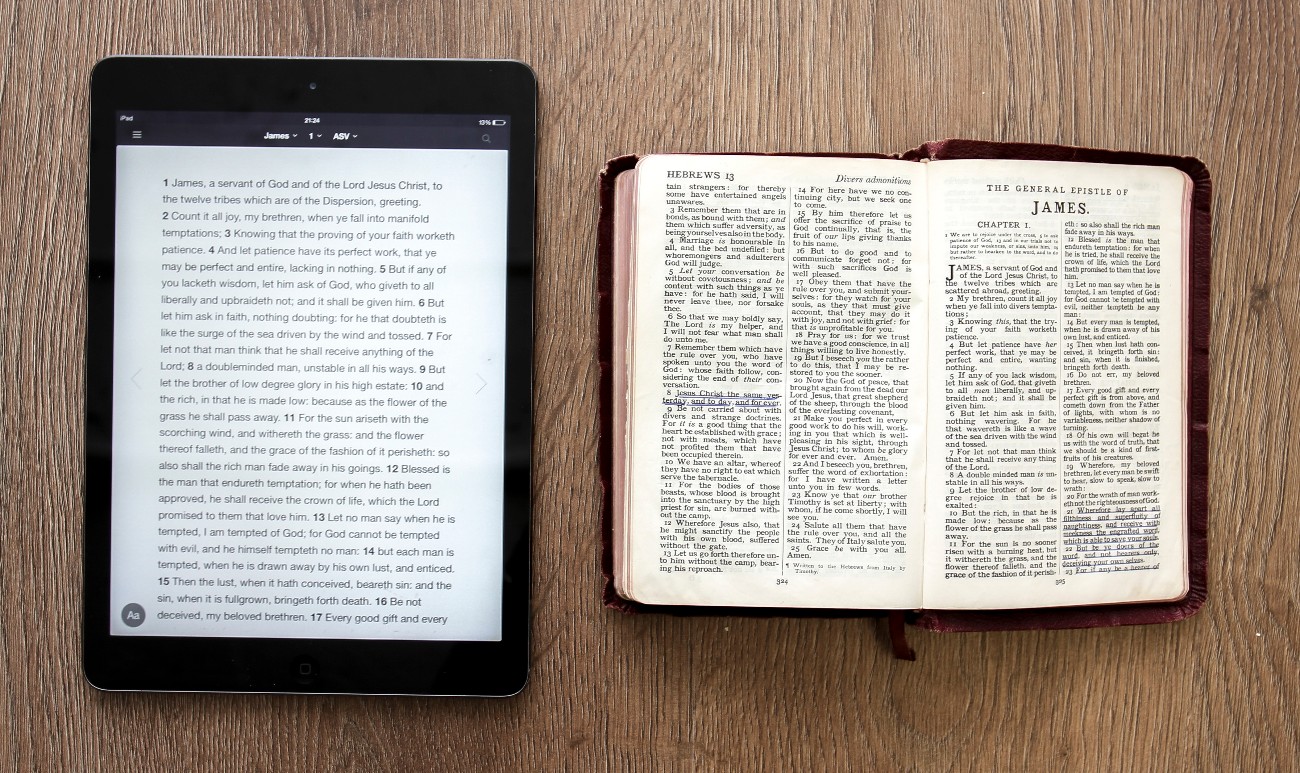
I’ve been taking a break on Wednesdays getting ready for our new study. I hope you’ll enjoy it and that it will edify you as you seek to grow in Christ and His Word. (The picture above does not mean we will be studying James. :0)

Some may find the book of the Bible we’ll be studying to be an exciting challenge (a challenge I know you’re up for!), so I wanted to give you a heads up to start thinking about reference materials. You don’t have to buy or use any of these materials, but you may find them handy as you study.

If you have been considering investing in a good study Bible, this would a great time to do so, not just for our next study but to use for years to come. I personally use and highly recommend the MacArthur Study Bible (the ESV and NASB are good translations), and, although I haven’t tried it out myself, I understand the ESV Study Bible is also very good. (You might want to shop around for the best price. These are both available on Amazon and probably other retail sites as well.) If free is more in keeping with your budget, the Faithlife Study Bible app is phenomenal. It not only has very good and copious study notes, it also has maps, Bible dictionaries, articles, videos, pictures, and more. In fact I would recommend you download it as a supplementary resource even if you decide to get one of the aforementioned study Bibles – it’s that good.

If you have a good set of Old Testament commentaries, you may find those to be useful in our study. There are also a number of sites that offer free, online commentaries, Bible dictionaries, encyclopedias, and other study resources (most of these are available as apps):

Bible Gateway          Blue Letter Bible          Bible Hub

Bible Study Tools         StudyLight.org

And finally, you can always find great articles, sermons, devotions and other materials to aid your understanding of various topics and passages of Scripture at Grace to You and Ligonier.


I hope you’ll find these resources helpful as we begin our new study.

What is your favorite
study Bible, commentary, or other Bible study resource?
Share with others in the comments below!

Bible Study

The Word on Wednesdays

Hi ladies! I hope you enjoyed our most recent Bible study, The Sermon on the Mount.

I’m going to take a little break before starting our next study, so for the next several Wednesdays, you’ve got some options:

📖 You can finish up The Sermon on the Mount or any of my other studies you’re currently working on.

📖 You can choose a book(s) of the Bible to work through on your own.

📖 You can choose one of my studies to work through at the Bible Studies tab at the top of this page. (I would choose one of the shorter ones, like Colossians or Ruth rather than one of the longer ones if you’re only trying to fill the space between now and the beginning of our next study.)

📖 You can follow along with the sampling of “re-run” lessons and resources I’ll be posting here on the blog each week.

Here’s today’s “re-run”:

Bible Study Articles and Resources

Did you know that there are lots of resources here on the blog to help you out as you study the Bible? Below are a few favorites. Click on the link above for more.

The Mailbag: Which Bible Do You Recommend?

The Mailbag: How can I get started studying the Bible itself?

Nine Helps for Starting and Sticking to Daily Bible Study

10 Simple Steps to Plain Vanilla Bible Study

Rightly Dividing: 12 Do’s and Don’ts for Effective Bible Study

Bible Book Backgrounds: Why You Need Them and Where to Find Them

The Mailbag: As a newly doctrinally sound Christian, should I stop journaling? (Taking notes on the text of Scripture.)

Bible Study, Mailbag

The Mailbag: Potpourri (Sentence diagram Bible study, Evangelism, Making teens attend church, Female pro-life speaker…)

Welcome to another “potpourri” edition of The Mailbag, where I give short(er) answers to several questions rather than a long answer to one question.

I like to take the opportunity in these potpourri editions to let new readers know about my comments/e-mail/messages policy. I’m not able to respond individually to most e-mails and messages, so here are some helpful hints for getting your questions answered more quickly. Remember, the search bar (at the very bottom of each page) can be a helpful tool!

Or maybe I answered your question already? Check out my article The Mailbag: Top 10 FAQs to see if your question has been answered and to get some helpful resources.


So it is by way of this email that I ask you to pray about my request to disciple me as a young woman in accordance to Titus 2.

You are so dear, and your e-mail was so sweet. I would love to say yes, but sadly, I cannot. Please see #10 in my article The Mailbag: Top 10 FAQs.


I would love your thoughts on the study of Scripture using the sentence diagram method. I have never tried it but it does look interesting. However I do not want to get into a mess of confusion.

If reading the phrase “the sentence diagram method” just gave you a fond or traumatic flashback to 7th grade English class, then you pretty much already know what it is. It’s taking a Bible verse and diagramming it – either grammatically (with all the little lines for adverbs and adjectives and conjunctions and whatnot), or conceptually (blocking it out according to concept and how those concepts connect.

If you’d like to see an example, click here. (FYI- This link does not mean I’m recommending this site. She endorses and/or has connections to several false teachers.)

If you’re a grammar nerd or language aficionado like I am, this is method is probably right up your alley, and if you need to employ it from time to time to better understand one of Paul’s numerous lengthy run-on sentences, then go for it!

My only counsel would be, don’t make this your only method of Bible study. For the most part, you need to be reading and studying the overall meaning, concepts, and application of larger passages of Scripture, not focusing on dissecting one verse every day. It’s kind of like cooking supper. You need to focus on fixing the whole meal every night rather than pouring all your focus into mincing that clove of garlic into perfectly symmetrical cubes.


I am convicted because I have not been faithful to be a witness for the Gospel. I get tongue tied even with family! I just want to be faithful like the Apostle Paul. My problem is getting started……I know the Good News and want to share. Can you help guide me? I was invited to church and heard the Word preached and the Holy Spirit convicted me of my guilt as a sinner. Can I just invite someone to church?

What a wonderful encouragement it is to encounter a sister with a zeal for sharing the gospel! If it makes you feel any better, a lot of us have the same experience when it comes to sharing the gospel. Let me see if I can offer a little help:

  • While we are all commanded to share the gospel with the lost, there are some people who are just really gifted at it. It comes as naturally to them as breathing, they never get flustered, and they make it look easy. I’m not one of those people, but I can point you to a couple of brothers who are: Ray Comfort and Todd Friel. Head on over to the Living Waters YouTube channel and watch a few thousand videos of Ray walking up to strangers and sharing the gospel. Subscribe to Wretched on your favorite podcast platform, and listen in to the “Witness Wednesday” episodes with Todd. These are the kinds of guys you should look to and be learning from when it comes to “cold call” evangelism.
  • Remember that walking up to a stranger and verbally sharing the gospel is not the only way you can evangelize:
    1. If you have unsaved children at home, they are your primary mission field. They’re just as lost and dead in their sins as any stranger on the street.
    2. Ditto for teaching children at your church. Pour the gospel into those kiddos every week.
    3. Tracts. Get a bunch and carry them around in your purse. Leave them behind at the store, the doctor’s office, the gym, wherever you go. Hand them to people personally when the opportunity arises. I highly recommend the Bezeugen Tract Club and tracts from Living Waters.
    4. If you’re on social media, share the gospel on your timeline. Write it out in your own words, share Scripture, or share links to gospel presentations. Here’s our gospel page at A Word Fitly Spoken. It has a text presentation of the gospel and a couple of videos if you’d like to share them.
    5. It is absolutely fine to invite someone to church (assuming you go to a doctrinally sound church) or any other Christian event where the gospel will be clearly and biblically presented. I would only quibble with people who call inviting someone to church “evangelism”. That’s not evangelism. Evangelism is when you actually share the gospel with someone (which every Christian should do when the opportunity presents itself). Inviting someone to church is inviting her to a place where she’ll be evangelized.
    6. Get creative! Give my articles 10 Ways to Share the Gospel During the Holidays and 10 Fun, Practically Effortless, and Free Ways to Do Missions and Evangelism a read and see if they give you any ideas.

Additional Resource:

Rock Your Role FAQs (#11)


Should I attempt to bribe/beg/force my teenage sons to go to church? My husband is no longer attending or leading the family spiritually. My sons and I do Bible study together, but they have no other church experiences.

Wow, this is such a difficult position for you to be in. I’m so sorry. I’ve taken a moment to pray for you and your family, and I would ask everyone reading this to pause briefly and do the same.

I would strongly encourage you to set up an appointment with your pastor to discuss this. Giving wise counsel to those he pastors is part of his job. You could also more thoroughly explain your situation to him and he could give you better informed counsel than I can.

Not knowing the dynamics of your situation, the best I can tell you is that I don’t see anything in Scripture that would say it’s a sin to offer your sons something they want or to excuse them from a certain chore or something like that in exchange for them attending church.

I’m not sure “beg” and “force” are words I’m comfortable with in the parent/child relationship. You are the parent. You are the one in authority and responsible to God for your children. When you tell them to do something, they should respectfully obey you. Period. “Begging” and “forcing” shouldn’t even be part of the equation.

That being said, I think it would be good and healthy for you to sit them down and have a serious, loving talk with them, explaining that, because you love them and want what’s best for them, you want to urge them to come to church with you. You can also explain how much their attendance would mean to you (just be careful not to guilt or manipulate them). And, since you’re teaching them the Bible, you might want to spend some time on Hebrews 10:24-25. But when you’ve had this talk with them, especially if they’re older teens and not Believers, you will probably need to leave the decision up to them. This is something it would be good to get your pastor’s guidance about.

Additional Resource:

Rock Your Role FAQs (#12)


If a woman were to speak at a church on the issue of abortion, would that fall into the category of a woman exercising authority over men?

No, the issue here would be whether or not she’s preaching to men or instructing them in the Scriptures, not whether or not she’s exercising authority over them. Someone giving an informational talk on a certain topic isn’t exercising authority over anyone, regardless of the venue, the sex of the speaker or the sex of the audience.

It’s a little difficult to answer this question due to the lack of details. Is this woman simply a member of the church who wishes to address the congregation, or is she a special guest speaker from a pro-life organization? Is her talk taking the place of the Sunday morning sermon? Is she going to be going at it from a “professional” angle (ex: stats on abortion, stories about moms who chose life, pro-life legislation), or is she going to get up and preach a sermon on Psalm 139?

It would be perfectly biblical for a special guest speaker to give a professional informational talk (not preaching/teaching the Bible) in any time slot other than when the sermon usually takes place (Tuesday night, during a special Sunday luncheon, etc.). (Because a- nothing should take the place of the preaching of God’s Word, and b- you don’t want her or anyone in attendance to be confused that she’s preaching the sermon.)

It would also be fine a woman who’s a member of the church and does sidewalk counseling or volunteers at a crisis pregnancy center or even a woman who has had an abortion (and repented of it) to speak about her experiences in a “personal testimony” sort of way.

But when it’s time for biblical instruction and admonition from the Scriptures about abortion, that’s the pastor’s job.

Additional Resource:

Rock Your Role FAQs (#7,14)


If you have a question about: a Bible passage, an aspect of theology, a current issue in Christianity, or how to biblically handle a family, life, or church situation, comment below (I’ll hold all questions in queue {unpublished} for a future edition of The Mailbag) or send me an e-mail or private message. If your question is chosen for publication, your anonymity will be protected.

Bible Study

Throwback Thursday on Wednesday! ~ Rightly Dividing: 12 Do’s and Don’ts for Effective Bible Study

Family stuff, church stuff, a hurricane in the Gulf, and a speaking engagement this coming weekend, means I needed a little flexibility in the blog schedule, so I’m flip-flopping Wednesday and Thursday this week. Today, I hope you’ll enjoy this Throwback Thursday article, and, Lord willing, Lesson 10  of Ezekiel will be coming your way tomorrow.

Originally published August 19, 2014

12 dos donts

Bible study. As Christians we want to do it, we know we’re supposed to do it, but have you ever stopped to think that there are right ways and wrong ways to do it? Let’s take a look at a few do’s and don’ts of “rightly dividing God’s word” in Bible study.

Do use a good translation, not a paraphrase. You want to get as close to the original wording as possible. There are a number of easy to read, accurate translations out there. The English Standard Version (ESV) and New American Standard Bible (NASB) are two of the best. Try some translations on for size at BibleGateway.com.

Do read the entire Bible from cover to cover at least every few years. It will give you a better understanding of the “big picture” of the Bible and how all the little pieces inside it fit together. (I highly recommend a chronological reading plan since the books of the Bible aren’t always arranged chronologically.)

Don’t neglect the textual context. Every Bible verse has what I call a “micro-context” (how it fits in with the verses immediately before and after it) a larger context (how it fits in with the chapter and book it’s in) and a “macro-context” (how it fits in with the big picture of the Bible). When we fail to take verses in context, we are mishandling and misappropriating God’s precious and holy word.

Do consider the cultural context. Who wrote the passage, and what do we know about him and his perspective? To whom was the passage written- Jews or Gentiles? Those under the Law or those under grace? Men or women? Pastors or lay people? How did the culture at the time view the topic the passage is about, God, Judaism, the church, etc.? At what period in history, in which country, and in what language was the passage written? A good study Bible or study Bible app can be a tremendous help here.

Don’t confuse descriptive texts (passages that describe something that happened to somebody) with prescriptive texts (a command we’re to obey). Just because you read that Noah built an ark or that Judas went out and hanged himself, doesn’t mean that God is telling you to do the same (thank goodness!). Those are descriptive passages. God is simply telling the story of what happened to someone else because it somehow fits into His bigger story of redemption.

Do consider the type of literature and literary devices you’re reading. Is this book of the Bible history? Poetry? Law? Prophecy? Epistle? Is the particular passage a song, metaphor, hyperbole, comparison, allegory, parable? The Bible uses various vehicles to drive truth home, and they must all be understood in different ways.

Don’t feel like you HAVE to use a Bible study or devotional book or workbook. It really is OK to just pick up the actual Bible and study it. God made His word understandable, made you smart enough to understand it, and gave you the indwelling Holy Spirit to illumine your understanding.

Do, if you decide to use one, choose a Bible study book or workbook that treats Scripture as the “swimming pool” you dive into and swim around in, not the “diving board” the author springs off of into a pool filled only with her own personal stories, anecdotes, and opinions.

Do read the Bible in orderly chunks, not in single verses. Think about the way you would read a magazine. Do you pick it up each day and read a random sentence or paragraph? Do you read the third page of an article before you read the first page of it? You’ll best understand a book of the Bible if you start at the beginning and read the chapters in order to the end.

Don’t give in to the temptation to read yourself into Scripture. The Bible isn’t our story. Approach every passage remembering that the Bible is God’s story of redemption through Christ from His perspective, and we study it to learn about and draw closer to Him.

Don’t underestimate how helpful your Bible’s cross-references to related verses can be. Reading several different passages on a particular topic you’re studying can give you a broader understanding of what the Bible has to say about it.

Do let clear passages interpret unclear passages. This is another reason cross-references are so handy. If you come across a passage you just don’t get, try reading related passages that are clearer, and understand the unclear passage in light of the clearer ones.

Lengthy tomes have been written on the topic of biblical hermeneutics and Bible study methods, so I’m sure I could go on at length, but it’s your turn:

Have you ever found it difficult or daunting to study the Bible?
What are some of the benefits of rightly handling God’s word?
How has a right understanding of Scripture helped you to grow
in your walk with the Lord?


THIS ARTICLE WAS ORIGINALLY PUBLISHED AT SATISFACTION THROUGH CHRIST.