Hi friends. Just a little announcement to let you know that the blog is going to look a bit different for the next few weeks.
Starting today and running through about June 10-ish, as we Southern Baptists anticipate the annual Southern Baptist Convention (June 14-15) I’m going to be exclusively running articles that are connected to the SBC and the various issues that have arisen therein over the past several years.
This is another watershed year for the SBC, and it is imperative that Southern Baptist women educate themselves on the issues and vote biblically – if you’re representing your church, and millions of other Southern Baptists, like me, as a messenger.
But even if you’re not, you still need to know what’s going on at the national level in your own denomination1, because it will eventually trickle down into your own church, if it hasn’t already – via the seminaries, the LifeWay curricula your church uses, the next IMB or NAMB missionary who speaks at your church, etc. – autonomy of the local church notwithstanding.
If you’re not Southern Baptist, I would still urge you to pay attention over the next month. Because the SBC is the largest Protestant denomination in the U.S., the well worn cliche, “As goes the SBC, so goes the rest of evangelicalism,” usually proves to be true. Don’t worry, I’m not going to bore you (and me!) to death with the intricacies of SBC polity. These articles will be primarily issues driven – issues you’re probably already seeing in your own church or denomination, or soon will.
So…buckle up, buttercups. Here we go…
1Yes, I totally understand that the SBC is not technically a denomination, but until somebody comes up with a better word, “denomination” it is.
1. Was there anything new God taught you in this study that particularly impacted you? What was it, and why was it so significant?
2. How is your walk with the Lord different after this study than it was before?
3. What did you learn from this study about what your relationship with, and response to God’s Word should be like?
4. What did this study teach you about obeying God’s Word?
5. What did this study teach you about the nature and character of God?
6. Have there been any passages or concepts in this study that God used to convict you of disobedience and lead you to repentance? How will you walk differently in this area from now on?
7. What did this study teach you about prayer?
8. Describe one specific, practical way you will apply to your life something you learned in this study.
Homework
Spend some time in prayer this week asking God to show you how to put into practice one thing you learned from this study.
Recite all of your memory verses from this study. Which one is most meaningful to you right now?
Recall the things from the introductory lesson that you wanted to keep in mind as you study the text of Psalm 119.
Don’t forget to read in complete sentences instead of stopping at the end of each verse.
Recall the themes you’ve been noticing in Psalm 119. Watch for those themes to be repeated in today’s and future passages. You may wish to make a list of those themes to refer to throughout this study.
Questions to Consider
1. Review your notes from last week’s lesson. Does that passage relate to this week’s passage? How? Do you notice any repeated words, thoughts, or themes?
2. Write down each phrase in 161-164, 167 that follows the general pattern: “I / my [heart attitude] at Your Word, law, etc.”. Compare the posture of your heart toward God’s Word with that of the psalmist’s. Take a moment to ask God to help you stand in awe, rejoice at, etc., His Word.
Second Corinthians 13:5 tells us to test ourselves to see if we are, indeed, in the faith. The book of 1 John emphasizes the tests of obedience to the Word and love for the brethren. John 10 shows us the test of rejecting false teachers. Could the phrases you wrote down from 161-164, 167, help you test yourself regarding your love for God’s Word? Since even the finest Christian will never love God’s Word perfectly 100% of the time, what would passing the test of loving God’s Word look like? What role does God play in your ability to love His Word?
3. What kinds of things would the psalmist have considered to be “great spoil”? (162). When you get right down to it, aren’t money, jewels, gold, and silver essentially just paper, rocks, and metal? Why do they have value? Who assigns them their value? Is it ultimately our place to assign value to things? Why or why not? Do we incorrectly over or under value certain things?
Consider this statement: “It’s not our place to assign value to things. It’s God’s place. It’s our place to agree with Him and value the things to which He has assigned value.” Agree of disagree? Why? Does Scripture have intrinsic, ontological value, or assigned value, or both? Explain your answer.
4. Verse 165 is the only verse in Psalm 119 in which the psalmist uses the word “peace”. How does loving God’s Word give Believers peace? Can an unbeliever truly love God’s Word or derive real peace from it? Why not?
5. What does the psalmist mean by “all my ways are before you” (168), and why does this fact lead him to keep God’s precepts and testimonies? Ponder for a moment that all your ways are before God. In what ways does this realization make you want to better keep God’s precepts and testimonies in your own life?
6. Revisit lesson 11 (link above), question 4, and compare 169-170 to the “Give me _____ according to your_____,” verses there. What similarities do you see? Differences?
7. In question 2, the verses we looked at all dealt with the internal response of the heart toward God’s Word. How would you characterize the response to God’s word in 171-172? For a Believer, why is it; a) natural, and b) important that God’s word evokes both an internal and external response in us? How, and why, should pondering God’s Word move us to worship Him?
8. Compare the sheep motif of 176 to these passages. What is the perspective from which each of these passages is written? Is the focus of each of these passages on the individual sheep, the flock, the shepherd, etc.? Are any of these passages (or any other “sheep” or “shepherd” motif passages you can think of) written from the perspective of an individual “sheep” saying “I have gone astray” as 176 is? What does the psalmist mean when he says he has gone astray like a lost sheep, and then asks the “Good Shepherd” to seek him? How does he know he has gone astray? If he knows he has gone astray, why doesn’t he just go back? Why does he need the shepherd to seek him? What does “I do not forget Your commandments” mean in relationship to all of this? How does the Lord restore us to Himself after we sin?
Praying Psalm 119
Have you ever tried praying the psalms? I want to encourage you to try praying part of Psalm 119 back to God each week of this study. (If you’re familiar with my other studies, this will take the place of the weekly “Homework” section.)
The psalms are uniquely suited for praying back to God, both verbatim and conceptually, because they are often written as prayers – as though the psalmist is talking to God. Did you notice that about today’s passage? In which verses?
What is a concept or thought for your own life that the Holy Spirit impressed on your heart or convicted you about from today’s passage? Is there a particular verse(s), or maybe the whole passage, that you would like to pray back to God verbatim? Whatever your “prayer point” from today’s lesson, pray it at least daily until we get to the next lesson.
I had a such a wonderful time recently sharing with the ladies of The Church at Pecan Creek of Denton, Texas, at their spring women’s conference! Ladies from as far away as Louisiana and Oklahoma, as well as various areas of Texas, came out to fellowship with us.
The FAA’s mask mandate was dropped about ten days or so before my trip to Denton. I fly a lot, and – no joke – I haven’t been this excited to fly since I was a little kid.
Felicia (wife of TCPC’s pastor, Trey Talley) was my charming hostess for the weekend and greeted me with this awesome gift bag when she picked me up at the airport Friday afternoon. Boy, were my husband and sons jealous! They love them some Bucc-ee’s, and we don’t have one in Louisiana. (Don’t worry, I shared a little bit when I got home.)
Dinner at The GreenHouse that night was tasty, and I spent a lovely evening chatting about all things women’s discipleship with Felicia and the other two elders’ wives, Melodie and Carrie.
My dear friends, Beki (Mrs. Gabriel Hughes) and Jennifer (Mrs. Tom Buck), came all the way from First Baptist Church, Lindale, Texas, for the conference. Providentially, we discovered we were staying in the same hotel, so we got to catch up for a little while after dinner. (I was just the tiniest bit excited to see them. :0)
Beki, Michelle, Jennifer Photo courtesy of Beki Hughes
Beki brought along Sonya, another sweet friend of ours, and they blessed me with these great gifts. Beki didn’t know it when she bought the mug, but “You Are My Sunshine” is Louisiana’s state song. They told me that the Lindale Candy Co. is just down the street from FBC Lindale, so both places are now, of course, on my bucket list of places to visit.
Saturday morning, it was conference time!
All of the ladies were greeted by these two handsome gents. Holding the door open for ladies will take you far in life, young men! :0)
Welcome and check in. It was such a great idea to invite conference guests to visit TCPC for worship the next day!
Check out these cool tees!
I like big, heavy wooden pulpits, and this one’s a beauty.
It was super helpful to have the schedule up on the screens throughout the church.
In our first session on Suffering, we explored Jesus as our hero in suffering, the hope in our suffering, and ways to biblically handle our suffering.
Session two was all about Managing Media – being wise and discerning with news, social media, movies and TV, and other media we consume.
Session three was Hooked on a Feeling: Living by God’s Word Instead of Our Emotions. We studied Jesus’ example of living by every word from the mouth of God and some practical ways to be led by God’s objective Word rather than our subjective feelings.
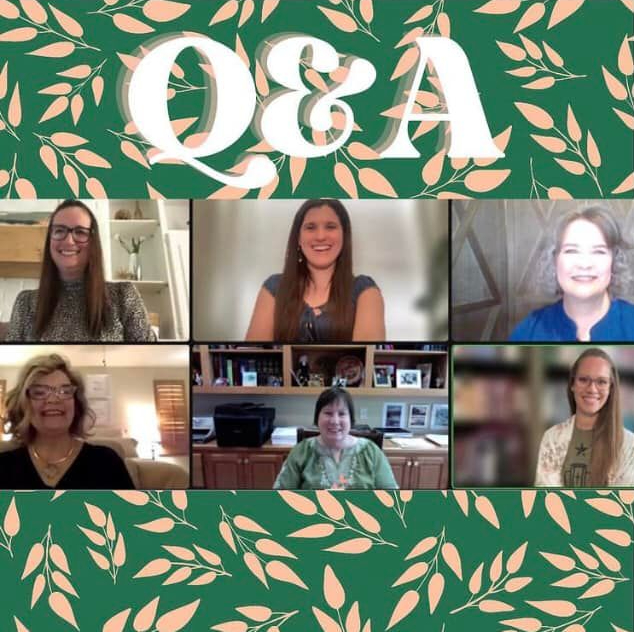
We finished up the day with a fun Q&A session. These ladies asked some sharp questions!
Keep an eye on TCPC’s website for soon to be posted conference video. In the mean time, my good friend Robin Self over at A Worthy Walk was also able to attend, and she has kindly shared her thoughts and notes on the conference with us in her article, A Day With Michelle Lesley.
Photo courtesy of Jennifer Buck
Photo courtesy of Robin Self
Photo courtesy of Morgan Lynn
Photo courtesy of Beki Hughes
For lunch, Felicia whisked me away to Rosa’s Cafe, and I am crushed that we don’t have one here at home. The food was delicious and the atmosphere was fun!
All photos courtesy of Rosa’s Cafe.
During and after the conference there was a little time for a few more pictures…
It was a full house!
You’re never too young to learn sound doctrine! Photo courtesy of Morgan Lynn
FBC Lindale brought a group of 41 women to the conference! Photo courtesy of Jennifer Buck
Beki, Jennifer, Michelle, Robin Self I love these ladies! Photo courtesy of Jennifer Buck
And all too soon, it was time to head home.
Many thanks to Felicia, Melodie, Carrie, the pastors, elders, and all of the other ladies and gentlemen of The Church at Pecan Creek who worked so hard to host a great conference, took care of all my needs, and made me feel so welcome. If you’re ever in the Denton area, be sure to stop in to TCPC for a visit!
If your church or organization is ever in need of a speaker for a womenโs event, Iโd love to come share with your ladies as well. Click here for more information.
Welcome to another โpotpourriโ edition of The Mailbag, where I give short(er) answers to several questions rather than a long answer to one question.
Or maybe I answered your question already? Check out my article The Mailbag: Top 10 FAQs to see if your question has been answered and to get some helpful resources.
For any men who might be reading – this question is about breastfeeding. If that’s a sensitive issue for you, please just scroll right on past this section.
I have searching for biblical content about breastfeeding and your post from 3 years ago “The Mailbag: Should Christian women cover up while breastfeeding? really did make think. I’m currently studying to become a pediatric dietitian if God allows it, and I have a debate in myself. I’m starting to create content in social media in order to teach about these topics: breastfeeding, nutrition, etc. But now I don’t know if it’ correct to share real videos that are educative to teach how to properly breastfeed, showing examples and different cases that help mothers to understand. Since it is shameful to show breast according to Bible, am I wrong if I am looking to share or record these types of videos? Just to clarify, these videos only shows the necessary.
I hope my email can reach you and have an advice for this, may the Lord continuing giving you wisdom and excuse me any grammatical error since english is not my first language.
Can I first just say – I have the utmost admiration for anyone who tackles English as a second language. Its intricacies and inconsistencies are often difficult even for us native speakers! When I get English messages from followers whose native language is not English, they almost always apologize for grammar and spelling errors. Please rest assured, when I read your messages, I’m not critiquing them, I’m wishing I were as proficient in a second language as you are!
Instructional videos for mothers about breastfeeding are not the same thing as a mother who is breastfeeding in public. For one thing, your videos are aimed specifically at women (new mothers), and for a legitimate purpose (teaching breastfeeding). If a man (assuming he’s not a health care worker who needs to view your videos for professional purposes) proactively clicks on and watches your videos in order to see women’s bare breasts, he is the one at fault, not you. His actions would be more similar to a man who peeks through the window of a woman’s bedroom to watch her breastfeed, not a man out in public, minding his own business, who’s suddenly confronted with a view of a woman’s breasts because she’s not making any effort to reasonably cover while nursing.
Additionally, aiming your videos at new mothers (women) is more similar to a woman breastfeeding her baby in a group meeting for new moms (all women), than out in public (random men and women present).
Here are a couple of things I would suggest:
Make sure the titles of your videos make it obvious in some way that they are educational, instructional videos on breastfeeding for new mothers and postpartum/neonatal healthcare workers.
Instead of, say, just posting these videos on your personal Facebook, Twitter, Instagram, etc., pages, set up a separate professional social media page or group specifically for your videos and other breastfeeding materials. (I would suggest also setting up a website and YouTube channel specifically for your breastfeeding materials.) Not only will this help build your professional online platform, but your male friends and family members won’t be randomly running across your videos (which might make them uncomfortable) every time they scroll through social media.
I think that’s really as far as your responsibility goes. Men have to take responsibility for what they view at some point, too. It’s not all on you.
I have a question about women who are ordained. My cousin is ordained to perform marriages in the state of South Carolina. Would that be considered the same as an ordained preacher and against I Timothy 2 teaching? As far as I know all she does is perform marriage ceremonies and does not โpreachโ in the pulpit.
Great question!
I’m thinking there might be a little confusion about the term “ordained” here. “Ordaining” is what a church does when it sets someone apart for ministry. “Licensing” is what the government does that allows a person to legally perform marriages recognized by the state.
For example, pastors, elders, and (usually) deacons are ordained by the church to their respective offices, but they are not automatically licensed to legally perform marriages. For that, they have to go downtown to the courthouse and fill out some paperwork. By the same token, people can go to the courthouse, fill out the paperwork, and become licensed to perform marriages, and never have set foot in a church in their lives.
So, I think maybe you mean your cousin is licensed by the state to perform marriages, not that she is ordained by her church to do so. (I’ve never heard of a church that ordains someone just to perform marriages, but if that’s what’s going on here, the more pressing problem is the church’s ecclesiology, not your cousin officiating at weddings.)
So let’s go with your cousin being licensed by the state, not ordained by the church: No, that’s not technically a violation of 1 Timothy 2:12, assuming she’s not preaching a sermon as part of the marriage ceremony. The biblical prohibition is against women pastoring, preaching to men, instructing men in the Scriptures, and holding unbiblical authority over men in the context of the church gathering.
But there are all kinds of variables that play into whether or not it’s wise or appropriate for her to be officiating weddings. Does your cousin profess to be a Christian? Where do these weddings take place – in a church, park, reception hall, beach, etc.? Is she performing these weddings, or being viewed as performing these weddings as an official representative of her church? (In other words, would those not in the know confuse her performing weddings for her being a pastor of her church?) Do the bride and groom profess to be Christians? If so, why would they not want their pastor (or at least a pastor) to perform the ceremony in their own church?
I’m just saying I would need to know a lot more, probably on a case by case basis, to weigh in on whether or not it’s actually a good idea for her to perform any or all of these wedding ceremonies.
FIRST, I want to say thank you for your recent list of doctrinally sound men. My reason for writing comes from referring to them as “awesome” in your social media post about them:
“Today on the blog: Check out these awesome men to follow and learn from…”
I would just would ask you to consider the use of the word “awesome” when it applies to “mere” men (or women, for that matter.) Never mind the “world,” but Christians use that word so freely when talking about truly “good” things (and we also use it for things like movies and ice cream.)
Is it wrong to want there to be a word that is reserved for God and what he does? When something is clearly a work of God, even working through a person, there are times I can agree that it is something awesome. But largely, the things we call awesome are not.
It’s always good to evaluate our words to make sure we are representing Christ well, and, no, it’s not wrong to want there to be a word that is reserved for God and what He does. But let me challenge us to take this a bit deeper than just the surface level use of a particular word.
I’ve received this same basic question a handful of times over the years, and the question has always been about the word “awesome”. And I just have two questions about that:
First, why “awesome”? I think a much stronger biblical case could be made against using “good” or “holy”.
I’m betting that, like the reader who wrote in, we all use the word “good” in the same ways the word “awesome” is used – “truly good things,” movies, ice cream, saying “Good dog!” etc. – because they both mean the same thing, except that awesome is a little more intense. And yet, while Scripture doesn’t speak to our use of the descriptor “awesome,” Jesus Himself addressed the use of the word “good” in Mark and Luke:
And a ruler asked him, โGood Teacher, what must I do to inherit eternal life?โ And Jesus said to him, โWhy do you call me good? No one is good except God alone.
Now, when we read this passage in context, we know that Jesus isn’t telling this guy (or us) that he shouldn’t call Him good, that he shouldn’t call anything good, that Jesus isn’t good, or that Jesus isn’t God. Quite the opposite of most of those, in fact.
He’s directing the rich young ruler’s attention to the fact that only God is completely good. That God is the only and perfect standard and embodiment of good. He was basically saying, “You’re calling me good in this context. Does that mean you’re prepared to call me God?”.
But what Jesus doesn’t say (here or anywhere else in Scripture) is, “Since only God is truly, completely, and perfectly good, you can’t use the word “good” to describe anything else.”. In fact God Himself uses the word “good” to describe other, lesser things besides Himself. He has prepared good works for us to do. God pronounced everything He created good. He gives us good gifts. He says good trees bear good fruit. And so on.
Personally, if I got to choose the word we were all going to consecrate to use only for describing God, it would be “holy”. I would be totally OK with us losing expressions like “holy cow,” “holy moly,” etc., forever. (And when my kids were little and would use one of those expressions, I would remind them, “Only God is holy.”.) First of all, there are far fewer people and things that could correctly be called “holy” than “awesome” or “good”.
“Only Thou art holy,” we sing. And it’s true. Though Christians are a holy nation, and we’re to strive for holiness, we are only positionally holy and set apart because Christ’s righteousness has been imputed to us. Even our righteous deeds are as filthy rags. In a common grace sense, we might say someone is a “good” man for the job, or a store is having an “awesome” sale, but there is no common grace sense in which anyone but Christians – and we, only through Christ – could, in any way, properly be called holy.
My second question about reserving “awesome,” or any other adjective, strictly for God is: If you’re going to be consistent with your line of reasoning, how far are you going to take this? If you’re going to stop using “awesome” for anything but God, are you also going to stop using the word “good” for anything but God? What about “perfect”? Powerful? Just? Kind? Compassionate? Merciful? Are you going to stop saying, “I love you” to your family because God is love, and only He loves perfectly and completely?
I hope not. I hope you won’t stop using any of those words, because God doesn’t require you to. It would be self-imposed legalism. Remember when Jesus said to the Pharisees, “The Sabbath was made for man, not man for the Sabbath.”? He was trying to teach them that the Sabbath was meant to be a blessing and a benefit of rest to God’s people, not a slave driver of legalism adding one more day of work (to earn God’s favor) to their week.
It’s kind of the same general idea with language in this case. Language is one of God’s good and awesome gifts to us. It gives us a way to express our reverence for Him, but also our delight in the work of His hands – like ice cream and dogs. Just as with the Sabbath, there’s a godly and appropriate way to use language, but, outside of those parameters, language was never meant to enslave us or hamstring our ability to communicate. When we use language to appreciate God’s good gifts, or to express delight or pleasure, knowing that every good gift and grace redounds to His glory, He is exalted.
When we use language to appreciate God’s good gifts, or to express delight or pleasure, knowing that every good gift and grace redounds to His glory, He is exalted.
If you’re convicted not to use the word “awesome” for anything but God, or you don’t want people calling you awesome as a matter of conscience, that’s totally fine. Don’t violate your conscience. But you must realize that it is a matter of your conscience, not everybody’s. And you can’t bind others to your conscience. Whether or not to use the word “awesome” is an issue of Christian liberty. It is not a biblical command.
If you have a question about: a Bible passage, an aspect of theology, a current issue in Christianity, or how to biblically handle a family, life, or church situation, comment below (Iโll hold all questions in queue {unpublished} for a future edition of The Mailbag) or send me an e-mail or private message. If your question is chosen for publication, your anonymity will be protected.