Speaking Engagements

Report Back: Cullman, Alabama, Women’s Conference

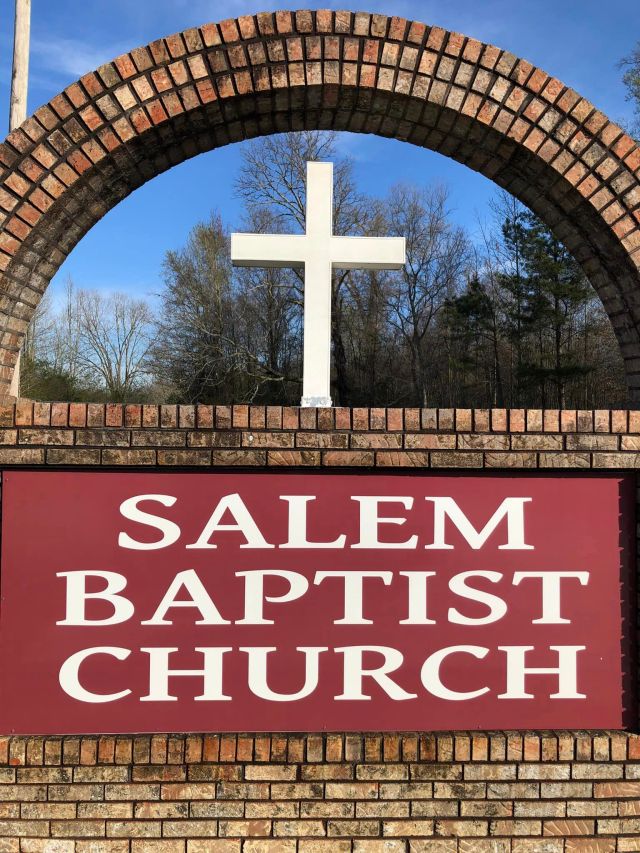
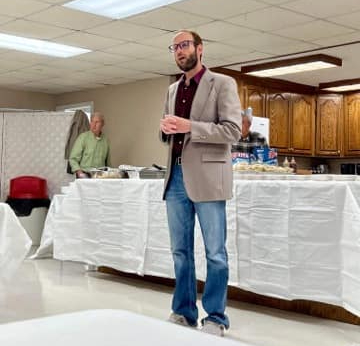
I recently had the pleasure of fellowshipping and sharing with the wonderful women of Cullman, Alabama, and the surrounding area at Salem Baptist Church’s women’s conference, put on by the awesome men of SBC. “The women of this church are the serving-est women I know,” Pastor Cory told me, “and we want to serve them for a change!”. What a great way to “outdo one another in showing honor”! (Romans 12:10)

My husband has taken to driving me to conferences that are nearby (and occasionally, those that aren’t!), so, since Cullman is a scant 6 1/2 hours from Baton Rouge, he accompanied me on this whirlwind trip. We had a great time together, chatting and listening to podcasts, and he really enjoyed hanging out with Pastor Cory and the rest of the brothers at Salem.

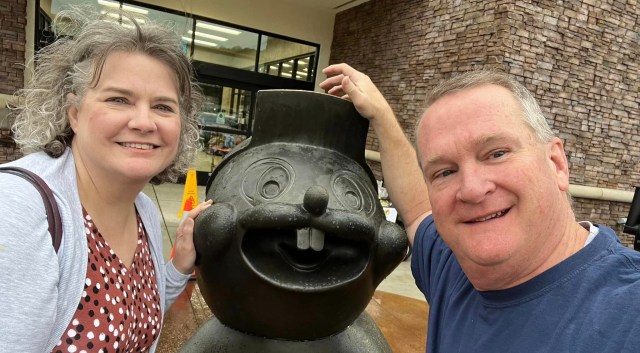
After a quick “stop and shop” (and lunch!) at Buc-ee’s in Leeds, AL…

Buc-ee’s is the new Stuckey’s. If you know, you know. :0)๐Ÿฆซ

…we arrived in Cullman Friday afternoon and got settled into our motel. Pastor Cory and his delightful wife, Amber, immediately whisked us away for some fabulous Mexican ice cream. Mine was chocolate-brownie-Oreo. I could definitely go for some more of that!


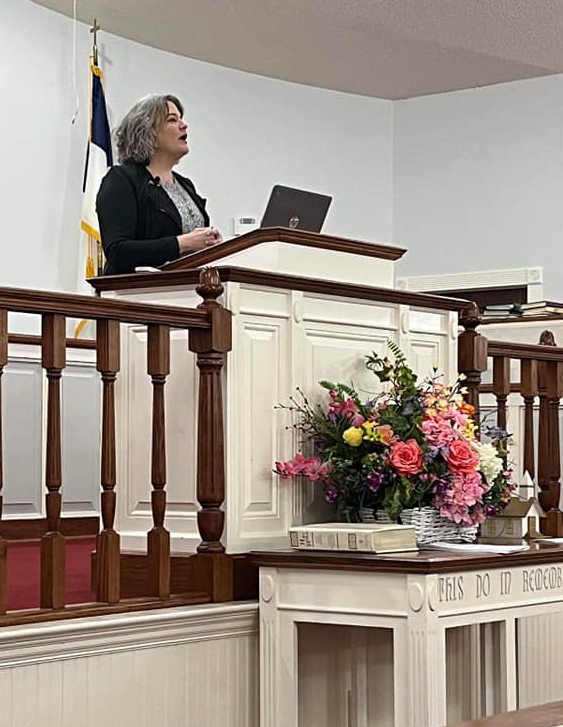
Friday night, it was conference time!

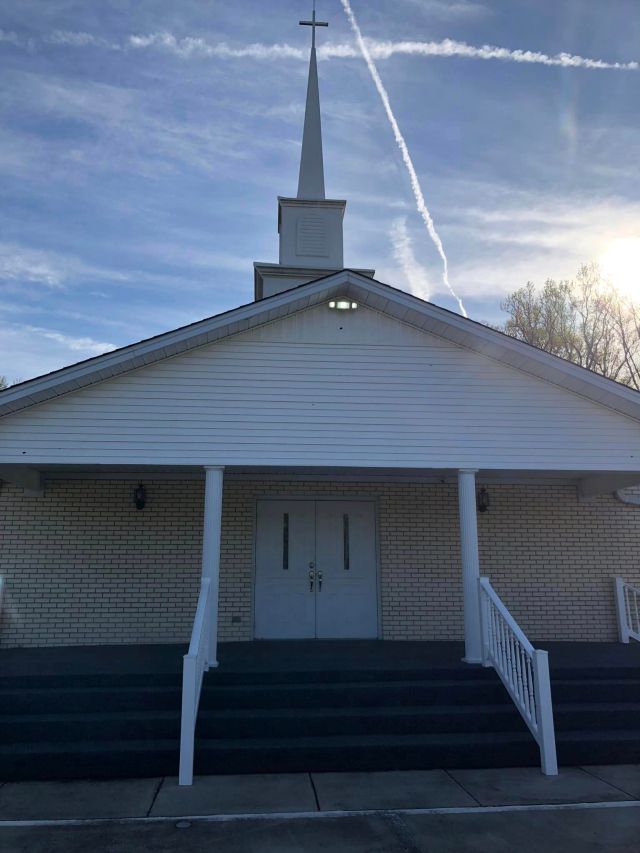
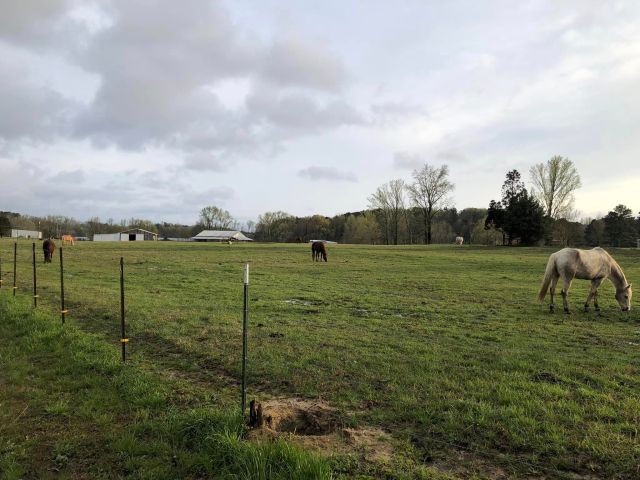
On arriving, we could see that Salem Baptist is a charming little church tucked into a beautiful, pastoral nook of northern Alabama.

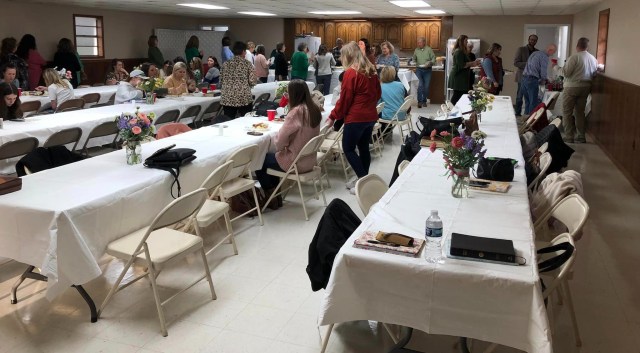
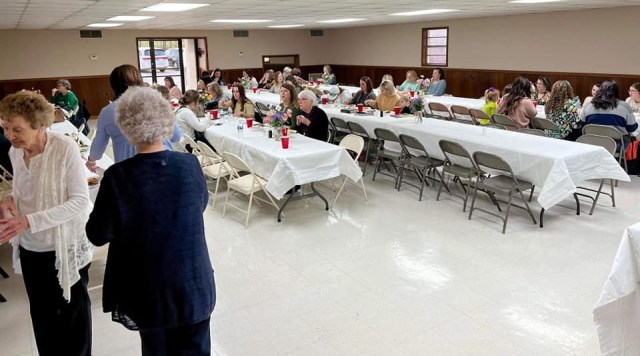
A delicious pulled pork dinner from what must be the best barbecue restaurant for miles around was a fantastic way to get the festivities kicked off.

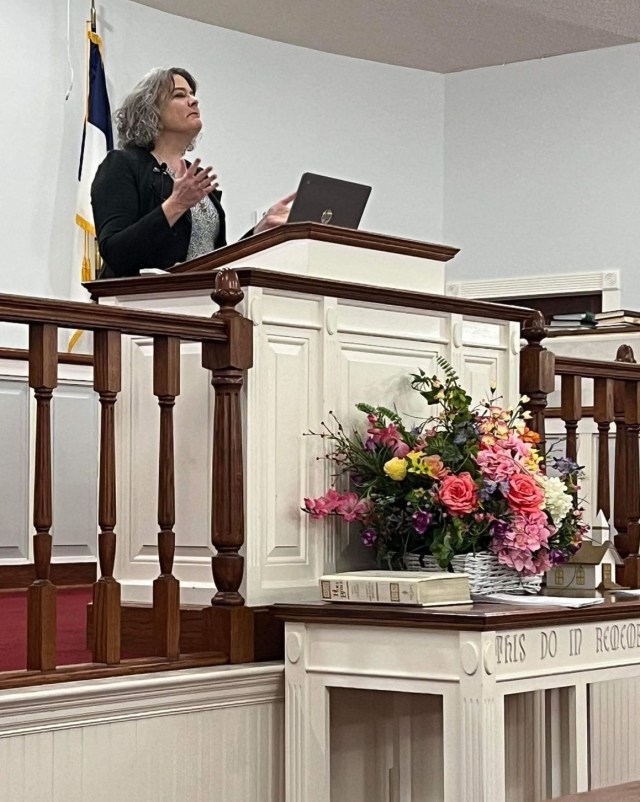
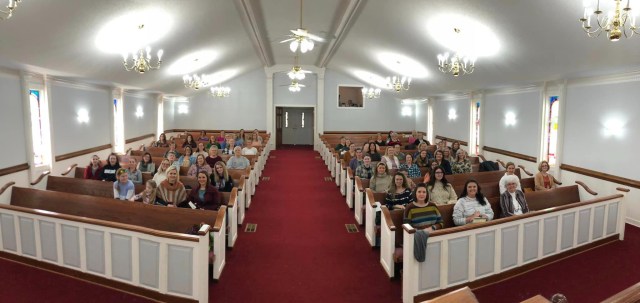
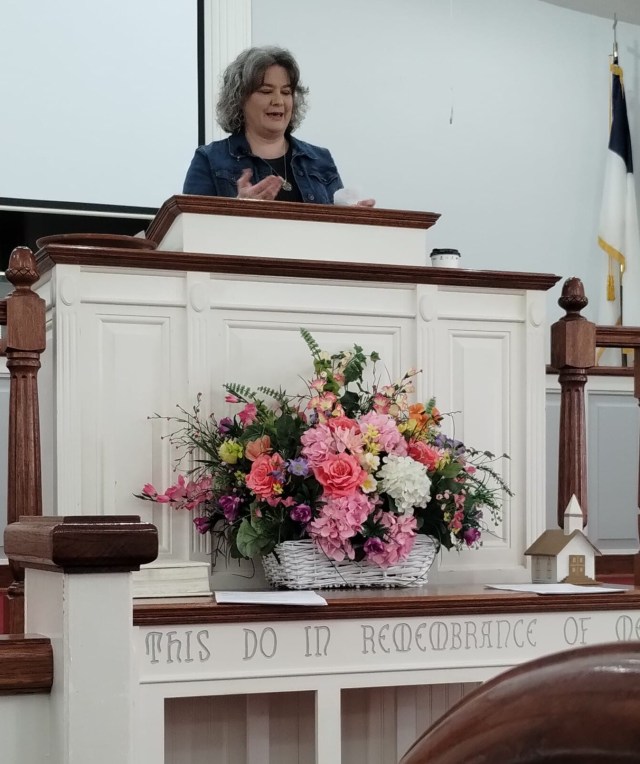
Once everyone was well fed and ready to focus, we headed into our first teaching session, God’s Design for Biblical Womanhood. Womanhood is special and unique. Womanhood – not a cheap knockoff of manhood – is something God values and wants women to display in the world, the church, and the family.

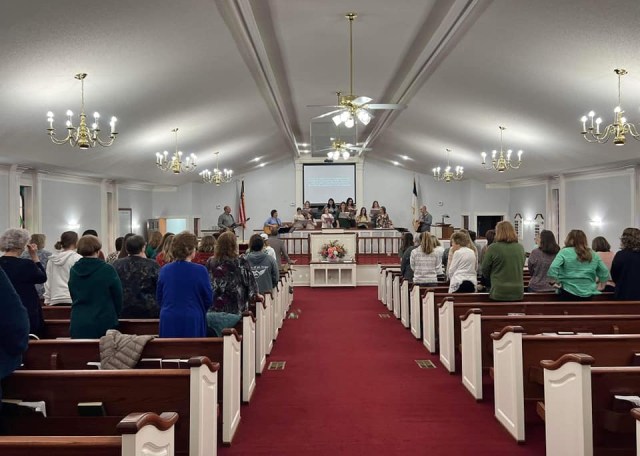
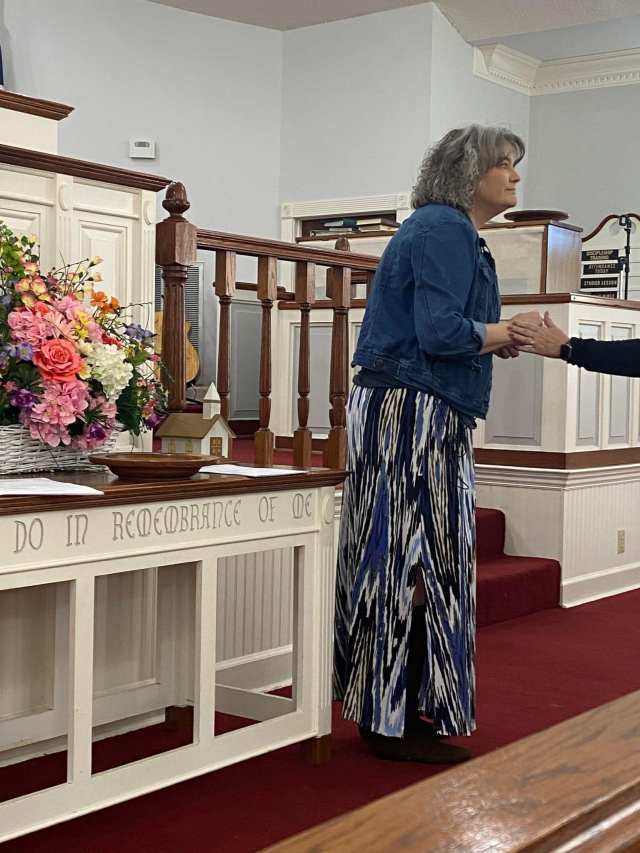
Friday night worship, teaching, and fellowship:


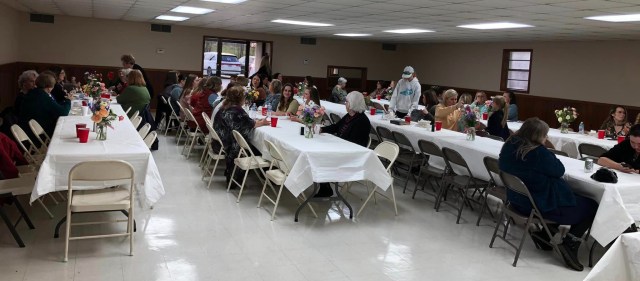
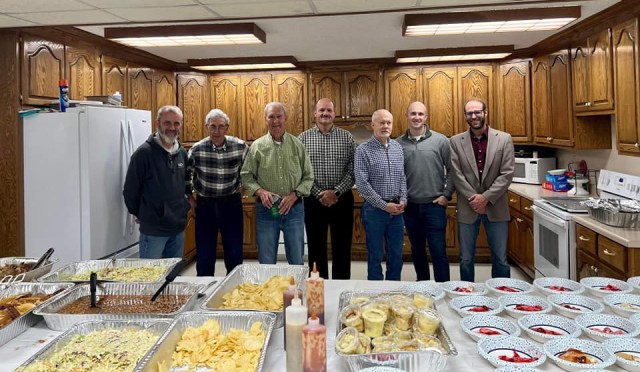
A hearty breakfast awaited us as we arrived at SBC Saturday morning.

Thank you so much to these gracious gents who worked so hard in the kitchen and in other capacities before and during the conference!

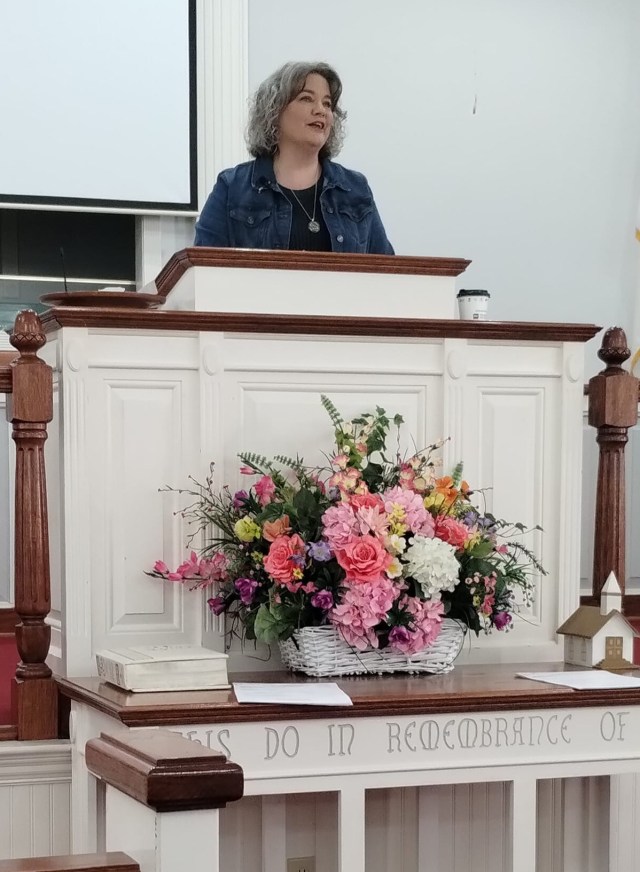
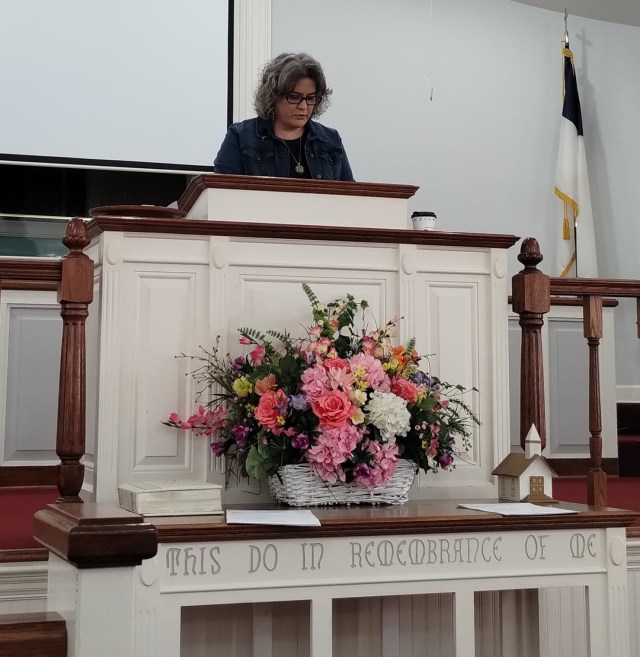
Saturday’s teaching started with our second session on biblical womanhood: Walking in Biblical Womanhood. Everybody wants to change the world, but nobody wants to change the diapers. God’s plan for most of us is to change the diapers, get the groceries, make the meals. We fight back against feminism by standing – right where God has placed us – and living each day faithfully.

We wrapped things up for the weekend with a fun Q&A session. These ladies asked some smart questions!

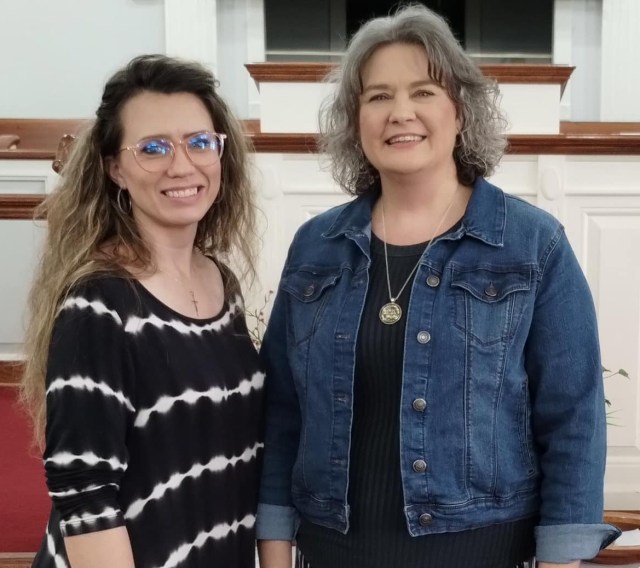
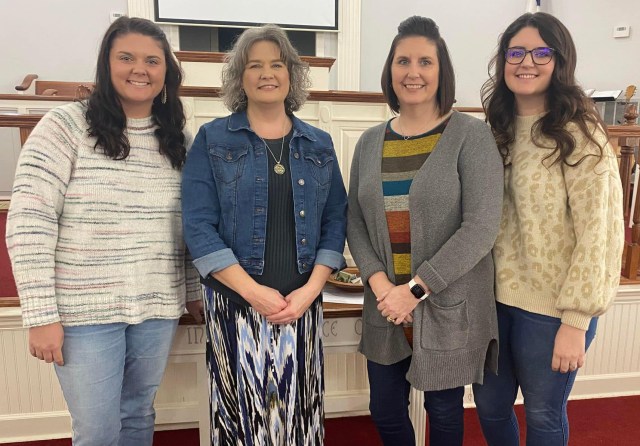
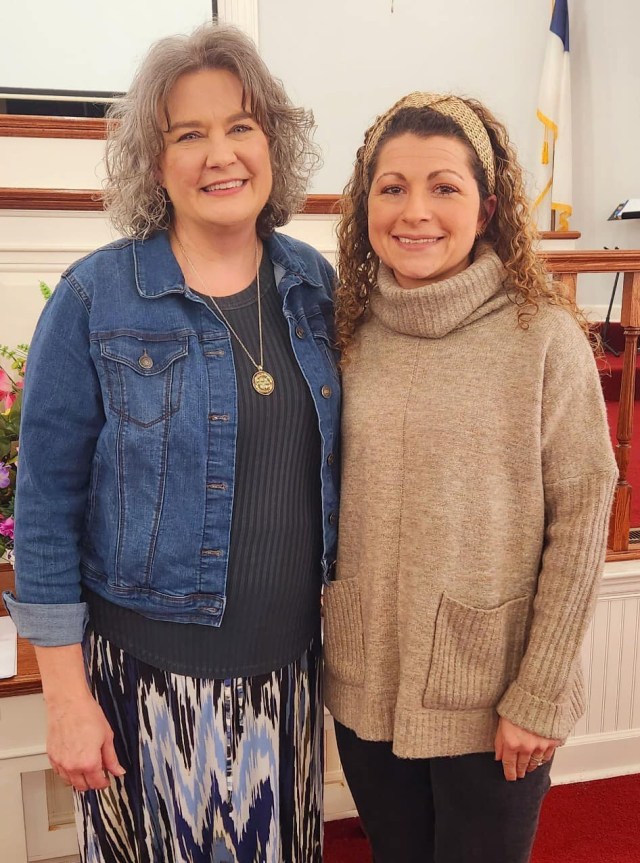
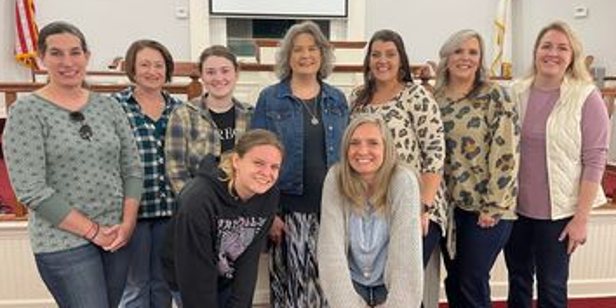
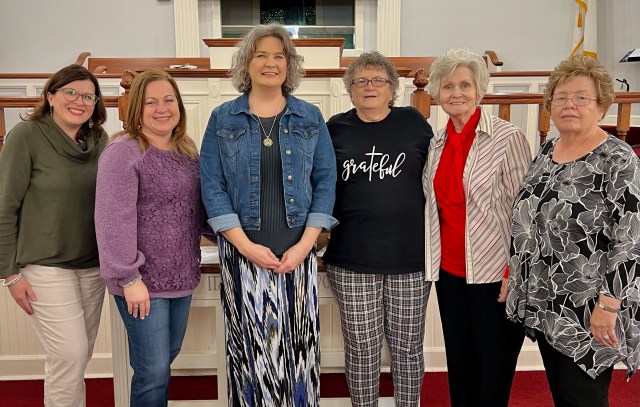
Saturday teaching and fellowship:

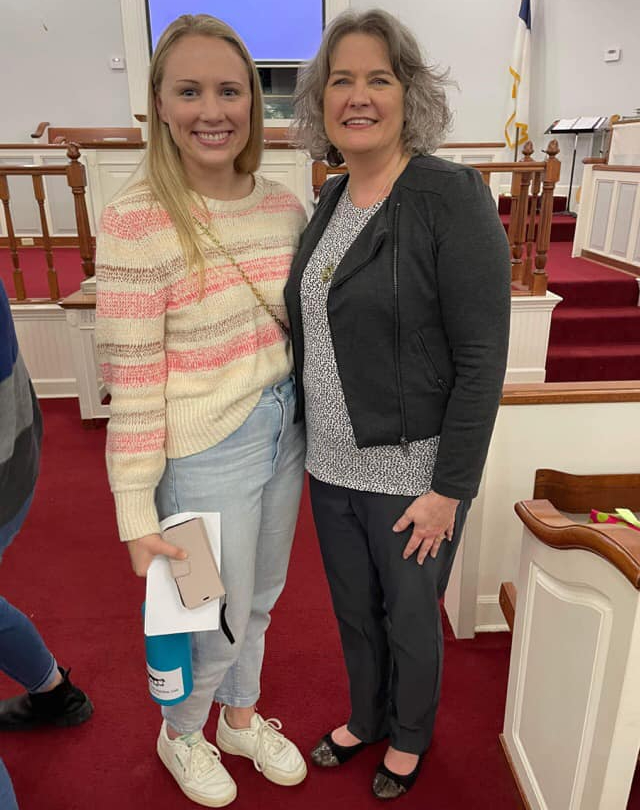
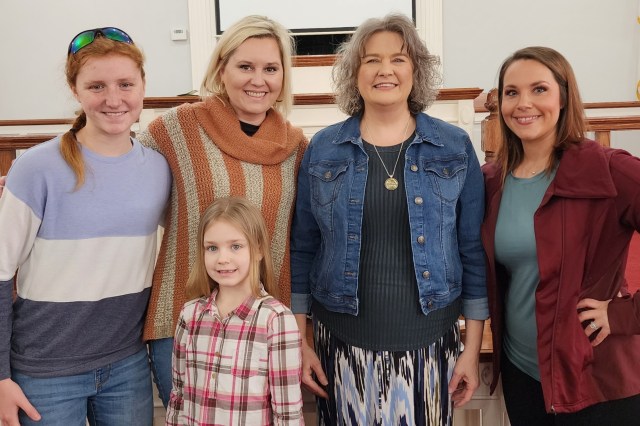
I don’t mind telling you this might be my favorite picture of the whole conference. It is never too early to start teaching your girls about biblical womanhood. Whenever you can, include them in multi-generational events like this one where they’ll be around godly older women they can begin developing Titus 2 relationships with.

All too soon, it was time to say goodbye. My deepest thanks to Cory and Amber, and all the men and women of Salem Baptist Church who worked so hard to host a fantastic conference, took care of all my needs, and made me feel so welcome. If you’re ever in the area and need a good church to visit, make plans to spend the Lord’s Day with these wonderful brothers and sisters.


If your church or organization is ever in need of a speaker for a womenโ€™s event, Iโ€™d love to come share with your ladies as well. Click here for more information, or to find an upcoming event near you!


Photo Credits

Many thanks to Amber and other conference attendees who took most of the photos above. You may assume that if I’m in the picture or if it’s a good quality photo that I didn’t take it. The remaining photos were shot by me.

Discernment

Fighting Off the Wolves

Originally published March 20, 2018

12974352_1075682862478482_4420640709694072913_n
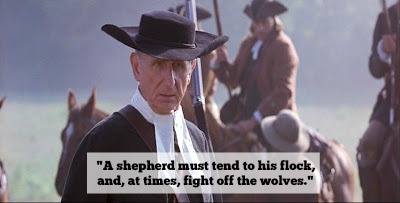
Photo and quote courtesy ofย The Patriot.ย ยฉ2000, Columbia Pictures, Inc.

I love pastors. I really do. As a minister of music’s wife, church member, and through involvement in other ministries, I’ve known a lot of them. They have a tough job that most of us wouldn’t take on in a million years. I pray for and encourage my own pastor and my pastor buddies regularly, and try to remind y’all to do the same from time to time. All this to say, I’m not a preacher-basher. Far from it.

But sometimes there’s a bit of a veering in a dangerous direction, like a vehicle heading towards the center line, among (some, not all) pastors who are momentarily distracted and might need a friendly “Hey, did you see that truck we’re about to crash into?” from their terrified, front seat passenger.

Color me terrified.

There are pastors out there who treat false teachers with kid gloves. They refuse to label anyone as a false teacher, or only vaguely allude to certain false teachers without naming names. I’d like to encourage those pastors to pull the steering wheel to the right and call a spade a spade. Yes, they need to use the label of false teacher soberly, sadly, and only after making sure, with hard evidence, that it is warranted, but enough with grown men of God tiptoeing around under the guise of “we don’t know what’s in that person’s heart” or “I’m afraid to be painted with the ‘mean old discernment blogger’ brush.”

Enough with grown men of God tiptoeing around under the guise of “we don’t know what’s in that person’s heart” or “I’m afraid to be painted with the ‘mean old discernment blogger’ brush.”

The Bible doesn’t say anywhere that a pastor shouldn’t call someone a false teacher and warn the flock about him just because the pastor doesn’t know for sure what’s in the person’s heart or because he’s afraid of what others might think. We are all to look at their words and their behavior and judge (that’s right, I said “judge“) whether or not they are teaching what accords with sound doctrine. And if they’re not, they need to be denounced. Not in a wild-eyed, foaming at the mouth, wingnut way, but certainly loudly and decisively as a mature man of God.

We never see Paul or Jesus or Peter or Jude or any other godly man in the Bible being over-cautious about firmly calling out those who had proved themselves to be false teachers.

We never see Paul or Jesus or Peter or Jude or any other godly man in the Bible being over-cautious about firmly calling out those who had proved themselves to be false teachers.

“Beware of the leaven of the Pharisees and Sadducees.” – Jesus, Matthew 16:11

“Woe to you, Scribes and Pharisees, hypocrites…blind guides…fools…serpents…brood of vipers.” – Jesus, Matthew 23

“For such men are false apostles, deceitful workmen, disguising themselves as apostles of Christ. And no wonder, for even Satan disguises himself as an angel of light. So it is no surprise if his servants, also, disguise themselves as servants of righteousness. Their end will correspond to their deeds.” – Paul, 2 Corinthians 11:13-15

“For certain people have crept in unnoticed who long ago were designated for this condemnation, ungodly people, who pervert the grace of our God into sensuality and deny our only Master and Lord, Jesus Christ.” – Jude, Jude 4

“They count it pleasure to revel in the daytime. They are blots and blemishes, reveling in their deceptions, while they feast with you. They have eyes full of adultery, insatiable for sin. They entice unsteady souls. They have hearts trained in greed. Accursed children! Forsaking the right way, they have gone astray.” – Peter, 2 Peter 2:13b-15a

“But even if we or an angel from heaven should preach to you a gospel contrary to the one we preached to you, let him be accursed. As we have said before, so now I say again: If anyone is preaching to you a gospel contrary to the one you received, let him be accursed.”
Paul, Galatians 1:8-9

Would pastors today be wise to use this same kind of verbiage? Maybe. Maybe not. These godly men spoke and wrote in a way that was appropriate for their time, culture, and context. Our time, culture, and context are different and may call for a different approach. But the point is, none of them were afraid to speak the truth boldly about false teachers in order to protect the sheep God had entrusted to them. And we sheep today desperately need courageous shepherds who will do the same.

Pastors, if you speak out against false teachers, there are people who will get mad at you. It’s unavoidable. But there are others who know the truth and will be cheering you on and supporting you. And there are still others you will turn back from false doctrine who will learn the truth of God’s word and love you for warning them. And their souls are worth any risk or trial.

Be encouraged, dear pastors. Be strong in the Lord. Be faithful to Him. You can do this!

Be encouraged, dear pastors. Be strong in the Lord. Be faithful to Him. You can do this!

Remember the words of your brother and fellow laborer Paul, who, after condemning false teachers in Galatians 1:6-9, may have anticipated the same backlash you might receive:

For am I now seeking the approval of man, or of God? Or am I trying to please man? If I were still trying to please man, I would not be a servant of Christ.
Galatians 1:10


Mailbag

The Mailbag: Potpourri (Prophetic “word” at church… Study apps… Pastoral counsel… Can treason be forgiven?… Fiction vs. lies)

Welcome to another โ€œpotpourriโ€ edition of The Mailbag, where I give short(er) answers to several questions rather than a long answer to one question.

I like to take the opportunity in these potpourri editions to let new readers know about my comments/e-mail/messages policy. Iโ€™m not able to respond individually to most e-mails and messages, so here are some helpful hints for getting your questions answered more quickly. Remember, the search bar (at the very bottom of each page) can be a helpful tool!

Or maybe I answered your question already? Check out my article The Mailbag: Top 10 FAQs to see if your question has been answered and to get some helpful resources.


I am writing to you today because the church we attend has started to allow a woman to speak a “word” over the congregation*.

After the third time, I approached the woman and asked if she thought she was a prophet. She did not deny it, but said that the Lord speaks to her directly through different ways. We went to our pastor who did not see a problem with what she was saying, but only that it was causing chaos during the service.

Last Sunday, our pastor allowed her to speak through the microphone stating that we need to let the Holy Spirit move in our midst.

My husband and I are very concerned and alarmed about this practice and we are unsure if we should leave the church over this and if we should approach our pastor with our concerns again. We have been attending this church for years and have never seen this happen until recently.

Honey, I know this is difficult and there are probably a lot of people you’re close to there, but this church has wandered off the reservation into New Apostolic Reformation land, and, yes, it’s time for you – and every other doctrinally sound Christian in it – to leave and find a real church. (Just to be clear, I would say the same thing if it were a man speaking these “words” over the congregation.)

Go to the Searching for a new church? tab in the blue menu bar at the top of this page, and begin studying the materials under “What to look for in a church” as you’re utilizing the church search engines.

You’ll also want to examine the materials under “Leaving Your Current Church,” including The Mailbag: How to Leave a Church. Be sure you don’t leave without going to your pastor and explaining to him that you’re leaving because he’s allowing false doctrine into the church. (You can consider this “approaching our pastor with our concerns again”. If you want to approach him one additional time – like you did before – prior to this explanation of why you’re leaving, you can, but it’s unlikely to do any good.)

*If you’re unfamiliar with what this reader means by “speaking a ‘word'” over the congregation, it looks something like this (start around the 14:27 mark), only, typically, it’s not quite this nutty and with a little thicker biblical veneer. The “church” in the link is not the reader’s church, it’s just the first example that popped into my head today.


As I read my Bible sometimes I would like to know what a certain word means in the original text. Can you recommend a resource that would be helpful for that? Thank you so much for all you do to keep us grounded in His Truth!

You’re welcome! It is my pleasure to serve you in Christ, and it is always encouraging to hear from women who are good students of Scripture.

I use both Blue Letter Bible’s and Bible Hub’s interlinear features, and find both to be helpful. You can read more about them in my article My Favorite Bible & Study Apps (they both have a web version as well as an app).


What does one do if they have a serious spiritual question and well known and trusted Biblical pastors give the exact opposite answers from one another? I cannot find the specific answer in Scripture and I desperately need to know what to do. I have read where one advises one course of action and the other advises the opposite. I am praying and continuing to search. But I need help. Any advice you have would be very welcome.

It’s hard to know exactly how to answer this question since I don’t know the details (and I’m not asking for them – this seems private), but, generally speaking, my advice is always to go to your own pastor first for counsel, assuming you’re in a doctrinally sound church. If it’s the type of issue best addressed by another woman rather than your pastor, reach out to a godly, doctrinally sound, “Titus 2” sort of woman in your church so that she can disciple you through this.

If, for some reason, you absolutely can’t go to your pastor or a godly older woman in your church, as a last resort, you can locate a biblical counselor (not the same thing as a “Christian counselor/therapist/etc.” – see the Biblical Counseling Resources tab in the blue menu bar at the top of this page) and set up an appointment.

If the reason you can’t go to your pastor or a godly older woman in your church is that you’re not currently in church, you need to remedy that immediately, and this situation is one of the main reasons why. (Go to the Searching for a new church? tab in the blue menu bar at the top of this page and start using the church search engines.)

When we go through crises and trials in life, God’s plan for us is to turn to our pastors and our church family, not to seek the generalized, one size fits all advice of celebrity pastors – even if they’re doctrinally sound.

Your own pastor and your brothers and sisters at your local church know you. They’re there for you, boots on the ground, to disciple you and help you walk through this situation over the long haul. A stranger on the internet or between the covers of a book can’t do that for you.

I urge you, turn to your church family.


Can God save someone convicted of treason by the government? Can they be forgiven and go to heaven?

Of course. God can and will save anyone who turns to Him in repentance over her sin and places her faith in the death burial and resurrection of Christ as payment and forgiveness for her sin. God doesn’t have a list of certain sins that He refuses to forgive*. I would encourage you to prayerfully study and consider the Scriptures and materials at the What must I do to be saved? tab in the blue menu bar at the top of this page.

*Readers, I know many of your minds immediately went here. Hope this resource is helpful.


Why should a woman or male read Fiction? Shouldn’t we read only and study only truth not fantasy? Jesus said “I am the truth”, Satan in the garden used fiction to challenge God’s authority and present a false truth to Eve, who was then deceived by her own desires gave Adam the forbidden fruit.

I think the struggle you’re having here is that you’re conflating fiction books, novels, and stories with lies and deception. They’re two different things, and they need to be kept in separate categories.

There’s nothing wrong with Goldilocks and the Three Bears or the John Grisham novel that’s sitting on my night stand. These are fiction – a creation of the author’s imagination. The authors aren’t trying to convince anyone that these stories are true. In fact, many novels carry a disclaimer stating that it is a work of fiction and that any resemblance the story or characters bear to real people or situations is purely coincidental. And no person of normal intelligence and wherewithal picks up a story or novel thinking it’s truth.

What Satan used in the Garden with Eve was not fiction. It was lies and deception. She thought he was telling her the truth. He was trying to make her believe he was telling the truth. See the difference? (Also, there’s no such thing as a “false truth”. A statement is either true or false. The words you’re looking for are “lies” and “deception”.)

And the Jesus who said, “I am the truth” in John 14:6? He told fictional stories throughout His ministry in order to teach and illustrate truth. We call them parables. And we know Jesus never lied or deceived anyone. That’s the best way we can tell the difference between lies and fiction. Lying is a sin. Fiction is not.

Now go and feel free to read that novel on your night stand.


If you have a question about: a Bible passage, an aspect of theology, a current issue in Christianity, or how to biblically handle a family, life, or church situation, comment below (Iโ€™ll hold all questions in queue {unpublished} for a future edition of The Mailbag) or send me an e-mail or private message. If your question is chosen for publication, your anonymity will be protected.

Discernment

Throwback Thursday ~ Discernment: A Spiritual Battle, Not a Logical One

Originally published May 11, 2018

The way people think, the way we react to environmental stimuli, the way we relate to one another, the way our backgrounds and experiences shape the way we view and interact with the world absolutely fascinates me. It’s probably what led me to pursue degrees in psychology and counseling as well as every sociology, anthropology, criminology, and every other social science -ology elective I could get my hands on when I was in college. What makes people tick? Why does the human mind perceive things the way it does? Why is it that two people can witness the exact same event and come away with two completely different interpretations of it?

Those human-centered constructs and sciences can be helpful when it comes to studying observable behavior, but that’s exactly where their helpfulness ends – at the line of observable human behavior. Statistical psychology can perform a longitudinal study on people who were abused as children and show us that those people are much more likely to become abusers themselves. But, try as they might, none of those -ologies can accurately explain why they don’t all turn out to be abusers, or why some become abusers and then, for no earthly reason, suddenly stop and are seemingly magically transformed into healthy parents or spouses.

It’s because all of the -ologies lack a major operating component in their schemata – the spiritual realm. They’re like a football team with an adequate defensive team but no offensive team. You can’t play the game of football that way, and you can’t begin to understand people without acknowledging and understanding the spiritual.

Humans are more than just brains transported around by a bag of bones and muscles. People have spirits, and there are only two kinds: a spirit that has been redeemed by the blood of Christ, or a spirit that is in rebellion against Christ. And even among those who have been redeemed, there’s a broad spectrum of maturity, both overall and in specific areas of sanctification. You can generalize someone as a “baby Christian” or a “mature Christian”, but even among mature Christians, you’ll find that Christian A isn’t as mature in trusting God as Christian B, that Christian B isn’t as mature in generosity as Christian C, that Christian C isn’t as mature in patience as Christian D, and so on.

People are wonderfully and weirdly spiritually complex and unique.

People are wonderfully and weirdly spiritually complex and unique.

As Christians, I think most of us realize all of this on some level. We know that the Bible says that when we’re born again, we become completely new creatures in Christ. Out with the old man, in with the new. It’s a redeemed spirit that causes us to do things – in varying levels of maturity – like: love Christ, hate our sin, enjoy worship, and weep over the lost. Conversely, not having a redeemed spirit will cause those things to be absent in someone’s life. The words, attitudes, and behaviors we see on the outside are driven by what’s on the inside – the state of our spirits. Or, as Jesus put it:

The good person out of the good treasure of his heart produces good, and the evil person out of his evil treasure produces evil, for out of the abundance of the heart his mouth speaks.

Luke 6:45

We know this in our heads – when we’re dealing with someone’s sinful or otherwise inappropriate or aberrant actions, the words and behavior we’re observing are an outflow of the person’s spiritual state.

Sometimes, it’s easy to apply that knowledge. You observe someone murdering someone else, and it seems pretty clear-cut to say that the murderer is almost certainly not a genuinely regenerated Christian. Which is why he’s murdering someone.

The waters get a bit murkier when it comes to discernment issues in the church and among professing Christians, but the same spiritual principle applies. We’re ultimately dealing with someone’s spiritual state, not their external behavior.

“I don’t understand why my friend can’t see that _____ is a false teacher!”, I frequently hear from frustrated Christians (and myself!). “I’ve shown her video evidence, print evidence, and audio evidence of this teacher twisting Scripture, teaching false doctrine, and blatantly sinning, and she dismisses it all, telling me I’m being hateful and legalistic or that what the teacher is saying and doing is no big deal!”

What we’re dealing with is a spiritual issue, not a logical one. No amount of biblical evidence in the world is going to convince your friend of false doctrine until the Holy Spirit opens her eyes to it.

That’s because what we’re dealing with is a spiritual issue, not a logical one. No amount of biblical evidence in the world is going to convince that friend of false doctrine until the Holy Spirit opens her eyes to it. My job is not to argue my friend into believing that Joel Osteen or Beth Moore or Benny Hinn or Christine Caine is a false teacher. My job is to lovingly present what Scripture says, demonstrate how the teacher is in conflict with it, leave it on the table, walk away, and continue to pray for my friend. My job is done. It is now the Holy Spirit’s job to open my friend’s eyes and change her heart.

My job is not to argue my friend into believing that Joel Osteen or Beth Moore is a false teacher. My job is to lovingly present what Scripture says. It is now the Holy Spiritโ€™s job to open my friendโ€™s eyes and change her heart.

Still not sure about all this? Let’s take a look at what Scripture has to say:

The sheep hear his voice, and he calls his own sheep by name and leads them out. When he has brought out all his own, he goes before them, and the sheep follow him, for they know his voice. A stranger they will not follow, but they will flee from him, for they do not know the voice of strangers…but you do not believe because you are not among my sheep. My sheep hear my voice, and I know them, and they follow me. John 10:3b-5, 26-27

You really need to read all of John 9-10 to get the fullest picture of what’s going on here. Jesus has, once again, proved His divinity and Messiahship – this time, by healing a man who was born blind. That’s all the proof the formerly blind man needs. He is all in. “He said, ‘Lord, I believe,’ and he worshiped him.” (John 9:38) and that’s all she wrote.

The Pharisees, on the other hand, despite having just witnessed a miracle only God can do, and despite the very words coming out of the mouth of God Himself in 9:39-10:30 – overwhelming, irrefutable, biblical video and audio evidence, you might say – refuse to believe. Instead, they do the first century equivalent of calling Jesus a legalistic-Pharisee-hater: “Many of them said, ‘He has a demon, and is insane; why listen to him?’…The Jews picked up stones again to stone him.” (10:20,31)

Jesus gave them evidence. He gave them Scripture. And He did it perfectly because He was God. But they still chose to believe false doctrine over sound doctrine because they were not regenerate: Jesus answered them, โ€œI told you, and you do not believe. The works that I do in my Father’s name bear witness about me, but you do not believe because you are not among my sheep.” (10:25-26)

Jesus gave them evidence. He gave them Scripture. And He did it perfectly because He was God. But they still chose to believe false doctrine over sound doctrine because they were not regenerate.

Sometimes that’s what’s going on, spiritually, with our friends who follow false teachers. Despite what they say, how many times they’ve walked the aisle, prayed a prayer, or been baptized, or how intense an encounter with the Lord they think they’ve had, they’ve never been genuinely saved.

Jesus definitively says that His sheep – genuinely regenerated Christians – know His voice. They either instinctively know, through the power of the indwelling Holy Spirit, when what they’re being taught is biblical (Jesus’ voice) and when it’s not (the voice of strangers), or they’re willing to learn as someone else teaches them God’s Word. Whether it’s an instant spiritual aversion to false teachers, or a gradual opening of their eyes through the teaching of Scripture, they will not follow the voice of strangers.

I can’t tell you how many women have told me (and I’ve personally experienced the same thing myself), “I was attending this women’s Bible study where they were using a book by _____. I couldn’t really put my finger on it, but I knew something was wrong, so I stopped going. Later, as I learned more and matured in my faith, I realized I had felt uneasy because the author teaches false doctrine.”

If a friend is following the voice of strangers, it could be that she doesn’t know the voice of the Shepherd and needs you to share the gospel with her.

If a friend is following the voice of strangers, it could be that she doesn’t know the voice of the Shepherd and needs you to share the gospel with her.

And the Lord’s servant must not be quarrelsome but kind to everyone, able to teach, patiently enduring evil, correcting his opponents with gentleness. God may perhaps grant them repentance leading to a knowledge of the truth, and they may come to their senses and escape from the snare of the devil, after being captured by him to do his will. 2 Timothy 2:24-26

The natural person does not accept the things of the Spirit of God, for they are folly to him, and he is not able to understand them because they are spiritually discerned. 1 Corinthians 2:14

People who aren’t saved, even if they appear to be and say that they are, aren’t going to “get it” when it comes to rejecting false teachers and false doctrine in favor of sound biblical doctrine. That’s something that only comes with a regenerated heart.

For though by this time you ought to be teachers, you need someone to teach you again the basic principles of the oracles of God. You need milk, not solid food, for everyone who lives on milk is unskilled in the word of righteousness, since he is a child. But solid food is for the mature, for those who have their powers of discernment trained by constant practice to distinguish good from evil. Hebrews 5:12-14

For among them are those who creep into households and capture weak women, burdened with sins and led astray by various passions, always learning and never able to arrive at a knowledge of the truth. 2 Timothy 3:6-7

Being unregenerate isn’t always the reason people follow false teachers. Sometimes the reason a friend follows a false teacher is that she has recently become a Christian, is immature in the faith, doesn’t know her Bible well, or is weak in the area of discernment.

When someone is genuinely saved, her life is on a trajectory toward holiness. But that doesn’t mean that God grows every aspect of her spiritual life at the same time or at the same rate. God may be growing your friend in kindness, or purity of speech, or self-control right now, and the “constant practice” of discernment might take a little longer, or not come as easily to her as it did to you. All Christians grow in the same direction, but we don’t all grow in the same time frame or in the same way. And that’s a good thing, because that way there’s always somebody strong to help me in my areas of weakness, and I can help others who are weak in the areas I’m strong in.

Something interesting I’ve discovered as I’ve studied and taught through the Old Testament books of Kings and Chronicles is a recurrence of some variation of this statement: “Nevertheless, the people still sacrificed at the high places, but only to the Lord their God.” (2 Chronicles 33:17)

Often, a righteous king came to power on the heels of an evil king. The evil king had introduced all sorts of idolatry into the nation, including building temples for idols and altars on the “high places” where the people sacrificed to false gods. As the righteous king settled into office and began painstakingly ridding the land of all the vestiges and accoutrements of idol worship, the people sometimes continued worshiping on the high places, but would worship God instead of idols. Was this pleasing to God? No. Not only was the place they were worshiping God defiled because it had been used for idol worship, but God had been very clear that the temple was the proper place for worship and sacrifice. However, the fact that the king had not yet been able to remove the high places did not make him an evil king or negate the fact that he was hard at work removing other, sometimes larger, icons of idol worship.

There are “high places” – areas of spiritual weakness – in all of our lives. I’ve got them, and you do too. Are they pleasing to God? No, and we should be working toward finding out what they are and tearing them down. But their existence doesn’t negate the fact that we love the Lord and are striving toward holiness, nor that God is hard at work conforming us to the image of Christ. Just because your friend’s “high place” is following a false teacher doesn’t necessarily mean she doesn’t love the Lord or that He isn’t at work in her life.

For we do not wrestle against flesh and blood, but against the rulers, against the authorities, against the cosmic powers over this present darkness, against the spiritual forces of evil in the heavenly places. Ephesians 6:12

We’re not at war with friends who follow false teachers, so we shouldn’t be fighting with them, trying to “win.” Our enemy is the Enemy – the one who holds lost sinners captive. The deceiver. The tempter. The father of lies.

The next time you get frustrated with a friend who’s following a false teacher…don’t.

Remember that this is a spiritual battle. Lovingly lay out biblical truth as long as she’ll let you. Then, stand down, keep praying, and trust the Holy Spirit to do His good work through His Word.


This is a spiritual battle. Lovingly lay out biblical truth, stand down, keep praying, and trust the Holy Spirit to do His good work through His Word.

Discernment Bible Study

Choose What Is Right: A Study in Discernment- Lesson 2


Previous Lessons: 1,


What Is Discernment?

Read These Passages


Questions to Consider

Throughout this study we will be looking at various passages of Scripture rather than working our way through a book of the Bible verse by verse. Because of that, we will need to be extra vigilant to rightly handle these passages in context. I will always attempt to provide the context you need for understanding these passages correctly, but if you need more clarity please feel free to read as much of the surrounding text as you need to – even the whole book, if necessary – in order to properly understand the passage presented.
1. Quickly read or skim Job 1:1-34:37, especially chapters 32-33, so you’ll have the major points of the story line fresh in your mind. Summarize the story of Job to this point in your own words in a few sentences.

2. Why does Elihu feel the need to speak his piece here (ch. 32-34)? What was the false doctrine with which Job’s three friends were counseling him? What was Job’s position in response to them (32:2)?

Meditate on Elihu’s words in 34:2-4. What does each phrase of this passage teach us about discernment? How does the passage as a whole explain discernment? In your own words, what is this passage saying to us as 21st century Christians? Be sure to explore the concepts of wisdom (2), “testing words,” (3) and the corporate nature, unity, and fellowship (4) of discernment.

3. Carefully examine the two Deuteronomy passages. Which genre of biblical literature is the book of Deuteronomy (law, history, wisdom, poetry, narrative, epistles, or prophecy/apocalyptic)? Generally speaking, were the laws of Deuteronomy laws that governed the Old Testament nation of Israel or New Testament Christians and the church?

Do these two passages in Deuteronomy center on our (vertical) relationship with God, our (horizontal) interpersonal relationships (with friends, family, neighbors, etc.), or maintaining an orderly society (similar to our modern day traffic, liability, tax, etc. laws)?

Which parts of these laws no longer apply to New Testament Christians? (13:5, 18:20) Why? Carefully explain the biblical principles underlying the remainder of these passages:

  • What is God telling His people about our relationship with Him?
  • What is God telling us about how He relates to His people?
  • Why is He telling us the things in this passage?

What do these passages teach us about the nature, character, and attributes of God, and how He desires to be worshiped? Why is it vital that our worship, beliefs, and doctrine are based on truth?

What were the two ways God’s people in the Old Testament could “test the words” of these prophets “as the palate tastes food”? (13:2-3a, 18:21-22) How does this relate to the fact that God used miraculous signs and wonders to authenticate and endorse the message of His true prophets (e.g. Moses, Elijah), Jesus, and the apostles? In what ways do false teachers of today say, “Let us go after other gods.”?

How many times could a prophet prophesy falsely before the death penalty was to be imposed? (Hint: Notice the words “sign,” “wonder,” and “word” in 13:1-2 and 18:20. Are those words singular or plural?) What does this, and the fact that false prophecy/teaching was a capital offense, tell you about how seriously God takes false prophecy/teaching? Does the absence of the death penalty for false teachers in the New Testament indicate that God has changed His mind, “gone soft” on false teaching, or no longer takes it seriously?

Explain what “God is testing you” means in 13:3b. Does God test us because He doesn’t know our hearts and needs to find out whether or not we’ll pass the test?

4. Did you notice that, as we begin to address the concepts of discernment, false doctrine, and false teachers – for Christians – that we’ve started in the Old Testament rather than the New Testament? Many theologians believe the events of the book of Job took place chronologically some time between the tower of Babel and Abraham. Can you think of any instances of false teachers and false doctrine that took place before Genesis 11? What does all of this tell you about the longevity of false doctrine and false teaching?

5. Examine the Acts 17 passage. To whom did Paul and Silas first go with their message – God’s people or the pagans? (10) Upon hearing Paul and Silas’ message, what was the Berean Jews’ initial response? (11) Their subsequent action? (11) The result of their action? (12) Which came first, believing the teachers’ message or examining the teachers’ message against Scripture? Why is this order important? How can we imitate the Bereans’ response>>action>>result when we encounter a new teacher today?

What word does God use in verse 11 to describe these Jews due to their discernment? Many professing Christians today characterize discernment and discerning Christians as “critical,” “negative,” “devoid of love,” “divisive,” and so on. How does God characterize discernment and discerning Christians?


Homework

  • Consider Job’s story. How can suffering make us vulnerable to believing false doctrine, and why is it especially important that we believe sound doctrine during times of suffering? Do you know a sister in Christ who is currently in a season of suffering? How can you help her avoid being deceived by false teachers and false doctrine? Pray for her, and how you might encourage her with the truth of God’s Word, this week.
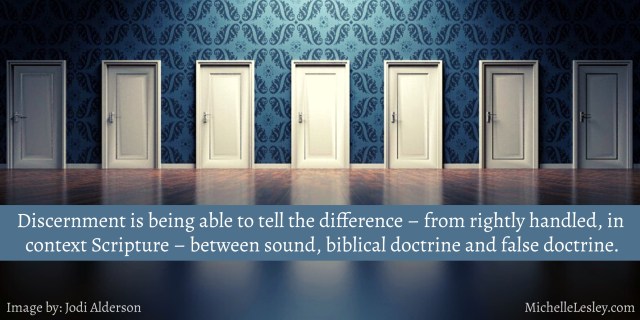
  • How do each of today’s passages fit with the definition of discernment in the image at the beginning of this lesson?

Suggested Memory Verse

(Every week of our study, you’ll see a suggested memory verse like the one above. You are welcome to grab the memory verse pic to use as your screensaver or wallpaper on your phone or computer, print it out and stick it somewhere you’ll see it frequently, or use it in any other way you wish to help you memorize the verse.)