Biblical Womanhood Bible Study

Imperishable Beauty: Lesson 1- Introduction

Welcome to our new study, Imperishable Beauty: A Study of Biblical Womanhood! The title of our study is taken from 1 Peter 3:4 (one of the passages we’ll be studying):

but let your adorning be the hidden person of the heart with the imperishable beauty of a gentle and quiet spirit, which in God’s sight is very precious.

What does it look like to live “a godly life in Christ Jesus” as a woman in the 21st century? Over the next several weeks we’ll take a look at the topic of biblical womanhood, examining the Scriptures that teach us how to live as godly women. Young or old, married or single, if you’d like to grow in Christlikeness in your God-given role as a woman, this study is for you.

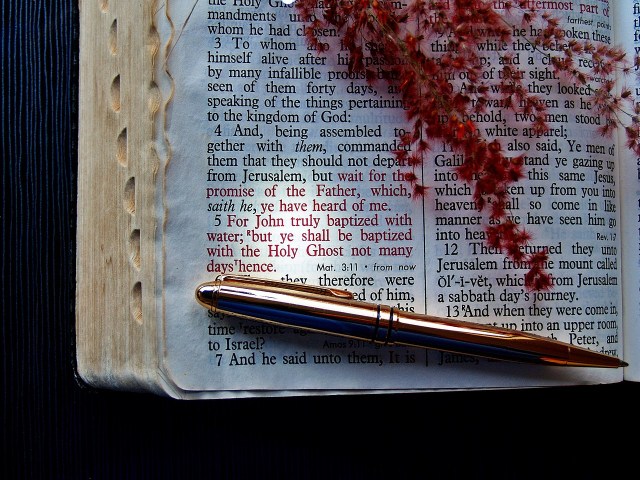
Many thanks to those who worked so hard on their entries for our title pic contest. You ladies really made it hard on me to choose just one design! I’ve selected the lovely image above, by Kasandra Shanholtz – who took this beautiful photo herself – as the official title picture for this study.

Thanks also go to these “honorable mention” entries. They are so creative and colorful!

You may wish to review my philosophy of Bible study at the “Bible studies” tab at the top of this page. My studies are designed to teach you how to study the Bible for yourself, which is why I don’t provide answers to the questions in the lessons.

My studies are also designed to be very flexible. You may answer all, any, or none of the questions in each lesson. All of my studies are self paced, so take as long or as short of a time in the passage and with the questions as you like. If, as you’re studying the text, the Holy Spirit leads you to focus on an aspect of the passage I haven’t addressed in the questions, awesome! Park yourself there and learn what He wants you to learn. These lessons are meant to be a tool for you to use as you see fit during your personal study time, not a school project where points are taken off if you don’t complete it the way the teacher wants.

As with all of my studies and articles, I use hyperlinks liberallyThe Scriptures for each lesson will be linked either at the beginning of the lesson or in the lesson questions. Whenever you see a word in red, click on it, and it will take you to a Scripture, article, or other resource that will help as you study.


Introduction to Imperishable Beauty

My philosophy of Bible study is that our main “diet” should be systematic, expositional study of the text. In other words: pick a book of the Bible, start at the beginning, and study it through to the end. Then, pick another book and start again. This method of studying helps us understand passages in their context and correctly apply them to our lives, and helps us avoid eisegesis, taking passages out of context, and incorrectly applying them.

However, there is a place for the study of a biblical topic such as peace, sin, the family, God’s wrath, or biblical womanhood. For example: if you’re struggling to trust God because of a sudden circumstance in your life, you don’t have time to study through every book of the Bible to learn what the Bible says about trusting God. You may need to spend some time in focused study on passages from various books that deal specifically with the topic of trusting God, and that’s OK. My goal with this study is not only that you learn what the Bible has to say about the topic of biblical womanhood, but also to demonstrate how to do a topical study properly so you can do topical studies on your own when the need arises.

Normally, in the introductory lesson to my studies, we take a look at the author of the book of the Bible we’re studying, the audience he wrote it to, the historical setting of the book, and other “backstory” issues. But because this is a topical study, and we’ll be examining passages from various books of the Bible, we’ll have to briefly address those issues as needed in each lesson.

So in the introduction to this study, I’d like to address two items in your “backstory.”

Salvation

If you’re not saved, this study isn’t going to be very helpful to you. You’ll probably find it confusing, frustrating, even angering. First Corinthians 2:14 says:

The natural person does not accept the things of the Spirit of God, for they are folly to him, and he is not able to understand them because they are spiritually discerned.

Only saved people are able to accept, embrace, and carry out biblical living because they have become new creatures in Christ and have the indwelling Holy Spirit to enable them to understand and obey Scripture.

This week, before we tackle biblical womanhood, I’d like everyone – even if you know beyond a shadow of a doubt that you’re saved – to work through the Scriptures in my article Basic Training: The Gospel. Do you understand the biblical gospel? Have you truly repented of your sin and trusted Christ as Savior? Spend some time alone with God examining your heart and life against these Scriptures. If you’re unsure whether or not you’re genuinely saved, I would encourage you to put this study aside and work through my study Am I Really Saved?: A First John Check Up first. You can’t be a godly woman if you don’t belong to God.

Expectations and Presuppositions

What do you expect out of this study? What kinds of ideas or preconceived notions are you carrying into this study? Take some time to answer the following questions.

1. When you hear the phrase “biblical womanhood”, what do you think of?

2. Without looking in your Bible, write a brief character sketch of the ideal “biblical woman.” What are some of her character traits, habits, things she focuses on, etc.?

3. What does your church teach about biblical womanhood- how a godly woman acts, talks, lives her life, etc.?

4. What Scriptures come to mind when you think about biblical womanhood?

5. Look up some of the Scriptures you listed in #4 and compare them to your character sketch from #2 and your answer to #3. How do they compare?

6. Why are you interested in a study of biblical womanhood, and what do you hope to get out of this study?

7. Why do you want to be a godly, biblical woman?

8. Some studies of “biblical” womanhood are the type that tell you how awesome you are, that “you’re enough” (whatever that means), that you can take charge of your life, girlfriend, and make all your dreams come true, and that you deserve to have the world at your feet.

This isn’t that kind of study.

Certainly, God is gracious, merciful, kind, comforting, and forgiving, and those wonderful attributes will be addressed as they come up in the texts we study. But becoming a godly woman also involves repenting from sin, obedience to Christ and His Word (even when we don’t feel like it), dying to self, and sometimes even suffering.

Are you prepared to have the Bible step on your toes? Are you committed to obeying Scripture out of love for Christ? Do you have the mindset that the Bible is your authority, not your own opinions, experiences, and feelings?

Take some time in prayer this week to begin preparing your heart for this study. If there’s a specific issue you struggle with regarding being a godly woman, ask God to open your eyes to the truth of His Word and strengthen you to obey Him in that area.  I’m excited to have you join me in this journey of discovering what God’s Word has to say about living life as a godly, biblical woman!

Apologetics, Movies

Movie Tuesday: The Bible vs. Joseph Smith


“In this unique documentary, produced entirely in Israel, a Christian and a Mormon sit down to dialogue about one of the most important questions of faith: How do we know if a prophet is speaking the truth? Listen in on their fascinating discussion and follow along as they travel throughout the Holy Land in search of the facts. They will put Biblical prophets and Mormon prophets to the test in order to find out if their predictions actually took place in history. If even one prediction fails to come true, then that prophet fails the test!”

First John 4:1 says, “Beloved, do not believe every spirit, but test the spirits to see whether they are from God, for many false prophets have gone out into the world.” How do Mormonism’s prophecies stack up to the Bible’s prophecies? Watch as both are put to the test and find out!

Salvation, Sanctification

Sinatra Saints and Developing Disciples

“I don’t get it. I just don’t get it.”

My friend, who’s also in women’s ministry, and I were discussing a phenomenon we’re seeing more and more among professing Christian women (and among men, too, I’m sure). I call it “Sinatra Sin-drome”.

Most of us are too young to be able to remember Frank Sinatra in his heyday, but one of the songs he was best known for was My Way. The lyrics open with a man who’s near death looking back over his life. He recounts his adventures and regrets, the good times and the bad, but no matter what came his way, he faced life on his own terms. “I did it my way,” is the refrain woven into the fabric of the entire song. The last stanza is especially telling:

For what is a man, what has he got?
If not himself, then he has naught
To say the things he truly feels and not the words of one who kneels
The record shows I took the blows and did it my way.¹

This man kneels all right. He kneels at the altar of self. Nobody else is going to tell him what to do. He’s going to do what he wants to do.

Most of the women my friend and I were discussing are either savvy enough or self-deceived enough that they would never dream of even thinking in these clear-cut terms, much less stating them so boldly. And yet, for many, their hearts beat to the rhythm of My Way.

One example of this kind of mindset – though it may have been an isolated incident in the lives of some women – came out in some of the comments on my recent Mailbag article, Should Christian women cover up while breastfeeding?. The sentiment behind the words from several women was, “What the Bible says about the shame of nakedness and denying self to serve others means less to me than: the law that says I have a right…the culture where I live that says it’s OK…my personal experience with the way my baby nurses that demands that I not cover up.”

It came out in a rather puzzling conversation I had with a reader, “B”, who sent me the link to my article on Priscilla Shirer and demanded to know why I think Priscilla is a false teacher (even though the article, which “B” claimed to have read, clearly demonstrates from Scripture why she’s a false teacher). It wasn’t that “B” didn’t have the information and Scriptures right in front of her, it was that she didn’t like what Scripture says about Priscilla. She loves Priscilla Shirer, so she’s willing to put her own feelings above what Scripture says.

It comes out constantly with the issue of women preaching to, teaching, and exercising authority over men in the church setting in violation of 1 Timothy 2:12. “I feel called to preach.” “It’s OK if I teach this co-ed Sunday School class because I have my pastor’s/husband’s permission.” “I can preach a sermon to a mixed audience at this event, because it’s not in a church, it’s at a Christian conference.”

And it always comes out when the topic is Christian women dressing modestly. “I can wear what I want! If men have issues with lust, that’s their problem. They can just avert their eyes.”

Now, let’s be clear, any time you or I or anyone else sins, we are – consciously or subconsciously – saying through that sinful thought, word, or action, “I don’t care what the Bible says about this, I want to do what I want to do.” I’m sure my own words and actions have shouted that rebellion against God loud and clear on many occasions.

But there’s a difference between…

A Developing Disciple
A Christian who is striving to do things God’s way, who occasionally stumbles into sin or gives in to a momentary weakness of the flesh. When confronted with what Scripture says on the subject, she sorrowfully repents and submits to God’s Word.

and

A Sinatra Saint
A person who claims to be a Christian and generally aligns with what the Bible says as long as it agrees with her. When confronted with what Scripture plainly says about her beliefs or actions, she doesn’t repent, but digs in her heels and attempts to justify herself, often with claims like, “Well that’s just your opinion/interpretation,” or “That’s not really what that passage means.”

Sometimes it can be hard to come to grips with a difficult passage of Scripture that challenges something you’ve believed or done your whole life. (Hey, I’ve been there. It’s no picnic.) But the difference between a Developing Disciple and a Sinatra Saint is that the Developing Disciple will grapple with the passage with an overall desire to properly understand and submit to that Scripture, even if it’s hard, while, for the Sinatra Saint, it’s a no-brainer. Her opinions, feelings, or personal experiences win. Because it’s not just that one isolated issue, it’s her whole outlook and approach to life.

Am I saying that a woman who thinks it’s OK to let it all hang out while she’s nursing her baby isn’t saved? Of course not. What I’m saying is that if your general approach to life is, “I’m doing it my way and if the Bible wants to align with me, fine, and if not, that’s fine, too,” you’d better start examining your heart pretty carefully against Scripture to discover whether or not you’re actually saved.

Why? Because that’s what the Bible says. And if you claim to be a Christian, the Bible is your authority in life, not yourself.

And I will give you a new heart, and a new spirit I will put within you. And I will remove the heart of stone from your flesh and give you a heart of flesh.
Ezekiel 36:26

Therefore, if anyone is in Christ, he is a new creation. The old has passed away; behold, the new has come.
2 Corinthians 5:17

This isn’t just flowery, poetic language. When Christ saves a person, he literally changes that person into a new type of creature with a different way of thinking, different likes and dislikes, different goals, different responses.

Imagine if you had a magic wand and could change a house cat into an elephant. When the cat was a cat, he wanted to chase mice. Now that he’s an elephant, he’s afraid of mice. As a cat, he craved tuna, but as an elephant, he turns his trunk up at meat, preferring an herbivorous diet. No more baring his claws to scratch at an enemy; now he tramples and uses his tusks to ward off danger. The coziness of hearth and home? Nope. The elephant prefers the wide open savanna.

And all of that is nothing compared to the radical transformation that takes place in the heart of someone who has been genuinely regenerated by Christ.

Christ changes our mindset from the mind set on the flesh to the mind set on the Spirit:

For those who live according to the flesh set their minds on the things of the flesh, but those who live according to the Spirit set their minds on the things of the Spirit. For to set the mind on the flesh is death, but to set the mind on the Spirit is life and peace. For the mind that is set on the flesh is hostile to God, for it does not submit to God’s law; indeed, it cannot. Those who are in the flesh cannot please God. You, however, are not in the flesh but in the Spirit, if in fact the Spirit of God dwells in you. Anyone who does not have the Spirit of Christ does not belong to him.
Romans 8:5-9

Christ changes our will – from desiring what Satan desires to desiring what God desires:

You are of your father the devil, and your will is to do your father’s desires.
John 8:44a

Now may the God of peace…equip you with everything good that you may do his will, working in us that which is pleasing in his sight, through Jesus Christ, to whom be glory forever and ever. Amen.
Hebrews 13:20a,21

Christ changes our behavior from willful disobedience to joyful obedience:

“Why do you call me ‘Lord, Lord,’ and not do what I tell you?”
Luke 6:46

If you love me, you will keep my commandments. John 14:15  Whoever has my commandments and keeps them, he it is who loves me. John 14:21a  For this is the love of God, that we keep his commandments. And his commandments are not burdensome. 1 John 5:3

Whoever says “I know him” but does not keep his commandments is a liar, and the truth is not in him,
1 John 2:4

And by this we know that we have come to know him, if we keep his commandments.
1 John 2:3

Christ changes us from His enemies to His friends:

You adulterous people! Do you not know that friendship with the world is enmity with God? Therefore whoever wishes to be a friend of the world makes himself an enemy of God.
James 4:4

They are…haters of God
Romans 1:29b,30a

The friendship of the Lord is for those who fear him, and he makes known to them his covenant.
Psalm 25:14

You are my friends if you do what I command you. No longer do I call you servants, for the servant does not know what his master is doing; but I have called you friends, for all that I have heard from my Father I have made known to you.
John 15:14-15

Christ changes us from believing Satan’s lies to believing God’s truth:

Why do you not understand what I say? It is because you cannot bear to hear my word. You are of your father the devil, and your will is to do your father’s desires. He was a murderer from the beginning, and does not stand in the truth, because there is no truth in him. When he lies, he speaks out of his own character, for he is a liar and the father of lies. But because I tell the truth, you do not believe me. Which one of you convicts me of sin? If I tell the truth, why do you not believe me? Whoever is of God hears the words of God. The reason why you do not hear them is that you are not of God.”
John 8:43-47

Has there been a radical transformation like that in your heart and life as a result of repenting of your sin and placing your faith in Christ? You can be your own authority and have “I did it my way,” as the theme song of your life, but you can’t do that and be a Christian too. The two are mutually exclusive. It doesn’t matter if you’ve walked an aisle, made a “decision”, prayed a prayer, been baptized, joined a church, are a “good person”, and do all sorts of good deeds, if your heart and your desires aren’t generally oriented toward Christ, growing toward in Him and away from self, you aren’t saved.

But that can be remedied right now. The gospel is right there, ready for you to repent of your sins and believe. Take some uninterrupted time alone with God and measure your life and your heart against the plumb line of His Word. Is it “I did it my way,” or “I’ll do it Thy way.”?

Are you a Developing Disciple or a Sinatra Saint?


¹My Way. AZLyrics. https://www.azlyrics.com/lyrics/franksinatra/myway.html
Sovereignty of God

Throwback Thursday ~ It’s ONLY Natural?

Originally published January 6, 2009

I admit it. I can be pretty nerdy when it comes to watching TV. While I occasionally enjoy a show whose plot is merely entertaining, most of the time I like to watch things that challenge me intellectually. Such was recently the case when I watched a very interesting program on the Discovery Channel.

The program was an attempt to give a naturalistic explanation for several of the miracles cited in the book of Exodus, mainly the burning bush (Exodus 3:1-5), the plagues (Exodus 7:14 – 11:10), and the parting of the Red Sea (Exodus 14:10-31).

The Nile River turning to blood, proposed the program, could have been an algal bloom (of red algae). This would have killed all the fish, but, according to the scientists’ theories, created an environment ideal for the proliferation of frogs in plague #2. The flies in plague #4, they believe to have been biting flies whose bites left open sores, which, when infected by a bacteria which had been carried by the gnats from plague #3, could have killed livestock in plague #5 and caused the boils in plague #6.

Personally, while there were several holes in some of their theories, I found this all quite fascinating. God being God, there’s no reason He couldn’t have done things the way these theories suggested if He had wanted to. And, whether the water was infested by algae or turned to blood, the end result would have been the same: all the fish died and the water was undrinkable.

At one point, the narrator interjected a comment which has been rolling around in my mind ever since. He said that many atheists don’t like to find physical evidence that supports Biblical accounts because this evidence shows that there is a God. Conversely, many Jews and Christians don’t like to hear theories of naturalistic explanations of how miracles could have occurred because they are afraid this takes God out of the equation.

While the former is undoubtedly true, I firmly believe that Christians and Jews have nothing to fear from naturalistic theories which attempt to explain the way God may have acted in some circumstances. Certainly, some scientists have tried to explain everything naturally in order to remove the need for God, but at some point there is a hole in each one of those theories which only God can fill, precisely because

…all things have been created through Him and for Him.
He is before all things, and in Him all things hold together.
Colossians 1:16-17

If we think about it, could not God’s working through the natural order of things which He had already set up show Him to be even more powerful and knowledgeable? Is it possible He set up the laws of biology, chemistry, physics, astronomy, etc., in certain ways as He was creating the universe because He foreknew every single circumstance that would ever happen on earth and the way in which He would work through those laws rather than around them in order to bring about His desired result? Is not the logic and order we see in His creation evidence that He might work in a logical and orderly way within the framework that He Himself had already set up? Couldn’t God’s working through natural law be even further evidence that nothing is a surprise to God? That nothing backs Him into a corner in such a way that He has no choice but to perform a “magic trick” in order to direct things? Certainly, in some circumstances God does suspend the laws of nature for His own purposes, but He doesn’t have to. He’s God. He can do whatever He wants in whatever way He wants. And working through the natural laws that He established rather than suspending them in whatever circumstances He may choose takes absolutely nothing away from His power and deity. Indeed, it proves He is God over the natural and God over the supernatural.

It’s within the realm of possibility that there will someday be plausible scientific theories (which don’t conflict with Scripture or what we know to be true of God’s character) for some of the mysteries and miracles in the Bible. If that happens, will God cease to be God simply because He worked through His laws rather than around them?

Hundreds of years ago, it was believed that the earth was the center of the universe. When Copernicus, and later Galileo, began to circulate their research on heliocentrism (that the sun was the center of our solar system and the earth revolved around it), the church branded them as heretics. Who turned out to be wrong? The church.

Did God cease to be God when it was discovered that the earth was not the center of the universe? Of course not. In our modern world, we would be wise to take a lesson that the church in the 16th and 17th centuries should have learned: God is God. He does as He pleases for His own glory. He has ways of doing things that we have never even dreamed of.

At the same time, the scientific community would be wise to catch up to the faith community and surrender to the fact that no matter how they think the world came into being, how they theorize all the miracles in the Bible happened, or what scientific explanation might be behind any phenomenon in the universe, when you distill everything down as far as you can go, you’re going to run into the least common denominator of every particle of matter or unit of energy in existence: God.

To go back to the plagues for a moment, even if there is a reasonable scientific explanation for each and every one of them, that only explains the how, not the why. Why is it that each plague started when Pharoah refused to let the Israelites leave? Why did the plague of frogs stop on the specific day Pharoah requested (Exodus 8:9-13)? Why did the plague of hail start at the precise time Moses stretched out his arms toward the sky (Exodus 9:23)? And finally, why did the plagues stop as soon as Pharoah let the Israelites go? To believe that any of the dozens of “why” questions that could be asked about the plagues alone (never mind all the zillions of other things God has done throughout history) could be answered by the comically flimsy explanation of “coincidence” would require infinitely more faith than believing the simple fact that God’s hand was behind it all.

Science and faith do not need to be at odds with each other. In fact, many of the earliest scientists began their studies as a way to bring glory to God by discovering more about His creation. This paradigm continues today in the studies of scientists who are Christians, as well as in the many scientists who have come to know Christ as a result of their studies.

Whether God chooses to work within the confines of natural law or to supersede it, His goal for us is the same as it was for Pharoah:

“…that [we] may know that there is no one like the Lord our God.”
Exodus 8:10b

Biblical Womanhood Bible Study

New Bible Study Kickoff and Title Pic Contest

Happy Wednesday, Ladies! I hope you all enjoyed our study of The Women of Genesis.

Today, we’re kicking off our new study…

…with a fun title pic contest!

The title is taken from 1 Peter 3:4:

but let your adorning be the hidden person of the heart with the imperishable beauty of a gentle and quiet spirit, which in God’s sight is very precious.

During the course of this topical study, we’ll take a look at the imperishable beauty of biblical womanhood, studying the various Scriptures that teach us what it means to be a godly woman. Married or single, young or old, if you want to become more conformed to the image of Christ and represent Him well as a Christian woman – whatever your station in life – this study is for you.

But before we get started studying, how about a little fun?

You’ve probably noticed that I design a title picture for each Bible study I write. Here are a few past title pics:

(You can see the rest of them at the Bible Studies tab, if you like.)

I got some great entries for The Women of Genesis title pic contest, so, once again, I wanted to get some of y’all involved in the design process for Imperishable Beauty.

Do you enjoy and have a knack for photo editing? Know someone who does? If so, I’m accepting submissions for title pictures for the Imperishable Beauty study. If your submission is chosen it will be used each week of the study, and you’ll be credited (name or website) by watermark. I’d love to be able to offer a huge cash prize, but, hey, we’re small potatoes here. This is just for fun and maybe a little publicity for your site, if you have one.

Contest Guidelines

 You must use images that don’t require attribution. Pictures you’ve taken yourself are fine, as are images from sources such as Pixabay, Pexels, Freely, Unsplash, StockSnap, or other free stock photo web sites. Please include the image source web sites you use along with your submission. (You cannot just grab and use any old picture off the internet. Photographers own their images and usually require permission, attribution, and often a fee, for their use.)

Title pics should be landscape (a horizontal rectangle) with a width of 640-1500 pixels and proportionate height. I prefer JPG images, but PNG is fine, too, if necessary.

 Your title pic must contain the full title of the study: Imperishable Beauty: A Study of Biblical Womanhood. (Be sure to double check your spelling).

 If your submission is selected, I’ll be glad to watermark it with your website address (please submit your picture without any watermarks) as long as your web site doesn’t conflict with my statement of faith or my beliefs outlined in the Welcome tab.

 Deadline for submissions is 11:59 p.m. Monday, September 10, 2018. 

E-mail your title pic submission along with your full name, web site address (if any), and the source(s) you used for your image(s) to MichelleLesley1@yahoo.com.

 Please don’t be offended if your submission isn’t selected. If I peruse all the submissions and I’m just not “feeling it,” I may still elect to design one of my own.

Feel free to share this around with friends who have an interest in photo editing. If you want to take a whack at it for fun but don’t know where to start, play around with Be Funky, PicMonkey, or Canva and see which one works best for you. Think about what it means to be a strong, godly woman and try to capture the feeling of the title, Imperishable Beauty: A Study of Biblical Womanhood, in your image.

Happy designing!