Christmas

Elizabeth’s Gift

Originally published December 23, 2020

Sometimes I think that if Elizabeth’s story had happened back in the Old Testament, we’d spend much more time on it than we do and be much more amazed by it than we are. Instead, we kind of tend to regard her as a footnote in the Christmas story, overshadowed by the story of Jesus’ incarnation.

And I’m sure Elizabeth is totally fine with that. Like her own son said, “He must increase, but I must decrease.”

But Elizabeth’s story is a rich gift to Christ’s birth narrative, adding wonder and awe to the divine beauty of the tale. It is also God’s gift to us as Christian women, giving us a sister in Christ to look up to and learn from.

Elizabeth’s story is a rich gift to Christ’s birth narrative, adding wonder and awe to the divine beauty of the tale.

In the days of Herod, king of Judea, there was a priest named Zechariah, of the division of Abijah. And he had a wife from the daughters of Aaron, and her name was Elizabeth. And they were both righteous before God, walking blamelessly in all the commandments and statutes of the Lord. But they had no child, because Elizabeth was barren, and both were advanced in years.

Luke 1:5-7

Elizabeth was righteous before God. She walked blamelessly in all the commandments and statutes of the Lord. Like you and me, she wasn’t perfect. She still fell into sin. But because she loved the Lord, she repented, and strove to live her life to please Him.

But Elizabeth also knew sorrow. She and Zechariah had no child. She had been barren for all of her childbearing years, and now she was elderly – some scholars estimate at least 60 years old – and long past menopause.

If you or someone you know has ever experienced the heartbreak of infertility, you know just how painful that is. And in biblical times, culture added insult to injury in a lot of ways. It was assumed any infertility was a problem with the woman, when today we know that men can also be infertile.

Because children are a blessing from the Lord and the fruit of the womb is a reward, and because God sometimes closed the wombs of certain women in Scripture as a result of sin – it was often assumed that if you weren’t having children you were cursed by God, or your barrenness was some sort of punishment for sin.

And in addition to all of that, in that day and time, women were “low man on the totem pole” so to speak. They were regarded as less than men in practically every way- intelligence, abilities, worth, and so on. They couldn’t testify in court because their testimony wasn’t considered credible. And, maybe you’ve even heard of the daily prayer that Jewish men still say today, thanking God for not creating them a Gentile…a slave…or a woman.

So, practically the only way women of that time could achieve a modicum of respect and status in society was by marrying well and by having sons. And, though she did marry well, Elizabeth didn’t have any children.

Try to imagine being a woman of Elizabeth’s time, having all of that on your shoulders, and having virtually no power to do anything about it.

Do you think you might be a little bitter toward God?

“Lord, my husband’s a priest! We can’t go around having people think you’ve cursed us.”

“We’ve been serving You all these years, and all we’ve asked for is a baby. You
owe us.”

“You’re not going to give me the one thing I want most in life? Forget it – there are plenty of other gods to worship. I’ll go serve one of them.”

But not Elizabeth. Elizabeth just kept getting up day after day, trusting the Lord, serving the Lord, obeying the Lord.

Elizabeth just kept getting up day after day, trusting the Lord, serving the Lord, obeying the Lord.

And let’s not forget, we know the rest of the story. We know God is going to miraculously open Elizabeth’s womb and she’ll be the mother of John the Baptist. We know she’s going to be one of the first people to learn the good news of the Messiah. We know she’s going to be celebrated and famous across the world once her story gets into Scripture.

Elizabeth didn’t know that. For all those years faithfully following and trusting the Lord, she didn’t know any of that. For all she knew, she was going to die childless and in obscurity, quickly to be forgotten even by those who knew her. And yet she still chose to walk faithfully with the Lord.

Elizabeth was faithful to God because of who God is, not for what she could get out of Him. She served God to get more of God, not to get the goodies.

But look what happens next…

Now while [Zechariah] was serving as priest before God when his division was on duty, according to the custom of the priesthood, he was chosen by lot to enter the temple of the Lord and burn incense…And there appeared to him an angel of the Lord standing on the right side of the altar of incense…the angel said to him, “Do not be afraid, Zechariah, for your prayer has been heard, and your wife Elizabeth will bear you a son, and you shall call his name John.

Luke 1:8-9,11,13

Zechariah has the great honor of entering the temple and burning incense. Suddenly – a miracle! Gabriel, who stands in the very presence of God Himself, has brought the amazing news that Elizabeth – barren and past her time – is going to give birth to the forerunner of the Messiah.

And Zechariah doesn’t believe it.

But Elizabeth does

Thus the Lord has done for me in the days when he looked on me, to take away my reproach among people.

Luke 1:25

Elizabeth believed God.

In those days Mary arose and went with haste into the hill country, to a town in Judah, and she entered the house of Zechariah and greeted Elizabeth. And when Elizabeth heard the greeting of Mary, the baby leaped in her womb. And Elizabeth was filled with the Holy Spirit, and she exclaimed with a loud cry, “Blessed are you among women, and blessed is the fruit of your womb! And why is this granted to me that the mother of my Lord should come to me? For behold, when the sound of your greeting came to my ears, the baby in my womb leaped for joy. And blessed is she who believed that there would be a fulfillment of what was spoken to her from the Lord.”

Luke 1:39-45

The newly pregnant Mary comes for a visit. The Holy Spirit reveals to and through Elizabeth that the baby Mary is carrying is the Messiah. And, once again, in great humility, Elizabeth believes Him: “Who am I, that my Lord should come to me?” Elizabeth wondered.

Indeed – who are any of us, that our Lord should come to us?

Elizabeth did not seek out Jesus. He came to find her. So, we who were dead in our sins and trespasses did not seek Him. He came to us, to seek and to save that which was lost.

Now the time came for Elizabeth to give birth, and she bore a son. And her neighbors and relatives heard that the Lord had shown great mercy to her, and they rejoiced with her. And on the eighth day they came to circumcise the child. And they would have called him Zechariah after his father, but his mother answered, “No; he shall be called John.”

Luke 1:57-60

It’s a boy! What a joy-filled day it must have been. This wasn’t just any birth. It was God’s promise fulfilled. It was God’s mercy to Elizabeth, His blameless – yet not sinless – and undeserving child. It was God’s blessing to Elizabeth, His faithful servant. The same kind of mercy and blessings He shows us, His faithful, yet undeserving sons and daughters. The same way He fulfills His promises to us.

The time quickly came to circumcise and officially name the baby. Tradition dictated that he be named after Dad: Zechariah. But Elizabeth believed all that God had revealed about this baby to the point that she put her foot down, broke with tradition and insisted, along with her husband, that the baby be named John. It wasn’t about what she wanted. It wasn’t about what others thought was best. It was all about God, and what He wanted.

All of these unbelievable things happening to Elizabeth, yet Elizabeth believes God. Obeys God. Trusts God. She trusted and obeyed God all of those years when He said no, and she believed and obeyed Him after He said yes.

Elizabeth trusted and obeyed God all of those years when He said no, and she believed and obeyed Him after He said yes.

May we, as godly women, be daughters of Elizabeth: Believing God through the unbelievable. Trusting Him in times of uncertainty. Obeying Him in the face of opposition.

What a legacy this dear sister has left us.

What a gift.

Christmas

Elizabeth’s Gift

Sometimes I think that if Elizabeth’s story had happened back in the Old Testament, we’d spend much more time on it than we do and be much more amazed by it than we are. Instead, we kind of tend to regard her as a footnote in the Christmas story, overshadowed by the story of Jesus’ incarnation.

And I’m sure Elizabeth is totally fine with that. Like her own son said, “He must increase, but I must decrease.”

But Elizabeth’s story is a rich gift to Christ’s birth narrative, adding wonder and awe to the divine beauty of the tale. It is also God’s gift to us as Christian women, giving us a sister in Christ to look up to and learn from.

In the days of Herod, king of Judea, there was a priest named Zechariah, of the division of Abijah. And he had a wife from the daughters of Aaron, and her name was Elizabeth. And they were both righteous before God, walking blamelessly in all the commandments and statutes of the Lord. But they had no child, because Elizabeth was barren, and both were advanced in years.

Luke 1:5-7

Elizabeth was righteous before God. She walked blamelessly in all the commandments and statutes of the Lord. Like you and me, she wasn’t perfect. She still fell into sin. But because she loved the Lord, she repented, and strove to live her life to please Him.

But Elizabeth also knew sorrow. She and Zechariah had no child. She had been barren for all of her childbearing years, and now she was elderly – some scholars estimate at least 60 years old – and long past menopause.

If you or someone you know has ever experienced the heartbreak of infertility, you know just how painful that is. And in biblical times, culture added insult to injury in a lot of ways. It was assumed any infertility was a problem with the woman, when today we know that men can also be infertile.

Because children are a blessing from the Lord and the fruit of the womb is a reward, and because God sometimes closed the wombs of certain women in Scripture as a result of sin – it was often assumed that if you weren’t having children you were cursed by God, or your barrenness was some sort of punishment for sin.

And in addition to all of that, in that day and time, women were “low man on the totem pole” so to speak. They were regarded as less than men in practically every way- intelligence, abilities, worth, and so on. They couldn’t testify in court because their testimony wasn’t considered credible. And, maybe you’ve even heard of the daily prayer that Jewish men still say today, thanking God for not creating them a gentile…a slave…or a woman.

So, practically the only way women of that time could achieve a modicum of respect and status in society was by marrying well and by having sons. And, though she did marry well, Elizabeth didn’t have any children.

Try to imagine being a woman of Elizabeth’s time, having all of that on your shoulders, and having virtually no power to do anything about it.

Do you think you might be a little bitter toward God?

“Lord, my husband’s a priest! We can’t go around having people think you’ve cursed us.”

“We’ve been serving You all these years, and all we’ve asked for is a baby. You
owe us.”

“You’re not going to give me the one thing I want most in life? Forget it – there are plenty of other gods to worship. I’ll go serve one of them.”

But not Elizabeth. Elizabeth just kept getting up day after day, trusting the Lord, serving the Lord, obeying the Lord.

And let’s not forget, we know the rest of the story. We know God is going to miraculously open Elizabeth’s womb and she’ll be the mother of John the Baptist. We know she’s going to be one of the first people to learn the good news of the Messiah. We know she’s going to be celebrated and famous across the world once her story gets into Scripture.

Elizabeth didn’t know that. For all those years faithfully following and trusting the Lord, she didn’t know any of that. For all she knew, she was going to die childless and in obscurity, quickly to be forgotten even by those who knew her. And yet she still chose to walk faithfully with the Lord.

Elizabeth was faithful to God because of who God is, not for what she could get out of Him. She served God to get more of God, not to get the goodies.

But look what happens next…

Now while [Zechariah] was serving as priest before God when his division was on duty, according to the custom of the priesthood, he was chosen by lot to enter the temple of the Lord and burn incense…And there appeared to him an angel of the Lord standing on the right side of the altar of incense…the angel said to him, “Do not be afraid, Zechariah, for your prayer has been heard, and your wife Elizabeth will bear you a son, and you shall call his name John.

Luke 1:8-9,11,13

Zechariah has the great honor of entering the temple and burning incense. Suddenly – a miracle! Gabriel, who stands in the very presence of God Himself, has brought the amazing news that Elizabeth – barren and past her time – is going to give birth to the forerunner of the Messiah.

And Zechariah doesn’t believe it.

But Elizabeth does

Thus the Lord has done for me in the days when he looked on me, to take away my reproach among people.

Luke 1:25

Elizabeth believed God.

In those days Mary arose and went with haste into the hill country, to a town in Judah, and she entered the house of Zechariah and greeted Elizabeth. And when Elizabeth heard the greeting of Mary, the baby leaped in her womb. And Elizabeth was filled with the Holy Spirit, and she exclaimed with a loud cry, “Blessed are you among women, and blessed is the fruit of your womb! And why is this granted to me that the mother of my Lord should come to me? For behold, when the sound of your greeting came to my ears, the baby in my womb leaped for joy. And blessed is she who believed that there would be a fulfillment of what was spoken to her from the Lord.”

Luke 1:39-45

The newly pregnant Mary comes for a visit. The Holy Spirit reveals to and through Elizabeth that the baby Mary is carrying is the Messiah. And, once again, in great humility, Elizabeth believes Him: “Who am I, that my Lord should come to me?” Elizabeth wondered.

Indeed – who are any of us, that our Lord should come to us?

Elizabeth did not seek out Jesus. He came to find her. So, we who were dead in our sins and trespasses did not seek Him. He came to us, to seek and to save that which was lost.

Now the time came for Elizabeth to give birth, and she bore a son. And her neighbors and relatives heard that the Lord had shown great mercy to her, and they rejoiced with her. And on the eighth day they came to circumcise the child. And they would have called him Zechariah after his father, but his mother answered, “No; he shall be called John.”

Luke 1:57-60

It’s a boy! What a joy-filled day it must have been. This wasn’t just any birth. It was God’s promise fulfilled. It was God’s mercy to Elizabeth, His blameless – yet not sinless – and undeserving child. It was God’s blessing to Elizabeth, His faithful servant. The same kind of mercy and blessings He shows us, His faithful, yet undeserving sons and daughters. The same way He fulfills His promises to us.

The time quickly came to circumcise and officially name the baby. Tradition dictated that he be named after Dad: Zechariah. But Elizabeth believed all that God had revealed about this baby to the point that she put her foot down, broke with tradition and insisted, along with her husband, that the baby be named John. It wasn’t about what she wanted. It wasn’t about what others thought was best. It was all about God, and what He wanted.

All of these unbelievable things happening to Elizabeth, yet Elizabeth believes God. Obeys God. Trusts God. She trusted and obeyed God all of those years when He said no, and she believed and obeyed Him after He said yes.

May we, as godly women, be daughters of Elizabeth: Believing God through the unbelievable. Trusting Him in times of uncertainty. Obeying Him in the face of opposition.

What a legacy this dear sister has left us.

What a gift.


Uncategorized

The Word on Wednesdays


For the next several weeks, I’ll be making preparations to speak at a conference, so our next regular weekly Bible study won’t start until after I return home and get my household back in order (I’m thinking probably mid-April-ish, but don’t quote me on that.). :0) I have a study in mind, but will keep thinking and praying about it for a few more weeks.

So anyway, for the next several Wednesdays, you’ve got some options:

📖 You can finish up Imperishable Beauty or any of my other studies you’re currently working on.

📖 You can choose a book(s) of the Bible to work through on your own.

📖 You can choose one of my studies to work through at the Bible Studies tab at the top of this page. (I would choose one of the shorter ones, like Colossians or Ruth rather than one of the longer ones if you’re only trying to fill the space between now and the beginning of our next study.)

📖 You can follow along with the sampling of “re-run” lessons I’ll be posting here on the blog each week.

Here’s today’s “re-run”:

Wednesday’s Word

Wednesday is Bible study day here on the blog. In my Wednesday’s Word study, you’ll find miscellaneous, one lesson Bible studies from each book of the Bible. One chapter of Scripture followed by study questions. This sampler series demonstrates that there’s nothing to be afraid of when approaching those “lesser known” books and that every book of the Bible is valuable and worth studying.

Wednesday’s Word ~ Zechariah 7

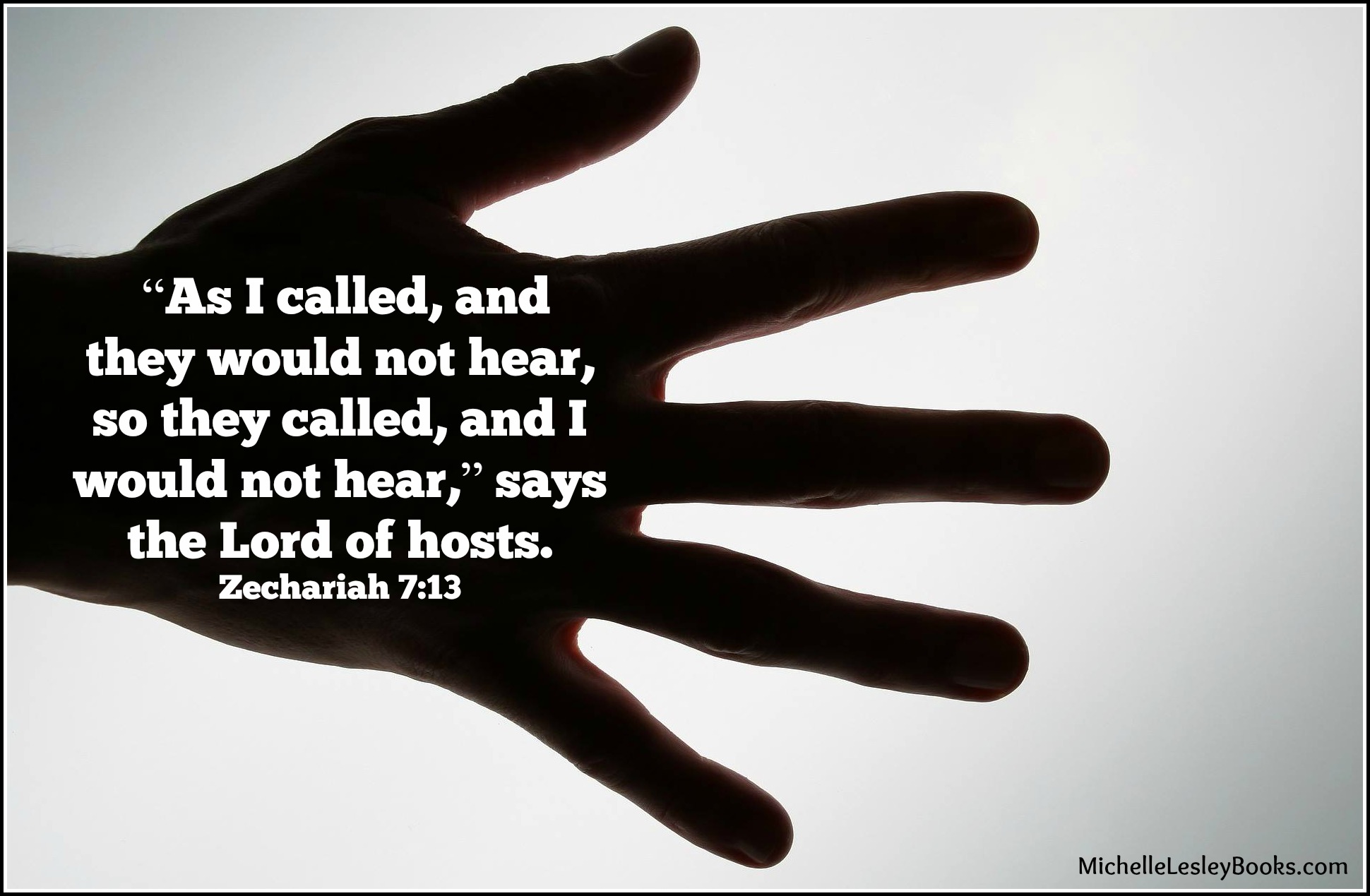
zech 7 13

In the fourth year of King Darius, the word of the Lord came to Zechariah on the fourth day of the ninth month, which is Chislev. Now the people of Bethel had sent Sharezer and Regem-melech and their men to entreat the favor of the Lord,saying to the priests of the house of the Lord of hosts and the prophets, “Should I weep and abstain in the fifth month, as I have done for so many years?” Keep reading…

Wednesday's Word

Wednesday’s Word ~ Zechariah 7

zech 7 13

Zechariah 7

In the fourth year of King Darius, the word of the Lord came to Zechariah on the fourth day of the ninth month, which is Chislev. Now the people of Bethel had sent Sharezer and Regem-melech and their men to entreat the favor of the Lord, saying to the priests of the house of the Lord of hosts and the prophets, “Should I weep and abstain in the fifth month, as I have done for so many years?”

Then the word of the Lord of hosts came to me: “Say to all the people of the land and the priests, When you fasted and mourned in the fifth month and in the seventh, for these seventy years, was it for me that you fasted? And when you eat and when you drink, do you not eat for yourselves and drink for yourselves? Were not these the words that the Lord proclaimed by the former prophets, when Jerusalem was inhabited and prosperous, with her cities around her, and the South and the lowland were inhabited?”

And the word of the Lord came to Zechariah, saying, “Thus says the Lord of hosts, Render true judgments, show kindness and mercy to one another, 10 do not oppress the widow, the fatherless, the sojourner, or the poor, and let none of you devise evil against another in your heart.” 11 But they refused to pay attention and turned a stubborn shoulder and stopped their ears that they might not hear. 12 They made their hearts diamond-hard lest they should hear the law and the words that the Lord of hosts had sent by his Spirit through the former prophets. Therefore great anger came from the Lord of hosts. 13 “As I called, and they would not hear, so they called, and I would not hear,” says the Lord of hosts, 14 “and I scattered them with a whirlwind among all the nations that they had not known. Thus the land they left was desolate, so that no one went to and fro, and the pleasant land was made desolate.”

The Holy Bible, English Standard Version Copyright © 2001 by Crossway Bibles, a publishing ministry of Good News Publishers.

Questions to Consider:

1. What is the theme or purpose of the book of Zechariah? Which other Old Testament, post-exilic prophet was a contemporary of Zechariah’s? What is the historical backdrop for the book of Zechariah?

2. What is the “weeping and abstaining in the fifth month” referred to by Sharezer and Regem-melech? (2-5) Instead of saying, “Yes, keep the fast,” or “No, forego the fast,” what does God say instead? (4-7) During the seventy years of exile, were the people keeping the fast out of love and reverence for God or simply as a self-pitying ritual? (5-6) Which is more important to God, the outward actions of obedience, or obedience from a heart of love for Him?

3. Examine your motives for going to church, worship, serving others, giving offerings, studying your Bible, and praying. Do you do these things out of rote obedience or because you love God? Pray and ask God to change your change your heart in any area in which you are not acting out of love for Him.

4. What instructions did God give the people in verses 9-10? What does the word “they,” the use of the past tense (refusED, turnED, etc.), and the phrase “former prophets” in verses 11-14 indicate about the previous recipients of these instructions? Who were these recipients? What was Israel’s response to God’s instructions before the exile? (11-12) What was God’s response to Israel’s disobedience? (13-14)

5. Why did God have Zechariah tell the people about Israel’s past disobedience and His punishment of that disobedience? (11-14) What can we, as Christians learn from this passage about the importance God places on obedience from the heart? Though verses 9-10 were written specifically to Israel, does God want Christians to carry out these same principles? How do you know? What are some examples of ways you can carry out the spirit of God’s instructions in verses 9-10?