Christmas

The Gospel According to Carols

Originally published December 17, 2019

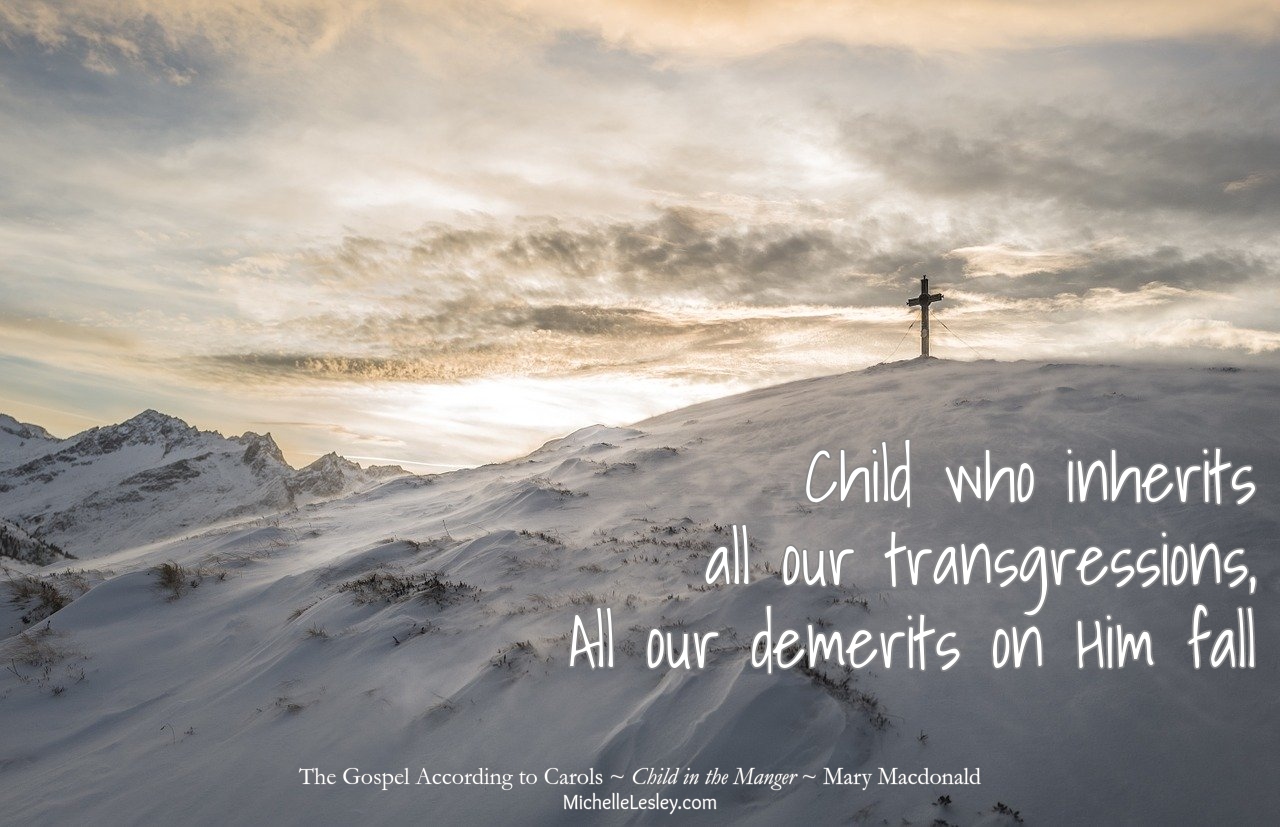
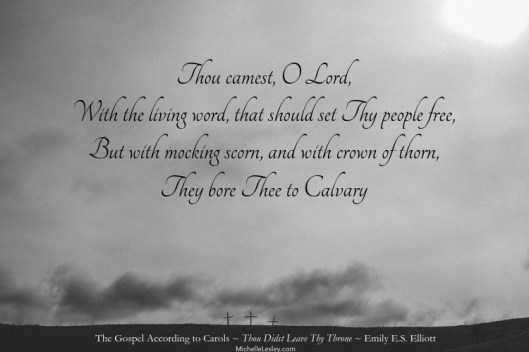
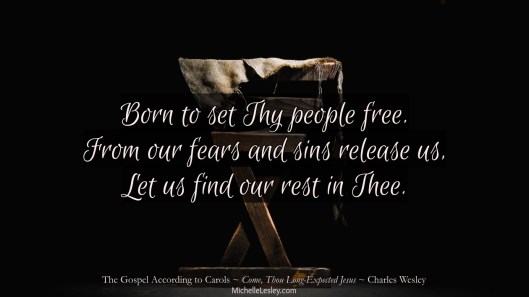
During the Christmas seasons of 2019 and 2020, I ran a meme series on my social media pages called The Gospel According to Carols. Many of our favorite Christmas carols include the gospel, so this was a series of memes with gospel quotes from Christmas carols to help keep our focus on the gospel during the hustle and bustle of the season.

Many of our favorite Christmas carols include the gospel. The Gospel According to Carols is a series of memes with gospel quotes from Christmas carols to help keep our focus on the gospel during the hustle and bustle of the season.

The series was so popular I decided to add it to my collection of annual Christmas blog articles. All of the memes are posted below. The title of the carol precedes each meme(s) and is linked to a YouTube video of that carol in case you’d like to listen. In addition to sharing these around on social media (or using them as your cover photo) to remind ourselves, our friends, and our family of the true reason for Christ’s incarnation, I thought of a few other ways you might like to use these.

Decorative Place Cards

In my article (and podcast) 10 Ways to Share the Gospel During the Holidays, I mentioned printing out these Bible verse memes on thankfulness and placing one at each place setting on your Thanksgiving dinner table as a way of initiating gospel conversations. The Gospel According to Carols memes could be used in the same way at your Christmas party or dinner.

Christmas Cards and Gift Tags

Not crazy about the rapidly dwindling selection of Christmas cards at your local retailer? Choose one or more of these designs, print them out on card stock and use them for Christmas cards. Or, minimize them to gift tag size, add a “to” and a “from,” print them out on card stock, and use them for labeling all your Christmas gifts.

Party Game

Instead of “Name that Tune,” make it “Name that Carol” by reading the quote aloud and having your guests guess which Christmas carol it came from.

Hark! The Herald Angels Sing

Silent Night

Lo, How a Rose E’er Blooming

Child in the Manger

O Little Town of Bethlehem

The First Noel

Good Christian Men Rejoice

We Three Kings

Joy to the World

Thou Didst Leave Thy Throne

While Shepherds Watched Their Flocks

Come, Thou Long-Expected Jesus

Glorious Impossible

Christmas, Evangelism, Missions, Thanks/Thanksgiving

10 Ways to Share the Gospel During the Holidays

Originally published November 17, 2016

With all the hustle and bustle during November and December, itโ€™s easy for the gospel to get lost in the shuffle. But the Great Commission never takes a vacation, and the holiday season provides some unique opportunities for sharing the gospel that we donโ€™t always have during the rest of the year.

The Great Commission never takes a vacation, and the holiday season provides some unique opportunities for sharing the gospel!

1.

If your family does the โ€œletโ€™s go around the table and say what weโ€™re thankful forโ€ thing at Thanksgiving, briefly express your thanks to Christ for His death, burial, and resurrection, and for saving you.

2.

If youโ€™re hosting Thanksgiving, place a slip of paper with a Bible verse on it about giving thanks at each place setting . Go around the table and let each person read his verse before the meal. Here are a few to get you started, or if you like it artsy, try these. If you’d like some gospel-centered place cards for a Christmas dinner or party, check these out. (And send me a picture of your table setting! I’d love to see it!)

3.

Give God’s Word to those around the world who need to hear the good news of Jesus. Give to HeartCry Missionary Society, or help establish indigenous churches by giving to The Master’s Academy International. And if your church supports a certain missionary or doctrinally sound missions organization, consider showing them a little extra financial love, too!

4.

Invite an unchurched friend to church with you. Lots of people are more open to dropping in on a worship service or attending a special church event (like a potluck Thanksgiving dinner, a Christmas cantata, or a nativity play) during the holidays than they are the rest of the year.

5.

Get a group from church together and go Christmas caroling. Choose songs whose lyrics showcase the gospel (Hark the Herald Angels Sing, Joy to the World, and O Holy Night are good ones!) Take some tracts, Bibles, or small gift baskets (containing tracts or Bibles) with you to leave at each home (and donโ€™t forget to invite them to church!).

6.

Donating to a toy drive? Tuck a tract inside your gift or consider donating a gospel-centered childrenโ€™s book or Bible. These Bibles and The Biggest Story are great, doctrinally sound choices. Or how about The Mission Ball?

7.

Contact your local college campus ministry and find out how to invite an international student to spend the holidays with your family. International students can be curious about the way Americans celebrate the holidays. Additionally, dorms often close during school breaks leaving students far from home with no place to stay. Take advantage of the time with your student to take him to church with you and share the gospel with him.

8.

If Christmas parades are a thing in your area, put a float together for your church and use some awesome gospel-themed throws like these gospel booklets from Wretched, or some eye catching tracts from Living Waters or One Million Tracts.

9.

Chat with your neighbors, even if you donโ€™t know them well. Shoveling snow together? Exchanging baked goodies? Slow down and take the time to talk (and really listen) with your neighbors. It is amazing how people often open up if someone just takes the time to listen to them. Ask how you can pray for them, and, if the situation is conducive, do it right then. You might even find it turning into a witnessing encounter.

10.

Tuck in a tract (see #8) with your Christmas cards, or print a QR code inside that goes to a gospel presentation like this one or this one. Or, do you send out an annual Christmas newsletter? This year, instead of making it about your familyโ€™s accomplishments, how about focusing on what God accomplished through the incarnation, life, death, and resurrection of Christ? Thatโ€™s the most important news your family could share.

Bonus!

Check out Unique Ways Christmas Helps us Share the Gospel* at A Word Fitly Spoken for more ideas for sharing the gospel during the holidays!

*In this episode (as well as in previous editions of this article), suggestion #3 was to give to the Southern Baptist Convention’s Lottie Moon Christmas Offering (International Mission Board). Due to pervasive corruption of various sorts in the SBC, I no longer recommend donating to any SBC entity including the IMB or LMCO.

What’s your favorite way to share the gospel during the holidays?

What’s your favorite way to
share the gospel during the holidays?

Christian women, Complementarianism, Mailbag

The Mailbag: Is it biblical for women to carry out The Great Commission?

Originally published June 18, 2018

Last week, I received some questions from a Facebook follower regarding my article Basic Training: The Great Commission. I thought they were very insightful and that other readers might have the same questions, so I’m sharing and expanding on my answers to her here. (I’ve edited/condensed the reader’s questions and comments {in bold type} for the sake of brevity.)

Given my understanding of what Jesus is commanding, and comparing it with other examples in the New Testament, it’s not for women to do the Great Commission. Our role is not to make disciples, teach, or baptize, but to keep the home, edify other women believers, etc. The Great Commission is for men, not women, to do because…

1. The Great Commission requires teaching and baptizing.

2. Jesus was speaking the Great Commission to His disciples, who were all male.

3. We don’t see any specific New Testament examples of women sharing the gospel with the lost through their own witness or example.

4. Because we don’t see any specific New Testament examples of women sharing the gospel or any explicit commands for women to share the gospel, it violates the regulative principle for women to share the gospel with the lost.

This reader’s questions really got me thinking and digging. I love questions that make me think hard and dig into Scripture and theology for answers!

First, let me briefly address the points of this issue that are not in dispute. As I understand her, the reader is in full agreement with Titus 2:3-5 and the example of Lois and Eunice. She agrees with the biblical principles of women training their own children in the gospel and discipling Christian women (already saved) inside the church. Her questions have mainly to do with sharing the gospel with the lost outside the church – evangelism.

Next, before we dive into the reader’s questions themselves, it is very important to distinguish between two types of Scripture:

Broadly speaking, there are two main types of Scripture: descriptive and prescriptive. Descriptive passages describe something that happened: Noah built an ark. Esther became queen. Paul got shipwrecked. These passages simply tell us what happened to somebody. Prescriptive passages are commands or statements to obey. Donโ€™t lie. Share the gospel. Forgive others.

If we wanted to know how to have a godly marriage, for example, we would look at passages like Ephesians 5:22-33, 1 Corinthians 7, and Exodus 20:14,17. These are all passages that clearly tell us what to do and what not to do in order to have a godly marriage.

What we would not do is look at Davidโ€™s and Solomonโ€™s lives and conclude that polygamy is Godโ€™s design for marriage. We would not read about Hosea and assume that God wants Christian men to marry prostitutes. We would not read the story of the woman at the well and think that being married five times and then shacking up with number six is OK with Jesus.

Descriptive passages may support, but never trump, the clear instruction of prescriptive passages.ยน

Now, let’s see if we can come to some biblical conclusions on her questions:

1. The Great Commission requires teaching and baptizing.

Teaching:
Often, when we’re looking at women’s roles in the church and being obedient to 1 Timothy 2:12, people conflate evangelism with teaching. Teaching Scripture to saved people inside the church gathering is not the same thing as sharing the gospel with lost people outside the church gathering. They are two separate, distinct things. First Timothy 2:12 (and other prohibitive passages) only prohibits the former, not the latter. The Great Commission, and the New Testament overall, commands the latter.

Teaching Scripture to saved people inside the church gathering is not the same thing as sharing the gospel with lost people outside the church gathering. They are two separate, distinct things.

As Christian women we want to be sure we keep these two things straight and carry out The Great Commission in the way God has prescribed for women to carry it out. May we share the gospel with a lost man or woman “as we are going”? Yes. If that person is a man, once he is saved is it biblically appropriate for a woman to teach and disciple him? No. If he is saved, he is supposed to be joined to a local church. Once inside the church body, he is to be taught Scripture and discipled by men.

As Christian women we want to be sure we keep teaching and evangelism straight and carry out The Great Commission in the way God has prescribed for *women* to carry it out.

Here are some resources which may be of further help:

Rock Your Role: Jill in the Pulpit

Rock Your Role FAQs (see #11 for using wisdom on sharing the gospel with men)

Basic Training: 7 Reasons Church is Not Optional and Non-Negotiable for Christians

Women Preaching the Gospel? at A Word Fitly Spoken (This is sort of the opposite {and unbiblical} argument: “Because the Bible says ‘preach the gospel’ -meaning, we’re to evangelize- that means women can preach in church, too!”. I thought you might find it interesting.)

Baptism:
When it comes to teaching inside the church, we have clear, prescriptive passages that specifically tell us what women are not to do. With evangelism, we also have clear commands in The Great Commission, and elsewhere, that disciples of Christ are to share the gospel.

But when it comes to baptism, we don’t have a clear “this or that person should or should not perform baptisms” passage, so we need to look at the principles and precedents surrounding baptism.

The people specifically named as personally performing baptisms in the New Testament were John the Baptist (who baptized Jesus), the twelve apostles, Philip the Evangelist, Paul and/or Silas, and Paul. All of these were men, and all held pastoral or pastoral/elder-type formal leadership positions in the embryonic or infancy stages of the church. All of them were commissioned, ordained, or set apart to their positions by God, Jesus, or the church. We do not see any New Testament instances of random church members – male or female – performing baptisms, only those in positions of church leadership.

Additionally, baptism is a formal, official, consecrated ordinance of the church, not a casual, personal, relational activity between individuals, friends, or loved ones. It should no more be administered by any church member who wants to do it than the Lord’s Supper should be. Both ordinances should be administered by an ordained pastor or elder of the church. That leaves out women as well as most men. Does the responsibility of pastors to baptize mean that men who aren’t pastors shouldn’t carry out the Great Commission? Of course not. We – men and women – share the gospel with someone, and if that person gets saved, part of our responsibility is to do what we can to get him plugged in to a local church where a pastor can baptize him. We don’t have to baptize him ourselves in order to be fulfilling The Great Commission.

Basic Training: Baptism

2. Jesus was speaking the Great Commission to His disciples, who were all male.
Yes, they were all male. They were all apostles, too. But first and foremost, they were all disciples – followers of Christ – just as Christians are today. Our identity in Christ – who we are, spiritually – trumps what we are, physically (male or female), and what we do (different roles and behaviors) as a result of who and what we are. Galatians 3:28 tells us:

There is neither Jew nor Greek, there is neither slave nor free, there is no male and female, for you are all one in Christ Jesus.

In Christ, there is only one type of being: Christian. There is only one kind of spiritual DNA. There’s no XX and XY. There’s just X. Ontologically, Christians are all the same kind of spiritual being.

The Great Commission is based on who the disciples, and we, are – followers of Christ – just as many of the other things that Jesus taught His disciples were. For example, when the disciples said, “Lord, teach us to pray,” and Jesus responded with the Lord’s Prayer, did Jesus mean that only the Twelve, or only men should use it as their model in prayer? When Jesus washed the disciples’ feet, did He mean that only the disciples or only men should serve one another in humility? When Peter asked Jesus how many times he had to forgive, did “seventy times seven” apply only to Peter, only to the disciples, or only to men? Of course not. Christ’s instructions to His followers apply to all who follow Him. It is in the way in which we carry these instructions out that Christ differentiates and delegates divergent and discrete responsibilities to men, women, and church leadership.

As disciples, we are to carry out The Great Commission. As Christian women, we carry it out in a different way from men and pastors.

As disciples, we are to carry out The Great Commission. As Christian women, we carry it out in a *different way* from men and pastors.

3. We don’t see any specific New Testament examples of women sharing the gospel with the lost through their own witness or example.
We don’t see any specific verses that say something along the lines of “Miriam shared the gospel with Simon, and he got saved,” that’s true. But how about these…

โœขThe woman at the well in John 4: “So the woman left her water jar and went away into town and said to the people, ‘Come, see a man who told me all that I ever did. Can this be the Christ?’ They went out of the town and were coming to him.” (28-30)

โœขThe widow (and townswomen) of Nain in Luke 7: “Fear seized them all, and they glorified God, saying, ‘A great prophet has arisen among us!’ and ‘God has visited his people!’ And this report about him spread through the whole of Judea and all the surrounding country.” (16-17)

โœขThe friends of Tabitha in Acts 9: ” And he gave her his hand and raised her up. Then, calling the saints and widows, he presented her alive. And it became known throughout all Joppa, and many believed in the Lord.” (41-42)

โœขLydia in Acts 16: “The Lord opened her heart to pay attention to what was said by Paul. And after she was baptized, and her household as well…” (14-15)

โœข1 Corinthians 7:12-16: “If any woman has a husband who is an unbeliever, and he consents to live with her, she should not divorce him. For the unbelieving husband is made holy because of his wife…For how do you know, wife, whether you will save your husband?”

โœข1 Peter 3:1-6: “Likewise, wives, be subject to your own husbands, so that even if some do not obey the word, they may be won without a word by the conduct of their wives.”

The first four examples imply that various women, to one degree or another, were pointing people to Jesus. But, again, these are descriptive passages. They lend a bit of support to the idea of women sharing the gospel with others, but we build doctrine on prescriptive passages like The Great Commission. The last two examples are prescriptive passages instructing women in sharing the gospel with their lost husbands. These passages are supportive of women sharing the gospel.

4. Because we don’t see any specific New Testament examples of women sharing the gospel or any explicit commands for women to share the gospel, it violates the regulative principle for women to share the gospel with the lost.
Well, as I mentioned above, we do see descriptive passages that at least hint at women sharing the gospel, and we also see prescriptive passages that explicitly instruct women in sharing the gospel with their lost husbands. But The Great Commission and other passages that are general commands to all followers of Christ to share the gospel are the strong and emphatic passages we draw doctrine from, not the more tangential passages. So even if the regulative principle did apply to evangelism, it would be supported by Scripture.

But the regulative principle doesn’t apply to evangelism as the full terminology – the regulative principle of worship – helps us to understand. The regulative principle applies to the corporate worship service, not evangelism, not marriage, not finances, not employment, not parenting, nor any other biblical issue. Just corporate worship.

Are women to carry out The Great Commission? Yes. We are to carry it out in the way Christ has prescribed for godly Christian women.

Are women to carry out The Great Commission? Yes. We are to carry it out in the way Christ has prescribed for godly Christian women.


ยนRock Your Role: Oh No She Di-int! Priscilla Didnโ€™t Preach, Deborah Didnโ€™t Dominate, and Esther Wasnโ€™t an Egalitarian

If you have a question about: a Bible passage, an aspect of theology, a current issue in Christianity, or how to biblically handle a family, life, or church situation, comment below (Iโ€™ll hold all questions in queue {unpublished} for a future edition of The Mailbag) or send me an e-mail or private message. If your question is chosen for publication, your anonymity will be protected.


Homosexuality, Movies

Movie Time: Audacity

Originally published May 8, 2018

Need something good to watch tonight?

From Living Waters, creators of the award-winning TV program โ€œThe Way of the Masterโ€ and the hit movies โ€œ180โ€ and โ€œEvolution vs. God,โ€ comes the powerful film โ€œAudacity.โ€ Executive produced by TV co-host and best-selling author Ray Comfort (Hellโ€™s Best Kept Secret, Scientific Facts in the Bible), this film delivers an unexpected, eye-opening look at the controversial topic of homosexuality.

Peter (Travis Owens) is an aspiring comedian encouraged by his friend Ben (Ben Price, Australiaโ€™s Got Talent finalist) to perform at the local comedy club. But stage fright isnโ€™t Peterโ€™s only fear. When confronted with one of todayโ€™s most divisive issues, he feels compelled to speak, but can he? Challenged by his coworker Diana (Molly Ritter) to defend his convictions about homosexuality and gay marriage, will he have the courage to stand for what he believesโ€”even at the risk of losing a friendship? And how will he respond when faced with a harrowing life-or-death experience?

โ€œAudacityโ€ uses a unique approach to address a very sensitive subject in contemporary society. Regardless of your views on homosexuality, youโ€™ll gain fresh insights and a new perspective.

(From Living Waters’ YouTube channel promo description of Audacity)

So snuggle up on the couch, grab some popcorn, and enjoy Audacity!

Mailbag

The Mailbag: Is “Jesus loves you” enough of the gospel?

Originally published April 16, 2018

I work in a parachurch organization in which I teach children. I have a passion for these kids to know God and know His Word. My direct supervisor, as well as the head of the organization, want to only emphasize God’s love and that we are ALL children of God. I am wrestling with this because I just don’t believe that I should make saying “Jesus loves you” the main message to the kids but rather the gospel in full context (of course getting down to their level but in no way changing the message). What should I do?

It’s always great to hear from someone who’s working with children and wants to put correct theology on the bottom shelf where their little hands can reach it. Thank you for serving God’s Kingdom this way!

There are three issues I think are important to address in this situation. Let’s take a look…

We are NOT “all” God’s children.
All humans are indeed made in the imago dei – the image of God. That’s definitely an important aspect of theology to teach children, and if that’s what your supervisors actually mean when they say “we’re all God’s children,” that’s super. But they need to use correct, biblical language and say “We’re all made in the image of God,” (age-appropriately explaining what that means, of course) instead of saying “We’re all God’s children.”

It’s not just a quibble over semantics. There are two very important reasons to get this right.

First, it’s simply not true on its face and you don’t want to be teaching the children a lie. I mean, Jesus once told some Jews (aka: God’s set apart people group) He was talking to, “If God were your Father, you would love me…You are of your father the devil, and your will is to do your father’s desires.” So, obviously, people fall into one of two categories: you’re either a child of God or you’re a child of the devil. Just as a person has to be physically born into a family, or adopted into a certain family, in order for that particular mom and dad to be her parents and for her to be their daughter, “you must be born again,” – a spiritual birth (and adoption) – must take place in order for God to be your Father and you to be His child.

Second, saying “We’re all God’s children,” smacks of universalism.ย Universalismย is basically the idea that everybody goes to Heaven when they die. No repentance is necessary, no belief in Christ, it doesn’t matter what religion you are, if any. If this is what your supervisors are teaching or wanting you to teach, I would encourage you to find employment elsewhere. This is blasphemous false doctrine that no Christian organization or its employees should be teaching.

Teaching the WHOLE gospel
Jesus loves you” is part of the gospel, and one that we need to make sure we’re including any time we share the gospel with others. It is only because of the amazing, unfathomable love of God that Christ came to earth to die in the first place. Without the love of God there would be no gospel at all. However, it is not the entirety of the gospel. The gospel also includes the components of sin, repentance, faith, and forgiveness.

Since this is a Christian organization you work for, I’m unclear on why (assuming they’re not universalists) your supervisors would not want the whole gospel taught to the children. Only three possible reasons come to mind:

1. They’re concerned that the children are too young to understand sin, repentance, faith, and forgiveness.
You didn’t mention the specific age of the children you’re working with, but I got the impression from your original message to me that they are elementary school aged. I have six children of my own and have taught every age level of children from birth through high school in church, parachurch, and school settings for most of my adult life, and I can tell you that elementary school aged children are perfectly capable of grasping these concepts when they’re explained at an age-appropriate level.

I would think anyone qualified to be in a supervisory capacity at an organization like yours would – as an experienced professional – know that children this age can intellectually handle these concepts, and would – as a Christian – want them to know the whole gospel so they can be saved and take the gospel home to their families.

2. They’re concerned anything more than a generic “Jesus loves you,” is going to offend some of the parents.
Tough. The gospel is offensive to sinners. They need to get over that fear of man right quick. And it’s not like the parents were tricked into putting their kids into a program they didn’t know was Christian, right? (By the way, this is not the tone I’d recommend using when speaking to your supervisors :0)

3. You’re spending too much of your time evangelizing the kids instead of teaching them the main topic(s) they’re there to learn.
That’s not the impression of you that I got from your original message, but just make sure that, if, for example, you were hired to teach the kids how to play kickball, you’re teaching them how to play kickball, not turning every practice session into a Bible study.

Honestly, I’m having a hard time wrapping my mind around why any organization that openly bills itself as “Christian” would only want part of the gospel presented. I would suggest sitting down with your supervisors and asking them politely why they don’t want the whole gospel presented to the children at appropriate times in age-appropriate ways. Perhaps they have a good, biblical reason for it, but I’m at a loss to imagine what it is.

Submitting to authority
Submission to authority is a big theme in the New Testament. Christians submit to God’s authority, wives submit to our husbands’ authority, church members submit to the authority of their pastors and elders, as citizens we submit to our civil authorities, and, in the present day, we understand the passages about slaves submitting to their masters in light of the employee/employer relationship.

In God’s structure of authority, He is always at the top. So if any other authority in your life – husband, boss, government, pastor, etc. – wants you to do something that conflicts with God’s written Word, your response must be the same as Peter’s: “I must obey God rather than men.”

I’m still unclear as to whether or not your employers are asking you to do something that conflicts with God’s Word. After talking it over with them, praying about it, talking to your husband about it (if you’re married), and possibly seeking counsel from your pastor or a mature sister in Christ at your church, if you come to the conclusion that your supervisors are not asking you to disobey God’s Word, then the proper godly response is for you to submit to their authority and joyfully do as they ask. If you come to the conclusion that they are asking you to disobey God’s Word, prayerfully ask to meet with them again, and kindly, with Scripture, explain to them that you cannot in good conscience truncate the gospel. Perhaps God will open their eyes and they will change their policy. If not, it might be an appropriate time to tender your two week’s notice.


If you have a question about: a Bible passage, an aspect of theology, a current issue in Christianity, or how to biblically handle a family, life, or church situation, comment below (Iโ€™ll hold all questions in queue {unpublished} for a future edition of The Mailbag) or send me an e-mail or private message. If your question is chosen for publication, your anonymity will be protected.