Mailbag

The Mailbag: Potpourri (Keeping a diary… Training women to teach in co-ed classes… Celebrate, much?)

Welcome to another โ€œpotpourriโ€ edition of The Mailbag, where I give short(er) answers to several questions rather than a long answer to one question.

I like to take the opportunity in these potpourri editions to let new readers know about my comments/e-mail/messages policy. Iโ€™m not able to respond individually to most e-mails and messages, so here are some helpful hints for getting your questions answered more quickly. Remember, the search bar (at the very bottom of each page) can be a helpful tool!

Or maybe I answered your question already? Check out my article The Mailbag: Top 10 FAQs to see if your question has been answered and to get some helpful resources.


Is it a good idea to keep a diary in order to vent oneโ€™s frustrations and keep thoughts and feelings under lock and key? How might a Christian do it in a Christlike way that is healthy and beneficial?

I really like your second question. As Christians, that’s a question we should all be asking about everything we undertake. Atta girl!

But first we need to back up one step and ask ourselves, “Is this thing I want to do biblical?”. Because you can’t do an unbiblical thing in a Christlike way.

So, is “venting one’s frustrations” biblical? Well, again, as Christians, it’s really important that when we ask a question, we frame it in biblical terms and teachings rather than in contemporary culture’s terms and teachings, so let’s look at how Scripture describes the idea you’re talking about and reframe the issue accordingly.

Trust in him at all times, O people;
pour out your heart before him;
God is a refuge for us.
Psalm 62:8

A Prayer of one afflicted, when he is faint and pours out his complaint before the Lord.
Hear my prayer, O Lord; let my cry come to you!
Psalm 102:1

With my voice I cry out to the Lord;
with my voice I plead for mercy to the Lord.
I pour out my complaint before him;
I tell my trouble before him.
Psalm 142:1-2

Did you notice those passages are all from Psalms? What else did you notice those passages have in common? Is the psalmist just venting his frustrations out into the ether, or writing them down for his own sake? No, he’s pouring out his heart to Someone. Someone he believes can help him and do something about the situation. These are prayers. This is the biblical model for offloading what’s bothering you: “take it to the Lord in prayer,” “I must tell Jesus,” and “take your burden to the Lord and leave it there“. Prayer.

When you pray, “cry out to the Lord”, or “pour out your heart/complaint to the Lord,” you’re declaring that you believe:

  • He exists
  • He can help you
  • He is listening to you
  • He understands the situation, what you think about it, and how you feel about it
  • He is powerful enough to remedy the situation

I would encourage you to study the Psalms (you may want to start with the three above and any they cross-reference with) and carefully observe the way the psalmist poured out his complaint to the Lord. Take notes on the posture of his heart toward both his complaints and toward God. What is usually the psalmist’s perspective as he concludes the psalm? How do you see him express faith, trust, and hope in God’s goodness, power, and faithfulness? As you study, you might even want to pray these psalms back to God.

Like the psalmist, you’ll want to pour your heart out to God in prayer obediently. That means praying biblically about whatever your complaint or problem is. Your atheist co-worker is making your job difficult? The Bible says to love your enemies and pray for those who persecute you. Your husband isn’t saved? Pray for his salvation and ask God to help you submit to him. You’re in need of provision? Trust that the Lord already knows what you need and ask Him to provide for you today.

So by this point, you might be thinking, “Yeah, but I asked about writing all this stuff down in a diary. The psalmist obviously wrote down all of his thoughts, so that must be OK, right?”. Well, that’s something else we can learn from the Psalms. How do you know he wrote all these things down? Because you’re reading them. And so have billions of other people for several thousand years. Now, obviously, that’s not going to be the case with your diary, but perhaps you’ve heard the old adage that you should never put in writing anything you wouldn’t want on the front page of the newspaper? That’s good advice. A flimsy little diary lock isn’t going to keep anybody out who wants to get in there, and they are also notorious for malfunctioning. And what about after you die? Your husband and/or children are going to go through your things, and they’re going to read your diary. You certainly don’t want them or anyone else reading things that should remain between you and the Lord. It is for that reason that I would advise against writing down anything you wouldn’t want anyone else to read. Stick to reverently pouring out your complaints to the Lord.


Our church has struggled with having older women leaders and teachers to faithfully train up and disciple younger women. Our elders have decided that they want to train older women to be sound in Scripture so they can teach other women and not rely onย DVD’S. However, part of this teaching developmentย is to allow them to teach in our public co-ed adult Bible life classes on Sunday mornings so they can receive feedback from the male leaders and/or elders present in the room on their teaching. Once these women are trained, the plan is to continue to allow them to teach in mixed-gender classes occasionally or when a substitute teacher is needed so they may exercise their gift of teaching. I am convicted that this is violating 1 Timothy 2:12. Is this a biblical method for women to exercise their gift of teaching and to be trained for a woman teacher?

No, it absolutely is not. This is taking a good, biblical goal and sinning in order to accomplish it. It’s like a teenager saying, “I want to be faithful to my spouse when I get married, so the way I’m going to accomplish that is to go out and sleep with everybody I can right now and get it all out of my system.”. It’s almost beyond belief that your pastor and elders are considering such a ridiculous plan of action and that they think it’s biblical! They say they want to teach older women to be “sound in Scripture” while simultaneously violating Scripture.

It doesn’t even make logical sense when the stated reason they want to train these women is to teach women. Why have them teach a co-ed class for training? Why not have them teach a women’s class?

No. I’m sorry, but this is either just really, really dumb, or your pastor and elders are trying to sneak egalitarianism in the back door. I hate for either one of those to be the case, but I can’t think of an alterative. Whatever the case may be, having these women teach a co-ed class is, in and of itself, a violation of Scripture.

If a church wanted to implement a training program like this, there are plenty of ways it could be done without violating Scripture. The elders could evaluate the trainee as she teaches a women’s class. They could have her prepare a lesson and present it only to the elders so they could critique and instruct her. They could even send the women they want trained to a G3 Expository Teaching Workshop for Women.

I would suggest praying fervently for your pastor and elders to come to their senses, express your concern to them, and hope that they correct their course, but if they continue down this road over the long haul, it’s likely you’ll need to start looking for a new church. Because unrepentant sin snowballs. Today it’s “just” a teaching practicum in a co-ed class. Next, women will become permanent teachers of co-ed classes. And from there, can women preaching, and serving as pastors and elders be far behind?

Related Resources

McBible Study and the Famine of Godโ€™s Word

Rock Your Role: Jill in the Pulpit (1 Timothy 2:11-12)

Fencing off the Forbidden Fruit Tree

Rock Your Role FAQs


It seems like in conservative churches these days that the most important people are the pregnant moms and women of child bearing age. They are routinely prayed for: to conceive, for the pregnancy, for the delivery, and then afterwards. They get showers and meals brought. Meanwhile there are a whole host of people with needs who are overlooked, milestones that go unrecognized, etc. In addition. The Scriptures say that those worthy of double honor are our leaders! Now I’m certainly not against women having babies, they are a blessing from the Lord. I’m not against rejoicing with those who rejoice, but it just seems overdone to me. At any given time there may be 2 or 3 pregnant and just as many with newborns. I seems to me that back in the day women just had babies with not alot of fanfare. In the meantime are we as dedicated in seeking to bring others to spiritual life? Just wondering what your take is. Are we out of balance?

I understand where you’re coming from, and I think there are several different ways this scenario could be “out of balance”.

First, I want to caution all of us (myself included- this is something I have to be careful about as well) not to assume that just because things are a certain way – either good or bad – in our own church that means they’re the same way in the majority of other churches. I think if you presented this scenario to a room full of women of all ages from different “conservative churches” all over the country, some would agree with you, but the majority would say, “It isn’t that way at my church,” whether they mean their church has a good balance of celebrations or their church foundationally lacks fellowship and doesn’t celebrate anything. I’m assuming you’re seeing this as an issue in your own church (or you wouldn’t have emailed me), so let’s keep our focus there and not on what may or may not be happening at other churches.

One thing we need to be sure to do is keep our categories straight and distinct. A plethora of weddings, showers, and meal trains for new moms has nothing to do with 1 Timothy 5:17‘s admonition to double honor elders who rule well unless something extreme is going on, like the church is spending so much money on these celebrations that they can’t afford to pay his salary, or church members are somehow failing to submit to his leadership with these celebrations, or something like that. So, I’m guessing we can go ahead and put that concern for your church to rest.

Do I think young people’s celebration of things is a bit over the top these days? Yeah, I do. But that’s just the way things are in our culture right now. I know young moms who make St. Patrick’s Day and Arbor Day practically as big a to-do for their kids as I made Christmas for mine. I see elementary schools having big parties with costumes and whatnot to celebrate the “100th day of school”. I never heard of such until about 5-10 years ago. I see these elaborate “gender reveal” parties and announcements taking place, when in my day, we used to just tell people the sex of the baby whenever we found out. (And not too long before that, “gender reveal” and birth were simultaneous!) None of those things are wrong, they’re just different from the way we used to do things. That happens in every generation. It’s normal.

If you think there are people and milestones being overlooked in your church, here’s what I’d suggest:

  • Get to know, and develop close Titus 2:3-5 relationships with those younger women. Celebrate their milestones with them. In many churches (and having been a member of and worked with lots of different churches over the years, I feel comfortable saying “many”) the younger women desperately need and desire older women to be involved in their lives, and the older women make plenty of excuses, but little to no effort to extend themselves in this way. This is a shameful dereliction of our duty as older women and outright disobedience to Scripture. Those young women need us, and the Bible commands us to be there for them.
  • If you think older women or others are having their needs or milestones overlooked, set up an appointment with your pastor, not to complain, but to lovingly express your concern and ask his advice about how to approach the situation.
  • If your pastor is OK with it, why don’t you gather up a few of those younger women you’ve gotten to know, as well as a few of the older women, and start jumping in and celebrating those milestones and providing for needs in areas that are lacking: meals and visits for shut-ins or those who have recently had surgery, retirement parties, or how about a baby shower for new grandmas? That could be fun!

When God shows us something in the church that’s lacking, it might be that He wants us to roll up our sleeves and get to work on it. You might have just found an incredible way to serve the church you love! What a blessing!


If you have a question about: a Bible passage, an aspect of theology, a current issue in Christianity, or how to biblically handle a family, life, or church situation, comment below (Iโ€™ll hold all questions in queue {unpublished} for a future edition of The Mailbag) or send me an e-mail or private message. If your question is chosen for publication, your anonymity will be protected.


Complementarianism, Rock Your Role

The Mailbag: Questions about the role of women in the church

A reader recently left a comment containing numerous questions on my article Rock Your Role: Jill in the Pulpit (1 Timothy 2:11-12). Her individual questions are in bold type below with my answers in regular type.

If you have questions about the role of women in the church, I recommend not only that article, but all of the articles in my Rock Your Role series. Jill, Rock Your Role FAQs, and The Mailbag: Counter Arguments to Egalitarianism seem to answer the questions I’m asked the most, so you may want to start with those.


some honest questions here

Thanks for asking. I hope my answers will help. I’d like to preface my answers with some biblical information I hope will be helpful to all of my readers when addressing questions and issues like this:

You did not say whether or not you are a genuinely regenerated Christian, nor was I able to infer from your questions whether or not you are. This is going to be crucial to your understanding and accepting the biblical answers I’m about to give you, because Scripture makes clear to us that people who aren’t saved do not embrace the things of God. They aren’t even able to understand them in any meaningful way.

The natural person does not accept the things of the Spirit of God, for they are folly to him, and he is not able to understand them because they are spiritually discerned.

1 Corinthians 2:14

Scripture is also clear that those who belong to Christ will obey His written Word, while those who do not belong to Christ -even if they claim to be Christians- don’t obey His written Word.

And by this we know that we have come to know him, if we keep his commandments. Whoever says โ€œI know himโ€ but does not keep his commandments is a liar, and the truth is not in him, but whoever keeps his word, in him truly the love of God is perfected. By this we may know that we are in him: whoever says he abides in him ought to walk in the same way in which he walked.

1 John 2:3-6

Sometimes when we read hard truths in the Bible, we initially struggle to accept them, but genuinely born again Christians are on a general trajectory of increasing in their love for, understanding of, and submission to God’s written Word. False converts (unsaved people who think they’re saved) and unsaved people are on the opposite trajectory and increasingly disdain, harden their hearts against, and rebel against God’s written Word.

If, in examining your own heart, you (or someone else reading this) find yourself on that second trajectory regarding this or any other biblical issue, let me offer you some resources that will help and that are much more urgent for you than the issue of the role of women in the church:

What must I do to be saved? (in the blue menu bar at the top of this page) You must repent and believe the biblical gospel.

Am I Really Saved? A First John Check-Up If you’re not really sure whether or not you’re saved, you may find it helpful to work through my Bible study on 1 John.

Searching for a new church? (in the blue menu bar at the top of this page) If you’re saved, you need to be a faithful, invested member of a doctrinally sound local church. Among many other things, that’s where you’ll learn the biblical answers to questions like the ones you’ve asked below.

As I said in the Jill article:

Godly women donโ€™t look for ways to get around Scripture.
Godly women look for ways to obey Scripture.

If you already know Christ as Savior, awesome! It’s wonderful that you’re asking questions and learning more about Scripture so you can grow in Him.

Now, let’s tackle your specific questions…


โ€”if the letter to Timothy was a letter to him and we are reading his mail, then what about the other NT letters written to the various churches? Are we also not reading their mail and what God was meaning for them to do?

I would encourage you to read that paragraph again carefully. I’ve bold-typed some of the more salient points:

First Timothy (along with 2 Timothy and Titus) is one of the pastoral epistles. It was written by Paul to young pastor Timothy as sort of a job description and operations manual for pastors, elders, and the church. So right off the bat, an important point we often miss about 1 Timothy is that it was written to a man, Timothy, a pastor, who would use this letter to train his elders (also men) and, subsequently, his congregation. That doesnโ€™t mean that 1 Timothy doesnโ€™t apply to women, or shouldnโ€™t be studied by women, or that women arenโ€™t required to obey 1 Timothy. It just means that when we open the letter of 1 Timothy, we need to understand that we, as women, are reading somebody elseโ€™s mail. Mail that pertains to us, yes, but mail thatโ€™s addressed to Timothy, and by extension, to pastors and elders today. That will help us better understand the tone and perspective of the passage.

So, you could think of it like this: the pastoral epistles (1&2 Timothy and Titus) have three “levels,” if you will, of who they’re addressed to: a) immediate: Timothy and Titus, b) by extension: all other / subsequent pastors and elders, c) with application to every church, Christian group, and individual Christian.

The other epistles, generally speaking, have two “levels” of who they’re addressed to: a) immediate: a specific church or people group of Christians (the church at Colossae, the church at Ephesus, etc.) b) by extension: all other / subsequent churches, groups of Christians, and Christian individuals.

There’s a sense in which, from Genesis through Revelation, we’re “reading somebody else’s mail,” because we were not alive when any of the books of the Bible were written, so we were not the original audience of any of Scripture. That being said, the Bible is still God’s word to us, through those original audiences. All of it, when correctly handled, applies to us in one or more ways, and we are required to obey God’s commands, instructions, laws, and teachings to New Testament Christians, no matter where in the Bible they are located.


โ€”What about women who are called to preach? Like slave Sojourner Truth and 2 quaker women called to preach against slavery in the south USA civil war times. Were they wrong? sinning? going against scripture?

I don’t know who the Quaker women are that you’ve referred to, and I’m not overly familiar Sojourner Truth or any of her “sermons,” but I think you may be conflating and confusing a few things here. Let’s see if we can untangle them.

  1. As I mentioned in my preface remarks, just because someone claims to be a Christian (or history has led us to believe they were Christians) does not mean they have actually been born again. I don’t know whether or not any of these women were truly Believers, and neither do you. Sojourner said and did some things that might cause one to wonder, and, while there could be individuals who get saved while still in Quakerism, the Quaker belief system, generally speaking, is not biblical, and therefore, not Christian.
  2. Making civil speeches against slavery (or on any other topic) is not “preaching” even if the speech maker or others called it preaching. “Preaching” is defined by Scripture alone, not by culture or common parlance. Preaching is the proclamation of God’s rightly handled, written Word for the edification of the church.
  3. If any of these women were actually preaching – proclaiming God’s Word or exhorting people from God’s Word – in a co-ed gathering, then yes, they were “wrong, sinning, and going against Scripture” because God’s written Word prohibits women from doing that as I explained at length in the Jill article. And when God’s written Word says not to do something and we do it anyway, that’s called sin.
  4. God doesn’t call women to preach or pastor. God has never called a single, solitary woman to preach. Ever. First, because God doesn’t give extra-biblical revelation like that. He tells us exactly who He has called to preach (and who He hasn’t) in 1 Timothy 2:11-3:7 and Titus 1:5-9. Second, because, even if He did give extra-biblical revelation, God is not a man that He should lie or change His mind, and He already told us in His Word that women aren’t to pastor, preach to, or teach men, or exercise authority over men in the gathering of the church body.

โ€”Paul gives โ€œcommandsโ€ about operating under patriarchy and slavery, both part of Roman society. He does not talk against either yet today we Christians abhor slavery but still support patriarchy. Why?

Because patriarchy was God’s design and command and antebellum American slavery wasn’t. I’m not totally sure exactly what you mean by Roman “patriarchy” and the “commands” Paul gave about it, which passages you’re referring to, or what all you many have in mind about patriarchy and slavery as you asked this question, so I can only give you a very general answer.

  • Instructing Christians on how to behave in a godly way when they’re in the middle of ungodly circumstances is not the same thing as God condoning or approving of those ungodly circumstances. There were many Christians who obeyed Scripture’s instructions while in concentration camps during World War II. That doesn’t mean God was in favor of concentration camps.
  • Antebellum American slavery was “man stealing” (which was a different type of slavery than that practiced during New Testament times), and is prohibited by Scripture.
  • Male headship was established by God at Creation and is continually buttressed and re-established throughout the Bible:

Look at the overall general pattern of male headship and leadership in Scripture. First human created? A man. The Patriarchs? As the word implies โ€“ all men. Priests, Levites, Scribes? Men. Heads of the twelve tribes of Israel? Men. Major and minor prophets? Men. All kings of Israel and Judah? Men. Noahic, Abrahamic, Mosaic, and Davidic Covenants? All established between God and men. Authors of Scripture? Men. The forerunner of Christ? John the Baptist โ€“ a man. Messiah? A man. All of the apostles? Men. All of the pastors, elders, and deacons of churches in the New Testament? Men. Founder and head of the church? Christ โ€“ a man. Leader and head of the family? Men. – from: The Mailbag: Counter Arguments to Egalitarianism

Anyone – including the Romans of Paul’s time – who stepped outside of God’s commands regarding patriarchy and slavery was in sin.


โ€”-in Ephesians 5:21 and following verses Paul tells 4 different groups to submit. He uses 2 different forms. For people and spouses he uses the form that means to submit as to one another. For children/slaves he uses the form that means to submit to an authority. Why werenโ€™t women included under the same one as children/slaves?

I’m sorry, but this question is impossible to answer because neither slaves nor children are mentioned in Ephesians 5:21-33 (or even in 5:1-20). If by “following verses” you meant elsewhere in Ephesians or in other places in the New Testament, you should have specified those passages so I could look at them, understand what you’re talking about, and explain them to you in context.

I also don’t know where you’re getting your information about “two different forms” (of the word “submit,” I’m assuming), so I have no way of knowing whether or not that’s accurate, and since I don’t read Greek, and I suspect you don’t either, I prefer to stick to reliable English translations rendered by experts in the biblical languages.

All I can say is, since I don’t know which passages you’re referring to, I don’t know why, allegedly, two different forms of the word submit were used. All I can tell you is – you know whether or not you’re a wife, and you know what the English word “submit” means, and if you’re married, Scripture’s instruction to you in Ephesians 5:22-33 (and elsewhere in Scripture) is to submit to your husband.

There is nowhere in Scripture where husbands are commanded to submit to their wives or that husbands and wives are to “mutually submit” to one another. Many egalitarians try to make Ephesians 5:21 say that, but that is a twisting of Scripture. Notice that verse 21 isn’t even a complete sentence. If you read verse 21 in context (i.e. – read verses 1-21) it should be obvious that Paul is addressing the church, not married couples, and that verse 21 is referring to being unselfish and putting others in the church first. (Check your cross-references on that verse. One of them is probably Philippians 2:3.) See why I keep harping on “rightly handled Scripture”?


โ€”-why do churches send women who say they are called to preach to the mission field?

Because they’re in sin. Those churches are either ignorant of Scripture’s commands about women preaching, or they’re in rebellion against those commands. Both are shameful, and both are sin.

If it is wrong here in the US for a woman to preach/pastor why is it ok in a foreign land?

It isn’t. If it’s a sin in the United States, it’s a sin in Kenya, Croatia, Uruguay, Sri Lanka, Australia, Antarctica, and everywhere else on the planet (and off the planet if God ever allows humans to live on the moon or something like that).

โ€”-why did Jesus break the rules about women? He talked with them, obeyed his mom at the party, let them learn of spiritual things, defended them, the woman at the well was the first evangelist and women were the first to see the empty tomb (all these things broke rules/laws about women and their testimonies were outlawed in that time and place) What was the point of doing this if women were going to be told they could not preach/teach and their only purpose to be wife/mom/homebodies? It does not make sense to me.

Where does the Bible say any of those things, though? Most of the things you’ve listed aren’t God’s law, they were secular law, Pharisaical law, or cultural custom, not commands of God. Jesus never broke any of God’s laws that are spelled out in the Bible. That would be sin, and we know Jesus never sinned. He wasn’t bound by man’s laws, and certainly not if they contradicted God’s Word. That’s why He and the Pharisees butted heads so often. They were trying to bind Him to their man-made laws (which often contradicted Scripture), which they sinfully equated to Scripture. By ignoring man-made laws and customs about women (while obeying God’s law about them) Jesus re-elevated the women He came into contact with to their rightful biblical place.

Let’s look:

  • “He talked with them…defended them” – There’s nothing in Scripture telling men they can’t talk to or defend women. Men talk to women all over the Bible and there are many places in Scripture where men are called upon to take up arms to defend women and children.
  • “Obeyed His mom at the party” – I assume you’re talking about the wedding at Cana. I just want to make sure we’re all understanding this correctly. From an earthly perspective, Jesus was obeying or acquiescing to His mother. However, Jesus, while fully man, was also fully God. He knew exactly what He was going to do next. Mary’s request was in line with His pre-ordained plan to turn the water into wine, and thus, in addition to the miracle, also gave Him an opportunity to set us an example of honoring His mother. Had she requested something that was not in line with His plan to turn the water into wine, He would have honored her in another way, but he would not have “obeyed” her request.
  • “Let them learn of spiritual things” – Not only does Scripture not prohibit women from learning spiritual things, women are commanded to “learn of spiritual things” from Genesis to Revelation. When Adam told Eve, “Hey, God said we can’t eat from this one tree right here,” that was a spiritual thing a woman learned. Deuteronomy 6:7 commanded the Israelites to teach God’s Word to their children, not just their sons. Ezra taught God’s law to “both men and women and all who could understand what they heard”. I also addressed this concept in the Jill article: First Timothy 2:11 (immediately before 2:12, which prohibits women from pastoring, preaching ,etc.) says “Let a woman learn quietly with all submissiveness.” God (remember, Jesus is God) commanded pastors to make sure women had the opportunity to “learn of spiritual things”.
  • “the woman at the well was the first evangelist” – Welllll, technically, no. We don’t even know for sure if she was a Believer when she went back to town and told everyone to come see Jesus. But OK, let’s go with that for a minute. Again, Scripture doesn’t prohibit women from relaying the gospel to lost people they encounter, it commands it of all Christians. (If you’re not clear on the difference between evangelism and preaching/pastoring, listen here.)
  • “women were the first to see the empty tomb…their testimonies were outlawed in that time and place” – I know a woman’s testimony in court was considered unreliable, but I’m not positive it was actually “outlawed”. But even if it was, that would have been a secular law. God’s Word doesn’t outlaw it. Yes, perhaps Jesus allowed women to be the first eyewitnesses to His resurrection in part to honor these women who had followed Him so faithfully, and to demonstrate that the testimony of women isn’t unreliable just because they’re women.

What was the point of doing this if women were going to be told they could not preach/teach and their only purpose to be wife/mom/homebodies? It does not make sense to me.

Because, as I said, Jesus elevated women to their rightful biblical place. He didn’t lower them to the wrongful, unbiblical place of modern day feminism and its rebellion against Scripture.

But really listen to what you’re saying here. I hope you didn’t mean to do this, but you just dismissively swept aside God’s high, holy, good, and biblical calling on the lives of most Christian women to be godly wives and mothers and manage their households well for the glory of God.

“Their only purpose…” Seriously? I don’t mind telling you I’m personally offended that you just insulted what I’ve dedicated my heart, soul, and life to for the past 30 years. You’re saying it doesn’t matter because I wasn’t pastoring or preaching to men. Never mind that I continually poured God’s Word into the six beautiful children He blessed us with. Never mind that I’ve gotten up every day for three decades – with no pay or vacation time, mind you, 24/7/365 – and striven to be a godly example, encouragement, and helpmeet to my husband. Never mind that I’ve taught and discipled more women and children at my church than I can count. No, all of that is worthless because I wasn’t preaching to or teaching men. That women’s teaching is only valuable if they’re teaching men. You may not have meant that, but that’s the effect of what you said. I’m not trying to be unnecessarily harsh with you, I’m trying to give you just enough of a healthy, biblical sting that you’ll realize that you’ve been influenced more by what the world values for women than what God values for women.

Godly women honor and respect the high calling and unique gifting women have to disciple other women and to raise up the next generation of godly men and women by discipling our own, and other, children. Because this is such a weighty and arduous responsibility, we consider it a blessing that God has not also burdened us with the responsibility to preach, teach the Scriptures to men, or exercise authority over men in the context of the gathering of the church. Rather, we encourage the men who have been given this responsibility, leaving godly women free and unfettered to carry out the ministry God has given us. – from: The Mailbag: Counter Arguments to Egalitarianism


I have so many more questions and seeking lots of help to find the answers. The scripture says to study to show yourself approved. I hope this applies to women too!

It absolutely does! I’m glad you’re asking questions and seeking to learn! And you’re right, as I’ve referred to throughout this article, 2 Timothy 2:15 says:

Do your best to present yourself to God as one approved, a worker who has no need to be ashamed, rightly handling the word of truth.

2 Timothy 2:15

As I said at the beginning, the best place to get your questions answered and to learn how to rightly handle Scripture is in a doctrinally sound local church. Ask a godly older woman in your church to disciple you. (Not sure what that’s all about? Listen here and here.) “Pester” your pastor (he’ll love it!). And study, study, study, directly from the text of Scripture (listen here, and check out the Bible studies tab in the blue menu bar at the top of this page).

Thanks for any insight you can give me.

You are most welcome. It is my pleasure to serve you in Christ.


If you have a question about: a Bible passage, an aspect of theology, a current issue in Christianity, or how to biblically handle a family, life, or church situation, comment below (Iโ€™ll hold all questions in queue {unpublished} for a future edition of The Mailbag) or send me an e-mail or private message. If your question is chosen for publication, your anonymity will be protected.

Mailbag

The Mailbag: Potpourri (Teaching co-ed college Sunday School… “Losing it” with attackers… “Tough” vs. “fluff” Bible studies… Why “Bye Begg”?)

Welcome to another โ€œpotpourriโ€ edition of The Mailbag, where I give short(er) answers to several questions rather than a long answer to one question.

I like to take the opportunity in these potpourri editions to let new readers know about my comments/e-mail/messages policy. Iโ€™m not able to respond individually to most e-mails and messages, so here are some helpful hints for getting your questions answered more quickly. Remember, the search bar (at the very bottom of each page) can be a helpful tool!

Or maybe I answered your question already? Check out my article The Mailbag: Top 10 FAQs to see if your question has been answered and to get some helpful resources.


Iโ€™ve been asked to teach a college/career Sunday School class. Itโ€™s couples that are married, some engaged. I would probably be able to co-teach with a man. Should I as a woman not be teaching that class since it has men and not really youth?

It’s really great that you’re giving this some thought and asking that question!

You’re correct – college aged young men are men, even if they are young. You should not be teaching them, your church is wrong for asking you to teach them, and your pastor is wrong for allowing women to teach men in your church. It isn’t just wrong for you, individually because you would be violating Scripture, it’s also wrong because, if you did it, you would be leading these young men to think that it’s OK for women to teach men. You would be teaching them by your actions that it’s OK to ignore or disobey any command of God that’s inconvenient or that we don’t like. (This is one of the reasons I also discourage women from teaching youth/teen boys.)

As far as “co-teaching” goes, it depends on what you and your church mean by that term. What the term “co-teaching” actually means is that you and another teacher(s) take turns teaching the class the Bible lesson. If that’s how you and your church are using that term, then, no, you shouldn’t be co-teaching. It doesn’t matter whether you’re teaching every week or every other week or once a month or whatever. You’re still teaching men the Bible, and that’s still a sin.

However, some churches/Christians will say that, for example, a husband and wife are “co-teaching” a Sunday School class when what they really mean is that the husband is doing all of the actual teaching and the wife is taking care of the administrative duties of the class like making the coffee, taking attendance, organizing fellowships, contacting those who have been absent, etc., but not doing any of the actual teaching. That is absolutely fine, but they need to stop calling it “co-teaching” – a) because it’s not, and b) because it leads others to believe they and their church are sinning when they’re actually not.

I would encourage you to give some thought and study to my Rock Your Role series of articles, starting with Jill in the Pulpit and Rock Your Role FAQs (start with #13), then make an appointment with your pastor to politely and kindly ask him why he’s allowing women to teach men in your church. If he brushes you off or tries to make you feel like the bad guy, it’s time to find a new, doctrinally sound church. Churches that allow or encourage women to teach men are just as much in sin as if they were allowing or encouraging church members to steal from the offering, or remain in a homosexual lifestyle, or if they taught that abortion is OK. No one should be joined to a church that’s in active, unrepentant sin.


Curious- Do you ever lose it? As in raise your voice and yell at someone who attacks you over doctrinal issues?

I don’t personally recall ever having lost it quite like that, but that has nothing to do with my stellar level of self control or personal holiness or anything like that. It has more to do with the fact that when I’m attacked, it’s virtually always online – social media, email, or blog comments – and virtually always by strangers. That affords me ways of dealing with the person or comment that aren’t feasible when you’re dealing with a friend or loved one in person.

I have gotten into a few exchanges on social media in which I was convicted that I crossed the line of anger or I squandered time in an argument that I should have stewarded better. In those cases, I’ve repented and asked the person’s forgiveness. And I’ve tried, since then to have a much stricter Matthew 7:6 policy.

The handful of times I’ve been attacked in person by someone I know, I was usually prepared because the meetings were pre-arranged for the specific purpose of excoriating me for standing on the truth of Scripture and decrying false teachers and false doctrine. I had my notes and thoughts in order and was prepared beforehand not to lose it.

The one or two times I’ve been spontaneously attacked in person by someone I know were relatively brief in duration, and I pretty much stood there in stunned silence with my mouth agape at the shock of a professing Christian acting that way. Even after all these years, I don’t think that’s something I’ll ever get used to.

So, to my recollection, no, I’ve never lost it like that in a similar situation, but mainly because I haven’t been in a similar situation.


I’m a co-leader of a women’s group at our church.. at first the other leader and I were on the same page.. no fluff. We are currently doing J.I. Packer’s book, Knowing God, and all I hear is, “It’s too hard!”. They all want fluff but 3 of us..How do I change their minds?… I’ve been praying on how to handle this. I can’t do fluff! They want Beth Moore type stuff. That is a hard pass for me. What should I do?

Atta girl! Fluff is not the answer, and we should always take a hard pass on false doctrine.

What should you do? You do exactly what you do with a toddler who only wants to keep eating candy rather than healthy food: You keep feeding her healthy food. You don’t give in to unbiblical, unhealthy childish whims. There’s not a single biblical passage that teaches us to coddle Christians in their immaturity. Scripture always instructs us to grow up.

That being said, we start babies on baby food, not steak. I haven’t read that particular book by Packer. Perhaps it is a little too tough for them, and the reason they’re suggesting “fluff” type authors and studies is that that’s all they know to suggest as an alternative.

Can I make a couple of suggestions? When you finish the Packer book (or, if you think it’s wiser, just discontinue it now)โ€ฆ

  • Grab one of my Bible studies and take them through it. Maybe one of the shorter ones like Colossians or Ruth. All of my studies are free, so if it turns out not to be a fit, nobody has lost any money. Also, you know where your ladies are, maturity-wise, and you can simplify or skip any of the questions you think are too tough for them at this moment. You can tailor the study for the ladies of your particular church.
  • If you absolutely have to do a book study rather than a Bible study, I would recommend my friend Allen Nelson’s book From Death to Life: How Salvation Works for two reasons: a) It’s a lot shorter, and probably simpler, too, than Packer’s book, and b) Often the reason women clamor after false teachers is because they’re not genuinely saved (John 10). This book is a wonderful, simple exposition of the gospel.

“Tough” and “fluff” aren’t your only two options. The key is to meet your ladies where they are, set the bar a little higher, and help them grow to maturity.


Why is Alistair Begg no longer listed at your Recommended Bible Teachers tab?

February 2024 UPDATE: Due to recent events, this section unfortunately became too lengthy and too much of a distraction to the rest of this article. I have explained why I removed Begg from my recommends and have gathered all of my information about him in one stand-alone article here.


If you have a question about: a Bible passage, an aspect of theology, a current issue in Christianity, or how to biblically handle a family, life, or church situation, comment below (Iโ€™ll hold all questions in queue {unpublished} for a future edition of The Mailbag) or send me an e-mail or private message. If your question is chosen for publication, your anonymity will be protected.

Podcast Appearances

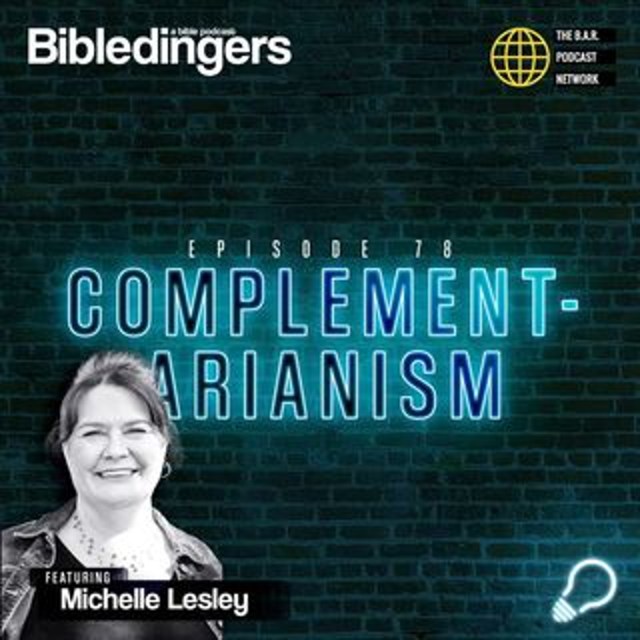
Podcast Guest Appearance – Bibledingers

Don’t worry, this episode was not about complementing Arians! :0)

It was so great to sit down and chat with my new friends Ryan and Nick over at Bibledingers recently!

We talked about all things complementarian – the biblical foundation for the complementarian position, the Scriptures egalitarians twist to try to justify their position, godly women in the Bible, and the crucial roles women play in the church and the home. The guys even had some great words of wisdom for all you husbands out there!

Listen in here or check out episode 78 of Bibledingers on your favorite podcast platform!

Be sure to visit the Bibledingers website for blog articles, videos, gear, and all the Bibledingers’ social media links. Subscribe and follow!


Articles / resources mentioned or touched on in the episode:

Rock Your Role: All Things Being Equal

Rock Your Role article series

The Mailbag: Counter Arguments to Egalitarianism


Got a podcast of your own or have a podcasting friend who needs a guest? Need a speaker for a womenโ€™s conference or church event? Click the โ€œSpeaking Engagementsโ€ tab in the blue menu bar at the top of this page, drop me an e-mail, and letโ€™s chat!

Mailbag

The Mailbag: Asked and Answered

Good morning, readers. It is an honor and a joy to serve you in Christ. Welcome to all the newbies and to you seasoned veterans of the blog.

Because some of y’all are new, you aren’t yet aware of all of the resources here to help you. Or maybe you’ve been around a while and haven’t noticed something that might be helpful. Let’s remedy that!

First, if you’re new (or if you’ve never read it), check out Blog Orientation for New Readers and Old Friends. It’s like a CliffsNotes intro to the blog.

Second, be sure to familiarize yourself with all of the tabs in the blue menu bar at the top of the page. That’s where I keep the info I’m most frequently asked about.

Third, there’s a search bar at the bottom of every page (and one in the blue menu bar at the top of every page) which might help you find what you need.

Fourth, if you don’t find your question answered in one of these ways or below, you might want to check previous Asked & Answered articles and The Mailbag: Top 10 FAQs.

And finally, let me get you new readers some answers to the questions several of you have asked. Some of you long time friends may have missed these along the way, so I hope they’ll be helpful to you, too!


[Instagrammer asks a question in the comments or DMs me a question]

I love my Instagram followers! Most of you are very sweet and kind, and you ask some really smart questions!

But a lot of you a) don’t seem to know that I have a blog, and b) aren’t familiar with how I use Instagram and how I do correspondence. I totally get that. A lot of you are new and Instagram seems to have a high turnover, and a much higher “hit or miss” with posts than other social media platforms. (Plus, I’m a weirdo and don’t use Instagram the way most influencers do. I mainly use it to tell you what’s on the blog each day.)

So, let me try to help. If you’ve commented or DM’d me a question and I haven’t answered, I would encourage you to watch “Questions” and “Get Info” in my highlights. (In fact, you might want to watch “Need a church?” “Warning,” and “New?” too.)

This is included in the “Questions?” highlight from a Mailbag article. I think it will be helpful to all of my social media and blog followers.


I’m in the market for a new Bible. What would you recommend? I really appreciate your ministry!

Thank you so much for your kind words. And thank you to all my followers who take a moment to encourage me with your comments. As you might imagine, and have probably witnessed, I catch a lot of flak via email and social media from people who don’t like or misunderstand things I’ve said and written. The encouragement is greatly needed and appreciated.

You’re right on time with your question! Amy and I answered it on a recent Glad You Asked episode of the podcast, and that answer was largely based on my blog article The Mailbag: Which Bible Do You Recommend?


God bless you, I wanted to reach out to see if you do Bible studies or if you know any through Zoom with other ladies.

It depends on what you mean by “do Bible studies”. If you’re asking whether or not I teach Bible studies in a video or livestream format, the answer is no, for two reasons. First, at the moment, I don’t have time. Second, I really think you should be meeting in person with a small group for Bible study – ideally with women from your own church and with oversight from your pastor. I understand there are situations in which that isn’t possible, but that is the ideal I want to encourage women toward. God’s plan is the in person assembling of the local church, not Zoom.

I do write Bible studies, though. They are all free, all suitable for groups or individuals, and all designed to teach you how to study or teach straight from the text of Scripture. If you’re new to that idea, I would encourage you to find a friend or a small group of friends, pick one of my studies, and work through it together.

You can find all of my studies and more helpful resources at the Bible Studies tab in the blue menu bar at the top of this page.

And speaking of Bible studies…

Are your Bible studies able to print off?!

Yes. Click the “Bible Studies” link above for all the info and instructions.

Can you recommend a good daily devotional book for a 17-year-old girl? Our granddaughter is having surgery in a few days and I was hoping to send her a little get well soon package and I would like to include a devotional.

What a blessing to have a godly grandma! I’m sorry, but, on principle, I don’t recommend what I call “canned” Bible studies and devotionals. I recommend that Christians read and study straight from the text of Scripture. (You can read more about why at the “Bible Studies” link above, and in my article The Mailbag: Can you recommend a good Bible study for women/teens/kids?.)

May I make a suggestion? Instead of a devotional, how about a new Bible? Or perhaps you could find a small “for those recovering from illness/surgery” gift book of selections from the Psalms, or a “coffee table” type book that is mostly artwork or photography, accompanied by Bible verses. There are also “Bibles” that are Psalms and Proverbs only. (Just make sure all of these books use a reliable translation of Scripture.) If you want to go a little higher tech, consider an iTunes gift card so she can download her favorite (doctrinally sound) Christian music, or a subscription to AGTV.


The womenโ€™s group of the church that we are attending will be doing a Priscilla Shirer simulcast. I have read your article about Ms. Shirer and have decided to abstain from attending the event. How do I lovingly but truthfully tell the women in this group why I am refusing to attend and why I feel this is not someone whom we should be promoting? (unless of course, Ms. Shirer has changed her stance since your article was written). My husband and I believe [our pastor] to be of sound doctrine [but] I am certain that he is oblivious to P. Shirer. [I] hope that you can help me โ€œfind the right wordsโ€ to discuss this with those involved.

I am so sorry this is happening in your church. I have been in exactly that situation, so I know what it’s like.

Here are a couple of articles I think will be of help:

The Mailbag: How should I approach my church leaders about a false teacher theyโ€™reย introducing? I would suggest approaching your women’s ministry leader (or whoever is most immediately in charge of the simulcast) first, then working your way up the chain of command until you’ve spoken to the pastor, if necessary.

The Mailbag: Should I attend the โ€œBibleโ€ study to correct falseย doctrine? (I know you’ve already decided not to attend the simulcast, but I think some of the info in this article will still be helpful.)

Just a note to all of my readers on the “unless she ‘has changed her stance since your article was written'” part: You’ll notice at the top of my article on Priscilla it says, “This article is kept continuously updated as needed.” (I think I’ve remembered to put this at the top of all of my articles on particular teachers? If I missed one, let me know.) Translation: “Yes, I originally wrote this article in 2015, but I go back and update it – fix links, add or delete info, etc. – whenever I feel it’s necessary.”.

If any teacher I’ve ever written an article about genuinely gets saved, repents of her false teaching, etc., I promise you, unless I’m somehow Providentially hindered, you will hear about it from me ASAP. That is not something I’m going to neglect to update you on (and rejoice with you about!) immediately. In the meantime, you can safely assume that the information in my articles is still accurate and applicable and that the teacher is either still status quo with the info in the article, or has gotten worse.


I have several Bible apps, and recently you gave info in one of your mailbags that YouVersion app is not recommended, and knowing now what I didn’t know then, I uninstalled it. I did find it easy to navigate and the search capability was good, but I no longer want anything to do with it. If you could kindly lead me to one that is as user friendly, I need an app that you recommend that is as simple as me. Lol

I like to keep things simple, too. I hope you’ll find my article My Favorite Bible & Studyย Apps to be helpful.


Our church has a mixed adult Sunday school. My conviction has been silence as I do not want the appearance of teaching men. I am discouraged as most of the responses in the hour of teaching is from the women in the group even though our church only allows men to be in teaching positions. I would genuinely like to hear your thoughts on this. I have appreciated your podcast and website information.

I know it can be discouraging when it seems like men are being less manly or exhibiting less leadership than we would hope. I would encourage you to kindly talk to your pastor or elders about your concerns and ask for some insight as well.

In this particular situation, it may be wise to answer fewer questions, or make fewer comments than you normally would, not because you would be teaching (or even giving the appearance of teaching), but because it might give the men more space to get a word in edgewise. If this dynamic is really problematic, I wonder if it might be helpful to split the class into a men’s class and a women’s class. Perhaps that way the men would feel more comfortable contributing. Maybe that’s something you can discuss with your pastor or elders.

I’ve explained why women answering questions and participating in the discussion in a co-ed Sunday School / Bible study class isn’t teaching men or a violation of Scripture in my article Rock Your Role FAQs #4.


If you have a question about: a Bible passage, an aspect of theology, a current issue in Christianity, or how to biblically handle a family, life, or church situation, comment below (Iโ€™ll hold all questions in queue {unpublished} for a future edition of The Mailbag) or send me an e-mail or private message. If your question is chosen for publication, your anonymity will be protected.