Wednesday's Word

Wednesday’s Word ~ Exodus 32

16197_944058255635109_3890365116545367373_n

Exodus 32

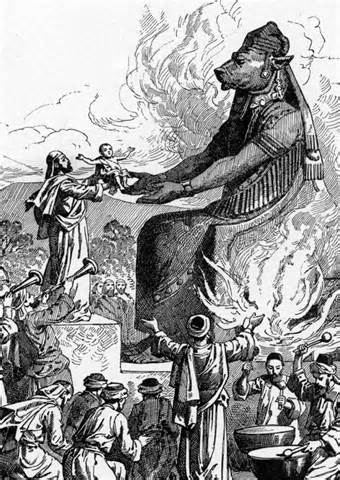
When the people saw that Moses delayed to come down from the mountain, the people gathered themselves together to Aaron and said to him, “Up, make us gods who shall go before us. As for this Moses, the man who brought us up out of the land of Egypt, we do not know what has become of him.”So Aaron said to them, “Take off the rings of gold that are in the ears of your wives, your sons, and your daughters, and bring them to me.” So all the people took off the rings of gold that were in their ears and brought them to Aaron. And he received the gold from their hand and fashioned it with a graving tool and made a golden calf. And they said, “These are your gods, O Israel, who brought you up out of the land of Egypt!” When Aaron saw this, he built an altar before it. And Aaron made a proclamation and said, “Tomorrow shall be a feast to the Lord.” And they rose up early the next day and offered burnt offerings and brought peace offerings. And the people sat down to eat and drink and rose up to play.

And the Lord said to Moses, “Go down, for your people, whom you brought up out of the land of Egypt, have corrupted themselves. They have turned aside quickly out of the way that I commanded them. They have made for themselves a golden calf and have worshiped it and sacrificed to it and said, ‘These are your gods, O Israel, who brought you up out of the land of Egypt!’” And the Lord said to Moses, “I have seen this people, and behold, it is a stiff-necked people. 10 Now therefore let me alone, that my wrath may burn hot against them and I may consume them, in order that I may make a great nation of you.”

11 But Moses implored the Lord his God and said, “O Lord, why does your wrath burn hot against your people, whom you have brought out of the land of Egypt with great power and with a mighty hand? 12 Why should the Egyptians say, ‘With evil intent did he bring them out, to kill them in the mountains and to consume them from the face of the earth’? Turn from your burning anger and relent from this disaster against your people. 13 Remember Abraham, Isaac, and Israel, your servants, to whom you swore by your own self, and said to them, ‘I will multiply your offspring as the stars of heaven, and all this land that I have promised I will give to your offspring, and they shall inherit it forever.’” 14 And the Lord relented from the disaster that he had spoken of bringing on his people.

15 Then Moses turned and went down from the mountain with the two tablets of the testimony in his hand, tablets that were written on both sides; on the front and on the back they were written. 16 The tablets were the work of God, and the writing was the writing of God, engraved on the tablets. 17 When Joshua heard the noise of the people as they shouted, he said to Moses, “There is a noise of war in the camp.” 18 But he said, “It is not the sound of shouting for victory, or the sound of the cry of defeat, but the sound of singing that I hear.” 19 And as soon as he came near the camp and saw the calf and the dancing, Moses’ anger burned hot, and he threw the tablets out of his hands and broke them at the foot of the mountain. 20 He took the calf that they had made and burned it with fire and ground it to powder and scattered it on the water and made the people of Israel drink it.

21 And Moses said to Aaron, “What did this people do to you that you have brought such a great sin upon them?” 22 And Aaron said, “Let not the anger of my lord burn hot. You know the people, that they are set on evil. 23 For they said to me, ‘Make us gods who shall go before us. As for this Moses, the man who brought us up out of the land of Egypt, we do not know what has become of him.’ 24 So I said to them, ‘Let any who have gold take it off.’ So they gave it to me, and I threw it into the fire, and out came this calf.”

25 And when Moses saw that the people had broken loose (for Aaron had let them break loose, to the derision of their enemies), 26 then Moses stood in the gate of the camp and said, “Who is on the Lord‘s side? Come to me.” And all the sons of Levi gathered around him. 27 And he said to them, “Thus says the Lord God of Israel, ‘Put your sword on your side each of you, and go to and fro from gate to gate throughout the camp, and each of you kill his brother and his companion and his neighbor.’” 28 And the sons of Levi did according to the word of Moses. And that day about three thousand men of the people fell. 29 And Moses said, “Today you have been ordained for the service of the Lord, each one at the cost of his son and of his brother, so that he might bestow a blessing upon you this day.”

30 The next day Moses said to the people, “You have sinned a great sin. And now I will go up to the Lord; perhaps I can make atonement for your sin.” 31 So Moses returned to the Lord and said, “Alas, this people has sinned a great sin. They have made for themselves gods of gold. 32 But now, if you will forgive their sin—but if not, please blot me out of your book that you have written.” 33 But the Lord said to Moses, “Whoever has sinned against me, I will blot out of my book. 34 But now go, lead the people to the place about which I have spoken to you; behold, my angel shall go before you. Nevertheless, in the day when I visit, I will visit their sin upon them.”

35 Then the Lord sent a plague on the people, because they made the calf, the one that Aaron made.


The Holy Bible, English Standard Version Copyright © 2001 by Crossway Bibles, a division of Good News Publishers.


Questions to Consider:

1. What is the main issue between God and Israel in this passage? How do Christians face this issue today?

2. According to verse 4, what accomplishment did the people ascribe to the golden calf? Who actually accomplished this? How does Psalm 29:2 relate to what the people did?

3. What was God’s reaction (v. 7-10) to the people’s sin? What did He want to do with Moses? (10)

4. What two reasons did Moses give in verses 12-13 for asking God to relent from His anger?

5. According to verse 25, what sort of impact did the people’s sin have on the surrounding nations? Why? What kind of impact does sin by Christians or the church have on lost people today?

Apologetics, Idolatry, Justice, Old Testament, Sunday School, Tough Passages

Tackling Tough Issues: Genocide in the Old Testament ~ Sunday School Lesson ~ 3-9-14

sunday school

These are my notes from my ladies’ Sunday School class this morning. I’ll be posting the notes from my class here each week. Click here for last week’s lesson.

Through the Bible in 2014 ~ Week 10 ~ Mar. 2-8
Numbers 16-32
Tackling Tough Issues: Genocide in the Old Testament

Genocide: It’s defined (by dictionary.com) as, “the deliberate and systematic extermination of a national, racial, political, or cultural group.” This week in our reading, we dealt with a passage in which God commanded the Israelites to kill nearly all of the Midianites, even those we might consider “innocent.” Was God being cruel or capricious? How could a loving God command such a thing?

Numbers 31:1-18
This is the first time (but won’t be the only time) we’ve seen God command Israel to wipe out a certain nation or people group. How do we make sense of this?

1. Hermeneutics principle: Clear passages interpret unclear passages. (2 Timothy 2:15)
Simply put, biblical hermeneutics is the proper application of 2 Timothy 2:15- a systematic and careful way of diligently studying God’s word so as to rightly understand and handle it. One of the principles of hermeneutics is that when you have a passage that’s confusing or could possibly be interpreted in more than one way, you dig into other biblical passages that address the same issue, but more clearly. In Numbers 31 we see a situation that is confusing because it seems like God is being cruel or unfair. We need to take a look at some clearer passages to help us understand this one.

2. What do we know about the nature and character of God?
On the surface of this passage, God seems to be acting in a way that goes against what we know about Him from the rest of the Bible. That thought itself tells us that the rest of the Bible describes God in certain ways, and that “cruel” and “unfair” are not among those certain ways. We also know that, because God is perfect, He never goes against His own character. How does the Bible describe God?

God is good. (Psalm 100:5)
Some people go so far as to declare that (because God has commanded genocide) God is evil. But God’s word clearly states in many places that He is good.

God is love. (1 John 4:8)
As parents, it’s easy to understand that there are many different ways our love for our children plays out. We smile and hug our children to express our joy in them. We cuddle and comfort them when they’re hurt. We play and celebrate with them. We sacrificially provide for them. But we also love them in “tough” ways sometimes. We discipline them when they’ve disobeyed. We yank them out of harm’s way to protect them. We take them for vaccinations to prevent them from getting sick. We lock the doors to keep bad guys from getting to them. God’s love for us is similar. He loves His children in many ways, some of them, “tough love” ways.

God is patient. (Romans 2:4, 1 Peter 3:20, Psalm 103:14)
God made people, so He understands that we are “dust,” weak, and completely vulnerable to sin. He extends patience and kindness to people over and over again to lead them to repentance and faith in Him. He exhibits patience for a very long time before He executes judgment.

God takes no pleasure in the death of the wicked. (Ezekiel 18:23,32, 2 Peter 3:9)
Going back to the parent/child analogy, no good parent gets joy out of punishing her children. We would much rather the child obey so that we can be at peace with each other, love them in the “non-tough” ways, and because obedience is what’s best for the child. God’s love for people is infinitely deeper than our love for our children. He never wants to punish people for their sin, but rather wants them to repent and turn to Him. He has even mercifully provided us a way to be rescued from the punishment for our sin: He punished His own Son on the cross in our place! God is patient with disobedience and rebellion, but eventually, as any good parent would, He has to punish it.

God is just. (Genesis 18:25, 1 Peter 2:23)
God is the only completely just judge because of His omnipresence (He’s present everywhere, always) and His omniscience (all knowingness). He sees every action, even those where there is no other witness, and He knows every secret motive and intent of the heart. Because of this, all of His “verdicts” are always right.

3. How do these character traits fit in with and explain God’s command to destroy most of the Midianites?

Genocide is evil. Doesn’t that make God evil? (Deuteronomy 32:39)
No. Genocide is evil when unjust, sinful men take it upon themselves to kill people for evil and selfish reasons. God is, by definition, good, so if He initiates the judgment of genocide, it cannot be evil. As mentioned above, He is abundantly patient before He exercises judgment, and, due to His omniscience and omnipotence, His verdicts are always just. Therefore, when God uses genocide, it is not evil, nor is He.

What had the Midianites done to be worthy of God’s judgment? (Numbers 31:16, 22:6-7, Revelation 2:14, Isaiah 14:12-15)

Note the locations of Midian, Moab, and Shittim.

Note– 31:3 makes clear this is God’s judgment on Midian, not Israel deciding on its own to annihilate them. God used Israel to carry out his sentence of judgment.

King Balak of Moab and the leaders of Midian conspired to pay Balaam to curse Israel (22:6-7). When Balaam couldn’t curse them, he instructed Balak to entice Israel into idolatry instead (Rev. 2:14).

Moab and Midian worshiped Baal. According to mythology, Baal was son of the chief god, El, but rose to power above El, who was considered weak and impotent. (This is very similar to the story we read in Isaiah about how Satan fell.) Baal was a fertility god, so “worship” consisted of sexual perversion including prostitution, and, often, the sacrifice of the first born thson. The religion of Baal took everything good and holy from God’s story (God’s name- El-elyon, El-shaddai, Satan’s attempt to overthrow God, Satan’s contempt for God, and God’s sacrifice of His firstborn Son) and turned it inside out for Satan’s glory. This is what the Midianites were strategically drawing Israel into so that they could either defeat them or turn them into allies.

God showed His goodness by deciding to put an end to evil. He showed His love for Israel by protecting them from both Midian’s schemes and from idolatry and its consequences. God showed His justice by punishing the rebellion of Midian.

Why didn’t God just warn Midian and Israel to stop their evil ways? (Numbers 25, Exodus 20:2-6, Leviticus 26:30, Deuteronomy 4:3)
He did. And, he started with Israel, not Midian. Israel knew better. God had repeatedly told them idolatry was a gross sin (1st and 2nd Commandment) and that it was punishable by death (Lev. 26:30). He had all the Israelite chiefs impaled who had led the people into idolatry. He sent a plague that 1898234_10152272211290761_266294837_ndestroyed the 24,000 people who had bowed the knee to Baal. And, He showed, graphically, through Phinehas that God would not tolerate Israel joining itself to Midian. Finally, he gave the Midianites a taste of what was to come when He had Israel attack (but not annihilate) them at the end of chapter 25.

God would have much preferred both Israel and Midian repent of their idolatry than to put any of them to death here or in chapter 31. He was patient with them and continued to let them live and experience common grace in order that they might repent and turn to Him.

Why did God command Israel to kill “innocent” women and children? (Psalm 51:1, Romans 3:10, 6:23, Samuel 12:22-23)
Note– Those women and children were not innocent. Every human is born in sin and rebellion against God.

The married women would have been adults, just as responsible for their sin of idolatry as the adult males who were killed. Had they been permitted to live, they would have continued to train their children in the ways of Baal worship, and the problem would have remained.

Though the male children may have suffered for a moment, we believe that they are in Heaven with Christ. Had they lived, they would have grown up (trained by their mothers) to be Baal worshipers, and as heads of their households, would have re-instituted Baal worship in Midian. Midian would have remained a threat (even more so because of the desire for revenge on Israel) militarily and in tempting Israel to idolatry.

The unmarried, young girls were allowed to live and marry Israelite men (even though they, too, were supposed to have been killed 31:15) because they would have had to conform to their husbands’ religion, the worship of Yahweh.

God showed His goodness in protecting the Israelites from Midian, in taking the male children to Heaven, and in sparing the young girls and allowing them to come to know Him through their marriage into Israel.

God’s exercising genocide on a people is a difficult issue to come to terms with. And, if it’s difficult for us, we can only imagine how difficult it must be for God. He created these people. He loves them and desires to save them so much that He sent His Son to rescue them from His wrath. Genocide is not a flippant decision by a God who kills people casually, but a heart rending last resort for putting an end to evil so rampant that the people will not turn back from it.

Additional Resources:
What is Biblical Hermeneutics? by GotQuestions.org

Who Was Baal? by GotQuestions.org

Faith, Obedience, Old Testament, Sunday School, Trust

Trust and Obey ~ Sunday School Lesson ~ 3-2-14

sunday school

These are my notes from my ladies’ Sunday School class this morning. I’ll be posting the notes from my class here each week. Click here for last week’s lesson.

Through the Bible in 2014 ~ Week 9 ~ Feb. 23-Mar. 1
Numbers 1-15, Psalm 90
Trust and Obey

Not a grief or a loss, not a frown or a cross, but is blest if we trust and obey.

Trust and obey, for there’s no other way to be happy in Jesus, but to trust and obey.

Dilemma → The People’s Response → Moses/Leadership’s Response ←→ God’s Response

Today, we’re taking a look at four incidents from this week’s reading which follow the paradigm above. All start out with a problem. We’ll look at how the people responded to that problem, how Moses and the other leaders responded, and how God responded, which will show us how we should respond to the dilemmas we face: with trust in, and obedience to, God.

 A Generic Gripe (Numbers 11:1-3)

The Dilemma (11:1):
This seems to have been a general discontent with the aggravations that come with marching around the desert. Various translations mention “hardships,” “adversity,” and “misfortunes.” We can’t tell from this verse whether these were hardships of their own making (as two of the subsequent problems were) or they were just things that came up outside their control.

Israel’s Response (11:1-2, Psalm 142:1-2):
Israel’s response was to gripe. How was this different from Psalm 142:2, where David said, “I pour out my complaint before him; I tell my trouble before him.”? Check out verse 1: David said, “I cry out to the Lord…I plead for mercy to the Lord.” David was crying out to the Lord. Israel was crying out against the Lord (“in the hearing of the Lord”).

God’s Response (11:1):
God’s anger was literally kindled. Why such a harsh response to a little complaining? We’ll see more clearly in the next incident.

Moses’ Response/God’s Response (11:2):
Moses intercedes in a picture of the way Christ intercedes for us. He gets between the sinful people and God’s wrath and pleads their case before Him. God’s wrath abates, not because there’s anything righteous in the people, but because of the righteousness of the one interceding.

 Where’s The Beef? (Numbers 11:4-35)

 The Dilemma (11:4-9):
“Waaah…we’re tired of the same old food day after day!” Notice, it wasn’t that they didn’t have food and were crying out to God to help them and keep them from starving. God had provided plenty of the food He thought best for them. He even delivered it right to their doorsteps—they didn’t have to go out and hunt! But that wasn’t good enough.

Israel’s Response (11:4-6,10, Philippians 3:19, Romans 1:25):
Israel’s response to this dilemma (which wasn’t really a dilemma at all—this was about what they preferred—it was a problem of their own making) was to turn their noses up at what God had provided for them and cry out against Him.

Their complaint was a disdain for all God had done for them in delivering them from Egypt. They didn’t want to do things God’s way anymore. They actually preferred going back to (and thought they had it better under) slavery! And for what? Food. The kind of food they missed and preferred. The food of their old way of life. The fruit of slavery.

Their complaint was essentially a contempt for and rejection of God’s salvation because they were willing to toss it all aside for something as paltry as a different kind of food. “They worshiped and served the creation rather than the creator.”

What are some ways we do the same thing? (Thinking we had it better when we were lost and longing for the things we had back then.)

Moses’ Response (11:10-15, Philippians 4:13, Matthew 11:28):
Moses had had it with these rebellious, childish people, and he cried out passionately to the Lord about it. This “friend of God” was not rejecting God or His ways. He was saying, “You’ve asked me to lead and care for this people, and I want to comply, but I can’t. It’s too hard. I need Your help!” His response was not to reject God (as was the case with the Israelites’ complaint), but to trust God and ask for His help in obeying Him.

When it is our desire to take up our cross daily, God has promised to either give us the strength to carry it (Phil. 4:13) or lift it off our backs permanently (Matt. 11:28).

God’s Response (11:16-35, Psalm 37:4):
Two different complaints. Two different motives. Two different responses: God showed kindness to Moses, but anger towards the Israelites.

Yet, in a way, the same response. God gave both Moses and the people what they asked for. (Actually, He gave the people much more than they asked for!) When Moses got what he wanted, it was a blessing because He was asking according to God’s will and out of a desire to obey Him. This is what Ps. 37:4 is talking about when it says, “Delight yourself in the Lord, and He will give you the desires of your heart.” When the people got what they wanted, it was a curse because God gave them what they never should have wanted in the first place.

Power Play (Numbers 12)

The Dilemma (12:1-2):
Miriam and Aaron were annoyed with Moses for some unclear-to-us reason having to do with Moses’ new wife. Whether they were opposed to her because she was a Cushite or because she had done something to tick them off, we don’t know.

Miriam and Aaron’s Response (12:1-2):
Their annoyance led Miriam and Aaron to grumble against Moses. And once they started grumbling against him- which was really grumbling against God, because God had called Moses, placed him in authority, and spoke through him- it was easy enough to convince themselves that they should be in charge, or at least equal to Moses. “And the Lord heard it,” indicates that they were implicating God in their complaint. Here is another incident that’s a problem of the complainant’s own making.

God’s Response (12:4-10, 14-15):
Again, God’s anger is “kindled.” He comes down personally, since they are denouncing Him personally by way of Moses, and sets them straight. “Yes, there is a difference between y’all and Moses. No, you’re not equal to him. Moses is the one I’ve put in this position, not either of you.” Miriam’s name being mentioned first (v.1) and the fact that God gave her leprosy but not Aaron, probably indicate that she was the instigator in this situation.

Moses’ Response (12:11-13):
Again, Moses intercedes between the sinner and the wrath of God and asks, trusting in God’s grace, for Miriam’s healing. God grants his petition, but not right away. God wants Miriam to understand how serious her disobedience is, so He allows her to experience His chastening for a week. But after her time of discipline is over, God’s grace allowed her back into the camp to be reconciled to Moses and the people.

Ten Were Bad, Two Were Good (Numbers 13:25-14:35)


The Dilemma (13:25-33):
The spies came back and gave an accurate report of what they saw. The land itself was awesome, but the people were strong, militarily, and the cities were strongly fortified. All of the spies and the people who heard their report were understandably afraid. This was not a problem of their own making.

Israel’s Response (14:1-4, Exodus 3:8):
Again, the people’s immediate response to fear was not to trust in the Lord and obey Him, but to rebel. Again, their response was to quickly abandon and disdain all God had done for them. They tossed aside His salvation in favor of slavery and what they thought would be safety. They knew what God had promised (Ex. 3:8- compare to 13:29) and called Him a liar (14:3- compare to Ex. 3:8). Again, they cried out against the Lord instead of crying out to Him.

Joshua and Caleb’s Response (14:5-9, 13:30):
Nowhere do we see Caleb and Joshua {13:30, 14:6-9} denying or minimizing the difficulty and scariness of the situation, but confirming it. They knew what people like the Hittites, et al, were capable of doing to their enemies. They were well aware of Israel’s military weakness and disadvantage.

Yet, instead of letting what they could see and experience determine reality, they trusted God’s word and promises to them to determine reality. They had seen what God was capable of doing to His enemies. They saw what He had done to Pharaoh’s army without their even having to fight, and trusted that, if He had promised them this land, He could do something like that again.

Moses’ Response (14:13-19):
Again, Moses stands between the sinful people and God’s wrath- just like Jesus does for us- pleading with God to forgive them so that God’s name will be glorified. He calls God to act in accordance with His own character: slow to anger, steadfast love, forgiving.

God’s Response (14:20-35):
Again, God grants the request of the intercessor (Moses), not because of the sinful people, but because of the righteousness of the one interceding, and because of His own character. Though they will still suffer the consequences of their sin, God pardons sinners.


What Can We Learn?

1. When we have a problem, need, or desire, God wants us to bring it to Him in prayer with a heart submissive to His will. He desires for us to cry out to him, not against Him.

2. Sometimes, we’re the problem. Sometimes we’re in anguish over a problem that’s not really a problem, but a selfish or ungodly desire we’re not even supposed to have.

3. When we face difficult situations, God wants us to calm down, trust His word and His promises, and obey Him, not reject Him in order to do things our own way. Like the song says, “there’s no other way to be happy in Jesus, but to trust and obey.”

Idolatry, Sunday School, Worship

Worship Gone Wrong, Worship Gone Right ~ Sunday School Lesson ~ 2-16-14

sunday school

These are my notes from my ladies’ Sunday School class this morning. I’ll be posting the notes from my class here each week. Click here for last week’s lesson.

Through the Bible in 2014 ~ Week 7 ~ Feb. 9-15
Exodus 30-Leviticus 10
Worship Gone Wrong ~ Worship Gone Right

Think about the last time you were invited over to someone’s house for dinner or a visit. Even if it was your closest friend’s house, did you go into her kitchen and start rearranging her cabinets so the dishes would be the way you like them? Refold her towels into thirds instead of halves? Insist on fried chicken when she had planned baked? Would you like it if your closest friend came to your house and started doing things like that?

What’s your favorite flower? Mine is pink roses, and my husband knows this very well. Would it have been loving for my husband to give me a cactus for Valentine’s Day—even though he knows I can’t stand them –because that’s the plant he likes best?

We all have a certain way we like things done at our own homes for certain reasons. We have all been given gifts that make us feel loved and cherished (and some gifts that haven’t). God is no different. When we come into His house to worship Him, we abide by His “house rules” out of love and respect for Him. We are to offer Him the worship He desires, not because it makes us happy or comfortable, but because that’s what makes Him “feel loved.”

This week’s reading was all about worship. Worship done the right way – God’s way, and worship done the wrong way – man’s way.

Worship Gone Wrong: Man’s Way (Exodus 32)

32:1-2: Worship goes wrong when we take our focus off God.
Moses didn’t bring them out of Egypt, God did. But the people’s focus was only on the temporal and tangible. They hounded Aaron to give them a god they could see and worship their own way rather than an invisible God whose ways were holy and different from theirs. They were not thinking about what God wanted but what they wanted.

32:2-14: Worship goes wrong when the pastor is more interested in pleasing the people (or himself) than pleasing God.
Rather than leading the people and holding up God’s standard for them, Aaron gave in to their base desires. Contrast this with Moses who was more interested in God’s glory, His name being honored among the heathens, and His covenant promises, than Moses’ own self interest of being made a “great nation”.

32:4-6: Worship goes wrong when we paste God’s name on man made rituals.
Notice that they essentially called the golden calf “God” and claimed that worshiping it was actually worshiping God. This was not a situation in which they were inventing a new god to worship.

32:15-19: Worship goes wrong when we break God’s law (Exodus 19-20:21).
The people had heard from the very mouth of God himself, “You shall have no other gods before me. You shall not make for yourself a carved image, or any likeness of anything that is in heaven above, or that is in the earth beneath, or that is in the water under the earth. You shall not bow down to them or serve them…” Those are the first and second Commandments! They knew God’s Law and intentionally broke it. Our worship is unacceptable to God (indeed, it isn’t worship at all) when we do it while knowingly disobeying Him. (Naked church, homosexuality affirming “churches”, female pastors.)

32:25: Worship goes wrong when we give unbelievers the opportunity to mock God.
When the people “break loose” from doing things biblically with the pastor leading the way (as in the New Apostolic Reformation movement, for example), the world rightly mocks them. As a result, many unbelievers understandably take the position, “If that’s what Christianity is, I don’t want any part of it.” This is to our shame. (This is different, however, from being mocked for upholding biblical standards, such as standing against abortion or homosexuality.)

32:26-28: Worship goes wrong when people refuse to repent of their sin (Matthew 18:15-17, 1 Corinthians 5:11-13).
The three thousand men who refused to repent of their idol worship were the problem here, not the Levites. They were given every opportunity to repent and refused. This compounded their sin by forcing their brothers into a horrific situation of having to kill them.

Today, when church members refuse to repent of their sin, God has instructed us to put them outside the fellowship (after due process). This is painful for all involved, and puts brothers and sisters who are trying to faithfully follow God’s word in the awful position of having to confront and discipline people they may dearly love. It often causes a deep wound that necessarily hinders worship.


Worship Gone Right: God’s Way

God cares about the smallest details of how we approach Him in worship. (Exodus 30, 39)
He’s not an “anything goes” God. We see this in the detailed instructions about the construction of the ark, the tabernacle, and all its accessories, right down to the recipe for the anointing oil (30) and the little pomegranates on the hems of the priestly garments (39). (We’ll also see His instructions about worship to the church in the New Testament.) If God cares this much about the little details of worship, what are some things in our worship services and other church activities that we need to think about as to whether or not they’re pleasing to God?

God takes worship seriously, and so should His people (Exodus 32, Leviticus 10, Acts 5:1-11, 1 Corinthians 11:29-30).
The results of the golden calf incident (32), the strange fire incident (10), as well as situations in the New Testament show us that the way we worship and conduct activities in the church is no trivial matter to God. When He gives instructions about worship, He means what He says. It is just as wrong for us in the New Testament church to disregard God’s instructions about the Lord’s supper, giving offerings, qualifications for pastors/teachers, etc., as it was for Nadab and Abihu to offer “strange fire” before the Lord.

This doesn’t mean we can’t experience and express joy during worship—God wants us to! But there are also times to weep over our sin, listen intently to God’s word, and pray fervently. What are some things that show that a church/church members take worship seriously?

The men who lead God’s people have a grave responsibility to lead biblically, and God’s people have the responsibility to follow them biblically. (Exodus 32, Leviticus 10, 2 Timothy 4:1-5)
Pastors are to be faithful to God and His requirements for worship regardless of what the people clamor for. When pastors give in to the sinful desires of their people, they both endorse and give their people the opportunity to sin. So long as the pastor is standing by Scripture, we are to follow his leadership and support him.

The results of worship gone right (Leviticus 9:22-24)
When worship is done biblically, the pastor is in right relationship with God. He’s in the right position spiritually to be a blessing to God’s people. God blesses the people, they see His glory, He is pleased with their worship, His presence is with them, and it generates more worship.

Gospel, Old Testament, Salvation, Sunday School, Types and Shadows

Joe & Moe: Delivery Boys (Part 2) ~ Sunday School Lesson ~ 2-9-14

 sunday school

These are my notes from my ladies’ Sunday School class this morning. I’ll be posting the notes from my class here each week. Click here for last week’s lesson.

Through the Bible in 2014 ~ Week 6 ~ Feb. 2-8
Exodus 10-29
Joe & Moe: Delivery Boys (Part 2)

Moses: Deliverance from Bondage  Last week we took a look at how Joseph was a type (symbol) of Christ: deliverance through forgiveness of sin. Just as Joseph was able to deliver his family from the famine to a new, abundant life through forgiving their sin, so Christ delivers us from the “famine” of the old life of sin by forgiving us of that sin and giving us a new and abundant life.

Today, we’re taking a look at another “delivery boy,” Moses, and examining how the events in his life demonstrate Christ’s delivering us from the bondage of sin, just as Moses delivered the Israelites from their bondage to slavery.

As Moses delivered Israel from the bondage of slavery, so Christ delivers us from the bondage of sin. Deliverance/redemption from bondage is not easy or lighthearted. It is a battle for the freedom of another person, and that freedom must be purchased with blood and struggle.

Exodus 11-12
Bondage: Before God sets us free.

11:7– God sets His people apart for His glory and His purposes. (Deuteronomy 7:6-8, Romans 8:29-30, 2 Corinthians 6:14-18)
This “setting apart” is called “consecration.” It wasn’t because there was anything special about Israel itself, but because God was keeping His covenant promise and working out His plan. God made a distinction between Israel and Egypt, and called them out of Egypt, and separated them from Egypt. So, God makes a distinction between unbelievers and those who will be saved, calls us out of the world’s system and ways, and separates us from the world in our identity and being.

11:9-10– Satan doesn’t willingly give up his slaves. (2 Timothy 2:24-26, 1 Corinthians 2:14) 
Look at everything that happened to Pharaoh, and yet he still, at this point, wouldn’t let go of the Israelites. In the same way, Satan holds people in bondage as slaves to himself, to sin. As a slave cannot resist his master, a slave to sin cannot resist his master- sin. Satan will not give his slaves up to Christ without a fight.

2 Timothy 2:24-26: The Lord’s bond-servant must not be quarrelsome, but be kind to all, able to teach, patient when wronged, with gentleness correcting those who are in opposition, if perhaps God may grant them repentance leading to the knowledge of the truth, and they may come to their senses and escape from the snare of the devil, having been held captive by him to do his will.

This is why we can’t expect lost people to act like Christians or tell them to clean themselves up. They can’t. They’re slaves. Only Christ can raise them from the “living death” of sin and set them free.

12:1– When God institutes a new covenant, He makes all things new.
God changed everything about Israel’s life, right down to their calendar. This was a completely fresh start: a new time, a new place (the Promised Land), and a new celebration (Passover) for a new covenant and way of life.

When Christ delivers us, we also get a new time (our new life starts at the moment of conversion, and we receive a fresh new future), a new place (Heaven instead of hell) and a new celebration (baptism and the Lord’s Supper) to mark the new covenant and way of life. Those celebrations were a reminder for Israel of how the Lord delivered them from bondage and slavery, and a reminder to us of how God delivers us from the bondage and slavery of sin.

The Key to the Shackles: How God sets us free: The Passover Lamb
Christ in the Passover:

12:5– A lamb without blemish (1 Corinthians 5:7, 1 Peter 1:18-19, James 2:10)
Jesus was to be the sacrifice for our sin. All sacrifices offered to God had to be perfect, pointing to Jesus’ sinlessness. Had he ever sinned, even once, He would not have been an acceptable sacrifice for our sin.

1 Corinthians 5:7b: Christ, our Passover lamb, has been sacrificed. 

1 Peter 1:18-19: you were ransomed …with the precious blood of Christ, like that of a lamb without blemish or spot. 

12:6– The lamb sacrificed at twilight (Luke 23:44-46)
The Passover lamb was sacrificed as the sun was setting. When Jesus died there was darkness over the whole land. Additionally, at the time of Jesus’ crucifixion the lamb was customarily slaughtered at 3 p.m., the same time Jesus died.

12:7,13– Blood on the doorposts and lintel (John 10:7, Romans 5:9,8:1)
Picture a vertical beam perpendicularly meeting a horizontal beam. Now picture the blood of a spotless lamb running down those beams. What comes to mind? The cross.

Jesus said, “I am the door. If anyone enters by me, He will be saved…” How do we enter in to and through Christ? We pass under and through the blood He shed on the cross. Anyone who has passed through the blood and is in Christ is not under the judgment of God.

Romans 5:9 “Since, therefore, we have now been justified by his blood, much more shall we be saved by him from the wrath of God.” 

12:8– Eating the flesh (John 6:53-55)
John 6:53-55: So Jesus said to them, “Truly, truly, I say to you, unless you eat the flesh of the Son of Man and drink his blood, you have no life in you. Whoever feeds on my flesh and drinks my blood has eternal life, and I will raise him up on the last day. For my flesh is true food, and my blood is true drink.

12:10, 46– Do not leave the remains until morning. Do not break any of the lamb’s bones. (John 19:31-36)
John 19:31-33,36: Since it was the day of Preparation, and so that the bodies would not remain on the cross on the Sabbath (for that Sabbath was a high day), the Jews asked Pilate that their legs might be broken and that they might be taken away. So the soldiers came and broke the legs of the first, and of the other who had been crucified with him. But when they came to Jesus and saw that he was already dead, they did not break his legs. For these things took place that the Scripture might be fulfilled: “Not one of his bones will be broken.”

11:5, 12:12-13, 29-31– Death of the firstborn son of the king. (Colossians 1:15,18; Romans 5:10)
Just as the firstborn son of the king had to die in order for Israel to be set free from bondage, so, Jesus, the firstborn Son of our King, the firstborn of Creation, and the firstborn from the dead, had to die to set us free from the bondage of sin.

Freedom
Now that Christ has set us free, we remember his sacrifice through the Lord’s Supper and celebrate our freedom from sin through baptism. The crossing of the Red Sea hints at baptism.

Exodus 14
The “Baptismal Waters” of the Red Sea (Romans 6:4)

God set the Israelites free from the bondage to Egypt and brought them out of Egypt into a new place. With their bondage and slave masters behind them, God brought them to the water and they passed through it. The old slave masters tried to follow them to recapture them, but God washed them away to their death. The Israelites started a brand new life on the other side of the water. It was a testimony of God’s glory to the Egyptians (14:4) and to the Israelites themselves that God is the Lord.

Christ passed through the waters of death- defeating the enemy and breaking his chains that keep us captive- and rose up out of those waters to life on the other side. So, “We were buried therefore with him by baptism into death, in order that, just as Christ was raised from the dead by the glory of the Father, we too might walk in newness of life.”

Our baptism is a testimony of God’s glory to Satan- that he is defeated, to ourselves- that we have passed from death unto life, and to others- that Jesus Christ is Lord.

Additional Resource:
What Does It Mean to Be a Slave to Sin? by GotQuestions.org