Mark Bible Study

Mark: Lesson 5

Previous Lessons: 1, 2, 3, 4

Mark 3:

Again he entered the synagogue, and a man was there with a withered hand. And they watched Jesus, to see whether he would heal him on the Sabbath, so that they might accuse him. And he said to the man with the withered hand, “Come here.” And he said to them, “Is it lawful on the Sabbath to do good or to do harm, to save life or to kill?” But they were silent. And he looked around at them with anger, grieved at their hardness of heart, and said to the man, “Stretch out your hand.” He stretched it out, and his hand was restored. The Pharisees went out and immediately held counsel with the Herodians against him, how to destroy him.

Jesus withdrew with his disciples to the sea, and a great crowd followed, from Galilee and Judea and Jerusalem and Idumea and from beyond the Jordan and from around Tyre and Sidon. When the great crowd heard all that he was doing, they came to him. And he told his disciples to have a boat ready for him because of the crowd, lest they crush him, 10 for he had healed many, so that all who had diseases pressed around him to touch him. 11 And whenever the unclean spirits saw him, they fell down before him and cried out, “You are the Son of God.” 12 And he strictly ordered them not to make him known.

13 And he went up on the mountain and called to him those whom he desired, and they came to him.14 And he appointed twelve (whom he also named apostles) so that they might be with him and he might send them out to preach 15 and have authority to cast out demons. 16 He appointed the twelve: Simon (to whom he gave the name Peter); 17 James the son of Zebedee and John the brother of James (to whom he gave the name Boanerges, that is, Sons of Thunder); 18 Andrew, and Philip, and Bartholomew, and Matthew, and Thomas, and James the son of Alphaeus, and Thaddaeus, and Simon the Zealot, 19 and Judas Iscariot, who betrayed him.

20 Then he went home, and the crowd gathered again, so that they could not even eat. 21 And when his family heard it, they went out to seize him, for they were saying, “He is out of his mind.”

22 And the scribes who came down from Jerusalem were saying, “He is possessed by Beelzebul,” and “by the prince of demons he casts out the demons.” 23 And he called them to him and said to them in parables, “How can Satan cast out Satan? 24 If a kingdom is divided against itself, that kingdom cannot stand. 25 And if a house is divided against itself, that house will not be able to stand. 26 And if Satan has risen up against himself and is divided, he cannot stand, but is coming to an end. 27 But no one can enter a strong man’s house and plunder his goods, unless he first binds the strong man. Then indeed he may plunder his house.

28 “Truly, I say to you, all sins will be forgiven the children of man, and whatever blasphemies they utter,29 but whoever blasphemes against the Holy Spirit never has forgiveness, but is guilty of an eternal sin”30 for they were saying, “He has an unclean spirit.”

31 And his mother and his brothers came, and standing outside they sent to him and called him. 32 And a crowd was sitting around him, and they said to him, “Your mother and your brothers are outside, seeking you.” 33 And he answered them, “Who are my mother and my brothers?” 34 And looking about at those who sat around him, he said, “Here are my mother and my brothers! 35 For whoever does the will of God, he is my brother and sister and mother.”


The Holy Bible, English Standard Version. ESV® Permanent Text Edition® (2016). Copyright © 2001 by Crossway Bibles, a publishing ministry of Good News Publishers.


Questions to Consider

1. In verses 1-6, we see again one of the major themes of Mark: Jesus’ lordship over the Sabbath. Take a moment to review question 6 from Lesson 4 (link above). What are the similarities and differences between Mark 2:23-28 and Mark 3:1-6? Look at these two passages in a physical Bible. What do you notice about their placement, or sequence, in the manuscript, despite the fact that some time elapsed between the two incidents? Why might Mark have organized his manuscript this way?

2. Why was guarding against profaning the Sabbath such a major issue for the Pharisees? (1-6) What might they have worried God would do if Jesus influenced Israel to (in the Pharisees’ eyes) break the Sabbath? What did Jesus mean by his question in verse 4? Why didn’t the Pharisees answer Jesus? (4-6) Sometimes we think of anger as being sinful. Here, we see Jesus get angry. Why was His anger not sinful? (5)

3. What was Jesus doing (8) that drew such large crowds to Him? (10, 20-21) Compare the crowds, and their reason for flocking to Jesus in verses 7-12, 20-21, with this passage. What was the reason Peter and Jesus’ true followers stuck with Him? Do you see any similarities between the crowds that came to Jesus in droves for miracles, yet turned away from His teaching, and the crowds that fill miracle-promising “churches” today, even though those “churches” do not preach the truth of the gospel? What does Jesus want us to come to Him for?

4. How did Jesus’ ability to heal, his lordship over the Sabbath, His ability to cast out demons, and His definitive teaching on forgiveness (28-29) demonstrate that Jesus was God and that His authority over the physical and spiritual realms was equal to God’s? How would the authority over demons that Jesus gave the disciples for this mission (15) have authenticated the message they were preaching? (14) Was the disciple’s primary objective to preach the gospel or cast out demons? (14)

5. You may wish to examine verses 22-30 alongside these parallel passages in Matthew and Luke for better understanding. What is the blasphemy against the Holy Spirit (also called the unpardonable sin)? What were the scribes accusing Jesus of? (22) In your own words, explain Jesus’ reasoning to them. (23-27) Why did Jesus say the scribes making these accusations would never be forgiven? (30)

6. Why might Mary and Jesus’ siblings have been looking for Him? (20-21, 31-32) Was Jesus dishonoring his mother or rejecting his siblings in favor of others? (33-35) What point was Jesus trying to make? Compare verses 31-35 with these passages. What do we learn from these Scriptures about the importance of our spiritual family? Think about religions that unbiblically venerate Mary and ascribe supernatural attributes to her. Would this passage seem to support those beliefs?


Homework

Think about your church family. Is there a brother or sister, or maybe even a spiritual “mother” or “father,” who has helped you in your walk with the Lord, encouraged you, been there for you, maybe even led you to Christ? Take a moment this week to touch base with that person and express your love and appreciation.


Suggested Memory Verse

For whoever does the will of God, he is my brother and sister and mother.”
Mark 3:35

Prayer, Sanctification, Throwback Thursday, Worship

Throwback Thursday ~ Great Expectations

Originally published February 6, 2014expectgreatthings-necklace (1)

Do we expect too much from God? Is that even possible?

No.

Yes.

Well, kinda.

You see, I’m not talking about expecting something and God being unable to deliver it. That’s just plain silly when talking about our omnipotent God. No, what I’m talking about is whether or not the expectations we come up with are grounded in biblical reality.

What do we mean when we talk about “praying expectantly” or coming to a time of corporate worship, study, or prayer, and “expecting God to do something”? Just what is it we are expecting God to do?

Could it be that He’s already doing something and we’re just not seeing it?

Sometimes, when we read God’s word, we expect God to do something just as “big” as He did in Moses’, Paul’s, or some other Bible hero’s life. We forget that the Bible is sort of like a “highlight reel” of the events in the lives of a handful of people that God drafted to be part of His visible activity at that moment in history.

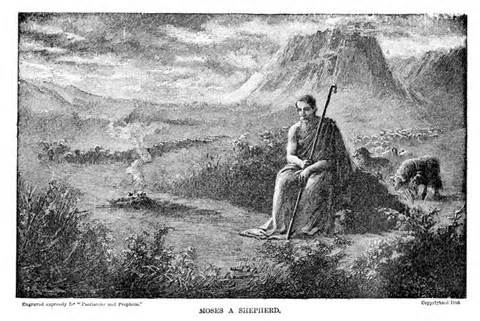
We focus on the moments Moses had at the burning bush or walking through the Red Sea, and that’s what we want, too. r643167_4468740But we forget that Moses’ life wasn’t like that every day. We forget about the eighty years he spent wandering around the desert, half in the day to day monotony of shepherding on the back side of Midian, the other half, wandering around the wilderness with the people of Israel.

Eighty years of nothing special. Day after day of ordinary. Week after week of God not “showing up” and doing something amazing. Eighty years. That’s a lifetime for most of us.

Was God any less at work in Moses’ eighty years of desert thwandering than He was when He gave Moses the Law or spoke to him face to face or sent manna? Of course not. During those days, God was protecting Moses from the heat and wild animals, providing food and shelter for him, blessing him with a wife and children, directing his steps, teaching him obedience and trust.

Just like He does for us.

Have you read a Bible passage this week that allowed you to see more of God’s glory? God is doing something. He’s revealing Himself to you.

Are you praying for someone’s salvation? God is doing something. He’s working on the heart of that person.

Did you have a place to sleep last night and food on your table today? God is doing something. He’s providing for your needs.

Do you leave church on Sundays having been fed the truth of God’s word by your pastor? God is doing something. He’s growing you to spiritual maturity.

Is it possible that we’re expecting God to do something in our lives that isn’t in His particular plan for us? You aren’t Moses, and neither am I. Neither were the million or so other Israelites Moses led out of Egypt, and neither have the billions of other people been who have inhabited earth since Creation. Moses was Moses. You are you. God doesn’t have the same plan for your life He had for Moses’ life.

And, by the way, have you ever noticed that most of the people in the Bible through whom God did something “big” were not expecting it or asking for it? Moses wasn’t expecting God to show up in that burning bush. David wasn’t asking God to do great things in his life when Samuel dropped by to anoint him as the next king. Both of them were hanging out with the sheep when God called them. Paul thought he was already an awesome servant of God when he got knocked off his high horse. Mary wasn’t expecting to be expecting. She was just a teenage girl growing up and learning how to run a household.

1 Thessalonians 4:10b-12 says:

But we urge you, brothers to do this more and more, and to aspire to live quietly, and to mind your own affairs, and to work with your hands, as we instructed you, so that you may walk properly before outsiders and be dependent on no one.

That’s what all of those Bible characters were doing when God chose them. Just regular people living regular lives doing regular work. Just like billions of other people through whom God has not chosen to do anything big and spectacular.

keep-calm-god-is-at-workBut that doesn’t mean God hasn’t been “doing something” in all of our lives. In fact, the vast majority of the work God does in our lives every single day goes unnoticed and unappreciated.

So, instead of setting our expectations on those very rare “wow factor” works of God that seem so appealing, maybe we should be asking Him to open our eyes to, and make us thankful for, all of the things He’s already doing in our lives. Instead of having great expectations of things that God has never promised us, maybe we should ask Him for, and expect Him to, do what He has promised:

Forgiveness for our sin

Christ-likeness

Provision for our needs

Endurance

The ability and opportunity to help others

Faithfulness

Humility

Patience

The opportunity to share the gospel

Because “all the promises of God find their Yes in him.” You can expect it.

Wednesday's Word

Wednesday’s Word ~ 1 Kings 17

1 kings 17 24


1 Kings 17

Now Elijah the Tishbite, of Tishbe in Gilead, said to Ahab, “As the Lord, the God of Israel, lives, before whom I stand, there shall be neither dew nor rain these years, except by my word.” And the word of the Lord came to him: “Depart from here and turn eastward and hide yourself by the brook Cherith, which is east of the Jordan. You shall drink from the brook, and I have commanded the ravens to feed you there.” So he went and did according to the word of the Lord. He went and lived by the brook Cherith that is east of the Jordan. And the ravens brought him bread and meat in the morning, and bread and meat in the evening, and he drank from the brook. And after a while the brook dried up, because there was no rain in the land.

Then the word of the Lord came to him, “Arise, go to Zarephath, which belongs to Sidon, and dwell there. Behold, I have commanded a widow there to feed you.” 10 So he arose and went to Zarephath. And when he came to the gate of the city, behold, a widow was there gathering sticks. And he called to her and said, “Bring me a little water in a vessel, that I may drink.” 11 And as she was going to bring it, he called to her and said, “Bring me a morsel of bread in your hand.” 12 And she said, “As the Lord your God lives, I have nothing baked, only a handful of flour in a jar and a little oil in a jug. And now I am gathering a couple of sticks that I may go in and prepare it for myself and my son, that we may eat it and die.” 13 And Elijah said to her, “Do not fear; go and do as you have said. But first make me a little cake of it and bring it to me, and afterward make something for yourself and your son. 14 For thus says the Lord, the God of Israel, ‘The jar of flour shall not be spent, and the jug of oil shall not be empty, until the day that the Lord sends rain upon the earth.’” 15 And she went and did as Elijah said. And she and he and her household ate for many days. 16 The jar of flour was not spent, neither did the jug of oil become empty, according to the word of the Lord that he spoke by Elijah.

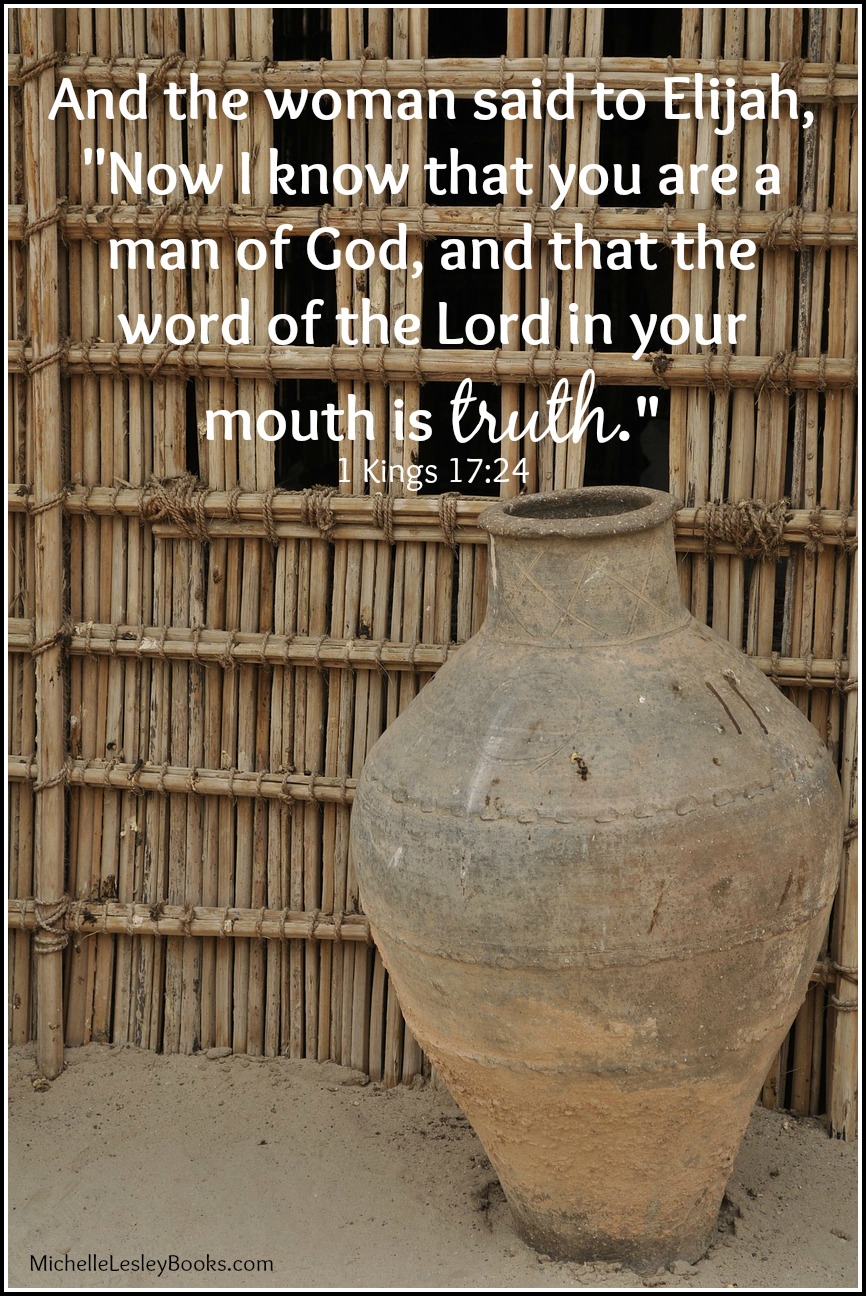
17 After this the son of the woman, the mistress of the house, became ill. And his illness was so severe that there was no breath left in him. 18 And she said to Elijah, “What have you against me, O man of God? You have come to me to bring my sin to remembrance and to cause the death of my son!” 19 And he said to her, “Give me your son.” And he took him from her arms and carried him up into the upper chamber where he lodged, and laid him on his own bed. 20 And he cried to the Lord, “O Lord my God, have you brought calamity even upon the widow with whom I sojourn, by killing her son?” 21 Then he stretched himself upon the child three times and cried to the Lord, “O Lord my God, let this child’s life come into him again.” 22 And the Lord listened to the voice of Elijah. And the life of the child came into him again, and he revived. 23 And Elijah took the child and brought him down from the upper chamber into the house and delivered him to his mother. And Elijah said, “See, your son lives.” 24 And the woman said to Elijah, “Now I know that you are a man of God, and that the word of the Lord in your mouth is truth.”


The Holy Bible, English Standard Version Copyright © 2001 by Crossway Bibles, a division of Good News Publishers.


Questions to Consider:

1. Compare verse 1 with James 5:16-18. What can we learn about prayer from Elijah’s example in these passages?

2. How did God provide for Elijah in verses 2-7? In verses 8-16? In both cases, how did he obtain the food? How did God provide for the widow and her son (15-16)? What does this chapter show us about God as Provider? How might Philippians 4:19 fit with this portrayal of God as Provider?

3. How do the three miracles in this chapter – the control over weather, the creation of food, and the raising of the child – point to the miracles of Jesus? Can you think of similar miracles Jesus performed? Might this explain why some people in Jesus’ time thought he was Elijah resurrected?

4. In verse 24, what purpose did the miracle serve according to the widow? How did Jesus’ miracles serve to confirm His message and His deity?

5. In one sentence, what is the overall theme of this passage?

New Testament, Sanctification, Sunday School

Persecution 101 ~ Sunday School Lesson ~ 10-19-14

persecution101

These are my notes from my ladies’ Sunday School class this morning. I’ll be posting the notes from my class here each week. Click here for last week’s lesson.

Through the Bible in 2014 ~ Week 42 ~ Oct. 12-18
Matthew 8:14-11:30, 12:22-14:36, Luke 8:1-9:17, 11, Mark 4-6, John 6
Persecution 101

Last week we took a look at this pattern:

God—>God calls and trains His people—>God’s people minister the gospel to others

We saw it across various contexts of the Bible: the “macro,” or overall theme from Old Testament to New, the “micro,” or the way God works in our personal lives, and the “messianic,” or the way this pattern applied to Jesus’ own life. This week’s reading was another example of this pattern, the “ministerial,” or the way it applied to Jesus’ and the disciples’ ministry.

In this week’s reading we saw that Jesus’ ministry started with Jesus, Himself. Next He called out and trained His disciples through many parables and healings. Today, we will be looking at the passage where He sends them out to minister the gospel to others. In His final training session before Jesus sends out the twelve, He wants to make sure they’re ready for what they’re about to face.

Matthew 10:16-39

Go Ye Therefore- 5-13 (10:7-8, 5-6, Mark 1:14-15, Isaiah 35:5-6)
Jesus is sending out the disciples. What is He sending them out to do? Verses 7-8 tell us that their ministry was two-fold: first, they were to preach, just as Jesus did (Mark 1):

the kingdom of God is at hand; repent and believe in the gospel.

Second, they were to perform various signs and wonders. Notice that the signs and wonders are secondary to the message of the gospel. Wasn’t the gospel enough? What was the purpose of the miracles? When Jesus perfomed miracles, the miracles were both a fulfillment of prophecy (Is.) to help the Jews to understand that He was the promised Messiah, and they also authenticated His message of the gospel to the gentiles and others who weren’t familiar with the prophecies. Street cred, in other words– if He can do that, what He says must be true, and we’d better listen. The miracles the disciples were to perform were to serve the same purpose– to point to Jesus as the Messiah and to give credibility to the gospel message.

Who were the disciples sent to? Jesus told them not to go to the Samaritans (half Jew, half gentile, as we studied last week) or the gentiles, but “rather to the lost sheep of the house of Israel.” Why? Because He didn’t love gentiles and want them to hear the gospel? Not at all. We saw last week that He had already been to a Samaritan village to preach the gospel. And, of a Roman centurion (a gentile) whose servant He healed, Jesus said, “Truly, I tell you, with no one in Israel have I found such faith,” and went on to say- to an audience of Jews- that there were many gentiles who would make it to Heaven while many Jews would not.

Jesus sent the disciples to the Jews because that was the order God had ordained- first the Jews, then the gentiles. Why?

1. His promise was to the Jews, not the gentiles. God had promised that the Messiah would come through the Jews and to the Jews. All of Jewish history and ceremony had been pointing to this moment in time. God had been laying the ground work through types and shadows and prophecy for millenia. It was only right that Messiah should be revealed to them first.

Imagine if you’ve been promising your child since the day he was born that when he turned 16 you’d buy him a car. Over the years you talked about it together, looked at pictures, visited car lots, and finally picked out the perfect one. Then, on the day of your son’s 16th birthday, you run into a random 16 year old on the street and buy him a car first. Even if you immediately thereafter drove your son to the car lot to buy him his car, would that be the right way to do things?

2. At this point in history -Jesus’ earthly ministry through the birth and spread of the church- we’re looking at very rapid Kingdom growth. Teachers and preachers are going to be needed, like, fast, to shepherd these thousands of new Christians, most of whom are clueless gentiles.

If you work at a computer company and you’re launching a completely new type of software that you want to make accessible to as many people as possible as fast as possible, are you going to hire field representatives who have a professional background in computers or someone who’s never used a computer before?

Same idea here. The Jewish people already had a background in “messiah-ology.” Once saved, they could be up and running as teachers and pastors much faster than your average gentile.

Good News, Bad News- 14-25 (John 3:19)
God is sending out His people (the disciples) to tell His people (the Jews) that He has kept His promise and sent Jesus, the long awaited Messiah. Plus, they’re going to heal a bunch of people and do other miracles. What Jew in his right mind wouln’t be overjoyed at this awesome news, right?

So, what’s all this stuff about the disciples being hated and persecuted and charged with criminal activity? That’s not the way people usually respond to someone who’s bringing them good news. But God’s news isn’t good news when you don’t love God, and these Jews didn’t. That’s why Jesus referred to the people He was sending the disciples to as “lost sheep.” They were just as lost as any gentile.

1. They loved darkness rather than light (Jn.). The good news of the gospel is bad news when you love your sin and don’t want to give it up, because the gospel requires us to forsake our sin -all of it- actually admit that we’re scum, and fling ourselves on the mercy of Christ for forgiveness. It’s only by the gift of God’s grace that we’re able to do that.

2. They wanted the idol-messiah they had fashioned in their minds, not the Messiah of Scripture. Many in Israel were expecting and/or hoping for a messiah who would come in, conquer Rome, sit on David’s throne, re-establish the theocracy of Israel, and bring them back to prominence and prosperity. In other words, just like the woman at the well from last week, they wanted the temporal stuff, not the eternal. A Christ who would set them free from Rome and poverty, not a Christ who would set them free from sin.

That’s why, to many people the disciples preached to, the good news was bad news.

Fear Not- 26-39
Jesus is delivering a pretty sobering message here. When the disciples preach the gospel (now, and in the early church era), they’re going to be: shunned (14), turned over to the courts (17), flogged (17- and they’re not too far from seeing this happen to Jesus), dragged in front of kings and governors (17), betrayed to the enemy by family members (21), hated by all (22), fleeing for their lives (23), slandered (25), executed (28), and alienated from their closest family members (35-36). That’s a tough row to hoe, but Jesus wants them to understand that what many of the Jews are expecting -Messiah will re-establish the kingdom of Israel and bring peace (34)- isn’t reality, and when they tell people that, things are going to get ugly. He hasn’t come to bring earthly peace, instead, standing with Christ will be the hardest thing they’ve ever done.

But what is their response to this persecution supposed to be? Are they to give up, retaliate, cower? No, Jesus tells them to do two things:

1. Don’t be afraid of them (26). The worst thing they can do is kill you. If you’re going to be afraid of something, fear God and fear denying Him (28).

2. As long as you’ve got breath in your body, you preach the gospel. You preach it loud and you preach it long (27). Do. not. stop. no matter what.

Why? Because God loves you. He values you. He’s going to take care of you. And He’s in control.

The Demands of Discipleship Today
There are Christians today in countries like North Korea, Syria, Iraq, Nigeria, and other areas, who understand all too well what Jesus was warning the disciples about. They experience the same things on a daily basis. Those of us born in America have very little grasp of just how blessed we are to be able to worship God openly, freely, and without much real persecution.

But the times, they are a-changin’. Fast.

If you’ve been paying attention to the news over the last couple of years, you’ve seen stories about the Bible, prayer, and Christianity being systematically removed from and prohibited in public places. We’ve seen Christian bakers, photographers, and t-shirt company owners sued for declining to provide their services for homosexual “weddings,” rallies, and other events. Just last week, we saw Houston officials subpoena sermons and other materials from pastors in an effort to bully them into silence about their homosexual agenda.

Real persecution is coming to America at breakneck speed. And in the same way that the disciples were persecuted by both gentiles and the “lost sheep of Israel”, we will face persecution by both the world and those who claim the name of Christ, but actually follow a messiah-idol of their own making. Those of us who stand with the true Christ of Scripture and His word will be shunned and rejected by our closest family members- even those who claim to be Christians. We will be hated and slandered. We will be arrested, prosecuted, and even executed by both lost people and church people.

But Christ’s message to us is the same as it was to the twelve. Keep preaching the gospel. Preach it loud, preach it long, and preach it with your dying breath. Love Me more than your family, more than your reputation, more than your very life, because I care for you. How could we fail to stay true to Him after all He has done for us?

Prayer, Sanctification, Worship

Great Expectations

expectgreatthings-necklace (1)

Do we expect too much from God? Is that even possible?

No.

Yes.

Well, kinda.

You see, I’m not talking about expecting something and God being unable to deliver it. That’s just plain silly when talking about our omnipotent God. No, what I’m talking about is whether or not the expectations we come up with are grounded in biblical reality.

What do we mean when we talk about “praying expectantly” or coming to a time of corporate worship, study, or prayer, and “expecting God to do something”? Just what is it we are expecting God to do?

Could it be that He’s already doing something and we’re just not seeing it?

Sometimes, when we read God’s word, we expect God to do something just as “big” as He did in Moses’, Paul’s, or some other Bible hero’s life. We forget that the Bible is sort of like a “highlight reel” of the events in the lives of a handful of people that God drafted to be part of His visible activity at that moment in history.

We focus on the moments Moses had at the burning bush or walking through the Red Sea, and that’s what we want, too. r643167_4468740But we forget that Moses’ life wasn’t like that every day. We forget about the eighty years he spent wandering around the desert, half in the day to day monotony of shepherding on the back side of Midian, the other half, wandering around the wilderness with the people of Israel.

Eighty years of nothing special. Day after day of ordinary. Week after week of God not “showing up” and doing something amazing. Eighty years. That’s a lifetime for most of us.

Was God any less at work in Moses’ eighty years of desert thwandering than He was when He gave Moses the Law or spoke to him face to face or sent manna? Of course not. During those days, God was protecting Moses from the heat and wild animals, providing food and shelter for him, blessing him with a wife and children, directing his steps, teaching him obedience and trust.

Just like He does for us.

Have you read a Bible passage this week that allowed you to see more of God’s glory? God is doing something. He’s revealing Himself to you.

Are you praying for someone’s salvation? God is doing something. He’s working on the heart of that person.

Did you have a place to sleep last night and food on your table today? God is doing something. He’s providing for your needs.

Do you leave church on Sundays having been fed the truth of God’s word by your pastor? God is doing something. He’s growing you to spiritual maturity.

Is it possible that we’re expecting God to do something in our lives that isn’t in His particular plan for us? You aren’t Moses, and neither am I. Neither were the million or so other Israelites Moses led out of Egypt, and neither have the billions of other people been who have inhabited earth since Creation. Moses was Moses. You are you. God doesn’t have the same plan for your life He had for Moses’ life.

And, by the way, have you ever noticed that most of the people in the Bible through whom God did something “big” were not expecting it or asking for it? Moses wasn’t expecting God to show up in that burning bush. David wasn’t asking God to do great things in his life when Samuel dropped by to anoint him as the next king. Both of them were hanging out with the sheep when God called them. Paul thought he was already an awesome servant of God when he got knocked off his high horse. Mary wasn’t expecting to be expecting. She was just a teenage girl growing up and learning how to run a household.

1 Thessalonians 4:10b-12 says:

But we urge you, brothers to do this more and more, and to aspire to live quietly, and to mind your own affairs, and to work with your hands, as we instructed you, so that you may walk properly before outsiders and be dependent on no one.

That’s what all of those Bible characters were doing when God chose them. Just regular people living regular lives doing regular work. Just like billions of other people through whom God has not chosen to do anything big and spectacular.

keep-calm-god-is-at-workBut that doesn’t mean God hasn’t been “doing something” in all of our lives. In fact, the vast majority of the work God does in our lives every single day goes unnoticed and unappreciated.

So, instead of setting our expectations on those very rare “wow factor” works of God that seem so appealing, maybe we should be asking Him to open our eyes to, and make us thankful for, all of the things He’s already doing in our lives. Instead of having great expectations of things that God has never promised us, maybe we should ask Him for, and expect Him to, do what He has promised:

Forgiveness for our sin

Christ-likeness

Provision for our needs

Endurance

The ability and opportunity to help others

Faithfulness

Humility

Patience

The opportunity to share the gospel

Because “all the promises of God find their Yes in him.” You can expect it.