Apologetics, Bible

Without Apology: 7 Reasons Not to Be Ashamed of the Hard Parts of the Gospel

7-not-ashamed

I am not ashamed of the gospel…

Romans 1:16 is such a great verse, isn’t it? And one of the things that’s great about it is that we can all agree on it. I mean, no self-respecting Christian would dream of saying she’s ashamed of the gospel, would she? It’s a rallying cry for evangelism and for standing against persecution. Of course we’re not ashamed.

In theory. But in practice?

You see, the gospel is the good news of salvation. And, while we don’t tend to share the entire Bible when we share the gospel with someone, the good news starts in Genesis with a holy God who created a perfect world, and moves on to the first people who messed everything up with their sin, a whole bunch of subsequent people who couldn’t be faithful to God and keep His Law, Christ and His redemption of sinners, and the Revelation of the hope of His return at the end of time. So, “the gospel” really stretches from the front cover of your Bible to the back cover.

Are there any parts of it you shy away from in evangelism, discipleship, or teaching?

What about the atheist you’re witnessing to who denigrates your God for committing genocide in the Old Testament?

Were you afraid to speak up the last time you were the only Creationist in a room full of evolutionists?

Have you ever seen some poor pastor or male teacher tiptoe his way through the minefield of a passage on marital submission or the biblical role of women in ministry lest the wrath of church ladies befall him?

Are you reluctant to be known as someone who believes and will unequivocally say that homosexuality and other deviant sexual behavior is a sin?

Hey, we’ve all been there and failed. These are tough passages for sinners to hear, after all! When they come up, we should certainly approach them wisely and lovingly with people, but we should take care never to wish these things (and others) weren’t in Scripture, feel embarrassed about them, apologize for them, or act as though we have to make excuses for God about them. We need to be just as willing, bold, kind, and comfortable saying, “The world did not evolve, God created it,” and “You must repent of homosexuality along with all your other sin,” as we are saying, “God is love.” Why?

1. The Bible is God’s word.

Scripture is the very words of the God of the universe. It’s not a storybook or a policy and procedure manual dreamed up by men. Scripture is God speaking to us. To be ashamed of any part of His word is to be ashamed of Him, what He has done, and who He is. We dare not.

2. The Bible glorifies God.

The mere existence of Scripture brings honor and glory to God. No other god has spoken personally, so magnificently, and in a living and active book, to his people. The Bible brings glory to God when His people believe and obey it. We exemplify His goodness and holiness to a watching world. And even when the Bible isn’t believed and obeyed, God is glorified by showing us in His word that His way is right and perfect and man’s way is not.

3. The Bible is perfect.

God didn’t leave anything out of the Bible or put anything extra in that shouldn’t be there. The Bible is perfect just the way it is. God doesn’t need us to help Him out by editing it. If He wanted it to say something different, it already would.

4. The Bible is right.

When God’s word says something is a sin, it is right. When God’s word tells us He, in His holiness, did something we think is unfair or distasteful, it is right. When God’s word requires us to do something, it is right. When someone balks at what the Bible says, it’s not the Bible that’s wrong. It’s that person’s sinful flesh that thinks it knows better than God what is good, appropriate, loving and fair. If a person comes up against the Bible, the Bible does not bend. That person bends. The knee. To God. If you are standing on the rightly divided word of God, you can be confident that you are in the right because the Bible is right. There’s no need for reticence.

5. The Bible is a blessing.

If you’ve ever studied the history of how you got the Bible sitting on your coffee table, you know just how amazing it is that you own one. Thousands of years, scores of writers, so many people who were martyred for penning it, protecting it, and translating it. How could we be ashamed of such a precious gift from God Himself?

6. The Bible is good for us.

God put those tough passages in the Bible because they’re good for you. And they’re good for the person who’s foaming at the mouth over the one you’re trying to explain to her, right now, too, she just doesn’t know it yet. God is a kind and loving Father who always does what is best for us. Those difficult passages would not be in the Bible if God didn’t want them there to benefit us in some way.

7. The Bible is useful.

 I can’t say it better than Scripture itself does:

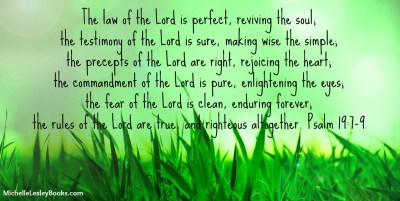
All Scripture is breathed out by God and profitable for teaching, for reproof, for correction, and for training in righteousness, that the man of God may be complete, equipped for every good work. 2 Timothy 3:16-17

God uses every verse of Scripture – even the hard ones – to save us, grow us, conform us to His will, equip us, and reveal Himself to us. Why would we deny those saving, growing words to people who desperately need to hear them by shying away from them just because they’re difficult to say or unpleasant to hear?

Steve Lawson once said, “The Bible is not hard to understand. It is just hard to swallow.” And he’s so right. It’s not difficult to understand the concept that wives should submit to their husbands or that the God who sovereignly gave people life has every right to take it away. What’s difficult for us is to humble ourselves and cede control to Someone else. We think we know best. We want to run things and make the rules. We don’t want to submit to God’s authority.

In the end, there really aren’t any tough passages. There are only passages that come up against tough hearts. Tough hearts that need to be broken by the gospel, that they might repent of their sin and be forgiven by a great and merciful God.

And that’s nothing to be ashamed of.
ps-19-7-9

Creation, Evolution, Throwback Thursday

Throwback Thursday ~ Tru Dat

Originally published September 2, 2013tru dat

“God is not man, that he should lie,” Numbers 23:19

“God, who never lies,” Titus 1:2

“It is impossible for God to lie,” Hebrews 6:18

God tells us in Genesis 1 (and reiterates it elsewhere in Scripture) that He created the world by speaking everything into existence. There’s nothing that exists that came into being apart from His creating it (John 1:3). He created all plant and animal life “according to their kind” on successive days of creation, and He created man separately and in His own image. This does not allow for the (macro) evolutionary idea that bacteria changed into an animal, which changed into another kind of animal, which changed into another kind of animal, which changed into man.

As Christians, we are called to believe God’s word simply by virtue of the fact that He said it. As Christians, we can also believe secular science and history insofar as it supports, or does not conflict with, God’s word. But there’s another good reason to believe God over man:

God doesn’t lie, and He’s never wrong.

Man does lie. Man is frequently wrong.

Which makes more sense, purely from a logical standpoint? To cast your lot with Someone who doesn’t lie and is never wrong, or to cast your lot with someone who does, and is?

God doesn’t lie. When He tells us something in His word, we can trust it, regardless of what man may say to the contrary.


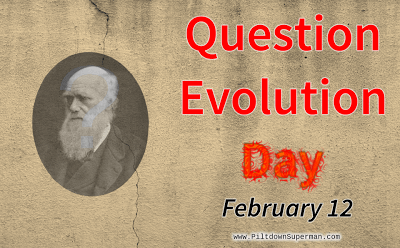
 Today (February 12, 2015) is Question Evolution Day.

QE_Day_1_12_2012_C

“Question Evolution Day has several purposes. One is very basic, to support people who want to say, “I don’t believe in evolution, here are my reasons…” A second is to show people that there is indeed scientific evidence refuting evolution and supporting creation. Third, we hope to prompt people to consider evidence against evolution and supporting creation that they may have not known about before. Another purpose of QED is to equip Christians with resources so they can confidently stand up for the faith.” 

Click here for more great information on
Creation science and Question Evolution Day.

Bible, Law- Old Testament, Old Testament, Sunday School

Loving God’s Word: Psalm 119 ~ Sunday School Lesson ~ 6-8-14

PicsArt_1402283595984

These are my notes from my ladies’ Sunday School class this morning. I’ll be posting the notes from my class here each week. Click here for last week’s lesson.

Through the Bible in 2014 ~ Week 23 ~ June 1-7
Psalm 119:89-176, Song of Solomon 1-8, Proverbs 1-15
Loving God’s Word: Psalm 119

Last week and this week, we read through Psalm 119, the longest psalm and the longest chapter in the Bible. Today, I thought we would go a little “old school” — “old” as in “Old Testament.” It was not uncommon at various times of worship in the temple or synagogue for the people to listen to lengthy portions of Scripture being read. (In fact, when we get to Nehemiah 8, you’ll have a completely new perspective on what constitutes a “lengthy” passage of Scripture or a “long” sermon!). But it’s an aspect of worship and teaching the church has lost as the years have gone by. So today, we’re going to start at verse 1 of Psalm 119 and see how far we can get. I have some brief notes on some of the verses/sections that I’ll share with you, and I encourage you to ask questions and comment as we read.

Note to blog readers: This is one of those “ya kinda had to be there” lessons. I’m happy to report that we ended up making it all the way through the chapter and even had some great discussion along the way! 


Psalm 119

1-8-The importance of obedience.

9-16- The importance of God’s word. We cannot be obedient to Him without His word, because His word tells us what He requires of us.

14, 16- The psalmist calls God’s word a “delight”. This was at a time when most of his “Bible” consisted of the Pentateuch, which was mostly law. He delighted in it, not primarily because of the do’s and dont’s, but because these were the words from the mouth of God. Also because the non-law portions reflected the greatness, power, mercy, and other attributes of God.

20 (John 1:1)- “My soul is consumed with longing for your rules at all times.” The psalmist has a genuine love for, and godly obsession with, God’s rules/statutes/ordinances/commands. It is not just a love for the rules themselves; a desire to obey them is inextricably interwoven throughout that love. The reason the Christian has a natural love for, and obsession with, God’s word is that Christ IS that word (John 1:1)

25-32- The psalmist realizes that only God’s word gives life, strengthens the sorrowing soul, and transforms the heart and behavior, therefore, he “clings” to them. He asks God to teach him His ways and give him understanding of His word.

32 (John 8:34-37)- “I will run in the way of your commandments when you enlarge my heart!” (for you set my heart free). Rather than seeing God’s law as confining or burdensome, the psalmist says they set his heart free. This is one of the core differences between the genuinely regenerated and those who are not. Christians, while we may struggle to understand and obey God’s word at times, know that it is His word that sets us free (if the Son sets you free, you are free indeed- John 8- This is, in fact, why we struggle to obey it instead of struggling against obeying it.). Lost people see God’s word as confining, enslaving, a prison. This is why, when coming face to face with God’s word, they rebel against it.

59- 60- “When I think on my ways, I turn my feet to Your testimonies.” The solution for sin is found in God’s word. Our shame over our sin should drive us TO His word, not away from it.

63- We make our friendships with those who keep His law.65-72- This passage extols God’s goodness even in times of hardship and attack. God’s word is the psalmist’s comfort and reassurance. Even in difficult times, he values God’s word more than great riches.

75- “In faithfulness You have afflicted me” The psalmist isn’t blaming God or accusing Him of wrong. He knows that what God does, He does for our best. He has already, in the preceding passage shown that affliction was valuable in teaching him to keep God’s commands. He goes on to say in v. 92 that he would have perished in his affliction if it had not been for his delight in God’s word.

81-88- Even when we know God is good and He afflicts us in faithfulness, it gets old and wearisome. The psalmist (88) asks God to ease up, not for his own personal comfort or gain, but so that he will be better able to keep God’s word.

97-104 (Proverbs 1:7)- This passage echoes what we studied in Proverbs this week about wisdom. “The fear of the Lord is the beginning of wisdom.” (Proverbs 1) The psalmist shows us that the knowledge of God’s word and the wisdom gained from it surpasses any other form of knowledge or wisdom: the craftiness of the enemy (98), academic knowledge (99), and the wisdom of age and experience (100).

129-136- The psalmist’s deep love for God and His word is palpable. It runs so deep he can scarcely convey it, even with so many descriptions in so many verses. He loves the Lord so much that it breaks his heart for others to continue in sin. This is the love that should fuel our evangelism. God’s testimonies are wonderful (129). They enlighten and give wisdom to even the simplest person (130), yet people throw them away in favor of their sin. It is incomprehensible to the psalmist.

137-144- God has laid down his precepts in righteousness. They are righteous and He is righteous.

158 (1 Corinthians 6:9-11)- We often look at “the faithless” (lost people) with disgust because they do not keep God’s commandments, but we must keep in mind that that’s what lost people do. (That’s what we did before we were saved!- 1 Corinthians 6) They are slaves to sin and need Jesus to set them free.

As we continue to study God’s word,
we will grow to love Christ more and love His word more.

Open my eyes that I may behold wondrous things out of your law. Psalm 119:18

Sunday School, Trust

Looking Into the Mirror of Christ ~ Sunday School Lesson ~ 4-27-14

sunday school

These are my notes from my ladies’ Sunday School class this morning. I’ll be posting the notes from my class here each week. Click here for last week’s lesson.

Through the Bible in 2014 ~ Week 17 ~ Apr. 20-26
Psalm 121, 123-125, 128-130, 6, 8-10, 14, 16, 19, 21, 43, 45, 49, 84-85, 87, 73, 77-78,
2 Samuel 1-4, 1 Chronicles 1-5
Looking Into the Mirror of Christ

What is the purpose of a mirror? It’s for seeing what we look like on the outside. As women, we often look in the mirror to make sure our hair is behaving, to see that our make up is straight, to find out how we look in a certain outfit. But we MH900442449also look into “mirrors” to see what we look like on the inside. Often, the mirrors we turn to in times of trouble or use to measure our self worth—how many friends we have, what others say or think about us, what we think about ourselves, whether people feel sorry for us or compliment us, even the number of “likes” we get on a Facebook status—are like the mirrors in an amusement park fun house. We never get a true reflection of who we are on the inside because the mirror itself is distorted. The only way to get a true reflection is to take our eyes off the distorted mirrors and put them on the perfect mirror of Christ and His word.

Background
We usually think of the book of Psalms as having been written by David, but, in fact, of the 150 psalms, David wrote 73, 50 are anonymous (some possibly written by David), and the others were written by other authors. Psalms was the “hymnal” of biblical times, and, indeed, there are churches even today whose only worship songs are psalms set to music. As with our own worship music, Psalms covers a variety of topics from creation to the attributes and mighty works of God to laments and requests from God. Today, we’re going to take a look at some of the more personal psalms from different authors in which the psalmist is crying out to God about his own situation.

Psalm 121, 123

What kind of mirror does the psalmist hold up? (121:1-2, 123:1-2)
When we look into a regular mirror, we see ourselves reflected back. When we look into one of those fun house mt-haunted-mansion-nathan-timmirrors I mentioned, we see a distorted image of ourselves reflected back. But there’s another kind of mirror we can look into. Have you ever been on the “Haunted Mansion” ride at Disney World? At one point in the ride, you find yourself facing a mirror, but what you see reflected back is a hologram (a “ghost”) of one of the people who used to live there.

Where does the psalmist direct us to look in these two passages? To the Lord. Where do we find the Lord? In the mirror of His word. When we look into the mirror of the Word, what do we see? Ourselves? No. Kind of like that “Haunted Mansion” mirror, we see the Lord reflected back in all of His goodness and glory. Our eyes are not to be on ourselves – whether we measure up, whether we’re important enough or good enough or worthwhile human beings— but on the Lord.

What do we notice about the Lord’s reflection?

The Lord is sufficient in all things (121:2-4, 123:1)
He made heaven and earth (121:2), so He is all powerful (omnipotent) and capable of rightly handling all situations. He neither sleeps nor slumbers (121:3-4), so He is all knowing (omniscient). He is aware of and involved in every aspect of life. He is “enthroned in the heavens” (123:1). What is the rank of someone who is “enthroned”? A king. A king has sovereign jurisdiction over every inch of his kingdom. He has the final word in all things, and no one outranks him. What comprises God’s kingdom? The universe. He has perfect, final, and sovereign jurisdiction over every inch of the universe, and no one outranks Him. He is complete and sufficient. This is why we need only look to Him for all things, including a right view of ourselves.

Because He is sufficient in all things, the Lord is our help, stability, protection, provider, and mercy for the needs of our souls (121:1, 3, Psalm 62:2, 121:5-8, 123:2-4)

The Lord is our help (121:1). Notice that the psalmist does not qualify that statement. It is blanket, all encompassing. The Lord is our help in all situations. Others may turn away or be incapable when we need help. He will not.

The Lord is our stability (121:3). While the storms of life may rage around us and try to blow us over, He holds us firmly to Himself, the rock of our salvation (62:2). People are not stable. They can let us down and fail to be there for us. God will not.

The Lord is our eternal protector (121:5-8). He keeps us through the difficult times. Notice that the psalmist does not say that God will do away with the sun, the moon, evil, or even death, but that God will be our shade, he will protect from destruction by the sun and moon, and that He will keep our lives. He will keep our going out and coming in – every step we take—from this time forth and forever more. People are not capable of preserving us in this way, but God is.

The Lord is our provider (123:2). Just as an earthly slave would look to his master to provide everything: food, shelter, clothing, health care, etc., we are to look to and depend on our kind and gracious Master who never fails to provide us with all we need. It is not the job of friends or family to provide us with self worth or fulfill our need for emotional support. That is God’s job, and He does it perfectly. That is why we look to Him for those things.

The Lord is our mercy (123:2-4). God sees all aspects of our lives, and He alone is able to provide us with merciful relief from difficult situations, or merciful grace to see us through those situations. And He’s not only capable of doing so, He will do so. Notice (2) that the psalmist doesn’t say “our eyes look to the Lord…hoping, perchance, that He might have mercy,” but “till He has mercy.” The psalmist is confident that it is God’s intention to show mercy. People cannot alleviate our circumstances or carry us through them, nor would they always be willing to do so even if they could, in fact, sometimes the people we would look to in difficult times can actually be the cause of those difficult times (4). Only God can mercifully take away or see us through tough situations.

As we can see, people are often undependable or incapable of giving us what we need emotionally, and completely unable to provide for our spiritual needs. This is why God’s word never directs us to look to the mirror of ourselves or to others for our inner needs or fulfillment, but rather to the mirror of His word and the reflection of Christ. Only God is capable of being, and wants to be, our sufficiency in all areas of life. We must look to God and depend on Him for these things.

Psalm 77

In times of trouble, we look back to the mighty deeds of God in the past.
The first nine verses of this psalm are a lament. Asaph doesn’t explain exactly what’s going on in his life—and maybe that’s beneficial to us because we can all relate to what he’s feeling here regardless of the specific circumstances—but he’s going through a really gut-wrenching time.

Where does Asaph turn? He starts out determined to cry out to the Lord over his situation. He knows in his mind that the Lord “will hear me” (1), but as he begins to pray, he takes his eyes off the Lord, begins to focus on the problems themselves (3- I moan…my spirit faints), and gets overwhelmed. Notice that when he looks back to the mirror of better circumstances (5) or happier times (6- “my song in the night”) or looks to himself (6- let me meditate in my heart) for the solution to his troubles, he only despairs more (7-9).

Finally, Asaph realizes that the only thing that will help is to focus on the Lord Himself (9- His hand), His power (9- “Right hand” is a metaphor for strength), and His deliverance in years gone by (9- the years). He looks into the mirror of God’s steadfast faithfulness.

Asaph doesn’t just recount the details (11- deeds) of what God has done in the past, he also recalls that God’s works evoke a sense of wonder (11,14) for both those who witnessed them and those who think back on them. And Asaph doesn’t merely recall and regurgitate the details of these deeds, he ponders them. He meditates on them (12). He turns them over and over in his mind, considering how they reflect God’s might (12, 14), His holiness, greatness, and superiority to other gods (13). Asaph thinks about how God redeemed His people (15) and would redeem him from his troubles, God’s 1185602_570889882972492_1155182179_npower over nature (16-18) and His power over Asaph’s situation. And even though Israel couldn’t see God Himself, He still led them (19-20), the same way he would lead Asaph, though unseen. If God was powerful enough to redeem Israel, have power over nature, and lead Israel, He was powerful enough to handle Asaph’s situation.

When we face difficult times, Asaph sets a great example for us. We look not to ourselves, others, or circumstances, we look to God, determined to cry out to Him. We ponder His wonder, holiness, power, and greatness. We look at what He has done in the past in His word and in our own lives, knowing that if He was powerful enough to handle those situations, He is powerful enough to handle the present one. We remember that as God has been faithful in the past, He will continue to be faithful in the future.

Psalm 130

There is hope in the Lord (1 John 1:9)
Finally, we turn to the Lord, because in Him, and in no other, is hope.

There is hope of His forgiveness (2-4). When we cry out to God for mercy, He has promised to forgive us (1 John). With Christ, we do not have to stand hopeless and condemned in our sin.

There is hope in His word (5). Not only can we find hope in God’s great and mighty deeds from the past in His word, but we can also find hope in the attributes of God described by the Bible (His goodness, holiness, mercy, compassion, etc.), and in the promises He has made in His word (He will provide, He hears our prayers, He will never leave us, etc.), because we know He will never break them. We cannot find this kind of perfect hope in others.

There is hope because the Lord is trustworthy (5-6). “I wait,” the psalmist says, “more than the watchmen for the morning.” The watchmen knew the morning was coming. How much more does the psalmist know that the Lord will answer him with hope?

There is hope in God’s steadfast love and His plentiful redemption (7-8). The psalmist wasn’t hoping for fleeting things like riches or temporary happiness. He was looking at the big picture. The spiritual picture: God’s eternal love and His redemption from sin. This is our hope as well.

As we face difficult times, like the psalmist, we must keep our eyes focused on the Lord as He is reflected in the mirror of His word, not on our own reflection or the way others reflect us. The Lord is the only one powerful enough to give us the help, stability, protection, provision, and mercy to meet the needs of our souls. Others will let us down, but as we look to God’s faithfulness in the past, we find hope for the present and the future.

Creation, Evolution

Tru Dat

tru dat

“God is not man, that he should lie,” Numbers 23:19

“God, who never lies,” Titus 1:2

“It is impossible for God to lie,” Hebrews 6:18

God tells us in Genesis 1 (and reiterates it elsewhere in Scripture) that He created the world by speaking everything into existence. There’s nothing that exists that came into being apart from His creating it (John 1:3). He created all plant and animal life “according to their kind” on successive days of creation, and He created man separately and in His own image. This does not allow for the (macro) evolutionary idea that bacteria changed into an animal, which changed into another kind of animal, which changed into another kind of animal, which changed into man.

As Christians, we are called to believe God’s word simply by virtue of the fact that He said it. As Christians, we can also believe secular science and history insofar as it supports, or does not conflict with, God’s word. But there’s another good reason to believe God over man:

God doesn’t lie, and He’s never wrong.

Man does lie. Man is frequently wrong.

Which makes more sense, purely from a logical standpoint? To cast your lot with Someone who doesn’t lie and is never wrong, or to cast your lot with someone who does, and is?

God doesn’t lie. When He tells us something in His word, we can trust it, regardless of what man may say to the contrary.