Evangelism, Missions

Missions Monday: Buy a Book ~ Be a Missionary

I’m just going to come right out and say it:

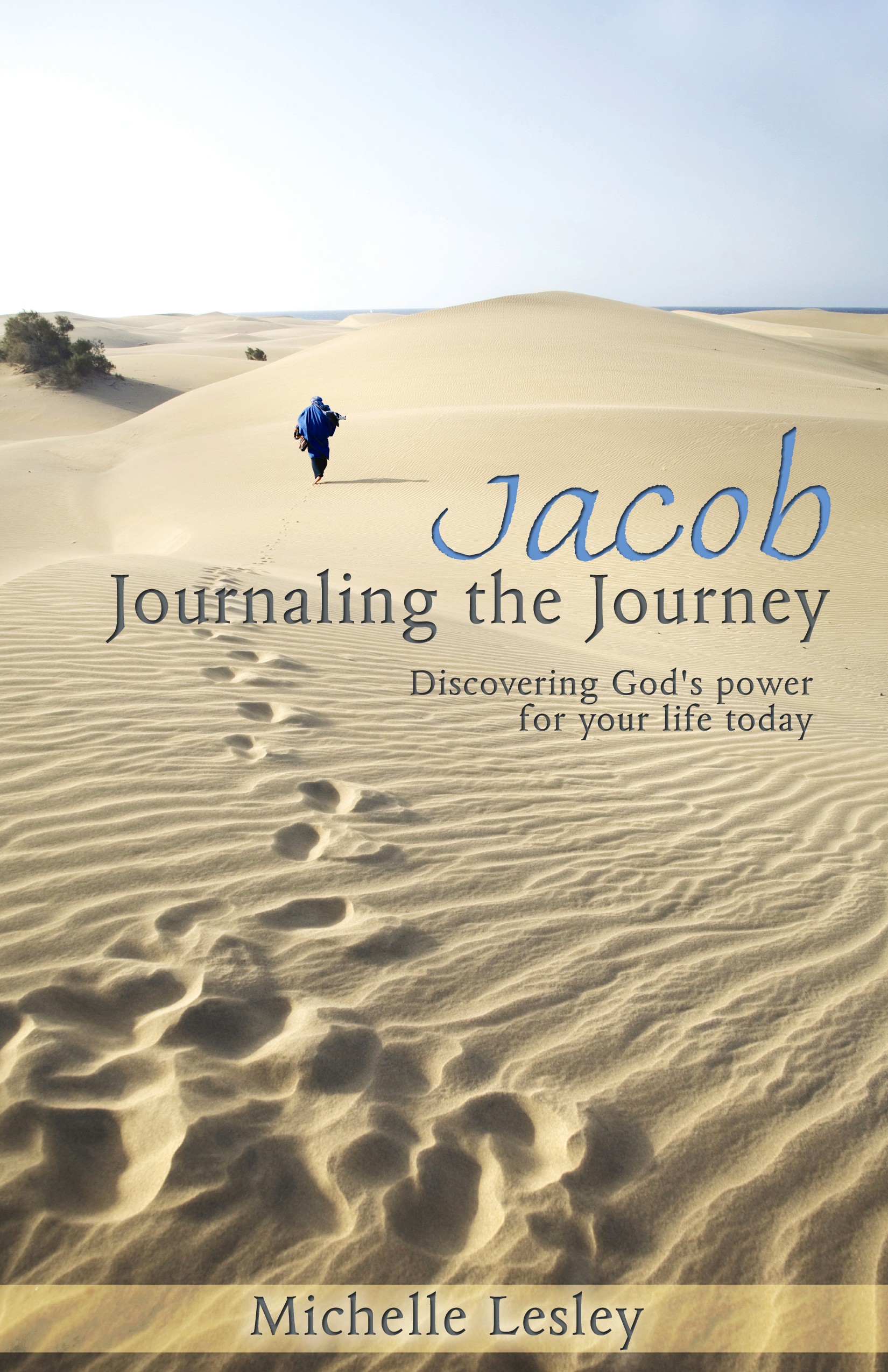
I want you to buy my book. I want you and your church and any other Christian organization you’re a member of to buy as many copies of my book as you possibly can.

Why?

Well, it’s certainly not because I want to become rich and famous and have a monopoly on Bible study sales at your local Christian bookstore. I really couldn’t care less about that.

And it’s not because I want to make a lot of money for my publishing house, or feed my ego, or prove myself to people, or score some sort of brownie points with God.

I want to be a missionary. And I want you to come with me.

How can buying my book turn you into a missionary?

Be a missionary to yourself:
If you’ve never turned from your sin and trusted in Christ’s death on the cross to pay the penalty for your sin, you’ll find out all about that in my book (and FYI– you do NOT have to buy the book for that. E-mail me at michellelesley1@yahoo.com, and we’ll chat, or click on the video “Good News!” on the side bar.) YOU are your first mission field.

If you have been born again, buy this book and use it to study God’s word so that He can build you up into an even mightier woman of God than you already are. Let Him turn you into a praying, studying, praising, worshiping, Gospel-sharing machine!

Be a missionary to those closest to you:
Give Jacob as a gift to someone who needs to know Jesus as Savior–a friend, your child’s teacher, your beautician… Give it to a Christian friend or loved one to help her grow in her faith. Give copies to your local battered women’s shelter. Start a lunchtime ladies’ Bible study at work. Invite the women of your neighborhood to study Jacob in a small group in your home.

Be a missionary to those far away:
All of my profits from the sale of this book–ALL of them- I am personally not making a penny from book sales– are going to the International Mission Board to reach an Unreached People Group in the Middle East with the Gospel of Jesus Christ. These are people who have never heard the name of Jesus or that He is the only way they can be forgiven of their sin and escape an eternity in hell. (Find out more by clicking the UPG tab at the top of this page.)

You can also buy copies to send with missions teams from your church to distribute to the people they’ll be ministering to, or ship them to an overseas church that your church supports.


And all you have to do is buy a book.


1 John Bible Study

Am I Really Saved?: A First John Check Up ~ Lesson 1: Introduction

1 John Study

Today, we’re taking a brief break from our regular Wednesday’s Word format. For the next (approximately) six to eight weeks, we’ll be studying the book of 1 John.

If you’ve ever wondered whether or not you’re really saved, think a loved one might be a false convert (someone who thinks she’s saved but isn’t), or are wondering about that “Christian” author who keeps promoting unbiblical ideas, you’ll find that 1 John has the answers to a lot of your questions.

So let’s dig in and get those questions answered. There’s just one ground rule- you must read the entire text of the chapter of 1 John we’re dealing with in each lesson. (Don’t freak out, though, the longest of the five chapters is chapter two, weighing in at a lightweight 29 verses.) This isn’t going to be a line by line study. We’re going to focus on the “Am I Really Saved?” check points in each chapter. So, you’ll need the entire chapter for context, plus, it’s a phenomenal book and I don’t want you to miss any of it. Ready?

Am I Really Saved? A First John Check Up
Lesson 1: Introduction
Please Read: 2 Corinthians 13:5; Matthew 7:21-23;
1 John 1:1-4, 5:13

Our relationship with Christ can be a hard one to quantify. It’s not like a big red “C” for “Christian” appears on our foreheads when we repent of our sin and trust Christ for salvation. We look the same, we talk the same, we live in the same place. We can’t even trust our feelings to validate that we’ve truly been born again.

So sometimes, we’re left wondering, “Am I really a Christian? How can I know for sure?” Those kinds of thoughts can produce a lot of anxiety. But God doesn’t want us to worry or live in constant fear that we don’t belong to Him. He’s very clear that He wants us to know for sure, one way or the other.

How can we know? Second Corinthians 13:5 tells us that we need to examine our hearts, test ourselves, to see whether we’re in the faith. As Christians, we use God’s word as a measuring stick for our salvation, not a prayer we once prayed, an emotional or spiritual “experience” we once had, baptism, church membership, being a “good person,” or external “Christiany” behavior, activities, or knowledge. Remember, Jesus said that there will be many people who claim to be Christians and look like Christians on the outside whom He will turn away from Heaven on the day of judgment because He does not know them as His own. So, maybe the people John was writing to had some of the same questions and anxieties about their salvation that we have about ours.

Background:

First John is the first and longest of three brief epistles, or letters, written by the apostle, John. You might remember John – along with his brother James – as one of the “sons of thunder,”or “the disciple whom Jesus loved.” Originally a fisherman, John became one of Jesus’ “inner circle” (with his brother James and Peter) of disciples. John was the longest living of the original twelve disciples, and is believed to be the only one of the twelve who was not martyred for his faith in Christ (though he was eventually exiled). John also wrote the gospel of John and the book of Revalation.

First John is classified as a “general epistle” and was probably written circa 90-95 A.D., toward the end of John’s life, to the churches he shepherded in Asia Minor. It is likely that these churches were encountering the heresy of gnosticism, which may have been why they needed a little refresher course in salvation, and which John seems to combat in this epistle. In 1 John 1:4 and 5:13, John personally explains two of his reasons for writing the epistle.

Questions to Consider:

1. In 1 John 1:1-3, which words and phrases indicate that John knew Jesus and was an eyewitness to His ministry? Why would his eyewitness testimony have been important to the churches he was writing to?

2. What were some of the things John witnessed and learned from Jesus that transformed Him from “Son of Thunder” fisherman to “John the Revelator” over the course of his life? (see the gospel of John)

3. Why was it important for John (and other New Testament writers) to actively combat false teaching rather than take a more passive approach such as simply praying for the false teachers?

4. Think back to your salvation experience. Do you believe you’re saved because you prayed a prayer, got baptized, or because you’re a good person? Reflect on Matthew 7:21-23. What impact does this passage have on you?

5. List some specific ways your relationship with Christ has, over time, changed the way you think, speak, act, regard others, and regard the Bible. Do you see evidence of your growth in Christlikeness?

6. If you prayerfully examine your heart (2 Corinthians 13:5) during this study and suspect that you might not truly be born again, what will you do? What Scriptures can you turn to for help?

Additional Resources:

1 John Summary at Blue Letter Bible

Book of 1 John at Got Questions

We Know: The Things Christians are Certain Of– A sermon series on 1 John by Dr. Hershael York

True or False? A Study in 1 John (Lessons 1-5) at Naomi’s Table

Wednesday's Word

Wednesday’s Word ~ 1 Kings 17

1 kings 17 24


1 Kings 17

Now Elijah the Tishbite, of Tishbe in Gilead, said to Ahab, “As the Lord, the God of Israel, lives, before whom I stand, there shall be neither dew nor rain these years, except by my word.” And the word of the Lord came to him: “Depart from here and turn eastward and hide yourself by the brook Cherith, which is east of the Jordan. You shall drink from the brook, and I have commanded the ravens to feed you there.” So he went and did according to the word of the Lord. He went and lived by the brook Cherith that is east of the Jordan. And the ravens brought him bread and meat in the morning, and bread and meat in the evening, and he drank from the brook. And after a while the brook dried up, because there was no rain in the land.

Then the word of the Lord came to him, “Arise, go to Zarephath, which belongs to Sidon, and dwell there. Behold, I have commanded a widow there to feed you.” 10 So he arose and went to Zarephath. And when he came to the gate of the city, behold, a widow was there gathering sticks. And he called to her and said, “Bring me a little water in a vessel, that I may drink.” 11 And as she was going to bring it, he called to her and said, “Bring me a morsel of bread in your hand.” 12 And she said, “As the Lord your God lives, I have nothing baked, only a handful of flour in a jar and a little oil in a jug. And now I am gathering a couple of sticks that I may go in and prepare it for myself and my son, that we may eat it and die.” 13 And Elijah said to her, “Do not fear; go and do as you have said. But first make me a little cake of it and bring it to me, and afterward make something for yourself and your son. 14 For thus says the Lord, the God of Israel, ‘The jar of flour shall not be spent, and the jug of oil shall not be empty, until the day that the Lord sends rain upon the earth.’” 15 And she went and did as Elijah said. And she and he and her household ate for many days. 16 The jar of flour was not spent, neither did the jug of oil become empty, according to the word of the Lord that he spoke by Elijah.

17 After this the son of the woman, the mistress of the house, became ill. And his illness was so severe that there was no breath left in him. 18 And she said to Elijah, “What have you against me, O man of God? You have come to me to bring my sin to remembrance and to cause the death of my son!” 19 And he said to her, “Give me your son.” And he took him from her arms and carried him up into the upper chamber where he lodged, and laid him on his own bed. 20 And he cried to the Lord, “O Lord my God, have you brought calamity even upon the widow with whom I sojourn, by killing her son?” 21 Then he stretched himself upon the child three times and cried to the Lord, “O Lord my God, let this child’s life come into him again.” 22 And the Lord listened to the voice of Elijah. And the life of the child came into him again, and he revived. 23 And Elijah took the child and brought him down from the upper chamber into the house and delivered him to his mother. And Elijah said, “See, your son lives.” 24 And the woman said to Elijah, “Now I know that you are a man of God, and that the word of the Lord in your mouth is truth.”


The Holy Bible, English Standard Version Copyright © 2001 by Crossway Bibles, a division of Good News Publishers.


Questions to Consider:

1. Compare verse 1 with James 5:16-18. What can we learn about prayer from Elijah’s example in these passages?

2. How did God provide for Elijah in verses 2-7? In verses 8-16? In both cases, how did he obtain the food? How did God provide for the widow and her son (15-16)? What does this chapter show us about God as Provider? How might Philippians 4:19 fit with this portrayal of God as Provider?

3. How do the three miracles in this chapter – the control over weather, the creation of food, and the raising of the child – point to the miracles of Jesus? Can you think of similar miracles Jesus performed? Might this explain why some people in Jesus’ time thought he was Elijah resurrected?

4. In verse 24, what purpose did the miracle serve according to the widow? How did Jesus’ miracles serve to confirm His message and His deity?

5. In one sentence, what is the overall theme of this passage?

Sin

9 Things that Are Still Sins Whether We Agree or Not

9 still sins


I do it all the time, Mother, and I’ve decided something-
it’s not a sin.

I heard this line several years ago on a popular sitcom, spoken by an adult daughter to her Christian mother about a behavior the Bible unambiguously calls a sin. I mean, it’s right smack dab in the middle of the Big 10; “thou shalt not” and everything.

It’s one thing to say, “I know it’s a sin, but I don’t care. I’m going to do it anyway,” but how depraved is the world when they think they – in God’s place – are the ones who get to define what sin is? And what’s even worse is that the church has begun to adopt this audacious depravity as well, whether approving of sin by fiat or by simply ignoring God’s word and letting sin slide without rebuke.

When it comes to what’s a sin and what’s not, God made up His mind a long time ago. And He’s not changing it, regardless of what you or I or Joe Politician or Jane Celebrity might think. Maybe we all need a remedial course in hamartiology, so let’s start with the basics. These things are all still sins whether the world and the church agree with God or not:

1. Homosexuality

Let’s just get it out of the way right up front. I don’t care how many celebrity “pastors” and “Christian” authors twist God’s word to say otherwise, or how many people declare themselves to be (unrepentant, practicing) “gay Christians,” or how many homosexuals declare that God made them that way, God’s word is clear: homosexual lust and behavior are sins.

2. Abortion

Abortion is the taking of an innocent human life. We don’t murder people because they’re small or sick or inconvenient or will hinder our sucess. God didn’t say, “You shall not murder, except when…” He said, “You shall not murder.” Period.

3. Extra-Marital (Heterosexual) Sex

Adultery, fornication, whatever form it might take, if you’re not legally married to the person you’re engaging in sexual activity – up to and including actual intercourse – with, you’re sinning.

4. Cohabitation

See #3. And don’t try to whitewash it by saying you’re living together but not sleeping together. A) The Bible says we’re to flee temptation, not move in with it, and B) we’re supposed to avoid every form of evil, even the appearance of it. If you call yourself a Christian and you’re shacking up, you’re living in sin (that’s why they call it “living in sin”). Repent and move out or marry up.

5. Divorce

Yep, still a sin, except in two cases: unfaithfulness or an unsaved spouse leaving a saved spouse. In those two cases the spouse who was wronged is not sinning and is free to marry again.

6. Swearing

The air is saturated with it. Foul language coming from our TVs, music, movies, social media, and the people we’re around all day. But expletives have no place in the vocabulary of a Christian. Is your potty mouth on Saturday the same one you praise God with on Sunday?

7. Taking God’s Name in Vain

It’s gotten to the point where we think so little of casually punctuating our sentences with, “Oh my G-d,”  or using the name of Jesus as an exclamation that pastors are even doing so from the pulpit these days. God’s name is high and holy and should be spoken only reverently and worshipfully. How can we look people in the eye and call them to repentance and faith in a Person whose name we use as a cuss word?

8. Gluttony

We have almost completely amputated gluttony from the spiritual realm by cordoning it off as merely a physical or medical issue. We’ve renamed it “overeating,” but that doesn’t change the fact that it’s a sin. God created good food for us to enjoy, but just as with all the other good gifts He gives us, He expects us to exercise Spirit-enabled self control when we receive it.

9. Female Usurpation

God makes it abundantly clear in His word that women are not to instruct men in the Scriptures or hold authority over them in the church. Women sin when they pastor churches, preach sermons in church, teach men in Sunday School classes, and hold other positions of authority over men in the church. Men, however, bear the primarily responsibility for this when they sin by failing to rebuke usurping women, or when women feel they have no other choice but to take on male responsibilities in the church because men are shirking their own duties before God.


We don’t get to decide what sin is. That’s God’s job. And all of us – whether we’ve committed one of these nine sins or not – are guilty of sinning against Him. That’s the bad news.

But, in Christianity, we never give the bad news without following it up with the good news. And, oh what wonderfully good news it is: forgiveness. Jesus paid for our sin at Calvary so that if we will only turn from it and trust Him, He will forgive us for all nine of these sins and countless others.

If we confess our sins, he is faithful and just to forgive us our sins and to cleanse us from all unrighteousness.
1 John 1:9

Wednesday's Word

Wednesday’s Word ~ 2 Samuel 9

2 sam 9 8

2 Samuel 9

And David said, “Is there still anyone left of the house of Saul, that I may show him kindness for Jonathan’s sake?” Now there was a servant of the house of Saul whose name was Ziba, and they called him to David. And the king said to him, “Are you Ziba?” And he said, “I am your servant.” And the king said, “Is there not still someone of the house of Saul, that I may show the kindness of God to him?” Ziba said to the king, “There is still a son of Jonathan; he is crippled in his feet.” The king said to him, “Where is he?” And Ziba said to the king, “He is in the house of Machir the son of Ammiel, at Lo-debar.” Then King David sent and brought him from the house of Machir the son of Ammiel, at Lo-debar. And Mephibosheth the son of Jonathan, son of Saul, came to David and fell on his face and paid homage. And David said, “Mephibosheth!” And he answered, “Behold, I am your servant.” And David said to him, “Do not fear, for I will show you kindness for the sake of your father Jonathan, and I will restore to you all the land of Saul your father, and you shall eat at my table always.” And he paid homage and said, “What is your servant, that you should show regard for a dead dog such as I?”

Then the king called Ziba, Saul’s servant, and said to him, “All that belonged to Saul and to all his house I have given to your master’s grandson. 10 And you and your sons and your servants shall till the land for him and shall bring in the produce, that your master’s grandson may have bread to eat. But Mephibosheth your master’s grandson shall always eat at my table.” Now Ziba had fifteen sons and twenty servants. 11 Then Ziba said to the king, “According to all that my lord the king commands his servant, so will your servant do.” So Mephibosheth ate at David’s table, like one of the king’s sons. 12 And Mephibosheth had a young son, whose name was Mica. And all who lived in Ziba’s house became Mephibosheth’s servants. 13 So Mephibosheth lived in Jerusalem, for he ate always at the king’s table. Now he was lame in both his feet.


The Holy Bible, English Standard Version Copyright © 2001 by Crossway Bibles, a division of Good News Publishers.The Holy Bible, English Standard Version Copyright © 2001 by Crossway Bibles, a division of Good News Publishers.


Questions to Consider:

1. Who were Saul and Jonathan, and why did David want to show kindness to someone from the house of Saul? (v. 1)

2. The story of David and Mephibosheth is a type and shadow of Christ. How does David’s heart in this story remind you of Jesus’ heart? How do his actions remind you of Jesus’ actions during His earthly ministry?

3. If David is playing the part of Jesus, who does Mephibosheth represent in Jesus’ earthly ministry? How do David and Mephibosheth foreshadow or symbolize what Jesus did for sinners?

4. With what sort of attitude and countenance did Mephibosheth respond to David? (v. 6,8) What does this tell us about our heart attitude as we respond to Christ?

5. In verses 9-13, Mephibosheth, due to David’s kindness, ends up financially comfortable with servants to take care of him. Is this a promise to Christians today that we will be wealthy and comfortable in this life? How do you know? How might Philippians 4:19 and John 16:33 work with verses 9-13?