You’ve heard the old adage: “forbidden fruit is sweeter.” When people use this phrase, what they mean is that if you tell someone he can’t have or do something, he’s going to want to have or do it all the more just because it’s forbidden.
I heard this little cliché several times last week on blogs, on Facebook, in discussion groups, etc., in reference to the deluge (yes, I contributed to it) of Christian blog and press articles decrying the movie Fifty Shades of Grey, and discouraging Christians from attending. Apparently – and I can see where they’re coming from, a little, I guess – some folks felt that the strong, repetitive, and biblical stand against Fifty Shades turned it into a piece of forbidden fruit that a) actually informed Christians (who would have been otherwise oblivious) that this movie even existed (Really? People are tech savvy enough to be on Facebook, Twitter, and blogs, but they were completely unaware of this movie? Ok, I suppose it’s possible.) and b) made Christians want to go see the movie because of its verboten status. The implication was that, if Christians went to see this movie, it was the fault – at least in part – of Christian writers who had warned against it.
Seems reasonable, right?
Until, that is, you start looking at this line of thinking a little more closely through the lens of Scripture.
Pop quiz: What does the phrase “forbidden fruit” allude to?
a) prunes
b) Snow White’s poisoned apple
c) the fruit of the tree of the knowledge of good and evil in Eden
Please tell me you answered “c,” because, if you didn’t, I might have to sit down and cry. When God put Adam in the Garden way back in Genesis 2, He said, “You may surely eat of every tree of the garden, but of the tree of the knowledge of good and evil you shall not eat, for in the day that you eat of it you shall surely die.” (2:16-17) Fruit. Forbidden. Boom.
Notice that God is the One who forbade Adam from eating this fruit. God’s way, throughout the entirety of Scripture, is to warn the people He loves of the dangers and consequences of sin, not to remain silent and keep His fingers crossed that they don’t stumble into a pit. God didn’t stick the tree in the middle of the Garden and say to Himself, “Gee I hope Adam doesn’t notice this tree and eat from it, but I’m not going to mention it to him because I’m scared that I’ll make him aware that it exists, and that he’ll want to eat from it just because I said he can’t.” Uh uh. God pointed it out and said, “No.”
God’s way, throughout the entirety of Scripture, is to warn the people He loves of the dangers and consequences of sin, not to remain silent and keep His fingers crossed that they don’t stumble into a pit.
Tweet
And let’s take a gander at something else in this story. What caused Adam and Eve to eat from the tree? Was it God telling Adam not to eat from it? No. If that was all it took, why don’t we find Adam eating the fruit immediately after God told him not to? Why didn’t Eve immediately eat from the tree upon learning from Adam of God’s prohibition against it?
Because the warning is not what led them to sin.
We don’t see Eve lay a finger on that fruit until Satan enters the picture. He tempted her, and she gave in to sin.
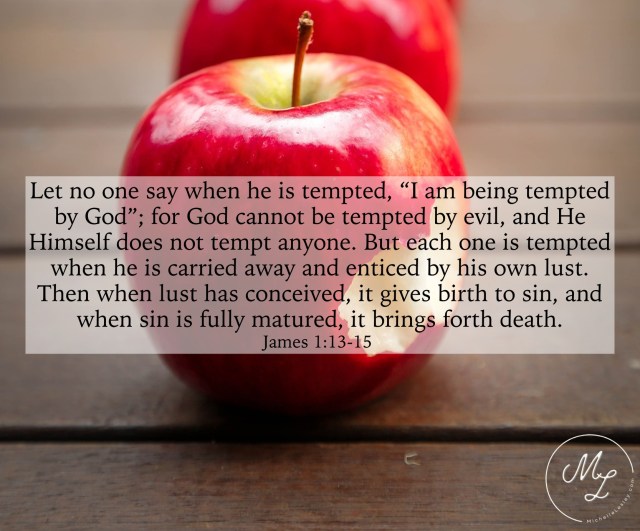
It wasn’t God’s fault for putting the tree there. It wasn’t God’s fault for warning them. It was Adam’s fault and Eve’s fault for being disobedient.
And giving in to sin is still our fault today. If you went to see Fifty Shades of Grey, it’s not God’s fault for allowing the movie to exist. It’s not some Christian blogger’s fault for making you aware of the movie or warning you not to see it. It’s your fault. You were tempted. You gave in to sin. (The good news is that if you will repent, God will graciously forgive you.)
As Christians we are to be imitators of God. “Whoever says he abides in him ought to walk in the same way in which he walked.” (1 John 2:6) That means that when we see sin that could easily ensnare our brothers and sisters, we don’t turn our heads. We don’t mind our own business. We don’t keep our mouths shut to be polite. We do the same thing God did time after time in the Bible. We run into the fray to rescue those we love.
When we see sin that could easily ensnare our brothers and sisters, we don’t turn our heads. We don’t mind our own business. We don’t keep our mouths shut to be polite. We run into the fray to rescue those we love.
Tweet
And we are not to blame if there are those who choose to charge headlong into sin rather than heed the alarm we sound.