Christian women, Church

Throwback Thursday ~ Pastoral Propriety with Church Ladies, and 7 Ways Women Can Help

Originally published September 20, 2016dancing-893206_1280

Yesterday, I read a fantastic article for pastors entitledย The Pastor and Inappropriate Interactions with Women in the Church. (I’ll give you the gist of it, but it’d be better if you would take a second and read it. It’s not long. I’ll wait.) It’s not about pastors having affairs, it’s about inappropriate interactions with women at church: full frontal hugs, emotionally intimate conversations, and such.

I thought it was great advice to pastors, and, while the onus really is on pastors themselves to make sure their behavior toward women in the church is appropriate, there’s no reason women have to make it difficult for them, right? So what can we ladies do to help out our pastors and other brothers at church?

1. Oh, man.ย Remeber that pastors and Christian brothers are men.ย No matter how godly they are, they’re subject to all the same temptations as other men, including temptations to lust, touch inappropriately, and even commit adultery. Don’t be lulled into some idyllic complacency that your pastor doesn’t struggle in this area and you don’t have to mind your P’s and Q’s.

2. Trade hugs for handshakes. Maybe you’re just a huggy person in general. You probably don’t mean anything more by hugging a man at church than you do by hugging a woman. But what might it mean or feel like to the man you’re hugging? Maybe that’s something he struggles with. How about offerning a handshake or a pat on the shoulder instead?

3. What Not to Wear.ย Dress modestly. Yeah, I went there. I’m not going to get into inches of skirt length and all that, just serve your brothers by keeping the girls and the gams sufficiently under wraps. If in doubt, wear something else. If you look like you’re going clubbing instead of to church, wear something else. If it would be too tight or revealing to wear to a funeral without people talking behind your back, wear something else. Sometimes your husband, father, or brother can offer a helpful opinion. They have more experience at looking through a man’s eyes and thinking with a man’s brain than you do.

4. (Don’t) Call me on the line. Don’t exchange personal orย numerous phone calls, e-mails, texts, or private social media messages with men. Brief, businesslike, back and forths when absolutely necessary due to mutual projects, meetings, etc., at church are fine, but even those can grow into something inappropriate if you’re not careful.

5. Flirty is for floozies. There’s a fine line between friendly and flirtatious. Locate it and stay on the right side of it.

6. None on one. Do not, under any circumstances, meet alone behind closed doors with your pastor or any other man. That includes your pastor’s office, and it includes pastoral counseling. If he doesn’t insist on another person being present or leaving the door of his office open to a common area where others are around, then you insist on it. Don’t meet in public (a coffee shop, restaurant, etc.) alone with your pastor or any other man, either. That looks like a date to most people.

7. The welcome mat chat. Don’t enter a man’s home if his wife isn’t there, and don’t invite a man inside if your husband isn’t home. Maybe you and the pastor’s wife are friends. You’re out running errands and happen to find yourself in her neighborhood, so you drop by to say hello. It turns out she isn’t home, but her husband is. Keep it to a brief exchange of pleasantries on the porch and go finish your errands. You never know who might be passing by seeing your car in the driveway, but not the pastor’s wife’s car.

Those are just a few of the thoughts I had about some safeguards and precautions we can take to help out our pastors and Christian brothers as well as protect our own hearts and reputations. What say you, ladies (and gentlemen- want to give us the benefit of your experience and wisdom?)? Any other ideas?

Sanctification

Watch Your Language! 10 Christian Terms that Need to be Cleaned Up

What would you think of a surgeon who forgot to take his scalpel to work one day and decided his pocketknife would be an adequate substitute? Or a chef who ran out of vanilla and figured peppermint extract would work just fine in its place? At the very least, youโ€™d probably think he was being a little sloppy and careless – not putting enough thought into his work. At worst, he could injure, sicken, or kill somebody.

When it comes to our Christian vernacular, we need to make sure weโ€™re using the right word for the right task. โ€œWell, she knows what I meant,โ€ doesnโ€™t cut it these days, as anyone on social media can attest. Sometimes, even as perfectly doctrinally sound Christians, we get a little sloppy with our phraseology, which can, at best, confuse people, and, at worst, defame God. We need to proactively think about the meanings of the words we use and be careful to say what we mean and mean what we say.

Letโ€™s watch our language on these ten terms and phrases and determine to use more precise, God-exalting vocabulary instead:

1. Let or allow God toโ€ฆ
When the doctrinally sound Christians I know say they need to โ€œletโ€ or โ€œallowโ€ God to do something in their lives, they donโ€™t mean: โ€œIโ€™m in charge here, and I call the shots. God can only do what I, as the boss, deign to permit Him to do.โ€ What they mean is, โ€œI need to stop doing things that are displeasing to God and obey His Word because He wants to grow me to greater Christlikeness.โ€ Unfortunately, one of the tenets of Word of Faith and New Apostolic Reformation false doctrine is that Christians are the ones in authority and that God can only do what we allow Him to do. Thatโ€™s blasphemy, and not something we even want to hint at with careless wording. We need to make sure our words communicate that God is in charge and we are His humble servants.

More God-exalting: โ€œI need to submit to Godโ€™s will.โ€ โ€œI need to make sure Iโ€™m not standing in opposition to Godโ€™s work in my life.โ€

2. Accept Jesus or make Jesus Savior/Lord of your life
Again, โ€œacceptโ€ and โ€œmakeโ€ put us in the driverโ€™s seat and leave Jesus a puppet who moves at our whim. Jesus is King. We do not accept Him, He graciously accepts us. We do not โ€œmakeโ€ Him Savior or Lord. He already is Savior and Lord. We throw ourselves upon His mercy to save us and bow the knee to His Lordship.

More God-exalting: โ€œAsk God to save you.โ€ โ€œBelieve the gospel.โ€

3. God said or told me; listen to God
Possibly the most prolific false teaching today is that God regularly speaks to individuals verbally, through dreams and visions, or through signs, outside of Scripture, about the mundane issues of life, despite the fact that God Himselfย tells us He doesn’t speak this way and that His written Word is sufficient for our every need.ย God speaks to us, and we hear Him, through His written Word, the Bible. When we talk about God speaking to us, we need to make sure weโ€™re driving that idea home, not subtly reinforcing the false idea that God is speaking to us outside of Scripture.

More God-exalting:ย โ€œGod tells us in Colossians 3:12โ€ฆโ€ โ€œThe Bible says in Proverbs 13:24…โ€

4. God showed up
No, He didnโ€™t. God has never – in the history of all eternity, nor in eternity yet to come – โ€œshown up.โ€ When we say somebody โ€œshowed up,โ€ the common understanding is that someone arrived on the scene who was not previously present. That has never been, and can never be, true of an eternal, omnipresent God. God has always been present everywhere. Sometimes whatโ€™s actually happening when people say โ€œGod showed upโ€ at church is that they had an emotional response to the music, or experienced a temporary worldy sorrowย over their sin. But when God really doesย seem to โ€œshow up,โ€ whatโ€™s usually the case is that we โ€œshowed upโ€ by prayerfully preparing our hearts for worship, by responding in repentance to the conviction of the Holy Spirit, by taking joy in praising and thanking God, or that God answered prayer or allowed us to see His hand at work in a situation.

More God-exalting: โ€œIt was a wonderful time of worship this morning!โ€ โ€œThank you, God, for letting us see how Youโ€™re working!โ€

5. Tithes and offerings, or offerings over and above the tithe
Tithing, like making animal sacrifices or celebrating Israelโ€™s various feasts and festivals, is an Old Testament law which Jesus fulfilled and is no longer binding on Christians. Godโ€™s instruction to Christians about giving is found in 2 Corinthians 9:7. When we try to impose Old Testament law upon New Testament Christians, we are violating Godโ€™s clear command that Christians are not to give under compulsion. On the other side of the coin (pun intended) merely plunking ten per cent of your earnings into the offering plate voluntarily and thinking youโ€™re good to go with God isnโ€™t right either. We are to follow Christโ€™s example of generosity and self-sacrifice as we minister to the church and others, giving up, if necessary, even our very lives.

More God-exalting: Offerings, gifts, generous giving, sacrificial giving

6. I have a peace about this
Often, this phrase reveals more than simple sloppy wording, it demonstrates that someone is relying more on her feelings, opinions, and experiences than on Godโ€™s Word to determine right from wrong. If thereโ€™s a Bible verse that tells us that a feeling of โ€œpeaceโ€ is what unequivocally confirms that weโ€™re obeying God, I havenโ€™t run across it. Iโ€™ve heard women say they have โ€œa peaceโ€ about leaving their husbands for sinful reasons, or that they have โ€œa peaceโ€ about opting out of church when God clearly commands the opposite.ย The fact of the matter is that our feelings are deceptive. We can have peaceful feelings about things that are ungodly, and anxious feelings even when carrying out the clear commands of Scripture. Scripture is our measuring stick for right and wrong, godly and ungodly, not our feelings.

More God-exalting: โ€œIโ€™m going to obey Godโ€™s Word and trust Him.โ€

7. What do you feel God would have you do?
Christians are not supposed to live our lives guided by our feelings. We are to live lives governed by the authority of Godโ€™s written Word. And itโ€™s important that our vocabulary reflect that by being precise when weโ€™re talking about making decisions. Our feelings are fleeting, fickle, and often false. Whatโ€™s important – and what weโ€™re to base all of our thoughts, words, and actions upon – is, โ€œWhat does Scripture say about this?โ€

More God-exalting: โ€œWhat does the Bible say you should do?โ€ โ€œLetโ€™s pray and ask God for wisdom to rightly apply Scripture to this situation.โ€

8. What is Godโ€™s will for my life?
Frequently, when Christians ask this question, itโ€™s in the context of making a life-altering decision about which college to attend or career to choose, whom to marry, and if, when, and how many children to have. But thatโ€™s not what โ€œGodโ€™s willโ€ means as outlined by Scripture. Godโ€™s will is for Christians to get up every day and walk in obedience to His Word. Thatโ€™s it. Thatโ€™s Godโ€™s will for your life. When it comes to making decisions, we rightly apply Scripture to the situation, pray that God will give us wisdom and direction, and make the most godly decision we can, trusting that the God whoโ€™s completely aware that weโ€™re frail and by no means omniscient, will direct our paths.

More God-exalting: โ€œHow can I walk in obedience to God today?โ€ โ€œGod, please give me wisdom and direct my path in this situation.โ€

9. God canโ€™t ____ unless we ____.
I beg your pardon, but God can do whatever He wants to do (thatโ€™s in keeping with His nature and character), and Heโ€™s not sitting around wringing His hands, hoping weโ€™ll do the right thing so He can act. Thatโ€™s a theology that makes man omnipotent and God impotent. Psalm 135:5-6 says it best: โ€œFor I know that the Lord is great, and that our Lord is above all gods. Whatever the Lord pleases, He does, in heaven and on earth, in the seas and all the deeps.โ€

More God-exalting: โ€œThe Bible says in 1 John 1:9, if we ____, God will ___.โ€

10. The Mormon church, the Roman Catholic church, a New Apostolic Reformation church, etc.
Itโ€™s easy to fall into the habit of calling these religious organizations โ€œchurchesโ€ because thatโ€™s what they call themselves. But any gathering that doesnโ€™t preach the biblical gospel is not a church, regardless of what the sign out front says. Human beings do not get to define what the church is. Only God gets to do that. And He has defined the churchย as Christโ€™s body, whom He died for and saved, of whom He is Head, and who submits to Him. Organizations which stand in opposition to clear Scripture or preach another gospel are not churches (Galatians 1:6-9 says they are โ€œaccursedโ€ or โ€œdamnedโ€), and verbal opposition to this misnomer would go a long way in helping to clarify that Mormons are not Christians, that Roman Catholic soteriology is not biblical, that Lakewood teaches false doctrine, and so on.

More God-exalting: Mormons, Catholicism, apostate church, organization, religion

What are some other โ€œChristianeseโ€ words and phrases that need some cleaning up, and what are some other more precise and God-exalting terms we could use instead?

Sin, Throwback Thursday

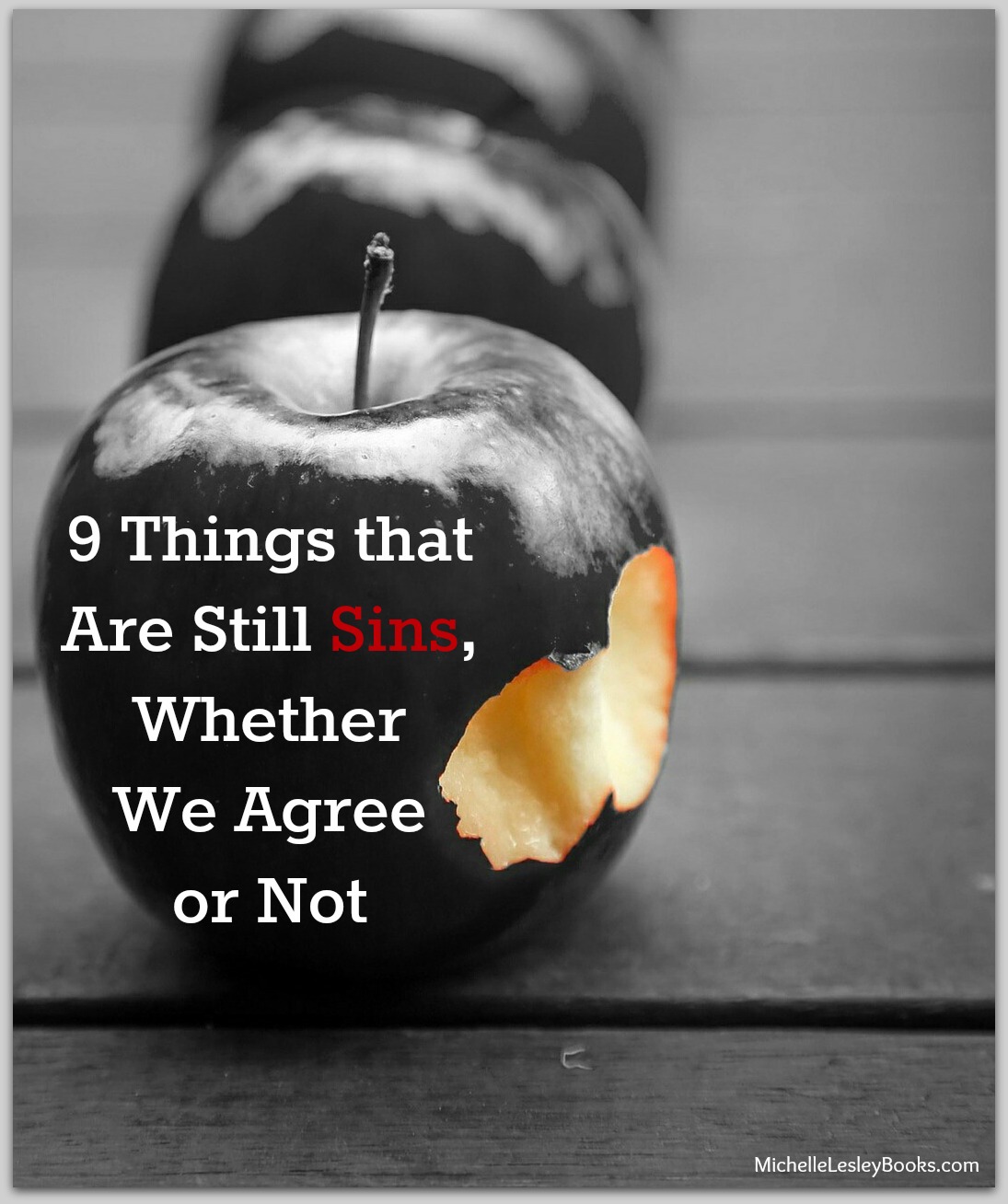
Throwback Thursday ~ 9 Things that Are Still Sins Whether We Agree or Not

Originally published June 19, 20159 still sins


I do it all the time, Mother, and I’ve decided something-
it’s not a sin.

I heard this line several years ago on a popular sitcom, spoken by an adult daughter to her Christian mother about a behavior the Bible unambiguously calls a sin. I mean, it’s right smack dab in the middle of the Big 10; “thou shalt not” and everything.

It’s one thing to say, “I know it’s a sin, but I don’t care. I’m going to do it anyway,” but how depraved is the world when they think they – in God’s place – are the ones who get to define what sin is? And what’s even worse is that the church has begun to adopt this audacious depravity as well, whether approving of sin by fiat or by simply ignoring God’s word and letting sin slide without rebuke.

When it comes to what’s a sin and what’s not, God made up His mind a long time ago. And He’s not changing it, regardless of what you or I or Joe Politician or Jane Celebrity might think. Maybe we all need a remedial course in hamartiology, so let’s start with the basics. These things are all still sins whether the world and the church agree with God or not:

1. Homosexuality

Let’s just get it out of the way right up front. I don’t care how many celebrity “pastors” and “Christian” authors twist God’s word to say otherwise, or how many people declare themselves to be (unrepentant, practicing) “gay Christians,” or how many homosexuals declare that God made them that way, God’s word is clear: homosexual lust and behavior are sins.

2. Abortion

Abortion is the taking of an innocent human life. We don’t murder people because they’re small or sick or inconvenient or will hinder our sucess. God didn’t say, “You shall not murder, except when…” He said, “You shall not murder.” Period.

3. Extra-Marital (Heterosexual) Sex

Adultery, fornication, whatever form it might take, if you’re not legally married to the person you’re engaging in sexual activity – up to and including actual intercourse – with, you’re sinning.

4. Cohabitation

See #3. And don’t try to whitewash it by saying you’re living together but not sleeping together. A) The Bible says we’re to flee temptation, not move in with it, and B) we’re supposed to avoid every form of evil, even the appearance of it. If you call yourself a Christian and you’re shacking up, you’re living in sin (that’s why they call it “living in sin”). Repent and move out or marry up.

5. Divorce

Yep, still a sin, except in two cases: unfaithfulness or an unsaved spouse leaving a saved spouse. In those two cases the spouse who was wronged is not sinning and is free to marry again.

6. Swearing

The air is saturated with it. Foul language coming from our TVs, music, movies, social media, and the people we’re around all day. But expletives have no place in the vocabulary of a Christian. Is your potty mouth on Saturday the same one you praise God with on Sunday?

7. Taking God’s Name in Vain

It’s gotten to the point where we think so little of casually punctuating our sentences with, “Oh my G-d,” ย or using the name of Jesus as an exclamation that pastors are even doing so from the pulpit these days. God’s name is high and holy and should be spoken only reverently and worshipfully. How can we look people in the eye and call them to repentance and faith in a Person whose name we use as a cuss word?

8. Gluttony

We have almost completely amputated gluttony from the spiritual realm by cordoning it off as merely a physical or medical issue. We’ve renamed it “overeating,” but that doesn’t change the fact that it’s a sin. God created good food for us to enjoy, but just as with all the other good gifts He gives us, He expects us to exercise Spirit-enabled self control when we receive it.

9. Female Usurpation

God makes it abundantly clear in His word that women are not to instruct men in the Scriptures or hold authority over them in the church. Women sin when they pastor churches, preach sermons in church, teach men in Sunday School classes, and hold other positions of authority over men in the church. Men, however, bear the primarily responsibility for this when they sin by failing to rebuke usurping women, or when women feel they have no other choice but to take on male responsibilities in the church because men are shirking their own duties before God.


We don’t get to decide what sin is. That’s God’s job. And all of us – whether we’ve committed one of these nine sins or not – are guilty of sinning against Him. That’s the bad news.

But, in Christianity, we never give the bad news without following it up with the good news. And, oh what wonderfully good news it is: forgiveness. Jesus paid for our sin at Calvary so that if we will only turn from it and trust Him, He will forgive us for all nine of these sins and countless others.

If we confess our sins, he is faithful and just to forgive us our sins and to cleanse us from all unrighteousness.
1 John 1:9

Discernment, Mailbag

The Mailbag: Should I attend the “Bible” study to correct false doctrine?

Iโ€™ve been invited to join a ladiesโ€™ Bible study class thatโ€™s using a book by a well-known author and speaker. The woman who wrote the book is a false teacher. Should I accept the invitation and join the class in hopes of correcting the false doctrine that will be taught?

To join or not to join. I’ve been in the same situation myself, and I know many of my readers have as well. It can be a difficult decision to make. The Bible does say to avoid false teachers, but it also says they should be rebuked, and that older women are to โ€œteach what is good, and so train the young women…that the word of God may not be reviled.โ€

My counsel to those who have expressed concern to me over studies by Beth Moore, Priscilla Shirer, Lysa TerKeurst, etc. taking place in their churches is to pray that God would give them wisdom as to whether they should attend the study and biblically refute all the false doctrine that comes up (the rebuking/training perspective) or whether they should decline to attend the study (the avoiding perspective), giving anyone who asks a biblical explanation as to why you wonโ€™t be participating (also, kind of rebuking/training). There are a lot of things to take into consideration as you begin working through Scripture and prayer to reach a decision.

First, where is your pastor in all of this? Why is he allowing a study to take place that uses materials authored by a false teacher? Maybe he is familiar with the authorโ€™s materials and approves of them (in which case you have a bigger issue than whether or not to attend this particular class). But maybe heโ€™s a discerning-leaning guy whoโ€™s just not aware that this author teaches false doctrine.

Most pastors are extremely busy. They either donโ€™t have the time or donโ€™t know they need to make the time to vet the authors of the studies their church is using (I’m not excusing this state of affairs, I’m just saying- this is the reality we’re dealing with). And many of them simply assume that if the book comes from LifeWay (or another trusted Christian retailer), it must be OK. So, before making a decision about whether or not to attend the class, go to where the buck stops and humbly, patiently, and kindly find out where your pastor is about the issue. He might just pleasantly surprise you and cancel the class or insist that a doctrinally sound study be used instead, and your problem will be solved.

Next, if youโ€™re married, what does your husband have to say about it? There may be a logistical conflict – he prefers you not to be out that late at night alone for safety reasons, your child has to be picked up from soccer at the time the class meets, etc. – that will immediately solve your dilemma, or there may be some other reason he doesnโ€™t want you to attend the class. Since itโ€™s not sinful to decline attending the class, if your husband says no, you need to respect his decision and decline to join. (You also need to discuss with your husband the issue of approaching the pastor about the study. He might prefer to be the one to talk to him, or he might prefer the two of you talk to the pastor together, rather than you approaching the pastor on your own.)

But even if your husband leaves the decision up to you, ask for his counsel and perspective. Simply by virtue of being a man, a person with his own unique thought processes, and someone who knows you well, he can add invaluable insight that can help you reach a wise decision. This was certainly the case for me when I was faced with this situation. I was leaning toward declining to attend the study, but my husband gave me a whole new perspective and encouraged me to get involved in order to be a corrective influence and godly example to the other ladies. And he was right!

If youโ€™ve talked to your pastor and your husband and the dilemma is still before you, there are several things you need to think, pray, and study through as youโ€™re working toward a decision:

โ˜™Are you biblically knowledgeable enough to recognize and properly refute false doctrine? (It might help to get the perspective of your pastor, your husband, or a mature believer who knows you well and who will be honest with you.)

โ˜™Do you have the extra time to study and make notes ahead of time so you’ll be prepared to refute, with Scripture, during class?

โ˜™Is the study so replete with false doctrine that you’ll have to constantly be speaking up and people will just be annoyed and tune you out?

โ˜™Does your conscience prevent you from financially supporting the false teacher by buying her book for the study?

โ˜™Would it make a bigger impact on this particular group of ladies for you to attend and refute or to decline to attend with explanation? (Consider your influence on them, your reputation for sound doctrine among them, the dynamics of the group, etc.)

โ˜™What will be the repercussions of your actions (whether you decide to attend or decline) on the church at large? How might your family and/or your pastor be affected?

โ˜™Are you spiritually and emotionally prepared for the harsh backlash you will probably receive for refuting? Can you stand firm in the face of that, or will you cave?

โ˜™Are you in the โ€œcage stageโ€ of discernment with a โ€œmow โ€˜em down!โ€ disposition to match, or do you have the self-control required to follow the instruction of 2 Timothy 2:24-26: to be patient, kind, and not quarrelsome? Do you understand that the goal of discernment is to humbly rescue captives, not to prove how right and knowledgeable you are?

โ˜™Think outside the box. Is there another way to handle this situation besides attending/refuting and declining to attend? What about you (or a spiritually mature woman in your church- someone who is able to teach) offering to teach an alternative class that studies a book of the Bible?

Thereโ€™s no one size fits all answer to this question. Either of these options (or another) could be biblically wise depending on the people and situations involved. Talk to your husband and your pastor. Examine what Godโ€™s word says about false teachers. Pray for wisdom. Follow your biblically-informed conscience.


If you have a question about: a Bible passage, an aspect of theology, a current issue in Christianity, or how to biblically handle a family, life, or church situation, comment below (Iโ€™ll hold all questions in queue {unpublished} for a future edition of The Mailbag) or send me an e-mail or private message. If your question is chosen for publication, your anonymity will be protected.


Church

Throwback Thursday ~ Six Ways Not to Forsake the Assembly

Originally published August 14, 2015

not forsake assembly

“We’ve been looking for a biblically sound church for seven years.”

“There isn’t a church that preaches sound doctrine within a 90 minute drive of our house.”

“My husband and I have given up on church.”

It was heartbreaking to read these and scores of similar comments responding to my recent article “Nine Reasons Discerning Women Are Leaving Your Church.” On the other hand, it was encouraging to hear from so many women (and even a few brave men!) whose love for Christ and fidelity to His word have moved them out of apostate churches and set them on the hunt for a body of believers which worships Him in spirit and in truth.

Even though most commenters already seemed to know this, I wanted to go back and clarify for everyone that leaving an apostate church is not the end of the story. God is quite clear in His word that we are not to abandon meeting together with other Christians for fellowship, worship, and the preaching and teaching of God’s word:

And let us consider how to stir up one another to love and good works, NOT neglecting to meet together, as is the habit of some, but encouraging one another, and all the more as you see the Day drawing near. Hebrews 10:24-25

Look around. Read the paper. Watch the news. Do “you see the Day [of Christ’s return] drawing near”? I do. God says that makes it even more important for Christians to stick together, meeting regularly to encourage each other and stir one another up to love and good works. We need each other. But how can we meet together, when it’s so hard to find a church that teaches and preaches sound doctrine?

1. Make sure you’re only leaving a church for essential reasons.
There are biblical issues and then there are issues of preference. You may not like the genre of music at your church, but is it theologically sound? Perhaps you’d prefer that your pastor wear a suit instead of jeans, but does he rightly handle God’s word?

If you’re a member of a church that is, generally speaking, doctrinally sound, you should probably stay, even if – or maybe especially if – you see some areas that seem slightly “off,” biblically. It may be that God has placed you in that church to shed some light on the situation and to be a catalyst for bringing things back in line with Scripture. Sometimes when a church member or leader bobbles a little it’s simply because they don’t know that what they’re doing conflicts with Scripture. See if you can come along side the person and help out. Remember, there was a time when you didn’t know any better, either.

2. Leave no stone unturned.
If your church is apostate and you do have to leave, you should immediately begin looking for a doctrinally sound church to join. Staying home from church for a while just makes it that much easier not to go back. Ask trusted Christian friends about their churches, look on line, drive around town, but look. Don’t give up your search until you’ve checked out every single church you can possibly get to.

Keep in mind that you may have to make some sacrifices to find a church that adheres to God’s word. It might not be very close to your house. They might meet earlier or later or be bigger or smaller than you prefer. You may have to choose a church of a different denomination than you grew up in. That’s OK. Keep looking.

3. Think outside the steeple.
It seems impossible, but some people, even in populous areas, leave no stone unturned and stillย can’t find a church that rightly handles God’s word. (Unfortunately, we are going to see more and more of that “as the Day draws near.”) If you absolutely cannot find a doctrinally sound established church you may need to begin meeting with other Christians outside of the established church: in homes, community centers, after work, etc.

I want to be clear that I advise this only as a last resort after exhausting every possibility of joining a biblical established church. I have known of people who withdrew from established churches because of doctrinal problems, and instead of searching for a sound, established church, decided to form a house church, which then fell into other doctrinal problems of its own. House churches can be very vulnerable to doctrinal error.

If you must meet with other believers outside of an established church, make sure whoever is pastoring the group is biblically qualified to do so, and that your home church carries out all of the components of a biblical church: Bible teaching, worship, prayer, care for members, the Lord’s Supper, baptism, and church discipline. There are many wonderful, trustworthy resources such as sermons, Bible teaching, and Bible study lessonsย available on line for free. Take advantage of them. You may also wish to contact your denomination’s headquarters, a reputable missions organization (such as NAMB or IMB), or a doctrinally sound church planting organization and ask about the possibility of a missionary or church planter coming to plant a new church in your area.

4. Can’t find other Christians to meet with? Make them.
I say that somewhat jokingly. Of course you should not evangelize for the sole purpose of having other Christians to meet with. You should already be sharing the gospel with others simply because you are a Christian. Everyย Christian, regardless of her own church situation, is called to take the good news of Christ to those around her. However, whereas you might previously have shared the gospel with someone and then invited her to church with you, now you might invite her to your home church.

5. Move.
Yep, it’s a pretty radical idea, but we still have the freedom in the U.S. to move to any area of the country we want. If you absolutely cannot find a way to meet together with other Christians, you might want to prayerfully consider moving somewhere else. Desperate times call for desperate measures, and obeying Scripture is worth any sacrifice. Yes, it’s that important.

6. Pray.
God’s word says we’re not to forsake meeting together with our brothers and sisters in Christ. God wants you to obey His word. If you want to obey His word and you ask Him to make a way for you to do that, He willย answer that prayer. It might not be in the way you’re hoping or expecting, but He will provide a way for you to obey Him.


God wants you to be in fellowship with other believers. I know it can be hard to find a biblical church, but where there’s a will, there’s a way. God’s will. God’s way. It’s my prayer that each of you reading this will find that biblical place of worship, fellowship, and teaching so that each time you get ready for assembly you can say with David:

I was glad when they said to me,
โ€œLet us go to the house of the Lord!โ€
Psalm 122:1