I’ve been married to a minister of music for over 20 years. My husband has served at many different churches in a variety of capacities: on staff, interim, supply, revivals, conferences, retreats, etc. Over those 20+ years and in those various capacities, I’ve observed a number of things about him, pastors, church musicians, and congregations from a unique vantage point.
Now, with a little help and a lot of input from a few sister minister of music’s wives, it’s true confession time. Time for us to tell all, here in Part 2 of Real Ministers of Music’s Wives of Anychurch, U.S.A.
Turn Your Radio On, and Listen to the Music in The Air The minister of music understands that there are songs we love to sing along with on Christian radio or Spotify that we’d also like to sing in church, and, in a lot of cases, he’d probably like to, too. There are a variety of reasons why the songs we like might not get sung in church:
It’s a solo. Most of the songs we hear on the radio (especially contemporary ones) are written and performed as solos, and don’t work for congregational singing because: the timing is difficult for a large group to follow, there are too many spontaneous riffs and change ups, there are complicated and/or numerous bridges and tags that are difficult for large groups to follow, etc. Not every song works for large group singing.
The lyrics contain faulty or watered down theology. The minister of music’s job is to lead us in worship. We can’t worship if we’re singing something that conflicts with God’s Word or doesn’t focus on Him and His nature, character, and deeds.
The accompanists aren’t comfortable with it. A lot of the songs people want to sing in the worship service can be difficult for pianists and other instrumentalists whose main experience is in other genres of music. While every musician should strive to improve his skills, the minister of music doesn’t want to put his accompanists on the spot if they’re uncomfortable with the technical requirements of the music.
Your minister of music isn’t comfortable with it.If the minister of music is in his 60’s he may not feel he can carry off a top ten CCM song made popular by somebody in his 20’s, especially if he doesn’t have a worship band equal to the one we’re used to hearing on the radio.
There’s no sheet music available. Or it’s not available in the right key or for the right instruments, etc.
It’s “off limits”. Occasionally, and for various reasons, the pastor, elders, or others in leadership over the minister of music will make a decision that a certain song is not to be used in the worship service. Depending on the circumstances, there may not be a diplomatic way to explain this to people who love that song and want to sing it in church.
Play Us a Song, You’re the Piano Woman Just by way of information, not every minister of music’s wife plays the piano. I’m one of them. Sorry. I wish I could.
One Singular Sensation Regardless of how many pop stars got their start by singing in church, the purpose of the worship service is to worship God. There are many wonderful and talented soloists who, in humility and faithfulness, pour their hearts out to God in song at their local churches and do a great job of it. There are also a few divas on their way up the ladder looking for a stepping stone to greatness. Church isn’t American Idol. Find a karaoke bar.
Show a Little Bit of Love and Kindness It’s always encouraging for a minister of music to hear that he did a great job with the choir or that you really worshiped this morning. It’s encouraging when a pastor mounts the platform for his sermon and says thank you, or “I really liked that song,” or refers back to/quotes one of the songs during his sermon. Little things like that go a long way, so offer your minister of music a word of encouragement when you can.
Also, if your church participates in pastor appreciation month (usually the month of October), please don’t forget your minister of music, youth pastor, associate pastor, etc. They all work hard to shepherd you, and it doesn’t feel good to be left out.
War- What is it Good For? The worship wars (contemporary worship music vs. traditional hymns) are alive and well. Sometimes, rather than being a general in that war, our minister of music might just be a casualty of it.
Everybody has particular genres of music that we’re most comfortable with. When a different style comes along, it can be jarring. It can cause angst. It can cause arguments. But when we worship God, our focus is not to be on what makes us happy or comfortable. Often, we get so concerned about whether the worship at church pleases or offends us that we don’t stop to think about whether it pleases or offends God.
But that’s the main concern of the minister of music. Which songs, regardless of style, will be pleasing to the Lord and lead people into truth about Him? While he’s trying to do his best to sort this out week by week, he’s possibly being pulled in a variety of directions by a variety of people over style. How many people will leave the church if we sing more hymns than contemporary songs? How many people will stop giving in the offering if we sing more contemporary songs than hymns? Who’s going to accost me after church and complain? How will the pastor and elders react to this week’s order of service? It can be a lot of pressure and take his focus off of where it needs to be: what will be pleasing to God?
Just as one man’s trash is another man’s treasure, the songs we don’t like might just be someone else’s favorite. What if we looked at singing the songs we don’t particularly like as a way to serve and encourage our brothers and sisters in the congregation who do like those songs?
Why’s Everybody Always Pickin’ on Me? There’s no nice, sweet way to say this, so I’m just gonna throw it out there. Church members can sometimes be mean. I mean, mean. Let me hasten to add that most of the time, most church members are not. The majority of church members are kind, loving, supportive, and definitely appreciated by the pastor and staff. However, the others are definitely out there. I have seen church members treat pastors, ministers of music, and other church staff the way I wouldn’t treat a dog. There’s no excuse for that.
The minister of music isn’t perfect. There may be times when he does something unbiblical or hurtful and at those times, it’s necessary for the appropriate person to talk with him, under the provisos of Matthew 18, about whatever is wrong. But there are other times when people get their feathers ruffled –even though the minister of music hasn’t done anything wrong or unbiblical—simply because their personal preferences haven’t been catered to.
It’s OK to talk with our ministers of music about things, even personal preferences, but let’s do it in an encouraging and helpful way rather than a griping or attacking way. Screaming, threatening, name calling, constant complaints, and nasty anonymous notes and emails are never appropriate, and if that’s what is transpiring, then the problem is not with the minister of music it’s with the person who’s acting that way. If we know that a member of our church is acting that way towards anyone, pastor, staff, or layperson, we must intervene and be a catalyst for making things right.
God calls us to encourage one another and build each other up, so let’s get at it! Let’s try to affirm our ministers of music (and pastors and other staff!) whenever we’re able!
What’s something you can do to be an encouragement to your minister of music?
I’ve been married to a minister of music for over 20 years. My husband has served at many different churches in a variety of capacities: on staff, interim, supply, revivals, conferences, retreats, etc. Over those 20+ years and in those various capacities, I’ve observed a number of things about him, pastors, church musicians, and congregations from a unique vantage point.
Now, with a little help and a lot of input from a few sister minister of music’s wives, it’s true confession time. Time for us to tell all…
Sing, Sing a Song… Singing is often the only opportunity church members have (besides the offering) to take an active role in worship. Let’s all take advantage of it!
The music portion of the worship service is just that: worship and service, but sometimes we can slip into thinking of it as “filler time” before the “main event” of the sermon. If we’re spending the music time chatting with our friends, checking Facebook on our phones, knitting, or clipping our nails (sadly, yes, I’ve seen all of those happen) aren’t we robbing God and ourselves of the precious few hours per week we set aside for worship? Is it fair to God to spend the time we’re supposed to be worshiping on these kinds of distractions? God commands our worship and God deserves our worship. So, let’s give God our full attention and worship Him!
R-E-S-P-E-C-T – find out what it means to your minister of music. The minister of music doesn’t just roll out of bed on Sunday morning, jump up on the platform, and wave his arms around for thirty minutes. He works hard during the week to plan a worship service that honors God and grows and trains the congregation spiritually. He often does so amid a number of challenges: the varied talents of his accompanists, a hymn request by the pastor or a church member, bugs in the sound system, musicians going out of town, the choir soloist getting the flu. He rehearses with the instrumentalists, the praise team, the choir, and others. When he stands in front of us to lead the music, he deserves the same respect we give the pastor when he preaches or a teacher imparting knowledge or someone at work who’s making a presentation: our attention.
Someone To Watch Over Me Singing in the choir or on the praise team kinda goes hand in hand with being a minister of music’s wife, so we’re often up on the platform near our husbands. I need to tell you a little secret:
We can see you out there.
It is incredibly encouraging to see people who are focused on Christ and engaged with Him as they’re worshiping. It’s obvious they’re communing with their Savior and thinking about Him as they sing. It makes the minister of music feel like he’s been successful in helping them connect with the Lord in worship.
On the other hand, it’s very discouraging to see people with their hands stuffed in their pockets, not singing, or, conversely, mindlessly rattling off lyrics, and with a countenance that says, “I’d rather be at the dentist.” I once saw a televised worship service where the congregation was singing the hymn, “All that Thrills My Soul is Jesus.” It would be difficult to describe just how unthrilled most of them looked. The word “corpses” comes to mind.
Jesus said to love the Lord with all our heart, soul, mind, and strength. When we engage all four of those areas in worship, we’re not just pleasing Him by our obedience, He’s growing us into stronger, more mature Believers. And that’s the best encouragement of all for our minister of music.
Where He Leads Me, I Will Follow We minister of music’s wives are blessed that our husbands have, for the most part, worked under pastors who are supportive and set a great example for their congregations. Pastors, you have an enormous influence on your congregation even when you’re not aware of it. And one area in which you may not be aware that church members are watching and emulating you, even when we’re not aware of it, is during the music portion of the worship service.
Your congregation can see you during the worship time, whether you’re sitting on the stage or in a pew. What you convey with your own behavior about the importance of worship, we will absorb and reflect. If you are engaged and sing heartily to the Lord, we will get the message that you think God is worthy of all of our worship and we will follow suit. If you spend the worship time engaged in other activities, we will get the message that worship time is more like the coming attractions before a movie than a time to join in and commune with the Lord through what we sing.
Additionally, when your congregation is actively engaged in worship, it gets our hearts prepared to soak up the message you have for us in your sermon. So, when you’re worshiping with gusto, you’re not only setting a great example, you’re also getting people right where you want them: ready to drink in God’s word!
Part two of this article is on its way!
What are some things you appreciate about your minister of music or worship leader?
Every time I hear “I speak Jesus over you” I cringe. I can’t exactly explain why. Is it scriptural??
No it’s not, which is why it makes you cringe. It’s pretending to be biblical and your John 10:5, 27 sheep ears know it’s not. Here’s why it’s not:
• There’s nothing in Scripture that tells us to do, or shows an example of anyone doing anything of the sort. The Bible speaks in terms of encouraging, teaching, preaching, exhorting, rebuking, reproving, and comforting others with the written Word of God. If that’s what the person using this phrase means, then that’s what she should say.
Christians should use biblical terminology for biblical concepts, not made up, mystic linguistics. But what “I speak Jesus over you” sounds like, and what she probably means is some sort of supernatural transaction in which she mystically, verbally pulls Jesus down out of Heaven and invisibly spreads Him out over you, like a tarp or an umbrella, to ward off evil spirits or negative circumstances. Sounds kinda pagan, and witchcrafty or incantationy doesn’t it? That’s because it is, which brings us to the second reason you’re cringing…
• You don’t hear doctrinally sound, biblical Christians saying this. This is a buzzword/phrase typical of New Apostolic Reformation heretics. You probably heard this from an NAR false teacher or someone you know who’s into NAR (Bethel, etc.) garbage. This is John 10 at work in your spirit again: Christ’s true sheep (genuinely regenerated Believers) know His voice – what His teaching of sound doctrine from Scripture sounds like – and they will not follow the voice of strangers (false teachers).
• It’s grammatically… incorrect stupid. We speak words. We can’t speak objects or people. It’s impossible. It makes no more grammatical sense to “speak Jesus” over someone than it does to “speak a frying pan” over her.
God ontologically wired human beings for language, and the structure and grammar that goes with it, and we intuitively know when something is linguistically whackadoodle, even if we can’t put our finger on why. That’s another reason you’re cringing.
So if someone said “I speak Jesus over you” to me, I’d have some questions:
• What is that supposed to accomplish, or what will the result of that be so I can watch for it?
People who use this kind of phraseology are going to have trouble coming up with answers to those questions, because “I speak Jesus over you” is not taught in Scripture and doesn’t even make logical or grammatical sense.
◦◦◦◦◦
I was asked this question publicly on X. Since I don’t listen to pop “Christian” music – and especially not “Christian” music of this theological caliber – I was not aware that I Speak Jesus is the title of a song by an artist named Charity Gayle. I misunderstood the lady who asked the question to mean that this is a phrase she’s heard people using in conversation (I’ve heard NAR people say similar things), so that’s the way I answered. After I answered, she informed me that it’s a song.
(Just a little aside here: I do try to keep abreast of things and people in evangelicalism, I promise, but there are so many things and so many people that it’s impossible. Followers often ask me brief questions with little context, use acronyms I’m not familiar with, vaguely allude to situations I’ve never heard of, etc., assuming I’ll know what they’re talking about. I’m very flattered that my followers think I’m up on everything that’s going on out there, but I just want to be perfectly transparent that I’m not. I can’t be. Sorry about that. So when you have a question, do have mercy on me and make sure I know what you’re talking about so I can give you an answer that will actually be helpful to you. I don’t want to be unhelpful. :0)
So now that I know it’s a song, I thought this would be a good opportunity to demonstrate for you, step by step, using I Speak Jesus as an example, how to vet the purportedly “Christian” music you might be listening to.
1.
You hear a song. It’s catchy. You like it. You’re kind of half paying attention to the lyrics, but nothing jumps out and slaps you in the face as overtly heretical, like “🎶 Ooo, ooo… the Trinity doesn’t exist…🎶” or “🎶 Shall we continue in sin that grace may abound? YES, baby, YES! 🎶.”
2.
You listen again, this time paying attention to all of the lyrics. You still don’t hear anything overtly heretical. On the surface, everything seems like it aligns with Scripture, or at least doesn’t contradict it. In fact, you’re pretty sure you heard some theological words or part of a Bible verse in there, somewhere. It must be a biblical song, right? Not so fast, there, Skippy.
3.
🎶 Whoa, whoa… listen to the music…🎶 NOT. Turn the music off, get a text copy of the lyrics (It’s easy to do this by typing the title of the song, followed by the word “lyrics” into your preferred search engine.), slowly, carefully, and discerningly read the words, and compare them to rightly handled, in context Scripture.
Why read instead of listen? Because, whether you realize it or not, the music itself is impacting you. You wouldn’t have finished listening to the song the first time if you hated the music. It’s pleasing your senses, drawing you in, and dulling your objectivity*. You don’t need that distraction when you’re trying to be discerning. Additionally, listening to a song, no matter how slow the tempo, doesn’t give you the time you need to stop and ponder the words in light of Scripture, nor do you have all of the words in front of you at once.
*(Full disclosure: I gave the answer above to the lady on X about the phrase, “I speak Jesus over you” and went through the lyrics of this song two or three times before I listened to it, and even then I could feel a little tickle at the back of my brain going, “The music is great. Maybe the song isn’t so bad after all.” That’s probably exactly how Eve was feeling in the Garden when the serpent offered her that beautiful piece of fruit. And we all know how that turned out. It’s imperative that our brains, logic, and rational thought keep our feelings and senses in check when we’re trying to be discerning.)
Let’s look at the lyrics of I Speak Jesus:
I Speak Jesus
Verse 1: I just wanna speak the name of Jesus Over every heart and every mind ‘Cause I know there is peace within Your presence I speak Jesus
Verse 2: I just wanna speak the name of Jesus ‘Til every dark addiction starts to break Declaring there is hope and there is freedom I speak Jesus
Refrain: ‘Cause Your name is power Your name is healing Your name is life Break every stronghold Shine through the shadows Burn like a fire
Verse 3: I just wanna speak the name of Jesus Over fear and all anxiety To every soul held captive by depression I speak Jesus
Refrain
Bridge: Shout Jesus from the mountains Jesus in the streets Jesus in the darkness, over every enemy Jesus for my family I speak the holy name Jesus, oh (oh)
Repeat bridge
Refrain
Repeat verse 1 Repeat bridge and refrain as artist desires
OK, so what is the singer saying she wants to do here? She wants to speak the name of Jesus.
Over whom? Verse 1: Over every heart and mind (all people) Verse 2: Over addiction itself (as a spirit or entity), or over people with addictions (it’s unclear) Verse 3: Over fear and all anxiety (as spirits or entities), and over people with depression
Why? Because she believes merely speaking the word “Jesus” taps into His power, healing, and life. She believes that speaking the word “Jesus” can break every stronghold; that the word “Jesus” will shine through the shadows and burn like a fire. (You’d have to ask the songwriters exactly what they mean by those last two metaphors, but I’m surmising that they mean something along the lines of, “Speaking the word ‘Jesus’ brings light to spiritual darkness.”)
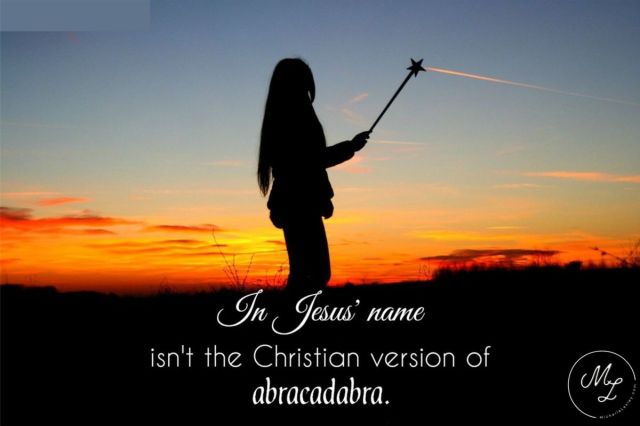
Is this biblical? No. Not in the way it’s being presented, as if the word “Jesus” is some sort of magic word you say, like “Abracadabra!” or “Hocus Pocus!” that – TA DAAAA! – magically makes things like addiction and depression disappear.
If saying the word “Jesus” did that, you’d see a lot more healing and peace and all the other things mentioned in the song happening, because a lot of people “speak Jesus” in vain a lot of the time. I mean, when was the last time you were watching a TV show and one of the characters blasphemously exclaimed, “J—s!”? Did that heal you of the flu or your gout? No, of course it didn’t.
To which Charity and the songwriters would probably reply, “Well, we didn’t mean it like that! We mean Christians speaking the name of Jesus over people with faith that doing so will heal them, bring them peace, etc.”.
Maybe so, but that’s not what they’re saying. The lyrics of the song imply that there is some sort of intrinsic power in the word “Jesus” itself. “Your nameis power. Your nameis healing. Your nameis life.” The lyrics don’t give any other provisos other than the word passing someone’s lips.
But let’s grant them the benefit of the doubt that when they say “speak Jesus” they mean Christians speaking it with some sort of faith in what saying it will accomplish. Is that biblical?
No, it’s not. It is actually a violation of the third Commandment (taking God’s name in vain) and the laws and commands against practicing witchcraft, magic, and casting spells. Because that is exactly the way they’re using the name of Jesus – the same way witches cast spells. They’re attempting to speak words that harness supernatural power that doesn’t belong to them in order to exercise power and control over things that only God has power and control over.
And God was doing extraordinary miracles by the hands of Paul, 12 so that cloths or aprons were even carried from his body to the sick, and the diseases left them and the evil spirits went out. 13 But also some of the Jewish exorcists, who went from place to place, attempted to invoke over those who had the evil spirits the name of the Lord Jesus, saying, “I implore you by Jesus whom Paul preaches.” 14 Now seven sons of one named Sceva, a Jewish chief priest, were doing this. 15 And the evil spirit answered and said to them, “I recognize Jesus, and I know about Paul, but who are you?” 16 And the man, in whom was the evil spirit, leaped on them, subdued all of them, and utterly prevailed against them, so that they fled out of that house naked and wounded. 17 And this became known to all, both Jews and Greeks, who lived in Ephesus; and fear fell upon them all and the name of the Lord Jesus was being magnified. 18 Also, many of those who had believed kept coming, confessing and disclosing their practices. 19 And many of those who practiced magic brought their books together and were burning them in the sight of everyone;
The magicians burning their books of spells in the fear of God in verse 19 demonstrates that they recognized that the Jewish exorcists “invoking the name of the Lord Jesus” (13) were doing essentially the same thing they were doing- casting spells. The magicians saw what happened to the exorcists and they didn’t want that to happen to them, too.
And invok[ing] over those who had the evil spirits the name of the Lord Jesus (13) is exactly what I Speak Jesus is teaching. Go back up to “Over whom?” above. See how I’ve notated the lyrics “addiction,” “fear,” and “anxiety,” as “a spirit or entity”? There’s a reason for that. The NAR doesn’t teach sin like the Bible does. It doesn’t say, “You’ve committed the sin of drunkenness and you need to repent.” It says, “The spirit of addiction is on you and you need to be delivered from that spirit.” The NAR teaches that sin (and illness) happen because you’re possessed by, or at least influenced by, demonic spirits, and you need “deliverance” from those demons and spirits (Sounds an awful lot like the “exorcists” trying to drive out “evil spirits” in v. 13, doesn’t it?). This is not at all what the Bible teaches about sin (or illness either, for that matter). Here’s what God says about why we sin:
But each one is tempted when he is carried away and enticed by his own lust. Then when lust has conceived, it gives birth to sin, and when sin is fully matured, it brings forth death. James 1:14-15
No demons. No evil spirits. You and I sin because our flesh wants to. Because our flesh craves and lusts after something unholy that we’re not supposed to have. “The devil made me do it,” was a Flip Wilson comedy routine, not biblical theology. We are responsible for our sin, not some demon or spirit.
This was funny at the time because everyone – even pagans – knew it was ridiculous. But this is basically what’s now being taught at New Apostolic Reformation “churches” all over the world.
The Bible does not teach us to “speak Jesus over” anyone or anything for the purpose of bringing about results (healing, peace, freedom from sin, conquering the enemy, etc.) that are strictly within the purview of God. If you want to see people set free from sin, fear, anxiety, depression, and addiction, the biblical thing to do is to call them to repent and believe the gospel.
Is this song biblical? No. It teaches false doctrine and is completely unbiblical.
4.
Now, maybe you’re not so much with all this “right brain” stuff – artsy words and metaphors and such. You’re more of a “left brain,” analytical, “Just the facts, ma’am,” kind of gal. Or maybe you’re just looking for a faster way to find out whether a song is worth listening to in the first place.
I have good news for you. Assuming the artist in question is somewhat prolific, there’s often a faster and easier way to find out what you should or shouldn’t be listening to. And it’s also a more biblical way than vetting individual songs.
When the Bible deals with false teachers, it doesn’t teach us to sift through every article they’ve written or every sermon they’ve preached and keep what’s good and throw out what’s bad. (In common parlance, this is often referred to as “chewing up the meat and spitting out the bones,” and it is an unbiblical way of dealing with false teachers.) The Bible teaches us to stay away from them, altogether.
Romans 16:17-18– “Turn away from” or “avoid” them. 2 John 9-11– “Do not receive him into your house and do not give him a greeting”. Titus 3:10– “Reject” a factious man.
Scripture teaches us to avoid that teacher completely. Avoid him as a person and every piece of content he has ever created. And that’s the model we should be following with Christian musicians as well. In the same way you wouldn’t listen to a “good” sermon from heretics like Bill Johnson or Steven Furtick, you shouldn’t be listening to “good” songs from doctrinally unsound or heretical musicians. And churches should definitely not be using music from heretical sources in their worship services.
How do you find out who should be avoided? You examine the musician’s life, doctrine, and practices. If you need a little help, you can use the resource I’ve created for vetting teachers: Is She a False Teacher? 7 Steps to Figuring it Out on Your Own.
The first thing I would suggest looking for is any ties to Bethel, Hillsong, or Elevation – all households of heresy (New Apostolic Reformation / Word of Faith). Bethel practically holds a monopoly on the Christian music industry (Hillsong, not as much any more since all the scandals, but Elevation is still hanging in there as a wannabe.), so any evangelical musician seeking fame and fortune is going to be looking to hitch her wagon to Bethel’s star. So look for connections to Bethel and anyone with strong ties to Bethel, for example, Phil Wickham. But also look for connections to any musician or band that you know has bad theology. I’ve got a few listed here, but this is honestly not an area I keep current with, so you may need to bounce things off a discerning friend who is more in the know than I.
Is “I speak Jesus over you” a biblical concept? Nope. Is the song I Speak Jesus biblical? Nope. Keep being discerning as you decide which music and artists to listen to.
If you have a question about: a Bible passage, an aspect of theology, a current issue in Christianity, or how to biblically handle a family, life, or church situation, comment below (I’ll hold all questions in queue {unpublished} for a future edition of The Mailbag) or send me an e-mail or private message. If your question is chosen for publication, your anonymity will be protected.
I know, I know – it’s January 4. Time to get back to real life after the holidays, right? But it’s so hard to let go and leave that festive and fun time of the year behind! So, yes, this is another New Years-y related post, but after today, I promise to mothball all the holiday stuff until next year. Scout’s honor. (In the interest of full disclosure, you should know I was never a Scout. :0)
Last week, Amy and I released the AWFS’s Evangelical Resolutions Wish List episode of A Word Fitly Spoken. Did you get a chance to listen yet? If not, I’d recommend you fire up the old podcast machine (or just click the link on the title above) and give it a listen, because a) what follows won’t make as much sense if you don’t, and b) we chose the best resolutions for the podcast episode. Trust me, you’re going to kick yourself if you don’t listen.
(And for those who are already getting a little squinchy at the idea of Christians occasionally engaging in fun and frolic, we addressed that – from Scripture – right off the bat. So no complainies on that aspect of the episode or this post, please.)
The basic idea is that we made up a list of New Year’s resolutions (some of which were more akin to “razz-olutions”) we wish various evangelical celebrities – the good, the bad, and the ugly (from our favorite doctrinally sound teachers all the way down to heretics) – would make.
Here are the leftovers that didn’t make the cut for the episode. The junk on the cutting room floor, so to speak…
We wish Steven Furtick would resolve to stop wearing tight pants. It’s cutting off the circulation to the portion of his brain that might otherwise be able to comprehend sound doctrine. Or…you know…like…any verse of Scripture at all.
We wish Bethel would resolve to stop putting gold glitter in their air ducts. That ain’t a manifestation of the Holy Spirit, y’all. It’s 25 bucks and a trip to Hobby Lobby.
We wish somebody would resolve to lock Ed Litton in a room with only a pencil, paper, and a Bible, and challenge him to write an original sermon. If we weren’t all good Baptists, we’d be taking bets as to whether or not he could. The smart money is on “not”.
We wish Beth Moore would resolve to go home. I mean, on her Instagram it seems like she enjoys cooking and gardening…that’s a good start, right?
We wish Benny Hinn would resolve to get a new suit. Or maybe a sweater vest. Or even a windbreaker. Maybe Ed Young, Jr. can help him.
We wish Gloria Copeland would resolve to prevent just one devastating storm this year. You don’t see “weather controllers” preventing devastating storms for the same reason you don’t see “faith healers” emptying out hospitals. Oops, did I just double dip on some of those heretics?
We wish Todd Friel would resolve to come out of his shell a little. He’s just so staid and passive. Get a little life in ye, me good man!
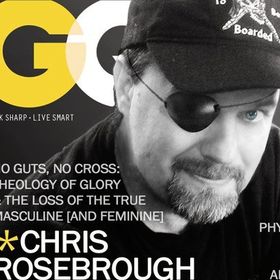
We wish Chris Rosebrough would resolve to make a heretic walk the plank. The crocs are hungry, Cap’n.
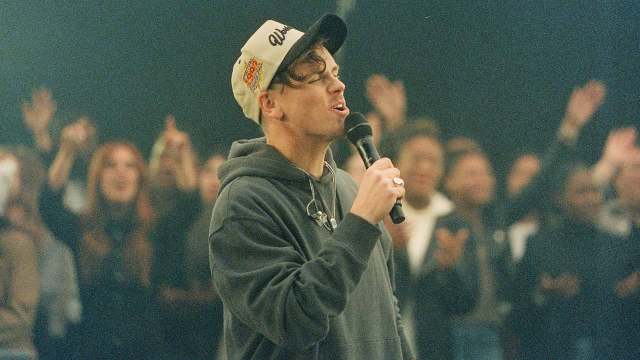
We wish contemporary “Christian” artists would resolve to stop looking like they’re passing a kidney stone when they’re singing. Is praising the Lord really this painful? Well…maybe…if you’re praising the lord of the flies.
We wish Todd White would resolve to get a haircut. My head and neck hurt just thinking how heavy that mass of hair must be. You’re not Samson, dude.
We wish James White would resolve to stop wearing seizure-inducing sweaters. And, great googly moogly, the dear brother lives in Phoenix! It’s like wearing sweaters on the surface of the sun!
Got a resolution you’d like to make for an evangelical celebrity? Make it lighthearted and pithy – not mean-spirited – and share it in the comments below. I’ll pick my favorite and add it to this article. (Bonus points if yours is funnier than mine were – and that’s a pretty low bar!)
Photo Credits: I did not take any of these photos. I am not claiming credit for any of these photos. I am not making money off any of these photos. If you are the photographer of one of these images and want credit, let me know, and I’ll credit you. If you aren’t the photographer and want to know who is, click here.
Walls. Sometimes they go up, and sometimes they come a tumblin’ down. When I was a kid it was, “Mr. Gorbachev, tear down this wall!” Now it’s, “Elect me and I’ll build a wall between the United States and Mexico.”
There was a time in history when it was common practice for a city to have a wall built around its perimeter. Walls have historically been built for protection, to keep inhabitants safe from attacking marauders. When Israel returned to Jerusalem after Babylonian captivity, their first priority was to rebuild the altar – their focal point of worship. Next came the temple – to consecrate, or set apart, their worship. And, finally, the city wall – which protected everything, including their worship.
Today, when Christians plant a church, we start off with our focal point of worship, the author and finisher of our faith, Jesus Christ. He is the foundation of the church, the center of our worship, our rallying point.
As the church grows, we consecrate it, setting it apart from other organizations and gatherings by buying or constructing its own special building. It’s not a store or an office or a restaurant. It’s a church. It’s where believers gather to worship, fellowship, and be trained in God’s word.
But somehow we never get around to protecting our churches from enemy attack. Indeed, it hardly ever occurs to most pastors and church members that there’s a need for a wall.
But there is. A huge need. And for some churches, it’s already too late.
Pastor, I plead with you- it’s time to build a wall around your church. A “walls of Jericho”-high wall. A chariot races on top- thick wall. And an armed guard posted at the gate. Not to keep out visitors or people who might look or act differently from your congregation- God forbid! It’s to keep out the false doctrine that’s infiltrating and attacking the Body in so many ways. And some areas of your wall are going to need extra fortification because they’re protecting these six vulnerable areas.
1. The Preaching of the Word
Pastor, the buck starts and stops with you. Are you preaching the Word? In season and out of season? Are you rightly handling God’s word? Preaching sound doctrine and rebuking those who contradict it? Declaring the whole counsel of God? Or is your focus on preaching to entertain, to keep people happy, to encourage giving, or to keep from rocking the boat? Only you can answer these questions. Strong preaching is the first step in building a strong wall to protect your church.
2. The Teaching of the Word
How much do you know about how, and what, your Sunday School, Bible study, or other small group leaders teach? Have you ever observed, evaluated, or interviewed any of your teachers? Does your church have any formal qualifications for teachers? Are they required to go through any sort of training? Who are their spiritual influencers? Which celebrity pastors and authors are they recommending to their classes?
A teacher who is listening to or reading materials by false teachers during the week is going to have her theology shaped by those false teachers, and she’s going to bring that warped theology into the classroom where it will infect the students. A teacher whose main discussion questions are, “How do you feel about this verse?” or “What does this verse mean to you?” is not handling God’s word properly and, thus, not properly training her students. Find out what’s going on in your Sunday School classrooms, and strengthen your wall by strengthening your teachers.
3. Sunday School/Small Group Curricula
Because so few teachers are properly trained, churches tend to rely heavily on the Sunday School curricula to do the actual teaching. Have you examined your curricula lately? Are the lessons anchored in copious amounts of rightly exposited Scripture or are they mainly comprised of inspirational stories and illustrations? Are the discussion questions watered down pablum or do they challenge people to think and search the Scriptures for understanding? Does the curriculum recommend supplementary materials or music from doctrinally sound, or questionable, sources? Does the curriculum recommend “homework assignments” that include unbiblical practices such as contemplative prayer or yoga? Build a solid wall with solid curricula.
If your church uses KLOVE’s playlist to formulate its worship set, you’re probably importing false doctrine right into your worship service. You’ve got to vet both the lyrics (hymns don’t get a pass on this, by the way) and the artists for sound theology. When it comes to contemporary worship music, the most popular and common sources of false doctrine are Hillsong, Elevation, and Bethel/Jesus Culture. Here’s another good resource.
6. Ecumenism
Is your church partnering or fellowshipping with other local churches outside your own denomination? Are you thoroughly familiar with their beliefs and practices? Are those beliefs and practices biblical? Where do they stand on female pastors, elders, and teachers? Homosexuals as church members or leaders? Abortion? The inerrancy, infallibility, and supremacy of Scripture? Extra-biblical revelation? Signs and wonders? Works righteousness? Do they have a biblical statement of faith “on paper” but stray from it in practice? Not every organization that calls itself a Christian church actually is one by biblical standards, and we are not to partner or fellowship with those whose beliefs and practices do not line up with Scripture.
That’s a lot of vetting to do for a pastor who’s probably already overwhelmed and stretched thin. May I make a suggestion? Don’t try to do it alone. After all, those cities with protective walls hired soldiers to guard the gates. Is there an associate pastor who could take on vetting curricula and fellow churches and conference speakers? Is there a mature, discerning layman or woman you trust who would be willing to lend a hand with researching your music or women’s Bible study books? Do you have a “master teacher” capable of training your Sunday School and small group teachers? Ask your people for help. Use the able. Train the willing. Get that wall built to shut out false doctrine, and station your armed guards at the gates to check out everything that comes in.
The enemy is out there, dear pastor. Let’s make sure that’s where he stays.