Ruth Bible Study

Ruth: Lesson 2

Previous Lessons: 1

Ruth 1

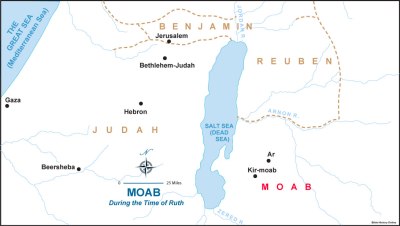
Photo courtesy of bible-history.com

In the days when the judges ruled there was a famine in the land, and a man of Bethlehem in Judah went to sojourn in the country of Moab, he and his wife and his two sons. 2 The name of the man was Elimelech and the name of his wife Naomi, and the names of his two sons were Mahlon and Chilion. They were Ephrathites from Bethlehem in Judah. They went into the country of Moab and remained there. 3 But Elimelech, the husband of Naomi, died, and she was left with her two sons. 4 These took Moabite wives; the name of the one was Orpah and the name of the other Ruth. They lived there about ten years, 5 and both Mahlon and Chilion died, so that the woman was left without her two sons and her husband.

6 Then she arose with her daughters-in-law to return from the country of Moab, for she had heard in the fields of Moab that the Lord had visited his people and given them food. 7 So she set out from the place where she was with her two daughters-in-law, and they went on the way to return to the land of Judah. 8 But Naomi said to her two daughters-in-law, โ€œGo, return each of you to her mother’s house. May the Lord deal kindly with you, as you have dealt with the dead and with me. 9 The Lord grant that you may find rest, each of you in the house of her husband!โ€ Then she kissed them, and they lifted up their voices and wept. 10 And they said to her, โ€œNo, we will return with you to your people.โ€ 11 But Naomi said, โ€œTurn back, my daughters; why will you go with me? Have I yet sons in my womb that they may become your husbands? 12 Turn back, my daughters; go your way, for I am too old to have a husband. If I should say I have hope, even if I should have a husband this night and should bear sons, 13 would you therefore wait till they were grown? Would you therefore refrain from marrying? No, my daughters, for it is exceedingly bitter to me for your sake that the hand of the Lord has gone out against me.โ€ 14 Then they lifted up their voices and wept again. And Orpah kissed her mother-in-law, but Ruth clung to her.

15 And she said, โ€œSee, your sister-in-law has gone back to her people and to her gods; return after your sister-in-law.โ€ 16 But Ruth said, โ€œDo not urge me to leave you or to return from following you. For where you go I will go, and where you lodge I will lodge. Your people shall be my people, and your God my God. 17 Where you die I will die, and there will I be buried. May the Lord do so to me and more also if anything but death parts me from you.โ€ 18 And when Naomi saw that she was determined to go with her, she said no more.

19 So the two of them went on until they came to Bethlehem. And when they came to Bethlehem, the whole town was stirred because of them. And the women said, โ€œIs this Naomi?โ€ 20 She said to them, โ€œDo not call me Naomi; call me Mara, for the Almighty has dealt very bitterly with me. 21 I went away full, and the Lord has brought me back empty. Why call me Naomi, when the Lord has testified against me and the Almighty has brought calamity upon me?โ€

22 So Naomi returned, and Ruth the Moabite her daughter-in-law with her, who returned from the country of Moab. And they came to Bethlehem at the beginning of barley harvest.


The Holy Bible, English Standard Version. ESVยฎ Permanent Text Editionยฎ (2016). Copyright ยฉ 2001 by Crossway Bibles, a publishing ministry of Good News Publishers.


Questions to Consider

1. ย Briefly review the background and setting of the book of Ruth from lesson 1 (link above).

2. What does verse 1 tell us about the period of Israel’s history in which the events of the book of Ruth take place? As we learned in lesson 1, Jairย was most likely judging Israel at this time. What else does verse 1 tell us was happening in Israel as the story opens?

3. Describe the sequence of events in verses 1-5 in your own words. Who are each of the people in this passage, and how are they related to one another? What is an Ephrathite?

4. On the map, trace Naomi’s family’s journey to and from Moab. What does the Old Testament tell us about Moab and the Moabites? Were they enemies or allies of Israel? Were they worshipers of God or of idols? What had happened the last time Israel joined with Moab? Did God want His people mingling with the Moabites?

5. Compare Naomi and Ruth’s journey (6) from the pagan land of Moab back to Israel, the Promised Land of God’s people, with the prodigal son’s journey from the pig pen back to his father’s house. How can both of these stories symbolize passing from death in sin to life in Christ?

6. In verses 8-13, what is Naomi’s main concern for Ruth and Orpah? Considering the culture and socio-economic status of women at that time, was this a valid concern? But considering the fact that Ruth and Orpah would be returning to a life of idolatry (15) if they stayed in Moab, why didn’t Naomi concern herself more with their spiritual state and urge them to come back to Bethlehem with her? Is it possible Ruth was already a believer and didn’t want to stay in a land of idolatry? Could this have been one of the things on Ruth’s mind in verses 16-17? (Note Ruth’s mention of “God” in 16 and her invoking of “the Lord” in her vow in 17).

7. Look at the footnotes on verse 20. What do the names “Naomi” and “Mara” mean? Describe Naomi’s outlook and attitude in verses 20-21. The Bible tells us to give thanks in all circumstances. Naomi had certainly been through some sad and difficult times, but she had many things to be thankful for. What were some of those things?ย What impact might it have had on the women of Bethlehem (19) if Naomi had testified to God’s love, care, and faithfulness in her adversity instead of spewing bitterness?

8. Which of God’s attributes do we see displayed in this chapter? Point to examples in the text of God’s sovereignty, provision, guidance, and other attributes you see.


Homework

Like Naomi, sometimes we can get so wrapped up in our own problems and suffering that we don’t think about what our attitude, words, and demeanor are saying to others about God. Think about a difficult time you’ve experienced in the past (or may be experiencing now). How did you talk about it to others? With bitterness and complaints? What were some things you could have been thankful to God for in that situation? What impact might it have had on those around you if you had testified to God’s love, care and faithfulness instead? Might your testimony about God’s goodness during your suffering have led to an opportunity to share the gospel with someone?
Basic Training, Bible

Basic Training: The Bible Is Sufficient

For more in the Basic Training series, click here.

God said to me…/I heard God say…

Listen for God’s voice…

God spoke to me in a dream…

God gave me a vision of…

We hear things like this non-stop these days in pop-evangelicalism. And it’s not just in the whack job Word of Faith or New Apostolic Reformation movements, or in Charismatic churches, either. These words are coming out of the mouths of regular, every day Baptists and Methodists and Lutherans and Presbyterians, too. It’s largely due to the infiltration of Word of Faith and New Apostolic Reformation false doctrine into our churches via a) “Bible studies” from false teachers like Beth Moore, Joyce Meyer, Priscilla Shirer, Christine Caine, Lysa TerKeurst and others and b) individual church members who feed on a steady diet of “Christian” television such as TBN, CBN, Daystar, and GodTV. Christians are getting the false idea that they need to hear, or should be hearing, God speak to them instead of trusting in the sufficiency of God’s word.

The theological term for “God spoke to me/showed me in a dream/etc.” is extra-biblical revelation– words or revelations, supposedly directly from God, that happen outside the pages of the Bible. I’d like to share with you six reasons God’s word is sufficient, and extra-biblcal revelation is both unbiblical and unnecessary.

1. Extra-biblical revelation is not the method God has established for communicating with us.
Maybe you and I would prefer it if God would just talk to us and tell us, one on one, in no uncertain terms, what He wants us to do. But that’s not the way that God prefers to communicate with New Testament Christians this side of a closed canon. God chooses to communicate with us through His written word. He says:

All Scripture is breathed out by God and profitable for teaching, for reproof, for correction, and for training in righteousness, that the man of God may be complete, equipped for every good work. 2 Timothy 3:16-17

Long ago, at many times and in many ways, God spoke to our fathers by the prophets, but in these last days he has spoken to us by his Son, whom he appointed the heir of all things, through whom also he created the world. Hebrews 1:1-2

Let’s bear in mind, it is God Himself who breathed out these words. These verses are God speaking to us, and He says Scripture is enough to make us complete and mature, and to equip us for everything He has for us to do.

When we insist on “hearing God speak” outside of Scripture, we’re essentially saying, “God, I reject Your way and demand you do things my way instead.” Remember, God set up this whole Christianity thing, and He gets to make the rules, not us.

2. What makes you so sure it’s God who’s speaking to you?
Just because you have a feeling, an urge, or an intense experience doesn’t mean that was God speaking to you. Maybe it was Satan. Maybe it was your own wicked heart. Maybe it was a temptation to sin. Maybe it was just an old memory resurfacing. How can you know, objectively (not based on your feelings, the intensity of the experience, etc.), beyond a shadow of a doubt, that it was actually God speaking to you? And if you can’t know for sure it was God, why would you put your trust in whatever “He said” to you?

As Christians, we can irrefutably know God is speaking to us when we read His word because we know He is the author of Scripture.

3. Extra-biblical revelation is redundant and unnecessary.
Even those (most of them, anyway) who believe God still talks to people will tell you that God will never say something to you that contradicts His written Word. So why not just bypass the whole “God spoke to me” thing and go straight to the Bible? Or as Puritan John Owen put it:

As God Himself has told us in His written Word, the Bible is sufficient instruction for every situation in our lives. We don’t need God to speak to us verbally. He has already spoken. Why aren’t we satisfied with that?

4. Insisting on extra-biblical revelation demonstrates a lack of trust in God and His ways.
James 1:5 says:

If any of you lacks wisdom, let him ask God, who gives generously to all without reproach, and it will be given him.

And where do we get wisdom to handle the situations and decisions of life? Not from a voice from Heaven saying “do this” or “do that,” but from Scripture:

The unfolding of your words gives light; it imparts understanding to the simple. Psalm 119:130

Let my cry come before you, O Lord; give me understanding according to your word! Psalm 119:169

The law of the Lord is perfect, reviving the soul; the testimony of the Lord is sure, making wise the simple; Psalm 19:7

and how from childhood you have been acquainted with the sacred writings, which are able to make you wise for salvation through faith in Christ Jesus. 2 Timothy 3:15

We don’t need God to tell us what decision to make, we want Him to, because that’s easier than doing the hard work of digging into Scripture, studying the biblical principles that apply to our situation, making the best and most godly decision we can, and trusting God for the outcome. But that’s exactly what God wants us to do:

Trust in the Lord with all your heart, and do not lean on your own understanding. In all your ways acknowledge him, and he will make straight your paths. Proverbs 3:5-6

When we honor and trust God by looking to His written word for the Holy Spirit’s guidance, He has promised to give us wisdom to make godly decisions and make our paths straight.

5. What about being led by the Holy Spirit?
For some reason people often draw a distinction between being “led” by the Holy Spirit and studying the Scriptures He breathed out, as though they’re two different things. Studying, believing, and obeying the words the Holy Spirit inspired is being led by the Spirit.

6. Extra-biblical revelation sets up a class system within Christianity.
Why do some people “hear” from God and others don’t? The reason implied by the Christian leaders (or even your fellow church members) – who make sure you know they’ve personally heard from God – is that people God speaks to are, spiritually, a cut above. Special. More faithful. More favored by God than you are. It’s like a carrot dangling in front of a horse. It keeps you buying their books, attending their conferences, following them on social media, hoping against hope that one day you’ll become one of the spiritual elite.

But how does the idea that others are “hearing God speak” affect a Christian who isn’t hearing from God? She starts thinking maybe God isn’t pleased with her. Maybe she’s sinning against God in some way. Maybe she’s not being faithful enough, praying enough, giving enough. Maybe God doesn’t love her. Maybe she’s not even saved. It turns her into a second class citizen of God’s Kingdom and causes her to covet something she doesn’t have and God never promised her.

None of this is biblical. There are no first tier and second tier Christians. A lot of the people God actually spoke to in Scripture were hardly paragons of spiritual awesomeness: BalaamSaul, and Moses, just to name a few. And God measures “spiritual awesomeness” not in strutting your closeness to Him before others, but in humility, servanthood, and crucifying self.

Ladies, God’s written Word is sufficient for our every need. We can trust that the words of Scripture are directly from the lips of God Himself. No one can say that with any certainty about extra-biblical revelation. Trust God to direct your paths and give you biblical wisdom to make godly decisions as you grow in the knowledge and understanding of His word.


Additional Resources

God Doesnโ€™t Whisper! With Jim Osman at A Word Fitly Spoken

Thatโ€™s Enough! The Sufficiency of Scripture at A Word Fitly Spoken

Isnโ€™t the Gospel enough? (The Sufficiency of Scripture) at A Word Fitly Spoken

How Does the Holy Spirit Lead Us? at A Word Fitly Spoken

Basic Training: 8 Steps to Finding Godโ€™s Will for Your Life

Where is it written that God doesn’t speak audibly any more? at Naomi’s Table

God Told Me: The Pentecostalization of Evangelical Theology of Revelation at G3 Ministries

Listening to God Without Getting All Weird About It by David Appelt

How God Speaks To Us Today by Tim Challies

Ruth Bible Study

Ruth: Lesson 1

Welcome to our new study of Ruth! There are so many captivating facets to the book of Ruth: it’s a snippet of Old Testament history, a beautiful romance, a demonstration of God’s love and value of women, a foreshadowing of Christ- our Redeemer. Over the next several weeks, we’ll be taking a look at all these treasures – and more – that God has for us to discover through Ruth’s story.

Let’s get started!

Introduction to the book of Ruth:

Before we begin studying a book of the Bible, it’s very important that we understand some things about that book. We need to know…

Who the author was and anything we might be able to find out about him or his background.

Who the audience of the book is: Jews or Gentiles? Old Testament Israelites or New Testament Christians? This will help us understand the author’s purpose and approach to what he’s writing.

What kind of biblical literature we’re looking at. We approach books of history differently than books of wisdom, books of wisdom differently than books of prophecy, etc.

What the purpose of the book is. Was it written to encourage? Rebuke? Warn?

What the historical backdrop is for the book. Is Israel at war? At peace? In exile? Under a bad king? Good king? Understanding the historical events surrounding a piece of writing help us understand what was written and why it was written.

When the book was written. Where does the book fall on the timeline of biblical history? This is especially important for Old Testament books which are not always arranged in chronological order.

So this week, before we start studying the actual text of the book of Ruth, we need to lay the foundation to understanding the book by finding the answers to these questions.

Read the following overviews of the book of Ruth, taking notes on anything that might aid your understanding of the book, and answer the questions below:

Bible Introductions: Ruth at Grace to You

Overview of the Book of Ruthย at Reformed Answers

Book of Ruthย at Got Questions

1. Who wrote the book ofย Ruth? Does the fact that we don’t definitively know the author’s name mean we can’t trust the biblicality of this book?

2. What is the approximate date Ruth was written? During what period of Israel’s history (kings, exile, judges, antediluvian, etc.) was Ruth written?

3. Considering the period of Israel’s history during which Ruth was written, who do you think is the intended audience of the book of Ruth? Why?

4. Which genre of biblical literature is the book of Ruth: law, history, wisdom, poetry, narrative, epistles, or prophecy/apocalyptic? What does this this tell us about the approach we should take when studying this book versus our approach to books of other genres?

5. What is the theme or purpose of the book of Ruth?

6.ย Who are the main characters in the book of Ruth?

7. Where do the events in the book of Ruth take place? (Sometimes, a good Bible map like this oneย orย this oneย can be helpful.)

8. What else did you learn about Ruth or the setting of this book that might help you understand the text of the book better?

Basic Training, Bible

Basic Training: The Bible Is Our Authority

For more in the Basic Training series, click here.

The Bible. Scripture. The Good Book. It used to be so blatantly self-evident that God’s written Word was the foundation and standard for the Christian faith that it was assumed. A given. You learned, “I stand alone on the word of God- the B-I-B-L-E,” when you were three or four years old, you believed it, and you moved on.

But take a look at the Westernized version of Christianity these days. The fruit of abandoning the authority of Scripture is chilling. From the demonic tremoring and barking antics of New Apostolic Reformation “churches” to the rebellion of female “pastors” to the “gay Christian” movement to “Christian” abortion doctors, it’s clear that an astounding number of self-professed Christians and churches don’t submit to Scripture’s mandates for their beliefs and practices.

“Whew,” you might be thinking, “my church and I must be OK. We call homosexuality sin. We’re pro-life. Our pastor is male. And the wildest our congregation gets is when Brother Joe bellows a good, hearty ‘Amen!’ during the sermon.”

Those are all good, biblical things and I don’t want to minimize them. But is it good enough? Are there other, more subtle ways you or your church aren’t submitting to the authority of Scripture? And what does it mean that the Bible is our authority, anyway?

Have you ever played Monopoly? If you have, you know that you’re supposed to use a Monopoly board, two dice, the and the game pieces and Chance and Community Chest cards that come with the game. You also know that there is a standard set of Monopoly rules that are supposed to be followed.

monopoly-1356307_640

Suppose a friend invited you to play Monopoly but wanted to use a checker board instead of a Monopoly board. Or wanted to create a new rule that you would get $500 for passing Go instead of $200. Or that you could get out of jail without rolling doubles.

Monopoly was created in 1903 by a lady named Elizabeth J. Magie Phillips. Magie created the game to teach people the consequences of having large or valuable tracts of land controlled by private monopoliesยน. Each piece of the game and each rule was created with that teaching goal in mind. To alter the rules of the game is to, at best, be out of alignment with Magie’s intentions and purposes, and, at worst, to not be playing Monopoly at all. If you want to truly play Monopoly, learn the fullest extent of the lesson Magie was trying to teach, and respect Magie as the creator of the game, you’ve got to play by her rules. All of them. Even the ones you don’t like or particularly understand.

Many of the same principles apply to Christianity. God set Christianity up a certain way with His own intentions and purposes. If we alter His rules, we’re, at best, not lined up with those intentions and purposes, and, at worst, not practicing Christianity at all. If we really want to honor God, grow in Christ to the greatest extent and truly be practicing biblical Christianity, we’ve got to play by His rules. All of them. Even the ones we don’t particularly like or understand.

But what many Christians are doing today is taking their “Monopoly game” of Christianity and assuming it’s for their own entertainment, better quality of life, or positive feelings. And because they’re largely ignorant of the Creator of the “game” and His purposes and intentions behind said game, the players start tossing out His rules whenever those rules don’t fit the purposes and intentions of the players.

God created you and me and the world and Christianity and the church for His glory. He gets to make the rules. We follow the rule book (the Bible), not because those rules will make us personally happy or successful, but – simply and ultimately – because they are given by God and glorify Him. What He says goes, and we honor Him by our obedience. We need to remember that our role in the game is player, not Creator. Players submit to the authority of the Creator.

When the Creator says…
I created the world in six literal days and here’s how I did it, we don’t dishonor His word by trying to cram evolution in there and make it fit. We believe Him, and we teach what His word says.

When the Creator says…
Ladies, I don’t want you to preach, teach Scripture to men, or hold authority over men in the church, we don’t search for loopholes. We search for ways we can humble ourselves and serve God in ways that please Him, not ourselves.

When the Creator says…
Here’s how I want you to pray, we repent of using unbiblical prayer methods such as private prayer languages and contemplative prayer, and we pray the way God wants us to pray.

When the Creator says…
Pastor, I want you to preach the Word, that means pastors preach rightly handled, in context Scripture- not a stand up comedy routine, not the storyline of the latest blockbuster movie, not a half hour of jokes and personal anecdotes, not their own opinions and self-styled doctrines.

When the Creator says…
I want you to stay away from people who teach false doctrine, it doesn’t matter how much we like that teacher, how good she makes us feel, how much we think she’s helping us in our walk with the Lord, or that we’d rather “chew up the meat and spit out the bones.” We reject her, and her teaching, and listen to those who teach sound biblical doctrine instead.

We bow the knee to what God’s word says. Period.

Ladies, if you don’t want to cripple your growth in Christ, one of the worst phrases you can utter about Christian beliefs and practices is, “Well, I just think…” followed by your own personal feelings or opinions. You don’t write the rules.

The Bible says:

You are not your own, for you were bought with a price. 
1 Corinthians 6:19b-20a

…you…have become slaves of God…
Romans 6:22

If you’re a genuinely regenerated believer, you are the slave of Christ. That means you don’t get to hold, or live by, your own feelings or opinions any more. That’s what lost people do. You are only entitled to God’s opinions as set down in His written Word. Your opinions don’t matter.

mozart

When it comes to Christian beliefs and practices, your experiences don’t matter either. It doesn’t matter what kind of so-called supernatural experience you had where you babbled incoherently or “heard God speak” or saw a “vision” or whatever. If your interpretation of your experience conflicts with the written word of God, your interpretation of your experience is wrong. Something may have happened, but it wasn’t God. (And if something supernatural happened and the Bible says God doesn’t work that way, there’s only one other option.)

When you decide what you’re going to believe and do based on your own opinions, feelings, and subjective personal experiences rather than the written word of God, what you’re doing is saying, “I know better than the almighty, all-knowing God of the universe.” You’re setting yourself up as judge over Scripture. You’re in charge, not God. Doesn’t sound much like a slave, does it?

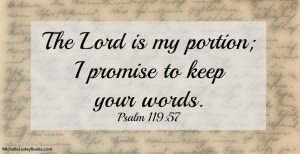
That’s because Scripture says those who truly belong to Christ will have a heart to keep His word. We will stumble and fall along the way. We will sometimes mistakenly believe things we shouldn’t. But one of the hallmarks of a Christian is that she loves and strives to obey God’s word. Because, as Christians, the Bible is our authority.

ps-119-57


Additional Resources

What does it mean that the Bible should be our sole authority for faith and practice? at Got Questions

For the Authority of Scripture by Dr. John MacArthur

Divine Authorship and Authority at Ligonier

The Authority of the Bible by Dr. Martyn Lloyd-Jones

Bad Fruit, Diseased Trees, and the Authority of God’s Word


ยนMonopoly (game), Early History, Wikipedia, February 16, 2017
ยฒAmadeus photo and quote courtesy of Orion Pictures, Amadeus1984.

Pop Theology, Social Media, Throwback Thursday

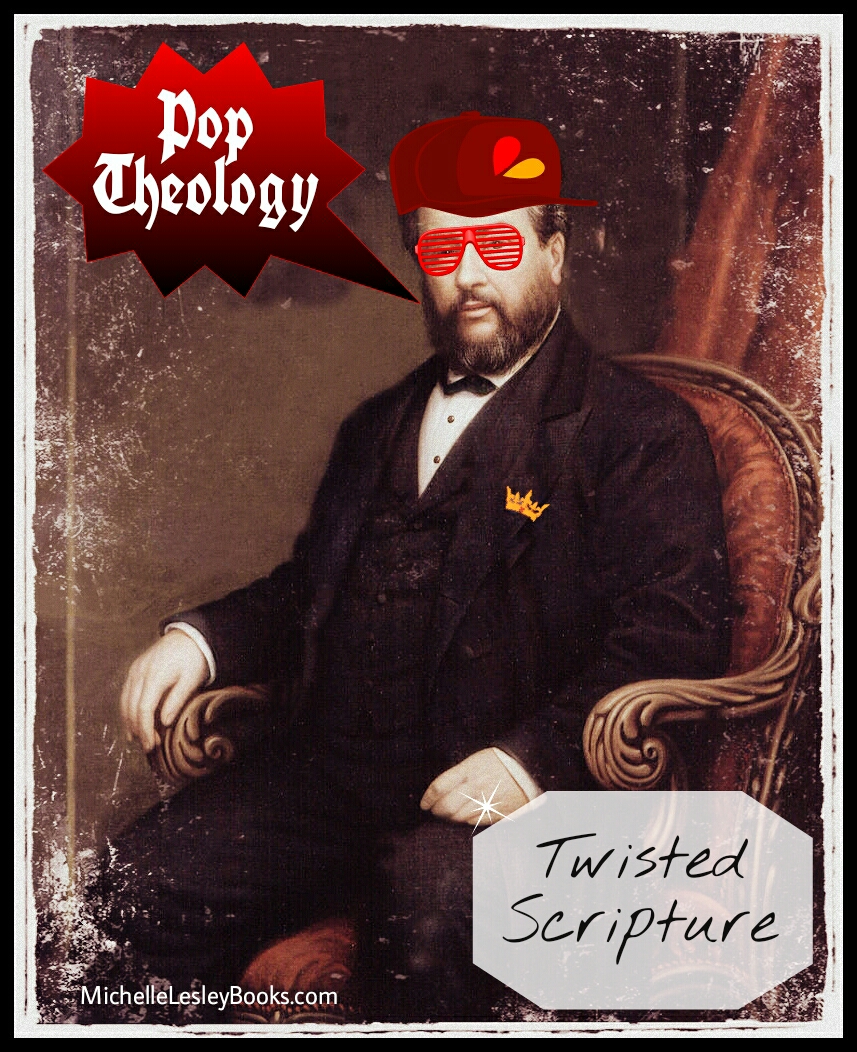
Throwback Thursday ~ Pop Theology: Twisted Scripture

Originally published May 22, 2015pop theology twisted scripture


Dear Pop-

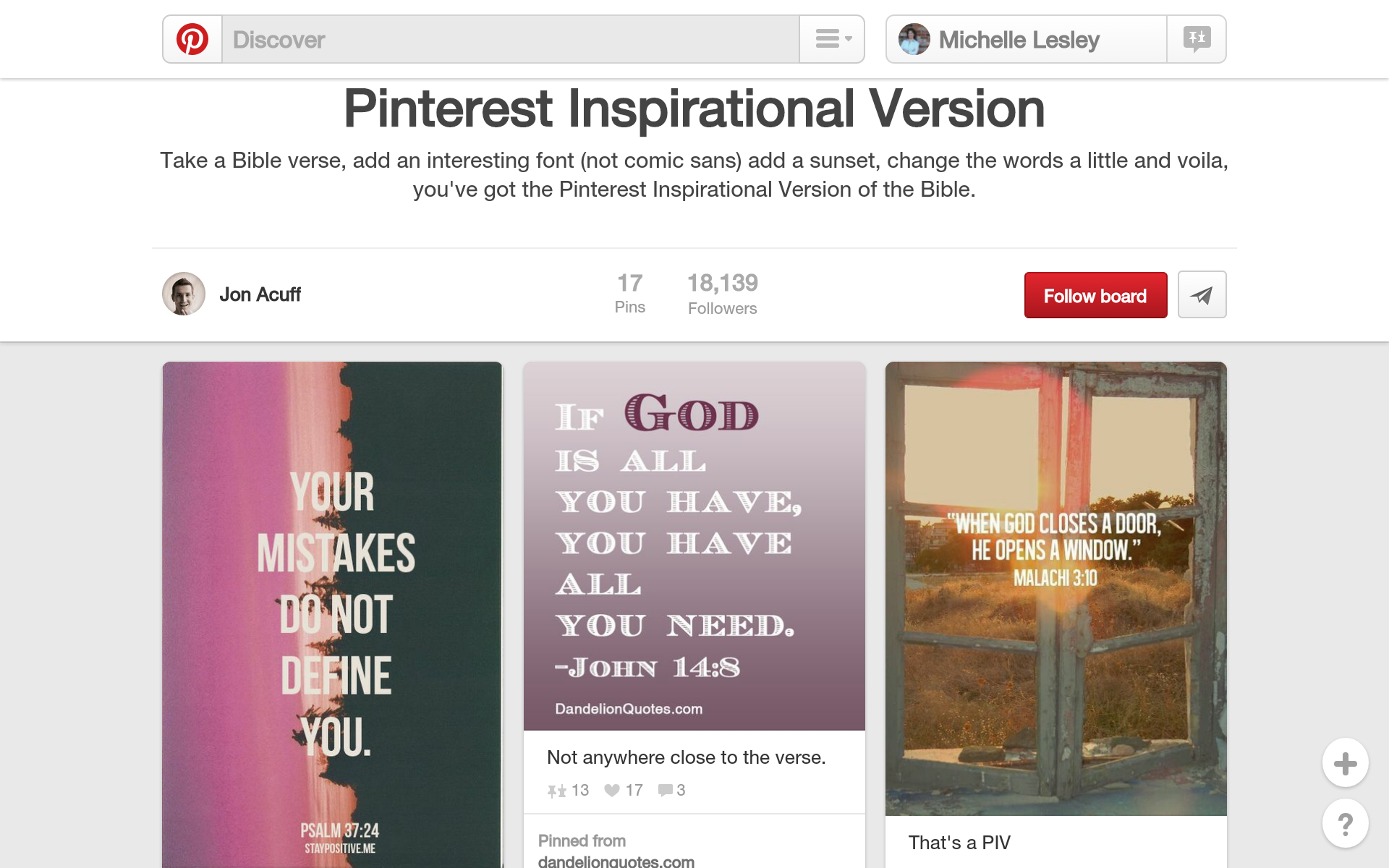
I saw this meme that I thought was a Bible verse. It had a nice thought and a Scripture reference after it, but when I turned there in my Bible, the nice thought didn’t say anything close to what the verse actually said. It turns out that someone wrote what the verse meantย to her and then put the Scripture reference after it. And there’s a whole Pinterest board dedicated to memes like this! Is it OK to handle God’s word like that? I’ve also included some other memes I found that sound fishy to me. Your thoughts?

Penny Pinterest


Screenshot_2015-04-23-08-20-50

Dear Penny,

Jon Acuff’s a fun dude, but this is dissin’ God’s word. Ain’t nobody – NO-O-O-O-O-BODY got the props to bling up the Bible. No addin’ to it. No subtractin’ from it. Bad things’ll go down, ya dig?ย ย Jots? Tittles?ย Keep your mitts off, and swing that sword right. And what up with all this “Inspirational Version”? God’s word is da bomb diggity all by its onliness, got me?


10857871_884902334876078_6947353962358613734_n

Heck to the no. Check it.


10401339_2331680386869577_7526666480006145492_n

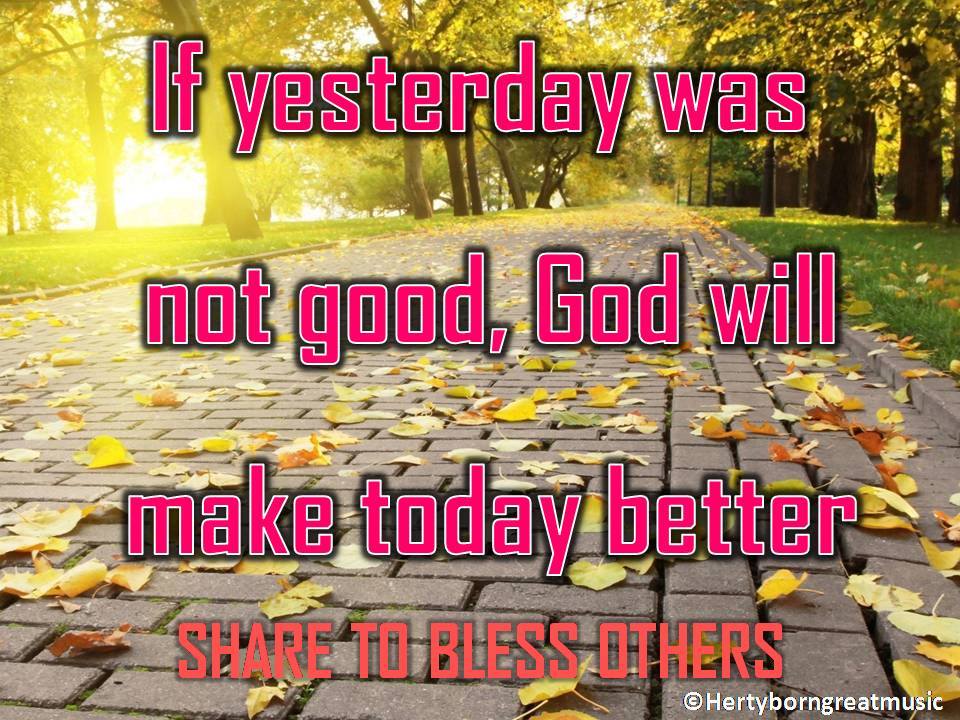
Fo’ relz? Where’s that in the Big Book? Lemme let you in on a little inside info: nowheresville. Jesus said as long as we’re hangin’ on the big blue, there’s gonna be trouble. Lots of it. But check it out- who cares? We don’t throw down our faith on havin’ a good day. We throw down our faith on Jesus, even when it’s a bad scene.


11051558_10153641788073625_1262363071_n

Yeah? Tell that to Jesus. His haters had front row seats to torture Him and watch Him die. Or the eleven out of Jesus’ twelve closest homeboys who were executed by their haters. Put your peeps on a copy of Foxe’s Book of Martyrsย and quit littering up social media with this mess. Kick that prosperity gospel junk to the curb.


Well, Penny. I’ve laid down the gospel 411 for ya. Keep your specs on Jesus and keep the faith.

For the Homies,
Pop