Wednesday's Word

Wednesday’s Word ~ Hosea 1

hosea 1 10Hosea 1

The word of the Lord that came to Hosea, the son of Beeri, in the days of Uzziah, Jotham, Ahaz, and Hezekiah, kings of Judah, and in the days of Jeroboam the son of Joash, king of Israel.

2 When the Lord first spoke through Hosea, the Lord said to Hosea, “Go, take to yourself a wife of whoredom and have children of whoredom, for the land commits great whoredom by forsaking the Lord.” 3 So he went and took Gomer, the daughter of Diblaim, and she conceived and bore him a son.

4 And the Lord said to him, “Call his name Jezreel, for in just a little while I will punish the house of Jehu for the blood of Jezreel, and I will put an end to the kingdom of the house of Israel. 5 And on that day I will break the bow of Israel in the Valley of Jezreel.”

6 She conceived again and bore a daughter. And the Lord said to him, “Call her name No Mercy, for I will no more have mercy on the house of Israel, to forgive them at all. 7 But I will have mercy on the house of Judah, and I will save them by the Lord their God. I will not save them by bow or by sword or by war or by horses or by horsemen.”

8 When she had weaned No Mercy, she conceived and bore a son. 9 And the Lord said, “Call his name Not My People, for you are not my people, and I am not your God.”

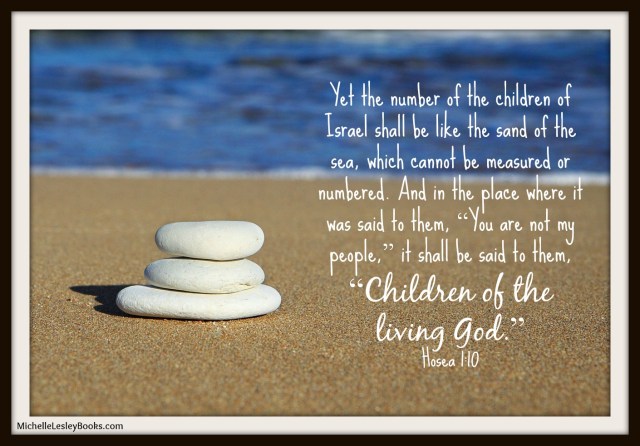
10  Yet the number of the children of Israel shall be like the sand of the sea, which cannot be measured or numbered. And in the place where it was said to them, “You are not my people,” it shall be said to them, “Children of the living God.” 11 And the children of Judah and the children of Israel shall be gathered together, and they shall appoint for themselves one head. And they shall go up from the land, for great shall be the day of Jezreel.


The Holy Bible, English Standard Version Copyright © 2001 by Crossway Bibles, a publishing ministry of Good News Publishers.


Questions to Consider:

1. Who wrote Hosea? What is the theme or purpose of the book? Which genre of biblical literature (wisdom, epistle, prophecy, history, etc.) is Hosea? What important background information about Hosea and this book can we glean from verse 1?

2. In verses 2-3 is God telling Hosea to commit a sin by marrying “a wife of whoredom”? (see interpretive challenges for help) Does this passage give Christians permission to sin in order to carry out God’s plans or proclaim His word?

3. How was Hosea’s marriage a picture of Israel’s sin? (2) Whom did Hosea represent in this picture? Whom did Gomer represent? What was the sin Israel had committed that God called “whoredom”? Do you see evidence of this sin in your life that you need to repent of? Do you see how God considers it “adultery” against Him?

4. Which attributes of God are portrayed in the names of the three children? (4-9) What was God saying to Israel through each of the names of the children? Do these attributes and messages conflict with other attributes we know to be true of God, such as mercy, forgiveness, compassion, and love?

5. Why does Paul quote from Hosea 2:23 and 1:10 in Romans 9:19-28? How does he tie the two passages together, and what is the point he’s trying to make?

Wednesday's Word

Wednesday’s Word ~ Daniel 3

daniel 3 17 18

Daniel 3

King Nebuchadnezzar made an image of gold, whose height was sixty cubits and its breadth six cubits. He set it up on the plain of Dura, in the province of Babylon. 2 Then King Nebuchadnezzar sent to gather the satraps, the prefects, and the governors, the counselors, the treasurers, the justices, the magistrates, and all the officials of the provinces to come to the dedication of the image that King Nebuchadnezzar had set up.3 Then the satraps, the prefects, and the governors, the counselors, the treasurers, the justices, the magistrates, and all the officials of the provinces gathered for the dedication of the image that King Nebuchadnezzar had set up. And they stood before the image that Nebuchadnezzar had set up. 4 And the herald proclaimed aloud, “You are commanded, O peoples, nations, and languages, 5 that when you hear thesound of the horn, pipe, lyre, trigon, harp, bagpipe, and every kind of music, you are to fall down and worship the golden image that King Nebuchadnezzar has set up. 6 And whoever does not fall down and worship shall immediately be cast into a burning fiery furnace.” 7 Therefore, as soon as all the peoples heard the sound of the horn, pipe, lyre, trigon, harp, bagpipe, and every kind of music, all the peoples, nations, and languages fell down and worshiped the golden image that King Nebuchadnezzar had set up.

8 Therefore at that time certain Chaldeans came forward and maliciously accused the Jews. 9 They declared to King Nebuchadnezzar, “O king, live forever! 10 You, O king, have made a decree, that every man who hears the sound of the horn, pipe, lyre, trigon, harp, bagpipe, and every kind of music, shall fall down and worship the golden image. 11 And whoever does not fall down and worship shall be cast into a burning fiery furnace.12 There are certain Jews whom you have appointed over the affairs of the province of Babylon: Shadrach, Meshach, and Abednego. These men, O king, pay no attention to you; they do not serve your gods or worship the golden image that you have set up.”

13 Then Nebuchadnezzar in furious rage commanded that Shadrach, Meshach, and Abednego be brought. So they brought these men before the king. 14 Nebuchadnezzar answered and said to them, “Is it true, O Shadrach, Meshach, and Abednego, that you do not serve my gods or worship the golden image that I have set up? 15 Now if you are ready when you hear the sound of the horn, pipe, lyre, trigon, harp, bagpipe, and every kind of music, to fall down and worship the image that I have made, well and good. But if you do not worship, you shall immediately be cast into a burning fiery furnace. And who is the god who will deliver you out of my hands?”

16 Shadrach, Meshach, and Abednego answered and said to the king, “O Nebuchadnezzar, we have no need to answer you in this matter. 17 If this be so, our God whom we serve is able to deliver us from the burning fiery furnace, and he will deliver us out of your hand, O king. 18 But if not, be it known to you, O king, that we will not serve your gods or worship the golden image that you have set up.”

19 Then Nebuchadnezzar was filled with fury, and the expression of his face was changed against Shadrach, Meshach, and Abednego. He ordered the furnace heated seven times more than it was usually heated. 20 And he ordered some of the mighty men of his army to bind Shadrach, Meshach, and Abednego, and to cast them into the burning fiery furnace. 21 Then these men were bound in their cloaks, their tunics, their hats, and their other garments, and they were thrown into the burning fiery furnace. 22 Because the king’s order was urgent and the furnace overheated, the flame of the fire killed those men who took up Shadrach, Meshach, and Abednego. 23 And these three men, Shadrach, Meshach, and Abednego, fell bound into the burning fiery furnace.

24 Then King Nebuchadnezzar was astonished and rose up in haste. He declared to his counselors, “Did we not cast three men bound into the fire?” They answered and said to the king, “True, O king.” 25 He answered and said, “But I see four men unbound, walking in the midst of the fire, and they are not hurt; and the appearance of the fourth is like a son of the gods.”

26 Then Nebuchadnezzar came near to the door of the burning fiery furnace; he declared, “Shadrach, Meshach, and Abednego, servants of the Most High God, come out, and come here!” Then Shadrach, Meshach, and Abednego came out from the fire. 27 And the satraps, the prefects, the governors, and the king’s counselors gathered together and saw that the fire had not had any power over the bodies of those men. The hair of their heads was not singed, their cloaks were not harmed, and no smell of fire had come upon them.28 Nebuchadnezzar answered and said, “Blessed be the God of Shadrach, Meshach, and Abednego, who has sent his angel and delivered his servants, who trusted in him, and set aside the king’s command, and yielded up their bodies rather than serve and worship any god except their own God. 29 Therefore I make a decree: Any people, nation, or language that speaks anything against the God of Shadrach, Meshach, and Abednego shall be torn limb from limb, and their houses laid in ruins, for there is no other god who is able to rescue in this way.” 30 Then the king promoted Shadrach, Meshach, and Abednego in the province of Babylon.


The Holy Bible, English Standard Version Copyright © 2001 by Crossway Bibles, a publishing ministry of Good News Publishers.


Questions to Consider:

1. What is the historical setting of the book of Daniel? Which nationality and religion were the Shadrach, Meshach, and Abednego? Nebuchadnezzar? Why do verses 2-3 list out all the specific government officials? What does this tell us about Nebuchadnezzar’s power, influence, and the reach of his edicts? Why might he have built the image and commanded everyone to worship it? (5-7, 12-15)

2. Read Romans 13:1-3. How does Shadrach, Meshach, and Abednego’s defiance of the king compare to God’s command to obey governmental authority? Were they obeying God by refusing to worship the image or disobeying Him by refusing to submit to the king? (Hint) Can you think of any situations in the world today that might force us to disobey the government in order to obey God?

3. Was Shadrach, Meshach, and Abednego’s obedience to God conditional (we’ll obey if God gives us the outcome we want) or unconditional (we’ll obey regardless of the outcome)? (16-18) Do you think they were scared? Are there any situations in your life in which you’re obeying God conditionally?

4. How did Shadrach, Meshach, and Abednego’s unconditional obedience to God and willingness to die for their faith impact Nebuchadnezzar? (26, 28) The officials? (27) What actions did Nebuchadnezzar take as a result? (29-30) How did these actions affect Shadrach, Meshach, and Abednego? The exiled Jews? The people of Babylon? How might your faithfulness to Christ impact those around you?

5. What do we learn about the nature and character of God from this story? Would it call God’s character into question if He hadn’t rescued Shadrach, Meshach, and Abednego?

Here’s a more detailed study I wrote on Daniel 3.

Wednesday's Word

Wednesday’s Word ~ James 4

james 4 4

James 4

What causes quarrels and what causes fights among you? Is it not this, that your passions are at war within you? 2 You desire and do not have, so you murder. You covet and cannot obtain, so you fight and quarrel. You do not have, because you do not ask. 3 You ask and do not receive, because you ask wrongly, to spend it on your passions. 4 You adulterous people! Do you not know that friendship with the world is enmity with God? Therefore whoever wishes to be a friend of the world makes himself an enemy of God. 5 Or do you suppose it is to no purpose that the Scripture says, “He yearns jealously over the spirit that he has made to dwell in us”? 6 But he gives more grace. Therefore it says, “God opposes the proud, but gives grace to the humble.” 7 Submit yourselves therefore to God. Resist the devil, and he will flee from you. 8 Draw near to God, and he will draw near to you. Cleanse your hands, you sinners, and purify your hearts, you double-minded.9 Be wretched and mourn and weep. Let your laughter be turned to mourning and your joy to gloom. 10 Humble yourselves before the Lord, and he will exalt you.

11 Do not speak evil against one another, brothers. The one who speaks against a brother or judges his brother, speaks evil against the law and judges the law. But if you judge the law, you are not a doer of the law but a judge. 12 There is only one lawgiver and judge, he who is able to save and to destroy. But who are you to judge your neighbor?

13 Come now, you who say, “Today or tomorrow we will go into such and such a town and spend a year there and trade and make a profit”— 14 yet you do not know what tomorrow will bring. What is your life? For you are a mist that appears for a little time and then vanishes. 15 Instead you ought to say, “If the Lord wills, we will live and do this or that.” 16 As it is, you boast in your arrogance. All such boasting is evil. 17 So whoever knows the right thing to do and fails to do it, for him it is sin.


The Holy Bible, English Standard Version Copyright © 2001 by Crossway Bibles, a publishing ministry of Good News Publishers.


Questions to Consider:

1. Who wrote the book of James? What was his purpose in writing the book? To whom was it written? What type of literature (historical narrative, epistle, poetry, prophecy, etc.) is this book? Is James a mostly descriptive or prescriptive book?

2. In verses 1-10, what sin(s) does James indicate is at the root of our conflicts with others (1-2), problems in our prayer life (2-3), and rifts in our relationship with God (4-10)? How would you summarize this passage in one sentence?

3. What is “friendship with the world”? (4) Does this mean we can’t associate with lost people? Why does James call his audience “adulterous people”? (4) What Old Testament events or Scriptures might this term have brought to mind for James’ Jewish readers? Why does God make such a big deal about worldliness?

4. How do verses 11-12 fit with other New Testament passages on judging? Is it “speaking evil” of someone to lovingly call her to repentance?

5. In verses 13-16, is James saying we can never make plans in advance? What does this passage teach us about God’s sovereign control over the universe and our lives? What perspective should we have about our lives in relationship to God’s sovereignty, and how should this lead us to greater humility? How does verse 17 define the concept of a “sin of omission”?

Wednesday's Word

Wednesday’s Word ~ Ezekiel 18

For further study on the book of Ezekiel, try my study, Ezekiel.

ez 18 23

Ezekiel 18

The word of the Lord came to me: 2 “What do you mean by repeating this proverb concerning the land of Israel, ‘The fathers have eaten sour grapes, and the children’s teeth are set on edge’? 3 As I live, declares the Lord God, this proverb shall no more be used by you in Israel. 4 Behold, all souls are mine; the soul of the father as well as the soul of the son is mine: the soul who sins shall die.

5 “If a man is righteous and does what is just and right— 6 if he does not eat upon the mountains or lift up his eyes to the idols of the house of Israel, does not defile his neighbor’s wife or approach a woman in her time of menstrual impurity, 7 does not oppress anyone, but restores to the debtor his pledge, commits no robbery, gives his bread to the hungry and covers the naked with a garment, 8 does not lend at interest or take any profit, withholds his hand from injustice, executes true justice between man and man, 9 walks in my statutes, and keeps my rules by acting faithfully—he is righteous; he shall surely live, declares the Lord God.

10 “If he fathers a son who is violent, a shedder of blood, who does any of these things 11 (though he himself did none of these things), who even eats upon the mountains, defiles his neighbor’s wife, 12 oppresses the poor and needy, commits robbery, does not restore the pledge, lifts up his eyes to the idols, commits abomination, 13 lends at interest, and takes profit; shall he then live? He shall not live. He has done all these abominations; he shall surely die; his blood shall be upon himself.

14 “Now suppose this man fathers a son who sees all the sins that his father has done; he sees, and does not do likewise: 15 he does not eat upon the mountains or lift up his eyes to the idols of the house of Israel, does not defile his neighbor’s wife, 16 does not oppress anyone, exacts no pledge, commits no robbery, but gives his bread to the hungry and covers the naked with a garment, 17 withholds his hand from iniquity, takes no interest or profit, obeys my rules, and walks in my statutes; he shall not die for his father’s iniquity; he shall surely live. 18 As for his father, because he practiced extortion, robbed his brother, and did what is not good among his people, behold, he shall die for his iniquity.

19 “Yet you say, ‘Why should not the son suffer for the iniquity of the father?’ When the son has done what is just and right, and has been careful to observe all my statutes, he shall surely live. 20 The soul who sins shall die. The son shall not suffer for the iniquity of the father, nor the father suffer for the iniquity of the son. The righteousness of the righteous shall be upon himself, and the wickedness of the wicked shall be upon himself.

21 “But if a wicked person turns away from all his sins that he has committed and keeps all my statutes and does what is just and right, he shall surely live; he shall not die. 22 None of the transgressions that he has committed shall be remembered against him; for the righteousness that he has done he shall live. 23 Have I any pleasure in the death of the wicked, declares the Lord God, and not rather that he should turn from his way and live? 24 But when a righteous person turns away from his righteousness and does injustice and does the same abominations that the wicked person does, shall he live? None of the righteous deeds that he has done shall be remembered; for the treachery of which he is guilty and the sin he has committed, for them he shall die.

25 “Yet you say, ‘The way of the Lord is not just.’ Hear now, O house of Israel: Is my way not just? Is it not your ways that are not just? 26 When a righteous person turns away from his righteousness and does injustice, he shall die for it; for the injustice that he has done he shall die. 27 Again, when a wicked person turns away from the wickedness he has committed and does what is just and right, he shall save his life.28 Because he considered and turned away from all the transgressions that he had committed, he shall surely live; he shall not die. 29 Yet the house of Israel says, ‘The way of the Lord is not just.’ O house of Israel, are my ways not just? Is it not your ways that are not just?

30 “Therefore I will judge you, O house of Israel, every one according to his ways, declares the Lord God. Repent and turn from all your transgressions, lest iniquity be your ruin. 31 Cast away from you all the transgressions that you have committed, and make yourselves a new heart and a new spirit! Why will you die, O house of Israel? 32 For I have no pleasure in the death of anyone, declares the Lord God; so turn, and live.”


The Holy Bible, English Standard Version Copyright © 2001 by Crossway Bibles, a publishing ministry of Good News Publishers.


Questions to Consider:

1. What is the book of Ezekiel about? Which genre (history, poetry, wisdom, etc.) is the book of Ezekiel? What is the overall theme of chapter 18?

2. How do verses 5-9 describe a righteous man? What kind of heart would such a man have to have in order to consistently live this way? (9)

3. Who is the “he” in verses 11 and 12 referring to? Is this man to be punished for the sins of his son? (13) If the sinful man (14) fathers a righteous son (14-17) is the righteous son to be punished for his father’s sin? (17-18) Which verse(s) in this chapter sum up the principle of individual responsibility for sin? How does this chapter refute the false teaching of generational curses?

4. What can we learn about repentance from verses 21-32? In which does God take delight, pouring out His wrath on the wicked or pouring out His forgiveness on the repentant? (23, 32) How does this passage compare to 2 Peter 3:9?

5. Consider this chapter in light of the gospel. Is any person truly righteous? Where does the Christian’s righteousness come from? How does the New Testament describe Jesus, the righteous Son, being punished for our sin? What effect does this have on verse 4 (“the soul who sins shall die”)?

Doctrinally Sound Teachers

A Few Good Men: 10 Doctrinally Sound Male Teachers

a few good men 1

This article has been updated and moved. You can now find it at:

Doctrinally Sound Christian Men to Follow – 1