Mailbag

The Mailbag: Communion Questions

Is it biblical for women to administer communion to other women in a local church or a parachurch ladies gathering? It it biblical for a couple to administer communion at a social gathering in their home?

Communion.. the Lord’s Supper… the Lord’s Table… the breaking of bread and drinking of wine (or grape juice) as a memorial to our Lord’s suffering and death is an extremely solemn and serious ordinance of the church.

I mean, in the Corinthian church, people were getting sick and dying because they weren’t handling the Lord’s Supper in a godly way.

Whoever, therefore, eats the bread or drinks the cup of the Lord in an unworthy manner will be guilty concerning the body and blood of the Lord. Let a person examine himself, then, and so eat of the bread and drink of the cup. For anyone who eats and drinks without discerning the body eats and drinks judgment on himself. That is why many of you are weak and ill, and some have died.
1 Corinthians 11:27-30

Take a moment and meditate on what that means. How seriously does God take the Lord’s Supper?

The Lord’s Supper is an ordinance of the gathered church, just like baptism is. You wouldn’t (I hope) baptize people at your Tupperware party or even your weekly women’s Bible study, and you shouldn’t be observing the Lord’s Supper in those sorts of venues either.

Look at the language in 1 Corinthians 11:17-34 and how it differentiates between eating outside the church gathering (at home) and partaking of the Lord’s Supper inside the worship gathering of the church. The language assumes that the Lord’s Supper takes place in the church gathering: “When you come together…” (17, 20), “When you come together as a church…” (18), “Do you not have houses to eat and drink in? Or do you despise the church of God…” (22), “when you come together to eat” (33), “if anyone is hungry, let him eat at homeโ€”so that when you come together…” (34).

When you unbiblically remove the Lord’s Supper from the worship gathering of the church body, you immediately cheapen it. It becomes lesser. Just some little thing we do so we can feel like we’re being holy, or because we crave ritual. It’s reduced to the level of hors d’oeuvres or a party game. The purpose of the Lord’s Supper is for the gathered church to proclaim the Lord’s death until he comes (26).

And because it is an ordinance of the church, those who shepherd the church – pastors and elders – are responsible for administering it in a biblical way. That responsibility has not been given to any Tom, Dick, and Harry (or Dawn, Pat, and Mary, if you will) who decides he or she wants to offer it at a private shindig. It is a pastoral responsibility, which includes fencing the table.

So the answer to all of your questions is no. The Lord’s Supper should not be observed at parachurch meetings or social gatherings at all. (Or weddings. You didn’t ask about that, but I’m going to throw that in there, too, for the same reasons.) And the only reason I can think of that a church would have women administering the Lord’s Supper during a worship service instead of the pastor, elders, and/or deacons is either to appear egalitarian or because they are egalitarian, so that’s a “no” too.


What about situations like COVID, when the church can’t gather? Is “online communion” (taking the Lord’s Supper at home with whatever elements I have on hand while watching the pastor “administer” it online) OK?

No. First of all, as we learned from COVID, while there may be very temporary emergencies, the church can gather if it is being obedient to the Lord. Sometimes obedience is costly, but it can be done. Just ask our Savior, whose obedience cost Him torture and death.

Second, there’s no requirement for how often the church must observe the Lord’s Supper. Jesus said “as often as you do this,” not “every week” or “twice a month”. Once the temporary emergency is over the church can come back together and observe the Lord’s Supper as a body, in person, as indicated by Scripture.


“What about homebound, hospitalized, or dying people who are Providentially hindered from gathering with the church? Can a pastor administer the Lord’s Supper to those people outside the church gathering?”

I would leave that to a pastor’s discretion, but, if I were a pastor, I would be very reluctant to do so. Personally, I would urge those people, as well as anyone else who wants to observe the Lord’s Supper outside of the gathering of the church body to consider why they want to do that. I mean, dig deep and do some serious introspection about your reasons and what you actually believe about the Lord’s Supper.

I suspect some Christians, without even realizing it, may hold some Roman Catholic-adjacent or superstitious beliefs about the Lord’s Supper.

It’s not the thing you do right before you die (or any time) to make you right with God, forgive your sins, or secure your place in Heaven. That’s what Christ’s death, burial, and resurrection were for. And if you’re placing your faith for any of those things in partaking of the Lord’s Supper instead of, or in addition to Christ’s finished work on the cross, that’s idolatry.

It’s not something you do to assuage misplaced guilt about not being physically able to attend church (or, for that matter, to assuage appropriate guilt about forsaking the assembly when you actually could be there). If you are legitimately Providentially hindered from faithful church attendance, God knows that. He’s the One who allowed or placed you in that situation in the first place. You don’t need to “make it up to Him” or try to get “back” into His good graces by performing for Him by partaking of the Lord’s Supper. Rest. Rest in His grace, mercy, and divine Providence. You can partake when you’re able to go back to church, or when the whole church is one day gathered for the marriage supper of the Lamb.

It’s not something you do to somehow conjure up or invoke God’s presence into your midst. That’s a variant of necromancy or witchcraft. God is omnipresent. There’s not a millimeter of the universe in which He is not present. He’s at your social gathering. He’s at your parachurch meeting. What you want to do at those events is to pray, not observe the Lord’s Supper. In prayer, you recognize God’s presence, submit yourselves and your gathering to Him, and ask Him to guide your meeting. And, no, observing the Lord’s Supper isn’t “leveling up” on “just prayer”. Prayer and the Lord’s Supper are two different worship practices with two different purposes.

And, finally, the Lord’s Supper isn’t something you do to secure God’s blessing on whatever activity or venue you’re observing it in. It’s not a talisman. It’s not like rubbing a rabbit’s foot for luck or a baseball player going through his superstitious pre-game rituals so he’ll play well and win the game. Participating in the Lord’s Supper with your church family is a blessing – it’s the blessing of unity in Christ and the fellowship of proclaiming His death together until He comes, but you don’t do it to get God’s blessing on your marriage, your dinner party, or your pro-life meeting.


What would you say to a church not using unleavened bread for communion? The last time we took communion the bread was Italian bread, obviously had yeast in it. I donโ€™t want to take the Lords supper with bread with yeast in it because yeast represents sin and Jesus has no sin in Him, and if we are to remember what He did, how can we use just regular bread. I did ask the pastor, he thought I had a good point, but I havenโ€™t heard from him yet.

It’s great that you asked your pastor about this. That’s exactly what I would have advised you to do. I would encourage you to submit to his leadership on this issue.

Leavened bread is not a reason to abstain from the Lord’s Supper any more than grape juice instead of wine (or vice versa) is a reason to abstain. My personal opinion (not biblical mandate) is that unleavened bread and wine should be used because they are more historically accurate and truer to the details of Scripture than leavened bread and/or grape juice. That being said, I’ve never been a member of a church that didn’t use grape juice, and I have participated in observances of the Lord’s Supper that used leavened bread, and it didn’t bother me in the least.

We need to remember that the reason unleavened bread was used was not because leaven represented sin, although we do see that symbolism later, but because the Lord’s Supper began as the Last Supper, which was an observance of Passover. Unleavened bread was used for Passover because it memorialized the Israelites’ flight from Egypt. They did not have time for the dough to rise before the exodus. That’s where the unleavened bread for Passover, the Last Supper, and the Lord’s Supper came from. It had nothing to do with Jesus’ sinlessness because Jesus had not yet come at the time of the exodus.

We can also remember that Jesus used leavened bread when He fed the 5000, and in that very context of leavened bread, He Himself said, “I am the bread of life.” If leaven always represents sin, why would Jesus, who was sinless God, have referred to Himself in the context of everyday leavened bread?

If leavened bread is the only reason you’re abstaining from the Lord’s Supper, I would encourage you to stop abstaining and partake joyfully with your church family, proclaiming the Lord’s death until He comes.


We recently moved and have been attending a Southern Baptist church. They have not had communion for over two months. Isn’t it the norm to have communion at least once a month? since we are new to this church we are still waiting and learning our place. We hesitate to make ourselves known as possibly unsubmissive or question why they do things the way they do. (From The Mailbag: Potpourri (…SBC Communion…))

These are such great questions because they help me, as a Southern Baptist, think about the way we do things and how those practices might be perceived by visitors or new members.

Every Southern Baptist church is autonomous, so each church has its own policy or practice about how often the Lord’s Supper is observed. There are some SBC churches who hold the Lord’s Supper every week and probably others who hold it only once or twice a year, although I don’t personally know of any who hold it that infrequently.

In my experience, most Southern Baptist churches observe the Lord’s Supper several times a year, usually on a schedule like the first Sunday of the month, once a quarter, or every “fifth Sunday” (in months that have five Sundays). In addition to these scheduled observances, many churches also observe the Lord’s Supper at their Christmas Eve, Good Friday, or Easter service.

I would encourage you and your husband to set up an appointment with the pastor and ask away! It is certainly not unsubmissive to sit in his office and politely say, “We’re new here and we were just wondering about…” Most pastors I know would love for potential members to do this.


We run into trouble when we start trying to “improve” on God’s Word and His ways. The Lord’s Supper is an ordinance of the church, to be observed in the gathering of the church body, and to be rightly administered by the pastor, elders, and/or deacons. Let’s leave it at that – nothing more, nothing less – right where Scripture leaves it.

Additional Resources:

The Last Supper ~ The Lord’s Supper


If you have a question about: a Bible passage, an aspect of theology, a current issue in Christianity, or how to biblically handle a family, life, or church situation, comment below (Iโ€™ll hold all questions in queue {unpublished} for a future edition of The Mailbag) or send me an e-mail or private message. If your question is chosen for publication, your anonymity will be protected.

Special Events, Uncategorized

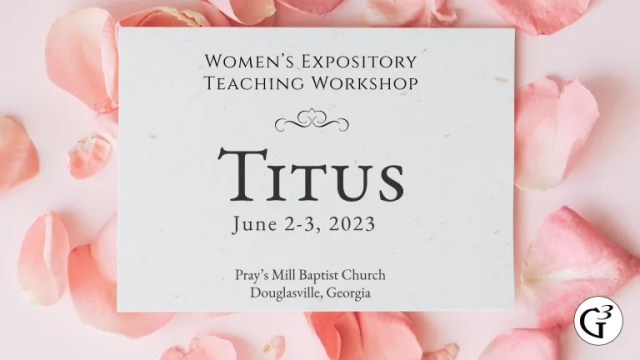
6 Reasons You Should Attend the Next G3 Women’s Expository Teaching Workshop

photo courtesy of G3 ministries

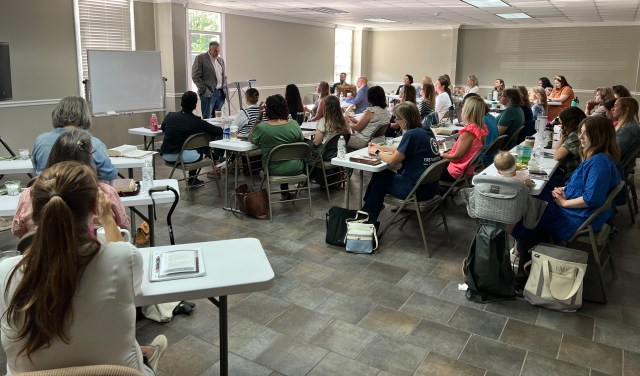
I recently had the great pleasure of participating in the inaugural G3 Women’s Expository Teaching Workshop. I had a wonderful time and learned so much! Here are six reasons I would encourage you to make sure you’re signed up for the next one!

1.
G3 has a biblical perspective on women teaching.

There are two unbiblical extremes when it comes to women teaching. On the left: egalitarianism. Women can pastor, preach, exercise authority over men – anything goes. On the right: hyper-patriarchy. Women can teach other women practical homemaking and childrearing skills, but that’s it. Any biblical teaching or learning has to come from your father, husband, or pastor.

G3’s perspective is right in the biblical middle of those two unbiblical extremes: No, women can’t preach, pastor, instruct men in the Scriptures, or exercise authority over men in the gathering of the church body, but we can and should pour the gospel, and Scripture as a whole, into our children, and the women and children of our churches. And it’s important that we be properly equipped to do that. If you’re gifted to teach and want to hone your skills, or even if you just want to learn to study the Bible more accurately, G3 will equip you from a biblical perspective.

2.
You’ll learn to handle Scripture
in a serious, scholarly way.

Look out across the vast wasteland of the women’s “Bible” study industry, and what do you see? “Bible” studies that encourage you to focus on your feelings. Narcissistic navel-gazing. A plethora of personal anecdotes from the author. And what little Scripture is included is mishandled, misunderstood, and misapplied.

But a G3 expository teaching workshop for women will help you to become “a worker who has no need to be ashamed, rightly handling the word of truth” (2 Timothy 2:15). You’ll learn about immediate, historical, and biblical context, the structure of the passage and how to outline it, how to find the central proposition of the passage, and so much more. It will equip you to bless your children and the women and children of your church with rich Bible teaching instead of fluff and false doctrine.

photo courtesy of G3 Ministries

3.
You’ll learn from the outstanding men of G3

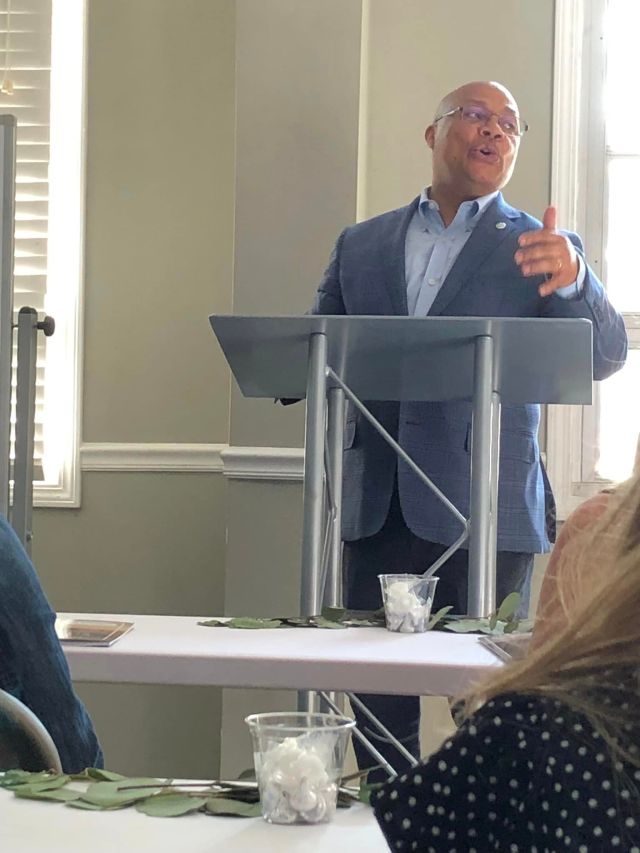
They’re all pastors with years of experience in rightly preaching and teaching God’s Word, so you’ll get to learn from the best. Our main teachers were Josh Buice and Tom Buck. They taught us thoroughly without expecting us to be seminary-trained or talking down to us as though we knew nothing of the Bible. We gained a great deal from their instruction about studying and teaching.

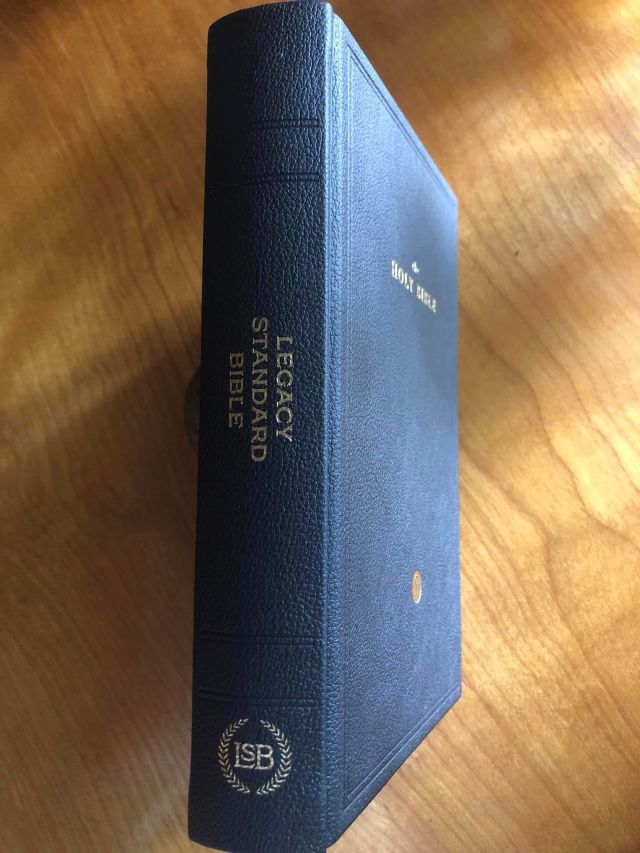
Thank you so much to G3 and Three Sixteen Publishing for
providing each participant with a new Legacy Standard Bible!

4.
Small groups

Before arriving at the workshop, each participant studies and prepares teaching notes on a passage(s) of Scripture. In your small group of about 6-8 women, you’ll work together to correct and fine tune your outline and notes. The women leading the small groups have been trained by the men leading the workshop, so they’re “well versed,” so to speak, in the passages at hand, and the small groups work uniformly with the lecture sessions. The small groups are a wonderful time of encouragement.

5.
Fellowship

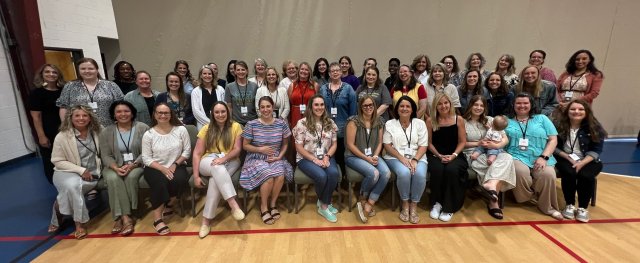
What could be a greater joy than to make new friends from all over the country, and to be reunited with old friends you don’t get to see often enough? The fellowship at the workshop was practically non-stop. From communing over the Word together in our small groups, to relationship-building over meals, to after hours fun and frolic, it was a foretaste of the “together forever-ness” we’ll have around the Throne for all eternity.

AWFS comes to G3. Total fangirl moment!

This is only the second time my A Word Fitly Spoken podcast partner and dear friend, Amy Spreeman, and I have been able to meet in person. It was such a treat to spend the weekend with her! Many thanks to my former pastor, Laramie Minga, now Director of Media and Managing Editor for G3, for giving us a tour of G3, including the podcast recording studio!

6.
I guess you had to be there.

Probably the most common question asked about the G3 expository teaching workshop for women is, “Will it be recorded?”. No. And that’s a good thing! There are some things you just can’t experience through a screen – you have to get out there and do them! You could listen to the lectures on a recording, but that was only a small part of the weekend. You couldn’t participate in the Q&A after the lectures on a recording. You couldn’t work collaboratively with your small group on a recording. And you certainly couldn’t enjoy and be encouraged by the fellowship with the other ladies on a recording. This is one of those things – like riding a bike or visiting the Grand Canyon – where you just have to be there.

photo courtesy of G3 Ministries

The G3 expository teaching workshop for women was incredibly helpful. Encouraging. Edifying. Sharpening. A warm time of fellowship around God’s Word with other women just like you and me who want to get better at teaching the Bible. I cannot recommend it highly enough to you. If you can make the sacrifice to be at the next one, make it.

To be alerted to the details for the next workshop, be sure to sign up for the G3 email list, get the G3 app, and follow G3 on Facebook, Twitter, and Instagram.

A word to the wise – when you see registration open up for the next workshop, register immediately. The first workshop sold out in 48 hours.

I hope to see you at a G3 event in the future!


No one asked me to write this article, and I didn’t get any sort of discounts or perks for writing it. You know me – when I find a fantastic, doctrinally sound resource, I recommend it to you, and the G3 expository teaching workshop for women is one of those resources!

Forgiveness, Mailbag

The Mailbag: Can unforgiveness cause you to you lose your salvation?

Originally published August 19, 2019

Can unforgiveness cause me to lose my salvation?

Forgiving (or refusing to forgive) others as it relates to our salvation is such an important issue. I’m so glad you asked!

Let’s break this question down a bit.

Can you lose your salvation?

The first thing we need to tackle is whether or not someone whom Christ has genuinely saved can lose her salvation – for unforgiveness or any other reason. And the answer to that question is no.

Why? The short answer is that if God saves someone, and that person can subsequently “unsave” herself, that makes her more powerful than God, which, as we know, can’t happen. You can’t save yourself, and you can’t unsave yourself. Salvation is all of God.

You can’t save yourself, and you can’t unsave yourself. Salvation is all of God.

When God saves you, you are His new creation in Christ. You can’t “uncreate” your new spiritual life any more than you can “uncreate” your body, or a tree, or a planet. You can kill or do damage to those things, but you cannot reverse God’s creative process. To use another example, oh so relevant to today, God created you female. You can mutilate your body til kingdom come trying to appear male, but that will not change the fact that at your genetic level – the very essence of your being – you are female. And you can’t undo that because God created you that way, and you’re not more powerful than God. If you can’t even change God’s creation of your physical body, how in the world can you change God’s creation of your spiritual being?

The moment God saves you, He forgives all your sins, past, present, and future, and robes you in the righteousness of Christ.

In addition to the fact that you can’t uncreate the new creature God has created you to be, you need to remember that the moment God saves you, He forgives all your sins, past, present, and future, and robes you in the righteousness of Christ. That swear word you’re going to say next week? Already forgiven. That lie you’re going to tell five years from now? Already forgiven. And if you decide to commit the sin of refusing to forgive someone, that sin has already been forgiven too. (So since all our sins are already forgiven, we can just commit as much sin as we want and we don’t have to worry about it, right? Wrong.) We still need to confess those sins to God and be cleansed from them because they disrupt our fellowship with God, but in His accounting office, that sin debt has already been marked “paid in full”.

Furthermore, Jesus tells us plainly that if He’s got you, He’s got you:

My sheep hear my voice, and I know them, and they follow me. I give them eternal life, and they will never perish, and no one will snatch them out of my hand. My Father, who has given them to me, is greater than all, and no one is able to snatch them out of the Father’s hand. I and the Father are one.โ€

No one. That includes you and your sin. The power of your sin is not greater than God’s power to forgive that sin.

The power of your sin is not greater than God’s power to forgive that sin.

They will never perish. To say that a person about which Jesus Himself has said, “I give them eternal life,” can lose her salvation is to call Jesus a liar. He says that person “will never perish.” End of story.

Still not convinced that someone whom Christ has genuinely saved can’t lose her salvation? Try these passages on for size.

Now the reason it can look to us like someone can lose her salvation comes from two places: experience and misunderstanding the Bible.

The reason it can look to us like someone can lose her salvation comes from two places: experience and misunderstanding the Bible.

Experience:
It’s happened plenty of times in the past, but in the last few weeks, we’ve seen two high profile evangelicals “walk away from the faith,”: Joshua Harris and Marty Sampson. Maybe you know someone personally – a friend, a loved one, even a pastor – who gave every appearance of being a Christian and then suddenly left Christianity, and the church, behind.

How does this compute when the Bible teaches that genuinely born again Christians cannot lose their salvation? Well, we need to remember something else the Bible teaches that’s very important:

Not everyone who claims to be a Christian actually is one.

Some people consciously know they’re not really saved and are just trying to pull the wool over the eyes of others. But many (my guess is “most” – these days there’s not a lot of social cachet in calling yourself a Christian) are deceived into believing they’re saved. Maybe they heard some sort of unbiblical gospel presentation and have put their faith in a decision they made in response. Maybe they just assume they’re saved because they’re good church-going people and their church doesn’t teach them otherwise. Who knows? It could be a lot of things. But we know for sure that there are many people who call themselves Christians and believe they are Christians who aren’t. Why? Because the Bible says so:

โ€œNot everyone who says to me, โ€˜Lord, Lord,โ€™ will enter the kingdom of heaven, but the one who does the will of my Father who is in heaven. On that day many will say to me, โ€˜Lord, Lord, did we not prophesy in your name, and cast out demons in your name, and do many mighty works in your name?โ€™ And then will I declare to them, โ€˜I never knew you; depart from me, you workers of lawlessness.โ€™
Matthew 7:21-23

Many will say”…False converts are common, not few and far between. And it’s not just your average Joe or Jane in the pew, either. People who “prophesy…cast out demons…do mighty works” under the auspices of Christianity? They’re pastors, elders, deacons, Bible study teachers, seminary professors, “Christian” authors, evangelical celebrities. And Christ does not know them, because they don’t know Him. They talk the talk, and might even look like they walk the walk, but they’ve never truly believed the biblical gospel, repented of their sin, and trusted the Jesus of Scripture to save them. First John 2:18-19 puts it this way:

Children, it is the last hour, and as you have heard that antichrist is coming, so now many antichrists have come. Therefore we know that it is the last hour. They went out from us, but they were not of us; for if they had been of us, they would have continued with us.

People whom Jesus has genuinely saved may fall into sin for a season, but they do not fall away from the faith. Those who leave the faith were never part of it in the first place, despite appearances or their claims to the contrary. It might be difficult, but this is one of those occasions when we have to believe what Scripture says over what we can see.

Those who leave the faith were never part of it in the first place, despite appearances or their claims to the contrary.

Jesus also tells us in the parable of the sower that there will be be “rocky ground” folks who will appear to be Christians, but because they have no root, they “endure for a while, and when tribulation or persecution arises on account of the word, immediately they fall away.” Jesus follows up this parable with the parable of the wheat and tares which further drives home His point that there will be impostors in the visible church.

So even though we observe people who appear to be Christians “falling away from the faith,” through unforgiveness or any other sin, we know that what’s really happening is that a lost person got tired of pretending to be saved and went back to being a lost person. Second Peter 2:22 puts it this way:

What the true proverb says has happened to them: โ€œThe dog returns to its own vomit, and the sow, after washing herself, returns to wallow in the mire.โ€

If Christ has never fundamentally changed your spiritual nature from dog or pig into a new creature in Christ, you’re still a dog or a pig. And even if you manage to clean up on the outside you’ll eventually return to the vomit of being a dog and the mud of being a pig because that’s your nature.

Misunderstood Scripture
There are passages in the Bible that, when misunderstood, when taken out of their immediate context, or when taken out of the overall context of Scripture can seem to teach that a person can lose her salvation. But as we’ve seen, there are way too many rightly handledin context passages of Scripture that refute that idea.

Can you lose your salvation by refusing to forgive someone?

You mentioned in your original question that you believe unforgiveness can cause someone to lose her salvation because, “It is so clear in so many ways in Scripture, even parables that Jesus told.” But, you did not mention any of the Scriptures you think teach this. My guess is that one of the Scriptures you’re thinking of is Matthew 6:14-15:

For if you forgive others their trespasses, your heavenly Father will also forgive you, but if you do not forgive others their trespasses, neither will your Father forgive your trespasses.

In context, we can see that these two verses come at the end of the Lord’s Prayer. In verse 12, Jesus has just taught us to pray that God would “forgive us our debts,
as we also have forgiven our debtors,” and He’s giving us a little addendum on this in 14-15.

Remember, even though all our sins from birth to death were forgiven at the moment of our salvation, we still need to confess our sins in prayer and ask God to cleanse us from our wrongdoing to bring us back into right fellowship with Him. But if you’re willfully in the middle of committing the sin of unforgiveness against someone, you’re still actively sinning. You haven’t turned from that sin in order to be cleansed. You’re essentially rolling around in the mud and asking God to cleanse you while you have no intention of getting out of the mud. How is that supposed to work? It doesn’t make any sense. If you want to get cleaned up (“forgiven”), you have to get out of the mud (stop committing the sin of unforgiveness – “forgive”). Otherwise, you’re asking God to restore the fellowship you’re still actively damaging with your sin.

Another passage you might be thinking of is the parable of the unforgiving servant. The takeaway from this passage is not that God will rescind the salvation of Christians who commit the sin of unforgiveness. This passage doesn’t say that and we already know that idea conflicts with what Scripture teaches about the security of the Believer.

The takeaway from this passage is that God has forgiven us a sin debt that is incomprehensible. Knowing and having experienced that forgiveness, how could we not forgive some paltry little sin another human commits against us? First John 4:19 says, “We love because He first loved us,” and the way He loved us was to forgive us our sin. So we also forgive because He first forgave us. And if we can giddily and unrepentantly harbor unforgiveness in our hearts against someone else, we’d better start testing ourselves against Scripture to see if we’re really in the faith. Because that kind of unforgiveness is not the fruit of a redeemed life, it’s the fruit of someone who’s unsaved.

No, a genuinely regenerated Christian cannot lose her salvation by committing the sin of unforgiveness. But if she is genuinely regenerated, she will repent of that sin and forgive.

A genuinely regenerated Christian cannot lose her salvation by committing the sin of unforgiveness. But if she *is* genuinely regenerated, she will repent of that sin and forgive.

Additional Resources:

Walking Away from Faith? at A Word Fitly Spoken Podcast

The Mailbag: Must I reconcile with my abusiveย ex-husband?

Forgiving Like Kings and Servants

You Canโ€™t Love Jesus with a Heart Full of Hate: 7 Reasons to Love and Forgive Your Enemies

Am I Really Saved? A 1 John Check Up


If you have a question about: a Bible passage, an aspect of theology, a current issue in Christianity, or how to biblically handle a family, life, or church situation, comment below (Iโ€™ll hold all questions in queue {unpublished} for a future edition of The Mailbag) or send me an e-mail or private message. If your question is chosen for publication, your anonymity will be protected.

Discernment Bible Study

Choose What Is Right: A Study in Discernment- Lesson 7


Previous Lessons: 1, 2, 3, 4, 5, 6


Refuse to Heed the Shepherd and You’ll Have the Wool Pulled Over Your Eyes

Todayโ€™s Scripture passages are embedded in the body of the study. Please click the links in each question.


Questions to Consider

Throughout this study we will be looking at various passages of Scripture rather than working our way through a book of the Bible verse by verse. Because of that, we will need to be extra vigilant to rightly handle these passages in context. I will always attempt to provide the context you need for understanding these passages correctly, but if you need more clarity please feel free to read as much of the surrounding text as you need to – even the whole book, if necessary – in order to properly understand the passage presented.

1. We need a firm foundation. What is that firm foundation? First and Second Timothy and Titus comprise what are known as the “pastoral epistles”. They are God’s instructions, via Paul, to Timothy, Titus, and all other pastors about how to run the church. I often liken the pastoral epistles to a “policy and procedure manual” for the church.

Even in these three very brief epistles, God has a lot to say about sound and false doctrine, and sound and false teachers. Read these passages from the pastoral epistles (you may wish to read more of the surrounding verses for context). What is the foundation of a healthy church? How does a foundation of being intentional and purposeful to preach and teach sound doctrine protect a church against the infiltration of false doctrine and false teachers?

Meditate on Paul’s solemn charge to pastors in the 2 Timothy 4:1-2 passage. Explain exactly what he is saying in these verses. Would you liken this charge to a vow or “oath of office”? Why or why not? Put yourself in Timothy’s sandals. Do you feel the weightiness of this charge and responsibility? How so?

As Paul is preparing to leave the Ephesian church, he mentions two ways, in Acts 20:29-30, in which false teachers can infiltrate the church. What are those two ways? How does a solid foundation of sound doctrine help guard against false teachers coming into the church from the outside, and prevent those who are already church members from believing false doctrine and becoming false teachers inside the church?

2. Regarding discernment, why do we need the firm foundation of the preaching and teaching of sound doctrine? Examine these passages. (Compare the verse references to the passages from question 1. See the proximity and context?) Why, in the context of discernment, is the teaching and preaching of sound doctrine so crucial? What will happen to those who refuse to heed sound doctrine? Which adjectives does Paul use in the 1 Timothy passage to paint a picture of the deceitfulness of false teachers? How does Paul address the idea of people being deceived and departing from the faith in these passages – as a possibility or a certainty? (Hint: Look for the word “will”.)

3. How is this deception accomplished? Are these people who “depart from the faith” deceived solely by the false teachers, self-deceived, or both?

Study these passages. What do they tell us about a person’s role in her own deception? Who is taking the initiative in these two passages, the false teachers/prophets, or the people who want to follow them? In the Isaiah passage, before the people turn to the seers and prophets in verse 10, how does verse 9 describe them? What have they already turned from? In the 2 Timothy passage, before the people turn to false teachers (3b) and myths (4b), what have they already turned away from (3a, 4a)?

Compare 2 Timothy’s “they will accumulate for themselves” and “teachers to suit their own passions” (3b) with Isaiah’s 10-11. How did the people in Isaiah proactively pursue or accumulate false teachers? What were “their own passions” they wanted to suit? Are people who turn to false teachers hapless, powerless victims of those false teachers or willing participants in their own deception?

Again, what happens when you “refuse to heed the Shepherd” (Jesus, His Word, sound doctrine, etc.)? Think about the nature and definition of the word “deceived”. Do deceived people know they’re deceived?

But if every teacher out there only taught sound doctrine, would self-deceived people be able to accumulate teachers to themselves to suit their own passions? It’s kind of a symbiotic relationship, isn’t it?

Study these passages. What do all of these passages say false teachers disguise themselves as? Make a list of the words and phrases from each passage that led you to your answer:

  • 2 Corinthians 11:
  • Galatians 2:
  • 2 Peter 2:
  • Titus 1:

Think about some of the false teachers you’re aware of (or check here if you need a little help). Do any of them go by the title “False Teacher”? Introduce themselves as false teachers? Write books and give interviews as experts in the field of false teaching? What titles do they go by? What do they want to be known as?

In the 2 Corinthians passage, what does Paul say the false apostles claim? (12) Are their claims true? (13) What three words in verse 13 indicate that these men are not honest? Compare verses 14-15 with Jesus addressing the Pharisees (the false teachers of His day) in John 8:42-47. Who is the spiritual “father” of these false teachers in both passages? Who do they actually serve? Are they actually Christians, as they claim to be? What does Paul mean, “Their end will correspond to their deeds.”(15)? What will their end be? (Hint- use your cross references)

Why do you think some professing Christians believe even the most egregious false teachers are actually Christians despite what these passages teach to the contrary? Is it fair to say they are believing the false teacher’s word over God’s Word?

Compare the 2 Corinthians passage and the John 8 passage above with Genesis 3:1-7. What similarities do you see when it comes to the descriptions of Satan’s character and methods?


Homework

Read 1 & 2 Timothy and Titus. Carefully examine each passage that deals with either the need to preach and teach sound doctrine or the need to rebuke and refute false teachers or false doctrine. Why is the proactive, purposeful, and intentional teaching of sound doctrine vital to the health of the church? How does sound doctrine itself refute false doctrine? Why is it imperative to rebuke and remove unrepentant false teachers from the church?

A common argument against the public rebuke and refutation of false teachers is that, “You shouldn’t warn against them, you should just pray for them.” (see #10 here). How would you answer that argument with the passages you examined in 1 & 2 Timothy and Titus?

You may wish to refer to parts of my studies on the pastoral epistles as you study:

1 & 2 Timothy: The Structure and Spirit of the Church

Titus: God’s Order of Service


Suggested Memory Verse

Discernment

Throwback Thursday ~ Discernment Hysteria and the God Who Wins

Originally published April 8, 2016

There are a lot of different facets to Christianity. Thereโ€™s worship. Fellowship with other Christians. Studying Godโ€™s Word alone, with our families, and with the local church. Evangelism. Serving at church. Teaching. Discipling other believers. Prayer. All of these things, and others, are vital to a healthy, growing relationship with Christ.

But things can get out of whack if we focus too much on any one of these areas to the neglect of others. Spend too much time in prayer, and you could overlook serving others. Focus on evangelism too much, and your Bible study time might suffer. It can be tricky, but itโ€™s important that we keep a good balance in our walk with the Lord.

If youโ€™re like me you probably have one or two areas that youโ€™re tempted to go overboard in. My temptation is studying, particularly in the area of discernment- false doctrine and false teachers. Itโ€™s a fascinating topic, and people educated in the field of discernment and doctrine are desperately needed in the church today.

But if you spend a lot of time studying discernment โ€“and many do- it can get pretty discouraging pretty quickly. You begin to realize just how pervasive false doctrine is and how many false teachers there are. Itโ€™s in your church, at your childโ€™s Christian school, on your Christian radio and TV stations, in your Christian bookstore. Itโ€™s everywhere. And itโ€™s not just the home grown heretics who spring from the soil of already apostate โ€œchurches.โ€ Weโ€™ve also got men and women who were once trustworthy teachers and preachers of Godโ€™s Word turning traitor and joining the forces of evil at an alarming rate. They just keep coming and coming, always more and more. Itโ€™s starting to feel like Invasion of โ€œThe Bodyโ€ Snatchers.

False teachers just keep coming and coming. Itโ€™s starting to feel like Invasion of โ€œThe Bodyโ€ Snatchers.

I hear often from women approaching panic and frenzy over the state of the church. And I get that, because I regularly feel the same way. But for all of us, there are some great reasons to take a step back when we get overwhelmed. To breathe, to relax, and to rejoice in some good news in the midst of the heresy hurricane.

There are some great reasons to take a step back when we get overwhelmed. To breathe, to relax, and to rejoice in some good news in the midst of the heresy hurricane.

God is both sovereign and just.

And praise His name for that. Nothing, and I mean nothing, escapes His notice. He sees everything- every thought, every action. There is going to come a day of reckoning for the enemies of God. They will get exactly what they deserve, and God will be good for punishing them. When itโ€™s all said and done, nobodyโ€™s getting away with anything, and nothing is going to slip through the cracks.

And no creature is hidden from his sight, but all are naked and exposed to the eyes of him to whom we must give account.
Hebrews 4:13

It is Godโ€™s job to preserve the church, not ours.

Thousands of years. Extreme idolatry and blasphemy. War. Exile. And yet God preserved a remnant of His people throughout the Old Testament. He preserved the church through its infancy of persecution and heresy. And He will continue to preserve His church today. Should we fight false doctrine the best we can? Yes. Will some local churches fold and apostasize? Yes. But, saving the church is way too big a job for us. Ultimately, the burden of preserving the Bride is on the Bridegroom.

Christ loved the church and gave himself up for her, that he might sanctify her, having cleansed her by the washing of water with the word, so that he might present the church to himself in splendor, without spot or wrinkle or any such thing, that she might be holy and without blemish.
Ephesians 5:25b-27

Godโ€™s Word isnโ€™t changing.

It doesnโ€™t matter how loudly people scream that this sin or that sin is OK. It doesnโ€™t matter how many people teach the most unbiblical false doctrine or how widespread its acceptance is. Godโ€™s Word is Godโ€™s Word. And Godโ€™s Word changes for no man. The Bible – not anyoneโ€™s opinion or the general consensus of sinful humans – is the standard God has issued and the rod of judgment He will wield. Godโ€™s Word isnโ€™t going anywhere.

for
โ€œAll flesh is like grass
    and all its glory like the flower of grass.
The grass withers,
    and the flower falls,
but the word of the Lord remains forever.โ€
1 Peter 1:24-25

It doesnโ€™t matter how many people teach the most unbiblical false doctrine or how widespread its acceptance is. Godโ€™s Word is Godโ€™s Word. And Godโ€™s Word changes for no man.

The gospel still has the power to save.

God is mightier to save than any false teacher is to deceive. Get out there and keep faithfully scattering that gospel seed and proclaiming Godโ€™s truth. A lot of people will reject it – just like they did when Jesus preached it โ€“ but some will listen and be saved. Theyโ€™re worth it.

Behold, the Lord’s hand is not shortened, that it cannot save, or his ear dull, that it cannot hear;
Isaiah 59:1

God is mightier to save than any false teacher is to deceive.

Heaven awaits.

Look around. This is all just temporary. In Heaven, there is no false doctrine. There are no false teachers. There will be no more contending for the faith. We will all finally be able to worship Christ in the splendor of His holiness with out any hint of error impeding us or infiltrating the Body.

Then I saw a new heaven and a new earth, for the first heaven and the first earth had passed away, and the sea was no more. And I saw the holy city, new Jerusalem, coming down out of heaven from God, prepared as a bride adorned for her husband. And I heard a loud voice from the throne saying, โ€œBehold, the dwelling place of God is with man. He will dwell with them, and they will be his people, and God himself will be with them as their God.
Revelation 21:1-3

Be encouraged my sisters, and donโ€™t grow weary in well doing. Because God is mighty. He is still on His throne. He is still saving souls.

And hear me, and cling to this as you walk through this evil world: God wins.

Let that sink in and drive you to rejoice and worship. The devil may do his worst in the world, but God wins.

he wins

Cling to this as you walk through this evil world: God wins. Let that sink in and drive you to rejoice and worship. The devil may do his worst in the world, but GOD WINS.