Discernment, False Teachers

You Might Be Apostate

Originally published June 3, 2016

Comedian Jeff Foxworthy hit the big time several years ago with his “You Might Be a Redneck” one-liners. He frequently introduced the bit by saying, “I’ve found that there are rednecks all over, but sometimes people don’t know they’re rednecks. So, I came up with this little test…” and continued with such gems as:

“If you’ve ever had to carry a bucket of paint to the top of a water tower to defend your sister’s honor, you might be a redneck.”

“If your wife has ever said, ‘Honey, come get this transmission out of the tub so I can take a bath!’ you might be a redneck.”

“If you’ve ever been accused of lying through your tooth, you might be a redneck.”

It was a routine that a lot of us in the South found hilarious because we knew someone (or were someone) who fit nearly every one of Jeff’s jabs.

Like rednecks, there are apostate false teachers all over the place out there, only a lot of them (and their disciples) don’t know they’re false teachers. And the fruit of their lives and ministries is far wackier than anything a redneck has ever dreamed up. That fruit is a sign that we’d better examine the root of doctrine from which the fruit sprang.

So if any of the preachers and teachers you’re following have ever said or done the following things (or something even crazier), watch out, because they Might Be Apostate.

HoNuthaLevel

If you’re a middle aged pastor who makes embarrassing rap videos, who publicly extols the virtues of Spanx for men (even though it gives you gas) and who calls himself a Ferrari you might be apostate.

If you feature a Naked Cowboy impersonater (aka- your youth “pastor”) at your “Christian” women’s conference, you might be apostate.

If you’ve ever purposefully applied the pronoun “herself” to God, you might be apostate.

If you celebrated your 35th birthday by preaching at the “church” of your mentor, T.D. Jakes, and placing a $35,000 check in his offering wheelbarrow, you might be apostate.

If God has ever told you to go up to a stranger in the airport and ask if you can brush his hair, you might be apostate.

If you’ve ever given your congregation a sob story about needing a new $70 million Gulfstream jet, because the old one is worn out, you might be apostate.

If you think of the Holy Spirit as the “sneaky,” “silly,” “funny,” “blue genie from Aladdin,” you might be apostate.

If you’re a woman who thinks God is OK with you preaching to men despite what His Word clearly says to the contrary, you might be apostate.

If you’ve ever said, regarding your church’s worship service, “I probably wouldn’t have a stripper on stage…” but leave the door open to the idea because “God told Isaiah to walk around naked for three years,” you might be apostate.

Benny Hinn at Maple Leaf Gardens on Sept. 28, 1992 photos by Tony Bock/Toronto Star and handout photo.

If you think smacking people in the face with your Nehru jacket is a ministry of the Holy Spirit, you might be apostate.

If you’ve ever typed a Facebook status in tongues, you might be apostate.

If you say you’re a trinitarian, but think the Father, Son, and Holy Ghost are three “manifestations” of God rather than three Persons, you ARE apostate.

If you think Proverbs 21:9 means you should camp out on your roof in a quest for biblical womanhood, you might be apostate.

If your senior pastor father sexually abused boys at your church and paid them off to keep them quiet and you, as the subsequent pastor, knew about it but didn’t speak up, you might be apostate.

If you officiated at your homosexual son’s “wedding,” you might be apostate.

If you’re a pastor who thinks expository preaching is “cheating” because it’s “too easy” and that “it’s not the way you grow people” AND that we shouldn’t say “the Bible says…” AND that parents who take their children to a small church instead of a mega church are “stinkin’ selfish,” AND that we shouldn’t use the Bible to convince the lost of their need for Christ, AND that we need to “unhitch” from the Old Testament, you might be apostate.

If you’re Oprah’s idea of an awesome pastor, you might be apostate.

download

If your preaching, ministry, and theology have ever been publicly rebuked by John MacArthur, Paul Washer, or Justin Peters, you might be apostate.

If you partnered with a Roman Catholic mystic with a degree in spiritual psychology to make a completely unbiblical movie about the Bible featuring ninja angels and Mary Magdalene bossing the disciples around, you might be apostate.

If you and your 80s rock star third husband stand in the pulpit and tell people to watch porn to improve their sex life, you might be apostate.

If a feature of your “worship service” is people laughing uncontrollably or barking like dogs, you might be apostate.

If you’ve ever decided to “p*ss off the religious people” on Easter Sunday by playing AC/DC’s Highway to Hell to open the service, you might be apostate.

If you’ve written a book entitled “I Am” and it’s about positive confession rather than Jehovah, you might be apostate.

If you think you have the power to control the weather by the words you speak, you might be apostate.

Joyce-Meyer-600x450

If you think that between the cross and the resurrection Jesus went to Hell and that Satan and the demons jumped up and down on His back, you might be apostate.

If the top three “pastors” you encourage people to follow on Twitter are T.D. Jakes, Rick Warren, and Joel Osteen, you might be apostate.

If a currently practicing homosexual couple wants to serve in leadership at your church and your only problem with it is that one of them isn’t yet divorced from his wife, you might be apostate.

If you’ve ever been accused of having an affair with Benny Hinn, you might be apostate.

If, a hundred years ago, your worship leaders might have been carted off to the funny farm or treated to an exorcism for conducting themselves like this, you might be apostate.

And, if you’re about to write a comment rebuking me for marking false teachers to avoid and exposing unfruitful works of darkness because Jesus would never do such a thing then you don’t know your Bible.

And you just might be apostate.

Mailbag, Prayer

The Mailbag: Help! Our ladies’ prayer meeting is a disaster!

Originally published August 6, 2018

I am married to a pastor of a small SBC church. Every Sunday evening I have a 30-minute prayer time for the ladies of the church. It feels like a disaster! Women ramble on and on with “prayer requests” that really seem to be either gossip or current news events. When it comes time to actually pray, I’m the one who is praying and everyone else is completely silent. Recently, the women were so out of control with talking that they didn’t even notice when I said it was time to pray, so I canceled the prayer meeting until further notice.

I know praying together as sisters couldn’t be a bad thing, but what do I do if it seems like no one else is actually praying? Am I giving up too soon? And just to be clear I’ve tried different “formulas” for the meeting (having specific scriptures that we pray, having a specific theme for the prayer, etc.).

Oh dear sister, I’m so sorry for your frustration! I have led a few ladies’ prayer groups myself, and I know it isn’t easy. If I could offer you one word of encouragement, though – your ladies are showing up! One of my dilemmas was having ladies who didn’t see prayer as important enough to even come to a prayer meeting. You’ve got them there – that’s a huge hurdle that’s out of your way.

But once you’ve got them there, what do you do with this gaggle of gals? Let’s see if we can figure that out together.

A few things I’m surmising from your e-mail:

First, I’m guessing you’re a sweet, younger lady and that at least some of the ladies in your group are 10+ years older than you are. (Even if I’m wrong, I’m going to go with this for a minute because there are probably some ladies reading this who are in that dynamic.)

Trying to lead ladies who are older than you are can be intimidating, especially when you have the added pressure of your husband being the pastor – you want to reflect well upon him and not be the cause of any issues he would have to deal with. If your personality is very easy going and less assertive, that’s going to add to the challenge and result in things like the ladies ignoring you when you say it’s time to start praying.

Another dynamic that’s probably affecting your group is that at least some of the ladies are there mainly because you’re the pastor’s wife, and they either feel a sense of duty to be there or they want to support you with their presence because they love you, or both. Neither of which are bad things, because it’s getting them to show up (and, hey, a little love and support never hurts, right?). But it may mean that prayer isn’t the primary reason some of them are there.

The way you describe the ladies’ talking, behavior, and “prayer requests” leads me to believe that they probably don’t know how to pray in a corporate prayer meeting, especially one that’s not an “organ recital” (all the prayer requests revolve around people who are sick, having surgery, etc.). Sadly, this is pretty typical for SBC churches in my experience.

The extensive conversing may also signal that these ladies are starved for meaningful fellowship with one another.

So taking all of that into consideration, here are a few thoughts I had:

๐Ÿ™ I think taking a hiatus was a good idea. It will give you time to regroup and reorganize your approach. My counsel would be that as long as you have ladies who are willing to attend, it’s too soon to give up (assuming, of course, that your husband is in agreement with that).

๐Ÿ™ Set aside a block of time to talk this through with your husband and ask his advice. Just by virtue of being a man, he has a different perspective than you do, and probably has some helpful ideas and suggestions. As your pastor, he likely has additional insight on the ladies in your group, as well as some leadership strategies and experiences that could be beneficial to you.

๐Ÿ™ When you start the group up again, you might want to consider, if it’s possible, having your husband lead for a couple of months. It’s just a fact of life that people act differently around pastors than they do around others. My guess is that your ladies will sit quietly and attentively for your husband. If you can develop that habit in them over the course of a couple of months, it will be easier for you to step in with more confidence and assertiveness when you resume leading the group.

๐Ÿ™ Find an older godly lady who has experience teaching and leading women’s classes and ask her to mentor you. 

๐Ÿ™ If that older godly lady is one of your church members, and you and she are both willing, maybe it would work for her to lead the group for, say, six months to a year while you attend as a participant. That could be helpful in two ways: a) You could learn by observing her leadership, and, b) You could model for the other ladies what it should look like to be a participant in this group, and they could learn from your example.

๐Ÿ™ It sounds like these ladies need to be discipled regarding what prayer is and how to do it. Instead of immediately diving back into praying when you start the group back up, consider taking a few months to study prayer together first. You’re welcome to use any of my articles on prayer (I’d recommend this one and this one in particular.) Or, you could take them through my Bible study: Sweet Hour of Prayer: Learning to Pray from the People of Scripture. And be sure to check the bookstores at GTY and Ligonier.

๐Ÿ™ It also sounds like your ladies need more structure and guidance. One thing you might want to do is dispense with the verbal sharing of prayer requests as it’s traditionally done and restructure that aspect of the meeting. There are several different ways you can do this:

โ‡’ You decide the prayer focus (praying for the lost, missionaries, revival, an upcoming church event, etc.) for each week. Write down specific things to pray for – nearly verbatim, if you have to – on an index card or piece of paper and hand one to each lady as she comes in. For example, if you’re praying for missionaries, give the name of the missionary and a few needs he has.

โ‡’ Homework assignments. At the end of each meeting, tell the ladies what the prayer focus will be for the next week, give each one a card with a different aspect of that topic, ask her to be praying about it during the week and to come prepared to pray aloud about it at the next meeting. For example, if you’re going to be praying about VBS next week, the cards might say things like leaders, teachers, students, gospel presentation, safety, etc.

โ‡’ “Conversation prayer“. This works really well with children and people who are inexperienced with corporate prayer. Basically, what you’re doing is replacing prayer request time with praying for the request as it’s mentioned. You open with a brief prayer. After that, the floor is open for anyone to pray about anything they would ordinarily have mentioned as a prayer request. The only catch is, they have to keep it to three sentences, max (You’ll want to stress this rule and remind them of it often). This keeps the prayer time from being dominated by long-winded people, and it introduces an idea others can build on in prayer which encourages more people to participate. Additionally, it takes the pressure off of those who are nervous about praying out loud. For example, one person might pray, “Lord, please comfort and strengthen Sally in the death of her husband,” which might prompt the next person to pray, “Please provide for her material needs now that she’s without George’s income,” and the next: “Please show us ways we can minister to Sally.” There are going to be long silences at first. That’s OK. Wait it out. When it’s time to wrap up, you lead the closing prayer.

โ‡’ Guided conversation prayer. Same as conversation prayer, but more structured. You choose a few areas of prayer focus and let the ladies know what they are before the prayer time begins. Open in prayer, introducing the first topic. The floor is now open for anyone to pray up to three sentences on that topic (and, of course, people can pray more than once if they want to, but only three sentences at a time). When it’s time to move on, announce the next topic or pray a brief prayer introducing it.

โ‡’ Small group prayer. If you have enough people, break them into groups of 2-4, and assign each group a topic to pray about. When the groups start getting quiet, hand them another topic to pray about. (Be sure you’re giving them plenty of time to pray, though. I’ve been in prayer meetings using this method where the leader hops from one topic to the next so fast that the first person in the group doesn’t even finish praying before the topic is changed.) For a 30 minute meeting and groups of 2-4, I’d recommend no more than 3-4 topics for each group.

๐Ÿ™ If you think lack of fellowship might be a factor in the ladies’ behavior, there is nothing wrong with making the last “prayer meeting” of each month a low key fellowship – a “three weeks on, one week off” kind of thing – where they have the unprogrammed space to just sit and talk (and snack – gotta have snacks!). Fellowship is vital to the life of the church, and, believe me, as they get to know each other better and bear one another’s burdens, they will bring more things to the table to pray about during the three weeks of prayer meetings.

๐Ÿ™ Most importantly, you pray. Pray for patience and confidence as you lead. Pray for each of the ladies in your group. Pray that God will grow them in maturity in prayer. Pray that He will help everyone stay focused. Pray that those who are timid will be emboldened and that God will rein in those who have a tendency to dominate. Prayer is an area of spiritual growth, and only God can produce that growth. Ask Him to.

Additional Resources:

Articles on Prayer

Sweet Hour of Prayer Bible Study

Episodes about Prayer at A Word Fitly Spoken


If you have a question about: a Bible passage, an aspect of theology, a current issue in Christianity, or how to biblically handle a family, life, or church situation, comment below (Iโ€™ll hold all questions in queue {unpublished} for a future edition of The Mailbag) or send me an e-mail or private message. If your question is chosen for publication, your anonymity will be protected.

False Doctrine, Movies, New Apostolic Reformation

Throwback Thursday ~ Movie Time: Miracles for Sale

Originally published August 7, 2018

“You are about to see a world where greed and deceit raise their ugly heads. Where lives have been needlessly lost. And where hope, the most precious gift of all, is peddled at a price. This is the wickedness in the world of faith healing.”

No, Derren Brown, the man behind the documentary Miracles for Sale, isn’t a watchblogger and he doesn’t head up a discernment ministry. He’s an atheist. And this project is proof in living color that – to our shame – lost people often see right through these types of blasphemies better than some so-called Christians do.

Several years ago, Derren Brown set out to expose the chicanery of faith healing. He chose to do so by taking an average man off the streets, teaching him the tricks of the trade, and passing him off as a legitimate faith healer, proving that God isn’t behind this movement – it’s all sleight of hand, fakery, and deceit.

Have you ever wondered how faith healers make it appear as though someone has actually been healed? Or how they can know personal things about someone in their audience whom they’ve never met? Miracles for Sale will show you.

WARNING: This movie contains a smattering of profanity (I tried counting. I believe it was about 5-6 words). It was made by an atheist and other non-Christians, and that’s how atheists and non-Christians talk sometimes (which, of course, is not to excuse this sin, merely to explain it). Additionally, since this movie was made by non-Christians, it does not contain a doctrinally sound theological response to the evil of faith healing. If these things would cause you to stumble or make you uncomfortable in any way, PLEASE DO NOT WATCH THIS VIDEO.

Speaking Engagements

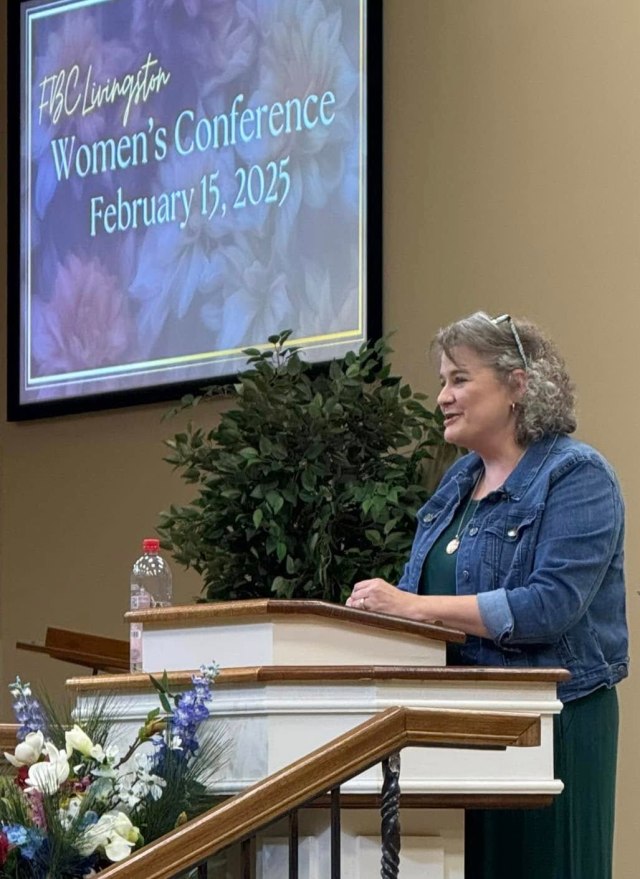
Report Back: FBC Livingston Women’s Conference


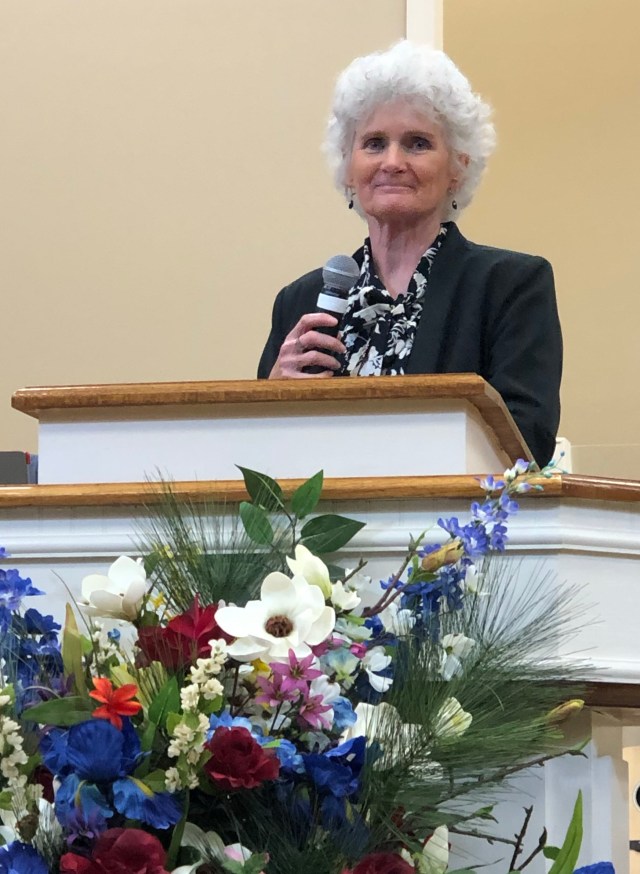
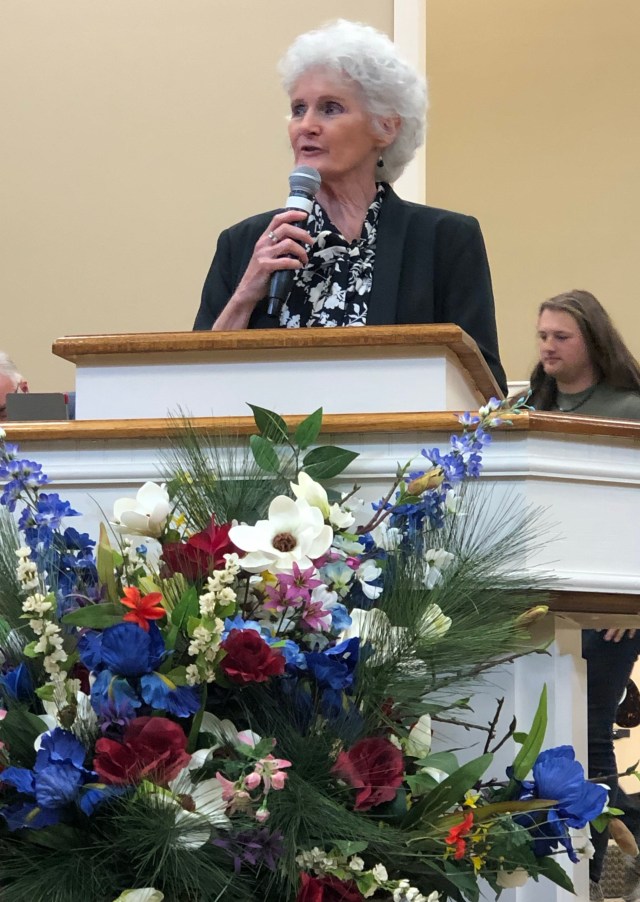
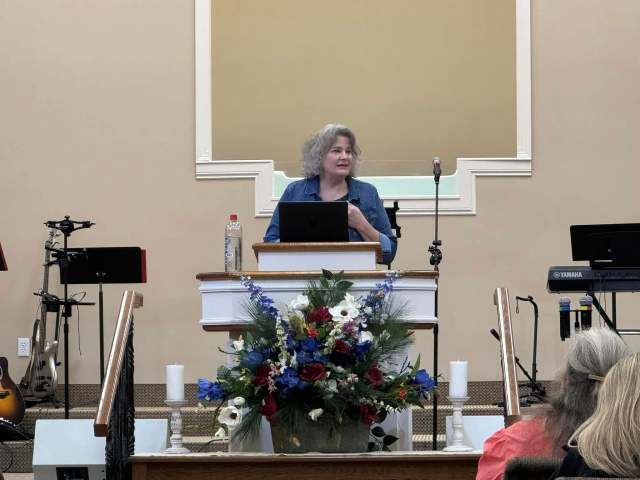
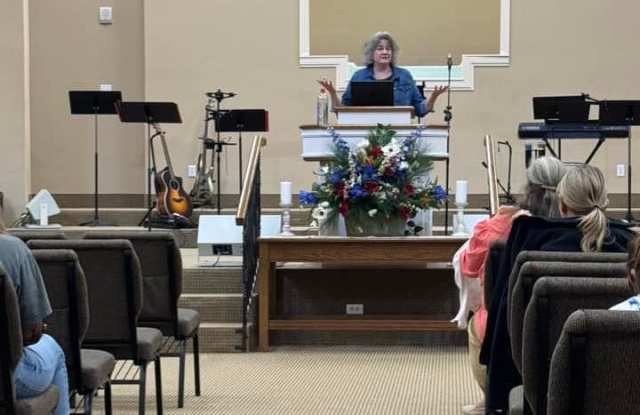
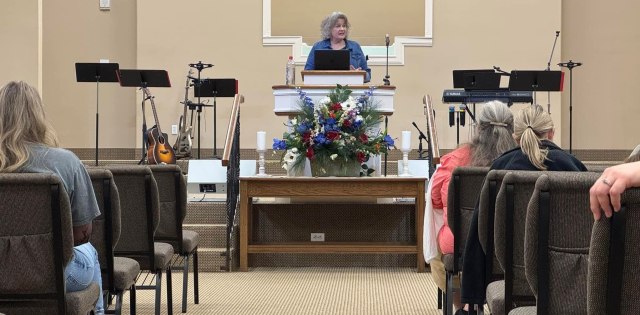
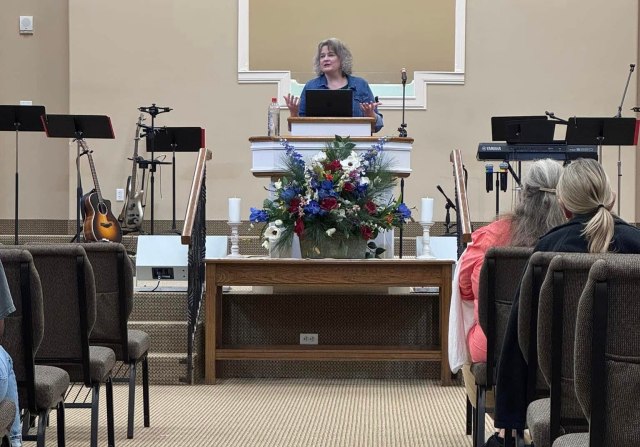
What a pleasure it was to teach at a wonderful sister church right in my own back yard, sleep in my own bed, and have a great group of dear sisters from my own church join me! I loved fellowshipping with the ladies of Livingston, Louisiana, and the surrounding area at First Baptist Church of Livingston’s annual women’s conference!

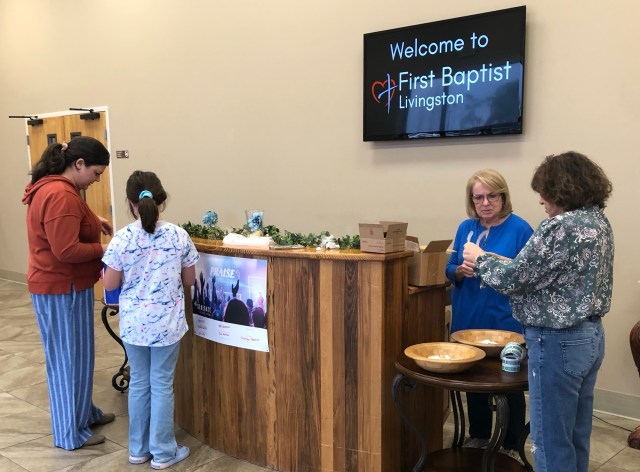
Attendees were warmly welcomed to the conference in the registration area with swag bags and helpful information.

Next, it was time for an energizing breakfast, with plenty of time to visit.

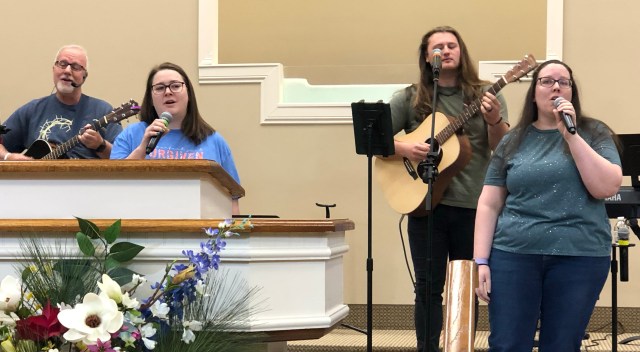
The conference proper started off with a worshipful time of singing led by these sweet brothers and sisters, and introductory remarks from Vickey, our emcee for the day.

Session 1 was God’s Word, Our Foundation. God’s Word is the very foundation of our lives as Christian women. It is all sufficient, our ultimate authority, and an absolute necessity for our growth in Christ and our wellbeing in life.

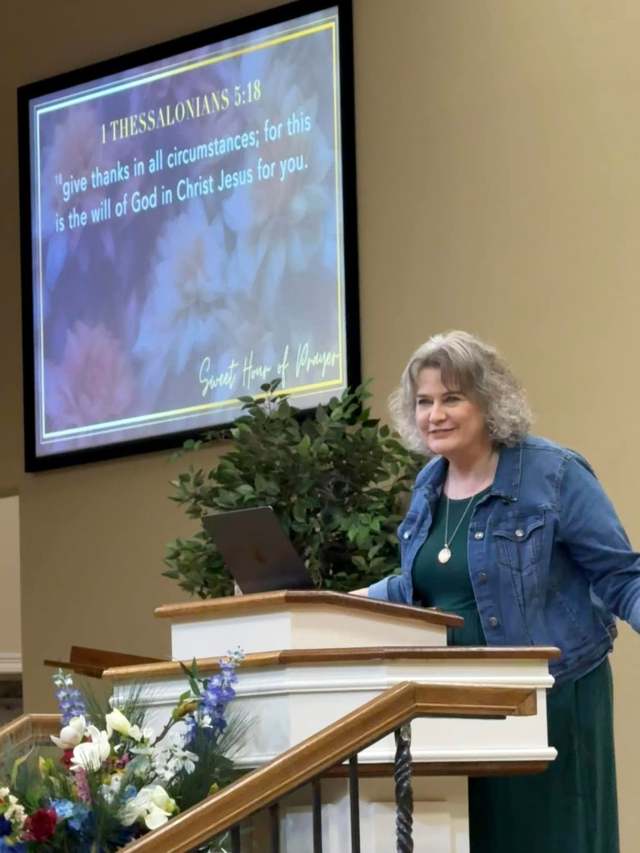
Session 2 was all about prayer. In Sweet Hour of Prayer, the ladies learned about biblical and unbiblical prayer practices, using the Lord’s Prayer as a model for our own prayers, praying Scripture and so much more!

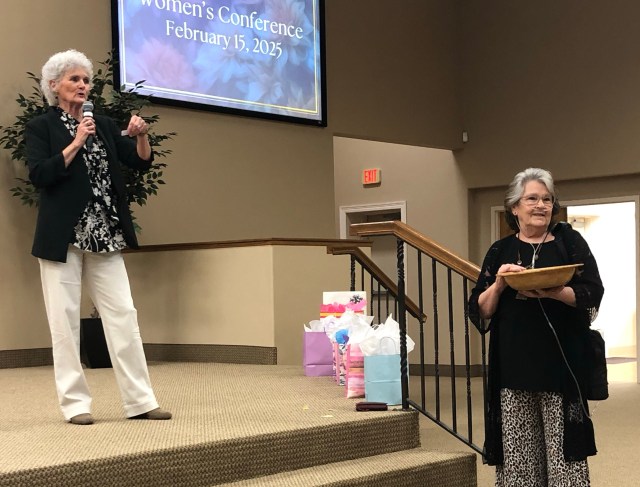
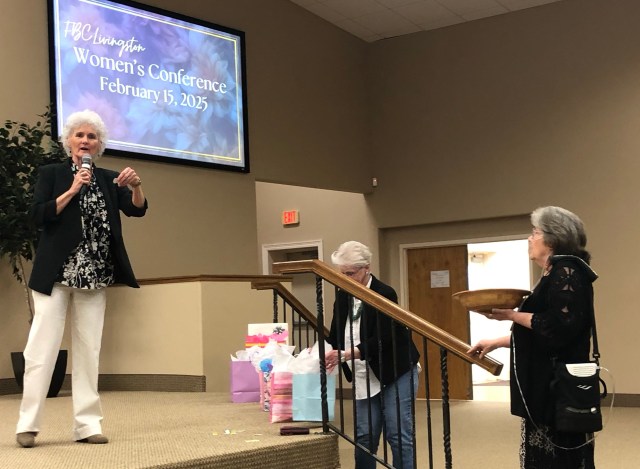
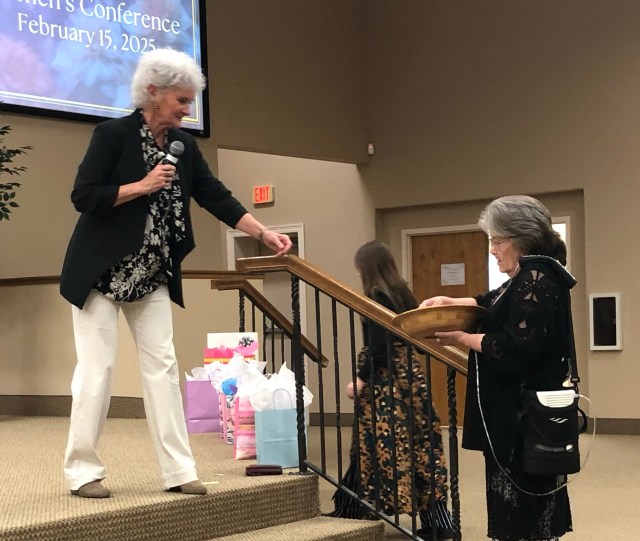
After a delicious lunch of deli sandwiches with all the trimmings, the afternoon session got off to a fun start with door prizes!

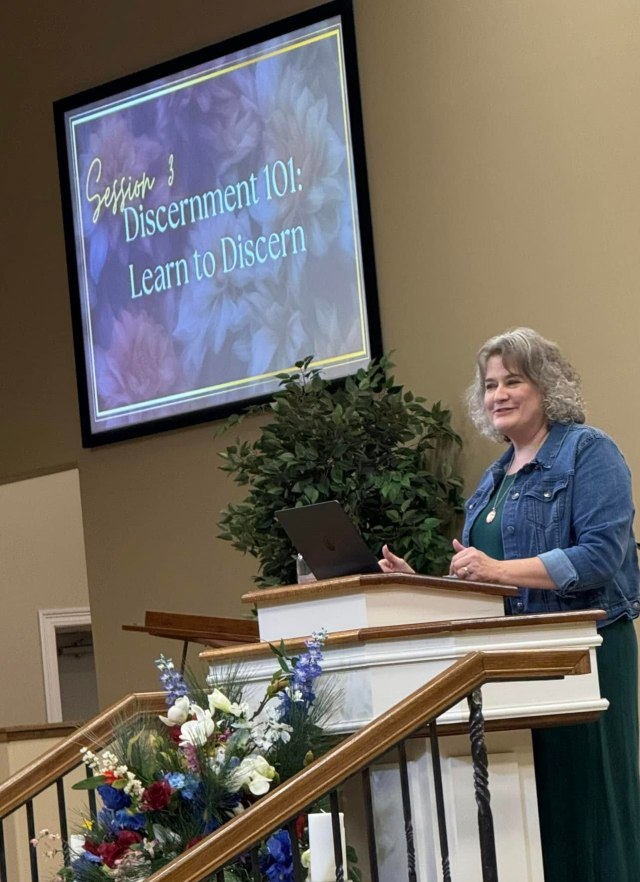
Discernment 101: Learn to Discern was our topic for session 3. What is discernment, and why is it important? What makes someone a false teacher? Who are some of today’s popular false teachers? It’s so important to be a good Berean.

Finishing up the day was our Q&A session. Wherever I go, I’m always so encouraged and sharpened by the questions my dear sisters ask, and these were no exception!

Big thank you’s to my precious sisters from my own church who took a day out of their busy lives to attend and support me at this event. It meant so much to me, and I deeply appreciate and love you all.

It was such a fantastic day with the ladies of FBC Livingston. Thanks so much to Pastor Brian for trusting me to teach these incredible women. Thanks to Joyce for being such a great event planner, and to all the other brothers and sisters of FBC for making me feel right at home and working so hard to host a fantastic conference. If you’re ever in the area and need a good church to visit, make plans to spend the Lord’s Day with these wonderful brothers and sisters.


If your church or organization is ever in need of a speaker for a womenโ€™s event, Iโ€™d love to come share with your ladies as well. Click here for more information, or to find an upcoming event near you!


Photo Credits

Thank you to Anna and Sarah for contributing several of these photos, including the ones of me.

All other photos by Michelle Lesley.

Mailbag

The Mailbag: Should I correct my boss’s errant theology?

Originally published January 29, 2018

I work in a Christian child care facility where the leadership is neck deep in false doctrine. Nearly a year ago, I stepped out of the classroom and into a management position so now I feel Iโ€™m more on the front lines. Most of the people believing all the false teaching (Bethel, Hillsong, Todd White, Sarah Young, etc.) are gone but the big boss is still in it. Iโ€™ve been bold to speak out against it to some of the young women who work there, but when it comes to my boss, Iโ€™m a lot less bold. So I guess my question is, am I wrong for not standing up to her and pointing out her error? Iโ€™m afraid Iโ€™ll get fired. What are your thoughts on this? Should I be bold and point out error? Should I even be working there?

Sounds like a sticky and uncomfortable spot to be in. Maybe we can sort things out a little.

Let’s start by remembering whose authority you’re under. First, you’re under God’s authority, so you need to make sure your highest priority is obeying Scripture regardless of the circumstances. If you’re married, your next authority is your husband. Make sure the two of you talk it through thoroughly and that you submit to any decisions he makes. You (and maybe your husband too) might want to bounce this situation off your pastor or elders and see what their counsel is. There’s wisdom in an abundance of counselors. Finally, at work, you are under your boss’s authority. She is not a friend or a co-worker, she is your boss. The two of you are not equals, you’re subordinate to her in the workplace. “Boldly” telling her she’s wrong about something (especially if it’s in regard to something that’s not work related) is not in keeping with God’s instruction to you to submit to her authority.

I’m not really clear on whether the false doctrine is a personal belief held by your boss that has no effect on the workplace, or whether the false doctrine is workplace policy. In other words, the false doctrine is part of the classroom curriculum you have to teach, or employees are required to take part in Word of Faith type devotions and contemplative prayer every morning, or in your role as administrator you have to do business with heretical “churches,” etc. So let’s take a look at it from both angles.

If the false doctrine is not affecting your work environment and is only a personal belief held by your boss, it is not necessary, and may not be wise, to proactively push the issue any more than you would be pushy about sharing the gospel with your boss if she were a garden variety lost person. It’s something that needs to be handled carefully and with wisdom about timing, how deep to go, etc. A good rule of thumb might be to address the issue only if she brings it up and asks for your opinion.

If it’s a situation where she’s constantly pushing the false doctrine on you and assuming you’re amenable to it, one way to handle it might be to say something like, “I’m kind of uncomfortable talking about this right now. Could I take you out to lunch and explain why?” At lunch, you’ll need to briefly, carefully, and biblically explain where you stand from the perspective of, “These are my personal beliefs,” helping her to grasp that when she pushes her personal beliefs (i.e. false doctrine) on you, you feel pressured and uncomfortable because you want to please her as your boss (the Bible teaches us that we’re to submit to those in authority over us and work hard for our employers), but you also don’t want to compromise your beliefs (“We must obey God rather than men.”) Hopefully she will get the message that she’s creating a hostile work environment and will tone it down. If she doesn’t, you’ll need to consider whether or not you want to keep working there.

If the false doctrine is part of workplace policy, you’ll need to figure out how pervasive it is and whether or not it’s something that can be worked around in accord with biblical principles and your conscience. If the false doctrine pretty much permeates your job (for example, if you were a teacher and it was interwoven into the curriculum you had to teach), it’s probably time to start looking for another job, and to make an appointment with you boss and politely explain why you’ll no longer be working there.

If it’s only a small part of your (otherwise doctrinally sound) job – for example, the aforementioned morning devotions – see if there’s a workaround. Employees are given all kinds of exemptions and accommodations these days, even for religious reasons. Perhaps you could be excused from the devotions or a co-worker could handle business with the heretical “churches” while you take on another task. “If possible, so far as it depends on you, live peaceably with all,” Romans 12:18 says. Be as cooperative and flexible as you can.

If you decide to stay at your job, the best way you can have an impact on your boss is by being a godly example. Pray fervently that God would open her eyes to the false doctrine she’s believing. Ask God to give you opportunities to slip in a doctrinally sound “word fitly spoken” in conversation from time to time. Be an “above and beyond” employee with a great attitude. Show kindness to your boss and co-workers, asking how you can pray for them, inquiring after their families, health, etc. Give doctrinally sound books as office Christmas gifts. Invite your boss and co-workers to an occasional event at your church. Suggest a doctrinally sound podcast you love if the topic comes up. There are lots of ways you can have a biblical influence on you boss. It doesn’t necessarily have to be “confront or quit.”


If you have a question about: a Bible passage, an aspect of theology, a current issue in Christianity, or how to biblically handle a family, life, or church situation, comment below (Iโ€™ll hold all questions in queue {unpublished} for a future edition of The Mailbag) or send me an e-mail or private message. If your question is chosen for publication, your anonymity will be protected.