Mailbag

The Mailbag: May Christian Women Wear Pants?

What are your views on women wearing pants?

For readers who are a little confused by this question, you may not be aware that there are various churches which require women and girls to wear skirts or dresses rather than pants. The local churches Iโ€™m familiar with which carry this requirement are Pentecostal and Independent Baptist, though there may be others. (Some of these churches also require women to have long hair and abstain from wearing makeup.)

The initial basis for this requirement is Deuteronomy 22:5…

A woman shall not wear a manโ€™s garment, nor shall a man put on a womanโ€™s cloak, for whoever does these things is an abomination to the Lord your God.

…along with the general desire to encourage God-given femininity for women and masculinity for men. Definitely a good idea these days.

But, since my opinion is of zero importance – itโ€™s what God thinks that counts – letโ€™s look at what the Bible says. Is it biblical for a church to make this requirement of Christian women, or, for a Christian woman to choose, on her own, not to wear pants?

Letโ€™s tackle that last question first.

Thereโ€™s nothing in the Bible that says women have to wear pants, so if you want to wear skirts and dresses all the time, youโ€™re absolutely free to do that. What you may not do (biblically) is think, or say, that wearing skirts and dresses somehow makes you holier or more obedient to God than women who choose to wear pants- because thereโ€™s nothing about that in the Bible either.

But what about Deuteronomy 22:5?

Well, letโ€™s take a look at that Scripture using good hermeneutical principles. We need to look at the context, culture, audience, and intent of this verse.

First we need to recognize that Deuteronomy is in the Old Testament. Right off the bat, we must keep in mind that, while there are many underlying, timeless principles in the Old Testament that still apply to Christians (usually because they are reiterated in the New Testament) the particular pronouncement of the Old Testament verse weโ€™re reading may not apply.

Next, Deuteronomy 22 is smack dab in the middle of the Levitical law that was given as a part of the Mosaic covenant. The Mosaic covenant was fulfilled in Christ, which means its laws are no longer binding on us as Christians. We are under the New Covenant of grace through Christ. This is why you’re not sinning if you build a house without a parapet around the roof (verse 8), sow your vineyard, if you have one, with two kinds of seed (verse 9), wear fabric that’s a wool-linen blend (verse 11), or go tassel-less (verse 12). If you think Deuteronomy 22:5 prohibits women from wearing pants, a good question to ask yourself is: “Why would I feel required to obey verse 5 of Deuteronomy 22, but not verses 8-12?”

The next thing we need to look at is the actual wording of Deuteronomy 22. Does it say anything about pants or any other specific item of clothing? No. It says women are not to wear men’s clothes and men are not to wear women’s clothes. Now, keep in mind that the audience for this verse was Old Testament Israel, and that, at the time, in that culture, both men and women wore what we would technically describe today as a “dress.”
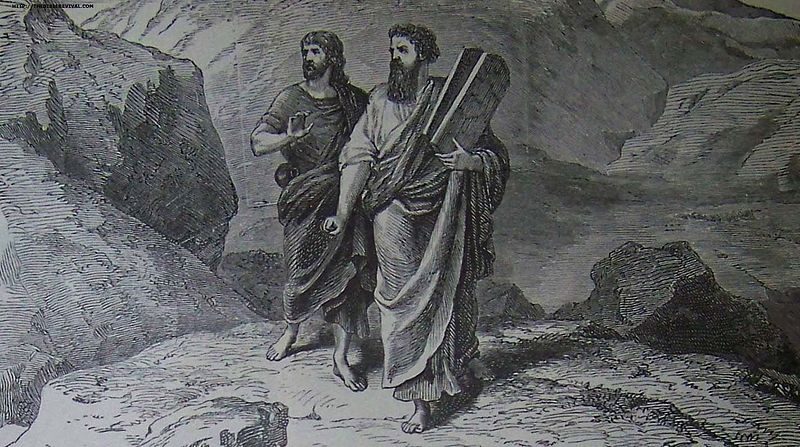
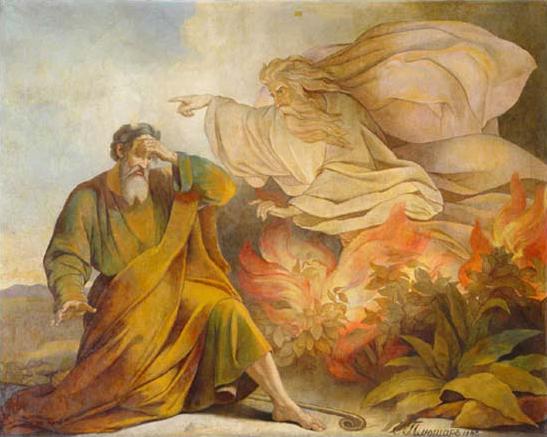
Were Moses and rest of the Israelite men – who were actually receiving this law from God at the time – sinning because they were wearing “dresses”? (And, let’s remember, Jesus dressed the same way.) Of course not. In our time and culture, they’re wearing dresses, and dresses are for women. In their time and culture, they’re wearing a garment designed for men. God has never said, “Pants are for men. Dresses are for women.” Pre-twentieth century western culture has said that. So if the men of the Bible weren’t sinning for wearing “dresses” designed for men, how could Christian women be sinning for wearing pants designed for women?

Deuteronomy 22:5 is not addressing the construction of specific garments. It’s addressing the intent of the heart. Since men and women of that culture both wore garments of similar construction (i.e. sleeves, an opening for the head, and a sheath for the torso and legs), there must have been differing accessories (veils, turbans, sashes, belts, cloaks, etc.) that clearly distinguished between male and female outfits. A woman could wear those male accessories and still be wearing a “dress,” but what would her motive for doing so have been? The only motive she could have had was to appear to others to be a man.

In other words, Deuteronomy 22:5 is not addressing American women wearing pants designed for women’s bodies, sold in the women’s department of the store, marketed to women, and purchased by women who have no intention of trying to impersonate, or appear to others to be, a man. It is addressing the sin of cross-dressing (transvestism).

And that is a prohibition that does carry over into the New Testament under the heading of sexual immorality. We are to respect and honor God’s perfect and holy decision to create us as women or men. We are not to alter our clothing, accessories, cosmetics, hair styles, gait, body language, speech patterns, lifestyles, or anatomy in order to appear to others, or ourselves, to be the opposite sex. To do so is to tell God that His decision to make you a woman or a man was wrong. That is rebellion.

So, if a church today really wants to correctly handle and apply Deuteronomy 22:5, it will do so in light of the New Testament passages on sexual immorality. The church should teach that God always makes the right decision to create someone male or female, and that to rebel against God’s perfect design by altering one’s appearance to impersonate the opposite sex is sin which needs to be repented of and forgiven by the shed blood of Christ.

Deuteronomy 22:5 is not about 21st century American women wearing pants designed for women. So, when a church prohibits women from wearing pants – even when done with the best of intentions to honor God – what they are doing is mishandling Scripture and making a law where none exists. Jesus wasn’t too happy when “church leaders” of His time did that, and our churches today shouldn’t be doing it either.

All of that being said, I’ve had the privilege of knowing and, on occasion, worshiping with some dear saints in an IFB church which required skirts for women. These folks truly loved the Lord and honored His word. Any time I attended one of their activities, I wore a skirt so as not to be a stumbling block or draw attention to myself. Churches which carry the requirement of skirts for women but are otherwise doctrinally sound should not be regarded as apostate.


If you have a question about: a Bible passage, an aspect of theology, a current issue in Christianity, or how to biblically handle a family, life, or church situation, comment below (Iโ€™ll hold all questions in queue {unpublished} for a future edition of The Mailbag) or send me an e-mail or private message. If your question is chosen for publication, your anonymity will be protected.


Guest Posts

Guest Post: Mackerels, Schmoley, and the Spirit of God

If your theology pretty much matches up with mine (as outlined in the โ€œWelcomeโ€ and โ€œStatement of Faithโ€ tabs) and youโ€™d like to contribute a guest post, drop me an e-mail at MichelleLesley1@yahoo.com,
and letโ€™s chat about it.

Mackerels, Schmoley, and the Spirit of God

by Michael Coughlin

What do mackerels, โ€œschmoley,โ€ and the Spirit of God have in common? If you listen to people in normal conversation, apparently all these things are holy.

Did you see something that surprised you, but youโ€™re a Christian so you donโ€™t want to blaspheme God? Just exclaim, โ€œHoly mackerel!โ€ Maybe you donโ€™t even know what to say, so just make up a word and mutter, โ€œholy schmoley!โ€

And when you want to refer to the third person of our thrice holy God? Well, just use the same terminology and call Him the Holy Spirit.

Maybe you are sensitive to the word holy, so when you are surprised you let people know by saying, โ€œOh my goodness!โ€ Thatโ€™s way better than actual blasphemy or cursing or especially that eff word the heathen use, right? Ah, but goodness is one of Godโ€™s attributes, and the concept of goodness is synonymous with who God is, so when we say โ€œoh my goodnessโ€ are we really just saying the dreaded and deftly avoided โ€œOh my Godโ€ anyway? What about โ€œoh my word?โ€ are we saying something new or different when we replace Godโ€™s name with โ€œword?โ€ Ponder thatโ€ฆ

Please, bear with me! My goal isnโ€™t some sort of legalistic โ€œhere are the words that are OK and here are the words that are notโ€ post. But I want you to consider a few things and let Godโ€™s Word and common sense guide you toward repentance if necessary in your life.

God is holy. Anything God sets apart is holy. NOTHING ELSE IS HOLY. When we use the word holy as an adjective before anything God hasnโ€™t set apart, are we diminishing the concept of holiness at all? Even if itโ€™s just a little, thatโ€™s a problem!

What about when you replace Godโ€™s name with the word โ€œgosh,โ€ or โ€œgoodnessโ€ or โ€œgolly?โ€

At some point, Christian, are you sure that you are saying something different in your heart that God sees than the careless language of the pagan? We bemoan the outward sins of a filthy culture while committing the same sins to lesser degrees often in our hearts and the privacy of our homes, our speech included!

Paul said in Ephesians 4:29:

Let no corrupting talk come out of your mouths, but only such as is good for building up, as fits the occasion, that it may give grace to those who hear.

Not only is corrupting talk forbidden, but we are obligated to ONLY have such as is good for edification come out of our mouths. It isnโ€™t enough to avoid the dirty words; we are to express ourselves with clean talk which is meaningful or helpful or build up.

Jesus said in Matthew 12:36-37:

โ€œI tell you, on the day of judgment people will give account for every careless word they speak, for by your words you will be justified, and by your words you will be condemned.โ€

How we speak is a direct fruit of our heart. That is, your speech indicates your heart toward God. So, dear Christian, do you speak carelessly? Why do you affix the term holy before that which is not holy?

And why are we so shocked all of the time? Seriously, how often are you really so shocked that you have to say โ€œoh my whatever?โ€ Is it possible that we are not meditating on the greatness and majesty of God enough and the world is too easily awe-inspiring?

Christians, our words mean things, even the ones we utter without the intention of actually communicating what they mean. James warns us that taming the tongue is a vital Christian virtue, and I think that goes along with what Paul said in Ephesians and what our Lord Jesus said above.

but no human being can tame the tongue. It is a restless evil, full of deadly poison. With it we bless our Lord and Father, and with it we curse people who are made in the likeness of God. James 3:8-9

Brother or sister, part of making your calling and election sure is seeking Christ through His Word and submitting to the Holy Spirit to sanctify you that you may practice the virtue of self-control over your tongue. I submit to you that those who cannot tame the tongue reveal themselves to not truly be one of his children. If you donโ€™t believe that, read Matthew 12, Ephesians 4 and James 3 in their full context and you will see that a contrast is being made between the children of darkness and those who tame the tongue. Extra credit if you can find self-control anywhere listed in Galatians 5.

So join me and letโ€™s see if together we can express ourselves more like our perfect Lord to whom we desire to be conformed, who never wastes a word, nor does he fail to use the best ones when words are required.

For further reading, here is an old blog post which supports the same ideas presented herein.


Michael Coughlin is a street evangelist from Ohio. He and his wife, Erin have 5 children. You can find him on Twitter, at his blog,ย or on Sermon Audio.


ALTHOUGH I DO MY BEST TO THOROUGHLY VET THE THEOLOGY OF THE BLOGGERS WHO SUBMIT GUEST POSTS, IT IS ALWAYS POSSIBLE FOR THINGS TO SLIP THROUGH THE CRACKS. PLEASE MAKE SURE ANY BLOGGER YOU FOLLOW, INCLUDING ME, RIGHTLY AND FAITHFULLY HANDLES GODโ€™S WORD AND HOLDS TO SOUND BIBLICAL DOCTRINE.
Church, Throwback Thursday, Worship

Throwback Thursday ~ Rolling Out the Welcome Wagon

Originally published August 25, 2010

The LORD said to him, “I have heard your prayer and your supplication, which you have made before Me; I have consecrated this house which you have built by putting My name there forever, and My eyes and My heart will be there perpetually. I Kings 9:3

As Golden Girl Sophia would say, “Picture it:”

After church one Sunday, a friend says, “Why don’t you come over to my house tomorrow night for dinner?”

So, the appropriate time comes on Monday evening, and you drive over to her house. The door is standing open because she is expecting you, and you’re familiar enough with each other that you feel comfortable just walking on in.

As you’re walking in, you see your friend standing there, and you say to her, “I invite you into this house! You are welcome here!”

Anything seem a little off about that?

Well, of course that seems strange. It’s her house.

But that’s what is taking place in churches all over America every Sunday morning. I saw it in a televised local church service last week. The worship leader stood up to lead the first song and said, “God we welcome you into this place!” I’ve heard others say things like, “Lord, we invite you into this house this morning!” We sing songs like Holy Spirit, Thou art Welcome and Lord, we Invite You.

‘Scuse me? Isn’t the church God’s house?

Of course, it isn’t God’s house in the same way the temple was God’s house, in that there isn’t a holy of holies where the actual presence of God resides. On the other hand, I wouldn’t go so far as to say that it’s only a building, like the post office or a doughnut shop.

At some point, way back when, or maybe even recently, a body of Believers got together and asked God to give them a place where they could worship Him. God saw fit to answer that prayer. He provided the land, the permits, and every brick, nail, and piece of sheetrock. He allowed His name to be placed there when we decided to call it “Grace Fellowship”, “St. Luke’s”, or “First Baptist”. He protects that building and allows it to stand as a testimony to the community: God, and God’s people, can be found here.

It’s not your church. It’s not my church. It’s God’s church. And it exists for His glory.

But somewhere along the way, we’ve forgotten that. Somewhere along the way, we gave God an eviction notice and became squatters on His property. How arrogant have we become that we strut into church as though we own the place, and dare to invite Him, to welcome Him into His own house as though He were a guest? How dare we?

Maybe it’s partly because we no longer have a holy of holies that we don’t see God’s house as sacred. “Ah,” you may say, “but that’s Old Testament thinking. Now we know that where two or three are gathered in His name, He is there in their midst. (Matthew 18:20)”

Really?

When it’s my church, my comfort, my pew, my ministry that nobody else better touch, my style of music, my opinion about how long the sermon should be, my feelings that got hurt, my idea of how things should operate, what I got out of the service, are we really gathering in His name?

Welcome, Lord. Are You sure You want to come in?

Book Reviews, Guest Posts

Guest Post: A Review of “Wait and See”

If your theology pretty much matches up with mine (as outlined in the โ€œWelcomeโ€ and โ€œStatement of Faithโ€ tabs) and youโ€™d like to contribute a guest post, drop me an e-mail at MichelleLesley1@yahoo.com,
and letโ€™s chat about it.

A Review of Wait and See by Wendy Pope

by Kirstin


The Author

Wendy Pope writes that she was minding her business in the early 2000s when God called her to teach the Bible and be active in womenโ€™s ministry. She then attended a She Speaks conference hosted by Proverbs 31 Ministries, and God confirmed her calling in โ€œways only God could arrange.โ€

For weeks after the She Speaks conference, Pope โ€œlived and breathed nothing but bio sheets, messages, headshots, and marketing.โ€ Her related expenses went over her familyโ€™s budget. But there was no demand for her as a speaker, and she ended up working for 12 years at the offices of Proverbs 31 Ministries (โ€œGod moved me to an office chair in a gray cubicle . . .โ€). She served in her church and honed her writing skills. Today she is on the team of speakers at Proverbs 31 Ministries.

Wait and See: Finding Peace in Godโ€™s Pauses and Plans

The publisherโ€™s overview of Wait and See states, โ€œEvery woman struggles with times of waiting โ€“ for a spouse, a child, a job. In Wait and See, Wendy Pope guides readers to focus on the person of their faith rather than the object of their wait. Pope draws on the story of King David, who was anointed king nearly twenty years before he took his throne.โ€

Pope seems to have written this book for the same audience of โ€œJesus girlsโ€ that has made Lysa TerKeurst of Proverbs 31 Ministries a popular author and speaker. Her writing style is informal and confidential, and the book is sprinkled with statements like these: โ€œThis is stinkinโ€™ thinkinโ€™, and it has got to go!โ€ and, โ€œInstead of the depressing turning dramatic, she was determined to find laughter in the yuck,โ€ and, โ€œWhoa! I just blew my own mind.โ€

The book includes stories of seasons of waiting in the lives of ordinary Christians, including Pope and her family, and questions for reflection. Each chapter concludes with a โ€œDigging Deeper with Davidโ€ section based on a Davidic psalm. Pope writes, โ€œDavid is an excellent example of how to prepare while we wait for what God has planned for our lives.โ€

Proverbs 31 Ministries offered an online Bible study based on the book in 2016. Dozens of readers have posted five-star reviews of Wait and See on Amazon and Goodreads. The book is encouraging, and its โ€œbloom where youโ€™re plantedโ€ message is good.

For me, however, the Bible exposition in Wait and See was unhelpful. Pope quotes from nine Bible translations, including The Message. Like TerKeurst and Beth Moore, she sometimes explains a verse by choosing a particular word in it, stating the word in the original language, and then stating itsย dictionary definition. In one instance, she simply writes, โ€œFret is the Hebrew word charah.โ€ So what?

In addition, Pope seems to expect believers to hear from God apart from the Bible. Throughout Wait and See, she refers to the Holy Spirit calling, confirming, leading, nudging, prompting, tugging on the heart, and whispering in a still, small voice in the present day. She writes that young David โ€œspent his days learning to recognize and obey Godโ€™s voice, two traits that would serve him greatly as king.โ€ But where does the Bible state or even imply that David had to learn to recognize Godโ€™s voice? At the same time, Pope seems to be saying that personal revelation from God cannot be misunderstood. โ€œI must not have heard God correctlyโ€ is โ€œMisconception #1,โ€ she writes.

Unfortunately, one of my main takeaways from Wait and See was that an unknown number of women are desperate to become famous Christian speakers and authors, the next Beth Moore or Lysa TerKeurst. โ€œI believed saying yes to God would put me center stage in an arena filled with thousands of women who had just read my bestseller,โ€ Pope writes.

As I sat in my gray cubicle, a severe case of the โ€œminesโ€ attacked my heart. Near the same time, many of my friends in ministry enjoyed success. Publishing opportunities, consistent speaking engagements, and individual ministries seemed to fall into their laps, but not mine. I pasted on a halfhearted smile when they shared about their ministry growth, but inwardly I pouted and argued with God. What about me? Iโ€™ve been speaking longer than she has. When will my ministry grow? Why canโ€™t my book be published?

That was then. โ€œNeither center stage nor a bestseller matters to me any longer,โ€ Pope assures us. But I wonder who these ministries really are for.

Final note: Seasons of Waiting by Betsy Childs Howard, who works with The Gospel Coalition, appears to be a better and deeper book on this topic, based on my reading of an excerpt available online and Aimee Byrdโ€™s review.


Additional Resource:

Leaving Lysa: Why You Shouldnโ€™t Be Following Lysa TerKeurst or Proverbs 31 Ministries


Kirstin lives in Southern California and works in the legal field. She has participated in women’s Bible studies for 20 years. “The fear of the LORD is the beginning of wisdom, and the knowledge of the Holy One is insight.” Proverbs 9:10 ESV


ALTHOUGH I DO MY BEST TO THOROUGHLY VET THE THEOLOGY OF THE BLOGGERS WHO SUBMIT GUEST POSTS, IT IS ALWAYS POSSIBLE FOR THINGS TO SLIP THROUGH THE CRACKS. PLEASE MAKE SURE ANY BLOGGER YOU FOLLOW, INCLUDING ME, RIGHTLY AND FAITHFULLY HANDLES GODโ€™S WORD AND HOLDS TO SOUND BIBLICAL DOCTRINE.
Mailbag

The Mailbag: Potpourri (Small groups, Furtick, Slander…)


Today’s edition ofย The Mailbagย is a tad different in format. Usually, I answer one reader’s question in a long form article. Today, I’m addressing various questions from several readers in a “short answer” format.

Please note: Due to theย recent change in my comments/e-mail/messages policy, I’m not responding individually to most e-mails and messages. Several of these questions could have been answered instantaneously if the search bar had been utilized.


I wanted to ask if you could suggest a study for mums with young children, all of whom need lots of support and encouragement, as well as one who is struggling with her faith at the moment.

While there may be a good, doctrinally sound study out there for moms of small children, I’m not personally familiar with any. Still, I would recommend simply choosing a book of the Bible and studying it from beginning to end. The best and most biblical support and encouragement comes right from Scripture. See my article:ย Youโ€™re Not as Dumb as You Think You Are: Five Reasons to Put Down that Devotional and Pick Up the Actual Bible.

For someone struggling with her faith, the book of 1 John is excellent. If you don’t feel equipped to teach a book of the Bible, get some training so you can. Untrained, undiscerning teachers are a major way false doctrine creeps into the church. See:ย McBible Study and the Famine of Godโ€™s Word.


What are your thoughts on: Rebecca Manly Pippert, Revelation Wellness, Liz Curtis Higgs,ย Heaven by Randy Alcorn, Dr. Caroline Leaf, Stephen Ministry, Jan Markell’s Olive Tree Ministries, Johanna Michaelsen, and Angie Smith?

Rebecca Manly Pippert, Revelation Wellness, and Stephen Ministry: I’m afraid I’ve never heard of them.

Dr. Caroline Leaf, Jan Markell, Johanna Michaelsen, and Angie Smith: I’ve heard the names in passing, but I don’t really know anything about any of them.

Liz Curtis Higgs: I’ve never read any of her stuff or heard her speak, but I know that, until it disbanded this year, she was a featured speaker for Women of Faith, alongside false teachers such as Sheila Walsh, Jen Hatmaker, Sarah Jakes Roberts (daughter of T.D. Jakes), and musician Nichole Nordeman (pro-homosexuality). Partnering with false teachers, even if your own doctrine is sound (and I don’t know whether or not Higgs’ is), is prohibited by Scripture, so for that reason alone, I would not recommend her.

Heaven by Randy Alcorn: I read most of this book, but it was probably ten years ago or more. I don’t remember any specifics from the book, nor was there any egregious false doctrine that sticks out in my memory. All I remember is that I quit reading it because it was way too long and because a lot of it was – while based on Scripture – speculation and extrapolation as to what Heaven would be like.ย Randy Alcorn is not someone I currently keep up with very closely. Although I have recommended him as a fiction author:ย The Mailbag: Christian Fiction Recommendations, I don’t often read his blog or other non-fiction work. From the little non-fiction of his that I have read, my impression of him is that he is generally doctrinally sound, but may not thoroughly vet the people he quotes and appears with.

For more information on checking out various teachers and ministries, see my article:ย Is She a False Teacher? 7 Steps to Figuring it Out on Your Own


How can I find a solid church and what are your feelings regarding small groups?

For recommendations on finding a solid church, seeย The Mailbag: How Can I Find a Good Church?

I’m strongly in favor of small group Bible studies and Sunday School classes as a supplement to sound preaching from the pulpit,ย ifย the small group teacher is able to teach (availability and willingness do not equal ability to teach) and has been trained in good hermeneutics, and if he or she is teaching the Bible. For more, read my articleย McBible Study and the Famine of Godโ€™s Word.


Do you have an opinion of Steven Furtick?

I have many opinions of Steven Furtick (“pastor” of Elevation “Church” in Charlotte, NC), none of them good. He mercilessly twists God’s word, he yokes with false teachers (including T.D. Jakes, Joel Osteen, Joyce Meyer, Christine Caine and others), and he allows women to preach from his pulpit (Including Lysa TerKeurst. Furtick is her pastor, which is one of the reasons I warn against her.) Additionally, Furtick has been immersed in Word of Faith false doctrine for years, and is now venturing into New Apostolic Reformation false doctrine. For more information, see Fighting for the Faith, Berean Research, Berean Examiner, and Apprising. I’ve also seen a number of YouTube videos from various sources explaining the doctrinal problems and scandals with Furtick (use the YouTube search bar).


The Bible says that women should learn in submission and not instruct men, however, The Great Commission is written to believers (which includes women). Therefore, if that is my aim to fulfill the Great Commission, in turn fulfilling God’s will, how am I sinning?

You’re not. Preaching to men, instructing men in the Scriptures, and holding authority over men in the church is not the same thing as evangelism and I have never claimed that it is.

I think a better grasp of the role of women in the church would be helpful for you. I’d recommend reading Rock Your Role: Jill in the Pulpit as well as the remaining articles in my Rock Your Role series. For more on women evangelizing men, read #11 in my article Rock Your Role FAQs.


I am wondering if you have ever done a post or topic on homeschooling? I have been praying for your conference.

I do home school, but I’m afraid I haven’t written anything on it. My friend Rachel over at Danielthree18ย sometimes writes about home schooling, as does Gospel Centered Mom. These ladies could probably better point you in the right direction for doctrinally sound home schooling blogs than I can. It’s just not something I read much about or have an interest in writing about.

Thank you so much for your prayers. I am leaving Thursday to speak at a Christian women’s retreat in Cape Cod, Massachusetts, addressing the topic of suffering.

Readers, if your church would be interested in having me come speak at a women’s event, please click on the “Contact…” tab at the top of this page.


What is the criteria for a woman in regards to not teaching a man?…I particularly like The Voice translation for this in 1 Timothy 2:12…I think the โ€˜women teachingโ€™ Scripture was more of a custom back in the day as is this Scripture about men and long hair.

I would recommend reading all of the articles in my Rock Your Role series, starting with Jill in the Pulpit. My article ย A Head of the Times- Head Coverings for Christian Women? will help answer your questions regarding men and long hair (since the two issues are in the same passage), particularly some of the articles in the “Additional Resources” section (I would start with the WWUTT video near the end of that section). Also, we always need to keep in mind that God is the author of these Scriptures, not Paul. These are not Paul’s ideas and preferences, they’re God’s.

I would strongly recommend you find a reliable translation of the Bible rather than using The Voice paraphrase, which had several false teachers and female “pastors” as contributors. More info. at The Mailbag: Which Bible Do You Recommend?


Lysa TerKeurstย (or Beth Moore, Priscilla Shirer, or anybody else I’ve warned against, I get this one a lot)ย should sue you for slander for the judgmental things you’ve said about her!

So you’ve obviously read my article aboutย Lysa TerKeurst. Did you happen to see and read the big, bold notice at the top of that article (and every other discernment article I’ve written) which says:

If you are considering commenting or sending me an e-mail objecting to the fact that I warn against false teachers, please click here and read this article first. Your objection is most likely answered here. I wonโ€™t be publishing comments or answering emails that are answered by this article.

Your objection is answered in detail in #5 of this article. However, I’d like to add a few things:

1. There’s not a single teacher I’ve ever mentioned on this site that could sue me for slander. Not one. Why? Because slander is about false and defamatoryย speech. What you’re talking about isย libel, which deals with false and defamatoryย writing. Get a dictionary and use your words.

2. In order to sue someone for libel, my understanding (maybe a reader who’s an actual lawyer could help out here) is that you have to prove that a) your reputation has been damaged (Anybody see people “Leaving Lysa” in droves? I don’t. Her “ministry” is, unfortunately, continuing to grow as far as I can tell.) b) that the allegations are untrue (The allegations I’ve madeย aren’tย untrue. I’ve taken Lysa’s own words and actions – from videos of her speaking, and from texts of her writing – and compared them with Scripture. If she’s able to demonstrate – from Scripture – that what I’ve said is untrue, she won’t have to sue me for anything because I’ll gladly repent and print a retraction. But, judging from the way she generally handles Scripture, she’s not going to be able to do that.) and c) that the writer acted with malice. (I’ve made very clear that my desire is for Lysa – and the others – to repent and teach sound doctrine so I can point women to them as solid resources. How could beingย for Lysa in this way, and wanting to help her ministry,ย be construed as malicious?)

3. If Lysa (or any of the others) did try to sue me for libel, she would only be further proving my point about her disobedience to Scripture, because Scripture instructs Christians not to sue each other.ย That’s not going to do a lot for her credibility in court.

Thanks for playing.


Why haven’t you answered my e-mail/social media message or posted my blog comment?

See:ย New E-Mail, Messages, and Blog Comments Policy

From the “Welcome” tab:ย As of March 2017, I will not be responding to (and often, not publishing) blog comments which require more than five minutes of my time to answer. While I love hearing from readers, it is simply taking too much time away from my family to engage in long, in depth, or teaching conversations in the comments section of my articles.


If you have a question about: a Bible passage, an aspect of theology, a current issue in Christianity, or how to biblically handle a family, life, or church situation, comment below (Iโ€™ll hold all questions in queue {unpublished} for a future edition of The Mailbag) or send me an e-mail or private message. If your question is chosen for publication, your anonymity will be protected.